
Fob

May 20, 2024

Our Jeep is equipped with a keyless entry and ignition system.  I always thought this was an asset, especially running across the parking lot in the rain when I can open my door without fumbling for my key.  We also have another feature that refuses to allow the car to lock if I left the keys in the car and will beep a warning to tell me I need to retrieve my keys.  This is not an absolute failsafe.  Three months ago, I hopped out of the car and locked it, missing the warning beep.  When I returned an hour later the vehicle had locked itself while I was gone, and I called for a locksmith to retrieve my key.  Last week I found another problem with my keyless ignition.  I had taken the kids to the lake for a walk and started the car and drove home.  I turned the vehicle off and took the kids inside.  When I returned to the car to lock it, it gave me a warning beep.  I made a thorough search of the vehicle, but my keys were nowhere to be found.  When Melissa came to help, we thought we saw the red button on the fob lodged under the center console.  We knew the key had to be in the car.  After all, how could I drive home if the key was not in the vehicle?

When I looked online, I found there have also been a number of injuries and even deaths from carbon monoxide poisoning when victims leave their cars running in the garage.  This is easier with modern keyless ignition systems which allow drivers to start and shut off their vehicle with the press of a button, especially with quiet, hybrid cars.  The engine might not be running when the car is parked but comes on as the batteries run down.  Keyless entry systems are a standard feature on many new cars and at least an option on even the least expensive models.  Some allow the driver to lock and unlock the car by touching the door handles without using the key fob, and then start the vehicle with the press of a button or the twist of a knob.  Some automakers have audible notifications when the key leaves the running vehicle.  Others have designed cars to automatically shut off after a certain period of time once the driver has left the vehicle or to automatically turn off whenever the driver exits with the key fob.  Lieutenant Athony Mancuso of the New York City Fire Department said, “When we do see a carbon monoxide death the people don’t have a carbon monoxide detector.”  Every home should have working carbon monoxide detectors, not in the garage but in the home’s living areas where it can be heard. 

I also found a YouTube share that discussed being able to drive your running Jeep without a key in the car.  Knowing this was possible, I drove back to the lake to see if my fob was lying on the ground.  It was not.  That left the possibility of their falling into the console.  I researched (YouTube again) how to remove the center console and found it was basically four bolts.  I removed the bolts and lifted the console enough to assure myself the key fob was not there.  I do not know if it was lost elsewhere (?) or if someone had decided to pick it up (?).  It was ironic when we walked the next day that I found a fishing pole lying in the road leading to the end of the jetty.  All I could think of was someone picking up my fob before I could retrieve it.  I left the pole propped against a fence post at the entrance of the road.  It was gone the next day.  I hoped it was the owner who had returned.

THOUGHTS:  When I told my sister about my key fob troubles she told me of a similar experience.  My brother-in-law was driving, and she hopped out of their Jeep (with the fob) to go shopping.  He drove the car to the other end of the shopping center to another store.  She had the fob, and he had the car.  I cannot imagine this is a good feature since Jeep is a 4-wheel designed to travel back roads.  I hope I never lose my key in Desolation Canyon.  Fore warned is fore prepared.  Act for all.  Change is coming and it starts with you.
Shrimp

May 16, 2024

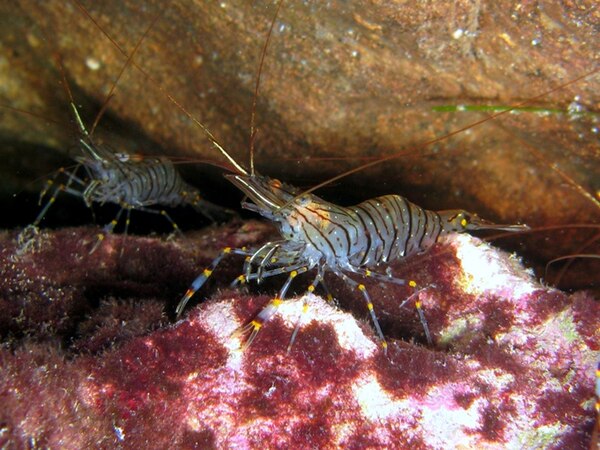
In today’s Business Section of my local newspaper, I found a USA Today article on an abundant harvest in Florida.  Homegrown Shrimp is an indoor aquaculture farm on Florida’s Treasure Coast.  According to the National Fisheries Institute, the US consumes 5.9 pounds (2.7 kg) of shrimp per person per year.  The US imports 1.7 billion pounds (771,000,000 kg).  Jake Dietzel served as a federal observer on shrimp boats in the Gulf of Mexico for the National Marine Fisheries Service and saw the bycatch rate in wild-caught shrimp.  This can be as high as 80%, meaning for every pound (.45 kg) of shrimp four pounds (1.8 kg) of other fish and marine life are thrown overboard.  These dead waste products are discarded because they are not the “target” species.  Dietzel now works as hatchery manager for Homegrown Shrimp which is owned by CPF Foods of Thailand.  The 20-acre (8 hectare) farm was opened in 2018 and has plans to expand into an adjacent 20 acres.  Homegrown currently produces 275 tons (249.5 mt) of shrimp per year, and when fully operational, they will produce from 600 to 1,000 pounds (544 to 907 mt) of shrimp.

When I looked online, I found shrimp is a crustacean (shellfish) typically belonging to the Caridea or Dendrobranchiata suborders of the order Decapoda, although some crustaceans outside of this order are also referred to as “shrimp”.  Under a broader definition, shrimp may be synonymous with prawn, covering stalk-eyed swimming crustaceans with long, narrow muscular tails (abdomens), long whiskers (antennae), and slender legs.  Any small crustacean which resembles a shrimp tends to be called one.  There are thousands of shrimp species adapted to a wide range of habitats, and they can be found feeding on most coasts and estuaries, as well as in rivers and lakes.  Shrimp are often solitary, though they can form large schools during the spawning season.  Shrimp are an important food source for larger animals ranging from fish to whales, and the tails of many shrimps are widely caught and farmed for human consumption.  Commercial shrimp species support an industry worth US$50 billion a year.  In 2010 the total commercial production of shrimp was nearly 77 million tons (70 million mt).  Shrimp farming became more prevalent during the 1980’s in Asia, and by 2007 the harvest from shrimp farms exceeded the capture of wild shrimp.  

Shrimp sold in the US are from shrimp farms or natural habitats.  Farm-raised shrimp are cultivated in large tanks or ponds, whereas wild-caught shrimp are caught in their natural habitat (Gulf of Mexico or Atlantic coast).  Wild-caught shrimp has a robust flavor that is oceanic and often sweeter than farm-raised shrimps from its natural diet, and the texture is firmer and snappier from the rigors of the wild.  However, overfishing leads to depletion of shrimp numbers and an increase in bycatch.  Shrimp farming in coastal estuaries in Southeast Asia and Latin America has resulted in the clearing of Mangrove forests to make way for shrimp farms, and reports of human trafficking, child labor, and subpar working conditions in Asian shrimp farms have caused concern.  US shrimp farmers have recently begun to adopt sustainable shrimp aquaculture practices like recirculating aquaculture systems (like Homegrown) that use large tanks and ensure that water is filtered and recycled to minimize the environmental impact.  Shrimp farming done right is profitable and sustainable.

THOUGHTS:  Last year Red Lobster promised customers an endless supply of shrimp for US$20, using what the industry calls a “loss leader”, or selling a product that is not profitable to bring in customers and other sales to make it worthwhile.  The offer became a Tik Tok challenge for shrimp eaten and was the key reason the chain had an operating loss of US$11 million during the third quarter.  One woman boasted she ate 108 shrimp during a 4-hour meal.  Food challenges in times of scarcity may not be the best marketing idea.  Act for all.  Change is coming and it starts with you.
Bird Egg

May 12, 2024

When I looked online, I found the approximately 10,000 bird species all lay a bird egg that comes in different shapes, sizes, and colors, and no two eggs are exactly alike.  The average egg size is 2.2 inches (5.6 cm) long and 1.5 inches (3.8 cm) wide, but they can range from a pea-sized hummingbird egg to an ostrich (Struthio camelus) egg over 6 inches (15.25 cm) long.  Most bird eggs are either white or a light creamy color, but some species lay vivid blue, green, brown, or brightly speckled eggs.  The main elements of an egg are the shell, albumen (egg white), yolk, membranes, and chalazae (ropey strands that anchor the yolk).  The hard shell is made of calcium carbonate and has tiny pores for air exchange.  Egg incubation ranges from 11 to 80 days depending on the species as the embryo develops.  Egg ID starts by noting the appearance of the egg, including the color, size, markings, texture, and shape.  Next, note where the egg is found as different bird species nest in different habitats and locations.  Identifying the habitat will also provide clues as birds nest in environments that meet their needs for food, shelter, climate, and protection.  Once you have this information you can go to a field guide or reference to find egg images and descriptions that match the bird egg you want to identify.  There are a number of good guides available, but I use the National Geographic Field Guide to the Birds of North America.  Finally, ask an expert for help.

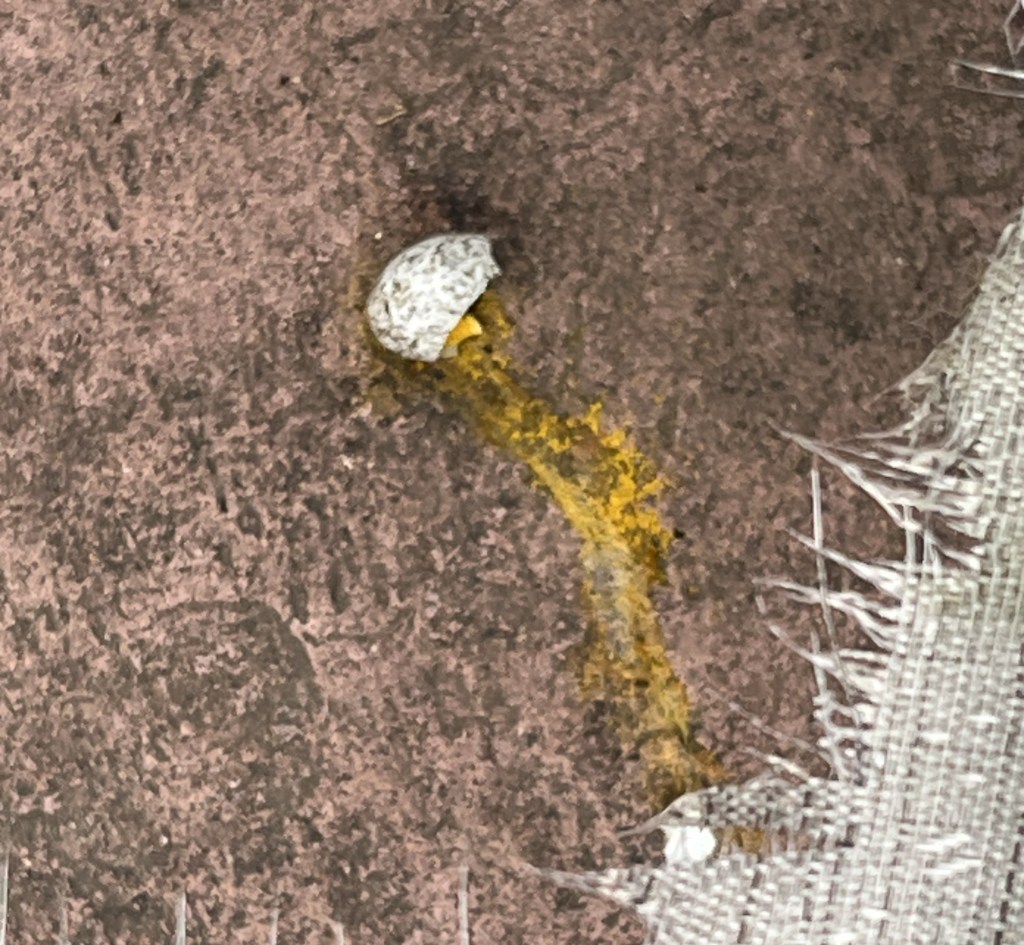
As I continued to check for damage, I found an unhatched (broken) egg under one of our lawn chairs.  This egg had probably also blown out of the nest.  While the half robin egg was basically intact, the white and brown speckled egg had impacted on the cement deck and broken.  When I checked my bird chart it IDed the egg as from a Northern Cardinal (Cardinalis cardinalis).  While I was saddened by the loss of the egg, cardinals are another one of the prolific birds that frequent my feeders.  I have not noticed any nests in the tree line, but I admit I have not been looking.  Identifying a bird egg is another item in a long list of things I need to do to become a competent birder.

THOUGHTS:  While a bird egg of each species may be unique, that does not make it any easier for a novice (me) to identify.  Like most skills this takes time studying field guides and observing details and habitats.  During the Western Renaissance, the Humanists seemed to be masters of the sciences, art, architecture, and even religion.  I tried this eclectic approach in graduate school and was booed down because I refused to “take a side”.  If I did not agree with a specific philosophy or methodology (theirs), I was wrong.  We seem to be employing a similar tact in our current relationships.  It was the diversity employed by the humanists that sparked the modern era.  Diversity generally creates a stronger outcome in science and relationships.  Act for all.  Change is coming and it starts with you.
Self-heal

May 11, 2024

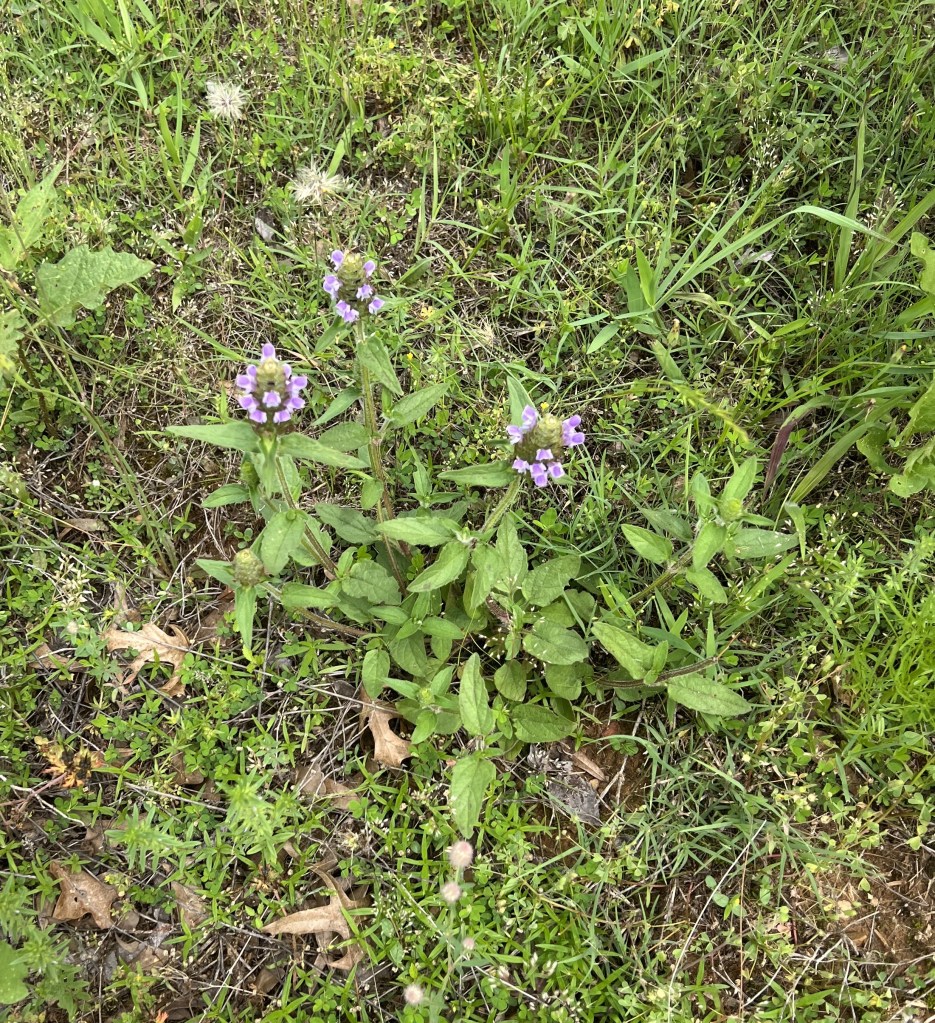
I started walking the kids (again) in the afternoon last week.  I had problems last fall because Loki was not well behaved and did not know how to walk on a leash.  When Loki had his three sessions with the “treat man” and I told him I was walking him with Zena to let her be the example.  He told me that would never work, and rather than schooling Loki, Zena would more likely pick up the bad habits.  I walked them separately for a while, then the weather got bad, and frankly I got out of the habit.  We fenced part of the yard in January in an effort to provide them with a place to run and play.  This works well except when it rains, and Loki comes in doing his impression of a mudball.  I know I need exercise as well and vowed to get back in the habit of walking.  The first couple of days I walked them separately.  I took Loki around the neighborhood and then went to the park with Zena.  This seemed like a slight to Loki, so I again took them (together) to the lake.  They walked much better together so that is now our “routine”.  Yesterday I noticed an odd flower which seemed to be bursting from a cone-shaped bud.  I IDed this with my camera as the common self-heal.

When I looked online, I found the common self-heal (Prunella vulgaris), also called heal-all, is an herbaceous plant in the mint family Lamiaceae.  Self-heal is native to Europe, Asia, Africa, and North America, and is common in most temperate climates.  It was introduced to many countries in the 1800’s and has become invasive in the Pacific Islands, including Australia, New Zealand, and Hawaii.  The leaves of the self-heal are lance-shaped, serrated, and reddish at the tip.  They are about 1 inch (2.5 cm) long and 0.6 inches (1.5 cm) wide and grow in opposite pairs down the square stem.  The stalks of the leaves are generally short but can be up to 2 inches (5 cm) long.  The flowers grow from a clublike, almost square, whirled cluster with a pair of stalkless leaves immediately below the club that stand out like a collar.  The flowers are two-lipped and tubular, with the top lip a purple hood and the bottom lip is often white.  The flowers bloom at different times depending on the climate, but mostly from June to August in the US.  Self-heal propagates by seed and vegetatively by creeping stems that root at the nodes.  It grows on roadsides, gardens, waste-places, and woodland edges (and around the parking lot at the lake).

The scientific name Prunella is derived from ‘Brunella’, a derivative from “die Bräune”, the German name for diphtheria, which Prunella was historically used to cure.  Vulgaris means ‘common’ or ‘vulgar’.  The common names self-heal and heal-all refer to its uses in traditional medicine.  The herb (called xia ku cao in Chinese), is used in traditional Chinese medicine to treat dizziness, red eyes, dry cough, dermatitis, and boils.  It is also a main ingredient in several herbal teas in southern China, including commercial beverages such as Wong Lo Kat.  The Nlaka’pamux drink is a cold infusion of the whole plant and is a common beverage.  The plant is also traditionally used by some Indigenous cultures to treat various physical ailments.  Self-heal is edible, with the young leaves and stems eaten raw in salads, the whole plant boiled and eaten as a leaf vegetable, and the aerial parts of the plant can be powdered and brewed in a cold infusion to make a beverage.

THOUGHTS:  The self-heal was in full flower around the parking lot at the lake.  No one seemed to be harvesting the plants, and I am sure most (like me) were not aware of its history as a healthy edible and curative.  Pharmacognosy is the study and use of medicinal plants and other natural sources which are a basis of traditional medicine.  While some scientists debunk natural remedies, others explore their use and effectiveness, even translating them into modern remedies.  Many of these plants are collected in wild and diverse ecosystems.  When these habitats are destroyed their potential knowledge is also lost.  Act for all.  Change is coming and it starts with you.
Potatoes

May 10, 2024

I woke up early this morning and decided it would be a good day to get my potatoes in the ground.  We have been under “high alert days” for the last week and are due for a stretch of warm and calm weather for the next three days.  When I got to the patio, I saw the wind and rain had caused some havoc on my tomatoes and feeders.  I refilled the feeders and put the two that had blown down back on their stands.  I straightened the tomato cages and pruned the small branches off the bottom of the plants.  It finally seems everything left will grow, although two of the plants I started from seed appear puny.  I was excited to see flowers on many of the plants as well as tiny tomatoes on two of them.  I took the time to remove the dead flowers off the fruit hoping to avoid the rotted ends I had encountered last year.  Next it was over to my “three sisters” beds.  Only about half of the corn had sprouted.  I did some light weeding and then reseeded corn in the areas where it had not grown.  The corn plants that had sprouted are getting tall enough that it is almost time to plant the beans and squash.  Hopefully, the new corn will sprout before I need to do the secondary plantings.  Finally, I cleaned up after the kids.  I could no longer put it off, it was time to plant some potatoes.

When I looked online, I found that like tomatoes, potatoes can be determinate or indeterminate as defined by their growth patterns.  Determinate potatoes are varieties with tubers that grow in just one layer and therefore do not require mounding of the soil around the plants.  These plants have a predetermined size and structure, and their growth typically stops once they reach a certain height, allowing their energy to be redirected towards the development of potatoes.  They produce early, in about 70 to 90 days.  Indeterminate potatoes are characterized by their continuous growth throughout the growing season and will keep growing and producing foliage until environmental factors (frost or lack of nutrients) limit their growth.  Unlike determinate potatoes, indeterminate varieties do not have a predetermined endpoint for their growth and can continue to produce potatoes as long as the conditions allow.  Indeterminate potatoes grow in multiple layers, so it is important to mound soil around the plants to give a better yield.  Indeterminate potatoes produce late crops, 110 to 135 days out.  You can determine the variety of potato by observing its growth over time.  Determinates will exhibit a more compact and uniform growth, while indeterminates, like Yukon Gold, will continue to grow and produce foliage throughout the season.

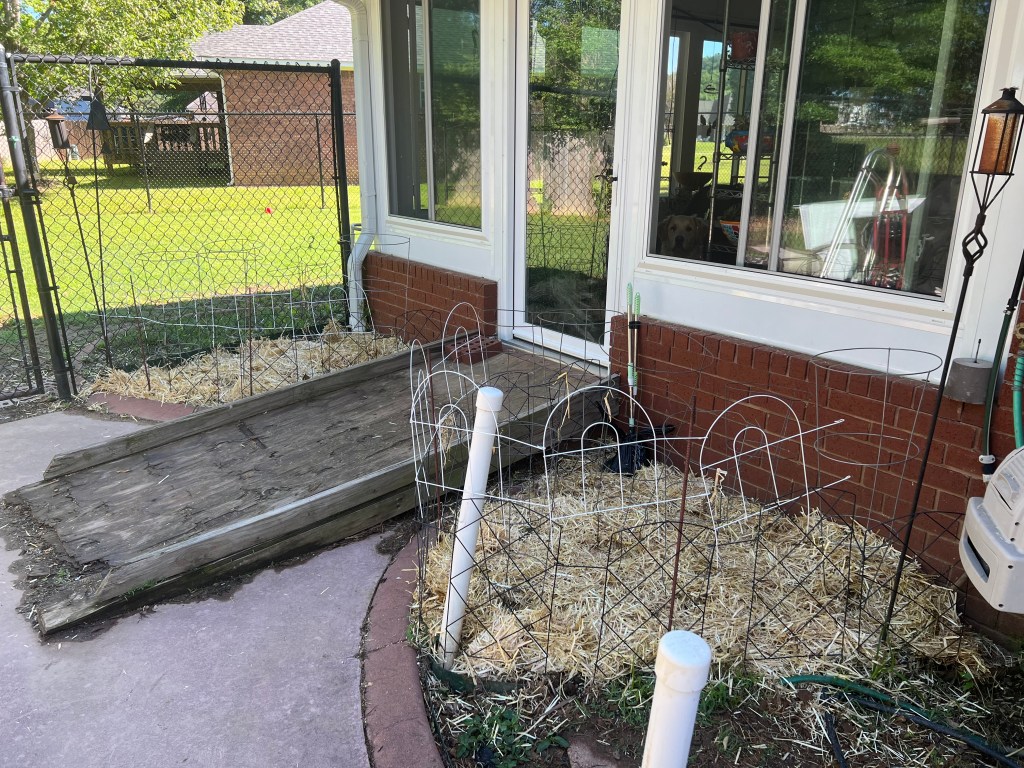
I mentioned several days ago that I intended to plant 10 hills of potatoes.  I had found (at last) the seed potatoes at the local co-op on “close out” and when the salesperson saw how few I was buying he gave them to me for free and told me to get more if I wanted.  I did not want to be greedy nor to waste potential seed potatoes someone else might need, but I did pick out three more.  I worked my way over the fence around one of the beds and weeded and re-loosened the soil.  I had my bag of potatoes but realized I had left the cages on the other side of the deck.  “Melissa?!?”  She was kind enough to bring the cages to me.   I like to cage the plants to help me know where the potatoes are supposed to be when I water and to support the indeterminant vines.  I was able to get 13 hills of seed potatoes in the ground, cage them, and mulch them with straw.  Only 120 days to go.

THOUGHTS:  I was again amazed that with all the research I have done on my plants how I learn new things each year.  In my third year of growing potatoes, I had no idea they could be determinant or indeterminant.   Melissa and I watched a documentary video on Apricot Lane Farms (The Biggest Little Farm) last night which chronicled the seven year journey of John and Molly Chester and their dog Todd to reawaken an interactive farm ecosystem focused on diversity.  It inspired me . . . and let me (again) know how far I have to go.  Act for all.  Change is coming and it starts with you.
Meat

May 08, 2024

I have come across several articles recently about meat production and the effect on greenhouse gases.  The controversy seemed to start in 2013 when the Food and Agriculture Organization (FAO) of the United Nations estimated that livestock production accounted for 14.5% of global greenhouse gas emissions.  While the analysis was based on studies over 20 years ago (from 2004 and 2005) it is still the most widely cited estimate of livestock’s global carbon footprint.  A CNN article in 2023 noted “livestock farming accounts for 14.5% of human-caused, planet-warming emissions.”  More recent data indicate livestock may contribute a much wider range of emissions, and potentially more, or potentially less.  The FAO has released a new, lower estimate that livestock produces 11.1% of global greenhouse gas emissions.  Peer-reviewed studies have put the figure higher, at up to 19.6% of emissions.  Whether the true carbon footprint is higher or lower, reducing livestock emissions would clearly provide even larger climate benefits than previously assumed.  These studies and articles got me thinking about the meat I eat and the impact my choices have on my own carbon footprint.

When I looked online, I found there are six sources of greenhouse gas emissions associated with livestock production.  Enteric fermentation is the regular digestive process of cattle and sheep (ruminants) and produces methane.  Over 90% of enteric methane from cattle is emitted through burping and it is the largest source of livestock emissions.  The solid waste of animals produces both methane and nitrous oxide.  Manufacturing fertilizers and other farm amendments produce carbon dioxide, fertilizing crops create nitrous oxide, and there are small amounts of emissions related to transporting and processing feed.  Expansion of pasture for grazing animals and cropland for growing feed crops results in conversion of forest, grassland, and other land, which emits the carbon dioxide stores in biomass and soils.  Energy is used to produce farm amendments and feed, but directly used in animal production for ventilation, cooling, and other activities.  Emissions related to slaughtering livestock and processing and packing the meat for consumers extend beyond the farm, and while it is not a key component of raising livestock it is included in most global estimates.

Global production of (all) food is responsible for a third of all planet-heating gases emitted by human activity, with production of animals for meat causing twice the pollution of producing plant-based foods.  The entire system of food production (the use of farm machinery, spraying of fertilizer, transportation of products) causes 19 billion tons (17.3bn metric tons) of greenhouse gases a year.  This is more than double the entire greenhouse emissions of the US and represents 35% of all global emissions.  The raising and culling of animals for meat is far worse for the climate than growing and processing fruits and vegetables for people to eat, confirming previous findings on the outsized impact that meat production has on the environment.  The use of cows, pigs, and other animals for food (and their feed) is responsible for 57% of all food production emissions, with 29% coming from the cultivation of plant-based foods.  The rest comes from other land uses, like cotton or rubber.  Beef alone accounts for a quarter of emissions produced by raising and growing food for people.

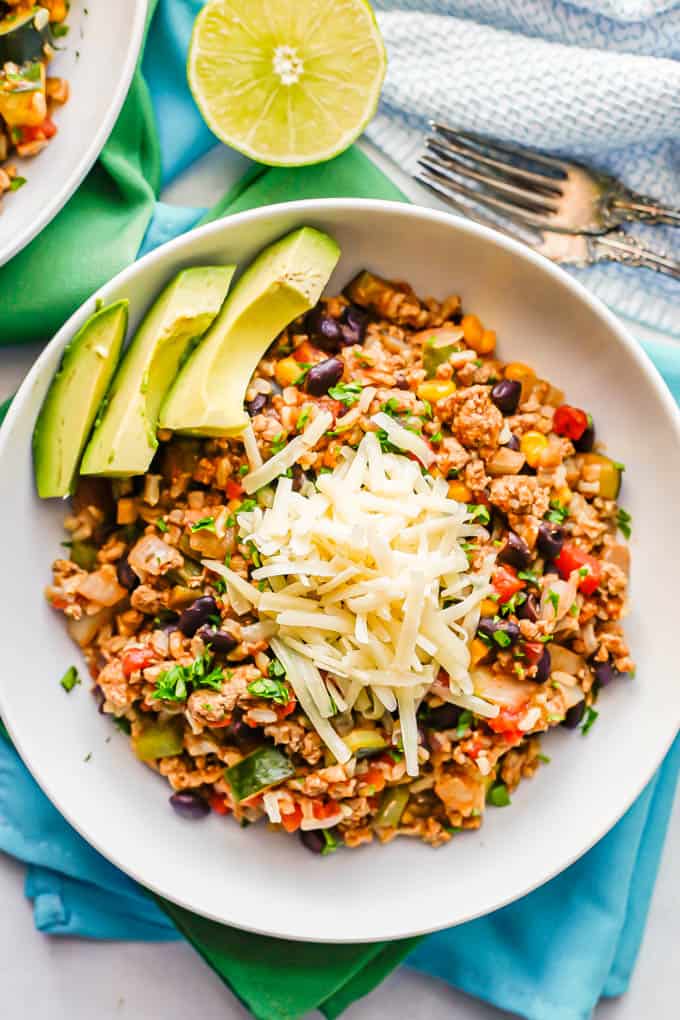
THOUGHTS:  While I am not willing to become a vegetarian, I have made decisions to cut back on the type of meat I eat.  In my 20’s I decided to not eat streak.  Even living in Kansas, it was as easy decision as I never acquired the taste and could not afford the good cuts on my salary.  Now I am trying to cut back on cattle products.  This is harder as I do enjoy hamburgers and I tend to live on cheese.  We have switched to ground chicken or turkey and found when seasoned correctly it is hard to detect in most dishes.  Still, there is that occasional cheeseburger.  Act for all.  Change is coming and it starts with you.
Sriracha

May 07, 2024

I found a USA Today article in the Business Section of today’s local newspaper on a possible supply shortage for chili sauce.  Huy Fong Foods said it halted production of the sauce until Labor Day.  The jalapeno chilies are not red enough and it is affecting the color of the sauce.  Harvesting the jalapenos too soon not only affects the color, but the quality and flavor of the sauce as well.  The riper red chilies are sweeter and have a more complex flavor.  Huy Fong’s processing plant rejects shipments of red jalapenos that are more than 5% green fruit.  Huy Fong Foods said, “all orders that have been scheduled beginning on May 6, 2024, will be canceled and the status changed to pending.”  Huy Fong Foods goes through 50,000 tons (45.4 mt) of chili peppers making their hot sauces and they are only in season four months out of the year.  The factory mixes the chiles with salt and preservatives and seals them in barrels for later distribution.  What makes Sriracha different from other hot sauces is its thick consistency, much like America’s ketchup.  Other Sriracha makers have not reported a lack of red jalapenos or production issues. 

When I looked online, I found Sriracha is a chili sauce that originated in Thailand.  The original sauce (Sriraja Panich) was made by Thanom Chakkapak of Si Racha, Thailand in the 1930’s.   David Tran began making chili sauces in 1975 in his native Vietnam, where his brother grew chili peppers on a farm north of Saigon.  In 1978, the new Communist Vietnamese government began to persecute ethnic Chinese in south Vietnam and Tran and three thousand other refugees crowded onto the Taiwanese freighter Huey Fong heading for Hong Kong.  After a month-long standoff with British authorities, its passengers disembarked on January 19, 1979.  Tran was granted asylum in the US, where he started Huy Fong Foods in 1980, naming the company after the refugee ship that brought him out of Vietnam.  The sauce gets its heat from red jalapeno peppers, but it’s only moderately spicy.  Sriracha measures 2,200 on the Scoville scale, developed to measure the level of heat in chiles, while Tabasco sauce measures 3,750 and cayenne pepper measures 50,000.  Huy Fong makes the most popular version of Sriracha, but several versions can be found at any supermarket.  Huy Fong Sriracha is sweet and tangy with a garlicky taste.  The flavor can vary depending on the brand.

The Huy Fong Foods factory produces 3,000 bottles every hour, 24 hours a day, six days a week, or about 20 million bottles a year.  Problems with Sriracha supply began in 2017.  Underwood Ranch in California had been the sole supplier since 1988, but the alliance fell apart.  After a two year court battle a jury found Huy Fong in breach of contract and Underwood was awarded US$23.3 million.  Underwood now produces their own brand of Sriracha.  Stephanie Walker, professor and vegetable specialist at New Mexico State University, said Huy Fong has been sourcing chili peppers in Mexico and has yet to established solid relationships with dependable growers.  The long shortages that have plagued Huy Fong Sriracha in recent years have frustrated fans, causing them to beg for bottles on social media, pilfer them from restaurants, or pay high prices to spice up their bowls of pho, ramen, or sushi rolls.  As bottles reappeared on grocery shelves, restaurant tables, and households stocked up, the grumbling eased.  Some Sriracha fans say they still feel scared.  Old hoarding habits die hard.

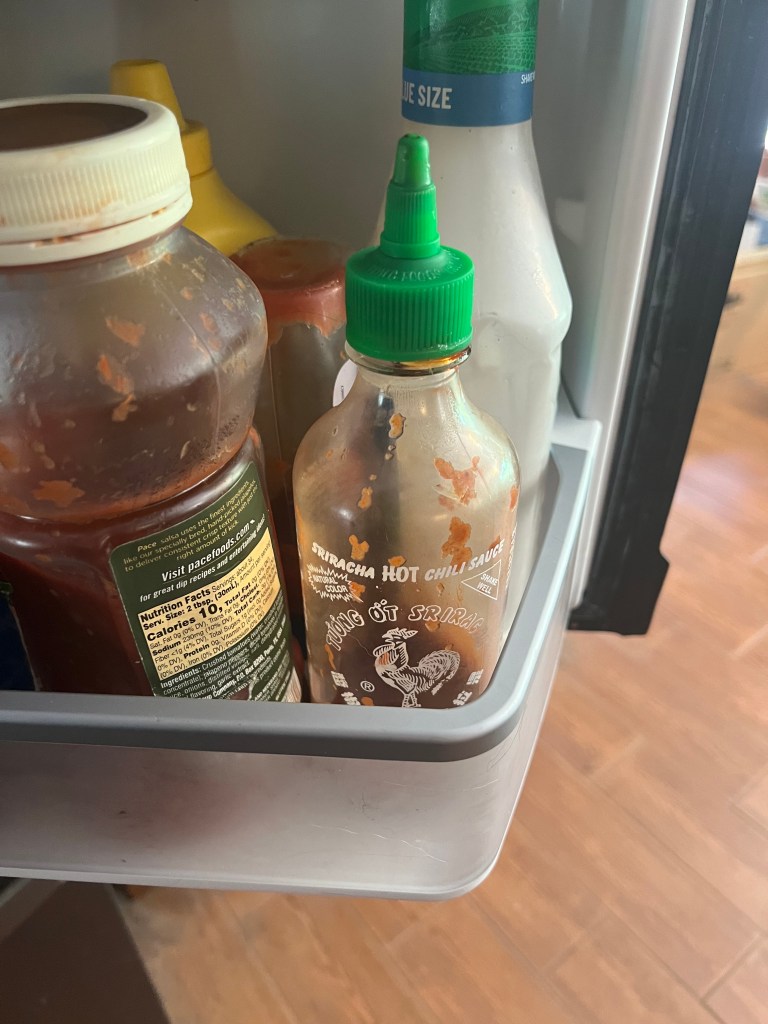
THOUGHTS:  One Sriracha fan recently posted on X, “How many bottles of hot sauce in the kitchen cabinet are too many?” Another responded, “My boyfriend is Vietnamese.  I just counted 16 in the pantry, two in the fridge, and one on the lazy Susan.  He’s still not over the Huy Fong Sriracha shortage.”  I like Sriracha along when I eat in Asian restaurants and have long kept a bottle in the cupboard.  I finally read the label and now it is in the fridge (as recommended).  Maybe I should stock up and get another bottle.  Act for all.  Change is coming and it starts with you.
Yukon Gold

May 06, 2024

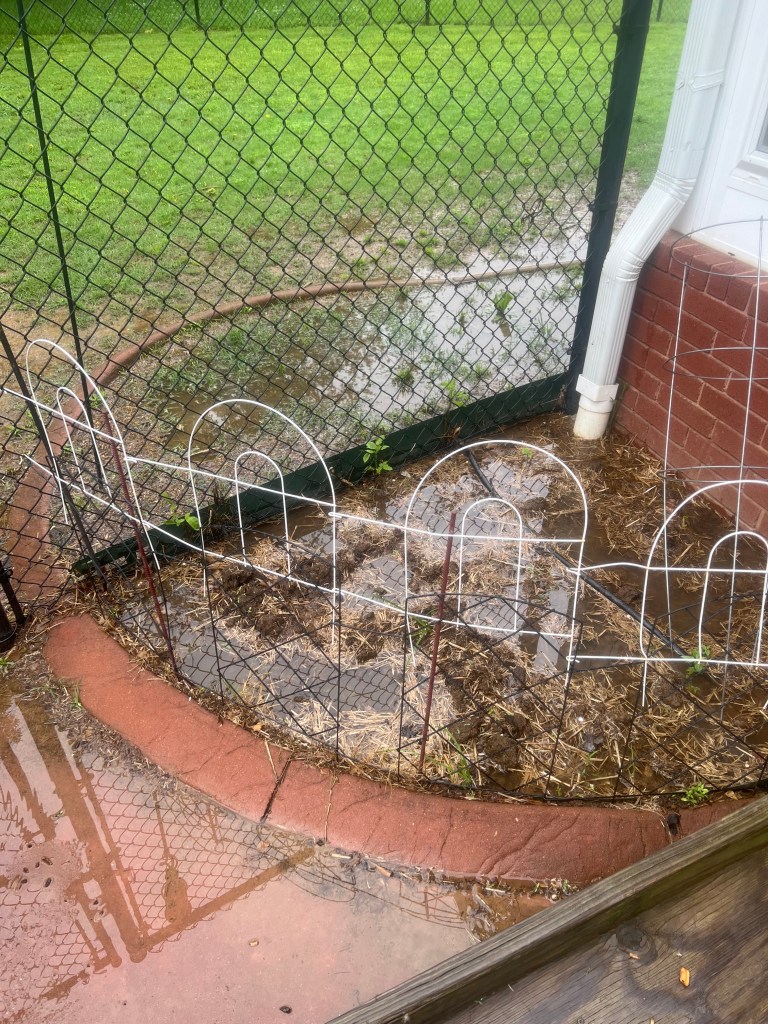
I have grown potatoes for the last two years.  The first year I only had one bed (five plants) but still harvested around 40 potatoes of various sizes.  Last year I put in the second bed with five more plants (10 total) with great expectations.  I also added Yukon Gold to the Russet I grew the first year.  I had cleaned out a spot on each side of our patio door and had caged and mulched them with straw.  For whatever reason, they all grew great tops, but the potatoes were either mushy or nonexistent.  I was determined to have a good potato crop this year and prepared my beds yearly.  I weeded the beds, turned over the top 6 inches (15 cm) of soil, and mixed a bag of compost and manure in each of the beds.  Loki had been getting into the beds, so I fenced them (and then added a higher fence) to try and keep him out.  The problem was, I could not find any seed potatoes even though I had been looking at outlets near me for several months.  This might have turned out to be a good thing as the weekend rain completely submerged both beds in water.  Today I was determined to find enough seed potatoes to plant 10 hills in those (now) drained beds.  My preference is the yellow flesh, taste, and mash-ability of the Yukon Gold.

When I looked online, I found the Yukon Gold (Solanum tuberosumis) a large cultivar of potato most distinctly characterized by its thin, smooth, eye-free skin and yellow-tinged flesh. This potato was developed in the 1960’s by Garnet Johnston in Guelph, Ontario, Canada, with the help of Geoff Rowberry at the University of Guelph.  The official cross bred strain was made in 1966 and ‘Yukon Gold’ was released onto the market in 1980.  The early name for the new cultivar was “Yukon”, for the Yukon River involved in the Klondike Gold Rush in Northern Canada.  “Gold” was later added to describe the potatoes’ color and appearance.  Johnston developed and brought 15 other potato varieties to market while at the Ontario Agriculture College lab.  A University publication states that “Yukon Gold was the first Canadian-bred potato variety to be promoted, packaged and marketed with its name right on the pack”.  The cultivar is resistant to bruising and does not sprout a lot, so it has good dormancy.  If potatoes are stored correctly, they will not lose a lot of moisture compared to other cultivars.  This seems like a good selection for my sustainable garden.

I checked online one last time and was again stymied in my potato quest.  There were several locations that had potatoes in a town 25 miles (40 km) away, but all the local outlets listed them “sold out”.  I decided to make one last try at the co-op before I drove into town.  That’s when I saw two bushel baskets with signs saying, “Close Out”.  One was an unidentified cultivar, and the other was the Yukon Gold I was seeking.  I selected ten of the smaller potatoes with prominent budding eyes and took the bag inside to the register.  I mentioned how I had been looking for seed potatoes and was not finding any.  The man told me they had gotten 2 tons (0.002 kt) in January, and these were the last of them.  When he saw how few potatoes were in my sack, he gave them to me for free and even told me to get more if I wanted.  I went back to the basket and picked out a couple more.

THOUGHTS:  While Yukon Gold are good storage potatoes, I also found they are susceptible to seed decay, blackleg, early blight, late blight, early dying, potato virus (PVY), soft rot, dry rot, leak, pink rot, silver scurf, and black scurf.  I will have to see if they were a good choice for sustainability.  While most plant seed potatoes in late winter (I could not find them), they can also be grown from seeds harvested from the potato flowers.  If you use seeds you need to start them indoors and then transplant them once the temps warm up.  If you use potatoes, you cannot eat all of last years’ crop.  I am not sure I would be good at either.  I am still on that learning curve.  Act for all.  Change is coming and it starts with you.
Earwig

May 03, 2024

On rare occasions I have found a small bug called an earwig crawling on the wall in our house.  I say this as while scrolling my Edge start page I saw a segment that asked if earwigs are dangerous to humans.  I was intrigued (which is why the article was there) and clicked to find out.  The site said the earwig gets its name from an old European myth that says that the bugs crawl into people’s ears and tunnel into their brains while they sleep, causing fever and insanity.  Other versions of the myth say they crawl into human ears to lay their eggs, and the hatchlings then tunnel their way into the brain.  The term earwig is derived from Old English word “ēare,” which means ear, and “wicga,” which means insect.  There is no scientific basis for claims about an earwig seeking out human ears and causing insanity or other damage.  However, emergency rooms do see patients with a bug in their ear, so the presence of any small bug in the ear canal is not unique to the earwig.  When an earwig is found in a person’s ear, it is likely it has wandered there by chance.  While it does not bite, the earwig can use its pincers to pinch if it is picked up and disturbed.  The earwig is mostly harmless to people.

When I looked online, I found the European earwig (Forficula auricularia) or common earwig is an omnivorous (eats plants and animals) insect belonging to the family Forficulidae.  The common name (actually) comes from the look of the hindwings which resemble a human ear when unfolded.  The species name (auricularia) is a specific reference to this feature.  The earwig is a pincher bug that ranges in size from one-fourth to 1 inch (0.6 to 2.5 cm).  It has six legs and an antenna that measures about half its size.  The earwig is reddish-brown in color with a flattened elongated body and slender beaded antennae with a pair of pincers (forceps) at the tip of the flexible abdomen.  While both sexes have pincers, in males they are large and curved, while in females they are straight.  Nymphs are similar to adults in appearance, though their wings are either absent or small.  The European earwig, which is the most common variety, was brought to North America from Europe around 1907 and rapidly spread across the US.  The insect survives in a variety of environments and is a common household pest because they tend to invade homes and consume pantry foods.

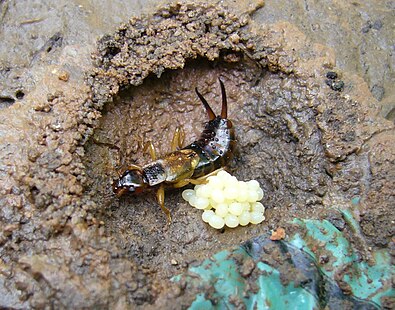
Common earwig females typically show maternal care through guarding and tending to their eggs and nymphs.  The female cares for her young by shifting the eggs and continuously cleaning them with her mouth and forceps to avoid fungal growth and pathogens.  She protects the eggs by staying close to the nest, fiercely defending against predators, applying chemical protection against drying (desiccation) through egg grooming, and relocating the entire clutch under stress.  After the eggs hatch the mother continues to care for the nymphs and provides food and protection until they reach maturity (one month).  In many species, kin bias prevents parents from investing care and energy for foreign offspring to allow them to invest in their own offspring and ensuring their own genes are passed on.  Common earwig mothers will not eliminate foreign eggs and treat them as her own.  This is thought to be a result of the family specific bouquet of cuticular hydrocarbons she applies to the surface of the eggs.  If it smells like me, it must be cared for like mine.

THOUGHTS:  While maternal care dramatically increases the survival and development of the young earwig, it can be costly.  The relationship between parents and offspring is shaped by an intersection of selfish and altruistic tendencies that reflect a compromise of evolutionary interests.  Researchers have found that in groups, selfish individuals beat altruistic individuals, but groups of altruistic individuals beat groups of selfish individuals.  That means we are stronger when we work together to support others than when we try to only take care of ourselves.  Act for all.  Change is coming and it starts with you.

Zakāh

May 02, 2024

On the back side of the front section of today’s local newspaper was an article on Islamic charity used to address climate concerns.  The charity comes from Zakāh, or the third of the five pillars of Islam.  Zakāh means “to purify”, “to develop”, and “cause to grow”, and is the amount of money every adult Muslim (male or female) who is “mentally stable, free, and financially able”, has to pay to support the destitute, the working poor, those unable to pay off debts, stranded travelers, and others in need.  Religious leaders in Bangladesh are trying to harness the generosity of Muslims around the world to help fight climate change.  Bangladesh alone has the potential to raise close to US$9.8 billion.  The country needs about US$9 billion a year to support climate adaptation.  Most provide zakāh by handing out clothes to family members or the neighborhood poor which has limited long-term impact on their lives.  Zakir H Khan, chief executive of Change Initiative, has studied the potential for Islamic charity to pool resources in order “to transform the lives of climate survivors.”

When I looked online, I found zakāh (also alms) is a religious form to donate money, food, or other material goods to people living in poverty and is often considered an act of charity.  In Buddhism, this is called “dāna” and it is one of the three elements of the path of practice formulated by Buddha for laypeople.  The giving of alms is the beginning of one’s journey to Nirvana.  In Judaism, tzedakah (literally “righteousness” but commonly “charity”), refers to the religious obligation to do what is right and just.  Tzedakah, prayer, and repentance, are regarded as ameliorating bad acts.  Christianity says giving alms is viewed as an act of charity and an expression of love and care for the poor and was understood as an act of love for God.  Nearly all Christian denominations have money donated to support financial needs and ministry to the less fortunate.  In Hinduism, dāna is an ancient concept of alms dating to the Vedic period (oldest) of Hinduism.  Dāna is defined as any act of giving what is yours to a recipient without expecting any return.  While dāna is typically given to one person or family, Hinduism also considers charity or giving aimed at public benefit, which is called utsarga.  This giving aims at larger projects such as building a rest house, school, investing in drinking water or an irrigation well, planting trees, and building care facilities, among others.

The article identified Wateraid as an international nongovernmental organization which uses the latter concept for zakāh to focus on water, sanitation, and hygiene and uses Islamic charitable donations to help salinity-affected communities in the Global South that have large Muslim populations such as Bangladesh, Pakistan, and Mali.  Wateraid focuses on girls and young women whose needs are often neglected.  Religious scholars agree on the use of zakāh to combat climate change.  This year Indonesia’s council of religious scholars issued rulings on how to use these funds to build water facilities or endow trusts with land or money to plant forests.  While there have been debates on the legitimacy of its use, scholars and financial experts are joining on the acceptability of the practice.  Zakāh can only be used to help poor Muslims, but other forms of voluntary alms (sadaqua) can support people of any faith.  Technology is going to be the key for every stage of faith-based financing and organizations are raising donations online. 

THOUGHTS:  All of the world’s major religions extoll the need to provide aid to the poor and the underserved.  Whether it is called zakāh, dāna, tzedakah, alms, or utsarga, faith-based giving has the potential to make a huge difference in fighting the effects of climate change.  Those at the lower end of the economic spectrum do not have the capacity to mitigate these effects on their own.  Call it what you will, donations are needed to affect change.  Act for all.  Change is coming and it starts with you.