Erosion

November 07, 2025

I have been going to a coffee shop to visit a friend every month or so.  I always enter from the rear of the building into the semi-outdoor seating area.  This is enclosed with glass doors that can be raised when the weather is appropriate, although I have never seen them raised.  Several years ago, they did some remodeling on the exterior to replace the concrete that backed up to the mini-mall parking lot where it was located.  The shop has an AC unit on top of the building and a downspout that channels the water off the roof and out to the street.  Over the years this has resulted in the water cutting a path from the spout to the parking lot.  When I arrived this last week, it impressed me with the power of water to cause erosion.  

When I went online, I found water erosion is the process of soil and rock being moved by water.  This erosion can be categorized into types.  Splash erosion comes from the impact of raindrops detaching soil particles.  Sheet erosion is the removal of a thin, uniform layer of soil across a slope.  Rill erosion is the small, channel-like cuts formed by runoff water.  Gully erosion is the larger, more-defined channels that develop from rills.  Stream-bank erosion is the wearing away of the banks of a stream or river.  Coastal erosion is the wearing away of land along the coastline, often caused by wave action.  This natural process shapes landscapes by carving out valleys and canyons, but human activities like deforestation and farming can accelerate it, impacting soil quality and water resources.  Techniques to control water erosion include keeping soil covered with vegetation, practicing conservation tillage, and building structures like terraces and grassed waterways.  The erosion at the coffee shop appears to be rill erosion.  I suppose if left long enough it would become gully erosion.

While erosion is a natural process, human activities have increased by 10 to 40 times the rate at which soil erosion is occurring globally.  At agriculture sites in the Appalachian Mountains, intensive farming practices have caused erosion up to 100 times the natural rate of erosion in the region.  Excessive (or accelerated) erosion causes both “onsite” and “offsite” problems.  Onsite impacts include decreases in agricultural productivity and even ecological collapse from the loss of the nutrient-rich upper soil layers and in extreme cases this can lead to desertification.  Offsite effects include sedimentation of waterways and an accumulation of nutrients (eutrophication) in a body of water.  Both can result in an increased growth of organisms that may deplete the oxygen in the water.  Intensive agriculture, deforestation, roads, anthropogenic climate change (global warming), and urban sprawl are among the most significant human activities regarding their effect on stimulating erosion.  There are also prevention and remediation practices that can curtail or limit erosion of vulnerable soils.

THOUGHTS: I recall being amazed when they had to shut down the 20-year-old spillway outlet at the reservoir where I fished in high school.  The outlet Shannel had two massive rows of 20-foot-high (6 m) concrete blocks that had suffered erosion from the water being released and were needing to be replaced.  Famous examples of water erosion include the Grand Canyon, formed by the Colorado River; the Mississippi River Delta, a large fan-shaped deposit of sediment; and Niagara Falls, which is slowly receding upstream due to erosion.  Water and wind erosion are the two primary causes of land degradation and are responsible for about 84% of degraded land globally, making excessive erosion one of the most significant environmental problems worldwide.  While erosion is a natural process, humans can choose to lessen (or increase) the effect by our actions.  It takes eons for the landscape to recover, if it does at all.  Act for all.  Change is coming and it starts with you.

Checkered

November 05, 2025

It is getting colder at night, and I am still waiting to see if my second crop vegetables will produce.  I have flowers (and even tiny fruit) on my peas (Pisum sativum).  The cabbage (Brassica oleracea) is growing well but has yet begun to make a head.  The same can be said for my broccoli (Brassica oleracea).  I have two small watermelons (Citrullus lanatus) but it is doubtful they will survive long enough to harvest.  I also have two leafy vegetables that are doing well.  The iceberg lettuce (Lactuca sativa) has yet to produce a head, and the spinach (Spinacia oleracea) is small but holding its own.  We are predicted to have the temperature drop to 28F (-2C) or colder for several hours (a hard freeze) this weekend.  A hard freeze effectively ends the growing season by killing any remaining annual plants and most seasonal vegetables.  When I went out to check my beds this morning, I found yet another new species of butterfly on the wildflowers, a common checkered-skipper.

When I went online, I found the common checkered skipper (Burnsius communis), formerly known as Pyrgus communis, is a species of butterfly in the family Hesperiidae.  It is known as the frequently seen spread-winged skippers (Pyrginae) species in the northern US by collectors and watchers alike.  The common checkered skipper has a wingspan of 0.75 to 1.25 inches (19 to 32 mm).  It gets its name from the checkerboard pattern on its wings.  The male tends to have broader bands than the female.  The body tends to be blue-gray with the small amount of “fuzz” which is seen in all skippers.  This butterfly can be found in gardens, parks, fields, roadsides, riverbanks, lowlands and foothills throughout southern Canada and almost the entire expanse of the US.  It has also been seen in Mexico.  In southern regions the checkered will fly all year with multiple broods.  In the north it will have two broods and fly late into the fall. 

Much like the variegated fritillary, the checkered skipper overwinters as a fully grown caterpillar (or a late-stage instar caterpillar) in a rolled-up leaf or other shelter it creates on its host plant.  This period of dormancy (overwintering) lasts from late fall until spring.  The caterpillar then forms a chrysalis (pupates) and emerges as an adult butterfly.  I did not see any monarchs (Danaus plexippus) so hopefully they continued their journey South.  The cold predicted for this weekend means the adult butterflies still present are on short time.  The checkered cannot survive very cold winters and may not be a permanent resident north of the 40th parallel.

THOUGHTS: The 40th parallel north is not just significant as a division line for the checkered skipper, it also holds significance as a historical and geographical landmark in the US.  This was the boundary between the Kansas and Nebraska territories established by the Kansas-Nebraska Act of 1854.  The Mason-Dixon Line is generally thought of as the dividing line between the Northern and Southern states during the US Civil War, but the original line established the border between Maryland and Pennsylvania colonies.  The colonies both claimed the area between the 39th and 40th parallel.  The Mason-Dixon line settled the boundary question at a northern latitude of 39 degrees and 43 minutes.  The line was marked using stones, with Pennsylvania’s crest on one side and Maryland’s on the other.  It is ironic how arbitrary lines of division separate humans into categories of “us” and “them”.  We need to look beyond these divisions and find the sameness of all.  Act for all.  Change is coming and it starts with you.
Variegated

November 05, 2025

As Fall stretched into late October, I was amazed by the dozens of pollinators which still flocked to the wildflower bed in front of our house.  My guess is they are still stocking up for a flight south or survival during the long winter.  We have several coneflowers (family, Asteraceae) along with a proliferation of orange sulfur cosmos (Cosmos sulphureus).  Yesterday afternoon was bright, sunny, and in the mid-70 F’s (24 C’s) and they were still out in full force.  There were several late traveling monarch butterflies (Danaus plexippus) along with dozens of bumblebees (Genus, Bombus) flitting from flower to flower.  There was also a new arrival (at least I had not noticed) with several smaller brightly colored butterflies.  Two characteristics struck me about these Lepidoptera.  First was the speed they were traveling as they drew nectar from around the bed, the second was variegated wings.

When I went online, I found the variegated fritillary (Euptoieta claudia) is a North and South American butterfly in the family Nymphalidae.  The variegated flight is low and swift and even when collecting nectar, the species is extremely difficult to approach.  This has earned the genus name which taken from the Greek “euptoietos” meaning “easily scared”.  The wingspan of the adult variegated measures 1.75 to 2.25 inches (44 to 57 mm).  The upper side of the wings is checkered with orange and black, and both the fore and hind wings have a row of submarginal black spots and black median lines running across them.  The underside of the forewing is orange with a pale orange spot rimmed in black in the forewing cell.  The underside of the hindwing is mottled with browns and grays with a pale postmedian band.  The variegated fritillary has three very different characteristics that distinguish them from the genus of greater fritillaries (Speyeria fritillaries), but it is still closely related to them.  Variegated fritillaries have two or three broods per year (Speyeria one), are nomadic (Speyeria sedentary), and use a wide variety of host plants (Speyeria only violets). 

While the variegated fritillary is nomadic, it is not (officially) migratory like the monarch.  Instead, it overwinters in its caterpillar stage in the leaf litter, seeking shelter and entering a dormant state (diapause).  In warmer climates, adult butterflies may also overwinter.  In Arkansas the adults need to either migrate south or they will die (freeze).  Caterpillars can survive Arkansas’ winter temperatures and will emerge from their hibernation to form cocoons (pupate) in the spring.  The survival of the caterpillars (or adults farther South) depends on factors like predation, temperature, and the amount of insulation provided by leaf litter.  When weather conditions improve in the Spring the caterpillars emerge from their winter hibernation to continue their life cycle.  While I was planning on clearing the bed and scattering the seed, perhaps I should wait until new life emerges in Spring.

THOUGHTS: I can attest to the “euptoietos” nature of the variegated fritillary.  It took me 10 minutes for one to wait long enough on a flower to get a picture.  The butterflies would fly up to 30 feet (10 m) away and then dart back to seek out another flower or two before repeating the maneuver.  I find it interesting how different species have adapted to survival during the cold months of winter.  This also explains how a warm day can bring out a swam of flying insects as they emerge from their sheltered refuge.  Humans do not naturally go dormant (hibernate) because our bodies lack the necessary biological adaptations to enter a state of deep sleep with a significantly lower body temperature and metabolic rate.  The earliest evidence of controlled use of fire dates back at least 1.8 million years ago, but evidence for habitual or widespread use of fire does not become clear until around 400,000 years ago.  We rely on protective structure, clothes, or sources of heat to achieve what nature has given other species.  Act for all.  Change is coming and it starts with you.
Pickle de Gallo

November 04, 2025

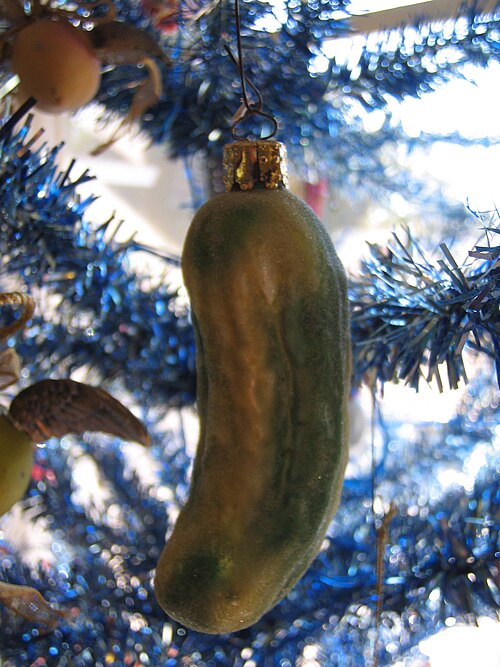
I was surprised when I walked through my local grocery store last week to see how many shelves were either light or empty.  We have had several runs on food over the last several years between covid, supply chain shortages, and tariffs.  The government shutdown is the latest (presumed) cause of the shortage.  Food subsidies like the US Department of Agriculture’s Supplemental Nutrition Assistance Program (SNAP) and the Women’s, Infants, Children (WIC) program were slated to lose funding on November 1.  Apparently, some were using the last of their monthly paychecks to purchase food while it was still available (affordable?).  You can imagine my surprise when I walked by the cheese and deli meat cold case to find new stocked items.  The cold case displayed Pickle de Gallo in mild, medium, and hot.

When I went online, I found the Pickle de Gallo, also known as pickle salsa, is packaged by Grillo’s Pickles who is owned by King’s Hawaiian (as of April 2021).  The company was founded by Travis Grillo in 2008 and developed the idea from a pickle cart on the Boston Common using a 100-year-old family recipe.  The biggest difference between fresh and non-refrigerated shelf pickles (Cucumis sativus) is pasteurization.  Grillo’s are made through a “fresh pickling” process using vinegar as the main active agent and are neither fermented nor pasteurized.  This means they need to be kept at refrigerated temperatures to ensure both quality and freshness are maintained.  Eddie Andre, director of brand experience at Grillo’s Pickles says, “If you see the top of the lid domed up or bubbled, this typically means the product has fermented and gone bad.”  Jarred pickles can remain unopened in the fridge for years.  Even after they are opened, they are still good for up to two years in the refrigerator.  Since fresh pickles aren’t pasteurized, they should be eaten within 75 days.

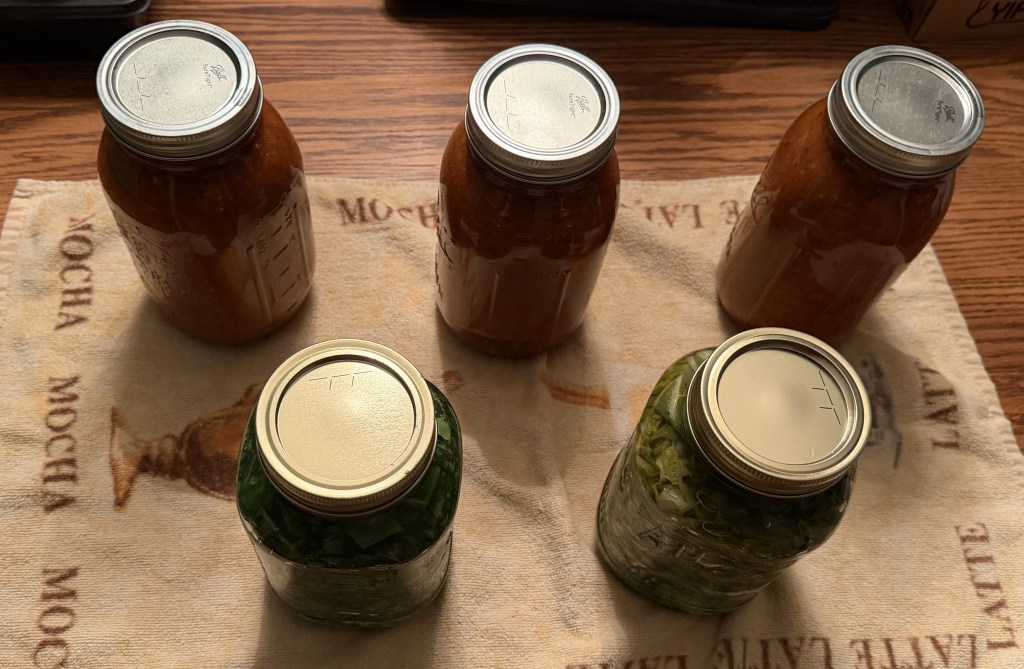
The Pickle de Gallo recipes I found were almost identical to the Pico de Gallo I have made every year since I started my garden five years ago.  This is usually made from early tomatoes (Solanum lycopersicum) and jalapeño peppers (Capsicum annuum).  This year I did not get an early crop, with almost no peppers and only enough tomatoes to make my pasta sauce (along with the green tomato Salsa Verde).  The difference between Pico and Pickle de Gallo is substituting pickles for tomatoes.  Chop the pickles jalapenos and onion (Allium cepa) into small pieces and mix in cilantro paste (Coriandrum sativum) and lime (Citrus aurantiifolia) juice.  I did not use spices as my canned dill pickles already had spices and garlic (Allium sativum).  The directions said to refrigerate the Gallo for at least 30 minutes to let the flavors mix.  I tried some with a chip and it was good (but different). 

THOUGHTS: Melissa is not a pickle fan and was not thrilled with the Pickle de Gallo.  I used an entire pint jar from my canning pantry (11 jars left).  The dills are good, but the storebought spice mixture is too salty for me and I wash the pickles before I eat them.  The advantage of making your own pickling mixture is you know what is in the brine.  I will probably make at least one more jar of the Pickle this year.  Even canned, pickles do not last forever once they are opened.  I enjoy trying new dishes made from the produce from my garden and the Pickle de Gallo is another way to use my crop.  Some of the dishes were excellent, and all were edible.  Approximately 40% of the food produced in the US is wasted, occurring at every stage of the food supply chain (from farm to home).  A large portion ends up in landfills and generates powerful greenhouse gas (methane).  The waste is compounded by the fact that 41 million Americans face food insecurity.  It reminds me of the sign at a buffet, “Take all you want, but eat all you take”.  We need to find ways to avoid wasting food and getting it to those in need.  Act for all.  Change is coming and it starts with you.
Anoka

November 03, 2025

Last Friday my local newspaper printed a USA Today article on the pranks that sparked a Halloween tradition in Minnesota.  The tradition began in the aftermath of particularly bad pranks in 1919.  Residents would wake the next day to find windows soaped, cows roaming the streets, outhouses set afire or tipped over, and carriages taken apart and reassembled on the rooftops of buildings.  This was not new, and many cities and towns were considering banning Halloween celebrations because the pranks had turned to outright vandalism.  The city leaders took another approach and rather than forbidding celebration, they organized a night parade as part of civic celebrations to keep the young troublemakers busy.  More than a century later Anoka, Minnesota has dubbed itself the “Halloween Capital of the World”.

When I went online, I found Anoka is believed to be the first city in the US to put on a Halloween celebration to divert its youngsters from Halloween pranks.  In 1920, George Green and other Anoka civic leaders suggested the idea of a giant celebration.  The idea was adopted by the Anoka Kiwanis Club and Anoka Commercial Club, which both gave their full support and a Halloween committee was organized.  Teachers from the public and parochial schools partnered with the businessmen, parents, and students.  More than a thousand Anoka school children made plans and costumes for the big event.  The evening opened with a parade with bands, the police and fire departments, National Guard, and 500 costumed marchers.  That was followed by a give-away of hundreds of bags of popcorn, candy, peanuts, and other treats to the children who had marched in the parade.  The celebrations have been held every year since 1920, except for 1942 and 1943 when the festivities were canceled because of World War II.  The “Anoka Halloween Capital of the World” celebration has grown to include units from all over the Midwest.

Anoka was not the only city to be plagued by Halloween tricks.  The Celtic traditions of All Saints Day (Alholowmesse in Middle English) and All Hallow’s Eve the night before to become known as Halloween.  The night grew in popularity in the US during the 1840’s with the immigration of Scottish and Irish to America.  They also brought a love of prank playing and carving a gourd with a glowing face.  By the early 1900’s the pranks morphed into leaving manure on the front porch or making frightening noises with a spool-and-stick (tick tack) to make noises on neighbors’ windows.  As America urbanized the pranks became more destructive.  Nine boys were detained in Kansas City in 1919 for waxing the streetcar tracks and causing a crash.  Trick or Treat took on a new meaning. 

THOUGHTS: While it did not have the longevity of the Anoka celebration, my High School football team had a tradition of bringing our line coach’s car into the gym lobby.  The lobby had a mosaic of the team mascot which the seniors “polished” with the bodies of anyone who accidentally stepped on it (unsuspecting Sophomores).  The car was brought inside around Halloween by the large linemen under the tutelage of the coach.  The coach drove a VW beetle (which made it doable) which was literally picked up and carried through the gym to rest on the logo.  Both these traditions went away during my Senior year when the administration had enough and placed a short metal fence around mosaic.  In 1920, the Anoka celebration included the release of chickens into the crowd for revelers to capture and take home.  The Anoka County Union declared, “We don’t know if the chickens enjoyed the sport, but the crowd did.”  The chicken release of Anoka, the bodily polishing at my High School, and the Halloween pranks were seen as fun until someone stepped in to control the mayhem.  Anoka showed control does not have to mean exclusion of liberties.  We should revisit that revelation.  Act for all.  Change is coming and it starts with you.
Inversa

October 28, 2025

A USA Today article in the middle of the front section of Monday’s local newspaper highlighted a partnership between the state of Florida and a Maimi based leather manufacturer.  Governor Ron DeSantis announced the partnership on the 21st.  The decision to join in partnership was made in 2024 to remove invasive Burmese pythons (Python bivittatus) from the Florida Everglades.  In three months, this summer, 1,022 pythons were removed, compared to 343 during the same period in 2024.  The approximately 50 hunters previously contracted by the Florida Fish and Wildlife Conservation (FWC) now work for the private company, reducing their administrative burden by 89%, increasing python removal, and paying about 60% more for the harvested pythons.  DeSantis said a lot of progress had been made in python removal but “at that pace it was not enough to get where we needed to go”.  The South Florida Water Management District has its own python hunting program separate from the partnership formed between FCW and the leather maker Inversa.

When I went online, I found Inversa is a leather products company that claims to make “ethical exotics that restore nature”.  This is done by “managing” (harvesting) harmful non-native species to help revive natural ecosystems.  Invasive species are a driving force in around 60% of today’s species extinctions and cause US$423B annual damage around the planet.  Management of invasive species restores indigenous species populations by up to 70%, enhances carbon sequestration and water purification, and strengthens global environmental and human health.  Using invasive species to create leather products rather than bovine leather not only removes invasives, it also comparatively uses 99.9% less land, 95% less water, and emits 89% less greenhouse gases.  Inversa partners to create job opportunities in rural and developing economies, empowering communities to protect their ecosystems by creating new jobs in nature restoration and directly increasing local incomes.  According to their website, the company “works closely with our restoration cooperatives to ensure the stable livelihoods and humane labor conditions of all partners in ecosystem management.”

Inversa currently harvests three invasive species for leather production to protect critical habitats.  The Greater Everglades provides critical habitats for hundreds of animal species and coastal protection against flooding for Southeastern America.  Non-native pythons cause a severe decline in animal populations that keep the ecosystem in balance.  The Mississippi River Basin is an ecological lifeline for North America, supporting over 870 species of fish and wildlife.  The overpopulation of the invasive Silverfin carp harms native biodiversity, degrades water quality, and threatens community livelihoods.  The Caribbean coral reefs are biodiversity hotspots that support 42 million livelihoods and, when healthy, protect coastlines from storms and erosion.  The invasive lionfish threatens the health and stability of these already vulnerable ecosystems through its prolific predation.  Inversa produces leather shoes, belts, purses, and accessories from all three invasives.

THOUGHTS: Inversa represents the latest of a series of efforts to remove invasive species from local ecosystems.  I have previously blogged on the use of biological predators, but these are risky and can result in the cure creating their own invasions.  Others are trying to convince diners to adjust their palates to consume the invaders, but this can be a hard sale that often involves reconstituting the product into a more acceptable form.  Turning invasives into high-end leather products is a niche market (what I saw was expensive) but another good approach.  Like most solutions, reduction or removal of invasives takes a long-term concerted cooperative effort.  It is worth the time and cost.  Act for all.  Change is coming and it starts with you.

Holes

October 28, 2025

Yesterday Melissa and I were ripped awake at 4:30 am by the sound of Loki’s frantic barking.  Something outside had obviously set him off and he was sounding the alarm.  Melissa was able to quiet him down and I was able to immediately fall asleep.  Melissa was not so lucky.  Even though he was no longer sounding his alarm, both Loki and Zena continued to grumble and give little chirp barks.  Zena got up in my living room chair (her comfort zone in thunderstorms), but Loki kept running back and forth between the dining room window and the front hall for the next hour.  When I got up in the morning, I was wondering what set Loki off.  I went outside to check on my vegetables and make sure nothing had gotten into the few remaining plants in the raised beds.  I had removed the cantaloupe (Cucumis melo) vines after they had stopped producing but there are still one mature and two small watermelons (Citrullus lanatus) in the tall bed.  The tall bed is 30 inches (76 cm) and has not been targeted (yet), but raccoons (Procyon lotor) have eaten several cantaloupes in the shorter 18-inch (45.7 cm) bed in the past.  My watermelons were intact but as I walked back to the house, I noticed several dozen small holes in the lawn between the rose bush (genus, Rosa hybrid) and the wildflower (family, Primulaceae) beds.  

When I went online, I found that raccoons are one of the main animals that dig holes in your yard.  The holes are usually cone-shaped and three to four inches (7.5 to 10 cm) wide, but larger areas up to ten inches (25 cm) may occur.  The holes are created when raccoons are foraging for grubs and other insects. According to Clemson University, raccoons will peel back newly laid sod while searching for food.  Raccoons are omnivorous and eat a variety of plants and animals.  In cities and suburban areas, they dig for grubs and larval insects, eat vegetables and fruit grown in backyards, root through compost piles, steal picnic and pet food that has been left outdoors, and turn over garbage cans in search of food.  According to the University of California, these night creatures can live unnoticed for quite some time as they make their homes in hollow trees, outbuildings, brush piles, rock crevices, a raccoon burrow, crawl spaces, culverts, storm drains, attics, chimneys, or under decks.  Raccoons dig holes in lawns in search of grubs (uperfamily, Scarabaeoidea), earthworms (Lumbricus terrestris), and other insects.

Raccoons have a keen sense of smell which allows them to dig holes to find insect larvae under the grass.  The best way to keep raccoons from digging holes in your yard is to address the grub problem or using deterrents.  Treat your lawn for grubs, especially in late summer and fall, and use methods like motion-activated sprinklers or lights to scare them away.  You can also cover the lawn with netting or chicken wire to create a physical barrier and prevent digging.  You need to maintain proper lawn care, as poor watering practices can make your lawn more attractive to grubs.  If your lawn is damaged, repair it promptly.  If sod has been flipped, reposition it, water it, and consider using a root-building fertilizer to help it re-establish.  I guess it is time for my fall bug-be-gone dusting.

THOUGHTS: I was able to flip the sod on the larger holes that had been made in our yard, but I did not get the bug-be-gone down.  I told myself this would give me something to do today.  Most adult beetles in Arkansas are active in the summer and lay their eggs in the grassy areas.  The eggs hatch and the larva begin to feed on the surface of the soil for several weeks before moving deeper as the fall temps cool.  Arkansas winters are relatively mild, and summers are hot and humid, so the two treatment windows are late summer to early fall (preventive and biological control) and late spring to early summer (curative for spring-feeding pests).  Otherwise, I have holes in my yard.  Act for all.  Change is coming and it starts with you.
Woolly Bear

October 22, 2025

Even though the cooler temps have slowed the grass in my yards the weeds in the flower beds seem to be doing fine.  Yesterday I got out and performed (I hope) my last weeding before fall.  I usually just throw the weeds into the lawn and run my mower over them to mulch them into the sod. I had just mowed last week, and it really did not need to be mown again.   I just raked the weeds up and threw them away.  It seems I can never do just one part of yard work and doing one thing always seems to bring on other tasks.  Mowing, weed eating, weeding the beds, and blowing off the sidewalks have become interchangeable.  While I may put one or the other off for a day or two, once I start, I know I am committed to the long haul.  I also have the wood pile stacked at the edge of the drive from the tree I had cut down.  I had it stacked for firewood, but I know I still need to split and season the wood for a minimum of six months or preferably a year.  While cleaning up around the pile I moved several pieces of cardboard and we greated by two guests who had taken up residence, a 12-inch (30.5 cm) Texas brown snake (Storeria dekayi texana) and a banded woolly bear caterpillar.

When I went online, I found the Isabella tiger moth (Pyrrharctia Isabella), whose larval form is called the banded woolly bear, woolly bear, or woolly worm, occurs throughout the US and Canada.  It was first formally named by James Edward Smith in 1797.  The thirteen-segment larvae are usually covered with brown hair (setae) in their mid-regions and black hair in their front (anterior) and back (posterior) areas.  In direct sunlight, the brown hair looks bright reddish brown.  Adult moths are generally dull yellowish through orangish and have robust and scaly midsection (thoraces), small heads, bright reddish-orange forelegs, and sparse black spotting on the wings.  Each abdominal segment bears three black dots.  The Isabella larva emerges from the egg in the fall and overwinters in its caterpillar form by allowing most of its mass to freeze solid.  First its heart stops beating, then its gut freezes, then its blood, followed by the rest of the body.  The larva survives being frozen by producing a cryoprotectant in its tissues that keeps the inside of the cells from freezing.  In the spring, it thaws, and the cycle begins again.

Folklore in both Canada and the US holds that the relative amounts of brown and black hair on a woolly bear larva indicate the severity of the coming winter.  If the brown band is wide, winter weather will be mild.  If the brown band is narrow, the winter weather will be severe.  A variation of this story says the color of the stripes predicts winter weather, with darker stripes indicating a harsher winter.  Another version of this belief is that the direction the Isabella crawls indicates the winter weather, with the caterpillar crawling south to escape colder weather.  There is no scientific evidence for weather prediction and hatchlings from the same clutch of eggs can display considerable variation in their color banding.  The larva’s brown band tends to widen with age as it molts.  Since the 1970’s, several locations in the US hold woolly bear festivals in the fall.

THOUGHTS: The wooly bear Caterpillar is not the only creature that can withstand being frozen.  Amphibians like the wood frog (Lithobates sylvaticus) and American toad (Anaxyrus americanus), reptiles like the alligator (Alligator mississippiensis) and green iguana (Iguana iguana), certain types of carp (family Cyprinidae), and microscopic animals like the tardigrades (Phylum, Tardigrada) and rotifers (Phylum, Rotifera) all survive freezing.  While the technology for freezing a human and bringing them back to life does not yet exist, cryonics involve preserving legally deceased bodies at extremely low temperatures with the hope of future revival.  If an alligator can do it . . . Act for all.  Change is coming and it starts with you.

Fall Alert

October 22, 2025

Earlier this week I saw the dogs both laying on their beds asleep and I decided it was time to create some mischief by getting down on their beds between them.  While I do rough house with them, it is generally while I am sitting on the edge of my chair.  Zena plays by turning back and forth while pressing her side against my legs.  She will also use the “power paw” (if you have a dog, you know what this whack is) to get my attention.  Loki’s go-to is to turn his back to me and slam his rear into my legs.  At times he does this so hard it can begin to hurt.  This time I got on the floor and started to roughly play with the two of them.  They got all worked up and began to bark and prance around, Zena pushing in with her side and Loki slamming me with his rear.  That is when I decided to use his tactics against him.  I lowered my head and started head butting him like he did me.  I had been doing this for less than a minute when the AI fall alert went off on my watch.

When I went online, I found AI fall alert systems use technologies like radar, cameras, and sensors to detect falls in real-time and can also predict a person’s fall risk.  Implementation in the US was envisioned in 1973 by Andrew Dibner, a psychologist on leave from Boston University studying personality in advanced age.  Also, in the early 1970’s in Germany, Wilhelm Hormann thought about developing a comprehensive structure for ambulatory and non-ambulatory care for the sick, the elderly, those who live alone, and people with disabilities.  These systems are designed to send immediate alerts to caregivers, family, or emergency services.  Some can even analyze movement patterns to help prevent future falls.  Privacy is often maintained using non-wearable sensors that convert human figures into abstract data.  Vision-based alert systems examine real-time video feeds to recognize fall events.  Radar and sensor-based systems (like my watch) track changes in height and sudden movement (like when a person falls out of bed or to the floor).  When a fall is detected a notice can be sent to the person to confirm or send alerts to pre-determined contacts.  The alerts can be sent via text, email, or to a dedicated app.  In high-risk environments, the system can immediately contact first responders. 

Medical fall alert devices can be a pendant around the neck, a wristband, or a smart watch.  Monitors, motion detectors, or radar-based detectors can also be placed in the home.  Active systems require the user to take some action to trigger an alarm condition, while passive systems monitor the user and raise an alarm based on an algorithm (a fall or lack of activity).  Alert systems can analyze patterns in movement, gait, and activity to identify individuals at higher risk of falling before an incident occurs, allowing for more proactive intervention and personalized prevention plans.  A weakness of active devices is that the user must be conscious to trigger the alarm.  Both passive and active devices require that the user wear the device.  Installed systems can be expensive and difficult to deploy.  My watch alert system detected that I had dropped to the floor (loss in height) and then forcibly hit another object (Loki). 

THOUGHTS: My watch fall alert was an alarm and (thankfully) asked if I had fallen and needed assistance.  This reminded me of the 1989 catchphrase of LifeCall Medical Alert System’s television commercial, “I’ve fallen and I can’t get up!”  The unintentional humor in the commercial made it a frequent punchline.  My watch had the option of having an SOS sent to EMT services or to decline assistance.  This was a timed alert and if I did not respond it would act automatically.  The alert surprised me but seemed like a good idea if it was required.  I never thought I would be the one who had fallen and could not get up.  Human and AI monitoring should be interchangeable to protect those with a possibility of a fall.  Act for all.  Change is coming and it starts with you.
Prevention

October 17, 2025

Browsing my NY Times app, I came across an illustrated article that explained what New York City will need to do to survive the predicted flooding over the next 50 years.  New York’s coastal location allowed it to thrive but has now become a threat.  Future models predict tidal flooding will mainly hit Southern Brooklyn, Queens, and Lower Manhattan.  By 2080, many areas will face an increased risk of tidal flooding because of rising sea levels.  At the same time, more neighborhoods will become vulnerable to extreme rainfall and wide swaths of the city face increasing risk from storm surge from a hurricane.  Nearly 30 % of the city’s land mass could be at risk of significant flooding by 2080, and 17% of the city’s population (1.4 million) currently live in these areas.  Climate experts recommend three strategies for the city to adapt.  The city could increase its ability to absorb water by converting 5areas of asphalt and concrete to green space.  It could be fortified by building barriers along its shores, and possibly a gate around the harbor.  Or it could retreat, relocating people out of the most hazardous regions.  Flood prevention will likely have to embrace all three approaches.

When I went online, I found New York’s flood prevention strategies include large-scale infrastructure projects along the East and Hudson Rivers to protect against storm surges and rising sea levels.  New York is installing continuous flood protection systems along its coastlines, including flood walls, elevated landscapes, and discreet barriers like flip-up gates and stop logs.  The Big U is a series of interconnected flood resilience projects to create a 5.5-mile (8.9 km) protective system around lower Manhattan to shield against sea level rise and storm surges.  Projects like Battery Park have improved drainage infrastructure with systems of tide gate chambers to manage water during coastal surge events.  Other initiatives include creating “cloudburst” sunken public spaces to temporarily hold water and providing residents with flood protection resources like sandbags, dams, and flood-resistant materials to help protect individual properties.  FloodHelpNY provides information and connects eligible homeowners with engineers to help reduce flood risk.  Finally, residents are encouraged to install features like sump pumps and drain plugs to protect their homes.

A 2024 study in Nature emphasizes how New York needs prevention measures to combat extreme rainfall events.  Since 1970, the city’s stormwater system has been built to handle up to 1.75 inches (4.5 cm) of rain per hour.  Hourly precipitation recorded in Central Park did not exceed this limit until 1995, but it has been eclipsed in three of the last five years.  Little of that rainfall is absorbed or stored before reaching the stormwater system.  Today, only about 30% of the city’s surface area is composed of absorbent surfaces.  The remaining 70% is covered by impervious surfaces that replaced the original porous landscapes.  The contemporary city was built atop wetlands and ponds that absorbed and stored water and the original shoreline was artificially expanded with landfill over the course of centuries.  The areas at risk of flooding in the modern city overlap to a striking degree with the city’s historical wetlands.  Understanding New York’s historical environment is crucial to imagining a more resilient urban future based on the city’s past topography. 

THOUGHTS: In “Mannahatta: A Natural History of New York City,” author Eric Sanderson, a landscape ecologist at the New York Botanical Garden, addressed the prevention measures needed.  “I was trying to imagine a configuration of the landscape . . . restoring streams, wetlands and agricultural lands, connecting the urbanized parts of the city, and depaving a lot of what we have.”  Islands and coastal cities around the globe are struggling to keep up with the rising oceans caused by climate change.  Sounds like sink or swim is more than an adage.  We can no longer wait.  Act for all.  Change is coming and it starts with you.