Thunder

February 25, 2022

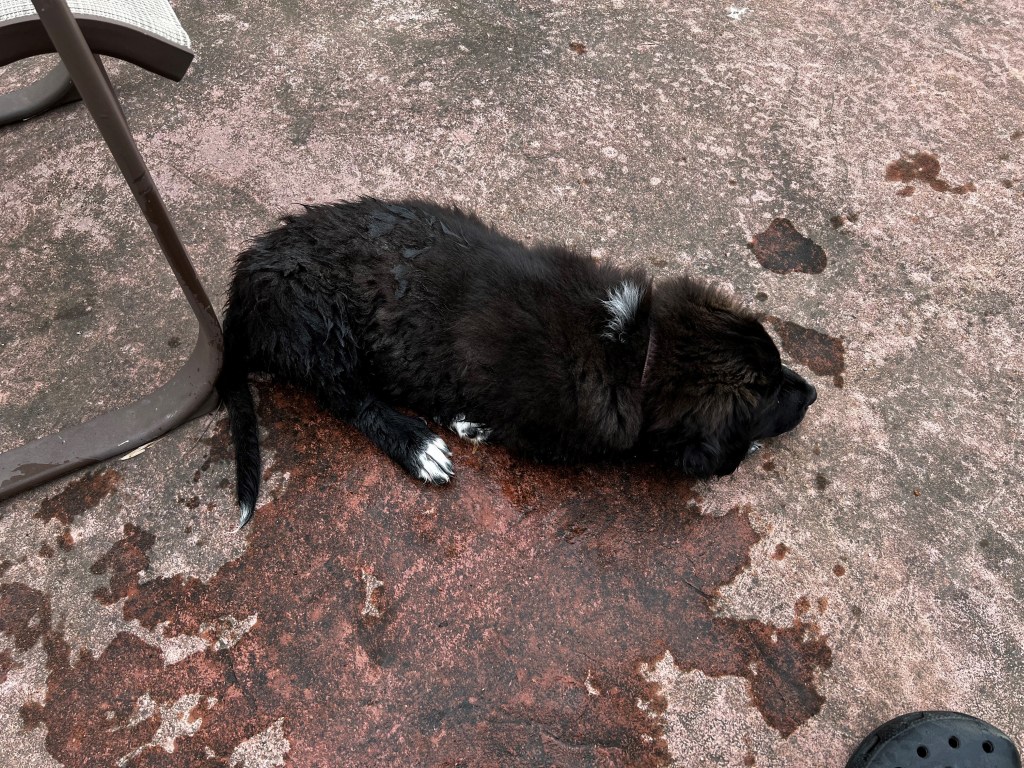
We have been trapped inside by the ice storm that descended on our state on Wednesday.  We received a heavy layer of ice that was repeated throughout the day on Thursday.  Melissa has her home office set up in our Bay window in the kitchen and watched as the few cars and trucks that tried to brave the storm slid into the ditch trying to make a turn.  Since I do most of my work from home, I do not normally get out every day, but being confined by the storm somehow made it feel different.  I was in my office yesterday when I heard thunder amid the sleet falling in the storm.  While most thunder is associated with rain, I have rarely heard it during snowstorms.  This was the first I recall hearing thunder during a sleet storm, but sleet is just short of snow.    

When I looked online, I found thundersnow, or a winter thunderstorm, is an unusual kind of thunderstorm with snow falling instead of rain.  Thermodynamically, it is not any different from other thunderstorms, but the top of the cumulonimbus cloud is usually quite low.  In addition to snow, graupel (snow pellets or corn snow) or hail may fall.  It is unlikely to see lightning during a thunder snowstorm.  First, you must be in the right place when a rare thunder snow happens.  It is estimated that only six snow thunder events occur in the US each year.  Second, in most cases it is not possible to see the lightning because the snow already makes the sky bright and white.  You may hear a rumble of thunder, but the significant snow associated with these storms will muffle the sound.  Typically, the thunder can only be heard within a couple of miles.

The cause of thunder has been the subject of speculation and scientific inquiry for centuries.  Early explanation was it was made by the gods, but the ancient Greek philosophers attributed it to natural causes, such as wind striking clouds (Anaximander, Aristotle) and movement of air within clouds (Democritus).  The Roman philosopher Lucretius held it was from the sound of hail colliding within clouds.  In the mid-19th century, the accepted theory was that lightning produced a vacuum and the collapse of that vacuum produced the sound known as thunder.  In the 20th century a consensus evolved that thunder begins as a shock wave due to sudden thermal expansion of the plasma in the lightning channel.  Experimental studies of simulated lightning have produced results largely consistent with this model, although there is continued debate about the precise physical mechanisms of the process.  I am always happy to hear the thunder, as it is the lighting strike that proceeds the thunder that will kill you.

THOUGHTS:  I faced another bout with winter thunder in Utah years ago.  We were skiing and made the last lift to the summit before it closed due to wind.  The fog and light snow caused the visibility to be about 30 yards, and this was a Blue run I had never skied.  As I dropped below the fog, I realized I was skiing into a bowl with a dense line of trees on the far side.  I cut too close to a tree and a powder drift exploded around my fall.  In that instant, lightning struck, lighting the sky around me, followed by a loud boom of thunder, and then silence.  My thought was, “If this is the Rapture, why am I still here?”  While the noise of thunder may be frightening, it rarely causes permanent damage.  Too bad the same cannot be said for the noise that comes from politicians.  Do the work.  Change is coming and it starts with you.
Bully

February 24, 2022

This morning we had a lull in the ice storm that hit our state yesterday.  I noticed there was no action on my feeders and assumed they had filled with ice.  I went cautiously out on the ice sheet covering our patio and sure enough, the feeders had a 2-inch (5 cm) sheet of ice covering the seed the birds had not been able to salvage before the storm began.  The ice filled several of the feeders to the brim.  I was unable to remove the solid blocks of ice, so I decided to just put new seed on top.  It was not more than two minutes when 25-30 birds showed up to attack the feeders or the seed that spilled off the ice onto the ground.  Usually, the different species fuss among themselves and the larger birds bully the smaller ones.  The birds today all concentrated on getting as much seed as they could before the storm retuned.

When I looked online, I found birds at a feeder display dominance and even bully other birds.  Three dominance-related behaviors happen at a feeder.  Displacement occurs when one bird leaves to get out of the way of another bird or when one bird waits nearby for another bird to finish eating.  Within a species males tend to dominate females and older birds dominate younger ones.  At feeders, larger birds tend to dominate smaller ones.  Threat displays are used when the dominant bird does not displace the subordinate.  Examples are the bill-up display of the Carolina chickadee (Poecile carolinensis) or the wing-spread display of the White-breasted Nuthatch (Sitta carolinensis).  Subordinate birds make appeasement displays by de-emphasizing their size or by leaning or looking away from a newly arrived bird, often while crouching or folding their wings.  When the dominant bird leaves, the subordinate bird will resume its normal posture.  Several dominant species will also bully other birds at the feeders.

Feeder bully birds are often those that are highly social and feed in flocks, as well as larger, more aggressive species.  Examples are the Brown-headed cowbird (Molothrus ater), Common grackle (Quiscalus quiscula), European starling (Sturnus vulgaris), and Red-winged blackbird (Agelaius phoeniceus) who are often found intermixed together in flocks.  One or two of these birds at your feeders does not imply a bully problem, but when the flocks grow and the feeders are crowded, other birds will have difficulty feeding and the bully can take over completely.  In a flock, you eat fast, or you do not eat at all.

THOUGHTS:  Another bully we have on our feeders is the blue jay (Cyanocitta cristata).  The jays drive other birds away from our squirrel feeder and then pick their way through the corn, sunflower seed, and peanuts I tried to use to keep squirrels out of the other feeders (it does not work).  When a squirrel does find this feeder, he ignores the jay.  While some people are like the squirrel and find it easy to ignore a bully, others find it more difficult.  According to the CDC, suicide is the third leading cause of death among young people, resulting in 4,400 US deaths per year, and for every suicide there are at least 100 attempts.  Being a bully is not child’s play.  Do the work.  Change is coming and it starts with you.

Chocolate

February 23, 2022

I thought it was appropriate as I sat in my office watching the sleet storm this morning to have an article forwarded to me concerning the difference between hot chocolate and hot cocoa.  While the terms are used interchangeably, they are two distinct drinks.  Hot chocolate is exactly what it sounds like.  It is small pieces or shavings of chocolate that you mix with hot water, milk, or cream.  Drinking hot chocolate is like drinking a melted chocolate bar, and the type and amount of liquid you use will determine how thick it is.  Hot cocoa is instead made with cocoa powder, which is dried and ground cocoa solids.  Cocoa is what is left after you press cocoa butter out of cocoa beans.  Most of the hot cocoa mixes at the supermarket contain added sugar and powdered milk.  Unless you make your own, you probably drink hot cocoa rather than hot chocolate.

When I looked online, I found the history of chocolate can be traced to the ancient Mayans, and even earlier to the ancient Olmecs of southern Mexico.  While “chocolate” may bring images of sweet candy bars and luscious truffles, today’s chocolate is unlike the chocolate of the past.  Originally, chocolate was a sacred, bitter beverage, not a sweet, edible treat.  Chocolate is made from the fruit of cacao trees, which are native to Central and South America.  Each fruit pod contains around 40 cacao beans.  The beans are dried and roasted to create cocoa beans.  Hayes Lavis, cultural arts curator for the Smithsonian’s National Museum of the American Indian, says ancient Olmec vessels from around 1500 BCE were discovered with traces of theobromine, a stimulant compound found in chocolate and tea.  Since the Olmec kept no written history (at least that we can decipher), opinions differ on how they used cacao in their drinks.

When I lived in the Bay Area, I would visit the chocolateries just off the Wharf District of San Francisco.  While these stores produce “bean-to-bar” chocolate, they created chocolate suited to American tastes.  American Chocolate is regulated by the US Food and Drug Administration, who mandates the levels of cocoa solids contained in the varieties of chocolate.  European chocolate adheres to EU standards and require a higher level of cocoa.  The main difference is US chocolate is sweeter than European chocolate, with less cocoa and more sugar or other sweeteners.  I visited one shop that did not make chocolate but sold chocolate bars and baking chocolate with various percentages of chocolate.  They offered samples and the higher the percentage of chocolate the lower the sweetness.  I found anything over 80% intolerable.

THOUGHTS:  Modern chocolate production comes at a cost.  As many cocoa farmers struggle to make ends meet, some turn to low-wage or slave labor, or even child trafficking, to stay competitive.  This has prompted grass roots efforts for large chocolate companies to reconsider how they get their cocoa supply.  It has also resulted in appeals for chocolate which is created in an ethical and sustainable way.  The West has created a demand for all kinds of luxury products (coffee, tea, chocolate, clothes, drugs) that are produced by unregulated practice.  We cannot afford to turn a blind eye to reduce the cost of our pleasure.  Fair Trade and Sustainably Sourced are more than just words.  Do the work.  Change is coming and it starts with you.
Roses

February 22, 2022

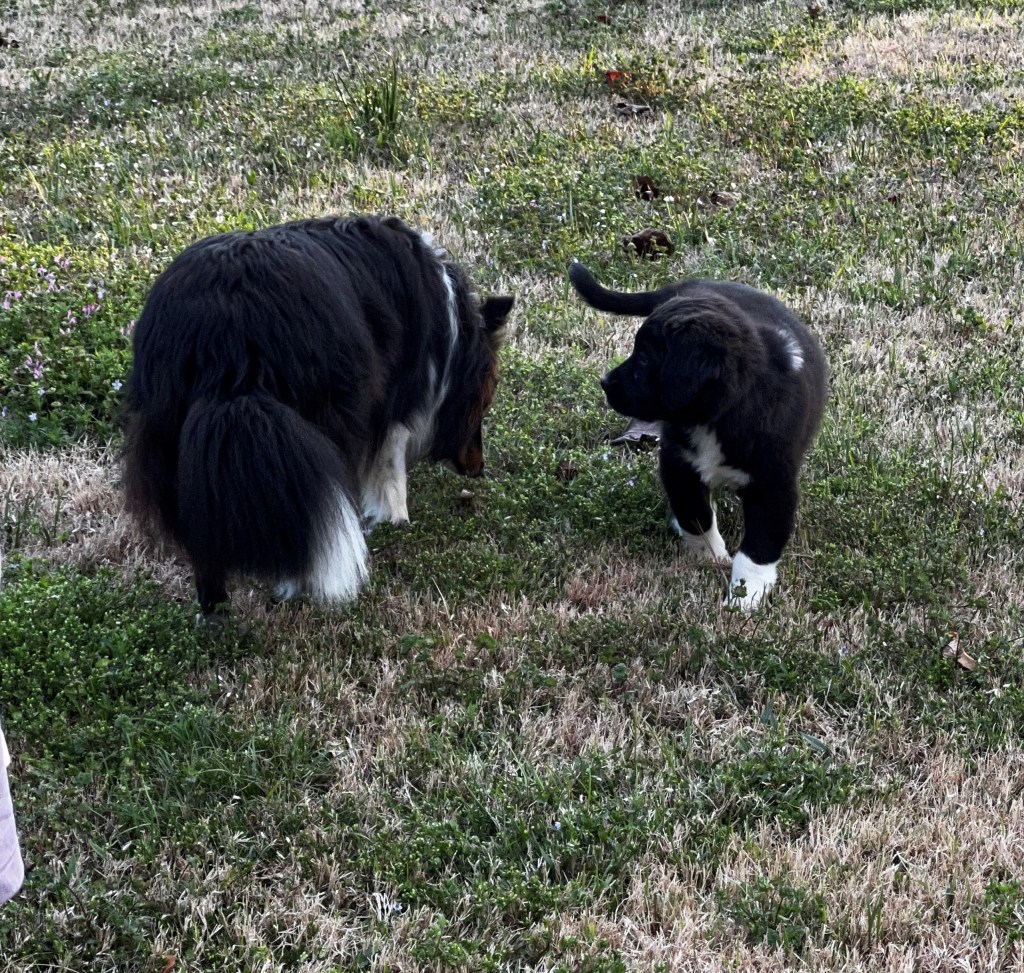
We are puppy-sitting this week and I had forgotten how much energy a young dog has.  When we sat him several weeks ago it was over the weekend, and I had time to take him for a walk in the afternoon.  That would wear him out until supper time, and then Melissa would get down on the floor to play which distracted him in the evening.  This is a longer stint, and although I intend to go for walks, I have focused on work and chores around the house and had not yet done so.  I could tell Eddie wanted outside (standing by the door and looking back over his shoulder gave it away), so I decided it was time to finish pruning the rose bush in the front year.  We went out through the garage so I could get my tools and headed for the roses.  Eddie began an intense search of a new yard.

When I looked online, I found the “Knock Out” rose (Rosa radrazz) we have in the front yard is a hardy, disease-tolerant rose variety bred by amateur breeder William Radler in his Wisconsin basement in1989.  The cultivar was a cross between the floribunda, Rosa ‘Razzle Dazzle’, and the shrub rose, Rosa ‘Carefree Beauty’.  It was introduced in the US in 2000 and was named an All-America Rose Selections winner that year.  ‘Knock Out’ is a medium, bushy shrub, 2-4 ft (60-121 cm) in height with a 3-4 ft (90-120 cm) spread.  The saucer-shaped blooms are 2-3 in (5-7 cm) in diameter with single to semi-double (5-13) petals.  The flowers open in a bright cherry red with a white center and green-yellow-stamens and have a strong, fruity fragrance.  The blooms persist in flushes from spring through fall.  This was planted as a memorial by my mother-in-law.

I also found the “pointy flanges” that grow on rose stalks are not thorns.  For a botanist, thorns are firm extensions of the shoots with internal tissue connection making them hard to pluck off.  The prickles found on roses are outgrowths of the bark of the stem and have no internal tissue connection to the plant, making them easy to pluck.  The sharp bulges on the stalk grow to 0.4 inches (1 cm) long.  The flange is arched downwards and can provide a grip on other plants for support as the rose grows in the direction of more sunshine.  The sharp extensions also increase the surface area of the plant for photosynthesis, allowing the plant to make more of the food necessary for growth.  The downwards direction of the curve draws water droplets towards the roots.  The prickles are formed to protect the rose from predators and are curved downward to discourage insects from crawling up the stems to eat the leaves and buds.  To get to the flower, you need to brave the prickles.

THOUGHTS:  Whether called thorns or prickles, they are sharp.  While I intended to get my gloves before working on the rose, I did not.  This resulted in having my hands and forearms pierced numerous times.  I pruned the rose bush last year, but it was still unruly.  I was amazed how many dead stalks were now evident as the warm weather began to bring the rose back to life.  I pruned the stalks and threw them to the side.  When I look at a vase of roses I do not think about the prickles, but when I work with a rose bush, I am intimately aware of their presence.  When we interact with others, we need to find the inner beauty of each, but to get to know them we need to brave the prickles.  Do the work.  Change is coming and it starts with you.
Sparrow

February 21, 2022

When I got up yesterday, I noticed one of the small house sparrows who have been frequenting our feeders had gotten through a hole in screen of the fire pit on our back patio.  I was afraid he would not be able to escape as he flailed against the top of the screen.  I thought I may as well do double duty and refill my feeders since the birds had been hitting them hard in the mornings for the last two days.  I loaded my pan with the black oil sunflower seed I keep in two of the feeders and headed out to the patio.  I never seem to give the birds enough credit.  By the time I got outside the sparrow had extricated himself from the mesh.  I went ahead and filled the feeders knowing that the second bird wave would come in the evening.

When I looked online, I found the house sparrow (Passer domesticus) is a bird of the family Passeridae, found in most parts of the world.  It is a small bird that has a typical length of 6.3 inches (16 cm) and weighs 0.85–1.39 ounces (24–39.5 g).  Females and young birds are pale brown and grey in color, and males have brighter black, white, and brown markings.  The house sparrow is one of about 25 species in the genus Passer and is native to most of Europe, the Mediterranean Basin, and a large part of Asia. The first US introduction was in 1851–1852 when 100 birds were brought to Brooklyn, New York hoping to control caterpillars that were harming shade trees.  Additional releases occurred in other areas of the country from 1871-1874.  The birds did not eat the caterpillars.  In less than 50 years, this small bird ranged across the entire US and well into Canada.  Its intentional or accidental introductions to many regions, including parts of Australasia, Africa, and the Americas, make it the most widely distributed wild bird.

Although misnamed English Sparrow, and commonly known as the House Sparrow, the species is not particularly a native of England nor is not a sparrow.  This bird’s origin is thought to have been in the Mediterranean and it is a member of the Weaver Finch family.  The house sparrow is strongly associated with human habitation and can live in urban or rural settings.  Although it is found in varied habitats and climates, it usually avoids areas away from human habitation.  The sparrow feeds mostly on the seeds of grains and weeds, but it is an opportunistic eater and will eat insects and other foods.  The birds are widespread and abundant and are listed as “least concern” on the IUCN Red List.

THOUGHTS:  The house sparrow it yet another invasive species brought by humans hoping to resolve one ecological problem and creating another.  These birds are highly aggressive when protecting their own nests and are known to attack other species nests and destroy the eggs.  Their numbers have recently declined in both their native country and in the US, and birders do not consider the invasive birds to cause population decline in native species.  House sparrows are non-natives and cause an imbalance in nature.  During the European age of exploration invasive species were spread accidentally and knowingly around the world causing species loss and eco-damage.  We need to take this to heart as we venture into space.  Follow the science.  Change is coming and it starts with you.

Tractor

February 19, 2022

I mentioned how we had taken the afternoon on Valentine’s Day to visit the Sequoyah Wildlife preserve.  I managed to get photos of ten new species that were not yet on this year’s birder list.  Most of them were varieties of migratory ducks, but I also got some long-distance shots of the pelicans.  The enormous flocks of red-winged black birds that were absent last October had returned and were taking advantage of the remains in the fields.  We noticed the refuge was preparing to plow and plant new seed for the forage crops they grow for the birds.  We saw a large John Deere tractor equipped with discs sitting ready in three of the fields scattered around the refuge, and another tractor with a sprayer attached behind the disc was being prepared by a worker.  Planting season is gearing up.

When I looked online, I found the tractor has long been used on farms to mechanize agricultural tasks.  A large modern tractor is used for ploughing, tilling, and planting fields, while a smaller tractor is used for routine lawn care, landscape maintenance, and clearing brush.  A small tractor (15hp to 40hp) is available in a wide range of options to suit specific tasks and requirements.  A subcompact tractor has the power and versatility to perform a large range of gardening tasks like mowing, moving mulch, and tilling gardens.  A compact tractor is a smaller version of the utility tractor and is ideal for landscaping tasks.  A utility tractor is recommended for more complex farming tasks and comes in different models with a horsepower range of 45hp to 110hp.  A wide range of farming implements can be attached to utility tractors to help accomplish jobs.

I worked on my grandfather’s farm one summer in high school along with my farmer cousins.  I worked to earn money, but mainly to create a connection with my grandfather.  Grandfather did his own planting and harvesting and bought the necessary equipment, including tractors, plows, grain trucks, and combines.  While I was there, he bought a huge Allis Chalmers tractor to pull an equally impressive two-way disc.  The disc came unassembled, and the sons and grandsons got to put the beast together.  This was literally tons of steel blades/discs that were stacked on end and then lowered to the ground to be attached to the frame.  No one had assembled a disc before, so it was a learning experience.  We attached the axel to an overhead pulley, stacked the first set of discs and began to lower it to the ground.  When the disc tipped it swung in a wide circle, barely missing several of us.  We did not share this information with grandma.

THOUGHTS:  When I was in Junior High, I took a class from the local coop to learn to drive a tractor.  The class was designed to make you familiar with the tractor in hopes of making you a safe operator.  Even a compact tractor packs a lot of power and is designed to produce torque rather than speed.  One exercise had us back a tractor with a front-end loader out of the barn.  I cut the turn too close (ala Denise Richards backing a star cruiser out of dock in the movie Starship Troopers) and ripped the door off the barn.  I did not pass the course.  Farming is one of the most dangerous occupations in America, with 22 of every 100,000 farmers dying in a work-related accident.  Farmers are nearly twice as likely to die on the job as police officers, five times as likely as firefighters, and 73 times as likely as Wall Street bankers.  Without them you have no food.  Do the work.  Change is coming and it starts with you.
Breweries

February 18, 2022

Ministry of Brewing via AP

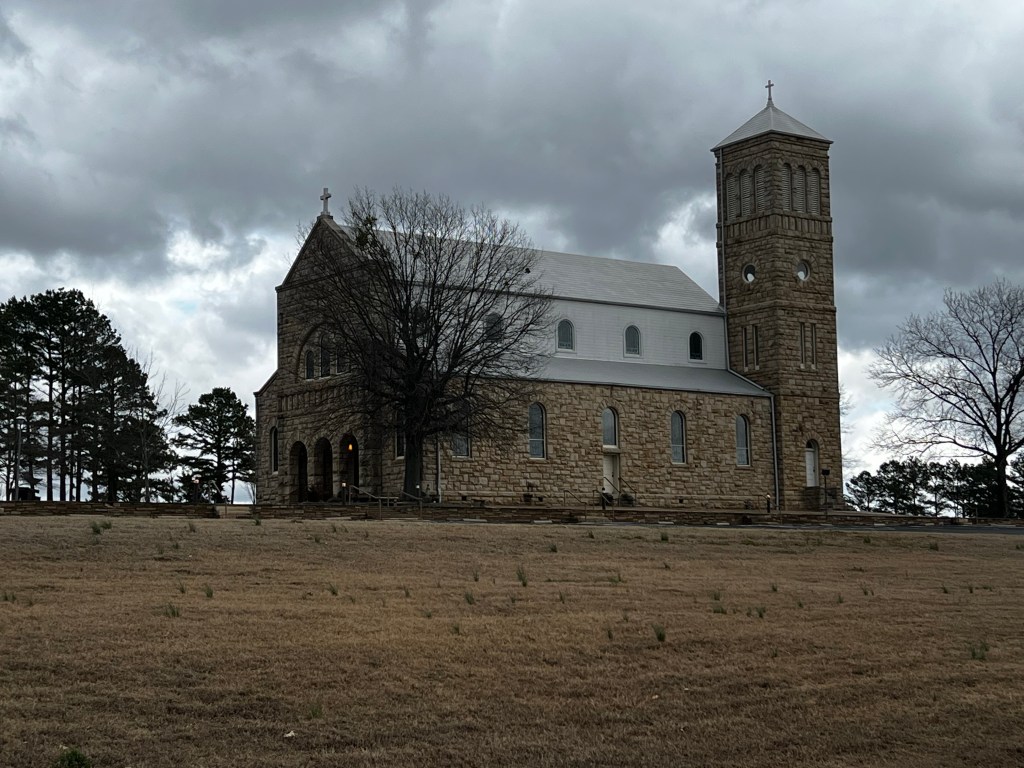
I came across an article this morning in my local newspaper that reported the growing number of breweries now housed in vacant churches.  One of the featured breweries is the Dirt Church Brewing Company.  The owners purchased a small, abandoned church built in 1876.  The site had no running water or septic, but rather than tearing up the church they built the taproom next door and transformed the church into an art gallery.  The name comes from the local mountain biking community who would take “dirt church” rides on Sunday mornings.  The brewery still hosts rides, runs, and hikes, always followed by a few celebratory beers in the tap room.  The US has around 30 breweries in a vacant church, and at least 8 opened since the start of the pandemic.

Breweries in churches have a long tradition in Europe, although it was the monks who were doing the brewing.  When I looked online, I found the Order of Cistercians was founded in 1098 when monks from the Benedictine abbey of Molesme left to form their own monastery in nearby Citeaux, France (Cistercium in Latin).  The monks sought to return to a quiet life of prayer and living by the fruit of their labor.  One of those labors included brewing beer.  The Cistercians reached their peak in the 1300’s, then began a steady decline.  The Reformation and the French Revolution nearly ended the order.  With the main Cistercian abbeys in decline, La Grande Trappe Abbey in Normandy, France again instituted reforms in 1664.  Like the initial reforms in 1098, they intended to return the order to a truer form of Benedictine monasticism.  Those following the La Trappe monks became known as “Trappists”.

Monks created brewing as we know it, with the first large scale breweries in Europe and many advances to brewing techniques and technology.  There were thousands of brewing monasteries, but as the monasteries disappeared during the French Revolution and its aftermath, the breweries went with them.  Several dozen monastic breweries reopened in the 19th century but some of those did not make it through the World Wars.  Today, monastic brewing is experiencing a Renaissance.  The lone Trappist brewery in the US is Spencer Abbey in Massachusetts (ten world-wide) which released their Spencer Trappist Ale in January of 2014, but there are five other US breweries operated by Benedictine monks.  These join the “non-denominational” breweries that opened in vacant church buildings.

THOUGHTS:  One of the churches in Wichita, Kansas took the opposite approach when it turned an old saloon into a church building.  The Delano area supported the booming cattle trade as the rail head expanded to the city in 1872.  When the rail head and cattle moved west to Dodge City the saloons, dance halls and gambling houses faced a major depression.  In 1897, the church purchased a frame saloon building and moved it several blocks to church property.  As one man remarked, “Quite a change from fire water to the water of life.”  Churches, bars, and breweries have always been subject to the events around them, even if those events may be different.  The pandemic has forced many of these institutions to close even as others adapt and thrive.  The difference is discovering new ways to reach (and include) people.  Do the work.  Change is coming and it starts with you.

Count

February 17, 2022

We are expecting another cold snap which means the birds are going to struggle to find food in their natural environments.  That means I will fill my feeders and prepare for the inevitable onslaught that will (hopefully) occur later today and then again tomorrow.  This is an opportune time as tomorrow is the beginning of the annual Great Backyard Bird Count.  It is easy to join in the count and the more who do, the better the estimate of birds around the world.  All you need to participate is to select and area to count (does not have to be your backyard), make a list of the different species you see/hear over (at least) a 15-minute period, and then register your list on the eBird website via the Merlin Bird ID app, the eBird Mobile app, or from your computer on the on the eBird website.  This will be my second year to participate.

When I looked online, I found the annual Great Backyard Bird Count (GBBC) is Friday, February 18 through Monday, February 21. This year, the GBBC is celebrating 25 years of coming together to enjoy birds. The GBBC was one of the first online projects to collect information on wild birds and was instrumental in the creation of eBird in 2002.  The 2022 GBBC will focus on connecting to birds, nature, and each other.  Migratory birds link the continents, and their movements highlight the interconnectedness of the world.  Unlike other global birding events, GBBC represents a chance to take a 4-day snapshot of bird populations around the world.  Everyone who submits an eBird checklist or saves a bird with Merlin Bird ID from Feb 18-21 will be part of the global effort.

The eBird website offered several tips to make the most detailed picture of wild birds possible.  This began with getting to know the local birds so you can easily identify them.  Since a lot of GBBC birding happens in backyards and often at feeders you need to use proper counting protocol to avoid multiple counts of the same bird (online tutorial available).  Submit complete checklists and be sure to document your list thoroughly.  Finally, add photos, especially when documenting rare birds.  Since this is a time to join virtually as part of the birder family, the site suggests you also share pictures of yourself, family, or friends celebrating the joy of birds during GBBC.  Sounds like a great idea!

THOUGHTS:  The GBBC is set up to allow you to filter the sightings and recent GBBC checklists by region, and you can submit data here as well.  Your My eBird stats will be the same here as they would be anywhere in eBird, with the addition of the Explore page.  The output on this page is tailored for the GBBC, and allows you to explore GBBC data by location, follow GBBC species maps, click on the points to see individual records, and check out the region-by-region contributions of individuals in terms of both number of checklists and number of species reported.  It also suggested “you share a link to these statistics on your blog, Facebook page, listserv, or your favorite social media of choice.”  Here it is: https://ebird.org/gbbc/region/world/.  Enjoy, and happy birding!  Follow the science.  Change is coming and it starts with you.
Buffets

February 16, 2022

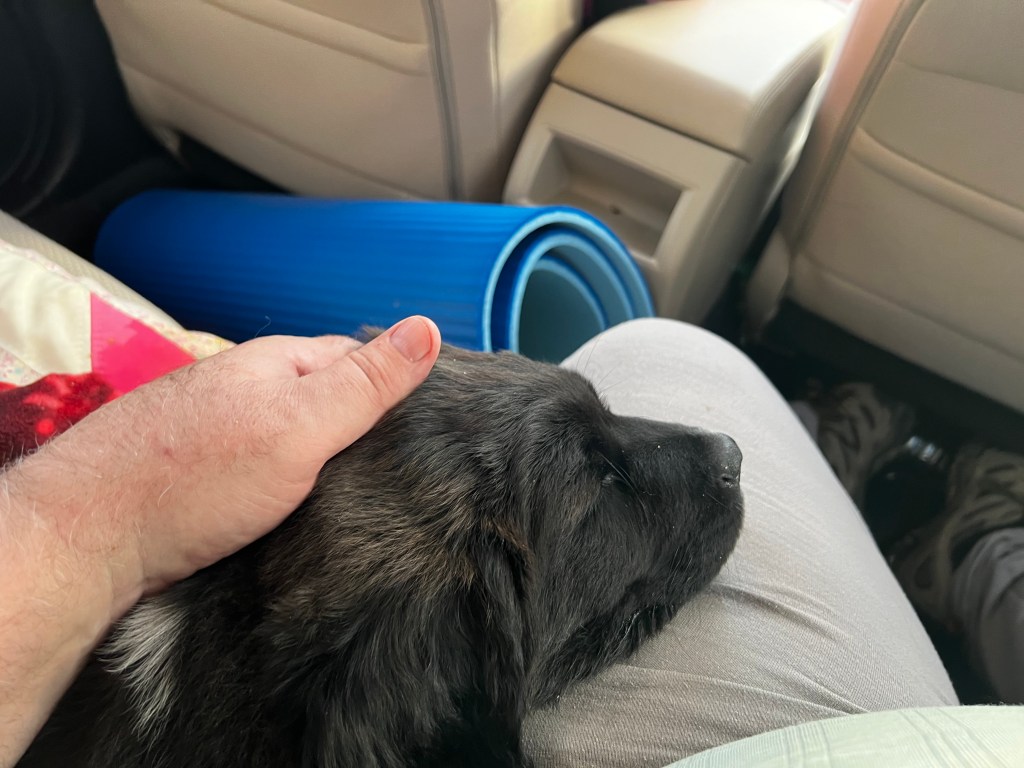
I have mentioned that I like to put out appetizer buffets for holidays and events.  This began when I hosted 15-20 people at my house for Christmas or New Year’s parties and then spilled over to the Super Bowl.  Over the years the parties have diminished, but the buffets continue to thrive.  I enjoy cooking and spend several days prior to the event deciding what to eat and making the dishes.  What I like about buffets is the ability to make choices about what I eat.  Even though it is now just Melissa and I, we still put out a spread to allow for choices.  Melissa asked for ribs for the Super Bowl, so I made them with all the sides for the game.  I then decided to roll out a limited appetizer buffet for lunch that also served as snacks during the afternoon.  It was more food than we could eat, but it gave me choices I like.

When I looked online, I found a buffet refers to either a sideboard or a system of serving meals where food is placed in a public area, so diners serve themselves.  Buffets are offered at various places including hotels, restaurants, and social events.  Restaurants who offer buffets normally offer all-you-can-eat food for a set price, and usually serve both hot and cold food.  The term Smörgåsbord came from Sweden and describes buffets without hot food.  Buffets may also refer to an array of finger foods designed to be small and easily consumed by hand.  Since the buffets involve diners serving themselves, the style has been considered a form of informal dining.  In recent years, buffets are increasingly popular for home dinner parties.  This is especially true where limited space complicates serving individual table places (read, our house).

When I played college football, our league was comprised of ten state schools that were mostly an hour or two apart.  The school was on a tight budget, and we were not fed after the games.  The exception was when we traveled five hours to a night game at one of the western schools.  This time the school arraigned for a meal at a buffet restaurant.  The restaurant had a sign saying, “Take all you want, but eat all you take.”  Several linemen took the motto to heart.  They picked up trays to serve as plates, skipped the salad bar, and went right to the main choices.  We only got halfway through the team line when the buffet was stripped bare and had to be restocked.  To my surprise, they did eat all they took.  I later learned the owner asked us not to come back.

THOUGHTS:  While the hotels of Vegas are known for their buffets, the largest buffets I have ever seen were for Easter at a hotel in Salt Lake City, Utah.  This brunch filled one full side of the grand ballroom with every imaginable breakfast and dinner entrée.  Another side was filled with breads, rolls, and pastry.  Still another section held baked and chilled seafood, including crab legs.  The piece-de-resistance was an entire smaller dining room for pies, cakes, cookies, and deserts.  I finally had enough choices.  Some people have treated the pandemic like a buffet.  They are given choices, and then complain about the requirements of their choice.  Government and corporate institutions have said you can get the vaccine or undergo testing and wear a mask.  The response has been I do not like either choice, so I will do neither.  The thing about choices is you need to take what you want, then eat all you take.  Follow the science.  Change is coming and it starts with you.
Job

February 15, 2022

AP Photo/Alex Menendez

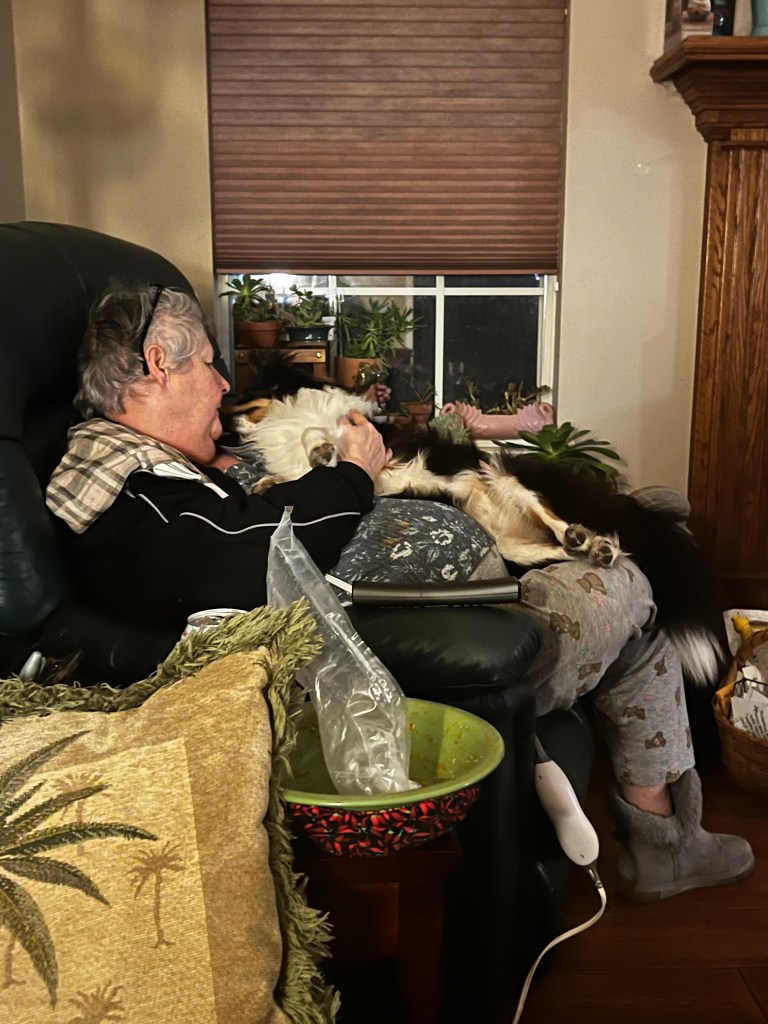
Melissa forwarded me a feed about how Los Angeles Rams offensive lineman (right guard) Austin Corbett helped lead his team to victory Sunday against the Cincinnati Bengals, 23-20.  Corbett got the starting job for the Rams in 2021 and was on the field late for the game-winning score with 1:25 remaining to give the Rams their first NFL title since the 1999 season, and their first representing Los Angeles since 1951.  What made Corbett unique was he is a citizen of the Walker River Paiute.  The previous Native to win the Super Bowl was Kansas City’s James Winchester of the Choctaw Nation in 2020.  Now Corbett holds that title.  

Corbett was born in Nevada and attended Edward C Reed High School.  He received little interest from college programs but managed to find playing time as a walk-on for the University of Nevada.  Corbett steadily improved for the Wolfpack, earning an honorable mention in the 2015 All-Mountain West team, second team in 2016 and then first team in 2017.  After his senior year at Nevada, Corbett was invited to the 2018 Senior Bowl and was drafted 33rd overall by the Cleveland Browns in the 2018 NFL draft.  Corbett struggled with the Browns and started just one game before being traded to the Rams midway through the 2019 season.  During the last two seasons with the Rams Corbett surrendered only four regular-season sacks and held the starting job for every game for the Rams this season.  He was named Bleacher Report’s “best kept secret” on the Rams roster prior to the Super Bowl.  Corbett become a free agent after the game, and that means for now, he is out of a job.

Two different pictures came out of last week’s job data release from the Bureau of Labor Statistics (BLS).  One told a story of a stunning job report, the other showed the job market is leaving Indigenous people behind.  According to a new report from the Brookings Institution, “While the nation’s topline unadjusted unemployment rate was 4.4% in January, the . . . rate among Native American workers was an extraordinarily high 11.1%.”  The report is striking because the monthly BLS report does not make Native unemployment even available.  That means there was a gap in how the economy was doing because it excluded Native people in general.  The Brookings report shows Native Americans had a higher unemployment rate (7.5%) than other racial groups before the pandemic, and with the pandemic the rate jumped to 28.6%, or comparable to national unemployment during the Great Depression.  Even with the recovery, Native American unemployment is two and a half times higher than the national level.  That would be considered a crisis if we tracked this information.

THOUGHTS:  Robert Maxim of the Brookings Institute said one cause of high unemployment is that health disparities, magnified by the pandemic, lead to worse economic outcomes.  “If you’re not healthy enough to work, if you’re just trying to stay alive, you can’t even think about your economic well being.”  Even this job data only identifies people that self-identify as American Indian or Alaskan Native alone, while 61% of Native people identify as two or more races, the highest of any racial or ethnic group.  That means it excludes three out of every five people in data about Native individuals.  What we do not know can hurt us.  Do the work.  Change is coming and it starts with you.