Appreciation

August 6, 2021

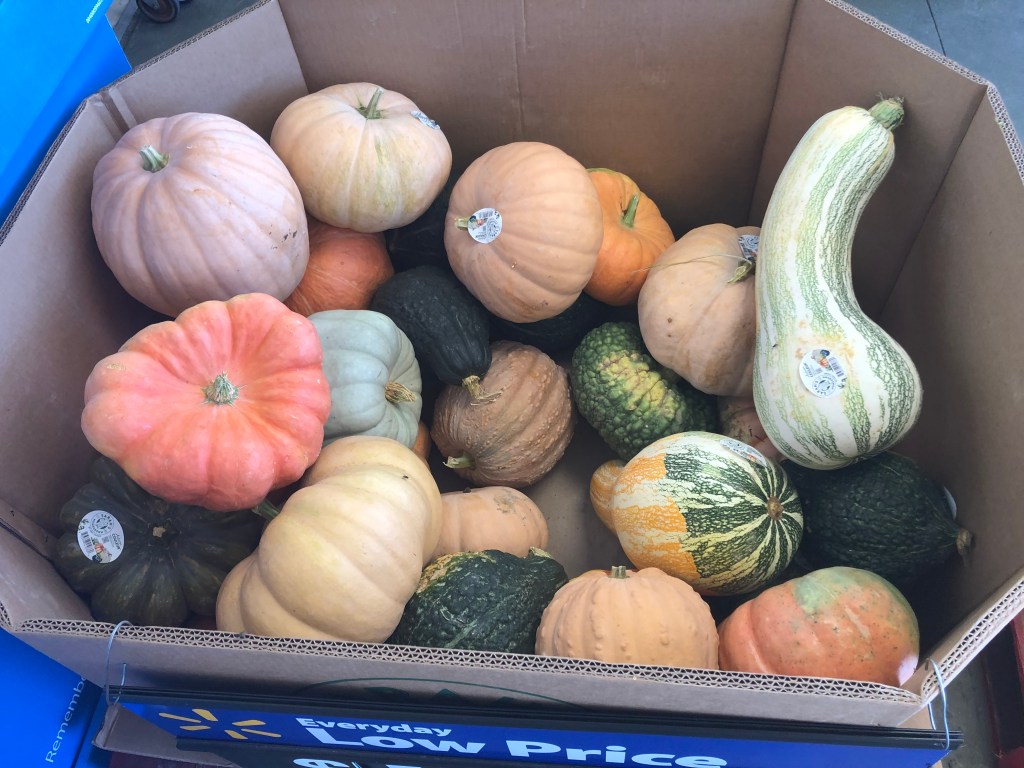
Yesterday I was able to participate in an appreciation breakfast for the teachers in our local school district.  This is an annual event put on by the women in our community.  While the women arrived early to make sure the meal was ready, I snuck in around 7:10.  I was not worried because I had no cooking duties, and the meal was not scheduled to begin until 7:30.  When I arrived, I was surprised to see the parking lot was full.  When I came into the kitchen the women were efficiently cooking scrambled eggs and ham, the tater tots were coming out of the oven, and the muffins were warming in a roaster oven.  There were already around 50 teachers talking and drinking coffee, waiting for the appreciation event to begin.  Maybe I might be of help after all.

When I looked online, I found the American Academy of Pediatrics (AAP) released new covid-19 guidance for schools on Monday that supports in-person learning and recommends universal masking, regardless of vaccination status.  This is a stricter position than was taken earlier this month by the CDC.   “The AAP believes that the benefits of in-person school outweigh the risks in all circumstances.”  One of the interventions put forward by the AAP is that all students over the age of 2 and all school staff wear masks at school unless they have a developmental or medical condition that prohibits wearing.  Reasons for the recommendation include a significant proportion of the student population is not yet eligible for vaccination, masking protects those who are not vaccinated and reduces transmission, and a difficulty in monitoring or enforcing mask policies for those who are not vaccinated.  I am not sure the teachers and staff receive enough appreciation (let alone pay) for the risk they gladly take on.

Dr. Sara Bode, chair-elect of the AAP Council on School Health Executive Committee, said Monday there are many children and others who cannot be vaccinated.  Therefore, it’s important to use every tool to safeguard children from covid-19.  Universal masking is one of those tools.  Masking is also the most effective strategy to create a consistent message and expectation among students.  It is an approach that does not create the added burden of trying to monitor the vaccination status of others.  The AAP’s recommendation on universal masking is different from guidance by CDC, which also prioritized in-person learning but advised that fully vaccinated students, teachers, and staff don’t need to wear masks at school.  It seems the AAP has a greater appreciation for the virus than the CDC.

Thoughts:  I have wondered about how every law maker who complains about mask mandates and social distancing is countered by a child who understands the gravity of the pandemic and their role in it.   Children seem to have a greater appreciation for the risks they are facing.  Perhaps it is because they cannot be vaccinated and are now beginning to face the brunt of the pandemic.  If the adults who are eligible to receive the vaccine would have a greater appreciation for the children who are at risk, we could ensure the safety of all.  Since we are not able to trust adults to “do the right thing,” the onus falls on the children.  Follow the science.  Change is coming and it starts with you.

Lizard

August 5, 2021

As I stopped among the rocks at the edge of the reservoir last week a small lizard came out to take advantage of the sun that was poking through the clouds.  The mostly black lizard was about four inches long and had distinctive white spots on its side and tail along with a white neck collar and a splash of blue under its front legs.  It was such a striking animal that I assumed it would be easy to recognize with one of my identification apps.  When my phone app failed to identify the species (no, it was not an iguana), I searched through the online guides and images for several hours to no avail.  None of the online descriptions or images matched the distinctive patterns of this lizard. 

There are thirteen species and subspecies of lizards found in Arkansas with their common names including legless, collared, horned, and fence lizards; skinks; and racerunners.  The Western Slender Glass lizard (Ophisaurus attenuatus) is a legless lizard and is often mistaken for a snake.  The Eastern Collared lizard (Crotaphytus collaris) is the most colorful of the Arkansas lizards ranging from blue to green to yellow and has a distinctive black band around its neck.  This common species is found in exposed rock outcroppings throughout most of the Interior Highlands of Arkansas.  The Skinks are among the most common lizards, and the Southern Prairie Skink (Eumeces septentrionalis) and the Southern Coal Skink (Eumeces anthracinus) look strikingly similar.  All six different species of skinks have shiny, smooth scales, and posse tails that easily break when handled.

The lizard I had photographed matched several descriptions, although none had the mottle white neck found on my lizard.  What I finally settled on was the Eastern Fence lizard (Sceloporus undulatus) in the Phrynosomatidae family.  The species is said to be found along forest edges, rock piles (where it was), and rotting logs or stumps.   Fence lizard bodies are gray to brown in color, but males and females can be distinguished by certain color variations (i.e., black with white spots?).  The males have patches of bright blue scales on their bellies and throats.  There is where I need to trust my instincts and go with the best guess scenario.  Maybe someone will see my blog and confirm or deny my finding.

Thoughts:  There are times when I photograph an animal or plant and I know exactly what it is.  There are other times when I must do some research (or ask an expert) to make an identification.  Then there are times like today where the species is so distinctive, it should be easy to identify, yet I am unable to do so with certainty.  The same may be said about life.  There are times when we know exactly how we should behave (even if we do not).  There are times when we are uncertain and turn to experts or resources to know what to do.  Then there are times when we are unsure and follow the best guess we can.  The CDC reaction to the pandemic has included all three responses.  Just because the guidelines have changed does not mean they have not been based on the best information available.  Follow the science.  Change is coming and it starts with you.
Warmouth

August 4, 2021

After I got off work yesterday, I decided I would give the magnet another try.  I have fished Lake Fort Smith (a reservoir) five or six times but have not had much luck, although I have always fished from the bank.  I have several friends who fish the lake from boats and tell me there are good fish present, if you can find them.  I started by dropping a bobber along a rock ledge next to a tree and got an immediate fish, then tangled in the rocks and lost my bobber.  I switched to my magnet and was not having much action.   Just as I told myself the trout magnet may not be the magic I thought, I was slammed by two quick fish.  As I pulled the second fish from the water, I realized it was different than anything I had ever seen.  I later found out this was a Warmouth Bass.

The Warmouth Bass (Lepomis gulosus) is a freshwater fish of the sunfish family (Centrarchidae) that is found throughout the southeastern United States.  The adult warmouth is dark back, with a mottled brown coloration.  The belly is generally golden, and the male has a bright-orange spot at the base of the dorsal fin.  Three to five reddish-brown streaks radiate from the eyes, and the gill flaps are often red.  It has three spines in the anal fin, 10 spines in the dorsal fin, and small teeth are present on the tongue.  These fish range in size from 4 to 10 inches (10.2 to 25 cm) but can grow to over 12 inches (31 cm) and weigh up to 2.25 pounds (1 kg).  The Warmouth is occasionally confused with the Rock Bass or Green Sunfish, both of which share its relatively large mouth and heavy body.  When I checked the app on my phone, both the Rock bass and Warmouth bass were suggestions (with several others).  The online site noted one difference is that the Warmouth tends to be a bit larger in size than either of the other two species.  I found it hard to determine “bigger” on a single five-inch fish.

The reason I found out it was a Warmouth Bass was because I asked.  Not just once, but several times (I know, not a typical male response).  I took the picture to the marina and the worker suggested I take it to the information office.  The three workers at the headquarters did not know.  I knew I would drive past a big fly-fishing store in Fort Smith, so I decided to stop and see if they knew what it was.  I was directed to two different employees who said, “Never seen one before,” although they thought it might be a Rock bass.   As I was leaving one of the workers said, “Oh, ask her, she is a fisheries biologist.”  This woman confirmed the Warmouth, Rock, and several others have similar colors and striations but have different spots.  One of the best ways to identify the Warmouth is by the red tint in their eyes.  When she enlarged the photo, she confirmed it was a Warmouth.  Who would have thought to ask an expert?

Thoughts:  While Warmouth range across southern rivers and ponds from Florida to Louisiana, in Arkansas they are generally confined to the waters of the Ozarks.  Other than the lake I had fished, where I rarely catch fish, I do not get into these waters often.  I was surprised that none of the regular anglers knew what the Warmouth was.   While I got many suggestions on what the fish might be, none of them was right.  Even my phone app took me in the wrong direction.  I asked the biologist I was reminded that if you really want to know, ask an expert.  The same could be said for the different recommendations and explanations for why the covid virus is ramping out of control.  The answer is obvious, you just need to ask the experts.  Follow the science.  Change is coming and it starts with you.

Turtle

August 3, 2021

I decided to go back to the mallard lake yesterday to see if I could continue my luck with the magnet.  When I arrived, I noticed the gazebo that juts out into the lake was empty.  I pulled in, loaded up my poles and gear and went out to the shade offered by the covering.  I decided that rather than going directly to my fly rod, I would put out my cat pole and my bobber to get the process started.  I baited the hook with a chartreuse worm, set the bobber about four feet up on the line, and tossed it into the lake.  I saw a turtle further out in the lake but did not think much of it.  I baited the cat pole with magic bait and tossed it out toward the middle of the lake.  Finally, I put together my fly rod.  By that time, my bobber had disappeared, and I reeled in a small channel cat.  The first fish of the day is always best.

I was watching River Monsters several months ago and it featured the rising number of Bull Sharks (Carcharhinus leucas) that are invading freshwater rivers.  The Bull Shark is commonly found worldwide in warm, shallow waters along coasts and in rivers., and is known for its aggressive behavior.  While Bull Sharks are a saltwater animal, they have the ability to thrive in both salt and fresh water and have been known to travel up the Mississippi River as far as Alton, Illinois, or about 700 miles (1100 km) from the ocean.  While few human-shark interactions have been recorded in freshwater, larger bull sharks are responsible for a majority of near-shore shark attacks, even those attributed to other species.  Luckily my mallard lake was a reservoir, without access to the Mississippi.  Avoiding the turtle was enough.

When I threw the bobber line back out, I saw another small turtle had noticed the activity.  He popped his head up to investigate my bobber, and then went back under.  Shortly after that “something” attacked my worm.  I rebaited and threw out again.  This time it was a Bluegill that found a meal (and hook).  By now my turtle friend was more active, so I threw the line farther to escape the turtle.  This time he popped up, saw my bobber about 20 feet away, and made a beeline for the float.  About two feet from the bobber, he again disappeared, and my bobber began to dance.  The turtle chased the baited worms until I finally gave up.  I had come to test the magnet anyway.  Although I saw three bass over 12 inches patrolling the shoreline, I could never get them to bite.

Thoughts:  It seems the turtle had learned that where there were bobbers, there were worms.  The Bull Sharks in Australia have gained a similar knowledge.  They follow the fishing boats trolling in the estuaries waiting for a fish to get caught.  Then they swoop in and snap the fish off the line.  So far, they have not attacked the people who are swimming in the water along the shore.  Other animals are highly adaptable to repetitive human behavior.  Both the turtle and the sharks have figured out how to get what they want.  It is too bad humans do not seem to be able to learn and adapt their behavior to new repetitive situations like the virus.  Maybe it is just not what they want.  Follow the science.  Change is coming and it starts with you.
Reservoir

August 02, 2021

I was amazed by the changes I saw at the city reservoir last week.  I have been consistently fishing the lake for the last three years but have not been there for several months.  Late last year the city put in information kiosks (one notice posted) and did rock work to form small patios on both sides of the boat ramp.  The road leading to the ramp has always been dirt, and even graded it consistently had ruts from the small spring that seeped out of the hillside.  When I arrive last week, I was surprised to see asphalt leading away from the highway.  As I turned, I saw the parking lot had been paved, drainage installed to whisk away the water from the spring, and the rock patios were now lined with rock benches.  They had spent a lot of money to make this a quality boat ramp and lake access.  The changes looked nice.

When I looked online, I found the difference between a lake and a reservoir is whether it is natural, or human made.  Reservoirs are different sizes and used for different purposes, but all have two things in common.  First, humans take water from the reservoirs when we need it, causing the water level to change in different ways than natural lakes.  Second, the dams that create reservoirs can prevent or limit species movement, both upstream and downstream, by the way they alter the flow of water.  Humans have built so many big dams that only one-third of the world’s longest rivers flow freely.  The rest have at least one dam.  Areas like Texas have limited natural lakes, but the rivers have been dammed to create thousands of reservoirs.   Minnesota’s “land of 10,000 lakes” are actuality 11,842, and most of the lakes are natural.  Minnesota’s lakes allow free species movement while Texas’ do not.

Since our reservoir is used for drinking, the water has a strict ban on swimming and gas-powered motors.  These regulations are in place for most small reservoirs, although larger reservoirs allow one or both.  While I understand the gas ban, the swimming ban always seemed odd.  Fish obviously swim in the water (among other things).  The water is also filtered and purified prior to being pumped through the pipes that bring it to individual households.  We have only recently overcome the “boil” order that was on our system for as long as Melissa can remember.  I guess the improved water quality prompted the improved access.  I noticed that as new as the changes were at the reservoir, someone had already backed into a bench and broken the rock top off.  Nice only seems to last so long.

Thoughts:  The changes created by a human-made reservoir influence the species that can live in the ecosystem.  While we have ideas for reducing the effect of dams and reservoirs on our river ecosystems, governments have not kept accurate records of where they are.  Scientists and researchers are trying to track down each reservoir on the planet, creating a GPS reference called the Global River Obstruction Database (GROD), while Europe is using the Adaptive Management of Barriers in European Rivers (AMBER) smartphone app.  If you build it, they will come.  At least the app cannot be rammed by a truck.  Follow the science.  Change is coming and it starts with you.

Webworms

July 31, 2021

As I left after fishing the reservoir earlier this week, I passed two trees that had infestations of webworms in their upper branches.  These moths lay their eggs on the tree leaves, and then wrap the nesting area in a silky web.  These must have been laid recently as the area of webbing was still relatively small.  As the eggs hatch and the 100’s of caterpillars (larvae) begin to grow, they encase ever larger areas of leaves beneath their web.  As the colony consumes the initial leaves in the vicinity of where the inch-wide white moth (adult) laid its eggs, the size of the webby mass increases.

The fall webworm (Hyphantria cunea) is a moth in the family Erebidae known principally for its larval stage, which creates the characteristic webbed nests on the tree limbs of a wide variety of hardwoods.  While it is considered a pest because of its unsightly web, it does not harm healthy trees.  When I looked online at the University of Arkansas Extension Service, I found the visible signs of infestation occur when the beige-brown webs begin to enclose the ends of the tree’s upper branches.  Fall webworms are a native moth that occurs throughout North America.  The web stage of the moth usually appears from June through August in Arkansas, but if a second generation is produced, can extend into October.  Fall webworm infestations tend to be episodic in nature with back-to-back bad webworm years occurring about once a decade, but some webworms are seen almost every season.

There are two different types of fall webworm found in Arkansas: the two-generation-a-year black-headed version and the single-generation-a-year orange-headed form.  Both occur across the South, but the orange-headed form is more common.  The moth usually lays her eggs around mid-June, and about 60-70 days are required to go from egg to pupal stage.  The black-headed form begins about four weeks earlier and can squeeze in a second generation.  I could not get close enough to determine which version was nesting high up in the trees.  I was just glad it was not my yard.

Thoughts:  I have been fascinated by the four-part life cycle of insects since I learned of it in elementary school.  What they did not teach is there are other types of insect metamorphosis.  The ametabolous (Greek for “having no metamorphosis”) insects look like tiny adults when they emerge from the egg.  Hemimetabolous (from “hemi” meaning part) insects have three distinct stages: egg, nymph, and adult.  Holometabolous (from “holo,” meaning “total”) insects have the four-part cycle (egg, larvae, pupae, adult).  Most of the world’s insect species are holometabolous, including butterflies, moths, true flies, ants, bees, and beetles.  I am constantly surprised by the difference between what I was taught in K-12 and the known reality found with further research.  I wonder if educators take the Jack Nicholson approach (“You can’t handle the truth!”), or if they do not know themselves.  For most of us, it seems we do not know.  We need to be willing to get the know “the rest of the story,” especially when it comes to issues of race and poverty.  Do the work.  Follow the science.  Change is coming and it starts with you.
Magnet

July 30, 2021

When Melissa and I went fishing on the White River last year I checked online to see what was the most effective artificial for the big Brown Trout that famously stalk the waters.  The local guides recommend two baits, depending on the type of fishing you do.  For baitcasting they recommended a trout magnet, and for fly fishing it was a sow bug.  Since I prefer fly fishing, I looked in the local stores and everyone was sold out of sow bugs.  I finally found a few online and had them shipped well before we left for the river.  It was not until this year that I again thought about the trout magnet.  I had received a gift card from my son Alex for Father’s Day to one of the big outfitters and stopped in Tulsa to see what they had.  When I came across the magnet, I decided to buy several and see if they really worked.

To be clear, a trout magnet is not a magnet.  It is a small split tailed plastic that is reported to attract fish “like a magnet.”  When I checked online, I found it was part of a series or plastics that are configured slightly different to attract a variety of fish (i.e., crappie magnet, panfish magnet).  The magnet is said to be irresistible because its “balanced design allows it to fall with a lifelike horizontal profile rather than a vertical plunge.”  It can be used with or without a float, and like natural forage, it flows along with the stream.  The trout magnet has quickly become one of the most successful baits for trout when fishing in creeks, rivers, and even lakes.  It worked for me.

Even though the magnet was recommended to be tossed on the end of a bait casting reel, I decided to try my magnet on a fly rod.  I attached a thing-a-ma-bobber to the line to get the right depth and cast along the shoreline of the lake.  I quickly caught four small but aggressive bluegill and got even more strikes.  I took a morning trip this week when the temps were still low (fells like 95F) to see if my earlier outing was a fluke or a valid technique.  Once again, I immediately got strikes and quickly caught four more fish.  It was the sun and not a lack of fish that finally forced me off the water.  It seems the trout magnet is effective for panfish as well.

Thoughts:  It has been so hot that I had not been too keen on fishing.  I decided to stay close and try the bluegill at the “tiny fish” pond near our house.  When I approached, the fish franticly scooted away from the shore, but the heat had caused the pond to be covered in a layer of scum.  Every cast came back draped with water grass.  I left to go to the small lake nearby which is where I again caught fish.  Prior to fly fishing I rarely used artificial bait, and live bait are still said to have the advantage.  The plastics, like my magnet, are becoming so lifelike they are giving naturals a run for their money.  The science that goes into these baits requires years of research and testing, but once the basic concept is developed it can be quickly adapted for the type of fish you are hoping to catch.  That is also the reason for the rapid development of the covid vaccine.  The years of research had already taken place, it just needed to be adapted to the specific virus.  Like my magnet, the vaccine works.  Follow the science.  Change is coming and it starts with you.
Mandates

July 29, 2021

The US has struggled to get half of our country to take the covid-19 virus seriously.  Mask mandates seemed almost universal earlier this year, even though they were disliked and were met with growing opposition.  When the CDC dropped the mandate for vaccinated people, the masks (for everyone) quickly dropped to the floor.  With cases again surging, masks are again recommended, but no longer mandated.  With approval of the vaccine the focus shifted to how to get people vaccinated.  While the vaccine seems to be generally accepted and received in urban and Democratic areas, it is generally viewed with suspicion in rural and Republican areas of the country.  The mandate divide has shifted from masks to the vaccine.

My NT Times feed this morning reported on the possibility of using mandates to require people to be vaccinated or lose access to goods and services.  Mandates are obviously controversial, and many Republican officials oppose them.  The National Conference of State Legislatures report at least 32 bills have been introduced across 25 states that “would limit mandatory COVID-19 vaccines for students, employees or generally.”  Arkansas’ (Republican) governor signed into law various measures that prevent state and local governments from requiring proof of vaccination as a condition of employment or to access goods and services.  With the surge of the Delta variant mandates could become more common.  Several weeks ago, covid appeared to be receding as vaccinations were rising and cases were plunging.  The combination of lingering vaccine skepticism and the contagiousness of Delta has caused cases to again surge.  Given the opposition, vaccine mandates are never going to be national.

Many Americans are now realizing a return to normal life is months away (if ever).  The CDC now says some people should put their masks back on, even when outdoors.  Businesses like Google are delaying bringing workers back to the office.  Parents are anxious that schools will not fully reopen this fall, and even more worried about children too young to be vaccinated being vulnerable to “long Covid.”  Experts say the primary cause of all these problems is the one third of Americans who remain unvaccinated despite being eligible.  It appears they will not get vaccinated without a mandate.  While the biggest cost of refusal is risking their own lives, it also affects vaccinated people with restrictions on daily life.  So far, none of the mutations have been vaccine-resistant variants.  It will continue to mutate.

Thoughts:  While businesses are posting their own vaccination mandates, state legislatures are trying to make them illegal.  This has led to another area of growing frustration as inoculated Americans are losing patience with the vaccine holdouts.  Alabama’s Republican governor said it was, “Time to start blaming the unvaccinated.”  Vaccine mandates effectively tell the unvaccinated they can refuse, but they will pay a price in lost access to a job, a college campus, or other shared experiences.  I am constantly amazed when individuals demand their “right to choose,” yet refuse responsibility for their choices.  Living in a free society means we need to allow the freedom to choose, but freedom also has its price.  Follow the science.  Change is coming and it starts with you.
Peppers

July 28, 2021

When I make stir fry or pasta salad, I like to use different types of sweet peppers to add color to the dish.  The problem is the red, yellow, and orange peppers are usually about a dollar more per pound than the green peppers.  I used to buy them anyway, but when Melissa and I started shopping together she would comment on how much I was paying just for the color.  Honestly, the varieties of store peppers never tasted any different and I knew she was right.  This year I resolved the issue by growing my own red, orange, and green peppers, along with the jalapeno and poblano.  I got all of them in the ground late because of cold weather, but the heat we are getting has begun to make them produce.

When I looked online, I found that sweet peppers and chilies are both derived from the same species, Capsicum annuum.  The pepper plant is a member of the Solanaceae or “nightshade” family, which also includes tomatoes and potatoes. It is originally from South and Central America and was introduced into Europe for the first time at the beginning of the 16th century.  Botanically, peppers are a fruit of the Capsicum plant, but in the culinary world people recognize peppers as a vegetable.   There are nearly 2,000 varieties of peppers cultivated worldwide.   These are generally grouped into two categories: the hot (chili) peppers and the sweet peppers.  The various forms of peppers are the most widely used condiment all over the world.  It is consumed fresh, dried, or processed.  I admit, I like them all in all three different forms.

The sweet peppers I decided on last spring were the Green Bonny Bell, the Orange Bell, and the Red Bell varieties.  When I purchase peppers from the market, I have noticed there is a difference in both the sweetness and the number of seeds.  What I found was that while the male pepper contains much fewer seeds than its female counterpart, the female pepper is sweeter.  You can recognize the difference between pepper sexes by the bumps on the bottom.  The male variant has three bumps, and the female has four.  I have always gravitated toward female peppers, especially when I make stuffed peppers.  The four bumps are larger (more stuffing) and sit upright better in the pan.  Now that I know they are also sweeter, I will try to only buy female peppers.  I get rid of the seeds regardless.

Thoughts:  One of the maladies of the early mariners was scurvy, which was caused by a lack of vitamin C (ascorbic acid).  Current researchers have discovered that high consumption of fresh vegetables and fruits also have a link to minimized chances for various types of cancer.  Research has shown that increased consumption of vitamin C rich foods like sweet pepper is related to a reduced chance of cancers of the lungs, mouth, vocal cords, throat, colon, rectum, stomach, and esophagus.  Sweet pepper has 119.8 mg of Vitamin C, or 133.11% of the daily recommended value.  Researchers are constantly finding new cures for old (and new!) diseases.  Just because this is a new discovery, does not mean it is experimental.  Follow the science.  Change is coming and it starts with you.
Gutters

July 27, 2021

We got the next phase of roofing at our house yesterday as the crew showed up to install the new gutters.  They began by removing the old gutters and the brackets that held them in place.  After the gutters were installed, they attached a new leaf guard system to replace the old one.  The leaf guards were black rather than the silver we had previously, and the gutters were a stark white which (luckily?) matched the existing trim.  While the gutter crew did not arrive as early nor stay as late, they were able to get most of the work done in one day.  I needed to have repairs done on two of my soffit joints and the wood needed to be purchased from the lumber yard and they had to return.  While the new system looks good, it also pointed out that I need to paint the eaves of our house.

Rain gutters are known as a crucial part and necessary investment of modern homes.  The gutters and down spouts funnel water away from the home to avoid water-related damage to the roof and foundation.  Although there are many types of drainage systems on the market, gutters have a long history.  The first gutters were in place as early as 3,000 BCE, as ancient civilizations started draining water using systems made of stone, brick, and wood.  The main objective of ancient gutters was to move water from one location to another, and often the gutters moved water into cisterns for storage.  Ancient civilizations also used waterspouts perched on roofs to drain water to the ground.  During the Middle Ages the European architects used waterspouts in the form of gargoyles on large structures like cathedrals and palaces.  Our installer did not think a gargoyle would work on my house.

I noticed on the side of the installation truck they offered seamless gutters.  When I checked online, I found seamless gutters are exactly that, seamless.  Rather than coming in standard 10-foot lengths, which are pieced together, seamless gutters are formed and cut to any length required by the roof line.  That meant the long runs had a single gutter, with the only seams at the roof angles.  While each seam is sealed, there is a possibility of leaks as the gutter ages.  Seamless gutters are made of galvanized steel, rather than the aluminum or vinal used in standard gutters.  That makes them heavier and stronger and more resistant to damage from the weight of snow and ice.  Seamless also means this is not a DIY project, unless you have a gutter forming machine and know how to operate it.  I have neither.

Thoughts:  After graduating from High School, I attended college on a hit or miss basis, working a semester and then retuning to school.  During one of my summer hiatuses, I worked at a meat processing plant.  I would arrive at 6 am with outside temperatures at 80F and enter a building kept at 35F.  I only lasted a couple of weeks.  When the owner returned to finish the gutters, he said his new worker quit after his first day.  He had decided it was too hot to hang gutters.  Perhaps he should have learned from the roofers and taken his lunch sleeping in the shade under a tree.  When I worked manual labor, the first few days on a new job were the hardest.  While you begin to get used to the labor, you also devise ways to adapt to the job.  If you cannot, you quit.  It seems many have decided to treat the pandemic the same way.  They did not like the restrictions and refused to adapt, and now refuse the vaccine that could save the lives of countless others.  With the pandemic, quitting is not an option.  Follow the science.  Change is coming and it starts with you.