Colossal

April 18, 2025

My MSN browser reported that the world’s largest squid species was filmed and photographed in its natural habitat for the first time since scientists discovered it about a century ago.  The video was recorded in the South Atlantic on March 9th by the crew of a vessel owned by the Schmidt Ocean Institute.  The crew’s remotely operated vehicle sighted the animal 2,000 feet (609.6 m) below the surface around the South Sandwich Islands, a volcanic archipelago located between the tip of South America and Antarctica.  The squid caught on video was a juvenile and much smaller than a full-grown adult.  The research team estimated its size at around 11 inches (28 cm) long.  According to the Schmidt Ocean Institute, the expedition occurred during a 35-day voyage where researchers sought to find new marine life.  Although this was a juvenile, the squid can become enormous and have been named colossal squid.

When I looked online, I found the colossal squid (Mesonychoteuthis hamiltoni) is a species of large squid belonging to the family Cranchiidae, known as cockatoo squids or glass squids. Glass squid are a group of about 60 squid species that have transparent bodies.  As the squid grow their bodies become opaque over time.  The colossal is sometimes called the Antarctic cranch squid or giant squid (not to be confused with the genus Architeuthis) and is believed to be the largest squid species in terms of mass.  Individuals have been confirmed to reach at least 1,091 pounds (495 kg).  Beaks found in sperm whale stomachs suggest some may weigh as much as 1,300 to 1,500 pounds (600 to 700 kilograms).  That would make it the largest extant invertebrate.  The maximum total length has been estimated between 33 to 46 feet (10 to 14 m).  The colossal squid has the largest eyes of any known creature to ever exist, with an estimated diameter of 11 to 12 inches (27 to 30 cm), with a whopping 15 inches (40 cm) for the largest collected specimen.  The colossal is presumed to be an ambush predator, with a diet including various fish, and is likely a key prey item of the sperm whale.

Chief scientist Dr. Michelle Taylor said the team was initially unsure what the squid was but filmed the animal because it was “beautiful and unusual”.  The footage was later verified by Dr. Kat Bolstad, who said previous squid encounters had mostly been as remains in whale and seabird stomachs.  A distinguishing feature of the species is the presence of hooks on the middle of their eight arms.  Dying adults have previously been filmed by people fishing but they have never been seen alive at depth.  The Natural History Museum has suggested it is hard to estimate the global population of colossal squids.  In 2022, the institution said the lack of observations meant that, “even to this day, the enormous invertebrates still straddle the line between legend and reality”.  The Schmidt Ocean Institute’s research trips have led to the first sightings of four species of squid, including the colossal squid sighting.  The institute’s executive director Jyotika Virmani described the encounters moments which “continue to remind us that the Ocean is brimming with mysteries yet to be solved.”

THOUGHTS: The recording of the colossal and other three species of squid is another reminder of the amazing diversity yet to be discovered in the oceans of the earth.  Yet even as we seek and find new life, the actions of humans are threatening to destroy the species and ecosystems that are known.  It is unclear whether the Ocean depths are so far immune from human intervention, or just so far out of our radar that we do not see the changes we are making.  It is known that microplastics have been found in the bodies of deep-water fish.  We need to take steps to preserve these fragile ecosystems while there is still time.  Act for all.  Change is coming and it starts with you.
It’s In

April 14, 2025

It has been an odd planting season (month) this year, to say the least.  It started four weeks ago when I went to the soil and mulch supply I had used for the Hügelkultur raised beds last year.  I had read that the limbs and wood on the bottom layer would decay over several years and as it does, the soil will sink.  At least I did not get the dreaded sink holes that can result when you do not compact the soil into the limbs well enough.  I ordered two skid scoops of topsoil but could only get one in my 8×5 foot (2.4×1.5 m) trailer.  I realized too late I wanted raised bed soil (a topsoil/compost mix) rather than topsoil.  I put the entire scoop into the four raised beds and when I went back for the second load, I changed my order to raised bed soil.  I used this to top off the raised beds and put a layer over two additional beds.  Melissa is going to scatter a wildflower mix in the bed in front of the house and I was going to put squash and lettuce in the back bed I had used for last year’s three sisters (corn, beans, squash).  I misjudged the amount of work this was going to take.  After two long afternoons the soil was finally laid down.  I breathed a sigh of relief and said, “It’s In”.

When I looked online, I found the Old Farmer’s Almanac says the average last frost date for USDA hardiness zone 7a is between March 22 and April 3.  It is Generally safe to plant most garden vegetables after this period, but you need to check local weather forecasts for potential late frosts.  We got excited and went to the plant nursery during the last weekend of March and got some great deals on six packs of peppers (Capsicum annuum), tomatoes (Solanum lycopersicum), and squash (Cucurbita pepo).  I was prepared to put them in the following Monday, but the weather person said there was a “possibility” of one of two frost days (they were right).  We put the plants on the porch with Melissa’s succulents where they could get sun and be out of the cold.  Melissa was countering the humidity for her succulents, so the fan was running 24/7.  The veggies did not like the fan and dried out quickly.  We brought them into the house and Melissa babied them.  Finally last week I was ready to take the risk and put them all in the ground along with the radish (Raphanus sativus), carrot (Daucus carota), beet (Beta vulgaris) seeds, and a hill each of cantaloupe (Cucumis melo) and watermelon (Citrullus lanatus).  I breathed a sigh of relief and said, “It’s In”.

I had worried as I planted the veggies last Monday as several were looking poorly.  I mulched and watered them for several days before I bought replacements and replanted five.  As the week went on several more withered and died.  I removed the store plants and planted seed for several straight necked squash and cucumbers (Cucumis sativus).  As I watered this morning, I faced the dilemma of what to do with three tomatoes and two bell peppers that were struggling.  It was iffy whether they would survive and if I waited to act it would probably be too late for seed before the summer heat.  I went back to the co-op and found a six pack of Cherokee purple tomatoes and two single peppers.  That meant I had more plants than planters, but the six pack was the same price as one single (I needed two).  I ended up placing two of the tomatoes in the back bed with the squash and found another container for the third.  I breathed a sigh of relief and said, “It’s In”.        

THOUGHTS: Each time I said, “It’s In, I thought the job was over.  While I could have left the empty containers and garden spaces I was unwilling to do so.  I had already invested too much time and energy to quit when I was so close to completing my planting.   I did tell Melissa after finishing today that I was not going to buy any more plants.  If any fail now their spaces will be reserved for my summer/fall planting.  In gardening and life, you need to be willing to overcome initial setbacks.  You also need to know when it is time to change strategies and tactics.  Doing the same thing and expecting different results rarely works.  Act for all.  Change is coming and it starts with you.
Fools

April 04, 2025

When I was growing up my dad had a running joke that occurred every April 1st.  As the boys would come sleepily downstairs and sit around the breakfast table, dad would rush in and exclaim, “There is a big brown dog outside!”  This would cause the three of us to jump up and run to the window hoping to get a glimpse of this large dog.  Later, dad was forced to change the joke as we owned a large brown boxer dog (Canis lupus familiaris) named Lucky.  Instead, dad would exclaim there was a large black dog outside.  The joke still worked and went on for years.  After we had looked expectantly out of the window for several seconds the punch line was delivered.  April Fools!  

When I looked online, I found April Fools’ Day, or April Fool’s Day, is an annual custom on April 1st consisting of practical jokes and hoaxes.  Participants often complete their prank by shouting “April Fools!” at the recipient.  Mass media can be involved with these pranks, which are often revealed the following day.  The custom of setting aside a day for playing harmless pranks on one’s neighbor has been relatively common historically throughout the world.  While many theories have been proposed for the origin of April Fools’ Day, it is not exactly known.  A disputed association between April 1st and foolishness is found in Geoffrey Chaucer’s The Canterbury Tales (1392) when in the “Nun’s Priest’s Tale”, a vain cock (Chauntecleer) is tricked by a fox on the first of April.  In 1508, French poet Eloy d’Amerval referred to a poisson d’avril (April fool, literally “April’s fish”), possibly the first reference to the celebration in France.  Some historians suggest April Fools originated because during the Middle Ages New Year’s Day was celebrated on March 25th in most European towns, and the festivities continued until April 1st.  Those who celebrated New Year’s Day on January 1st made fun of those who celebrated on other dates by the invention of April Fools’ Day.  The first British reference came from John Aubrey in 1686 who referred to the celebration as “Fooles holy day”.  

My best April Fool’s joke happened when I was working for the Division of State History in Utah.  I was monitoring a particular thorny case where a pipeline installation was running roughshod over the archeological resources that stood in the way.  I sent a scathing memo to my boss on April 1st that detailed a new set of offenses and demanding he do something about this clear breach of contract.  When he received the memo, he immediately took it to his boss and demanded something be done.  His boss calmly read the memo and began to laugh.  My boss had failed to read the complete memo, as the last line said, April Fool’s!”  Both his boss and I thought the joke was extremely funny.  My boss did not think it was funny.

THOUGHTS: Most can attest to the fact that if you are around someone long enough, they will repeat the same joke time and again.  My dad’s April Fool’s joke was done purposefully (and as it always worked).  Dad also had the reputation for telling a joke and either forgetting or screwing up the punchline.  The black dog did not have that issue.  Repetitive storytelling is such a widespread phenomenon across age groups that a group of researchers at the University of Waterloo in Ontario studied both short-term and long-term memory and discovered there is a particular kind of memory (destination memory) where humans do not excel.  Destination memory is the inability to remember to whom we have told our stories.  Another reason for repetition is when you hear (or live) a good story you want to share it with others, even if it is again and again.  Laughter is used to ease tension, to amuse, or to introduce yourself.  Knowing what another finds funny can tell a lot about their thoughts and values, but only if you listen.  Act for all.  Change is coming and it starts with you.
Atolls

March 31, 2025

© Laurent Ballesta

Today’s MSN browser carried an article about the mysterious circles found on the floor of the Mediterranean.  The circles were discovered in 2011 by a team of scientists led by marine biologist Christine Pergent-Martini.  More than 1,300 rings, about 65.5 feet (20 m) in diameter with a dark spot at their center, were detected through satellite images and confirmed through underwater explorations.  Theories on the circle’s origin ranged from unusual geological formations to extraterrestrial intervention (when in doubt it must be UFO’s).  A decade of research has found the key to their origin.  When biologist Laurent Ballesta submerged himself to reach one of the rings he realized “it was alive”.  The formations are composed of calcareous algae and various marine organisms which create rigid structures on the seafloor that, over time, form a circular arrangement.  The study of these circles revealed that they are biological structures known as coral atolls.

When I looked online, I found atolls are ring-shaped islands with a coral rim that encircles a lagoon.  Atolls occur in warm tropical or subtropical parts of the oceans and seas.  Most of the approximately 440 atolls are in the Pacific Ocean.  There are two models which explain how atolls form.  Charles Darwin described the subsidence model, where the atoll is formed by the sinking of a volcanic island that had a coral fringe reef.  The extinct volcanic island erodes and sinks under the surface of the ocean until the reef and small coral islets on top of it are all that is left, leaving a lagoon in place of the former volcano.  The antecedent karst model has formation as the development of a flat top, mound-like coral reef during the sinking of an island (volcanic or nonvolcanic) below sea level.  When the sea level drops, the coral reef is exposed to the atmosphere and is dissolved by rainfall to form limestone karst.  The rate the exposed coral is dissolved is lowest along its rim and increases inward to its maximum at the center of the island resulting in a saucer shaped island with a raised rim.  When the sea level rises the island is submerged and the rim provides a core where the coral grows to form the atolls, and the flooded bottom of the saucer forms the lagoon.

While the Mediterranean coral atolls do not breach the surface, they form in a similar fashion.  The perfect symmetry of the rings is due to the radial growth of the algae and corals that make up the ecosystem.  The interaction between the ocean currents and the development of the living organisms generates this unusual arrangement on the ocean floor.  The discovery of coral atolls has important implications for the study and conservation of marine ecosystems as these formations play a crucial role in the biodiversity of the Mediterranean, providing shelter for numerous species and acting as indicators of the health of the oceans.  Experts warn these structures are extremely fragile and climate change, pollution, and human activity could affect their development.  Ocean acidification and rising temperatures may alter the growth of the organisms that form these atolls, threatening their existence.

THOUGHTS: We still know very little about the submerged coral atolls found in the Mediterranean.  Pergent-Martini said, “What is clear is that their preservation is key to maintaining the balance of marine ecosystems in the region.”  The ocean covers approximately 70% of Earth’s surface and represents the largest livable space on our planet.  Its surface area is about 139 million miles2 (360 million k2) and an average depth of 12,080 feet (3,682 m).  Life exists throughout these depths, but much of the ocean is unexplored.  As of June 2024, 26.1% of the global seafloor had been mapped with modern high-resolution technology (multibeam sonar systems).  While 54% of the seafloor beneath US waters had been mapped to these modern standards, the US seafloor is larger than the land area of all 50 states, the District of Columbia, and the five territories combined.  The future of exploration is both out there and under here.  Act for all.  Change is coming and it starts with you.

Partula

March 28, 2025

This morning’s MSN browser caught my eye with an article on a creature that has managed to return from extinction.  The International Union for Conservation of Nature (IUCN) Red List of Threatened Species has reclassified a peanut sized snail as critically endangered after being previously declared extinct in the wild, according to a release from the Zoological Society of London (ZSL).  The snail’s comeback is credited to a decades-long conservation program led by ZSL and its global partners.  Paul Pearce-Kelly, leader of the conservation program, said in a news release, “This is a landmark moment for Partula tohiveana and for decades of international conservation work.  Seeing a species return from the brink after years of collaborative effort is exactly why we do what we do.”  The press release states that the reclassification follows the discovery of adult Partula snails born in the wild.

When I looked online, I found Partula tohiveana is one of several species with the common name Moorean viviparous tree snail.  The species is an air-breathing tropical land snail in the family Partulidae endemic to highlands on Moorea, French Polynesia.  The species was reintroduced into the wild in 2024 and by September “born in the wild” snails were observed for the first time in 40 years, meaning the species is officially considered re-established.  While the snail is still critically endangered, it had been extinct in the wild since the 1980’s.  The snail is the first invertebrate species to be successfully re-established following an Extinct in the Wild IUCN status.  ZSL started breeding these snails in the 1980’s after the invasive carnivorous rosy wolf snail (Euglandina rosea) began to threaten the Partula tohiveana’s wild population.  The snails were bred and cared for under carefully controlled conditions and were then marked with UV reflective paint prior to their release back into their forest habitats.  The 2024 reintroduction saw the release of about 6,000 snails from 10 species and sub-species of Partula snails raised at zoos worldwide.

Ali Reynolds, Senior Keeper, Lower Vertebrates & Invertebrates at the Marwell Wildlife Zoo, said: “It was so heartening when I heard the news of tohiveana being downlisted, it makes all our efforts worthwhile, and shows what a difference zoos can make.”  Reynolds has a tattoo on her arm with a picture of a snail along with words, “never give up”.  She went on to say the more you learn about Partula, the more fascinating they become.  The snails show a high level of speciation, and a single species can evolve in very small specific areas, at times even living in only one valley.  They are unusual amongst snails, as they do not lay eggs, but give birth to a single live young.  Their name comes from Partula, the Roman goddess of birth.  “Given the cause of their decline is entirely manmade, we have a responsibly to try to make things right, and this shows that is possible!”

THOUGHTS: One of the global partners that aided the reintroduction of Partula was the Sedgwick County Zoo in Wichita, Kansas.  My parents lived there and always had a season pass to the zoo, so when we held reunions, we would all go.  This was usually in August and turned out to be the hottest day of the year (100+F/37.7+C).  Zoos have always been a subject of interest and debate.  Some say they play a crucial role in conserving endangered species and educating the public.  Others say they represent captivity for profit and do more harm than good.  Zoos do support conservation through breeding and donations that are critical for groups working in areas trying to preserve wildlife.  A critical argument for zoos is that people need to see animals to care about their protection and most urban populations will likely never get the opportunity to experience these animals in the wild.  Direct encounters with animals encourage people to adopt more eco-friendly behaviors and feel more invested in conservation efforts.  Longer life (with ethical treatment) is a tradeoff for freedom.  As with humans, not all feel the cost is worth it.  Act for all.  Change is coming and it starts with you.

Bracketology

March 26, 2025

The first weekend of the college basketball playoffs is over and I have life in my brackets.  This year I filled online for a initial bracket, an alternate bracket, and a best guess bracket.  I also filled out hard copy brackets, so I pulled that from the newspaper.  Then Melissa said she would like to do a head-to-head challenge (hardcopy) so I filled out another one for her.  I then filled out two online brackets for the women’s championship.  There seem to be two approaches toward filling out these predictive brackets.  One is the purist approach where only one bracket is allowed.  The other is to fill out as many brackets as possible (a maximum of 25 are allowed by ESPN) and try to gauge all the nuances that might be possible, given upsets and close matchups.  I find myself somewhere in the middle, counting my initial bracket as the “true” representation but still filling out several more brackets for luck.  This annual event for men’s and women’s basketball has become known as bracketology.        

When I looked online, I found Bracketology is the process of predicting the participants in the NCAA men’s and women’s basketball tournaments.  The name comes from the predictions made while filling in tournament brackets for the postseason.  This process uses some method of predicting the metrics the NCAA Selection Committee will use, such as the rating percentage index through the 2018 tournament, and the NCAA Evaluation Tool (NET) since 2019, in order to determine at-large (non-conference winning) teams to complete the field of 68 teams, and to seed the field by ranking all teams from first through sixty-eighth.  Bracketology also encompasses the process of predicting the winners of each of the brackets.  Joe Lunardi is credited with inventing the term bracketology.  On February 25, 1996, The Philadelphia Inquirer referred to Lunardi as a bracketologist, which is the first known instance the term was applied to a college basketball expert.   Lunardi soon started the website Bracketology.net, and ESPN began running his predictions in exchange for a link to his website.  By 2002, Lunardi had his own Bracketology page with ESPN.  In recent years the concept of bracketology has been applied to areas other than basketball.

My efforts at bracketology have only been fruitful in one of the men’s brackets.  My purist bracket chose Duke as the winner but only matched 56.8% of the actual winners through the first weekend.  My alternate bracket selected Auburn as the winner and has done much better, choosing 96.7% of the winners and ranking 792,137th on the ESPN site.  The best guess bracket did the worst, choosing Michigan State as the eventual winner and choosing a lowly 17.9% of the winners.  By contrast both of my women’s brackets have done well.  My initial bracket chose U Conn as the champion and scored 97.6% of all winners.  My alternate chose OU as the champion and came in at an astounding 99%.  I do not follow college basketball (except for favorite teams) other than during championship season.  Still, this time of year causes me to watch games I would otherwise skip and the first weekend provided several exciting games.  One of my bracket busters was the Hogs of Arkansas who took two underdog games, including from St. John’s who I had predicted to go to the elite eight.  There are no perfect brackets left for the men (out of 24,388.569) and only 25 for the women (out of 3,425,826).  I guess that is why they call it bracketology (the study of brackets).

THOUGHTS: To try and keep the public involved in the sport (and betting), ESPN has another chance at Bracketology by offering a second chance option.  This starts with Sweet 16 participants and allows you to select who will win based on those still in the tournament.  This did not spark my interest.   If I do not get it right the first time(s), I am not trying again.  I understand the allure, however.  In life we need to both alter our initial approach and try again.  Life is not a predictable bracketology.  Act for all.  Change is coming and it starts with you.
Python

March 21, 2025

This morning’s local newspaper carried a USA Today article on the adaptability of the Burmese python in Florida.  The snakes have been established in the Everglades since the 1990’s but recent studies and sightings indicate the cold-blooded reptiles have adapted to cooler temperatures and different habitats.  One reason for the adaptation is crossbreeding with the Indian rock python (Python molurus) which has also been introduced into the habitat.  Genetic evidence by the USGS shows at least 13 out of 400 pythons studied were crossbred.  Climate change could expand their range by 2100 to include New York, New Jersey, Pennsylvania, West Virginia, Ohio, Indiana, Illinois, Colorado, and parts of Washington State.  Southern states with climates like the native range of the Burmese python include all of Florida, most of California, the Carolinas, Georgia, Alabama, Louisiana, Texas, and Oklahoma.          

When I looked online, I found the Burmese python (Python bivittatus) is one of the largest species of snakes in the world.  The species is a dark-colored non-venomous snake with many brown blotches bordered by black down the back.  Burmese pythons typically grow to 16 feet (5 m) but unconfirmed specimens of over 23 feet (7 m) have been reported.  The species is sexually dimorphic with females slightly longer but considerably heavier and bulkier than males.  Length-weight comparisons in captive Burmese pythons for females have shown at 11 feet 5 inches (3.47 m) length, a specimen weighed 64 pounds (29 kg) and a specimen of 16 feet (5 m) weighed 165 pounds (75 kg).  Length-weight comparisons for males found a specimen of 9 feet 2 inches (2.8 m) weighed 26 pounds (12 kg) and a specimen of 10 feet (3.05 m) weighed 41 pounds (18.5 kg).  Individuals over 16 feet (5 m) are rare for either sex.  The Burmese is native to a large area of Southeast Asia where it is listed as Vulnerable on the IUCN Red List.  It is an invasive species in Florida because of the pet trade.

Importing Burmese pythons was banned in the US in January 2012 by the US Department of the Interior.  A 2012 report stated, “in areas where the snakes are well established, foxes and rabbits have disappeared.  Sightings of raccoons are down by 99.3%, opossums by 98.9%, and white-tailed deer by 94.1%.”  Road surveys between 2003 and 2011 indicated an 87.3% decrease in bobcat (Lynx rufus) populations, and in some areas, rabbits (Sylvilagus palustris) have disappeared.  Bird and coyote (Canis latrans) populations may be threatened, as well as the rare Florida panther (Puma concolor couguar).  Burmese pythons compete with the native American alligator (Alligator mississippiensis), and numerous instances of alligators and pythons attacking, and even preying on, each other.  By 2011, researchers identified up to 25 species of birds from nine avian orders in the digestive tract remains of 85 Burmese pythons found in Everglades National Park.  Native bird populations are suffering a negative impact from the introduction of the Burmese python in Florida and the wood stork (Mycteria americana) is now listed as federally endangered.

THOUGHTS: A Burmese python named “Baby” was the heaviest snake recorded in the world in 1999 at 403 pounds (182.8 kg), much heavier than any wild snake ever measured.  Her length was measured at 18 feet (5.74 m).  Efforts in Florida have removed over 23,000 pythons since 2000, but trappers have caught less than 1% of the estimated population of tens of thousands.  Lisa Thompson of the Florida Wildlife Conservation Commission said, “Every python removed from the Florida landscape is one less invasive snake impacting our native wildlife and ecosystems.”  While importing exotic wildlife may be chic, bringing them (and allowing them to escape) into compatible ecosystems is never a good idea.  Act for all.  Change is coming and it starts with you.

African Penguin

March 17, 2025

Photograph by Cody O’Loughlin

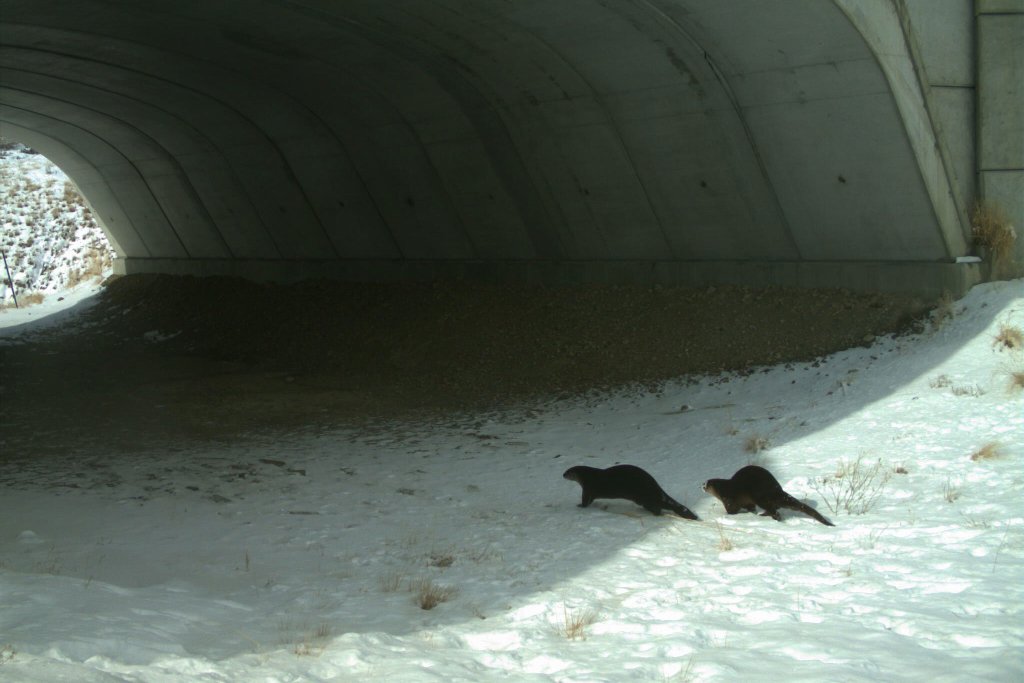
This morning’s NY Times Morning feed carried an article about a group of penguins who are receiving special treatment at the New England Aquarium in Boston.  Six seabirds were moved to the island for “retired” penguins that opened in February.  The birds were relocated to address the large number of penguins at the aquarium who are living well beyond the age they would be expected to reach in the wild.  The residents of this “country club for older animals” are sectioned off from three other islands inhabited by penguins via a mesh gate in the water.  “They all get a good opportunity to eat and take their time and not feel rushed, not get pushed off the island by another animal that’s anxious to eat,” said Kristen McMahon, the aquarium’s curator of pinnipeds and penguins.  About half of the aquarium’s 40 African penguins are older than the bird’s life expectancy of 10 to 15 years, and some have doubled it.

When I looked online, I found the African penguin (Spheniscus demersus), also known as the Cape penguin or South African penguin, is a species of penguin confined to southern African waters and is the only penguin found in the Old World.  All penguins are flightless and have a streamlined body and wings stiffened and flattened into flippers for a marine habitat.  Adults weigh an average of 4.9 to 7.7 pounds (2.2 to 3.5 kg) and are 24 to 28 inches (60 to 70 cm) tall.  The upper parts of the body are black and are sharply delineated from the white underparts (counter shading), which are spotted and marked with a black band.  The African has distinctive pink patches of skin above the eyes and a black facial mask.  The birds are pursuit divers that feed primarily on fish and squid.  Wild penguins are found in the coastal waters of South Africa and Namibia, where they face threats that include the depletion of food from overfishing, climate change, and pollution.  Once extremely numerous, they are now the rarest species of penguin. 

The geriatric penguins at the aquarium are mostly in their 30’s and receive close monitoring for ailments like cataracts and arthritis.  They are fed fish injected with extra water to promote kidney health, and they get treatments such as eye drops and physical therapy.  Some even get acupuncture.  McMahan said, “We wanted a space that was a little bit lower paced and more easily observed by the veterinarian team and our training team on a daily basis.”  The life expectancy for a wild African penguin likely does not reflect the reality for the species today, said Christina Hagen, the Pamela Isdell Fellow of Penguin Conservation at the organization BirdLife South Africa, a group who are attempting to establish an African penguin colony in the wild.  The aquarium’s penguins can live longer because they do not face the same threats as wild birds and receive specialized care.  The African penguin is classified as a critically endangered species, and conservationists say that they could become extinct in the wild by 2035. 

THOUGHTS: The aquarium’s oldest African penguin, Good Hope (35), and his mate St. Croix (23), are set to move to the retirement island soon.  McMahan said the aquarium does not have plans to move in other birds and will instead let this group “live in harmony”.  Human retirement homes in the US range from independent living to assisted living to skilled nursing care, and the costs vary greatly depending on location and level of care needed.  While independent living costs vary widely based on location and specific community, the national median monthly cost for assisted living is around $5,676, a semi-private room in a skilled nursing facility is around $8,669, and a private room is $9,733.  As of Mar 7, 2025, the average annual pay for a Retirement Community in the United States is $62,680 a year.  Being able to live in harmony is not cheap.  As our population ages new innovations are needed to provide housing.  Act for all.  Change is coming and it starts with you.
Loki

March 13, 2025

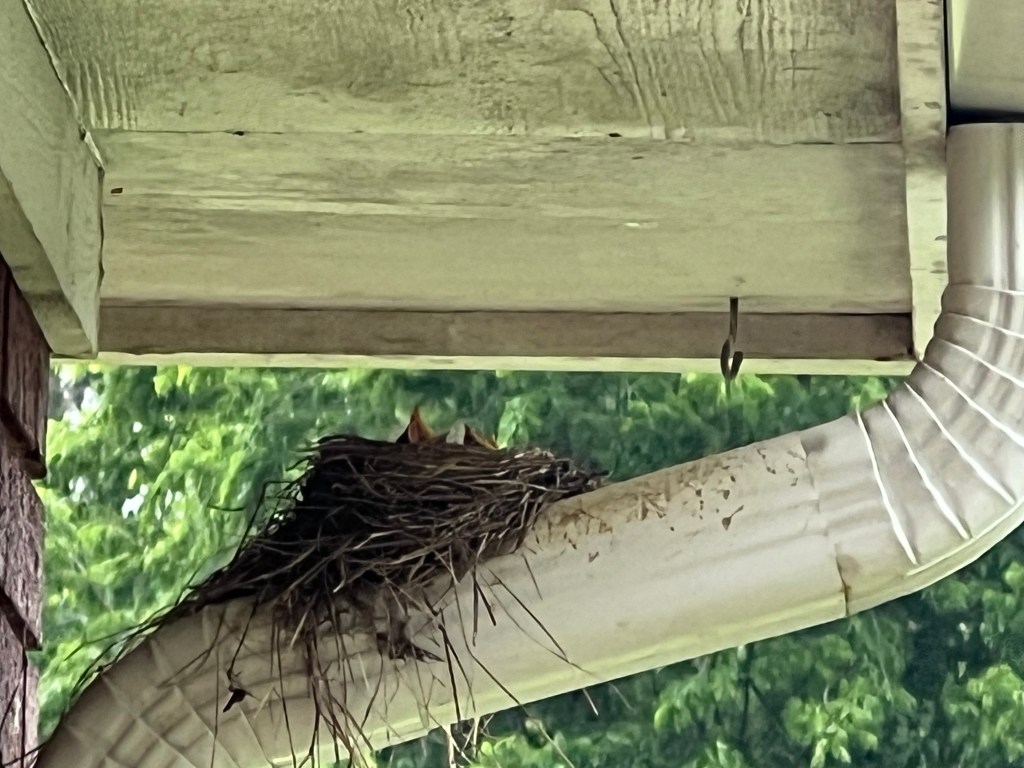
We have been getting quite a bit of activity on our feeders over the last month.  When the snow came and the temps dropped, there was a scarcity of natural seeds, and the birds flocked to the feeders.  Now the temps are warming up and the birds are getting frisky and need to replenish their energy.  I also have a group of about ten common grackles (Quiscalus quiscula) that quickly wipe out the feeders.  I have been filling the feeders every morning and finding them completely empty the next day.  I have also noticed the birds are getting more familiar with having the dogs around while they are feeding.  It used to be they would scatter when I let the kids out, but now they tend to either stay or at least do not stray too far.  Several days ago, we were visited by a small American gold finch (Spinus tristis) who refused to move.  Loki ran out of the house and the bird continued to sit on the feeder.  Loki became fascinated and stood looking at the bird for at least a minute.  Even after running away, Loki repeatedly returned to look at the bird, giving it full attention.    

When I looked online, I found (if you do not have a gold finch handy) there are four ways to teach your dog to pay attention.  This is focused on the reward-based method, and since Loki is already food-oriented these should work well.  The method begins by establishing a clear “Watch Me” cue.  This is done by beginning to hold the treat by your face and letting your dog sniff them.  Then slowly move the treats away and reward them the moment they refocus on your face.  Vocal clues like “watch me” or “look at me” are added to positive reinforcement like “Yes” or by using a clicker.  The key is consistency.  Distractions should be added gradually.  Once your dog focuses on you in a quiet environment you can add distractions like toys or other people.  Another technique is to teach your dog that good things happen when they regularly make eye contact.  Here again treats and toys are used as a reward.  Finally, learn to understand tension seeking behaviors and teach them alternative behaviors like sitting to say hello, or fetching a toy to get your attention.

Loki displays several attention-seeking behaviors that can be overpowering.  We have worked on his jumping when we enter the house, and he is getting better.  Loki will also sidle into you or try to get on your chair when you sit down.   These actions could stem from anxiety, lack of exercise or stimulation, a change in routine, or even a natural tendency for companionship.  Dogs can experience anxiety and stress just like humans, and this can trigger clingy behavior as they seek reassurance.  A dog who is not getting enough physical and mental stimulation may resort to these attention-seeking behaviors to release pent-up energy or boredom.  Separation anxiety happens when they anticipate or experience your departure.  Dogs crave attention and affection, and needy behavior may be a way to get more interaction.  Dogs are social animals that need companionship.  A dog who does not get enough social interaction may become more needy in their attempts to bond with their humans.  I think for Loki the behavior comes from a desire for attention.  Loki and Zena sometimes get into pushing matches to force the other dog away and command the attention of both Melissa and me. 

THOUGHTS: Knowing the needy behavior Loki exhibited was a desire for attention means we need to provide more.  When Loki gets on the chair, we tell him to get down but then reward the good behavior by petting and talking to him.  When Loki and Zena get into pushing matches to get close and force the other away, we try to love both, or Melissa will call one to her so they both get full attention.  Attention theory was developed to account for how humans learned based on rewards (approval) for their response.  Everyone requires attention and if they do not get enough, they will act out to receive it.  It seems negative attention is better than none.  Like Loki, society needs to provide positive attention for children and adults.  Act for all.  Change is coming and it starts with you.
Blue Ghost

March 07, 2025

Inside the back section of Thursday’s newspaper was a USA Today article on the lunar lander that touched down early Sunday morning, March 2nd.  NASA’s Janet Petro said, “This incredible achievement demonstrates how NASA and American companies are leading the way in space exploration for the benefit of all.”  The Texas based Firefly Aerospace was hired by NASA to carry scientific instruments to the moon’s Earth-facing side to study its environment ahead of a manned return.  The 10 instruments will be used for lunar subsurface drilling, sample collection, X-ray imaging, and dust mitigation.  The craft has already sent striking images of the moon since it arrived in Lunar Orbit on February 10th.  Firefly has named this class of lunar lander the Blue Ghost.

When I looked online, I found the Firefly Aerospace Blue Ghost, or simply Blue Ghost, is a class of lunar landers designed and manufactured by the private American company Firefly Aerospace designed to deliver small payloads to the surface of the Moon.  The first Blue Ghost mission was launched January 15, 2025, at 1:11 a.m. EST and successfully landed on the Moon on March 2, 2025.  The landers are named after the firefly (Phausis reticulata) known as the Blue Ghost.  Firefly is the prime contractor for lunar delivery services using Blue Ghost landers which provide payload integration, launch from Earth, landing on the Moon, and mission operations.  Blue Ghost has four landing legs and is designed and built to be easily adapted to each customer’s needs between the earth and moon or in the moon’s orbit (cislunar).  Blue Ghost can be customized to support larger, more complex missions and is compatible with multiple launch providers. NASA awarded Firefly the first Blue Ghost lunar delivery task order in February 2021 as part of the Commercial Lunar Payload Services (CLPS) initiative.

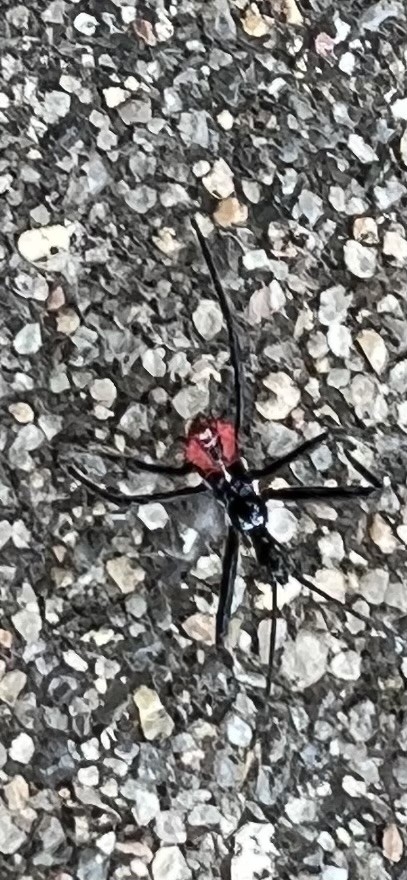
The lander’s blue ghost namesake is a species of firefly found in the eastern and central US and is common in the southern Appalachians.  Adults are found in a variety of habitats, including dry and moist woods, near water, and along high, dry ridges.  The male of the beetle species is all-brown and about 0.2 to 0.4 inches (6 to 9 mm) long with large eyes.  The female is smaller, measuring 0.2 to 0.4 (4 to 9 mm) long.  Female blue ghosts are wingless, are yellow. and remain in larval form through adulthood (paedomorphic).  The females glow continuously from 4 to 9 spots on her body so they can be spotted by the males.  Once a female lays her clutch of 20 to 30 eggs, she guards them until she dies in one to two weeks.  The eggs hatch approximately 4 to 5 weeks after the mother dies. The larvae are extremely tiny, approximately 0.05 in (1 – 2 mm) and are bioluminescent.  Unlike many firefly species in the US, the blue ghost displays a steady glow rather than the typical flashing pattern.  The light emitted appears (to humans) as blueish-white when seen from a distance, but bright green when examined at close range.

THOUGHTS: The discrepancy in the observed color of the blue ghost is likely due to the Purkinje effect.  While the effect is often described from the perspective of the human eye, it occurs in other animals under the same name.  This effect describes the general shifting of spectral sensitivity due to pooling of rod and cone output signals as a part of dark/light adaptation.  The colors seen by different animals vary greatly depending on the makeup of those rod and cone features.  Humans seem to be in the middle of both color detection and acuity.  This is also true about our ability to make observations and gain understanding.  “Not like us” means different, not better or worse.  That is true for other animals and other humans.  Act for all.  Change is coming and it starts with you.