Underdog

February 16, 2021

With all the backyard’s focus on the birds during the cold and snow we have experienced, Melissa mentioned how she had not seen the squirrel for almost a week.  I admit, I had been wondering the same thing.  While I used to run them off, giving in and accepting their raids on our feeders has meant we now enjoy their antics as well.  I assured her he was alright.  He was probably hunkered down in his nest munching the seed and nuts he had stored previously.  At least, that was my hope.

I looked online to find out about my squirrel and nesting habits.  A Squirrel nest, or drey, is a compact, spherical structure that is slightly larger than a football.  It is constructed of twigs, leaves, bark, and grass.  Squirrels usually nest solo, but during the height of the mating season (usually the beginning of the calendar year) both male and female squirrels will share a nest for the purpose of mating.  They may also share a nest to help conserve body heat during the coldest stage of winter.  Squirrels do not hibernate and regularly venture out to their food stores for supplies.  I guess my squirrel was just keeping warm.

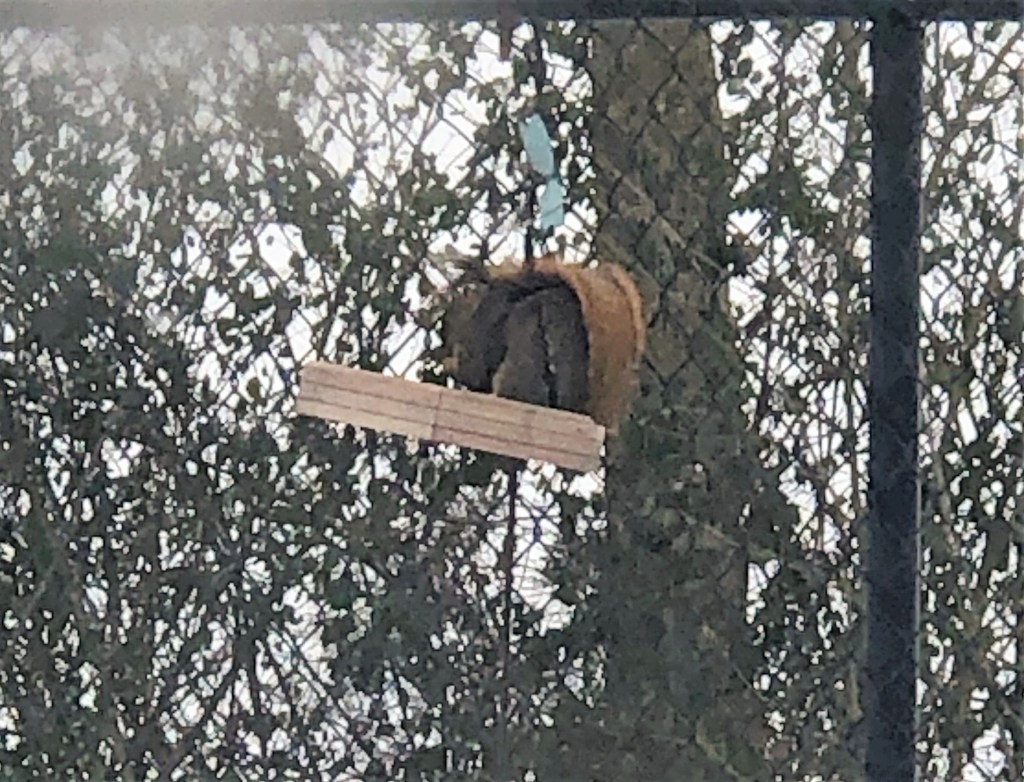
Apparently either the squirrel’s stores had been exhausted or at least diminished enough, because he came out to help himself to the sunflower seed yesterday.  It still drives me crazy that the corn and peanuts I put out for the squirrel are eaten by the cardinals and jays and the sunflower seeds I put out for the cardinals are the first place the squirrel goes to eat.  He usually hangs upside down on the fence and works his way through as much seed as he can handle.  With all the blackbirds in every feeder he decided to take a new tact.  This time he crawled into the feeder and curled his tail up over his head and back.  The blackbirds were not happy about his presence, but curled up as he was, he seemed immune to their dive bombing.  Instead, he ignored the blackbirds and sat munching away for over 30 minutes.

Thoughts:  I tend to root for the underdog in most situations.  The word ”underdog” comes from the dogfights in the late 19th century.  The loser was called the ”underdog,” and the winner was the ”top dog”.  That has carried over to watching the birds at the feeders.  Initially I was irritated by the squirrel eating all the seed.  Then I saw the jays driving him off and I grew to like him, even giving him his own feeder (not that he uses it).  I do not like the jays much because they drive other birds away and claim a feeder for themselves.  Many movies depict an underdog who rises to the occasion and overcomes seemingly insurmountable odds.  Generally, this is accomplished by forming a rag tag team and working together.  We do not have to be rag tag to overcome the effects of the current pandemic, but we do need to work together.  Follow the science.  Change is coming and it starts with you.
GBBC

February 15, 2021

I got a call from my mom on Thursday saying she had come across an article in her newspaper about the upcoming Great Backyard Bird Count (GBBC).  While mom did not have the direct link, I had found it online while still on our conversation.  The GBBC is designed to engage bird watchers of all ages in counting birds to create a real-time snapshot of bird populations. Participants are asked to count birds for at least 15 minutes (or longer) on one or more days of the four-day event and report their sightings online at birdcount.org.  Each checklist submitted helps researchers at the National Audubon Society, Cornell Lab of Ornithology, and Birds Canada learn more about how birds are doing, and how to protect them and their environments.  The 24th annual GBBC was from Friday through Monday (12th-15th).

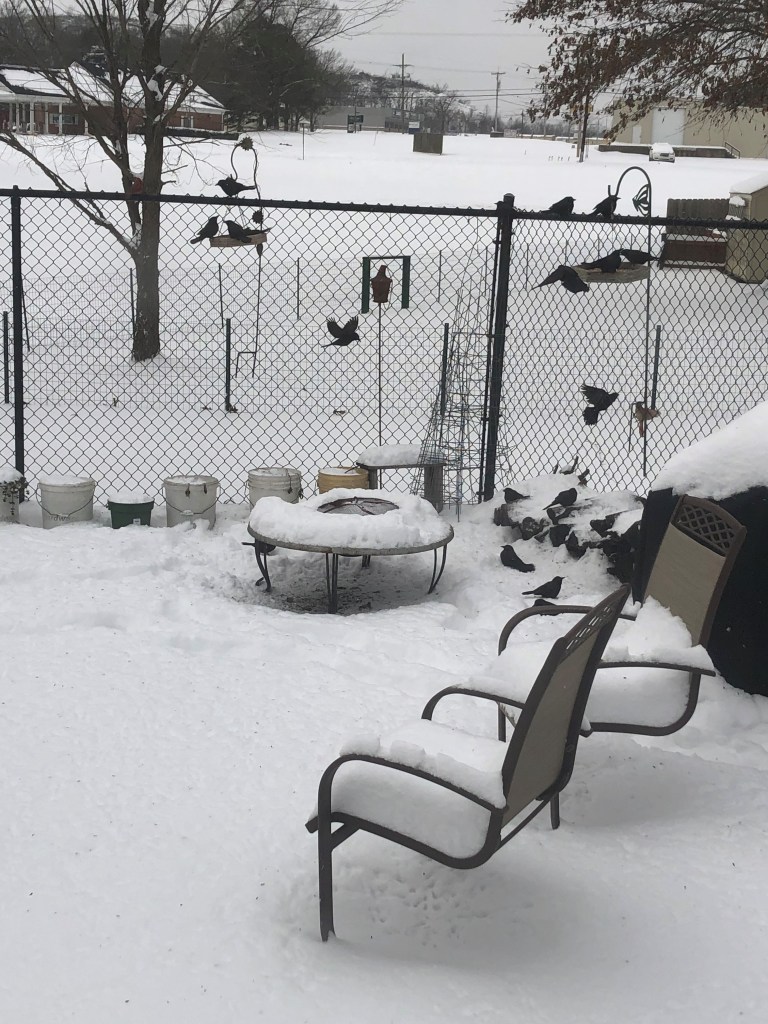
I downloaded all the necessary apps to participate in the study and signed up with the National Audubon Society and the Cornell Lab of Ornithology.  They each provided an identification app for my phone that I added to the National Geographic identification app I already had.  I had filled my feeders on Friday and sat down in front of our bay window to see what might arrive.  The cold weather meant the birds arrived in masse.  I sat for forty minutes and recorded 31 birds and 9 different species.  Later that day I had a flock of 30 Rusty Blackbirds/Brewers Blackbirds (?) descend on the tree line at the back of my house.  I read that black birds of many species often gather in mixed flocks.  That was what I had seen at the wildlife refuge in January.                  

By midnight Sunday morning the GBBC had received impressive results.  More than 60,000 participants had reported more than 5,200 species on over 133,000 checklists.  Sightings had come in from all over the world, including 157 countries.  That left a lot of birdwatching to be done to match or exceed last year’s total tally of 6,942 species.  While I continued to watch, it did not seem right to stay in one place and just keep recording my own backyard.  My winter birds are hunkered down in the trees and bushes nearby and do not change much from day to day.  Still, they are fun to watch as they battle each other for supremacy.

Thoughts:  We got our expected 4-5 inches of snow on Sunday night.  When I put out seed for the birds on Friday, they had attacked it voraciously.  When I got up Sunday there were few birds, and the squirrel feeder (a Cardinal favorite) was empty.  Since it was snowing and wicked cold, I did not go out to check.  When I got up today, I felt sorry for the birds and filled my feeders.  Within 20 minutes they were full of cardinals, sparrows, larks, and the single Blue Jay that hangs around.  An hour later the blackbirds I had seen the previous day were back and filled the feeders.  They are larger birds and drove off even the Cardinals by their sheer numbers.  Size and numbers are generally dominant when species (or countries?) work together.  Humans could accomplish even more amazing things if we could just decide on a focus.  It is time to work together rather than competing for the same resources.  Follow the science.  Do the work.  Change is coming and it starts with you.

Freeze

February 13, 2021

With all the freezing cold weather we have been having the birds have been stripping my feeders on a regular basis.  I have been refilling them every two or three days.  That meant I had run out of all three types of feed I have been putting out.  I purchased a bag of black-oil sunflower earlier this week but decided to make a run to the tractor store yesterday.  I wanted to see if I could find bigger bags for the squirrel mix and the small grain mix.  Sure enough, I found 20# bags of both and they were on sale.  While this was only a savings of $1, it was still half as much as I had paid at the grocery.  Hopefully, this will last until the weather starts to thaw.

Before this week’s freeze warning I had been toying with the idea of getting some early plants and putting them out on our greenhouse porch.  I realize February is too soon to put them outside but thought putting them on the porch might give them a head start on the growing season.  I have some leftover seed and I considered putting it in last year’s tomato buckets to see if I could get them to sprout.  When I got to the tractor store, I found they had several flats of cabbage plants displayed in front of the store.  These were sitting outside in the sun.  The only problem was, it was 20F and the previous rains had frozen over the entire batch of flats.  We are predicted to continue to have freezing rain and snow over the next week.  Perhaps I should wait on getting my early start.

When I mentioned the frozen cabbages to Melissa, she told me they should be ok if they were not frozen for too long.  I was skeptical and looked online to see if this was the case.  The site said frost and freezing generally occurs in the late fall when the temperatures drop and there is more abundant moisture.  While this will damage many vegetables, hardy and semi-hardy varieties can sustain temperatures as low as 20F without being killed. The hardy vegetables include cabbage, broccoli, Brussel sprouts, carrots, kale, leeks, rutabagas, and turnips.  While a freeze may kill the leafy tops of rooted vegetables, mulched crops will survive throughout the winter.  That is unless voles discover your cache and beat you to the harvest. 

Thoughts:  When I went to the grocery store today to prepare for a Valentine’s Day meal, I was not surprised to find many of the shelves bare.  While the milk was fully stocked, the bread and cheese had been decimated.  Many of the carts were filled with bottled water and other staples.  I find it humorous what some find to be essential items during a storm.  I am always amazed (not surprised) how the threat of snow or freeze causes humans to act the same as my birds.  Both of us stock up on food supplies “just in case.”  The news said the local homeless shelters are also preparing for the freeze, vowing “no one will be turned away.”  This announcement must be to make me feel better, as few homeless outside the shelters have access to a TV.  This is always a hard time to be on the streets.   The need for food, clothing, and warmth are year-round, even if intensified during a freeze.  Do the work.  Change is coming and it starts with you.
Common

February 12, 2021

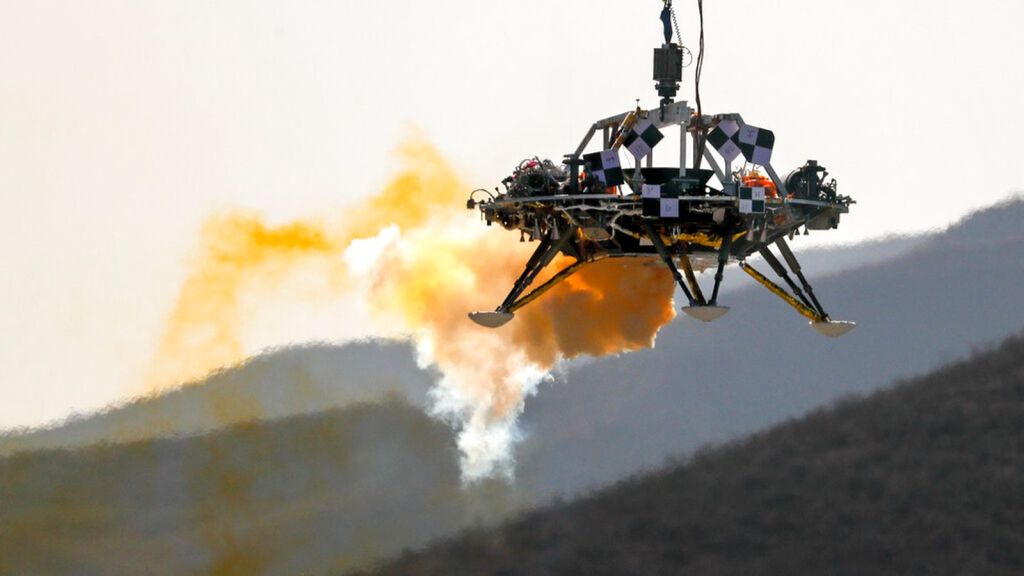
This is an historic week as three Mars spacecraft will arrive in quick succession.  And no, I am not talking about UFO’s landing in Central Park to mark the end of the world.  The United Arab Emirates (UAE) Orbiter (named Amal or “Hope”) was the first to arrive on Tuesday and successfully settle into orbit.  This was followed on Wednesday by China’s combined orbiter-rover (Tianwen-1 or “Quest for Heavenly Truth”).  The craft will continue to orbit and then in May the rover will descend to the planet’s surface.  If successful it will become only the second country to land on Mars, along with the US.  The US rover is scheduled to arrive on February 18th and will immediately dive toward the surface.  NASA has landed eight of its nine attempts successfully.  Mar’s surface is littered with smashed Russian and European attempts along with the failed US Mars Polar Lander.

While Melissa and I were watching a documentary on World War I last night it mentioned the trepidation felt as America sent our first troops to France in 1917.  The German U-boats (submarines) had been decimating the cargo ships and it was feared they would do the same to our troops.  That is when the leaders devised a plan to ship the men as part of a convoy, heavily defended by small destroyers designed to find and sink the U-boats and save the ships.  The plan was successful and American troops and supplies were able to turn the tide of war.  Crossing the Atlantic moved from being a death trap to being common.

The countries of the world have made a total of 49 attempts to reach Mars to date.  There have been six countries, along with the European Union, who have launched missions to Mars.  Mars fly-bys were common in the 1960’s with 12 attempts, but only three were successful.  Now orbiting Mars is becoming common as the Chinese and UAB crafts will join six other craft still in orbit: three from the US, two from Europe, and one from India.  These are added to the two working Mars rovers and two rovers set to activate this year.  The Mars exploration program for the US is scheduled to continue until 2033, followed by a crewed phase in 2040–2060.  These crew members would land on Mars and return home.  This will begin the process of making Interplanetary travel common.

Thoughts:  As we watched last night’s documentary Melissa asked a simple question, “Why didn’t they just fly?”   It is amazing to think the first successful flight took place on December 17, 1903, as Wilbur and Orville Wright made four brief flights at Kitty Hawk.  They used a stopwatch to time the duration of the flights.  Just 66 years later the US Apollo 11 landed two astronauts on the moon and two years after that we landed successfully on Mars.  There is only one person in the world still alive at the time of first flight (Kane Tanaka of japan), now few can recall a time when flight was not common.  When the extraordinary becomes common we tend to forget.  We need to remember the turmoil and change of 2020.  If we relegate it to common, we will dismiss the learning gained by our ordeal.  Follow the science.  Do the work.  Change is coming and it starts with you.
1619

February 11, 2021

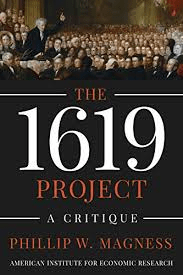
One of the articles on the front page of my local paper this morning addressed the effort to ban the “1619 Project” from being taught in the state’s schools.  The representative who proposed the ban cited “a misleading narrative of American history.”  The proposal drew criticism from both Republican and Democrats on the House panel.  The main criticism of the bill was that the two dozen teachers who choose to be trained to teach the material should be regulated at the local level, rather than the state.  Rather than ban the curriculum, the Districts should be able to decide if, and when it is taught, and then allow parents the right to opt in or out for their children.

When I looked the project up online, I found it had been created to mark the 400th anniversary of the arrival of the first enslaved Africans in England’s Virginia colony.  The 1619 Project is a journalism project developed by Nikole Hannah-Jones, writers from The New York Times, and The New York Times Magazine which “aims to reframe the country’s history by placing the consequences of slavery and the contributions of Black Americans at the very center of the United States’ national narrative”.  The project has received mixed critiques from historians.  In a letter published in The New York Times in December 2019, several historians expressed “strong reservations” about the project and requested factual corrections.  They accused the project of putting ideology before historical understanding.  Project creator Nikole Hannah-Jones was awarded the 2020 Pulitzer Prize for Commentary for her introductory essay to the 1619 Project.

Opposition to teaching the curriculum began in July 2020, when Republican Senator Tom Cotton (Arkansas) proposed the “Saving American History Act of 2020.”  This called for the prohibition of K-12 schools from using federal funds to teach curriculum related to the 1619 project, and to make schools that did ineligible for federal professional-development grants.  Cotton added that “The 1619 Project is a racially divisive and revisionist account of history that threatens the integrity of the Union by denying the true principles on which it was founded.”  This was backed by the administration who used an Executive Order last November to create the “1776 Commission” to develop a “patriotic” curriculum.  The commission was terminated by President Joe Biden on January 20, 2021.  History is always bias, just usually in favor of the elite.

Thoughts:  One of the requirements for my graduate degree in American History was completion of a Thesis.  While the MA Thesis is designed to prove your ability to research and recount what other historians have said in a scholarly manner, the PhD instead focuses on presenting new information on the past.  Over the last half century this has resulted in a focus on “revisionist history”.  This often revises how we interpret and understand existing documents rather than finding new sources to shed new light.  One of the things I have been taught (and found to be true) is that what we record, save, and retell are the stories that support our individual bias.  That is true for individuals, but also for a nation.  The 1619 Project presents a different voice.  That is what free speech is about.  Do the work.  Change is coming and it starts with you.
Frenzy

February 10, 2021

The only thing that has not benefited from video game use has been the brick-and-mortar retail chains like GameStop, which still rely on physical sales in a world swiftly transitioning to digital transactions.  That changed last month as GameStop’s stock skyrocketed as part of a frenzy orchestrated by small-time investors on Reddit and TikTok.  To get back at the hedge funds profiting off GameStop’s steadily declining business, these investors banded together to buy the company’s stock and increase its value. That created a “short squeeze,” forcing the hedge funds that had shorted GameStop’s stock to buy more and more shares to cover their losses.  The stock’s price reached a high of $483 on January 29, up 12,000% from its $4 price around this time a year ago.

When I looked online, I found that a short sale is a transaction where the seller does not own the stock being sold.  Instead, they borrow it from the broker-dealer where they place the sell order.  The seller has the obligation to buy back the stock at some point in the future.  Short sellers are subject to the risk of short squeezes.  A short squeeze occurs when a heavily shorted stock moves sharply higher, which “squeezes” more short sellers out of their positions and drives the price of the stock higher.  That is what happened with GameStop.  The advantage of a short sale is that it allows traders to profit from a drop in price.  Short sellers aim to sell shares while the price is high, and then buy them later after the price has dropped.  The hedge funds who bought GameStop stock for short sale were making millions.

A hedge fund is an “investment fund that trades in relatively liquid assets and can make extensive use of more complex trading, portfolio-construction, and risk management techniques to better performance.”  One of the tools of the hedge fund is short selling.  Financial regulators generally restrict hedge fund marketing to institutional investors, high net worth individuals, and others who are considered “sufficiently sophisticated.”   Many of the small investors who drove the GameStop frenzy were not “sufficiently sophisticated.”  However, when they banded together, they were able to cause the hedge funds huge losses while making money for themselves.  Perhaps sophistication is relative.

Thoughts:  The elite rarely give credit to those they consider beneath them.  That was true with the hedge fund traders in the stock market.  That was also true with the revolutions of Europe:  the American Revolution in 1776, the French Revolution in 1789, and the Russian Revolution in 1917.  When the populace did rise it caused a frenzy as power shifted from the elite to the masses.  While some say a living wage is a right for every worker, others say we cannot afford it and point to “small business” as an example.  MacDonald’s small franchises reported over $93 Billion in sales during 2020.  We cannot afford not to provide this help to our essential workers.  That is what 1776 was all about.  Do the work.  Change is coming and it starts with you.
Nance

February 09, 2021

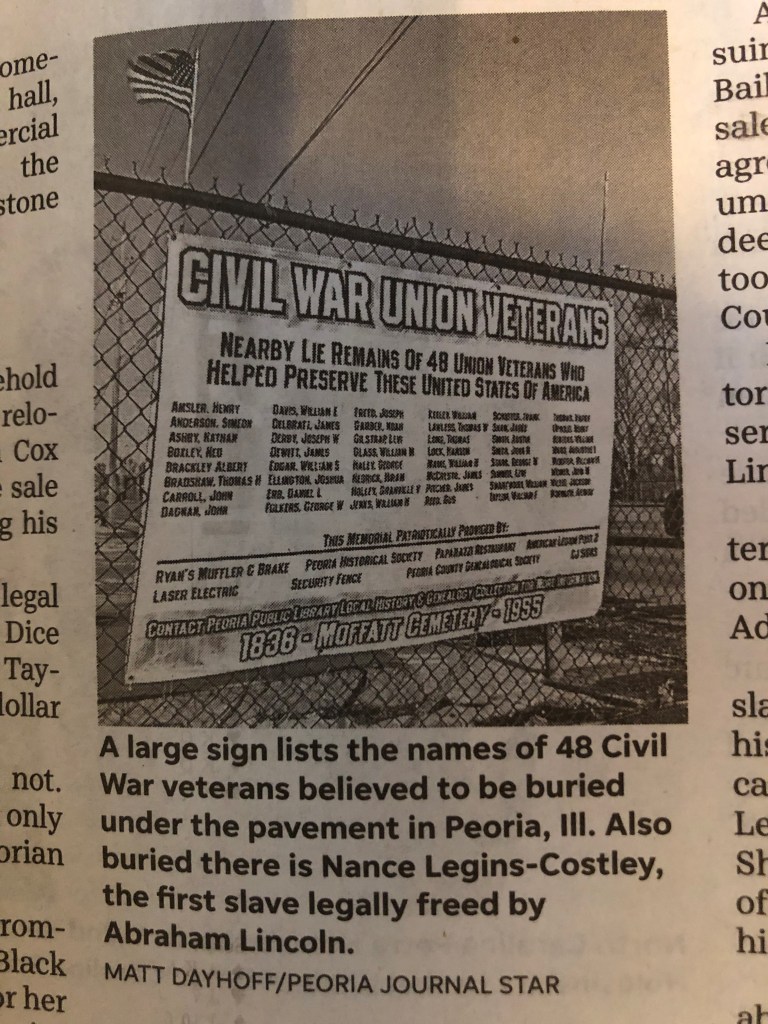
I came across an article this week about the first slave freed by Abraham Lincoln.  Nance Legins-Costley was not born in the south and was not freed as part of Lincoln’s Emancipation Proclamation of 1863.  She instead was born into bondage in the state of Illinois in 1813.  Nance’s slavery became a life-long indentured servitude when Illinois became a state and in 1822, she and another indentured servant named Dice, were sold to Nathan Cromwell to recover debts owed by Mr. Cox, their master.  While Dice went along with the sale, Nance objected as she was being taken from the only home she had known.  Her case ended up in the state Supreme Court where Cox lost, awarding Nance to Cromwell as property.  This is the only legal slave auction in Illinois history.  

The Northwest Ordinance (1787) banned slavery in Illinois and the rest of the Northwest Territory, but slavery remained an issue throughout the territory’s existence.  When Illinois Territory was created in 1809, they kept the Indiana Territory’s Black Code, which restricted free blacks and required them to carry documents to prove their freedom.  Slaveowners could keep their workers in bondage by forcing them to sign indentures of anywhere from 40 to 99 years, threatening them with sale elsewhere if they refused.  When Illinois became a state (1818), the constitution stated that slavery shall not be “thereafter introduced”, but existing slavery was still tolerated.  The Illinois Supreme Court ruled indentured servants could be bought and sold, although three years later it also held that their children were legally free. This ruling ensured that slavery would gradually end. The census records reveal that 747 slaves resided in Illinois in 1830, while by 1840 that number had dwindled to 331.

Nance’s case went to the Illinois Supreme Court again after Cromwell decided to move to Texas in 1836.  Nance again refused to go, and her servitude was sold to David Bailey, an abolitionist on the promise of $400.  Cromwell died in route and Nance declared herself free.  Cromwell’s heirs sued Bailey for the money owed and the judge deemed Nance was again property.  Baily took the case to the Illinois Supreme Court and hired an attorney friend whom he had served with in the Black Hawk War, Abraham Lincoln.  At the time, Lincoln was ambivalent on the issue of slavery, but his discussions with Nance pushed him toward an anti-slavery stance.  On July 9, 1841, Lincoln appeared before the state’s high court.  His arguments leaned heavily on the anti-slavery language of the Northwest Ordinance and the Illinois Constitution.  The justices agreed and ruled in favor of Bailey and Lincoln: “It is a presumption of law, in the State of Illinois, that every person is free, without regard to color . . . The sale of a free person is illegal.”  Nance had finally won her freedom.   

Thoughts:  It is always easier to point the blame at others than to embrace our own culpability.  Northerners tend to look at the South and say, “It is their problem.”  The struggles of Nance took place in a northern state that had declared slavery illegal, yet she was born into slavery and lived as a slave for the first 28 years of her life.  Clearly, this was not a Southern problem, it is an American failure.  It is notable that the BLM movement began in 2013 in response to the death of two Black men in northern cities.  Last summer’s protests primarily occurred in northern cities following the killing of George Floyd by a Minneapolis police officer.  Racism is our problem, and we all need to acknowledge its institutional foundation.  Do the work.  Change is coming and it starts with you.
Old

February 08, 2021

Yesterday’s Super Bowl was touted as a battle between the young and the old.  The two weeks before the game was all about the quarterback duel between Tom Brady the GOAT (greatest of all time) and Patrick Mahomes the wannabe GOAT.   Brady was vying for his seventh Super Bowl ring in ten trips to the game during his 21-year career.  Mahomes is in his fourth season and was attempting to become the first back-to-back champion since Brady led the Patriots to victories in 2004 and 2005.  There is an 18-year age difference between the two quarterbacks.  Most predicted the kid would have a big edge.  Yesterday’s 31-9 Buccaneers victory showed being old was a good thing.

The 43-year-old Brady became a free agent last March after the Patriots refused to resign him for a multiyear contract, ending a 20 seasons stint with the Patriots.  A month later Rob Gronkowski ended his year-old retirement to join his friend.  Brady and the Gronk were joined by Leonard Fournette after he was waived by the Jaguars in September.  Receiver Antonio Brown who had been let go by the Raiders and Patriots last season for his outrageous behavior signed in late October.  All were believed to be past their prime.  These four accounted for all the Bucs’ touchdowns on Sunday.  Gronkowski’s two touchdown catches were the twelfth and 13th Brady-to-Gronkowski postseason touchdowns, an NFL record.  It seemed the experience of being old was an advantage.

The 25-year-old Mahomes ended up scrambling for his life behind a makeshift offensive line.  Pro Bowl left tackle Eric Fisher tore his Achilles’ tendon in KC’s AFC championship win over Buffalo.  Right tackle Mitchell Schwartz was the team’s best offensive lineman last season but has been out with a back injury since Week 6.  That meant inserting new players int the lineup and shift others to new positions.  The turf toe Mohomes suffered in the Divisional round appeared to again flare up as KC’s line failed to keep the aggressive Buc defense from forcing Mahomes to scramble for his life.  Mahomes lost an NFL game by double digits for the first time in his career.

Thoughts:  Tom Brady was drafted 199th in the sixth round of the 2000 NFL Draft by the New England Patriots.  He led the team to its first Super Bowl victory in the following year and three in his first five years.  After a ten-year drought, he led The Patriots to three more titles over five years between 2014 and 2018.  After two years without a title, Brady was considered too old to play.  He signed a two-year deal with the Buccaneers and brought them their second victory in franchise history.   While the average tenure for NFL quarterbacks is 4.5 years, this year quarterbacks of six of the 14 teams in the playoffs were at least 36 years old.  Perhaps being old and discrimination through ageism needs to be rethought.  Do the work.  Change is coming and it starts with you.
Rules

February 06, 2021

Buried in the middle of my Saturday paper I found an article on changes the Biden administration has taken to protect migratory birds.  During the last administration, the Interior Department had sided with industry groups and sought to end criminal prosecution of accidental, yet preventable bird deaths.  The Migratory Bird Treaty Act of 1918 (MBTA) is a US federal law for the protection of migratory birds between the United States and Great Britain/Canada.  The law is of constitutional interest as it uses federal treaty-making power to override the provisions of state law.  The principle that the federal government may do this was upheld in the case Missouri v. Holland.  In a defense of the treaty, Judge Caproni on August 11, 2020 wrote in a decision, “It is not only a sin to kill a mockingbird, it is also a crime.”  The highest profile case under the MBTA was the $100 million settlement by British Petroleum after the 2010 Gulf oil spill killed 100,000 birds.  This illustrates how fragile bird populations can be.

Kansas is on the main route for many migratory birds between Canada and the southern US/northern Mexico.  When I lived in southeastern Kansas a local farmer’s field was inundated by migrating Canadian Geese.  For nearly four days geese would stop in the evening and fly off in the morning as they moved north.  The paper estimated there were around 80,000 geese who had stopped on these 80 acers and the small pond they held.  The geese were drawn by the water and abundant milo the farmer annually left standing in the field as fodder for the migrants.  While this was done on purpose, it had never attracted so many birds.

The MBTA is critical to protecting and restoring declining bird populations.  The statute makes it “unlawful without a waiver to pursue, hunt, take, capture, kill, or sell” nearly 1,100 species of birds listed as migratory birds.  The statute does not discriminate between live or dead birds and grants full protection to any bird parts including feathers, eggs, and nests.  Some exceptions allow for scientific collection and for enrolled members of Native American Indian Tribes to use feathers for religious purposes.  The Act was enacted in an era when many bird species were threatened by the commercial trade in birds and bird feathers and was one of the first federal environmental laws.  Similar Acts with other nations have been incorporated into the MBTA.  Some of these provisions stipulate protections not only for the birds, but for habitats and environs necessary for the birds’ survival.

Thoughts:  There have been 150 bird (recorded) species lost globally since 1500 CE.  Of those, 132 have been classified as ‘Extinct’ and four as ‘Extinct in the Wild’ (populations only surviving in captivity).  An additional 14 species have been classified as ‘Critically Endangered (Possibly Extinct)’ and one as ‘Critically Endangered (Possibly Extinct in the Wild)’.  While the reason for extinction can rarely be pinned to a single cause, extinction most often occurs when new threats develop that are “outside the evolutionary experience of species” (read humans and human pets).  Some believe if we block existing rules or reduce their penalties people will do the right thing on their own.  Try telling that to the 12% if bird species that are predicted to go extinct in the 21st century.  Follow the science.  Change is coming and it starts with you.
Language

February 05, 2021

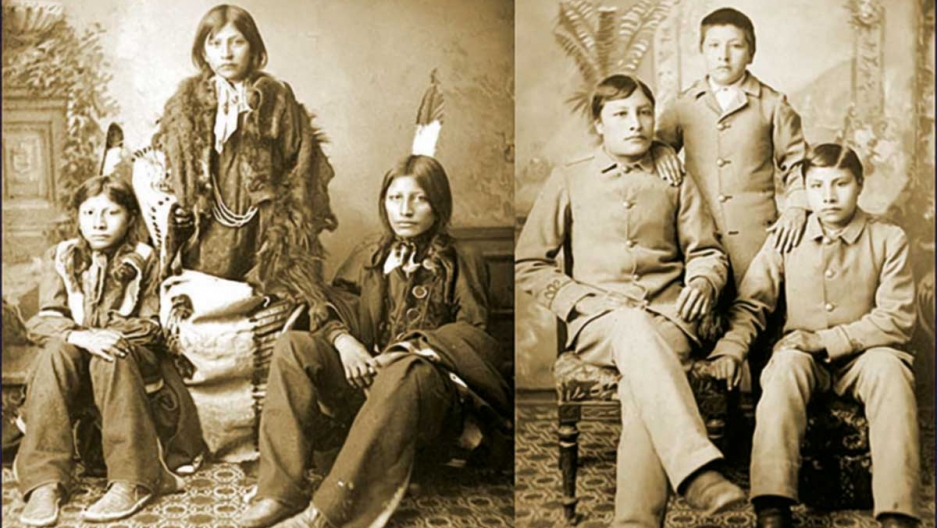
On February 2, 1887 Congress passed a law to prohibit the use of Indian languages in schools.  It was not until a century later that President George Bush signed the Native American Languages Act on October 30, 1990.  In passing the act Congress declared it was the responsibility of the US “to act together with Native Americans to ensure the survival of these unique cultures and languages.”  The act went on to declare it was their right to use Native American languages “as a medium of instruction in all schools funded by the Secretary of the Interior.”  The act also stated this right “shall not be restricted in any public proceeding, including publicly supported education programs.”

I have infamously claimed to have failed to learn more languages than most even try.  In undergraduate school I tried to learn German (my ancestry) but gave up after failing 101 twice (hence, my BS).  My MA demanded a language.  I tried Hebrew (Ancient and Modern), took a course in Coptic, Syriac, and Nabatean, tried to become self-taught in Arabic, and finally again tried German, all to no avail.  For another MA I was finally able to pass Spanish 103, but only by the grace of the Graduate Assistant who let me slide by on “attendance.”  My final degree attempt brought Koine Greek (Biblical) and later French.  I have since tried to learn Italian.  I am not fluent in any of these eleven languages.

Indigenous languages in Indian education have a long history in the US.  Reverend John Eliot preached to the Massachusett Indians in their own tongue in 1646 and got the New Testament published in the language in 1683.  In the early Nineteenth Century, a Northeast mission school only used books written in the Chippewan language.  When the missionaries later switched to English the quality of education declined.  This was also true during the 1830’s among the Sioux.  It was not that the students lacked the ability to learn English, it was their unwillingness.  Another difficulty the English instructors found was that Native languages did not have words for many of the European concepts being taught.  By the 1880’s the federal government was running the schools and assimilation was the goal.  Not only were the youth taken from their families and placed in boarding schools, but they were also conspicuously stripped of anything representing their culture.  

Thoughts:  One of the reasons I struggle with language is the system used to teach me English.  Mine was the “test” class, and the system was abandoned during High School because it was shown that we all lacked the basic skills of grammar.  When learning another language, I was always taught referring to the grammatical forms I never knew.  Another reason I struggled was due to the heavy reliance on rote memorization.  Like the Sioux children above I was unwilling to be told.  Language is an integral part of any culture.  It reflects how society functions and our understanding of the world.  When we learn a new language, it forces us to look at the world in new ways.  The language we use will either bind us closely to our community or separate us from it.  Either requires a conscious choice.  We need to pay attention to health.  We need to follow the science.  We need to do the work.  Change is coming and it starts with you.