NFL Draft

May 10, 2025

Sarah Kloepping/USA Today

The Sunday edition of my local newspaper (yes, it is Saturday) ran a USA Today article on the donations made by the National Football League (NFL) after the draft in Green Bay, Wisconsin.  While some pieces arNFL Drafte returned to their owners, the NFL is donating material and other items to local organizations.  That is up to 30 truckloads of food and reusable items.  Ryan Sclar of ENGIE Impact, a part of the NFL’s green team, said, “It’s really important to the NFL that not only when they come in for a big event are they having a spectacular fan experience, but that they are leaving a really good legacy.” The NFL and the Green Bay Packers are working with community members throughout Green Bay and the surrounding area to donate reusable items.  Recipients include Habitat for Humanity, Red Cross, Oneida Nation, various school districts, and government entities.  These donations continue the economic impact of the NFL draft to the area.

When I went online, I found the NFL draft, officially known as the Annual Player Selection Meeting, is an annual event which serves as the source of player recruitment in the NFL.  Each team is given a position in the drafting order in reverse order relative to its record in the previous year.  Teams with the same record rotate their order for each round of the draft.  A team can either select a player or trade its position to another team for other draft positions, a player, or players, or any combination of those options.  The round is complete when each team has either selected a player or traded its position in the draft.  The first draft was held in 1936 and the rational was to increase the competitive parity between the teams as the worst team would be able to choose the best player available.  Early on, players were chosen based on hearsay, print media, or evidence of ability.  Some franchises began employing full-time scouts in the 1940’s and the success of these teams forced the other franchises to also hire scouts.  While things like team positioning and the number of draft rounds (currently at 7) have been revised since its creation, the fundamental method remains the same.

Edwin Stueck, a store manager for Greater Green Bay Habitat for Humanity ReStore, said donations raise money for their homeowner and building-homes programs.  Lowes asked that items from the green room (large rugs, coffee tables and lamps) be donated to Habitat for Humanity homeowners.  Volunteers with Rooted In, Inc, worked with 17 different spots to pick up trays of unused catered food to be picked up, refrigerated, and donated it to 13 Green Bay area groups.  The Packers have their own sustainability program and worked with the NFL to identify local groups that could use wood from various structures, fence mesh, pieces of metal, flag poles, and other items.  The NFL rents a great deal of what goes into building a draft campus, such as fences, generators, lights, stage pillars, and portable restrooms.  Sustainability has become a major component of many companies, organizations and individual households.  The NFL Draft is yet another example.

THOUGHTS: While the NFL Draft is an example, The NFL says sustainability is a core focus and the league is committed to reducing the environmental impact at each event.  Last year’s Draft donations of over US$200,000 in food and materials were exceeded by US$500,000 from Green Bay.  The NFL asks fans to help reduce waste by recycling and ensuring recyclables are empty, clean, and dry.  We have a new (retired schoolteacher) in charge of our recycling site.  When I pulled in, he was inspecting the items the woman had brought and instructing her on what was permissible and about crushing cans and plastic to save room in the bins.  Even as a conscientious recycler, I learned some things as well.  Recycling is more than dumping trash in a bin.  It is an attitude toward sustainability.  Act for all.  Change is coming and it starts with you.
Fledging

May 06, 2025

When I let the kids out into the side yard yesterday afternoon for a constitutional Loki immediately ran to the fence.  That was not a real surprise as he usually runs to the fence to see if the next-door dogs were outside.  This time he instead started scrambling after something he found on the ground.  Although I did not know what he had found, I was certain it was not something he needed to have in his mouth.  I shooed him away and saw a fledgling bird lying on the ground.  The frightened bird started scittering around as I tried to trap it in my hands.  I finally grabbed the small bird.  The bird was obviously frightened and distressed, but other than being wet from being in Loki’s mouth it appeared to be unharmed.  I placed the bird on the top of the 6-foot (1.8 m) fence to keep it out of harms way and to give it a chance to gain some air before it hit the ground again trying to fly away.  This was a fledgling blue jay that must have fallen from its nest trying to learn to fly.

When I went online, I found the blue jay (Cyanocitta cristata), or the jaybird, is a passerine bird in the family Corvidae that is native to eastern North America.  The blue jay lives in most of the eastern and central states of the US.  Some US populations are migratory.  Resident populations are also found in Newfoundland, Canada, while breeding populations are found across southern Canada.  The blue jay measures 9 to 12 inches (22 to 30 cm) from bill to tail and weighs 2.5 to 3.5 ounces (70 to 100 g), with a wingspan of 13 to 17 inches (34 to 43 cm).  The color is predominantly blue, with a white chest and underparts, a blue crest, and a black, U-shaped collar around its neck and a black border behind the crest.  Males and females are similar in size and plumage.  The blue jay feeds mainly on seeds and nuts, soft fruits, arthropods, and an occasional small vertebrate.  It typically gleans food from trees, shrubs, and the ground, and will “hawk” insects from the air.  Blue jays can be very aggressive to other birds and have been seen to raid nests and have even to kill other birds.  The nest is an open cup in the branches of a tree built by both sexes.  The clutch has from two to seven eggs, which are blueish or light brown with darker brown spots.  Young are underdeveloped at birth (altricial) and are brooded by the female for 8 to 12 days after hatching.  The fledgling will leave the nest between 17 to 21 days old

Blue jays are monogamous during nesting and do not typically abandon their young.  Even after the fledgling leaves the nest the parents will care for and feed them for at least a month, and sometimes for up to two months.  If a young jay wanders far from the nest, parents may still feed it if it can be restored to or near the nest.  The rare cases where the young are abandoned are due to some disturbance or other unforeseen circumstances.  If you find a young blue jay, it is best to leave it alone unless it is in immediate danger.  It is likely the parents are likely to be nearby and will continue to care for the fledgling bird. 

THOUGHTS: The fledgling blue jay I found appeared to be in imminent danger when I put it on the fence.  Fledgling is a dangerous time of life, with an average mortality rate of 42% over a week or two, with most mortality just after they leave the nest.  Humans are born altricial and take even longer to learn to be self-sufficient, typically around 30 years to become fully self-sufficient.  This lengthy process is due to factors like the large human brain taking time to develop, premature birth, and the need to learn complex skills from caregivers.  Self-sufficiency is a gradual progression and not an event and involves developing practical skills and emotional independence.  Being labeled an adult at 18 has little to do with being self-sufficient.  Care networks need to be extended rather than cut off when a child comes of age or decides to become a fledgling.  Act for all.  Change is coming and it starts with you.
Indigo

May 05, 2025

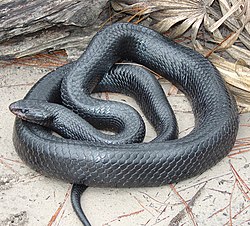
My MSN browser carried an article about the annual reintroduction of a snake into Florida’s forests.  The 41 snakes were released on April 30 at Apalachicola Bluffs and Ravines Preserve (ABRP).  The 21 males and 20 females are part of a long-term effort to restore a once-common species.  This is the eighth year that The Nature Conservancy and its partners have conducted the release.  “The snakes are native, non-venomous, and critical to this ecosystem,” said Catherine Ricketts, preserve manager at ABRP.  This latest release brings the total number of snakes returned to the site to 167.  In 2023, conservationists spotted two hatchlings born in the wild, the first natural offspring of previously released snakes.  Each snake hatches at the Orianne Center for Indigo Conservation (OCIC) and at one year are moved to the Welaka National Fish Hatchery.  The Apalachicola Bluffs and Ravines Preserve is the only site in Florida where Eastern Indigo snake reintroduction is happening.

When I went online, I found the eastern indigo snake (Drymarchon couperi), also called the indigo snake, blue indigo snake, black snake, blue gopher snake, and blue bull snake, is a species of large, non-venomous snake in the family Colubridae.  The species is native to the southeastern US.  The Eastern Indigo was first described by John Edwards Holbrook in 1842.  Until the early 1990’s the genus Drymarchon was considered monotypic with one species (Drymarchon corais) and 12 subspecies.  Drymarchon corais couperi was then elevated to full species status according to the Society for the Study of Amphibians and Reptiles.  The generic name (Drymarchon) is from the Greek words drymos (“forest”) and archon (“lord” or “ruler”), roughly translating to “lord of the forest”.  The eastern indigo has uniform blue-black dorsal scales, with some specimens having a reddish orange to tan color on the throat, cheeks, and chin.  This smooth-scaled snake is considered e the longest native snake species in the US.  The longest recorded specimen measured 9.2 feet (2.8 m) long and the mature male are slightly larger than females.  A typical mature male measures 3.0 to 7.7 feet (1.2 to 2.36 m) and weighs 1.6 to 9.9 pounds (0.72 to 4.5 kg).  Specimens over 8,5 feet (2.6 m) can weigh up to 11pounds (5 kg).

The eastern indigo snake is listed as a federally threatened species in Georgia and Florida due to habitat loss.  In 2012 the Alabama Department of Conservation and Natural Resources had listed the species as possibly extirpated within the state, but a reintroduction program has shown signs of success.  The eastern indigo was largely eliminated from northern Florida due to habitat loss and fragmentation. A restoration program is currently underway at Apalachicola Bluffs and Ravines Preserve (ABRP) in northern Florida. The eastern indigo snake was last observed at ABRP in 1982, until 2017 when 12 snakes were released as part of the program. Twenty more snakes were released in 2018, and another 15 (10 female and 5 male) in 2019.  The 10-year program is a collaborative effort between the Florida Fish and Wildlife Conservation Commission and private partners.  The snakes are also dealing with infections due to the snake fungal disease (Ophidiomyces ophiodiicola) which infects the dermal layer of skin, causing a variety of lesions that commonly manifest on the head and near the vent.  NatureServe considers the species to be Vulnerable.

THOUGHTS: The docile nature and appearance can make the eastern indigo snake to be a desirable pet but owning one may be illegal without a permit.  While only a few states require permits, a federal permit is required to buy one from out of state anywhere in the US.  Most states allow unrestricted in-state sales.  The snake requires a larger enclosure than most species and preferably with something to climb on.  As a vulnerable species, it is perhaps best to leave them to the Nature Conservancy.  Act for all.  Change is coming and it starts with you.
Bluegill

April 30, 2025

I am not sure exactly why, but Melissa and I rarely fish since we got the kids.  We did go a couple of times when Zena was a pup but even then, Melissa sat with her while I fished.  I always felt bad about leaving Melissa with the two dogs while she was still working.  Now that she is retired, I guess it comes down to being out of the habit.  That changed on Monday.  It has been raining and we were (mostly) confined to the house.  By the afternoon the sun was out, and it was a beautiful Spring Day.  I took the dogs for a walk and then we decided to go fishing.  That meant stopping to get worms.  I prefer red worms (Eisenia fetida) as they do not tend to die as easily in the heat as the nightcrawlers  (Lumbricus terrestris).  We also went online to update Melissa’s fishing license.  Now we were ready to fish at one of our favorite spots.  This is a small pond where Melissa caught a 3 pound (1.4 kg) largemouth bass (Micropterus nigricans) several years ago.  Mostly, the pond produces bluegill.  When I went online, I found bluegill (Lepomis macrochirus), also called “bream” or “brim”, is a species of North American freshwater fish commonly found in streams, rivers, lakes, ponds, and wetlands east of the Rocky Mountains.  It is the type species of the genus Lepomis (true sunfish). 

Bluegills range in size from about 4 to 12 inches (100 to 300 mm) and reach a maximum size of 16 inches (41 cm) long and about 4-1⁄2 pounds (2.0 kg).  Color varies from population to population depending on their food source, but they typically have deep blue and purple on the face and gill cover, dark olive-colored bands down the side, and a fiery orange to yellow belly.  The bluegill is noted for the large black appendage (the “ear”) on each side of the posterior edge of the gill covers as well as the base of the dorsal fin.  The sides of the head and chin are commonly dark shades of blue, hence the name “bluegill”.  They are omnivorous and will consume anything they can fit in their mouth, but mostly small aquatic insects and baitfish.  Blue gills are important prey for bass, other larger sunfish, northern pike and muskellunge, walleye, trout, herons, kingfishers, snapping turtles and otters, and play a key role within the food chain of its freshwater ecosystem.  The largest bluegill ever caught was 4 pounds 12 ounces (2.2 kg) in 1950. 

When I blogged about the large bass Melissa caught, I mentioned she is really known as “queen of the tiny fish”.   Small bluegill have a voracious appetite and will devour the smallest amount of worm on a #10 hook.  The trick is not getting them to bite, it is catching them as they tend to nibble rather than engulf the hook.  That is another reason for red worms’ verse nightcrawlers.  The reds are smaller (2 inches /5 cm) and skinnier (1/5 inch/2 mm), meaning the bluegill needs to get their mouth closer to the hook.  Melissa has perfected the skill of fishing for tiny fish and consistently out fishes me.  Monday was no exception as she reeled in 16 bluegill to my 7. 

THOUGHTS: The problem I have fishing for bluegill is that after I catch several, I decide it is time to go after something larger (that bass?).  That means switching from my casting rod to my fly pole.  Invariably, Melissa will catch 2 to 3 fish while I am transitioning.  I rarely have luck with my fly rod at the “tiny fish” pond, but it is fun to practice my cast and to retain the hope of hooking a largemouth.  While Melissa enjoys catching fish, I enjoy the process of fishing.  We both practice “catch and release”, although we occasionally keep a stocked rainbow trout (Oncorhynchus mykiss) at the end of the season.  Both actions are a luxury many in the world do not have.  I have watched videos of people who fish so they can eat and keep anything they catch (regardless of size).  That is true even with many fisher people in the US.  Over 3 billion people worldwide rely on fish for a significant portion of their animal protein intake.  We need to keep our waterways pollution free and use conservation to keep this resource viable.  Act for all.  Change is coming and it starts with you.
Beavers 3

April 22, 2025

© Pavel Mikoska/Shutterstock

My MSN browser provided an update to the ongoing saga of a family of beavers in Northern California.  On a 2,325-acre valley in Northern California named Tásmam Koyóm, conservation efforts are underway to reintroduce beavers (Castor canadensis) after a nearly 75-year absence.  The result has been an explosion in population.  The beaver family in Tásmam Koyóm is one part of the continued efforts in California.  The state released a family of seven on June 12, 2024, at nearby South Fork Tule River, marking the first time the beaver had homed in the region in over a century.  The Tásmam Koyóm family has had a year and a half to get used to the new environment and are thriving, with two litters of kits and one of the beavers finding a mate in the wild.  The California Department of Fish and Wildlife says population growth offers a chance for beavers to thrive again. The species is endemic to Northern California, but its population was decimated by the fur trade in the 1800’s with numbers dwindling to fewer than a thousand by 1912.  The beaver is not only beginning to make a comeback, but it can also protect the landscape from wildfire threats.

When I went online, I found California has been affected by thousands of wildfires between 1987 and 2023.  The Palisades Fire began burning in the Santa Monica Mountains of Los Angeles County on January 7, 2025, and grew to destroy large areas of Pacific Palisades, Topanga, and Malibu before it was fully contained on January 31, 24 days later.  The fire was driven by hurricane-force Santa Ana winds and burned 23,448 acres (9,489 ha), killed 12 people, and destroyed 6,837 structures.  The fire was the tenth deadliest and third-most destructive California wildfire on record and the most destructive to occur in the history of the city of Los Angeles.  While the wildfire-prone area requires a multifaceted approach to future prevention, the recent reintroduction of beavers across the state could help.

The beavers come into play as they naturally create and maintain wetland environments.  Beaver dams have been mimicked in conservation efforts with volunteers creating Beaver Dam Analogues (BDA) to help bring water to drought-prone areas.  The state’s largest (real) beaver dam was over 320 feet (97.5 m) long before it was consumed in a wildfire in 2021.  One of the groups of the Tule River beavers began building off a BDA, strengthening the man-made dam already there.  Conservation efforts for the beaver help prevent wildfires and benefit the region’s wildlife, from the long-lived Desert Tortoise (Gopherus agassizii) to the state bird, the California quail (Callipepla californica).  The beavers’ explosive growth has given rise to the title of “Swiss army knife” of the animal kingdom for its utility.  The Tásmam Koyóm beaver family should be a rallying cry for more conservation as well as a case study of how important it is to protect ecosystems to the benefit of every living creature.  

THOUGHTS: The International Union for Conservation of Nature lists over 47,000 species as threatened with extinction.  Success stories like the Tule River beavers provide a cause for celebration.  Another family of beavers have taken up living in Alhambra Creek in downtown Martinez, California.  A male and female beaver arrived in Alhambra Creek in 2006 and proceeding to produce 4 kits over the course of the summer.  After the city decided to exterminate the beavers, local conservationists formed an organization called Worth a Dam which got the decision overturned.  Subsequently, wildlife populations have increased in diversity along the Alhambra Creek watershed.  Living in proximity to wildlife can be beneficial, if humans take time to figure out how to create a symbiotic relationship.  Act for all.  Change is coming and it starts with you.
Coexistence

April 20, 2025

Earlier this week the NY Times carried an article by Jack Nicas about an invasion occurring in Argentina.  Since the pandemic, “carpinchos,” as they are known, have proliferated in Nordelta, a ritzy gated community of 45,000 people north of Buenos Aires.  Over the past two years, biologists estimate the capybara population has tripled to nearly 1,000 in this gated community, posing a test case for the urban coexistence of humans and wildlife.  While most residents find them cute, they also cause traffic accidents, chomp their way through gardens, and have occasionally attacked some of the community’s smallest dogs.  These actions have led to an effort to place controls on the animals.  Veronica Esposito is one of a small group of neighbors leading a rebellion against the controls.  They have protested in the streets, taken legal action against developers, and gathered 25,000 signatures for an online petition to protect the animals.  “I believe their adorableness is a strategy of the species itself to survive.” said Silvia Soto, the most vocal neighbor.   In February, the Nordelta organization told residents in an email that it was moving ahead with a “contraceptive vaccination program,” to sterilize 250 adult capybaras.  It seems some do not want coexistence.

When I looked online, I found the future of wildlife depends on the willingness and capacity of human coexistence.  To coexist means to live in a dynamic state where the needs and interests of both humans and wildlife living in proximity to each other are generally met.  This coexistence may not be entirely free of negative interactions and may still contain some level of impact on both people and wildlife.  Living together is especially dependent on a level of tolerance on the human side.  Humans have lived alongside wildlife for thousands of years, but conflict arises when the presence or behavior of wildlife poses a direct or perceived threat to people’s needs, interests, and safety.  As our planet becomes increasingly crowded, livable space is decreased by accelerated climate change, habitat loss, and competition for resources.  What it means to share space with wildlife differs drastically from place to place and from species to species, which often makes moving toward coexistence a complex and ever-evolving target.  

Thirty years ago, Nordelta was an untouched wetland where capybaras roamed free, hunted by pumas, jaguars, caiman, and sport hunters.  Eduardo Constantini, the real estate developer who controls the Nordelta organization, began transforming the area in the late 1990’s, building housing, infrastructure, a shopping center, and a golf course designed by Jack Nicklaus.  Construction has been nearly nonstop.  Ms. Soto argued that the capybara population is only increasing because developers destroyed the animals’ wild habitat, forcing them out of the forest and into the suburbs.  As capybara grazed on a playground, a married couple walking by held different views of the plight of the animals.  Felipo Contigiani said he used to hunt capybara as a child and had little sympathy, “It’s a wild animal that came to live in the city.”  His wife Lidia Schmidt corrected him, “No, the city came to settle where the wild animal was.”  Coexistence seems a long way off.

THOUGHTS: To achieve some level of coexistence between people and wildlife, various stakeholders must partner together to address the challenges and devise solutions that focus on the benefits of living alongside wildlife.  This is especially true for the local communities who are often directly negatively impacted by living with wildlife.  The town of Churchill in northern Manitoba, Canada is most famous for the many polar bears that move toward the shore from inland in the autumn, leading to the nickname “Polar Bear Capital of the World”.  Coexistence often means a willingness to think outside the box.  Act for all.  Change is coming and it starts with you.

Barrier

April 19, 2025

My MSN browser reported on a recent discovery in Australia on the region’s marine life.  The research was published in Science Advances and shows how marine dynamics could have far-reaching implications for understanding the resilience of oceanic ecosystems.  Research found that the Marine reserves on the Great Barrier Reef outperformed expectations, with fish densities two to three times higher than in zones where fishing is allowed.  This is especially true for the leopard coral grouper (Plectropomus leopardus), or coral trout, which is a key species for both biodiversity and commercial fisheries.  The sanctuaries serve as critical breeding grounds where the fish grow larger and produce more offspring.  The baby fish then migrate to fishing zones, maintaining catch levels without depleting stocks.  Researchers found that even though the reserves make up less than a third of the Great Barrier Reef, about 55% of all coral trout reproduction and 47% of the total catch across the reef originates from these protected areas.

When I looked online, I found the Great Barrier Reef is the world’s largest coral reef system.  The system is composed of over 2,900 individual reefs and 900 islands stretching for over 1,400 miles (2,300 km) over an area of approximately 133,000 miles2 (344,400 km2).  The reef is in the Coral Sea, off the coast of Queensland, Australia, separated from the coast by a channel up to 100 miles (160 km) wide and over 200 feet (61 m) deep.  The Great Barrier Reef can be seen from outer space and is the world’s largest single structure made by living organisms.  The reef is composed of and built by billions of tiny coral polyps (phylum Cnidaria, subphylum Anthozoa) and supports a wide diversity of life.  The reef was selected as a World Heritage Site in 1981, and CNN labelled it one of the Seven Natural Wonders of the World in 1997.  Australian World Heritage places included it in its list in 2007 and the Queensland National Trust named it a state icon of Queensland in 2006.

The study used an innovative mix of fish surveys, genetic testing, ocean current modeling, and reef mapping to pull together decades of data.  Researchers found the benefits of marine reserves extend far beyond their boundaries.  Nearly 95% of reefs receive at least 30% of their baby fish from reserves, and 93% of fished reefs get at least 30% of their catch from protected areas, demonstrating the far-reaching impact of conservation strategies.  As fish from protected areas travel and repopulate nearby reefs, the entire ecosystem becomes more resilient.  Michael Bode, of the QUT School of Mathematical Sciences, said, “By protecting fish populations within these no-take zones, we not only safeguard biodiversity but also guarantee that there will be a new generation of fish on the reefs that are open to fishing.”  Environmental pressures on the Barrier Reef come from runoff of human made pollutants, climate change (mass coral bleaching), dumping of dredging sludge, and cyclic population outbreaks of the crown-of-thorns starfish.  The reef has lost more than half its coral cover since 1985.

THOUGHTS: This recent study of the protected areas in the Great Barrier Reef shows the synergy between conservation and economic security.  By ensuring that fish populations remain healthy and abundant, marine reserves support sustainable fishing practices, helping local fishers and coastal communities maintain their livelihoods without compromising long-term ocean health.  The Australian government is investing millions into reef protection and this study offers evidence that marine conservation is not at odds with economic growth.  While some consider such government-funded studies to be frivolous, they can guide better practices to benefit the economy and natural ecosystems.  Sticking your head in the sand or ignoring problems has never proven to be viable for long-term growth.  Act for all.  Change is coming and it starts with you.

Colossal

April 18, 2025

My MSN browser reported that the world’s largest squid species was filmed and photographed in its natural habitat for the first time since scientists discovered it about a century ago.  The video was recorded in the South Atlantic on March 9th by the crew of a vessel owned by the Schmidt Ocean Institute.  The crew’s remotely operated vehicle sighted the animal 2,000 feet (609.6 m) below the surface around the South Sandwich Islands, a volcanic archipelago located between the tip of South America and Antarctica.  The squid caught on video was a juvenile and much smaller than a full-grown adult.  The research team estimated its size at around 11 inches (28 cm) long.  According to the Schmidt Ocean Institute, the expedition occurred during a 35-day voyage where researchers sought to find new marine life.  Although this was a juvenile, the squid can become enormous and have been named colossal squid.

When I looked online, I found the colossal squid (Mesonychoteuthis hamiltoni) is a species of large squid belonging to the family Cranchiidae, known as cockatoo squids or glass squids. Glass squid are a group of about 60 squid species that have transparent bodies.  As the squid grow their bodies become opaque over time.  The colossal is sometimes called the Antarctic cranch squid or giant squid (not to be confused with the genus Architeuthis) and is believed to be the largest squid species in terms of mass.  Individuals have been confirmed to reach at least 1,091 pounds (495 kg).  Beaks found in sperm whale stomachs suggest some may weigh as much as 1,300 to 1,500 pounds (600 to 700 kilograms).  That would make it the largest extant invertebrate.  The maximum total length has been estimated between 33 to 46 feet (10 to 14 m).  The colossal squid has the largest eyes of any known creature to ever exist, with an estimated diameter of 11 to 12 inches (27 to 30 cm), with a whopping 15 inches (40 cm) for the largest collected specimen.  The colossal is presumed to be an ambush predator, with a diet including various fish, and is likely a key prey item of the sperm whale.

Chief scientist Dr. Michelle Taylor said the team was initially unsure what the squid was but filmed the animal because it was “beautiful and unusual”.  The footage was later verified by Dr. Kat Bolstad, who said previous squid encounters had mostly been as remains in whale and seabird stomachs.  A distinguishing feature of the species is the presence of hooks on the middle of their eight arms.  Dying adults have previously been filmed by people fishing but they have never been seen alive at depth.  The Natural History Museum has suggested it is hard to estimate the global population of colossal squids.  In 2022, the institution said the lack of observations meant that, “even to this day, the enormous invertebrates still straddle the line between legend and reality”.  The Schmidt Ocean Institute’s research trips have led to the first sightings of four species of squid, including the colossal squid sighting.  The institute’s executive director Jyotika Virmani described the encounters moments which “continue to remind us that the Ocean is brimming with mysteries yet to be solved.”

THOUGHTS: The recording of the colossal and other three species of squid is another reminder of the amazing diversity yet to be discovered in the oceans of the earth.  Yet even as we seek and find new life, the actions of humans are threatening to destroy the species and ecosystems that are known.  It is unclear whether the Ocean depths are so far immune from human intervention, or just so far out of our radar that we do not see the changes we are making.  It is known that microplastics have been found in the bodies of deep-water fish.  We need to take steps to preserve these fragile ecosystems while there is still time.  Act for all.  Change is coming and it starts with you.
It’s In

April 14, 2025

It has been an odd planting season (month) this year, to say the least.  It started four weeks ago when I went to the soil and mulch supply I had used for the Hügelkultur raised beds last year.  I had read that the limbs and wood on the bottom layer would decay over several years and as it does, the soil will sink.  At least I did not get the dreaded sink holes that can result when you do not compact the soil into the limbs well enough.  I ordered two skid scoops of topsoil but could only get one in my 8×5 foot (2.4×1.5 m) trailer.  I realized too late I wanted raised bed soil (a topsoil/compost mix) rather than topsoil.  I put the entire scoop into the four raised beds and when I went back for the second load, I changed my order to raised bed soil.  I used this to top off the raised beds and put a layer over two additional beds.  Melissa is going to scatter a wildflower mix in the bed in front of the house and I was going to put squash and lettuce in the back bed I had used for last year’s three sisters (corn, beans, squash).  I misjudged the amount of work this was going to take.  After two long afternoons the soil was finally laid down.  I breathed a sigh of relief and said, “It’s In”.

When I looked online, I found the Old Farmer’s Almanac says the average last frost date for USDA hardiness zone 7a is between March 22 and April 3.  It is Generally safe to plant most garden vegetables after this period, but you need to check local weather forecasts for potential late frosts.  We got excited and went to the plant nursery during the last weekend of March and got some great deals on six packs of peppers (Capsicum annuum), tomatoes (Solanum lycopersicum), and squash (Cucurbita pepo).  I was prepared to put them in the following Monday, but the weather person said there was a “possibility” of one of two frost days (they were right).  We put the plants on the porch with Melissa’s succulents where they could get sun and be out of the cold.  Melissa was countering the humidity for her succulents, so the fan was running 24/7.  The veggies did not like the fan and dried out quickly.  We brought them into the house and Melissa babied them.  Finally last week I was ready to take the risk and put them all in the ground along with the radish (Raphanus sativus), carrot (Daucus carota), beet (Beta vulgaris) seeds, and a hill each of cantaloupe (Cucumis melo) and watermelon (Citrullus lanatus).  I breathed a sigh of relief and said, “It’s In”.

I had worried as I planted the veggies last Monday as several were looking poorly.  I mulched and watered them for several days before I bought replacements and replanted five.  As the week went on several more withered and died.  I removed the store plants and planted seed for several straight necked squash and cucumbers (Cucumis sativus).  As I watered this morning, I faced the dilemma of what to do with three tomatoes and two bell peppers that were struggling.  It was iffy whether they would survive and if I waited to act it would probably be too late for seed before the summer heat.  I went back to the co-op and found a six pack of Cherokee purple tomatoes and two single peppers.  That meant I had more plants than planters, but the six pack was the same price as one single (I needed two).  I ended up placing two of the tomatoes in the back bed with the squash and found another container for the third.  I breathed a sigh of relief and said, “It’s In”.        

THOUGHTS: Each time I said, “It’s In, I thought the job was over.  While I could have left the empty containers and garden spaces I was unwilling to do so.  I had already invested too much time and energy to quit when I was so close to completing my planting.   I did tell Melissa after finishing today that I was not going to buy any more plants.  If any fail now their spaces will be reserved for my summer/fall planting.  In gardening and life, you need to be willing to overcome initial setbacks.  You also need to know when it is time to change strategies and tactics.  Doing the same thing and expecting different results rarely works.  Act for all.  Change is coming and it starts with you.

Fools

April 04, 2025

When I was growing up my dad had a running joke that occurred every April 1st.  As the boys would come sleepily downstairs and sit around the breakfast table, dad would rush in and exclaim, “There is a big brown dog outside!”  This would cause the three of us to jump up and run to the window hoping to get a glimpse of this large dog.  Later, dad was forced to change the joke as we owned a large brown boxer dog (Canis lupus familiaris) named Lucky.  Instead, dad would exclaim there was a large black dog outside.  The joke still worked and went on for years.  After we had looked expectantly out of the window for several seconds the punch line was delivered.  April Fools!  

When I looked online, I found April Fools’ Day, or April Fool’s Day, is an annual custom on April 1st consisting of practical jokes and hoaxes.  Participants often complete their prank by shouting “April Fools!” at the recipient.  Mass media can be involved with these pranks, which are often revealed the following day.  The custom of setting aside a day for playing harmless pranks on one’s neighbor has been relatively common historically throughout the world.  While many theories have been proposed for the origin of April Fools’ Day, it is not exactly known.  A disputed association between April 1st and foolishness is found in Geoffrey Chaucer’s The Canterbury Tales (1392) when in the “Nun’s Priest’s Tale”, a vain cock (Chauntecleer) is tricked by a fox on the first of April.  In 1508, French poet Eloy d’Amerval referred to a poisson d’avril (April fool, literally “April’s fish”), possibly the first reference to the celebration in France.  Some historians suggest April Fools originated because during the Middle Ages New Year’s Day was celebrated on March 25th in most European towns, and the festivities continued until April 1st.  Those who celebrated New Year’s Day on January 1st made fun of those who celebrated on other dates by the invention of April Fools’ Day.  The first British reference came from John Aubrey in 1686 who referred to the celebration as “Fooles holy day”.  

My best April Fool’s joke happened when I was working for the Division of State History in Utah.  I was monitoring a particular thorny case where a pipeline installation was running roughshod over the archeological resources that stood in the way.  I sent a scathing memo to my boss on April 1st that detailed a new set of offenses and demanding he do something about this clear breach of contract.  When he received the memo, he immediately took it to his boss and demanded something be done.  His boss calmly read the memo and began to laugh.  My boss had failed to read the complete memo, as the last line said, April Fool’s!”  Both his boss and I thought the joke was extremely funny.  My boss did not think it was funny.

THOUGHTS: Most can attest to the fact that if you are around someone long enough, they will repeat the same joke time and again.  My dad’s April Fool’s joke was done purposefully (and as it always worked).  Dad also had the reputation for telling a joke and either forgetting or screwing up the punchline.  The black dog did not have that issue.  Repetitive storytelling is such a widespread phenomenon across age groups that a group of researchers at the University of Waterloo in Ontario studied both short-term and long-term memory and discovered there is a particular kind of memory (destination memory) where humans do not excel.  Destination memory is the inability to remember to whom we have told our stories.  Another reason for repetition is when you hear (or live) a good story you want to share it with others, even if it is again and again.  Laughter is used to ease tension, to amuse, or to introduce yourself.  Knowing what another finds funny can tell a lot about their thoughts and values, but only if you listen.  Act for all.  Change is coming and it starts with you.