2nd Sister

September 24, 2024

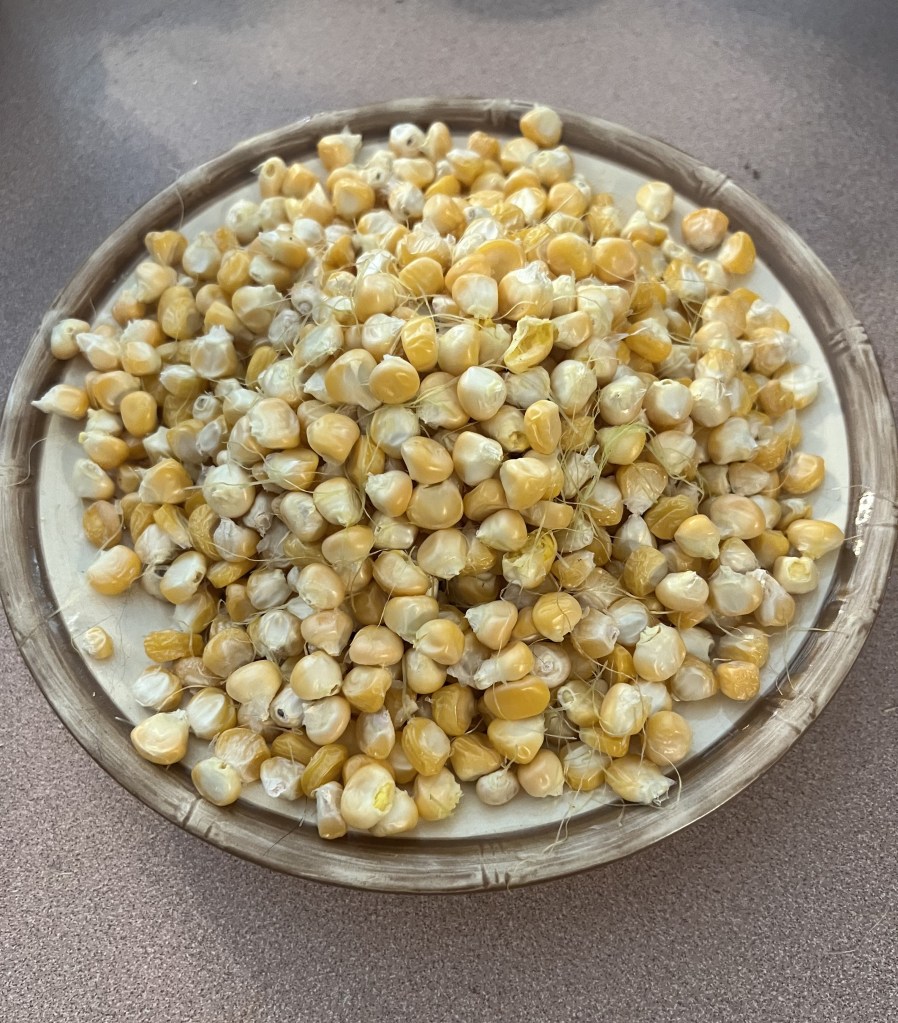
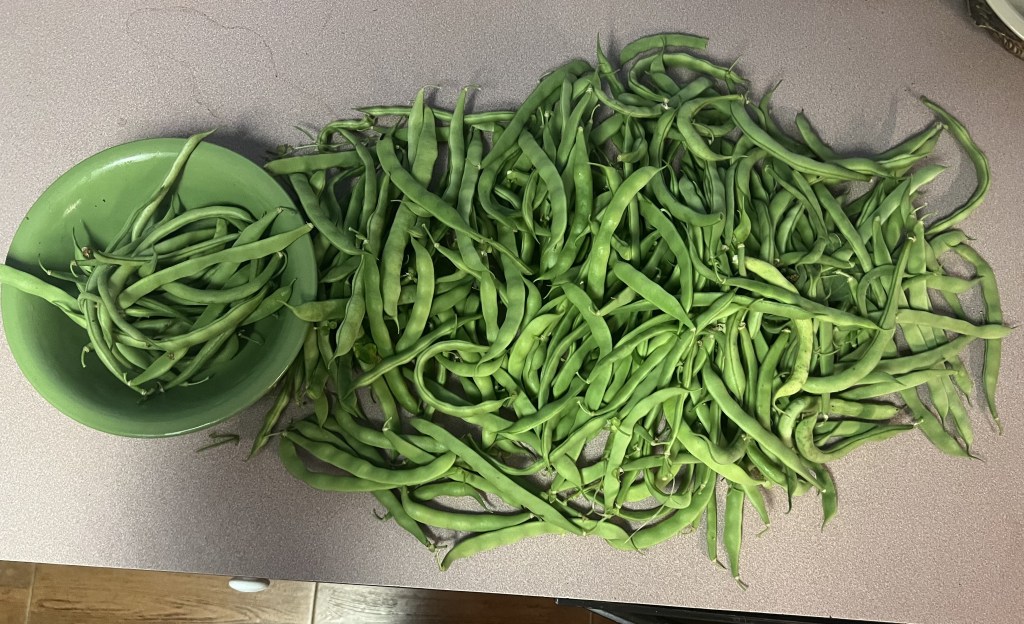
I was excited over the weekend when I went out to check the remnants of the three sisters planting to find the pole beans (Phaseolus vulgaris) had finally begun to produce.  I have mentioned the poor production for the 1st sister, corn (Zea mays var. rugosa), with only dried kernels suitable for grinding or bird food.  That was followed by an ok harvest of the 3rd sister, Butternut squash (Cucurbita moschata), which produced 7 gourds.  It has now been nearly a month and while there were lots of flowers and buds, I had not seen any beans hanging from the vines until last weekend.  The vines had been growing well, even causing some of the drying corn stalks to collapse and again lay on the ground.  I felt lucky for having staked the stalks after their infamous “leaning” event in July.  I knew at least some of the stalks would be able to stand despite the weight of the bean vines.  Yesterday I decided to see if I could find anything worth harvesting among the twisted vines.  I was anxious to see the result from the 2nd sister.

When I looked online, I found the common bean (Phaseolus vulgaris) is an herbaceous annual plant grown worldwide for its edible dry seeds or green, unripe pods.  The bean’s botanical classification (as all Phaseolus species) is a member of the legume family Fabaceae.  Common beans acquire the nitrogen they require through an association with rhizobia (like most Fabaceae), or nitrogen-fixing bacteria.  The bean has a long history of cultivation with the wild Phaseolus vulgaris native to the Americas.  It was originally believed that it had been domesticated separately in Mesoamerica and in the southern Andes region 8000 years ago, giving the domesticated bean two gene pools.  Recent genetic analyses show that it was first domesticated in Mexico, and then split into the Mesoamerican and Andean gene pools.  As the 2nd sister (by planting order), maize (corn), beans, and squash are the three Mesoamerican crops that constitute the “Three Sisters” that were central to the indigenous agriculture.  All wild members of the species are climbing, but many cultivars are now classified as bush beans or climbing beans, depending on their style of growth.  Beans are grown on every continent except Antarctica, and during 2022, there were 28 million tons (28000 kt) of dry beans produced worldwide, led by India with 23% of the total.  The common bean arrived in Europe as part of the Columbian exchange, the widespread transfer of plants, animals, commodities, precious metal, culture, human populations, technology, diseases, and ideas between the New World (the Americas) and the Old World (Afro-Eurasia) in the late 15th and following centuries.

While I had (inadvertently) planted bush beans in my raised beds, I planted pole beans as my 2nd sister.  I have mentioned how bush beans are preferable for commercial cultivars as the fruit tends to ripen at the same time (yes, beans are another fruit that is eaten as a vegetable).  I harvested the bush beans last week and got a small return (the bowl in picture).  Unlike the bush beans I planted in the raised bed, the pole beans are expected to provide a continuous harvest throughout the growing cycle.  I look forward to several more weeks of harvest from my 2nd sister.    

THOUGHTS:  I was pleased with the harvest from the 2nd sister.  The first pick of pole beans yielded over 6 quarts of processed green beans.  I flash froze 4 quarts and plan for the other 2 quarts to be mixed with onions, bacon, and the Yukon Gold potatoes (Solanum tuberosum) I harvested earlier this month, for a meal later this week.  This Thanksgiving, I plan on providing a green bean casserole for the family using my home grown beans.  This is one of the joys I find in (trying) to provide subsistence agriculture.  While there are trials (i.e., the other sisters) in growing your own food, they make the successes sweeter.  This also forces me to explore a variety of preservation techniques.  Life-long learning is a good thing.  Act for all.  Change is coming and it starts with you.

Neptune

September 23, 2024

Toward the back of the front section of my local newspaper I came across an article about the continuing quest for space tourism as Space Perspective successfully completed a second uncrewed test flight of the spaceship Neptune Excelsior.  The flight boosts the company’s mission to provide distinctive and accessible space travel experiences.  The test flight was launched from the Marine Spaceport Voyager near Florida on 15 September 2024 and showed the spacecraft’s capability to perform an entire flight sequence.  Jane Poynter, founder of Space Perspective said, “This flight successfully demonstrated the extraordinary accessibility of Spaceship Neptune’s spaceflight experience with its gentle ascent, descent and splashdown, a critical step in opening space up to more people than ever before possible.”  During the flight, Neptune reached an altitude of 100,000 feet, approaching the boundary of space and redefining the idea of space tourism.

When I looked online, I found Space Perspective is a high-altitude flight tourism company, founded and incorporated in 2019 by Jane Poynter and Taber MacCallum.  The space tourism company plans to launch its nine-person Spaceship Neptune crewed balloon from NASA Kennedy Space Center.  On 18 June 2020, Space Perspective announced plans to balloon passengers to nearly 100,000 feet (30,000 m; 30 km) above the Earth.  On 2 December 2020, Space Perspective closed its seed funding round, having gathered US$7 million.  The company planned the first uncrewed test flight in the first half of 2021 and crewed operational flights by end of 2024.  SpaceX charges US$55 million for a 3 day orbit along with three other crewmates.  Blue Origin charges from US$200,000 to US$300,000, but the actual price depends on who you are and the publicity you can generate.  Virgin Galactic offers a 90 minute suborbital (164,040 feet/50 km) with up to 4 passengers for US$450,000.  Tickets for Neptune are a mere US$125,000 per seat with a total of 8 passengers.

A significant feature of last week’s test flight was the deployment of a new four-roller system to elevate the company’s SpaceBalloon.  This mechanism enables spaceflights from marine locations worldwide, enhancing operational flexibility and allowing for year-round launches regardless of weather conditions.  The spaceship capsule for Neptune exceeded performance expectations by maintaining optimal cabin pressure and stability throughout its journey, even at its highest point in the upper atmosphere.  The advanced thermal control system successfully managed the extreme temperature fluctuations of high-altitude flights, ensuring comfort and safety.  SpaceBalloon is an eco-friendly and pioneering lifting technology central to the spacecraft and proved its reliability during the test flight.  The technology uses hydrogen gas for ascent and enabled the spacecraft to reach its maximum altitude, provided a well-controlled descent, and demonstrating the company’s commitment to sustainable space exploration.  The Space Perspective Mission Control team managed the test flight from their ground base using proprietary software and communication systems.  The spacecraft was retrieved after a successful splashdown by employing a jet boat and a crane.  The company intends to crew test flights in 2025, with the launch of commercial spaceflights in 2026.

THOUGHTS:  While the Neptune Excelsior reached the impressive altitude of 100,000 feet (30 km), the Karman line is frequently cited as the boundary of space at 62 miles (300,000 feet/90 km).  The Federal Aviation Administration regulates spaceflight and has defined Neptune as a spacecraft.  The craft went above 99% of the Earth’s atmosphere.  Still, this offers an impressive perspective (and view) of the Earth.  Even more than flying at 35,000 feet (10.5 km) in an airplane, the world appears as a united single entity, beyond divisions and barriers.  This is a perspective world leaders would be good to emulate.  Act for all.  Change is coming and it starts with you.
Smooth Flower

September 20, 2024

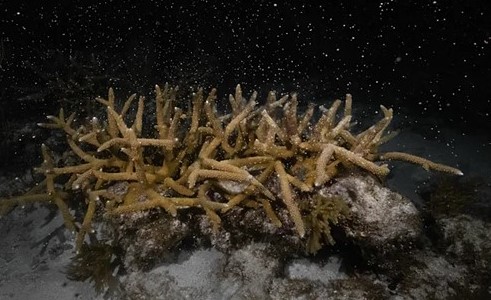
In the middle of the front section of today’s newspaper was an article on attempts to restore Florida’s reefs by breeding and growing coral in an aqueous gene bank.  The corals were grown to maturity at Mote Marine Laboratory’s International Coral Gene Bank, and successfully spawned just 22 months after they were produced by corals from the Florida Reef Tract Rescue Project in March 2022.  This species of coral will not contribute a lot of mass to the coral reefs, but it does offer shelter to smaller dwellers of the lowest (benthic) ocean levels.  Cody Engelsma, senior coral reproduction biologist at the gene bank said, “These corals, they grow these little branches and the branches are very closely knit together so they create a very good environment for baby fish, brittle stars – all the things we naturally see when we bring these corals in.  A lot of invertebrates can hide and find safety in these little cavities.”  Smooth flower corals are only one of the corals Mote biologists are inducing to spawn at the gene bank where coral care is managed to mirror conditions experienced in the ocean.

When I looked online, I found the smooth flower coral (Eusmilia fastigiate) is a stony coral found on reefs in the Caribbean Sea.  Eusmilia is a monotypic genus represented by a single species.  Smooth flower coral is a colonial species that grows to about 20 inches (50 cm) across.  It forms a low mound of stony calcium carbonate, the surface of which is covered with tubular projections (corallites) in groups of one to three.  Mound colors range from cream, to yellow, or pale brown and often have a green or pink tinge.  The polyps protrude from these projections and are either round or oval, with the oval form being more common at moderate depths.  Smooth flower corals are large and widely spaced and are connected by an extracellular matrix (mesoglea) forming a layer of translucent, jelly-like tissue (coenosarc) which covers the surface of the carbonate skeleton.  The corallites have large smooth-edged ridges (septa) and the polyps have corresponding grooves at their base.  During the day the polyps retract into the cup-shaped corallites.  At night, the polyps stretch out their translucent white tentacles to feed, making the coral appear to “flower”.   Smooth flower coral is found at depths down to about 200 feet (60 m) though it is most common between 16 to 98 feet (5 to 30 m).  Smooth flower coral is listed as critically endangered by the IUCN Red List of Threatened Species.

The Mote International Coral Gene Bank was established about four years ago at the 200-acre Mote Aquaculture Park in the Florida Keys.  Mote’s gene bank is one of the largest of its type in the world and serves as a refuge for thousands of coral genotypes from the Florida Reef Tract and Caribbean.  There are at least 25 other species of coral along with the smooth flower coral, all stored in triplicate, and there are plans to expand and house corals from Indo-Pacific waters as well.  The gene bank consists of four 1,500-gallon tanks and sump pumps, along with four spawning systems that each have four 150-gallon tanks, and a quarantine system for newly arrived corals of eight different 150-gallon tanks.  Mote is staffed with four full-time scientists and several interns to care for the corals.

THOUGHTS:  The smooth flower coral represents another species which has formed a symbiotic relationship with plants.  While the yellow-spotted salamander (Ambystoma maculatum) partners with fresh-water algae (Oophila amblystomatis), these corals form a relationship with a marine plankton (eukaryotes) which live within the skin covering of the corallites (coenenchyma) and produce nutrients by photosynthesis.  The coral benefits from the carbohydrates produced and the algae use the coral’s nitrogenous waste products.  If non-sentient (?) plants and animals can find ways to coexist and support each other, you would think humans might be able to do the same.  Act for all.  Change is coming and it starts with you.
Salamander

September 19, 2024

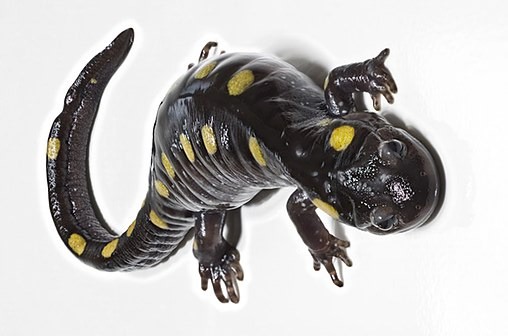
Tucked inside this quarter’s issue of Sierra magazine was an article on a solar powered vertebrate.  The adult salamander females lay eggs in the temporary spring pools that are filled with algae called Oophila amblystomatis (“salamander egg lover”).  The cells of this algae make their way into the embryo’s egg sac (osmosis) making the sac turn fluorescent green.  The algae cells are also infused into the salamander’s own cells giving the embryo a dual power source.  The mitochondria of the salamander embryos convert oxygen and a sugar byproduct into molecules that store energy (as do all salamanders) but it can also use the energy generated through photosynthesis from the algae to create additional oxygen and (research suggests) carbohydrates the salamander can use.  A symbiotic relationship is completed when the algae receive a boost from the nitrogen waste produced by the salamander.  The yellow-spotted salamander is the only known case of this use of solar power.

When I looked online, I found the spotted salamander (Ambystoma maculatum) or yellow-spotted salamander is a mole salamander common in eastern United States and Canada.  Individuals of the Ambystoma genus are called mole salamanders because they are nocturnal and spend the day in leaf litter or in burrows on the forest floor.  The scientific name comes from Ambystoma (amblys, Greek for blunt) and stoma (Greek meaning mouth); or anabystoma (New Latin, meaning ‘to cram into the mouth’) and maculatum (macula, Latin for spot or maculosus, Latin for spotted).  The species ranges from Nova Scotia to Lake Superior, to southern Georgia and Texas.  The spotted salamander is the state amphibian of Ohio and South Carolina.  The spotted salamander is about 5.9 to 9.8 inches (15 to 25 cm) long, with females larger than males.  They are stout and have wide snouts.  The main color is black, but it can be a blueish-black, dark gray, dark green, or even dark brown.  Two uneven rows of yellowish-orange spots run from the top of the head (near the eyes) to the tip of the tail (dorso-lateral ranging).  The spotted salamander’s spots near the top of its head are more orange, while the spots on the rest of its body are more yellow.  The underside of the spotted salamander is slate gray and pink.  The physical difference (sexual dimorphism) between males and females is the larger females have brighter spots.  Males will have a larger portion of their dorsal surface covered in duller spots.  The salamander typically lives around 20 years, but some have lived up to 30 years.

This dual-power symbiosis is not known to happen in other vertebrates as most animals have immune systems designed to block foreign cells.  Salamanders have notably less reactive immune systems than other vertebrates.  It is hypothesized the looser cellular definition of self-verses-other not only allows the infusion of the algae into the salamander cells but also is part of what enables the species to regenerate limbs lost to predators.  The solar power adaptation shuts off when the salamander hatches from the eggs and leave the algae filled pools.  Although the bright yellow spots may stand out, the salamander spends most of its life hiding in the leaf litter on the forest floor.

THOUGHTS:  The yellow-spotted salamander is an excellent example of how little humans know about the life cycles and ecosystems of the flora (plants) and fauna (animals) with which we coexist.  While we have spent centuries focused on the lifeways and gene patterns of domesticated species, most non-domesticates have been relatively ignored until the last 300 years.  Even then attention was focused on classification rather than observation.  Taking time to study the details is now providing insights not only on these species, but their implications for human adaptation and well-being.  The same could be said for most indigenous cultures.  If they were different, they were passed off as inconsequential.  This attitude precludes the larger understanding of what it means to be human and how this knowledge can aide all humanity.  Act for all.  Change is coming and it starts with you.
Greenhouse 2

September 12, 2024

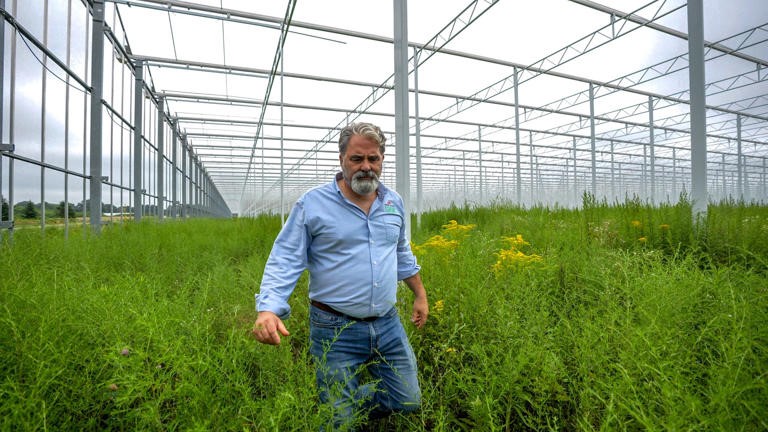
In today’s Business section of our local newspaper, I found an article on a mall-sized greenhouse approved for construction in a rural Rhode Island town.  The town Planning Board of Exeter voted unanimously last week to accept Tim Schartner’s plans for his $80 million venture into the future of agriculture.  Like any government action, it came with stipulations, including tweaking the internal design to meet fire safety concerns, purchasing one of the three lots the project will sit on (under agreement), and obtaining an air permit for the gas-fired electrical generators from the Rhode Island Department of Environmental Management.  Schartner joined with relatives and other partners to form Rhode Island Grows, LLC, and hopes to have the greenhouse’s 25 acre (10 ha) glass framework completed this winter.  The hope is to eventually produce 42,000 pounds (19,051 kg) of tomatoes a day.  Final completion of the greenhouse to allow year-round use will take months longer.

When I looked online, I found a greenhouse is a special structure designed to regulate temperature and humidity of the inside environment.  There are different types of greenhouses, but they all have large areas covered with transparent materials that let sunlight pass and block it as heat.  Common materials used in the walls and roofs of a modern greenhouse are rigid plastic polycarbonate, plastic polyethylene film, or glass panes.  When the inside of a greenhouse is exposed to sunlight, the temperature increases, providing a sheltered environment for plants to grow in cold weather.  Around 30 CE, the Roman’s built the first recorded greenhouse.  Emperor Tiberius’s physicians advised he eat one cucumber a day because of his declining health, but cucumbers did not grow year-round.  An artificial environment was designed where cucumbers were planted in wheeled carts put in the sun daily, then taken inside to keep warm at night.  According to Pliny the Elder, the cucumbers were stored under frames glazed with oiled cloth (specularia) or with sheets of selenite (lapis specularis).

Schartner’s greenhouse project exemplifies the challenges and competing interests facing many rural communities.  Town Planer William DePasquale said, “You got a rural community that wants to stay rural, but you’ve got to give these farmers some ability to have some kind of versatility in income to stay rural, otherwise they will go to [selling land for] housing.”  The Planning Board’s conditional approval was necessary to reassure investors the project could move forward after years of being stymied by zoning and planning issues and local opposition.  Schartner’s family has farmed along Route 2 for generations and broke ground on what would be Rhode Island’s largest example of “controlled-environment agriculture” (read, greenhouse) in June 2021.   Town officials said the project needed zoning and planning review first, while Schartner argued greenhouses were purely agricultural structures and exempt from such review.  The town issued a “cease and desist” order in October 2021 that was upheld by a Superior Court judge.  Schartner said, “It’s on the rails now, moving forward.”

THOUGHTS:  I have mentioned the pool-pond we have on our back patio.  The pool was abandoned while Melissa and I lived in Kansas.  We returned to Arkansas with my expectation of hours in the pool during the summer.  When we returned it was filled with leaves and the remains of a glass table.  We contacted several pool repair companies and cannot get anyone willing to deal with us.  I drained the pool this summer and scooped out the leaves and debris (and glass) and found the fiberglass liner does not leak, although two of the lines back-fill when the water table is high.  Perhaps there is still hope.  One of the alternatives we considered was to cut out the liner, fill the pool with dirt, and create a greenhouse to grow succulents or vegetables.  Ours would be smaller than the Exeter greenhouse but would be another constructive use of space.  Act for all.  Change is coming and it starts with you.
Yukon Gold 2

September 05, 2024

I mentioned in May my struggles to get any potatoes into the ground.  I planted late because I could not find any seed potatoes (of any variety) in the stores or co-op in my area.  I made a last ditch effort late in the planting season and found the co-op had ordered tons (literally) of several types of seed potatoes (they were “in the back”) and were now trying to get rid of the remaining crates.  When the man saw I only wanted to buy 12 potatoes, he gave them to me for free.  I planted the 12 hills in the two beds beside the back door leading to the patio.  When I planted these beds two years ago, I got a good crop of Russet potatoes.  Last year I planted Yukon Gold and Russet, and they all turned to mush.  This year’s crop started well, with the vines overflowing and even producing flowers, so I had high expectations.  Last week I noticed the tops of the potato plants were starting to wilt.  I stopped watering them over the weekend to let the plants die and the tubers harden.  Today I harvested what I hoped to be a bumper crop of Yukon Gold.

When I looked online, I found Yukon Gold is a large cultivar of potato (Solanum tuberosum) most characterized by its thin, smooth, eye-free skin and yellow-tinged flesh.  This potato was developed in the 1960’s by Garnet Johnston in Guelph, Ontario, Canada, with help from Geoff Rowberry at the University of Guelph.  The official cross bred strain was made in 1966, and ‘Yukon Gold’ was finally released onto the market in 1980.  The early name for the new cultivar was “Yukon”, for the Yukon River involved in the Klondike Gold Rush in Northern Canada.  “Gold” was added later to describe the color and appearance of the tuber.  A University publication states, “Yukon Gold was the first Canadian-bred potato variety to be promoted, packaged and marketed with its name right on the pack”.  The variety was initially met with overwhelming success but sales in Canada dropped 30% between 2004 and 2014 as other varieties became increasingly popular.  Yukon Gold potatoes are susceptible to seed decay, blackleg, early blight, late blight, early dying, PVY, soft rot, dry rot, leak, pink rot, silver scurf, and black scurf (other than that . . .).  They do taste good, and the creamy texture makes them great for mashing.

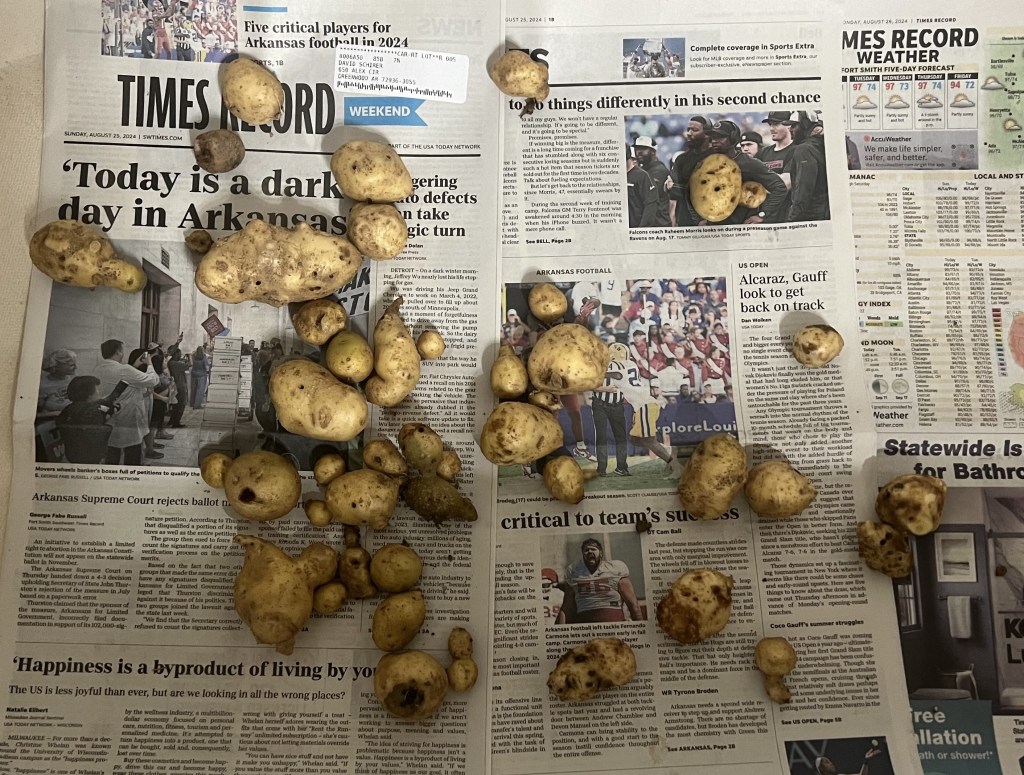
I first took down the fencing I had placed around the beds to keep Loki from snuffling.  Then I removed the first of the 11 cages (one had died early) around my potato hills.  I wiped back the straw and was encouraged as several small potatoes came to the surface.  When I scratched the ground there were only a few small (1/2 inch – 1.25 cm) potatoes to be found.  Not to worry, this was only the first hill.  In fact, I should have worried because this was a harbinger of what was to come.  I opened hill after hill to one or two medium sized (3 inches/7.5 cm) potatoes and several tiny ones (less than 1 inch/2.5 cm).  After I had harvested, I washed and dried them and placed them on newspaper in the guest bathroom.  I guess no one will be able to visit as long as I have my Yukon Gold potatoes in the tub.  Then again, it should not take too long to finish them off.

THOUGHTS:  At least I have the advantage that Ukon Gold is resistant to bruising and has good dormancy so does not sprout a lot.  It is important that the dark spots on the skin (lenticels) of the potatoes are not swollen and that the skin is not bruised, as this can lead to rot.  The one thing that has produced prodigiously is the red burgundy okra (Abelmoschus esculentus).  Too bad I do not like okra and only grew it for Melissa.  Forest Gump said, “Life is like a box of chocolates.  You never know what you will get.”  While that may be true, I would like to get either a nougat or pecan praline at some point.  I will keep hoping and trying.  Act for all.  Change is coming and it starts with you.
Klamath

September 03, 2024

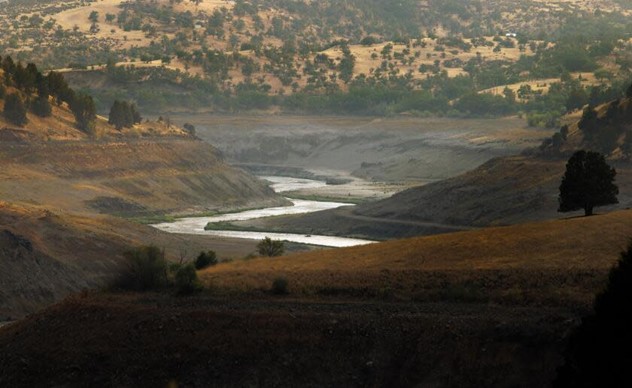
Inside the back section of today’s newspaper was a USA Today syndicated story on the removal of four dams along the lower Klamath River.  The Klamath watershed is located in the US states of Oregon and California and was once known as the second largest salmon fishery on the West Coast.  Salmon (genus, Oncorhynchus) is center of the Indigenous peoples who live along the river.  The spring and fall salmon run combined with the acorns from the California live oak (Quercus agrifolia), California huckleberry (Vaccinium Ovatum), and along the coast, Bull Kelp (Nereocystis luetkeana) served as the heart of a healthy diet and culture.  Agricultural and industrial activity in the basin took their toll on the Klamath and the Tribes who lived there.  As the salmon suffered, the people deprived of their healthy food fell into despair.  Suicide rates spiked, along with domestic violence, drug and alcohol abuse, diabetes, and other diseases related to poor nutrition. 

When I looked online, I found the ecological decline of the Klamath River was the result of many factors.  These include dams, water diversions, mining operations, logging, poor fire management, and an overstretched demand for limited water supplies.  That said, the four dams on the lower Klamath seem to be the biggest single factor in the river’s decline.  The dams were built by the Lower Klamath Hydroelectric Project between 1908 and 1962 as directed by the California-Oregon Power Company.  None of the three lower dams had fish ladders and they denied the salmon access to hundreds of miles of historic spawning and rearing habitat.  The dams disrupted transport of sediment, altered water temperatures, and created the perfect conditions for blooms of toxic blue-green algae.  River conditions led to a massive fish disease outbreak in 2002 that caused a fish kill on the lower Klamath River of an estimated 70,000 adult salmon before they could spawn.  The 2002 fish kill was a traumatic event started a grassroots campaign by the tribal communities with the goal of removing the lower four Klamath River dams and restoring the watershed to health.

The Bring the Salmon Home campaign called on PacifiCorp to surrender the lower four Klamath River dams for removal.  After years of protests, lawsuits, and direct action, PacifiCorp, the States of California and Oregon, tribal governments, conservation groups, commercial and recreational fishing organizations, and counties reached an agreement to remove the dams in 2016.  The signatories went through the regulatory process from 2016 to 2022 to secure Federal Energy Regulatory Commission (FERC) approval for dam removal.  Dam removal began in 2023 and will conclude in September 2024.  Activities to restore the Klamath watershed and continued monitoring are expected to last for several years after conclusion of the (de)construction activity.  The project’s US$500 million budget includes funds from California and from surcharges paid by PacifiCorp customers.  The dams were used to generate power (hydroelectricity) and not water storage.  The utility agreed to removal of the dams after concluding it would be less expensive than bringing them up to current environmental standards.  Two other dams not affected by the project will remain farther upstream in Oregon.

THOUGHTS:  The four Klamath dams were constructed without the tribe’s approval.  Their removal has cleared the way for California to return more than 2,800 acres (1133 ha) of ancestral land to the Shasta Indian Nation.  According to the nonprofit American Rivers, more than 2,000 dams have been removed across the US.  Dam removal is a proven tool to restore river health, improve water quality, improve public health and safety, revitalize fish and wildlife populations, safeguard cultural values, and reconnect communities to their rivers.  The healing has just begun for the Shasta Indian Nation.  Act for all.  Change is coming and it starts with you.
Watermelon

August 29, 2024

I have tried to grow various types of melons over the last several years without much success.  The last two years I have lost both watermelons and cantaloupes to the nine-banded armadillo (Dasypus novemcinctus) that would sneak into the back bed where I now have my 3 sisters planted.  He would make his presence known by gnawing a hole in the melons and leaving them to rot.  I caught him last year in the evening as he was scurrying across the cement pool deck.  While I rarely got any fruit (except one stunted melon that did not mature) I did learn of the prodigious output of vines.  That is why I decided to plant my melons in the raised beds to keep them out of reach of any critters.  I planted the honey melon cantaloupe (Cucumis melo) in one end of the u-shaped bed and reserved the large 4.5 foot (1.4 m) square bed solely for my Georgia rattlesnake watermelon. 

When I looked online, I found the Watermelon (Citrullus lanatus) is a flowering plant species of the Cucurbitaceae family and the name of its edible fruit.  The plant produces a scrambling and trailing vine with more than 1,000 varieties cultivated for its fruit worldwide, including Georgia rattlesnake watermelon heirloom.  The sweet, juicy flesh of the watermelon is usually deep red to pink, with many black seeds, although seedless varieties exist.  Colonists first brought watermelon to North America during the 1500’s and eventually new varieties began to appear.  One of these was the Georgia Rattlesnake watermelon, which was introduced around 1870, making it one of the oldest heirloom varieties.  Heirloom watermelons are usually left to ripen on the vine to ensure they reach their peak sugar level.  The name comes from the light and dark green strips which form a unique pattern similar to the skin of a rattlesnake.  The tough rind and oblong shape make this watermelon easily stackable and great for shipping.  The fruit is usually at least two feet (.60 m) long and weighs between 25 to 30 pounds (11 to 13.6 kg), but 40-pounders (18 kg) are not unheard of.

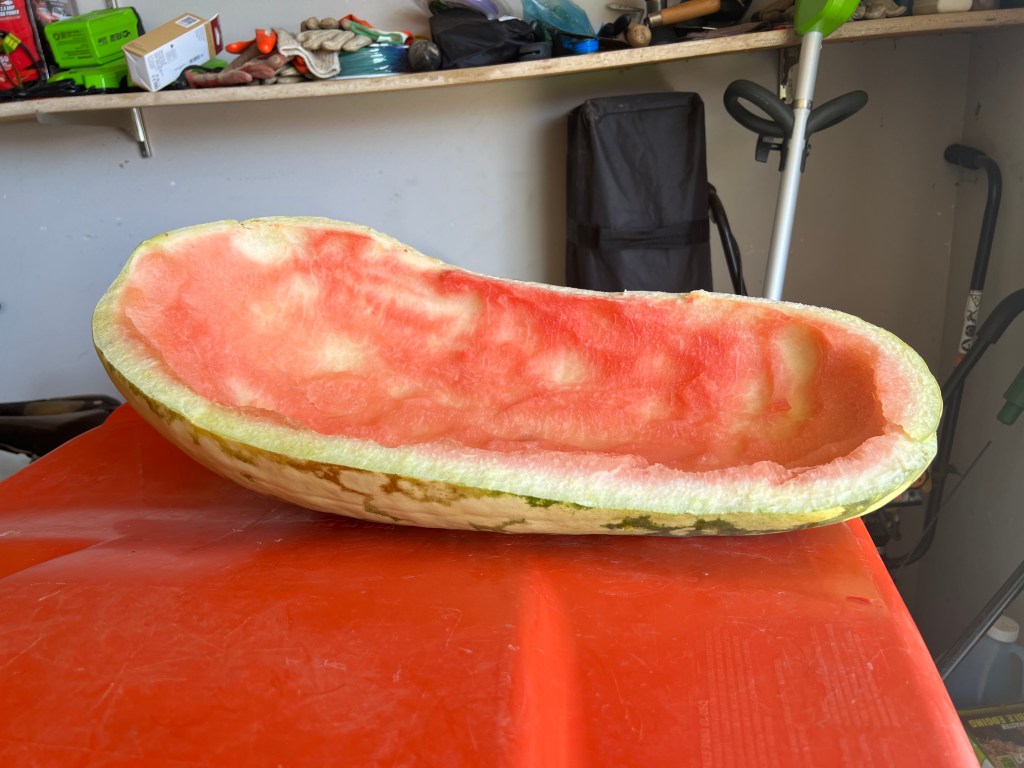
I hired the two high school age sisters next door to water my vegetables when we were on vacation.  When I returned their mom told me their younger brother had helped and became enamored by the thought of having his own garden.  He has approached me several times since our return and asked about being able to help me with watering.  More than that, he has kept an eye on the watermelon in the raised bed.  One in particular has really taken off and dominates the corner of the bed.  The boy brought friends by to look at it and I had a maintenance person stop and take a picture.  I finally decided it was time to harvest the watermelon before something happened and it went bad.  It easily popped off the vine (a good sign).  I struggled to lift it from the bed and hauled it into the kitchen.  When I weighed it (on our bathroom digital scale) it was 50 pounds 3 ounces (22.8 kg) and 22 inches (.79 m) long.  While the boy was away for the week, I split the beast with the family and hopefully he will get a share of their 25 pounds (11.3 kg) of watermelon.  There are three smaller watermelons on the vine, along with flowers and starter melons.  This is one harvest crop that has produced.

THOUGHTS:  At 25 pounds, half a watermelon was more than I could handle at one time, so I needed a way to store it.  I seeded, balled, and flash froze half of the fruit to be enjoyed later.  I put the other half of watermelon balls in the refrigerator to be eaten this week.  That left about a quart of juice that had leaked out during processing and had pooled in the bottom of the rind.  I am saving this to be made into “something”.  Even though this is the fourth year for my container garden, the vegetables continue to be on and off.  Still, I have canned, pickled, frozen, and fresh produce that we will enjoy this winter.  Most of my expenses were incurred this year for the beds, seed starters, and seed.  Now I just need to hone my expertise.  As always, that seems to be the biggest obstacle.  Act for all.  Change is coming and it starts with you.

3rd Sister

August 28, 2024

While the puny ears of corn (Z. mays var. rugosa) have been harvested and the stalks have begun to wilt and dry, they are still staked and perform well as a trellis for my pole beans (Phaseolus vulgaris), the 2nd sister.  I was surprised by the amount of grass that popped up out of nowhere after I mulched the troughs between the beds with straw.  When we went to Maine my sister mentioned she placed straw as mulch for her vegetables and it was also producing copious amounts of grass.  Whether this was wheat grass of some other form, it was growing well in both gardens.  The butternut squash had finally decided to take off and the leaves were fighting fiercely to overcome the groundcover that is still thriving beneath the compost and soil I had placed on top of the beds.  For the last several weeks I have been waiting to harvest this 3rd sister. 

When I looked online, I found Butternut squash (Cucurbita moschata) is a type of winter squash grown on a vine and is part of the same squash family as ponca, waltham, pumpkin, and calabaza.  The word “squash” comes from the Narragansett (an Algonquian language) word askutasquash, meaning “eaten raw or uncooked”, and butternut comes from the squash’s nutty flavor.  Although American native peoples may have eaten some forms of squash without cooking, today most squash is eaten cooked.  Before the arrival of Europeans, winter squash had been carried through out North America where it could be grown.  Butternut is a modern variety developed in 1944 by Charles Leggett of Stow of Massachusetts, who crossed pumpkin (Cucurbita pepo) and gooseneck squash varieties.  Butternut squash has a sweet, nutty taste similar to that of a pumpkin.  It has tan-yellow skin and orange fleshy pulp with seeds contained in a compartment in the blossom end.  When ripening, the flesh turns increasingly deep orange due to its rich content of beta-carotene (vitamin A).  Although botanically a fruit (a berry), butternut squash is a culinarily vegetable that can be roasted, sautéed, puréed for soups, or mashed to be used in casseroles, breads, muffins, and pies. 

Once I saw my 3rd sister producing large 8 to 10 inch fruits I needed to know when they were ripe and how to harvest.  I watched several YouTube videos that came to the consensus that the first way is to look at the skin.  According to the horticulture experts at Iowa State University, “butternut squash are mature (ready to harvest) when the skin is hard (cannot be punctured with the thumbnail) and uniformly tan in color.”   While that was good information, I knew there had to be something more.  One of my videos suggested rather than the squash itself, look at the stem.  When the stem turns from green to brown and dry it is time to harvest.  I also learned that if I “accidentally” picked my squash prematurely, not to worry.  Rhoda Burrows, professor and horticulture specialist at San Diego State, says “in weeks, and even months, after harvest winter squash slowly convert starch to sugars, increasing their appeal to our taste buds.”  I have harvested the 7 squash fruits produced by my 3rd sister and have stored them on the porch to continue to mature.  While I could have wished for a larger harvest, I am looking forward to some squash soup this fall.

THOUGHTS:  While my 3rd sister did not produce to abundance, I was happy with the fruit I got.  Two of the small fruits were damaged by worms.  The US Department of Agriculture says billions of pounds (453.5 kt) of fruits and vegetables go to waste every year, or about 30 to 40 percent of the food supply chain in the US.  The beauty of growing your own vegetables is I cut out the bad spots, peeled and roasted the flesh, and now have squash ready to sauté in a stir fry.  While this will not solve the problem of waste (food loss) or garbage (methane pollution), it is a start.  Act for all.  Change is coming and it starts with you.
1st Sister

August 27, 2024

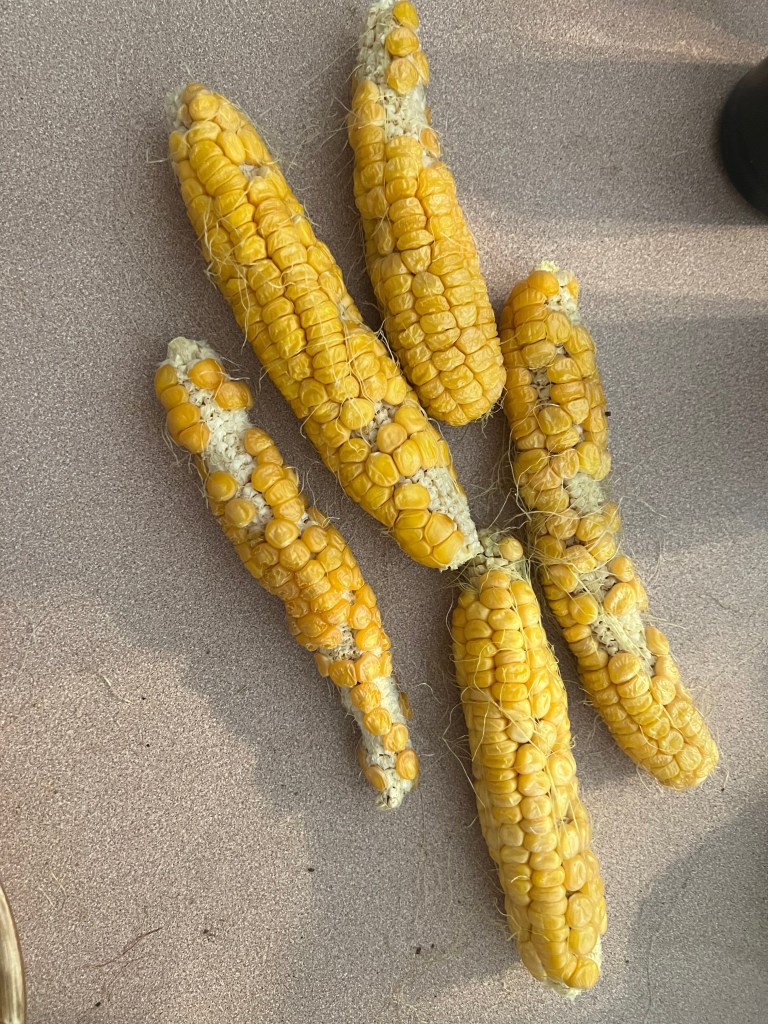
Since I confessed my cantaloupe (Cucumis melo, honey melon variety) and cucumbers (Cucumis sativus) have been overrun with squash bugs, I may as well begin a final report on the 3 Sisters (i.e., corn, beans, and squash).  I was excited when I put the four mounds of 3 Sisters along the back bed of our house.  Melissa supervised as I moved some of the flower bulbs that had been transplanted from her grandmother’s flower beds by her mom so they would not be overwhelmed by the new mounds.  I cleared the tangled mess of ground cover and laid down a 4 inch (20cm) layer of compost and an additional 1 inch (2.5 cm) of garden soil I had purchased in bulk.  I planted 7 corn seeds in the center of each of the 4 hills.  Even though I had presoaked the seed as suggested, only a total of 7 seeds sprouted.  I replanted the corn knowing this would throw the timing off for planting the other sisters, but it felt good to know the 1st sister was in the ground.

When I looked online, I found the Iroquois had planted maize/corn (Zea mays) for grinding as their 1st sister.  I chose another variation known as sweet corn (Z. mays var. rugosa), sugar corn, or pole corn.  This variety is grown for human consumption with a high sugar content.  Sweet corn is the result of a naturally occurring recessive mutation in the genes which control conversion of sugar to starch inside the endosperm of the corn kernel.  The secret to a good sweet corn, is to pick it when it is still immature (milk stage) and can be prepared and eaten as a vegetable.  Field corn is grown for consumption by livestock and is harvested when the kernels are dry and mature (dent stage).  Since the process of maturation involves converting sugar to starch, sweet corn stores poorly and must be eaten fresh, canned, or frozen, before the kernels become tough and starchy.

My problems continued with the 1st sister in July when most of the corn stalks suffered from leaning.  This is usually caused by high winds that topple the stalks.  While they are “said” to re-right on their own, mine never did and I ended up staking them to provide support.  I could tell the ears were maturing on the stalks, but they were also being obscured by the voracious leaves of the Kentucky pole beans (Phaseolus vulgaris) which they were designed to support.  I finally picked one of the small ears to see if they were ripe.  Unfortunately, I had allowed them to mature too long on the stalk and they were beginning to dry out.  I went ahead and picked them, and the result was only 15 ears of corn from all of my stalks.  When I shucked the husks, I saw the ears had not completely filled out.  Even that would have been enough for a meal or two for Melissa and me, if it had not become tough and starchy.  If I had been relying on this corn for subsistence, I would have ground the kernels into meal.  Since I am not near to that point yet, it will become bird seed.  If I plant corn next year I will use a fresh pack of seed.       

THOUGHTS:  I was disappointed with the harvest of this year’s 1st sister.  I had been dreaming of ears of sweet corn that I could eat and share with friends and neighbors.  I had put many hours into the preparation and care of the beds.  I had protected them from Loki (fence), nature (leaning), and the heat (daily water).  Once again, I learned (hopefully) the lesson of hard knocks.  I still have expectations of the other 2 sisters coming to maturity.  Hope is defined as” an optimistic state of mind based on an expectation of positive outcomes with respect to events and circumstances in one’s life or the world at large”.  While there are times when events seem (or are) against you, there are always ways to alter the circumstances to try and produce a positive result.  I could have ground the corn into a meal.  The outcomes often rely on your attitude and willingness to persevere in order to succeed.  Humans are a world community and as such we can overcome the challenges before us, when we act together.  Act for all.  Change is coming and it starts with you.