Menopause

March 15, 2024

Hidden inside the back section of today’s local newspaper was a USA Today article on a recent study on the life cycles of different species of whales.  A paper published Wednesday in the journal Nature looked at 32 whale species, five of which undergo menopause.  The findings suggest menopause gives an evolutionary advantage to grandmother whales’ grandchildren.  This is a unique insight because very few groups of animals experience menopause.  In five species of toothed whales, orca (Orcinus orca), beluga whales (Delphinapterus leucas), narwhals (Monodon monoceros), short-finned pilot whales (Globicephala macrorhynchus), and false killer whales (Pseudorca crassidens), the findings suggest menopause evolved so grandmothers could help their daughters’ offspring, while not competing with the younger female for mates.  While whales may seem biologically distant from humans, there are important similarities.  Both are mammals, both are long-lived, and both live in family and social groups that help each other.  Humans are the only land-based animals that go through menopause, and the findings could offer clues about why humans evolved the trait.

When I looked online, I found Menopause, also known as the climacteric, is the time when menstrual periods permanently stop marking the end of reproduction.  Menopause in humans typically occurs between the ages of 45 and 55, but timing varies.  Menopause is a natural change but can occur earlier if you smoke tobacco, have surgery to remove both ovaries, or undergo some chemotherapy.  Menopause happens physiologically due to a decrease in estrogen and progesterone.  Prior to menopause, a woman’s periods become irregular, and they often experience hot flashes (shivering and night sweats) that can recur for four to five years.  The physical consequences of menopause include bone loss, increased abdominal fat, and adverse changes in a woman’s cholesterol profile and vascular function.  These changes predispose postmenopausal women to increased risks of bone loss (osteoporosis) and bone fracture, and of diabetes and cardiovascular disease.  Menopause in humans has long been a biological enigma, but the study of whales is providing scientists with a better understanding of human biology.

The researchers’ findings also support what is known as “the grandmother hypothesis”, which states menopause is evolutionarily useful.  Older women who are no longer able to have children can focus on supporting their children and grandchildren.  This means their family lines are more likely to survive, which has the same effect as having more children.  “What we showed is that species with menopause have a much longer time spent to live with their grand offspring, giving them many more opportunities for intergenerational health due to their long life,” said Samuel Ellis, an expert in human social behavior at the University of Exeter.  The live-long hypothesis suggests menopause increased total life span, but not how long a woman could have children.  That leads to a prediction that species with menopause would live longer but have the same reproductive life span as species without menopause.  This appears to be exactly what humans did.  The study does not prove the grandmother hypothesis is the reason for menopause in women, but it does lay out the evidence.

THOUGHTS:  Thankfully (for me), the whale study does not reflect human male life spans.  In Orca populations females live into their 60’s and 70’s, but males are all dead by 40.  No one knows why human females undergo menopause even though both sexes live to be approximately the same ages.  The difference may be that for humans both grandmothers and grandfathers contribute to the well-being of their children and grandchildren.  This is an evolutionary change human dads and granddads may want to reflect on.  Act for all.  Change is coming and it starts with you.

Bees

March 12, 2024

Two years ago, I mentioned how the Hyacinth (Hyacinthus orientalis) planted by Melissa’s mom had finally returned to the mailbox flower bed.  The hyacinth had been dormant for over a decade.  When they first sprouted, Melissa did not look at them and said they must be one of the many weeds that thrive in the bed.  Since they were weeds, I had torn them up and threw them away.  When they arrived two years ago, I was lax and allowed them to grow.  When they sprouted again this year, I once more let them grow on their own.  They have produced a lush carpet of leaves that have filled the entire bed and the flowers have bloomed this week.  I am always looking for ways to help the pollinators and the hyacinth appear to provide a good source of nectar.  When I went out to get the mail this morning the bed was swarming with bees.     

When I looked online, I found honeybees (also spelled honey bees) are a eusocial flying insects within the genus Apis of the bee clade, all native to mainland Afro-Eurasia.  Bees spread naturally throughout Africa and Eurasia, and humans were responsible for the wider distribution, introducing multiple subspecies into South America (early 16th century), North America (early 17th century), and Australia (early 19th century).  Honeybees are known for their construction nests from wax to hold their large colonies and their surplus production and storage of honey.  Their hives are a prized foraging target for honey badgers (Mellivora capensis), bears (family Ursidae) and human hunter-gatherers.  Only 8 surviving species of honeybees are recognized (with 43 subspecies).  Historically 7 to 11 species are recognized.  Honeybees represent only a small fraction of the roughly 20,000 known species of bees.  The best known honeybee is the western honeybee, (Apis mellifera), which was domesticated for honey production and crop pollination.  The only other domesticated bee is the eastern honeybee (Apis cerana), which occurs in South, Southeast, and East Asia.  Only members of the genus Apis are true honeybees, but other types of bees produce and store honey and have been kept by humans for that purpose.

A pollinator is an animal that moves pollen from the male anther of a flower to the female stigma of a flower, resulting in fertilization.  Insects are the major pollinators of most plants.  Insect pollinators include all families of bees and most families of aculeate (stinging) wasps, ants, many families of flies, many lepidopterans (butterflies and moths), and many families of beetles.  Bats and birds are the main vertebrate pollinators, but non-bat mammals (monkeys, lemurs, possums, rodents) and some lizards pollinate certain plants.  Among pollinating birds are hummingbirds (366 species in family, Trochilidae), honeyeaters (186 species in family, Meliphagidae), and sunbirds (151 species in family, Nectariniidae).  These all have long beaks and tend to pollinate deep-throated flowers.  Humans may also carry out artificial pollination.  Western honeybees are often described as essential to human food production and fruits like apples (Malus domestica), blueberries (genus, Vaccinium), and cherries (genus, Prunus), are 90% dependent on pollination by bees, but many crops need no insect pollination at all.

THOUGHTS:  Crops originating in the New World (the Americas) do not rely on honey bees as they are an invasive species, but they do require native pollinators.  However, all pollinators need food and shelter.  Many insect pollinators have a narrow range of plants they can eat.  All pollinators need appropriate nesting sites.  Migratory pollinators require overwintering sites.  During the last 25 years, many species of pollinators have experienced large drops in numbers.  Protecting ecosystems is also protecting our food supply.  Act for all.  Change is coming and it starts with you.
Hügelkultur

March 11, 2024

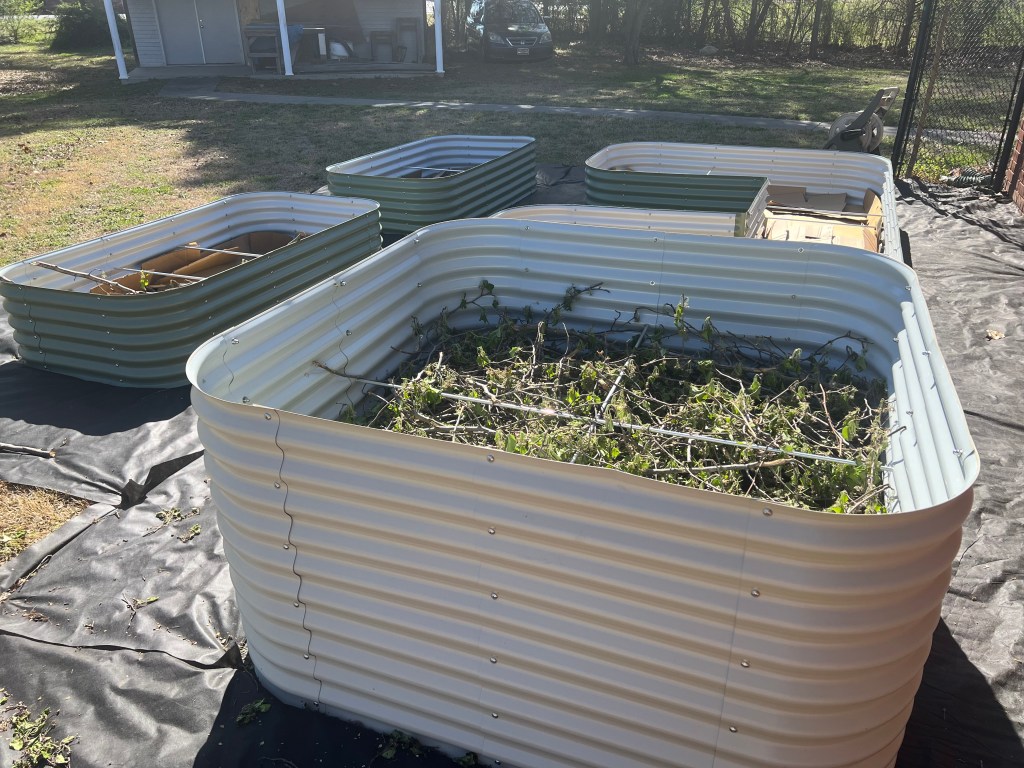
I mentioned Melissa gave me metal raised beds (along with 100’s of seeds) for Christmas.  I planned on putting the beds on the south side of the house where we get the most sun.  Melissa had grown a vegetable garden there and knew it was a viable location.  This would also keep Loki from having direct contact with the beds (he is a digger) and being off the ground would help discourage the critters that have feasted on the melons I tried to grow in my ground beds over the last three years.   I took January to research what to grow in the beds and the best way to fill them.  The simple answer was fill them with compost and place several inches of potting soil on top.  The problem was three of the beds hold around 3 yards3 (2.3 m3) each, and the larger bed is closer to 5 yards3 (3.8 m3).  That is a lot of compost.  As I checked online about filling raised beds, I kept coming across a less expensive method that used wood and yard debris already on hand and was also said to be a better long term method for your vegetables.  This layered approach to filling a raised bed is called hügelkultur.

When I looked online, I found Hügelkultur (German, “mound culture”) is a centuries-old technique of creating mounds of raised garden beds made up of layers of compostable material you already have.  That includes tree limbs, grass clippings, leaf litter, and all sorts of garden debris.  The mounds can sit directly on the surface of the garden or be contained in a raised bed.  A hügelkultur mound consists of layers stacked on top of each other.  The bottom layer is made by placing large chunks of wood on the ground and gradually adding smaller branches and debris as you stack the pile.  Next comes a nitrogen-rich layer of leaves, grass clippings (if the lawn was not sprayed), kitchen scraps, manure, or other organic matter to fill the spaces at the top of the pile.  The third layer adds less desirable subsoil to fill in the holes left in the pile, then 3 to 4 inches (7.5 to 10 cm) of compost, and finally 1 to 2 inches (2.5 to 5 cm) of topsoil.  The different layers break down over time and add nutrients to your soil.  As the wood layer in the base of the bed rots over time it provides spaces for water and nutrients, keeping your garden productive, self-watering, and full of nutrient-rich soil for your plants.  Hügelkultur originated in Germany but is catching on in gardens everywhere.

While I do not have a lot of wood in my suburban yard, I do have several trees that need to be trimmed.  During the pre-Christmas sale season, I found a combination cordless electric leaf-blower and grass trimer along with a cordless chain saw that all use the same 40 volt battery.  These will remove part of my carbon footprint while I take care of my lawn needs.  Everything I read advised against major pruning on my Bradford pear (Pyrus calleryana) until the late winter or early spring as the tree was starting to wake up.  This let me say I was waiting (not procrastinating) to do the work of trimming my tree and using the wood to fill my raised beds via hügelkultur.  I started putting the four beds together in February, laid down the ground cloth for the spaces between the beds early in March, and this week began to trim my trees and fill my beds.  I have more trimming and still need to fill two more beds with debris.  Then comes the compost and soil. 

THOUGHTS:  Using hügelkultur to fill my raised beds sounded like a good idea when I began, and I still think it will be in the long run.  While none of these tasks have been hard, all of them have been tiring and time-consuming.  These tasks all must be done in stages that are dependent on each other.  I need to trim the trees to get the wood for my beds to add compost before I can plant the seeds that have been under my grow lights.  Every subsistence agriculturalist goes through a similar progression to plant their crops every year.  Then it is up to the weather to get a good result.  This is the lesson I hoped to gain from my experience, even knowing I have a safety net (market).  Act for all.  Change is coming and it starts with you.
Synanthropes

March 08, 2024

Last December I decided to become a member of the Sierra Club.  I began my academic career hoping to become a wildlife biologist (Inorganic Chemistry did me in) and later worked reviewing Environmental Impact Statements for the State of Utah and was aware of the work being done by the organization.  Last December I received (along with throngs of others) an invitation and decided to become a member.  One of the perks is quarterly copies of Sierra, the club’s official magazine.  I received my Spring issue this morning and one of the first articles addressed the prevalence of animal species normally thought to live only in the wild that reside close to people in rural, suburban, urban, and even inner city locations.  I recalled how the beginning of the pandemic in 2020 resulted in scientists proposing the word “Anthropause” (human pause) to explain the increased activity of urban wildlife as human activity had been curtailed.  In the Sierra article, Bethany Brookshire described how these animals have always lived in our midst as synanthropes, even if we rarely see them.

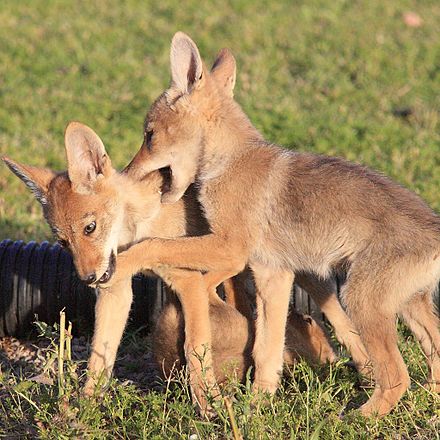
When I looked online, I found synanthropes (from ancient Greek, “together, with” and “man”) refers to organisms that live near and benefit from humans and their environmental modifications.  This term includes species regarded as pests or weeds but does not include domesticated animals.  Plant synanthropes can be of native origin or of foreign origin and introduced voluntarily or involuntarily.  Animal synanthropes are common in houses, gardens, farms, parks, roadsides, and rubbish dumps.  Examples of animal synanthropes include various insect species (like roaches, order Blattodea) we consider pests along with those we enjoy (like butterflies, lepidopteran suborder Rhopalocera), passerine or perching birds (like house sparrows, Passer domesticus and blue jays, Cyanocitta cristata), and various rodent species.  Among animals the brown rat is one of the most prominent synanthropes and can be found almost anywhere there are people.  As humans continue to encroach on animal habitats raptor birds (like redtail hawk, Buteo jamaicensis) and larger mammalian species (like white-tailed deer, Odocoileus virginianus and coyote, Canis latrans) are also synanthropes.  

Brookshire made the point that knowing we are altering an existing ecosystem is only the first step and the second is working to create avenues for coexistence with our synanthropes.  The red-tailed hawk is a majestic sight as it soars in the sky, perches on power poles, and nests under bridges.  By contrast the brown rat is viewed with disgust as it scurries over trash bins or slinks along alley ways.  While the immediate response may be to place rodenticides to kill the rat population.  However, the hawks and owls’ prey on the dead rats and are in turn poisoned as well.  The New York City Parks (NYCP) department no longer uses rodenticide during hawk breeding season and suggests residents to do the same.  The city uses snare traps and Rat Ice (essentially dry ice), along with pumping carbon monoxide into burrows, to control the unwanted species without harming the birds.  Sunny Carrao, biologist with NYCP, said it is like walking a tightrope trying to manage the synanthropes humans do not want and the charismatic ones we do.  This is made more precarious as they are all connected by the food chain.   

THOUGHTS:  Forgetting we live with synanthropes can have consequences for both them and us.  Encountering a black bear (Ursus americanus) in your yard as happened in our neighborhood last June can cause fear and panic.  Generally large predators stay away or hide from humans but when they are seen we choose whether to live and let live, to control, or to cull.  These decisions are best made in advance and not in the panic that follows a sighting and there are consequences for each path.  Finding ways to co-exist is preferable for synanthropes and for the people who live with their presence.  Act for all.  Change is coming and it starts with you.
Tumbleweed

March 07, 2024

Brandy McCombs AP

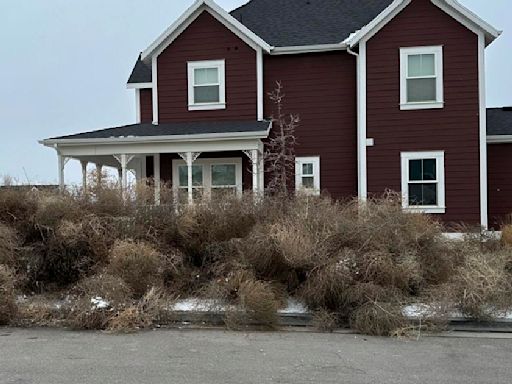
Inside the front section of my local newspaper, I found an AP article on how areas around Salt Lake City, Utah, were being inundated by windblown debris.   This debris rolled in over the weekend and blanketed some homes and streets in South Jordan, a suburban Salt Lake City.  Crews were brought on Tuesday to plow, load, and haul the dried carcasses four days after scores of the beachball-sized plants were bounced in by heavy winds.  Dawn Ramsey, South Jordan’s mayor said, “People woke up Saturday morning and it looked like these huge walls had been erected made of tumbleweed,” said. “We had entire streets in some of our neighborhoods completely blocked. They wrapped around homes.”  Saturday’s tumbleweed takeover is not isolated, nor is it a conspiracy by the invasive Russian thistle to conquer the western US.  These occurrences are due to combinations of seasonal wet and dry weather, the death cycle of the tumbleweed plants, and the strong gusts that propel them.  Mayor Ramsey said that three consecutive windy storms in 2021 brought in tumbleweeds to South Jordan, but not like Saturday’s event.  Cleanup was nearly complete by Tuesday afternoon as 13 dumpster loads of tumbleweed had been taken to a landfill.  No damage has been reported.

When I looked online, I found tumbleweed (Salsola tragus), also known as prickly Russian thistle, windwitch, or common saltwort, is a species of flowering plant in the family Amaranthaceae.  In regions of the US, it is the most common and conspicuous species that produces tumbleweed (other species do as well).  The young version of the species may be grazed but then become too spiny and woody to be edible to most wildlife and livestock.  Mature specimens are often more than 39 inches (1 m) in diameter.  As its fruits mature, the seed pod (diaspore) dies, dries, hardens, and detaches from its root.  This detached part of the plant is colloquially called “tumbleweed”.  Once detached, the dry orb will tumble (roll) with the force of the wind.  As the dead structure tumbles, it gradually falls apart, spreading as many as 200,000 seeds across the land.  If the seeds disperse in a wet area they can germinate rapidly.  Tumbleweed has a high tolerance of salinity and can successfully compete with native plants in environments like sea beaches, grassland, desert, or semiarid regions.  Native to Eurasia, Salsola tragus has proven to be highly invasive as an introduced species and rapidly became a common ruderal weed of disturbed habitats throughout the world.  It is believed tumbleweed was introduced into the US by Russian immigrants as a contaminant in flax seed.

Utah is not the only environment to be overcome by tumbleweed.  Mini-storms of tumbleweed swamped the drought-stricken prairie of southern Colorado in 2014, blocking rural roads and irrigation canals, and briefly barricading homes and an elementary school.  Parts of Victorville, California, were nearly buried by the large balls of the dried weeds in 2018.  Tumbleweed is known to damage non-native plants and environments and its highly flammable nature sometimes helps wildfires spread, especially during windy conditions.  An ignited tumbleweed may spread fire across firebreaks and even ignite buildings or structures that it stops against.  Erica Fleishman, of Oregon State University and director of the Oregon Climate Research Institute, noted that little work has been done on how climate change may affect tumbleweed.

THOUGHTS:  Tumbleweeds have become entrenched in western US culture and how many view the Old West.  They also figure prominently in “Tumbling Tumbleweeds,” a song recorded by Sons of the Pioneers in the 1930’s and identify the singer with the drifting tumbleweed rolling through the empty western spaces.  This is yet another immigrant which now defines an iconic age of Americana.  Act for all.  Change is coming and it starts with you.

Coral Reef

March 05, 2024

(Mengshin Lin / Associated Press)

Inside the back section of my local newspaper was a new spin on the perils facing the Pacific Ocean.  The wildfire that decimated Lahaina, Hawaii, last August was the deadliest US fire in a century.  More than 2,000 buildings burned and there were 101 confirmed fatalities.  The fire also left behind piles of toxic debris.  Now there is concern that runoff could carry contaminants into the ocean where they could get into the coral, seaweed, and food chain.  Scientists say there has never been another instance of a large urban fire burning next to a coral reef anywhere in the world and they are using the Maui wildfire as a chance to study how chemicals and metals from burned plastics, lead paint, and lithium-ion batteries might affect delicate reef ecosystems.  The research is already underway in the waters off Maui, and could help inform residents, tourists, and coastal tropical communities worldwide as climate change increases the likelihood of extreme weather events of the kind that fueled the wildfire.  It is too soon to determine how the fire will affect Lahaina’s coral reef.

When I looked online, I found a coral reef is an underwater ecosystem characterized by reef-building corals.  Reefs are formed of colonies of coral polyps held together by calcium carbonate.  Most coral reefs are built from stony corals (order, Scleractinia), whose polyps cluster in groups.  Coral is in the class Anthozoa in the animal phylum Cnidaria, which includes sea anemones and jellyfish, but unlike sea anemones, corals secrete hard carbonate exoskeletons that support and protect the coral.  Most reefs grow best in warm, shallow, clear, sunny, and agitated water.  Coral reefs first appeared 485 million years ago (Early Ordovician) displacing the microbial and sponge reefs of the Cambrian.  Coral reefs are sometimes called the “rainforests of the sea” and are some of the most diverse ecosystems in the world.  The reefs are a crucial indicator of healthy oceans.  The reefs are made up of stony corals, which are hard skeletons formed by thousands of individual living coral polyps that symbiotically host algae.  Fish, crabs, and other species find refuge in their midst.  Scientists say one-fourth of the ocean’s fish rely on healthy coral reefs for habitat, and a coral reef protects shoreline communities from powerful waves during storms.

Lahaina’s coral reef faced challenges before the fire from overfishing, abuse from kayak and stand-up paddleboard tours, warm ocean temperatures, and sediment from fallow fields and construction sites flowing into the ocean.  Much of the coral reef offshore of the burn zone was already degraded prior to the fire but there were still patches of nice reef, like in an area north of Lahaina Harbor near Mala Wharf.  In the past, Sea Maui, a whale watching and snorkeling tour company, would take snorkelers to the Mala Wharf reef to see turtles and occasional monk seals.  Phil LeBlanc, partner and chief operating officer, said, “We’re not into disaster tourism”.   The company’s boats now avoid the reef because of concerns about toxic runoff and out of respect for the town.  They now send their tours south to Olowalu or north to Honolua Bay.

THOUGHTS:  One of Hawaii’s oldest stories is the centuries-old chant called The Kumulipo, which reflects the central role of the coral reef in the island chain.  The chant tells how a coral polyp was the first living being to emerge from the darkness of creation.  Starfish, worms, sea cucumber, and other species followed, and humans came last.  “So the first form of life is a coral polyp.  That is your foundation.  The foundation of life is a coral,” said Ekolu Lindsey, a Lahaina community advocate.  This chant reflects the attitude and relationship the indigenous Hawaiians have with the coral reef.  The coral reef as the basis for much or marine life is also being understood by scientists.  Collapse of the reefs reflect the eventual collapse of oceans.  Act for all.  Change is coming and it starts with you.
Denisovans

March 04, 2024

Credit: Maayan Harel

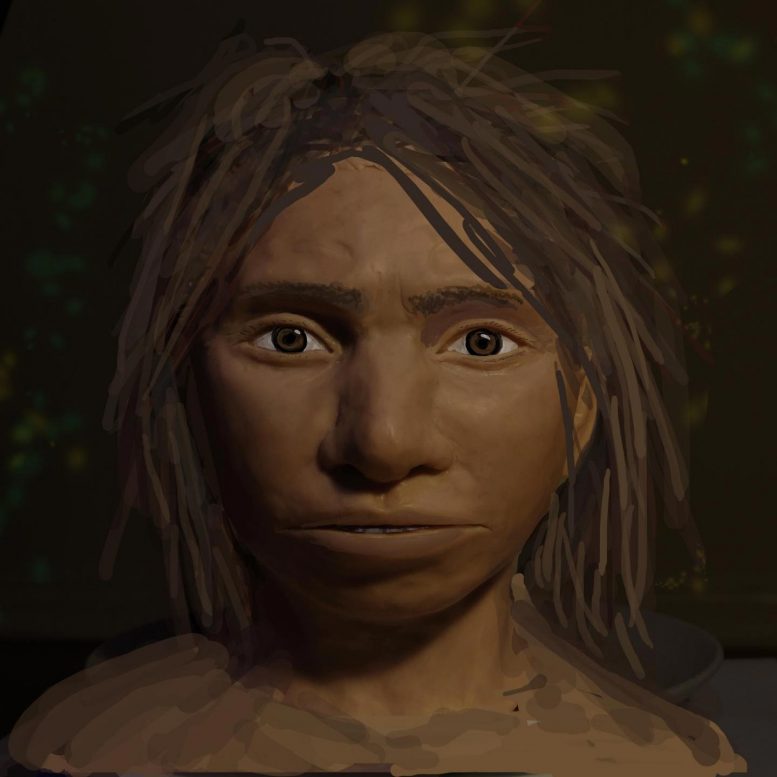
My NY Times feed reported on a lesser known group of humans that split from the Neanderthal line and survived for hundreds of thousands of years before going extinct.  While Neanderthals may have vanished 40,000 years ago, they are still a part of our popular culture in museums and TV ads.  The humans that split from the Neanderthal line are relatively unknown as few of their bones have been located.  Since the first discovery in 2010, the list of fossil remains total half a broken jaw, a finger bone, a skull fragment, three loose teeth, and four chips of bone.  What the group lacks in fossils they make up for in DNA.  Geneticists have been able to extract bits of genetic material from teeth and bones found in cave dating back 200,000 years, and billions of people on Earth carry Denisovan DNA inherited from interbreeding.  The evidence offers a picture of remarkable humans who were able to thrive across thousands of miles and in diverse environments, from chilly Siberia to high-altitude Tibet to woodlands in Laos.  This extinct line is called Denisovans.

When I looked online, I found Denisovans (Homo denisova) are an extinct species or subspecies of archaic human that ranged across Asia during the Lower and Middle Paleolithic.  The Denisovans get their name from the Denisova Cave in Siberia named after Denis (Dyonisiy), a Russian hermit who lived there in the 18th century and where their remains were first identified.  The cave was inspected for fossils in the 1970’s by Russian paleontologist Nikolai Ovodov, who was looking for remains of canids (dogs).  Fossils of five distinct Denisovan individuals in the cave were identified through their ancient DNA.  These remained the only known specimens until 2019, when a research group led by Fahu Chen described a partial mandible (Xiahe mandible) discovered in 1980 by a Buddhist monk in the Baishiya Karst Cave on the Tibetan Plateau.  Janet Kelso, paleoanthropologist at the Max Planck Institute for Evolutionary Anthropology in Leipzig, Germany, and other researchers offered to search them for DNA.  A molar tooth’s (122,700 and 194,400 years old) DNA was distinct enough to suggest it had come from a separate branch of human evolution.  The Denisovan fossils date from 200,000 to 50,000 years ago demonstrating the line existed tens of thousands of years, and a 90,000-year-old bone fragment from a Denisovan-Neanderthal hybrid, shows that the two groups interbred. 

Other researchers are surveying the Denisovan DNA inherited by living people.  The pattern of mutations suggests several genetically distinct Denisovans groups interbred with our ancestors.  The most intriguing results have come from studies on people in New Guinea and the Philippines which show signs of repeated instances of interbreeding with Denisovans that were distinct from what occurred on mainland Asia.  These findings suggest that Denisovans thrived in vastly different environments.  That flexibility stands in sharp contrast to Neanderthals, who adapted to the cold climate of Europe and western Asia but did not expand elsewhere.  The Denisovans’ versatility may have helped them last for a long time, and people in New Guinea may have inherited Denisovans DNA from interbreeding as late as 25,000 years ago.

THOUGHTS:  After the Denisovans disappeared, certain genes of Denisovans have become more common as they provide an evolutionary advantage in modern humans.  Emilis Huerta-Sanchez, a geneticist at Brown University, and her colleagues found a Denisovan gene that helps people survive at high altitudes in Tibet, and DNA from Native Americans carry a Denisovan gene for a mucus protein, though its benefit remains a mystery.  Humans are not just related to each other but have genetic links to several hominid kin.  Or we can discard genetics and declare our supremacy over others.  Act for all.  Change is coming and it starts with you.
Burial

March 1, 2024

From Astrobotic

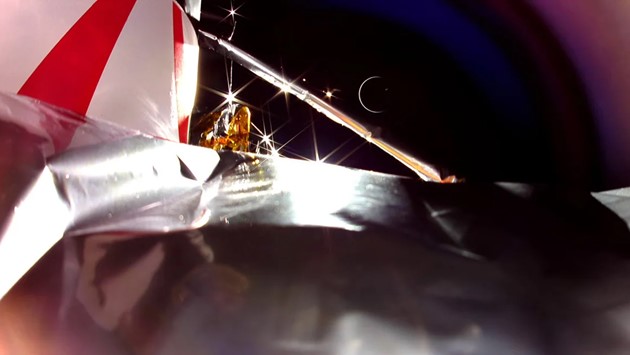
Inside the back section of today’s local newspaper was an article on questions raised by landing human remains on the moon.  Peregrin I launched on January 8, 2024, and was set to be the first commercial lunar lander and the first US built lunar lander on the moon since Apollo 17 in 1972.  Shortly after the lander separated from the Vulcan rocket a propellant leak developed that prevented completion of its mission.  The spacecraft was redirected into Earth’s atmosphere after six days in orbit where it burned up over the Pacific Ocean on January 18th.  Peregrin I was built by Astrobotic Technology and carried payloads for NASA’s Commercial Lunar Payload Services program.  Other payloads included a library (microprint on nickel) with Wikipedia contents, Long Now Foundation’s Rosetta Project, and cremains space burial companies Elysium Space and Celestis paid Astrobotic to carry to the moon.  The decision to include human remains was criticized by President Buu Nygren of the Navajo Nation, who said the Moon is sacred to the Navajo and other Indigenous peoples.  The remains never made it to the moon, but they did spark controversy about appropriate burial.

When I looked online, I found burial (interment or inhumation) is a method of final disposition where a dead body is placed into the ground.  This is usually accomplished by excavating a pit or trench, placing the deceased and objects, and covering it.  Evidence suggests some archaic and early modern humans buried their dead, seen as a demonstration of respect.  Burial has been used to prevent the odor of decay, to give family members closure, and to prevent witness of the decomposition of kin.  Many cultures see burial as a necessary step for the dead to enter the afterlife or to give back to the cycle of life.  Methods of burial may be heavily ritualized and include natural burial (“green burial”), embalming or mummification, and the use of containers (shrouds, coffins, grave liners, and burial vaults) to slow the decomposition of the body.  Objects or grave goods may also be buried, and the body may be dressed in fancy or ceremonial garb.  Depending on the culture, the way the body is positioned, and the associated grave goods may have great significance.  There are alternatives to burial, like cremation, burial at sea, and cryopreservation (freezing).

Peregrin I’s attempt to use the lunar surface as a burial site is not the first.  Eugene Shoemaker is still the only person whose remains have been sent to the Moon.  Shoemaker enjoyed a celebrated career combining his discipline of geology with astronomical applications, helping to create the field of planetary science.  Shoemaker studied craters on Earth, and founded the Astrogeology Research Program within the US Geological Survey in the early 1960’s.  Shoemaker used his knowledge to train Apollo mission astronauts on what the terrain would be on the surface of the Moon.  Shoemaker died on July 18, 1997, in a car crash while exploring a meteor crater in Australia.  Carolyn Porco, a close colleague of Shoemaker’s, decided to try to get the ashes of the deceased scientist to the Moon.  NASA liked the idea of honoring Shoemaker and called Celestis.  On January 6, 1998, NASA’s Lunar Prospector blasted off for the south pole of the Moon, looking for ice and carrying an ounce of Shoemaker’s ashes.  The mission ended when NASA deliberately crashed the craft on the surface of the moon on July 31, 1999, making him the first and only person to be buried on the moon.

THOUGHTS:  Celestis has been helping people send their loved ones into space for over 20 years, with four different levels of burial.  Earth Rise will launch into space and then return to earth starting at US$2,995.  Earth Orbit launches into orbit around the earth starting at US$4,995.  Luna launches to lunar orbit or the surface, and Voyager launches into deep space, both at US$12,995.  Certificates and apparel are also available.  As space exploration increases, burial customs will be one of the many traditions that will be challenged.  Act for all.  Change is coming and it starts with you.

Leaplings

February 29, 2024

The BBC news caried an online story today about an 84 year old man who was celebrating his 21st birthday.  Ronald Mustard, of Sunderland, England, is 84 years old but has only marked the exact day of birth every four years.  The staff at the dementia-friendly care home Archers Court in the city decided to throw Mustard a party to mark this milestone 21st birthday with a surprise celebration themed around 1961, or the year when he was actually 21, to help him remember his younger days as part of his care.  Ronald’s daughter Sharon said her father suffered through the pandemic, but since moving to the specialist care home last year he had “come out of his shell”.   Sharon helped arrange the surprise, which included residents and staff dressed up as hippies while dancing to music from that era.  Mustard was born in 1940, a leap year.  So-called “leaplings” are rare and there is about a one in 1,461 chance of being born on 29 February. 

When I looked online, I found a leap year, also called an intercalary year or bissextile year, is a calendar year that contains an additional day (or for a lunisolar calendar, a month) compared to a common year.  The 366th day is added to keep the calendar year synchronized with the astronomical or seasonal year.  Since astronomical events and seasons do not repeat in a whole number of days, calendars having a constant number of days each year unavoidably drift over time.  By inserting (intercalating) an additional day or month into some years, the drift between a culture’s dating system and the physical properties of the Solar System are corrected.  An astronomical year is slightly less than 365-1/4 days.  The historic Julian calendar has three common years of 365 days followed by a leap year of 366 days.  This is done by extending February to 29 days rather than the normal 28.  The Gregorian calendar is the world’s most widely used civil calendar and makes further adjustment for the Julian algorithm.  Each leap year has 366 days instead of 365, but this leap day occurs in each year that is a multiple of 4, except for years evenly divisible by 100 but not by 400.  That greatly restricts the number of times leaplings can celebrate on their actual birthday.

While the Julian and Georgian calendars are based on the time it takes for the earth to travel around the sun, other calendars are based on the phases of the moon.  Both Chinese and Hebrew calendars are lunisolar, so during a leap year there is an extra month, often called an embolismic month after the Greek word for it.  In the Chinese calendar, the leap month is added to ensure the 11th month always contains the northern winter solstice, and the intercalary month takes the same number as the preceding month i.e., if it follows the second month it is called “leap second month”.  In the Hebrew calendar this extra month is called Adar Rishon (first Adar) and is added before Adar, which then becomes Adar Sheini (second Adar).  According to the Metonic cycle, a period of almost exactly 19 years after which the lunar phases then repeat.  This is done to ensure that Passover (Pesah) is always in the spring as required by many verses in the Torah (Pentateuch).  Counting your age as leaplings appears to be the opposite of considering your pets age in “dog years”.

THOUGHTS:  Technically, leaplings will have fewer birthday anniversaries than their age in years.  This can be exploited for dramatic effect when a person declares themself only a quarter of their actual age by only counting their leap-year birthday anniversaries.  In Gilbert and Sullivan’s 1879 comic opera The Pirates of Penzance, Frederic (the pirate apprentice) discovers he is bound to serve the pirates until his “21st birthday” (i.e., 88 years old) rather than his 21st year.  For legal purposes, legal birthdays depend on how local laws count time intervals.  It seems like you need to be a little crazy to grasp how this all works.  Tracking the passage of time (not seasons) is one of the advances that occurs with the rise of human civilization.  Act for all.  Change is coming and it starts with you.

Singapore

February 27, 2024

AP Photo/David Goldman

The back page of today’s local newspaper carried an AP article on Singapore’s cutting edge water solutions.  Singapore has combined technology, diplomacy, and community involvement to help one of the most water-stressed nations in the world secure its water future.  There are no natural water resources in the country, and it relied on importing water from nearby Malaysia through deals for the inexpensive purchase of water from the Johor River.  The deal is set to expire in 2061 and there is no certainty over its renewal.  Across the island, seventeen reservoirs catch and store rainwater which is treated through a series of chemical coagulation, rapid gravity filtration, and disinfection.  Five desalination plants produce drinking water by pushing seawater through membranes to remove dissolved salts and minerals and are creating millions of gallons of clean water every day.  The country’s innovations have attracted the attention of other water-scarce nations seeking solutions.

When I looked online, I found Singapore, officially the Republic of Singapore, is an island country and city-state in maritime Southeast Asia located just north of the equator.  The country consists of the main island, 63 satellite islands and islets, and one outlying islet, with a total area of 281 miles2 (734 km2).  Around 25% of this area is the result of extensive land reclamation projects since the country’s independence from Malaysia in 1965.  It has the second highest population density of any country in the world, although urban planning has resulted in green and recreational spaces.  There are four official languages (English, Malay, Mandarin, and Tamil) that represent the multicultural population, although English is the lingua franca.  Multi-racism is enshrined in the constitution and continues to shape national policies in education, housing, and politics.  In recent decades the island has transformed into a modern international business hub with a rapidly developing economy.  The economic boom has caused Singapore’s water consumption to increase by over twelve times since the nation’s independence, and the economy is expected to keep growing. 

In 2006 Singapore launched the Active, Beautiful, Clean Waters Program, which transformed the country’s water systems into more public areas.  Residents can now kayak, hike, and picnic on the reservoirs, and several water facilities have public green spaces on the roofs where the public can picnic on lush green lawns.  Children are taught in school about best practices for water use and conservation and the schools hold mock water rationing exercises where water taps are shut off and students collect water in pails.  Water technology developed and used in Singapore, like portable water filters, water testing technology, and flood management tools, have been exported to over 30 countries.  The country has become a global hub for water technology, as home to nearly 200 water companies, over 20 research centers, and hosts a biennial International Water Week.  Despite the progress Singapore has made toward water security, Harry Seah, deputy chief executive of operations at Singapore’s National Water Agency, warns that continued progress is essential for the island.

THOUGHTS:  Another innovation in Singapore is a massive sewage recycling program to purify wastewater through microfiltration, reverse osmosis, and ultraviolet irradiation, adding to drinking supply reservoirs.  The treated wastewater (called “NEWater”) provides Singapore 40% of its water with the hope to increase capacity to 55% of demand in years to come.  To help build confidence in the safety of Newater, Singapore’s national water agency collaborated with a local craft brewery to create a line of beer made from treated sewage.  Singapore has become innovative out of necessity, but that necessity may not be far for other countries if we do not conserve and innovatively reform use of the resources we now have.  Act for all.  Change is coming and it starts with you.