Traitor

November 21, 2023

AP Photo/Todd Richmond

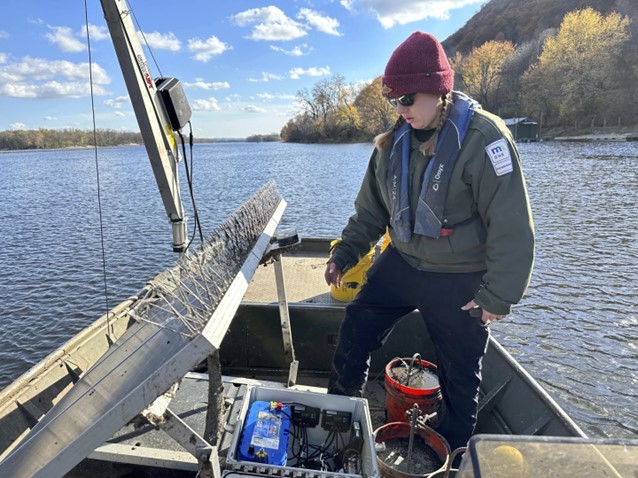
Hidden in the middle of the back section of my local newspaper I found an AP article on a new method of removing invasive carp in the Mississippi watershed of the central US.  Last March I wrote about the invasive carp and the attempt by Canada to keep them out of their waters.  Another attempt is to use the carp against their own species.  Over the last five years the US Fish and Wildlife Service (USFWS) and Minnesota Department of Natural Resources (DNR) have employed turncoat carp to lead them to the fish’s hideouts.  Agency workers capture carp, implant them with transmitters, and then release them.  Floating receivers along the rivers send real-time notifications when a tagged carp swims past.  The carp clump in schools in the spring and fall and the traitor carp’s location allows agency workers and commercial fishers to drop their nets and remove multiple fish.  Kayla Stampfle, invasive carp field lead for the Minnesota DNR, said the goal is to monitor when carp start moving and use the tagged fish to ambush the school.  “We use these fish as a traitor fish and set the nets around this fish,” she said.

When I looked online, I found there are four different carp species that are considered invasive: bighead (Hypophthalmichthys nobilis), black (Mylopharyngodon piceus), grass (Ctenopharyngodon idella), and silver (Hypophthalmichthys molitrix).  All four were imported to the US in the 1960’s and 1970’s to help rid southern aquaculture farms of algae, weeds, and parasites.  Flooding and accidental releases allowed them to escape, and they found their way into the Mississippi River where they have been spreading north through the rivers and streams ever since.  The carp are voracious eaters (up to 40% of their bodyweight a day) and easily out-compete native species.  The Associate Press reported state and federal agencies have spent US$607 million to stop the fish, and this is expected to hit US$1.5 billion over the next decade.  Experts have employed defenses like electric barriers, walls of bubbles, and herding the carp into nets using underwater speakers.  Tagging and releasing traitor fish began in the early 2000’s with the first receivers deployed in the Illinois River to stem migration into Lake Michigan.

Beginning around 2018, managers started placing solar-powered receivers around the Great Lakes region to track tagged traitor carp.  The real-time notifications reveal where carp may be massing before a migration and show movement patterns.  The receivers consist of a raft supporting three solar panels and a locked box with a modem and a computer that records contacts with tagged carp that pick up signals from over a mile away.  Each receiver costs about $10,000.  The federal Water Resources Reform and Development Act of 2014 authorized a multi-agency offensive against invasive carp which allows the USFWS to buy the receivers through its existing budget.  The Minnesota DNR began deploying real-time receivers in the Mississippi backwaters forming the Minnesota-Wisconsin border around La Crosse three years ago, with four receivers out this year and plans for seven next year.  Traitor carp helped wildlife managers and anglers double the poundage of invasive carp pulled from that area of river annually.

Thoughts:  The use of traitor carp has drawn criticism from the fisheries industry because managers return tagged carp to the wild where they can breed, said Marc Smith, policy director at the National Wildlife Federation’s Great Lakes Regional Center.  “In theory, it works,” Smith said. “We think the rewards outweigh the risk.”  Funny, this is like what the Arkansas aquaculture farms thought when they imported the fish from Asia.  It is always better for the existing ecosystem to avoid transplanting any new species.  The actual risks are rarely known.  Act for all.  Change is coming and it starts with you.
Firmaggedon

November 20, 2023

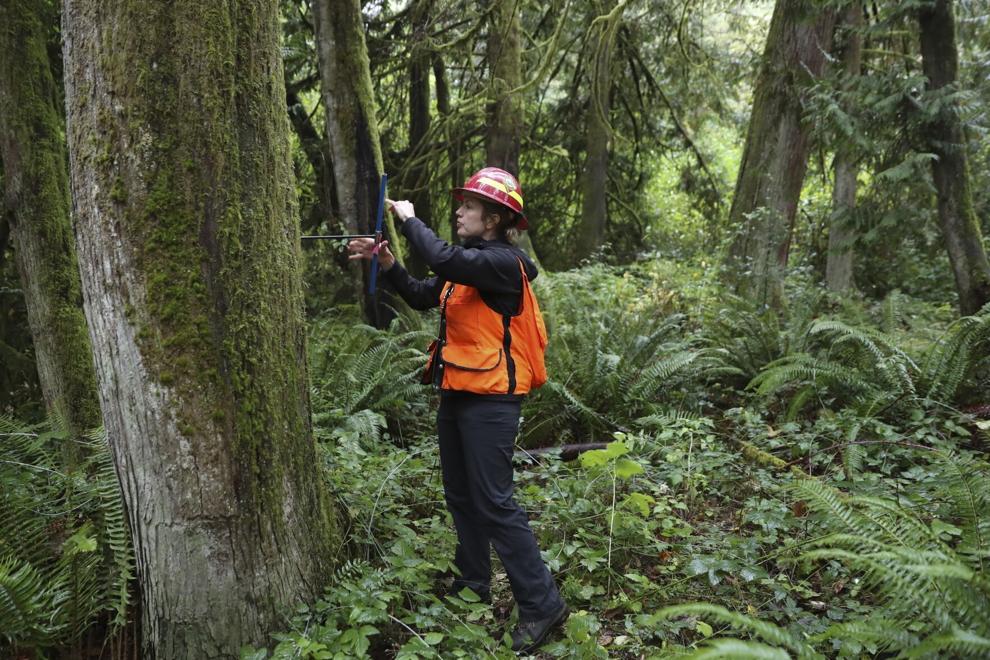
Located toward the back of Sunday’s local newspaper, I found an article on how the forests of the US’ Pacific Northwest are disappearing.  The article began with the loss of the iconic western red cedar (Thuja plicata).  People have used red cedar for thousands of years to make everything from canoes to clothing, and the many uses for this tree have earned the cedar the name “Tree of Life”.  More recently, scientists have started calling this water-loving relative of redwoods “the climate canary”.  Studies and reports in recent years indicate at least 15 native Pacific Northwest tree species have experienced growth declines and die-offs, and 10 have been directly linked to drought and warming temperatures.  Christine Buhl, a forest health specialist for the Oregon Department of Forestry, and other researchers are now arguing that the drought-driven die-offs are the beginning of a much larger and long-predicted shift in tree growing ranges due to climate change.  Researchers call the loss of trees, “Firmageddon”.

When I looked online, I found Firmageddon refers to the more than 1,875 square-mile (4,856 km2) die-off of five fir species in Oregon, Washington, and northern California.  The drought-driven fir “mortality event” was identified last year during an aerial survey of the forested area.  According to tree-range predictions, climate-induced die-offs are expected to start at the edges of growing ranges, including at lower-elevation locations that are predicted to become too warm and dry for many existing species.  The survey eventually tallied about 1.1 million acres (445,154 ha) of Oregon forest with dead firs, the most damage recorded in a single season since surveys began 75 years ago.  Climate change is reshaping the landscape in Western states that have been experiencing extreme heat and drought conditions.  As conditions change the fir trees might be replaced by more drought-hardy species in the future, which would reshape how the ecosystems function and along with changing their character.

Trees, and all plants, have growing ranges that are largely determined by climate factors like moisture and temperature.  Scientists have argued for decades that as atmospheric warming continues, growing ranges in the Northern Hemisphere will shift upslope in elevation and farther north, leaving many trees stranded in a warmer, drier world.  With the resulting climate mismatch, native trees are predicted to die-off and not grow back.  “That’s why it’s the canary,” says Buhl. “Any tree that’s less drought tolerant is going to be the canary in the coal mine.  They’re going to start bailing.”  Last year, Buhl and colleagues reported that red cedars were dying throughout the tree’s growing range not because of a fungus or insect attack, but due to the region’s “climate change-induced drought”.  Daniel DePinte, Forest Service aerial survey program manager, said surveys found the largest die-offs associated with Firmageddon are occurring at lower-elevations.  Buhl and colleagues found a similar pattern with western red cedar. Mortality was greatest at sites less than about 650 feet (200 m) in elevation west of the Cascade Range, according to their analysis.  The forests are all moving uphill.

Thoughts:  While red cedar is believed to be dying from drought alone, Firmageddon and Douglas fir (Pseudotsuga menziesii) die-offs have been linked to a combination of drought weakening trees and insect pests.  Where the insects would not normally kill the trees, the combination of stress from drought and pests are like a person with a weakened immune system dying from the flu.  While it is unlikely the red cedar is going to disappear from the landscape entirely it probably will not grow back in areas where it’s dying off.  These changes in turn affect the entire ecosystem, as plants, birds, and even other animals move along with the forests.  Perhaps the “oceanfront property in Arizona” sung by George Strait is not too far from reality.  Act for all.  Change is coming and it starts with you.

Weaving

November 17, 2023

I have mentioned how my DIY skills are not always the best.  While I had replaced the water lines in one of the bathrooms, I failed to mention that I misassembled it the first time and had to take the sink back apart to add a couple of pieces I left out.  I started another project several months ago to repair two of our patio chairs.  These had spent years (decades?) in the weather and the cloth mesh used for the seats had aged.  Every time we sat in them, they would rip “just a little bit more”.  Melissa found a YouTube video that walked you through the process of weaving paracord to replace the rotted seat.  I watched the video twice, found two more that I also watched, and still could not figure out how to do the project.  I finally gave up and came up with my own way to attach the horizontal layer of the weave.  It looked nothing like the YouTube version, and I never completed the project.  After having the chair sit in our living room for the last months, I decided it was time to tackle the chair once more.  I decided my weaving did not have to look like the ones on the videos, it just needed to work (and not be too ugly).

When I looked online, I found weaving is a method of textile production where two distinct sets of yarns or threads (or even paracord) are interlaced at right angles to form a fabric or cloth (or chair seat).  Other methods of cloth production are knitting, crocheting, felting, and braiding (plaiting).  The longitudinal threads are called the warp, and the lateral threads are called either the weft, woof, or filling.  The way these threads are interwoven affects the characteristics of the cloth.  Cloth is usually woven on a loom, which holds the warp threads in place while the filling threads are woven through them.  A fabric band that meets this definition of cloth (warp threads with a weft thread winding between) can also be made using other methods, including tablet weaving, back strap loom, or other techniques that can be done without looms.  The way the warp and filling threads interlace with each other is called the weave.  Most woven products are created with one of three basic weaves:  plain weave, satin weave, or twill weave.  The color and design of the cloth will depend on the artistic desire and ability of the one weaving.

There are some indications that weaving was known as early as 27,000 years ago in the Paleolithic Era as an indistinct textile impression has been found at the Dolní Věstonice site (Czech Republic).  The finds indicate weaving was used to produce a variety of cordage types, plaited basketry, and sophisticated twined and plain woven cloth.  The oldest known textiles found in the Americas are remnants of six finely woven textiles and cordage found in Guitarrero Cave (Peru).  The weavings are made from plant fibers and date between 10,100 and 9080 BCE.  A piece of woven hemp cloth was found in a burial at the Çatalhöyük site (southern Anatolia) in 2013 dating from around 7000 BCE.  The oldest-known weaving in North America comes from the Windover Archaeological Site (Florida) and dates from 4900 to 6500 BCE and are made from plant fibers.  The Windover hunter-gatherers produced what researchers called “finely crafted” twined and plain weave textiles.  I doubt my chair seat is as nice or will last as long as any of these examples.  I am hoping for another 5 to 10 years.

Thoughts:  I found it a lot easier weaving the warp cord than deciding how to place the initial weft cords (yes, I did it opposite than recommended).  I had tried to string the weft as a contiguous cord which became my nightmare.  For the warp I cut the amount needed for four passes between the weft and then wove it onto the chair seat.  I also decided to not tie off the sections of warp until I completed weaving.  This allowed me to continue to adjust the cord as needed.  While the process was time consuming, one chair is now complete.  The other is still on my project “to do” list.  I admire the work of craftspeople and skilled DIYers.  Venturing into their world reminds me that we are all “differently abled”.  Act for all.  Change is coming and it starts with you.
Caiman

November 16, 2023

My NY Times feed reported on a new University of Florida (UF) study published in the journal Management of Biological Invasions saying wildlife biologists at the Institute of Food and Agricultural Sciences (IFAS) found a series of strategies to successfully control and remove caimans in some areas of the Everglades.  Caiman have been established in Florida since the 1970’s since the pet trade (escapes and deliberate releases) made it possible for the species to invade the Florida Everglades.  They pose a threat to native wildlife by occupying the same habitat as native alligators and crocodiles and compete for food and other resources.  Scientists consider the removal efforts and results of the study a significant milestone for invasion science that has applications for other invasive species statewide and globally.  Frank Mazzotti, a UF/IFAS professor of wildlife ecology and principal investigator for the caiman removal project, said “Managing invasive wildlife will not be an in-and-out process . . . early detection and rapid response, long-term removal efforts and multi-agency cooperation, . . . will be key to success.”

When I looked online, I found the spectacled caiman (Caiman crocodilus), also known as the white caiman, common caiman, and speckled caiman, is a crocodilian in the family Alligatoridae.  The common name comes from a spectacle-like ridge between the animal’s eyes.  The caiman was described by Carl Linnaeus in 1758 as Lacerta crocodilus but has since been redescribed several times, including as Caiman sclerops by Schneider in 1801.  There are four subspecies of Caiman: the Rio Apaporis caiman (C. c. apaporiensis) endemic to Colombia and possibly the Venezuelan Llanos; the Chiapasius (C. c. chiapasius) in Mexico, Central America, and northern South America; the spectacled caiman (C. c. crocodilus) found in parts of South America; and the brown caiman (C. c. fuscus) in Nicaragua, Colombia, Ecuador, and Venezuela.The color is brownish-, greenish-, or yellowish-gray and grows to a length of 4 feet 7 inches to 8 feet 2 inches (1.4 to 2.5 m) and a weight of 15 to 88 pounds (7 to 40 kg).  The males are both longer and heavier than females.  Their diet varies seasonally, but consists of crabs, fish, small mammals, amphibians, and snails.  Breeding ois from May to August and 14 to 40 eggs are laid in July and August.  

Scientists at state and federal agencies see promise in the results and continued use of these strategies because they believe the caiman invasion has also impacted the restoration goals of the Comprehensive Everglades Restoration Plan (CERP).  CERP is the largest ecosystem restoration project undertaken in the US to restore, preserve and protect the South Florida ecosystem, while providing for other needs of the region, including water supply and flood protection, with a cost of more than US$24.5 billion.  A critical outcome of the team’s efforts was successfully reducing caimans in the Biscayne Bay Coastal Wetlands and C-111 Canal Project areas, important arteries in South Florida’s water management infrastructure designed to improve freshwater flow to Everglades National Park, Florida Bay, and Biscayne Bay.  The study team compiled data from 2012 through 2021 of the project’s removal efforts, conducting weekly surveys, rapid responses for removal of reported caiman sightings, and performing necropsies of captured caimans.

Thoughts:  Complete removal of the invasive caiman may not be possible.  The Rio Apaporis caiman was believed to be extinct by 1981 when the last known zoo specimen died, but a specimen was captured for the TV show Extinct or Alive in 2019 and identified by DNA sampling.  A “good idea” to introduce new species always has devastating effects on native species and the ecosystems they create.  Nature is a balance created over thousands (millions?) of years.  This lesson is critical as humans plan to move into the ocean and space.  Act for all.  Change is coming and it starts with you.
Dominica

November 15, 2023

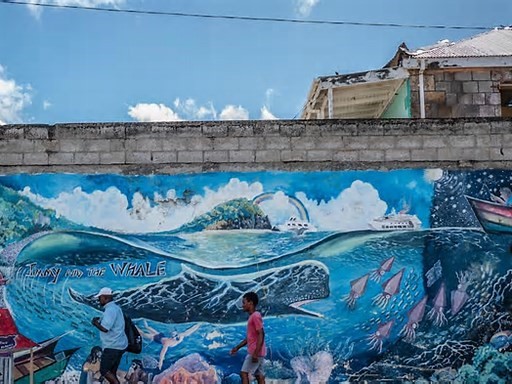
The back page of the News section of my local newspaper carried an AP article on the creation of the world’s first marine protected area for sperm whales (Physeter macrocephalus).  The area covers nearly 300 square miles (800 km2) on the western side of the island nation of Dominica and serves as a key nursing and feeding grounds for the whales.  Less than 500 sperm whales live in the waters surrounding Dominica, part of a population that moves along the Lesser Antilles chain south from St. Vincent and north into Guadeloupe.  Unlike other sperm whales, the ones in the eastern Caribbean do not travel very far.  Dominica Prime Minister Roosevelt Skerrit said, “We want to ensure these majestic and highly intelligent animals are safe from harm and continue keeping our waters and our climate healthy.”  The preserve will not only protect the animals but will help fight climate change.  Sperm whales defecate near the surface and the nutrient-rich poop creates plankton blooms that capture carbon dioxide and drag it to the ocean floor when they die.  Whale biologist Shane Gero said sperm whales in Dominica are believed to defecate more than whales elsewhere, either because they eat twice as much or due to the type of squid they are eating.

When I looked online, I found Dominica is a small island country of the Lesser Antilles in the eastern Caribbean Sea that lies between the French islands of Guadeloupe and Marie-Galante to the north and Martinique to the south.  The country has been a member of the British Commonwealth since its independence in 1978.  The island is 29 miles (47 km) long with a maximum width of 16 miles (26 km).  The capital and chief port is Roseau.  The island is a volcanic formation and still has active volcanoes (eruptions are rare), fumaroles (volcanic vents), and hot springs.  Boiling Lake lies in the south at 2,300 feet (700 m) above sea level.  The lake gets its name as its waters are often forced 3 feet (1 m) above normal by the pressure of escaping gases.  There are numerous rivers (unnavigable), and a range of high forest-clad mountains running north to south broken in the center by a plain drained by the Layou River.  The highest points are Mount Diablotins (4,747 ft/1,447 m) and Mount Trois Pitons (4,670 ft/1,424 m).

An estimated 35 families of sperm whales spend most of their time in waters surrounding Dominica and some are likely more than 60 years old.  Sperm whales are a matrilineal society, and young males leave and switch oceans at some point in their lives.  Sperm whales produce a single calf every five to seven years so protecting the female calves is key.  The loss of a single calf can mean the end of a family.  In the waters around Dominica and elsewhere, sperm whales have been hit by ships, entangled in fishing gear, and affected by agricultural runoff, limiting their survival.  Prior to whaling an estimated 2 million sperm whales roamed the Earth’s oceans before they were hunted for their oil.  There are only 800,000 left.  Once the reserve is created, the prime minister said his administration will appoint an officer and observers to ensure the area is respected and that whale tourism regulations are enforced.  Visitors can still swim with sperm whales and see them from a boat, but in limited numbers.  The move was praised by scientists and conservationists.

Thoughts:  Dominica experienced out-migration in the 1970’s that culminated with a massive exodus after Hurricane David (1979).  This continued in the 1980’s but moderated in the 1990’s.  A controversial government scheme in 1992 offered “economic citizenship” to investors from other countries.  Now Dominica has embraced the idea that sperm whales are also citizens of Dominica, and they are taking care of some of their citizens in a way few nations have ever done.  Tourism is a major economic force for Dominica, and they have grasped the importance of ecotourism.  Whether a publicity stunt or not, it protects endangered whales.  Act for all.  Change is coming and it starts with you.
Plumbing

November 12, 2023

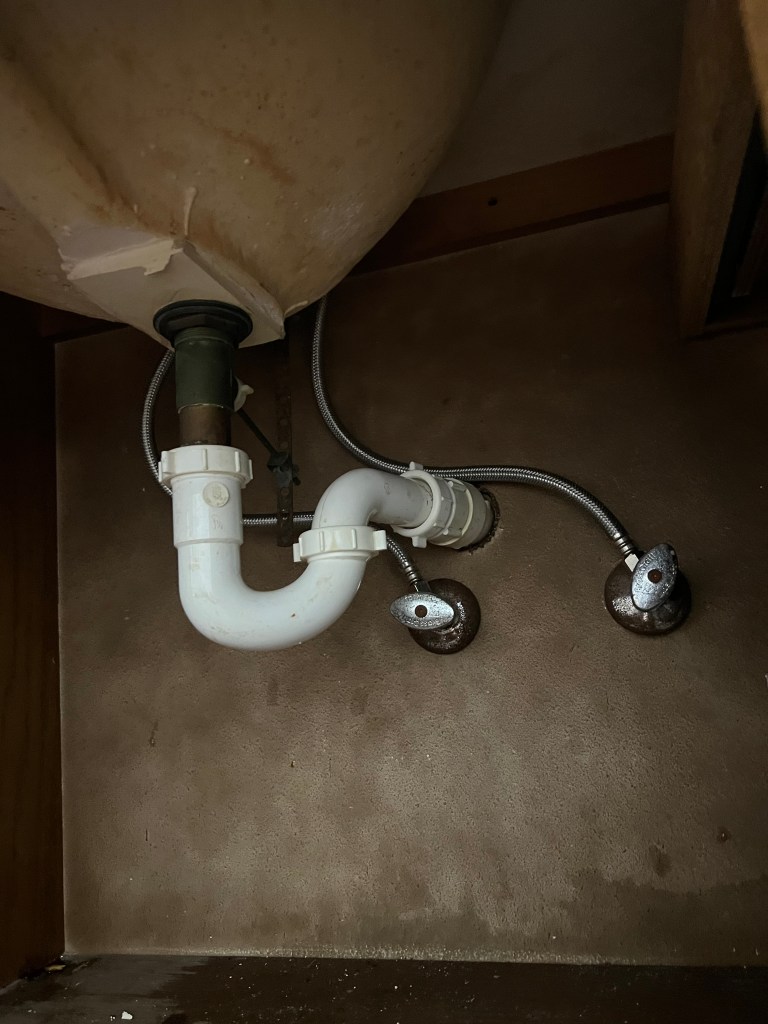
Yesterday I decided it was time to test my Do-It-Yourself (DIY) skills.  I had contacted a plumbing firm to do an an inspection of my water heater and while they were not able to drain my water heater (what I wanted) they gave me the “courtesy” of looking at my sinks and faucets.  The assessment was I needed to replace the water heater, the water lines for the sinks, and the kitchen faucet was leaking.  This could all be repaired for 5 to 10,000 US$.  I decided to skip the expense, but then the kitchen faucet went completely out.  I went to my local hardware store and purchased a similar faucet and the eight water lines (flex steel) I needed.  The threads for the kitchen water line had frozen shut and I was unable to replace them.  I called my usual plumber and was told he could come today.  I had intended to have him work on all the projects, but since I had time, I set to work replacing the water lines in the bathroom sink.  This was a start-and-stop process that sent me back to the store for tools and supplies.  I was finally able to replace the lines (I do not fit well beneath the vanity) and was proud of my accomplishment.  That made me think I could do anything, so I went back to work on the kitchen faucet.  I quickly broke off the shutoff valve.  I decided to wait for the man to fix my plumbing.

When I looked online, I found plumbing for clean water and sanitation has been around since the stone age (Neolithic).  Where water resources, infrastructure, or sanitation systems were insufficient, diseases spread, and people fell sick or died prematurely.  That meant large human settlements could only develop around fresh water like rivers or springs.  People have historically devised systems to get water into their communities and dispose of wastewater.  Early on, raw sewage was transported by a natural body of water (river or ocean) where it was diluted and dissipated.  With the Neolithic, humans dug the first permanent water wells, and the water was carried to homes in handheld pots.  Wells dug around 8500 BCE have been found on Cyprus, and by 6500 BCE in the Jezreel Valley (now Israel).  Skara Brae, a Neolithic village in Orkney, Scotland, was found to have water-flushing toilets from 3180 BCE to 2500 BCE.  This consisted of two stone channels lined with tree bark (for fresh and wastewater) in the city’s houses.  A cell-like enclave from 3000 BCE was also found in several houses in Skara Brae that are suggested to have served early indoor latrine.

Constructing irrigation systems to bring fresh water into urban areas is one of the concepts that define a civilization.  However, you also needed to get rid of the wastewater.  The reuse of wastewater has been used since the earliest human settlements as an ancient sanitation process and served as a corollary to just diverting human waste outside urban settlements.  Domestic wastewater was used for irrigation by prehistoric civilizations like the Mesopotamian, Indus Valley, and the Minoan since the Bronze Age (3200 to 1100 BCE).  Wastewater was used for disposal, irrigation, and crop fertilization by Hellenic (Athens) civilizations and then by the Romans (Rome) in areas around larger cities.  Plumbing is also known to have been used in East Asia since the Qin (750 BCE) and Han (200 BCE to 200 CE) Dynasties of China.

Thoughts:  The Roman Empire had indoor plumbing consisting of a system of aqueducts and pipes that terminated in homes and at public wells and fountains.  Rome (and others) used lead pipes which are commonly thought to be the cause of lead poisoning in the Roman Empire (and Nero’s madness), but the combination of running water which did not stay in the pipe for long and the precipitation scale that accumulated mitigated the risk from lead pipes.  This is another urban myth that ranks up there with my DIY skills.  There are times to defer to the experts.  Act for all.  Change is coming and it starts with you.
Biofluorscence

November 12, 2023

© J. Martin and E. Olson, Northland College; from Olson et al. 2021, Scientific Reports.

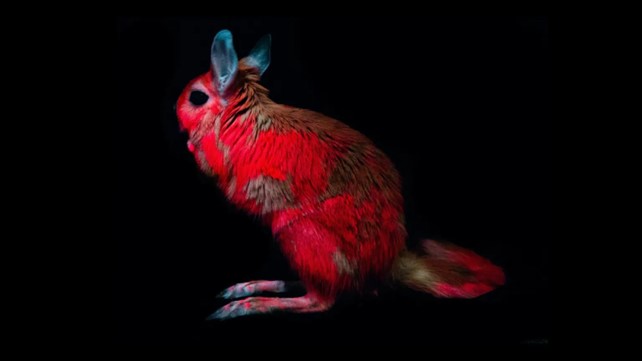
One of my favorite pastimes on summer nights as a child was catching fireflies (family: Lampyridae).  My brother and I would catch the blinking insects as they flew around our yard and place them in glass jars.  By the time we were called into the house we would always have a glowing lantern of fireflies that would blink on and off, lighting up the jar and giving us great delight.  When I looked at one of the side posts from my NY Times feed today, I found these insects are not the only fluorescent animals in the world.  There is a growing body of research that lists large numbers of bioluminescent mammals.  The latest addition is a jumping rodent called the South African springhare (Pedetes capensis).  Scientists found when the animal’s brown fur is exposed to ultraviolet (UV) rays it displays swirling disco patterns of pink and orange.  This striking fluorescence was detected in both live animals and museum collections.   The scientists reporting on the find called the springhare’s fluorescent colors “funky and vivid,” forming patterns that were highly diverse “relative to biofluorescence found in other mammals.”

When I looked online, I found biofluorescence occurs when higher energy wavelengths of light (e.g. ultra-violet or blue light) are absorbed and subsequently reemitted at lower energy wavelengths in living organisms.  This results in a glow of brilliant fluorescent colors including blues, greens, and reds.  The phenomenon is widespread among animals and can be caused by several different proteins, pigments, metabolites, and chemical reactions.  The process of biofluorescence has long fascinated humans, and as far back as 79 AD humans experimented with the concept.  Gaius Plinius Secundus (AD 23/24 – AD 79), called Pliny the Elder, was a Roman author, naturalist, natural philosopher, a commander of the early Roman Empire, and a friend of the emperor Vespasian.  He recorded the first use of bioluminescence as a kind of torch by rubbing a stick against jellyfish slime.  It was only recently that scientists accidentally discovered that mammals can also shine.  Jon Martin, a forestry professor, was exploring the forest at night using a UV flashlight to scan the canopy for biofluorescence from lichens, fungi, plants, and frogs.  He heard the chirp of a northern flying squirrel (Glaucomys sabrinus) and pointing the flashlight at it, was amazed to see pink fluorescence.

Until Martin found biofluorescence in the squirrels, the only other mammals known to have fluorescent fur were about two dozen species of opossum (order: Didelphimorphia) .  These marsupials are scattered across the Americas and are not closely related to flying squirrels.  They live in different ecosystems and have a different diet, suggesting that the glowing characteristic could be much more widespread than thought.  The small mammals do share one thing in common in they are all active at night and twilight, where other squirrels are mostly active in daylight (diurnal).  Many of the other biofluorescent mammals identified are either nocturnal (night) or crepuscular (twilight), suggesting the reason the animals glow is linked to their night life.  However, biofluorescence requires a light source for the glow to re-emit, and there is less UV light at night.  There may be more to the mammals biofluorescence.

Thoughts:  Field studies are required to examine if there are any advantages or disadvantages of this ability within these species’ natural environment and to see whether biofluorescence has a role in communication, sexual selection, camouflage, or no obvious function at all.  Australian Museum wildlife forensic scientist Greta Frankham adds, “Predators don’t seem to glow.  I think this is because if predators could be seen, they would lose all chance of catching their prey.”  As mammal predators humans do not glow either, except when we are really happy.  Although it is detectable by other humans, it is not biofluorescence.  Act for all.  Change is coming and it starts with you.
Capture

November 10, 2023

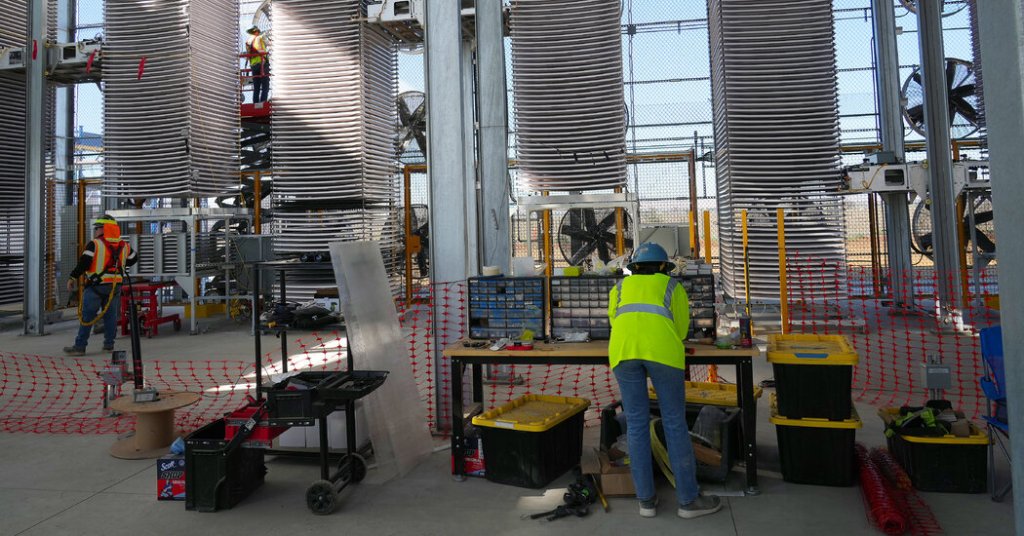
While scrolling my NY Times Morning feed I found a climate blurb about a new US plant designed to pull carbon (CO2) from the air.  Heirloom Carbon Technologies calls this the first commercial plant in the US to use direct air capture to remove greenhouse gases from the atmosphere.  The open-air warehouse in California’s Central Valley uses 40-foot-tall (12 m) racks holding 100’s of trays filled with a white powder that turns crusty as it absorbs carbon dioxide.  The carbon dioxide pulled is then permanently sealed in concrete.  Heirloom’s revenue comes from selling carbon removal credits to companies paying to offset their own emissions.  Microsoft has already signed a deal with Heirloom to remove 315,000 tons of CO2 from the atmosphere.  The plant can absorb up to 1,000 tons of carbon dioxide per year, equal to the exhaust from 200 cars, but Heirloom hopes to expand quickly.  Another larger carbon capture plant is already operating in Iceland and scientists say the technique could be crucial for fighting climate change.

When I looked online, I found the Orca project in Iceland purposes to capture about 4,000 tons of carbon dioxide a year and store it deep underground.  Orca was launched on September 8, 2021, as the first and largest direct air capture and storage plant in the world.  The facilities eight collector containers have an annual capture capacity of 500 tons each.  The plant was built by Zurich-based Climeworks and the heat and electricity required to run the process is supplied by the Hellisheidi Geothermal Power Plant.  The 4,000 tons of captured carbon is stored underground and turned into stone.  The plant uses massive fans to draw in large amounts of air to contact chemicals which can selectively remove carbon dioxide.  The carbon-rich chemicals are then heated to about 212F (100C) to release carbon dioxide as a pure gas.  The Icelandic startup Carbfix partnered with Orca to then mix the pure gas with water and pump it deep into basaltic rock where it will crystallize into a mineral in about two years.  The carbon offsets gained by the Orca project are the most expensive in the world.

Even 4,000 tons of carbon represents a fraction of global carbon emissions, which has been forecast by the International Energy Agency (IEA) to reach up to 33 billion tons this year.  The Orca company originally sought to capture 1% of annual global emissions, or more than 300 million tons, by 2025 but has since lowered the target to 500,000 tons by that same date.  Climeworks has plans for a facility that will be 10 times larger and could collect millions of tons of carbon dioxide in the next three years.  The high demand for carbon offsets has surprised some as the plant charges up to €1,000 (US$1,067) for a ton of CO2 removed.  Climeworks will need to lower carbon capture prices to attract and encourage large polluting companies to purchase carbon offsets rather than play the penalty.  Some critics argue global efforts should focus more on reducing carbon emissions than on technology to capture and store carbon.  Throwing this much resource and energy could become a distraction for the immediate carbon reduction goals set out in the Paris Agreement.

Thoughts:  The capture of carbon from the air is an innovative technology that could go a long way toward reducing carbon dioxide that causes global warming.  It also appears to be one of the ways polluting corporations have found to honor their pledge to reduce their carbon footprint to zero by 2030 (or 2050?).  Rather than investing in technology that will eliminate production of carbon dioxide, they are able to maintain their current practice and pay someone else to eliminate existing carbon.  Big corporations are about the bottom line.  The carbon removal credits were intended to reward big polluters for redesigning the production process.   If it is cheaper to continue to pollute and pay someone else to reduce the overall level of pollution many may take this tact.  Global warming should not be treated as an either/or, but as a both/and.  Act for all.  Change is coming and it starts with you.
Dolomedes

November 09, 2023

OLYMPUS DIGITAL CAMERA

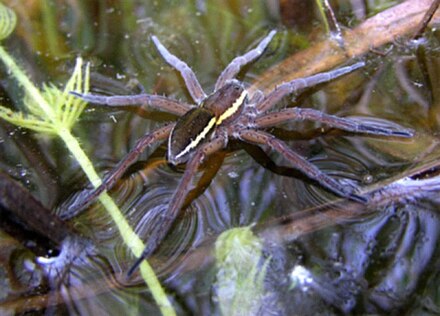
One of the stories highlighted in my browser suggestions concerned a fishing spider that can often be found on docks or near ponds and streams around the world.  The genus of spiders gets their name because they literally wait by the edge of a water source and ambush small fish that come to the surface.  Rather than using a web to trap their prey, they hunt by waiting at the edge of a pool and when they detect the ripples from prey, they run across the surface of the water to subdue it using their foremost legs, which are tipped with small claws.  Like other spiders they inject venom with their hollow jaws to kill and digest the prey.  They mainly eat insects, but some larger species can catch fish up to the size of a small goldfish (Carassius auratus).  Fishing spiders are also capable of submerging beneath the surface of the water by using the hairs on their bodies to trap air bubbles.  The browser caption called the gigantic Dolmedes one of “nature’s best scuba divers.”

When I looked online, I found the Dolomedes, also known as fishing spiders, raft spiders, dock spiders, or wharf spiders, is a genus of large spiders of the family Pisauridae.  Their scientific name (Dolomedes) comes from Greek and means “wily or deceitful”.  Almost all Dolomedes species are semiaquatic, except for the tree-dwelling, white-banded fishing spider (Dolomedes albineus) of the southeastern US.  Many species have a striking pale stripe down each side of the body.  There are over a hundred species of Dolomedes throughout the world, including the forest-stream species of New Zealand (Dolomedes aquaticus) and the great raft spider (Dolomedes plantarius) which lives in the marshlands (fens) of Europe.  Many species of this genus are large, with females up to 1 inch (26 cm) long and a leg span of just over 3 inches (80 mm).  Member species are easily confused with wolf spiders (family: Lycosidae) except for their context with water.  Even out of context they could be easily identified as this genus has two rows of eyes with two larger eyes at the top, a placement unique to this genus inside the Pisauridae family.  If you keep your distance, you can still tell them apart by their aquatic adaptations.

Dolomedes spiders are covered all over in short, velvety hairs which are hydrophobic (repel water).  This allows them to use surface tension to stand or run on the water, like water striders (family: Gerridae).  They also submerge beneath the water by trapping air in the body hairs to form a thin silvery film over the whole surface of their body and legs.  Like other spiders, Dolomedes breathes with book lungs found beneath their abdomens.  These open into the captured air film and allow the spiders to breathe while submerged.  The trapped air makes them buoyant and if they do not hold onto a rock or a plant stem they will float to the surface where they emerge completely dry.  The fishing spider hunts for mayflies and other insects on the surface of the water, using the water like a web, detecting ripples and vibrations which indicate where their prey is located.  The spider can estimate distance and direction, as well as discern the vibrations given off by predators such as trout (maybe I should rig a spider fly).  Dolomedes are powerful predators capable of eating tadpoles and fish as large as a small goldfish.

Thoughts:  Although species of Dolomedes spiders are frighteningly large, they rarely bite people.  They also help keep the insect population in check but eating larva and emerging adults, especially of the approximately 3,500 species of mosquitos (family Culicidae).  They build webs on shore to lay eggs and house their spiderlings.  Humans often brush away the webs or squash intrusive spiders when we come upon them.  There are more than 40,000 species of spiders, almost all of them venomous, but only a few are known to produce venom that is toxic to humans.  Most serve as a beneficial species, and they are best left alone to do their work.  Act for all.  Change is coming and it starts with you.
Loneliest

November 08, 2023

PHOTO: ANIMAL RISING

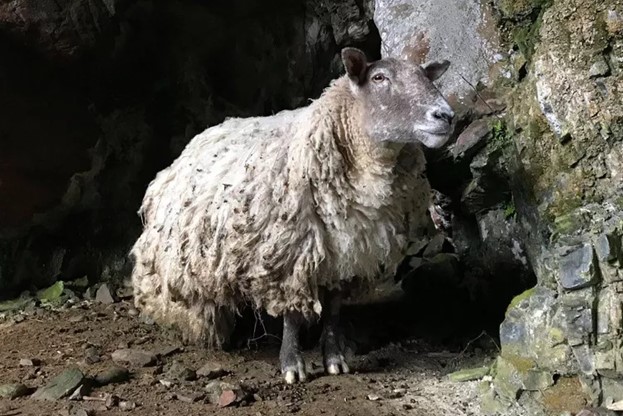
Last year I commented on Fiona the Hippo who had just turned five (now six) and all the fanfare that has marked her life.  Fiona was born six weeks premature in 2017 and only weighed 29 pounds (13 kg).  The story captured the attention of Cincinnati and the world.  The zoo’s marketing spokesperson called Fiona “the story of hope” and her INL brand has been attached to cookies, coffee, shirts, mugs, and books.  I came across another animal named Fiona that contrasted with the love and attention showered on her hippopotamus (Hippopotamus amphibius) namesake.  After spending at least two years stuck at the bottom of a cliff in Scotland, Fiona the sheep was finally rescued and is now living at a farm about 25 miles north of the border with England.  Once known as Britain’s loneliest sheep, she is no longer alone.

When I looked online, I found the Border Cheviot (Ovis aries var.), also known as the South Country Cheviot, is a breed of domesticated sheep from the UK native to the Cheviot Hills between Scotland and England.  The beginnings of the Cheviot breed existed in the Cheviot Hills of Northern England as far back as the early 1300’s.  These sheep were described as small hardy animals with a “long white face” and other physical attributes of the present day Cheviot.  The Cheviot is a distinctive white-faced sheep, with a wool-free face and legs, pricked ears, black muzzle, and black feet.  About 1370 CE considerable numbers of these “longfaces” found their way north from the English hills into the border country in the south of Scotland where they mingled with and gradually displaced the primitive tan-faced sheep that had been reared mainly for their hardiness and mutton qualities without much regard for wool.   The breed was recognized as early as 1372 and is prized for its wool, although bred primarily for meat.  The rams can have horns, but the ewes are naturally polled.  The live weight of a mature Border Cheviot ram ranges from 154 to 187 pounds (70 to 85 kg) and a mature ewe is from 121 to 154 pounds (55 to 70kg).  Border Cheviot are very hardy and strong animals that are well suited to their local harsh climates and rugged conditions.  This no doubt helped the loneliest sheep survive for two years on her own.

The rescue of the “loneliest sheep” came when five farmers from the Scottish Highlands used an all-terrain vehicle with a winch to haul her up the cliff.  Last month, kayaker Jillian Turner saw Fiona on the shores of Cromarty Firth in the Scottish Highlands.  This was two years after the sheep was first spotted at the same location.  Over 50,000 people signed a petition asking for Fiona’s rescue on Change.org, but the Coast Guard and the Scottish Society for the Prevention of Cruelty to Animals (SPCA) hesitated over performing a rescue operation, believing Fiona’s position was too dangerous to reach.  Despite this, the five farmers used an all-terrain vehicle with a winch attached to it to lower themselves 820 feet (250 m) down the cliffside and then to bring them back up with the sheep.  Graeme Parker who headed the group said, “When we got down there, sure enough, Fiona was . . . right in the middle of the cave in a little patch of sunlight that’s coming through a craggy hole in the ceiling of the cave.”  Fiona is no longer the loneliest sheep in the UK.

Thoughts:  Fiona was taken to a farm to live in a pen alone where she will be slowly integrated with a small herd of other animals.  Animal Rising, an animal rights group, has argued that Fiona should have been taken to a sanctuary where she could “live out the rest of her life in peace and security.”  The group added it was planning its own rescue of Fiona, but the farmers completed their rescue first.  My question is why someone did not do something two years ago, and how did Fiona get there in the first place?  Humans tend to wait to act until there is a crisis or public outcry, then criticize others who accomplish what we were reluctant to attempt.  Act for all.  Change is coming and it starts with you.