
Treat Man 2

January 22, 2024

It was just over a year ago that we took Zena to a local dog trainer.  This was an extended six week session to provide the basics and begin to work through more advanced activities like walking on a leash.  This January we decided to take Loki for his own series of training sessions with the same trainer.  We decided to forgo the extended series as I had learned the basic commands for Zena and Loki had learned them as well.  What Loki (read “I”) needed was advice on jumping and leash work.  When Zena was training, we had dubbed the trainer the “treat man” because she got copious amounts of treats as rewards for doing what she is supposed to do.  Loki is food motivated as Zena is and I am sure the treat man will not disappoint our little man.

Loki spent most of the first session getting adjusted to the surroundings and the new person vying for his attention.  The treat man had sold his house and construction was not completed on his new one, so we met at his office in a nearby town.  I do not know if it was the small area or the smells, but Loki was reluctant to enter the office.  I finally got him to go through the door and we sat down across the room from the trainer.  Loki was still unsure and sat on my foot crushed against my leg.  The treat man was standing and coaxing Loki with the small treats, but Loki would have none of it.  The man finally sat down (less intimidating) and tossed the treat in the middle of the room.  He finally got Loki to come away and get the treat, but he would rush back to sit on my foot.  It probably took half an hour of coaxing and cajoling before Loki was comfortable enough to begin working on his commands.  This time was not lost.  As Loki was becoming comfortable the trainer was going over my responses and what I should do regarding jumping and curtailing the excitement our 75 pound (34 kg) puppy displays when we first come home.  Loki was still wary of the treat man by the end of the hour, but the lure of food and his eagerness to please won out.        

The second session with the treat man went much better.  Loki went right through the door and was expecting to receive the treats that were going to be showered on him.  Over the week we had worked on my going down to Loki’s level when I arrive home and ignoring him if he tries to jump.  My niece even dropped by, so we were able to work on proper behavior with guests.  Loki was doing well, and the trainer decided to take us outside to work on leash behavior.  Here again, the leash problem is caused by excitement and lunging to reach the best smells faster.  All was going well until a man drove into the parking lot to see the lawyer located in another office.  The lawyer was closed but we were in the parking lot, so we became the focus of his attention.  The treat man listened patiently as the man describe his dismay over getting a notice from the post office requesting him to pick up a package that would be available on Monday.  As the man became comfortable with talking to us, he began to explain his problem and why he was seeing the lawyer for his son.  The trainer listened politely and finally said he needed to go as he was working with Loki.  By that time Loki was more interested in the parking lot smells than the treats that had initially kept his interest.

THOUGHTS:  As the treat man worked with Loki, he commented on how smart Golden Retriever’s are and how willing they are to perform tasks.  Loki was uncomfortable when we first arrived as this was a strange place with new expectations.  Now that Loki has grown accustomed to the trainer, he is willing to perform.  The man who met us in the parking lot was in a new place and finding it filled with new expectations.  He haltingly approached until he found we were willing to listen.  Finding someone to listen to him, he gladly began to share.  When Melissa and I were in Europe we had a similar problem.  Luckily, we were able to find someone willing to listen and try to help.  Strive to be the helper when others are uncertain.  Act for all.  Change is coming and it starts with you.

Pumpkin Spice

January 19, 2024

I have mentioned how I tend to practice daily intermittent fasting by skipping breakfast and refraining from eating until after noon, but that does not include coffee.  I like to have two cups of coffee (black) when I wake up.  My preference is to buy Lanna Fair Trade whole bean coffee.  This is ethically sourced from a hill tribe in Thailand that my parents worked with on two separate occasions over nearly 1-1/2 years.  I also prefer the robust flavor of a dark roast over the flavored coffees that are popular.  One of the popular flavored coffees is the Pumpkin Spice Latte offered by a national chain on a limited basis for two months in the fall.  The drink’s popularity gave rise to an entire market of pumpkin spice products and today you can find pumpkin spice versions from hummus to hard seltzer, to marshmallows, to mac and cheese.  When I was in the hardware store yesterday, I even found a fall version of pumpkin spice wild bird food blend with “ultimate pumpkin powder”.  I wonder if this was marketed toward the birds or the birders. 

When I looked online, I found the pumpkin spice craze can be divided into two eras, or before and after the introduction of the Pumpkin Spice Latte (PSL).  Before the PSL, pumpkin spice referred to a blend of spices that was used to flavor pumpkin pie, often combining cinnamon, nutmeg, ginger, allspice, and cloves.  This has long been part of the American baking tradition and Amelia Simmons’ 1798 reprint of her cookbook American Cookery lists two different recipes for “pompkin” pie, one with nutmeg and ginger and the other with allspice and ginger.  In the 1930’s, companies like Thompson & Taylor Spice Co and McCormick & Company came out with a revolutionary pre-blended mix that meant bakers could buy one spice (container) instead of several.  Thompson & Taylor’s version (1933) included nine spices.  McCormick’s blend was originally launched in 1934 and includes four spices: cinnamon, ginger, nutmeg, and allspice.  Starbucks launched the original PSL in October of 2003.  It is now available around the world and is Starbucks’ most popular seasonal beverage, having sold over 424 million PSL’s in the US alone.

The pumpkin spice phenomenon is an intriguing psychological occurrence in the US.  Many argue the pumpkin spice flavor itself is delicious.  Ironically, pumpkin spice rarely has any pumpkin in them and are instead the toppings added to a pumpkin pie.  Cinnamon is a natural aphrodisiac and is known to relax muscles and increase sexual desire.  Nutmeg has aphrodisiac properties and a study on rats found extracts of nutmeg and clove stimulated the mounting behavior of male mice and significantly increase their mating performance.  Nutmeg also acts with an antidepressant-like effect involving various aspects of the human nervous system.  The strongest pull other than taste may be the pumpkin spice desirability due to its scarcity.  Social psychology tells us that once something is “limited supply”, “seasonal”, or “for a short time only”, its desirability increases.  This can lead to a bandwagon effect as people want to feel involved and part of the conversation.  We may feel we belong when sharing our seasonal pumpkin spice.

THOUGHTS:  Pumpkin spice is reminiscent of fall and is associated with coziness, with flannel, warm, fuzzy socks, and comfort.  Fall is also a time of greater stability and predictability in schedules after the vacations of summer.  Fall brings structure.  Fall is expectation of Halloween, Thanksgiving, and the December holidays.  As such, pumpkin spice speaks to us on a conscious and subconscious level.  The use of persuasion to influence people and their response is as old as humankind.  In today’s digital age this is no longer an art, but a science carefully tailored to individual preferences. Since I do not drink PSL, I did not buy the pumpkin spice bird seed.  Your understanding of, “if Jimmy jumped off a bridge . . .” is insightful.  Act for all.  Change is coming and it starts with you.

Clog

January 18, 2024

Our toilet stopped up last night.  This does not happen often, and I consider unstopping a toilet one of the few handyman activities I am capable of.  The last time it happened I tried everything.  I tried heavy plunging, used drain cleaner (yes, the package says not to), and even tried a coat hanger (scratched the porcelain), but to no avail.  Of course, this was over a holiday weekend, so I told the plumber not to bother until after the holiday was over (avoiding overtime rates).  He sent his drain clearing person to resolve the issue the following Tuesday.  The man stuck a plunging snake into the bowl and the clog was gone three minutes after his arrival.  I think it took longer for me to get the bill and write the check than for him to clear the clog.  This time I was determined to resolve the clog on my own and save the money.    

When I looked online, I found a survey by American toilet manufacturer Kohler Co. in July of 2004 found 27% of 1,000 adults claim to experience a toilet clog each month, and sometimes up to three times.  That translates to an estimated 28 million clogged American toilets per month.  The study also found that 57% of the respondents said their fixtures were more than 10 years old.  The 1994 Energy Policy Act brought the flush rate down to 1.6 gallons-per-flush (6.0 lpf).  Kohler suggested since there have been so many new developments in toilet design homeowners may want to consider upgrading their toilets every five to 10 years to keep up with new technology and low-flow water regulations (and sell more toilets?).  The survey also found the Northeast boasts America’s oldest toilets (23% older than 20 years) while the newest toilets are found in the West (56% less than 10 years old).  That probably relates to older established housing in the Northeast and new construction in the West.  Drought-suffering states in the West are more likely to provide incentives to install water-conserving fixtures.  In households with children, 34% had replaced their toilets within the past five years and nearly 20% of Americans had attempted to install a toilet by themselves.  I think the key word is attempted.

When the last clog happened, Melissa suggested her dad had purchased a drain snake and it may still be in the garage.  If it is, I could not find it.  We have needed a snake on other occasions for different projects (drains and dryer vents).  The dryer vent especially requires a much longer auger than a sink or toilet often do.  I got bound up in manual verses power (drill) driven, toilet verses water line, 25 foot (7.6 m) verses 6 foot (1.8 m), and just called the plumber.  While I started down that rabbit hole again this time, I also came across Bob Villa’s “7 ways to unclog a toilet without a plunger”.  I tried several suggestions, baking soda and vinegar and then hot water and soap, but neither worked.  I finally went to the hardware store to purchase a snake.  The one good thing is all my activity buffed out the scratches from the coat hanger I used the last time we had a clog.

THOUGHTS:  I found two disclaimers on the clog removal I used.  You should not use drain clog products in toilets because they contain chemicals that damage the porcelain, your pipes, or disrupt the chemical balance of your septic system.  There are products for toilet clogs.  The other was to use hot (not boiling) water along with soap.  Boiling water may melt the wax ring that seals your toilet, and if it melts it will need to be replaced.  All may result in significant repair costs.  It seems every time I get involved in DIY, I learn why I am not qualified.  That means I either need training, or I go to those who have been trained.  Measles is highly contagious and considered the “canary” when herd immunity is compromised.  There are 54 confirmed cases in Washington state alone and five outbreaks across the US this year.  That is in addition to the rising numbers of covid and flu cases.  Our herd is going the wrong way.  Act for all.  Change is coming and it starts with you.
Cabbage

January 16, 2024

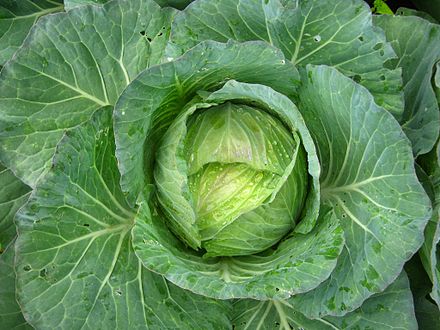
Located inside the back section of my local newspaper was an article on a Louisiana woman who set the record for growing the state’s largest cabbage.  Jenny Bourg lives about an hour southwest of New Orleans and grew the giant Sapporo cabbage in her backyard.  The record was verified by the Louisiana Department of Agriculture and Forestry (LDAF).  Bourg has been a gardener all her life and said she could not remember a time when she was not planting fruits and vegetables.  “My mother lived to the age of 90 and I was very fortunate to be able (to) get her wise gardening advice for many, many years.”  The giant cabbage had grown from a seed Bourg planted in July and when it was harvested on December 21st, the LDAF measured it.  The vegetable had a circumference of 7 feet 2 inches (2.18 m) and weighed 44.115 pounds (20.0 kg).  The previous Louisiana state record was held by a New Orleans third grader, Macyn Bertucci, who won the competition with a 28 pound (12.7kg) cabbage in 2018.  Bertucci won a US$1,000 savings bond from Bonnie Plant, a greenhouse facility that sells fresh fruits, vegetables, and succulents.  Bourg got to eat lots of cabbage.

When I looked online, I found cabbage (Brassica oleracea) is a leafy green, red (purple), or white (pale green) biennial plant grown as an annual vegetable crop for its dense-leaved heads.  The vegetable is descended from the wild cabbage (Brassica oleracea var. oleracea) and belongs to the “cole crops” (brassicas).  Cabbage is closely related to broccoli and cauliflower (var. botrytis), Brussels sprouts (var. gemmifera), and Savoy cabbage (var. sabauda).  A cabbage generally weighs between 1 and 2 pounds (500 and 1,000 g).  Green cabbage is the most common while purple cabbages and crinkle-leafed savoy cabbages of both colors are rarer.  Cabbage was domesticated somewhere in Europe before 1000 BCE.  Cabbage was described as a table luxury in the Roman Empire and by the Middle Ages had become a prominent part of European cuisine.  By the 17th and 18th centuries cabbage was a staple food in central, northern, and Eastern Europe, and used by European sailors to prevent scurvy during long ship voyages at sea.  Cabbage was exported to the Americas, Asia, and around the world early in the modern era.

As big as the Louisiana cabbage was, it is dwarfed by the world record cabbage.  The long summer days of the northern latitudes allow the cabbage to grow quite large.  The Guinness World Record for the heaviest cabbage was 138 pounds 4 ounces (62.71 kg) grown by Scott Robb of Palmer, Alaska, 40 miles (64.4 km) northeast of Anchorage in 2012.  Cabbage heads are generally picked during the first year of the plant’s life cycle, but plants intended for seed are allowed to grow a second year and must be kept separate from other cole crops to prevent cross-pollination.  Cabbage is prone to several nutrient deficiencies, multiple pests, and bacterial and fungal diseases.  To honor her win, Bourg turned her record-setting cabbage into casseroles and served it with ham.  Even after sharing the dish with her neighbor, she is officially “tired of eating cabbage”.

THOUGHTS:  Growing up my mom kept a 5 gallon (18.9 liter) crock in the basement to ferment our garden cabbage into sauerkraut.  While I do not recall eating the cabbage at a meal, I do recall sneaking into the basement and stealing “tastes” of the mixture from the jar.  Now that I have my raised garden beds I may need to try and grow cabbage for myself.  I already have a crock.  There are several Guinness Book of World Records entries related to cabbage.  These include the heaviest cabbage (above), heaviest red cabbage (69 pounds 11 ounces/31.6 kg), longest cabbage roll (64 feet 1 + 1/2 inches/19.54 m), and largest cabbage dish (6,526 pounds/2,960 kg.  I am sure all these records required “sharing with a neighbor”.  Act for all.  Change is coming and it starts with you.
Helmet

January 14, 2024

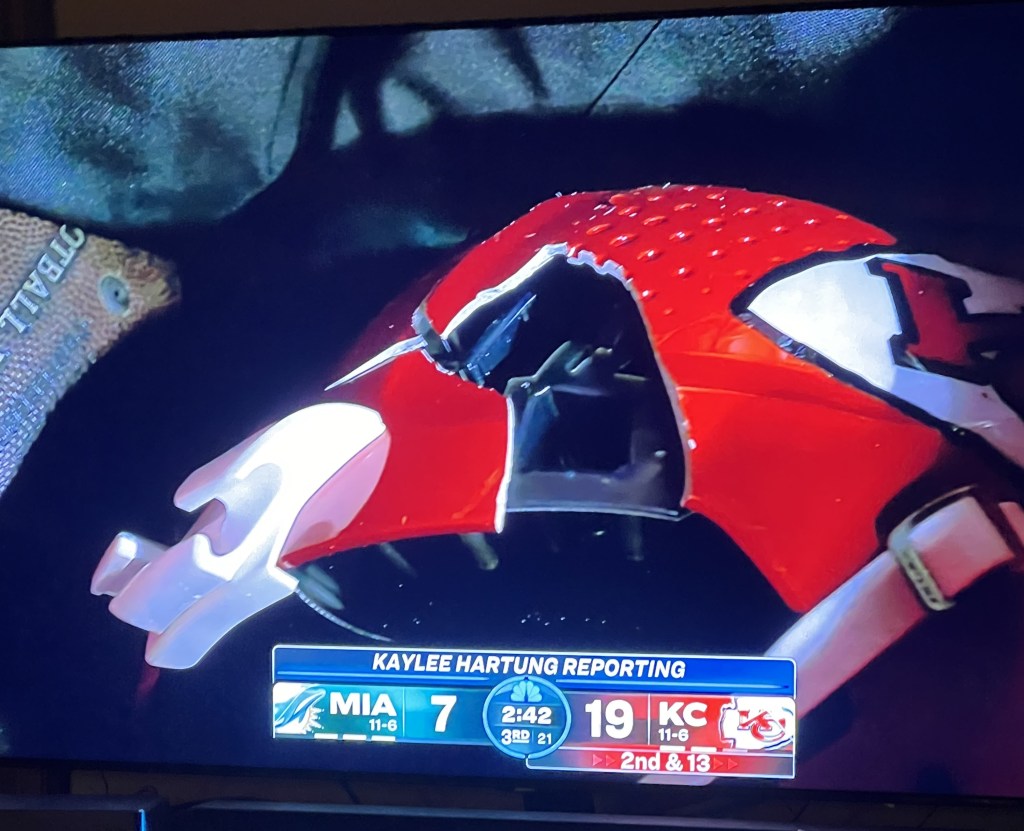
Last night the Chiefs and Dolphins squared off in a Wildcard playoff game that ranked as the fourth coldest NFL game on record.  Arrowhead Stadium has a seating capacity of 76,416, making it the 25th-largest stadium in the United States and the fourth-largest NFL stadium.  It was reported the sellout crowd braved the weather as an estimated 76,000 showed up to brave the -24F (-31C) windchill temperature.  Tailgaters arrived outside the stadium with heaters and hot drinks trying to stay warm.  They brought multiple layers of clothing, heated gloves and socks, thermal underwear, and long johns.  The game cameras again and again focused on Chief’s head coach Andy Reid’s frozen mustache.  According to one fan, “You’ve got to enjoy it while you have it.  This is the golden era.  I’m not going to miss it because it’s a little cold.”  The sub-zero game in Kansas City was everything that fans expected from the fourth-coldest game in NFL history, but Patrick Mahomes’ broken helmet was not expected.

When I looked online, I found the coldest game in NFL history was the 1967 NFL Championship between the Dallas Cowboys and the Green Bay Packers.  The gametime temperatures for “The Ice Bowl” was -13F (-25C).  The game was attended by 50,861 people, selling out Lambeau Field.  While Green Bay won the game 21-17, both teams finished with less than 200 total yards (Green Bay–195 yards; Dallas–192 yards).  The wind chill was even colder at -48F (-44.5C).  A layer of condensation had formed between the tarp and the field and once the tarp was removed the field froze.  Green Bay has been home to several of the coldest games in NFL history.  According to Stathead, the average temperature for playoff games at Lambeau Field is 21.8F (5.7C), and the warmest playoff hosted at Lambeau was 35F (1.7C) when the Packers hosted the Los Angeles Rams on January 16, 2021.  It is one of only two playoff games played at the stadium where temperatures were above freezing.  Four of the games played there have either been in the single digits or in the negatives.  Despite the cold, last night was the first time a helmet broke.

The broken helmet occurred when Mahomes took a helmet-to-helmet hit from Miami’s DeShon Elliot in the third quarter.  While Mahomes shrugged off the hit, his helmet was not so lucky.  The plastic headgear cracked, and a large piece was broken off.  The image of Mahomes’ helmet cracking captured the attention of NFL fans, and the replays showed the three inch (7.5 cm) long piece of plastic flying through the air after the hit.  Mahomes played several downs before the referee stopped the action and allowed Mahomes to switch out his helmet.  The drive ended with a field goal.  Maholmes worked on the new helmet while Miami had the ball, trying to stuff the old padding into the new one (it did not work) and trying to change out the face mask.  Despite the irritation, Mahomes led the Chiefs to their second touchdown of the night on the next drive.  The Chiefs won the game 26-7.

THOUGHTS:  Melissa’s question was after hearing about the cold was, “Why are they playing?”  Buffalo did postpone their game, but because of snow and not from the cold.  Mahomes’ broken helmet worked out and he was not injured.  The companies that manufacture the helmets are required to put them through safety tests to be approved for use in the NFL, but it is unclear whether testing is done under the extreme temperatures that Kansas City experienced.  Pro Football Talk said both the NFL and the NFL Players Association should insist on testing helmets in subzero temperatures and if there is a temperature where it is too cold for helmets to perform reliably, it should be too cold to play.  Short of a lightning strike, little gets in the way of football.  Act for all.  Change is coming and it starts with you.
Improvement

January 12, 2024

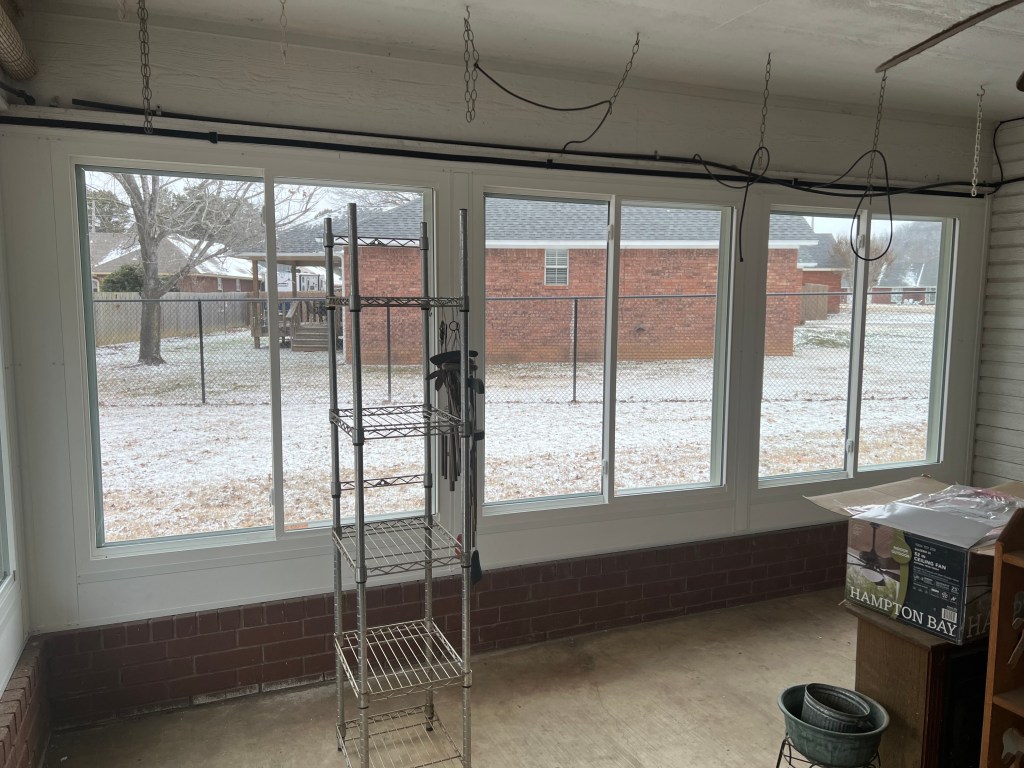
Last fall we decided it was time to take on construction projects on our house and two immediately came to mind.  We have struggled with keeping the succulents alive and happy over the last three winters (the cacti seem fine with most anything).  The 10 mil plastic we placed over the porch screens kept out the bitter cold, but it filtered the sunlight and was difficult to allow air flow on nice winter days.  Last October we decided to bite the bullet and install a window system in the sunroom.  The other project was for our dogs.  We have felt bad about the kids being confined in the fenced area of our pool/patio and decided it was time to extend the fence around a larger portion of our yard.  We were taken back by the cost and delayed the project, but again bit the bullet in December.  This will also help keep Loki out of the new raised garden beds Melissa surprised me with for Christmas.  Both the fence and windows were installed this week.  This will make it easier for the succulents, the dogs, the vegetables, and Melissa and me.  This was a true home improvement.

When I looked online, I found the concept of home improvement or remodeling is the process of renovating or making additions to your home.  Home improvement can consist of projects that upgrade an existing home interior (kitchen, bath, electrical, and plumbing), exterior (masonry, concrete, siding, roofing, or windows), or other improvements to the property (lawn, garden, and fence work).  Home improvement projects can be carried out for a variety of reasons but are often completed for repair, energy savings, or to enlarge or improve the living space.  Home improvement often refers to building projects that alter the structure of an existing home, but can include lawns, gardens, and outdoor structures like gazebos, garages, and sheds.  Home or residential renovation is an almost US$300 billion industry in the US and a $48 billion industry in Canada.  The average cost per project in the US is US$3,000 and $11,000 to $15,000 in Canada.  This is a booming business.

During the pandemic home improvement was (reportedly) delayed by “supply chain issues”.  Melissa and I were wary about delays in our windows because winter was rapidly approaching.  We were assured in October the new system would arrive “within four weeks”, so I delayed installing the plastic and ordered the windows.  The system did not arrive until the 18th of December and then installation was delayed by the holidays and weather.  Ten weeks later we have the porch installed.  It looks nice and while it has gotten well below freezing for the high, the unheated porch has stayed above 55F (12.7C).  The succulents will be happy to get out of the house.  Our fence was instead delayed by code regulations.  We intended to fence the side yard and shed to the south but were told a drainage easement (effective November 2023) prevented construction.  We switched gears, had the plans redrawn and re-estimated, and had the fence installed on the north.  The kids enjoyed running in the new play area last night and have already “christened” the space.  This is something else I will need to keep tabs on.

THOUGHTS:  Professional home improvement goes back to the beginning of recorded civilization.  Sergius Orata is said to have invented the hypocaust in the 1st century BCE according to Vitruvius in his famous book De architectura.  The hypocaust is an underfloor heating system used throughout the Roman Empire in villas of the wealthy.  Orata became wealthy buying villas at a low price, adding spas and his hypocaust, and reselling them at higher prices.  On average, home improvement projects provide a 70% return on investment (ROI).  Home improvement with the best ROI are projects that add functional space and square footage.  Our porch (with HVAC) provides another room and an additional 200 square feet (18.5 m2).  This should please future buyers (and us now).  Act for all.  Change is coming and it starts with you.
Springtails

January 11, 2024

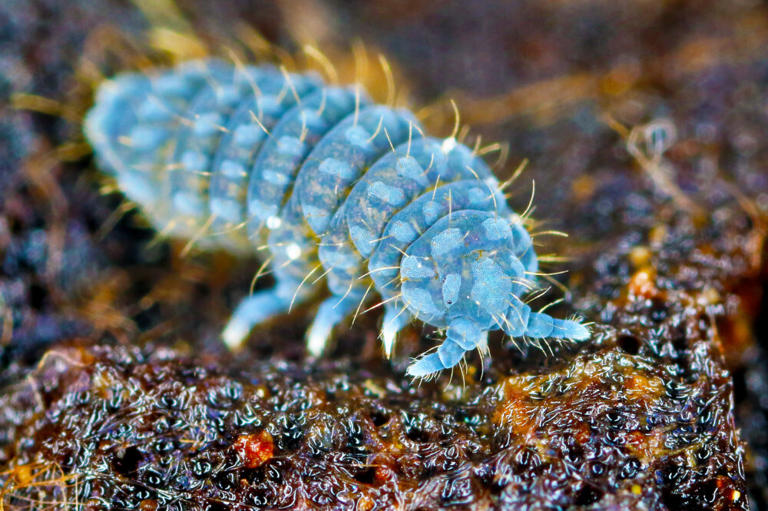
Hidden deep down in my browser I came across a story about a class of tiny creatures that survived the transition that occurred at the end of the Ordovician period around 450 million years ago.  The hot and humid environment that had allowed life to flourish changed as the land masses began to freeze and a vast ice cap expanded across the surface.  Over a brief span the Earth saw its second-worst mass extinction event as half of all known species perished.  However, the springtails survived.  Over 9,000 species of springtails have been identified, and their habitats range from the soils of backyards to the foliage of dense forests.  The class gets their name from a forked tail (furcula) located on the fourth abdominal segment and folded beneath the body.  When released, the tail snaps against the substrate in as little as 18 milliseconds and allows them to jump (spring) up to 4 inches (10 cm) high when threatened, allowing for rapid evasion and travel. 

When I looked online, I found Springtails (Collembola) form the largest of the three lineages of modern hexapods no longer considered insects (the other two are the Protura and Diplura).  The three orders are sometimes grouped together in class Entognatha as all have internal mouthparts, but they are no more closely related to each other than they are to their previous class Insecta, which have external mouthparts.  The word Collembola is from the ancient Greek kólla (glue) and émbolos (peg).  Springtails are normally less than 0.24 inches (6 mm) long, have six or fewer abdominal segments, and possess a tubular appendage (collophore) with reversible, sticky vesicles, projecting ventrally from the first abdominal segment.  The appendage is the reason for the common name and was previously thought to stick to surfaces to stabilize the creature.  Current scientific consensus is that this structure plays a role in water intake and excretion (osmoregulation).  Springtails are omnivorous (eat animal and vegetable mater), free-living organisms that prefer moist conditions. 

Springtails have another impressive adaptation.  Researchers from Aarhus University and Queen’s University in Canada suggests that the springtails may have been the first animal to ever produce antifreeze proteins.  Prior to this discovery, the scientific consensus was that animals did not develop this ability until much later.  “We knew that antifreeze proteins had developed independently of each other several times during evolutionary history.  Fish have them.  Insects have them.  Some spiders have them.  But until we saw these results, we didn’t know that they’d developed so early in the animal world,” says Martin Holmstrup of the Department of Ecoscience at Aarhus University.  The gene mutation leading to antifreeze protein genesis for the springtails occurred during the Ordovician period.  Another survival adaptation is that springtails protect their cells from freezing by drying out completely, much like a freeze-dried raisin, and their metabolism drops to near-undetectable levels.  In spring they absorb water and swell back to normal size, good as new.

THOUGHTS:  The springtails were not the only species to emerge during this period, which spanned from 485 to 443 million years ago.  The Ordovician experienced an explosion in marine life as trilobites, brachiopods, graptolites, and nautiloids dominated the oceans.  This period also gave rise to the first fish and corals begin constructing the first reef systems that laid the foundation for today’s marine ecosystem.  The world’s continents also transformed during the Ordovician and by the end of the period evidence of life on land began to emerge with non-vascular plants (bryophytes) taking root on shore.  The antifreeze proteins of springtails continue to be researched and reaches beyond our understanding of evolutionary survival.  The food industry (particularly the frozen sector) has taken a keen interest.  Humans still have much to learn from the myriad of tiny creatures that thrive around us.  Act for all.  Change is coming and it starts with you.

Naloxone

January 10, 2024

We were driving through Oklahoma last week on the way to Wichita and stopped at one of the many rest areas along the interstate highway.  This was the kind that has a fast food restaurant on one side, a convenience market on the other, and shared restrooms in the middle.  I decided to stretch my legs and went inside to browse the snacks and odd state themed collectables these stops are known for.  The typical travel brochures were prominently placed just outside the restroom entrances, and next to them was a brightly colored vending machine.  At first, I could not figure out what was dispensed in the rows of boxes on display, but it was clear the product was the same for each box.  When I took a closer look I read, “Naloxone and Fentanyl test strips” and in larger letters, “SAVE LIVES”.   

When I looked online, I found the Centers for Disease Control and Prevention (CDC) estimated that more than 107,000 Americans died of drug overdoses in 2021, or a 15% increase from the previous record set in 2020.  This amounts to roughly one overdose death every 5 minutes.  In Oklahoma, the CDC’s estimates show the state saw an even greater rise in overdose deaths, or a 22% increase compared to the previous year.  The provisional count for overdose deaths in Oklahoma for the year ending December 2021 is predicted to be 923, compared with 755 the previous year.  Unintentional fentanyl overdose deaths in Oklahoma have also skyrocketed and reached almost 700 from April 2022 to April 2023.  The life-saving naloxone nasal spray is available over the counter at local pharmacies, but a package of two doses can cost almost US$45 causing many to wonder if the product can make it into the hands of those who need it.  As fentanyl overdose deaths rise, Oklahoma began a campaign to get free Narcan (naloxone) to anyone who needs it.  “Mothers and fathers are losing their children.  Children are losing their brothers and sisters,” said Dr. George Monks, former President of the Oklahoma State Medical Association. “So, we’ve got to get control of this situation.”

Six months after placing Naloxone vending machines across Oklahoma the state has dispensed more than 26,000 doses (13,000 boxes) and boosted awareness of fentanyl overdose.  Naloxone is an anti-overdose medication also known by the brand name Narcan.  Heath Hayes, communications chief for the Oklahoma Department of Mental Health and Substance Abuse Services (ODMHSAS), said only half of the state’s available vending machines have been placed so far.  Motorists will have access to free naloxone and fentanyl test strips at vending machines at seven of Oklahoma’s busiest turnpike travel centers under a partnership between the ODMHSAS and the Oklahoma Turnpike Authority OTA).  In addition to offering the machines at public locations on turnpikes, OTA also added Narcan and fentanyl test strips to the first aid kit of more than 350 agency maintenance and construction vehicles due to the potential for workers to possibly be exposed to these substances when working crash sites.  The department will place 40 vending machines in zip code locations where overdose prevalence in Oklahoma is high.  This the largest scale overdose initiative in the US. 

THOUGHTS:  Overdoses can be accidental or intentional.  An accidental overdose is the result of mistiming doses of medication, overconsumption of medication without knowing the danger, or using multiple substances at once.  Intentional overdoses are attempts at ending one’s life through the overuse of a substance.  More than four times as many people died from drug overdose in the US than from homicide, and 72% of those deaths are related to fentanyl and the majority of those are unintentional.  ODMHSAS has provided 213,528 Fentanyl test kits and 427,056 Naloxone doses to Oklahomans since 2021 in addition to the 13,067 boxes and 7,025 test strips in the vending machines.  During fiscal year 2022 Oklahoma’s overdose prevention funding was US$2,481,405.  This is a societal problem, not a legislative one.  Act for all.  Change is coming and it starts with you.
Dairy

January 09, 2024

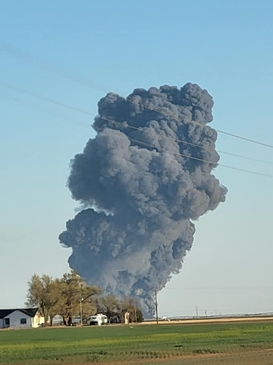
The front page of Sunday’s local newspaper ran a follow-up USA Today article about a disaster that happened on April 10, 2023.  The fire took place at the South Fork Dairy Farm about 10 miles south of Dimmitt, Texas.  The dairy was started by Eltje Frans Brand who immigrated from Netherlands in 1984.  He started a small dairy of 40 cows that grew to several dairies with over 1000 cows each.  Brand purchased the land for the Castro dairy in 2019 with a total of 640 acres (258 ha).  South Fork Dairy started with 8,000 cows in 2020 and then added 9,500 more the following year, bringing the total to 17,500 mostly Holstein and Jersey cows.  The fire killed all the approximately 17,500 cows at the dairy and injured one person.  The fire was ruled to have started in a vacuum truck used to suck up the manure and water waste in the cattle barn.  This was one of the deadliest fires involving animals, and the deadliest fire involving cattle in at least a decade.  The fire wiped out 3% of all dairy cattle in the state of Texas.

When I looked online, I found the South Fork Dairy Farm is a dairy production facility located in Castro County, Texas.  According to the 2021 Texas Annual Dairy Review, the county houses 30,000 cattle and is the second largest dairy-producer in the US, with more than 147,000,000 pounds (67,000,000 kg) of dairy produced in February 2023.  The South Fork facility was an area of more than 2,100,000 square feet (200,000 m2).  The Texas Commission on Environmental Quality (TCEQ) in 2019 had authorized the South Fork Dairy Farm to double the amount of cattle present at their facility (from 11,500 to 23,000), and to allow the dairy to increase manure production by 50%.  South Fork Dairy was investing in the latest technology and was operating at a scale that dwarfed the area’s other large dairies.  The dairy was in the process of building a biogas digester to process the cow manure currently being stored in outdoor lagoons.

The biogas digester proposed for the South Fork Dairy is touted as a win for the environment.  The methane gases produced by the waste lagoons are captured and converted into a renewable source of energy for truck engines and power plants.  The EPA listed 343 digestors across the US as of January 2023, another 86 in construction, and 290 are located on dairy farms.  The digesters cost from US$20 million to US$70 million to build and incentivize large farms to increase their herd size to sell the waste byproduct.  While a dairy will not get rich off the digestor projects, it provides a stable income stream to offset the volatile milk prices.  Oil and gas energy giants are pouring billions of dollars into these new plants in return for a percentage of the profits.  Shortly after the fire, TCEQ granted South Fork approval to install the digester.  Another state agency allowed the dairy to expand the herd to 32,000 cows, making it one of the largest dairies in Texas.  Hopefully, there will not be another fire.

THOUGHTS:  I visited a friend in high school whose dad operated a 100 cow dairy in Wisconsin.  The cows spent most of the winter inside the barn due to the extreme cold.  I had worked on a smaller dairy with a parlor (four cows milked at a time) and was interested to see the difference milking in a barn.  The barn had a trough with a conveyor system that moved the solid and liquid waste outside to a holding bin which was later spread across the field that grew feed for the cows.  My job was to stand outside and make sure the conveyor was working correctly.  I still remember the horrific stench as the waste slopped into the bin.  I cannot image how much waste (and the smell) goes into the lagoons.  The digestor uses a sustainable source (cows) to produce energy and cuts down on the smell.  This is a win for the environment and people living on surrounding farms.  Act for all.  Change is coming and it starts with you.

Perspective

January 08, 2024

My family gathered at the home of my brother this weekend to celebrate one of the life changes (birth, marriage, death) that bring families together.  After a meal of homemade pizza (my brother’s specialty) we retired to the living room to watch the end of Saturday night’s NFL game.  As the conversation came up the volume on the TV came down.  Our talk began casually enough (life and what was going on with family) and then moved to memories of growing up.  The way my family participates in these conversations is by sharing personal stories of the past.  For me, this tradition began as I sat around the table at my grandparents’ house and listened to my aunts and uncles tell their stories of growing up.  After my grandparents, the venue often shifted to my parent’s house as my sibs would sit and tell stories.  Both parents are now gone, but we continue the tradition at some point when we all come together at other locations.  What I like about these conversations is the back and forth as each remembers the story in different ways.  This will result in additions and different understandings (but never corrections) to the stories that have been told for decades.  As we talked, I realized the additions often came from the perspective held by each participant in the same event.

When I looked online, I found the Britannica Dictionary definition of perspective has four parts.  If we start at the last (least to most common understanding), the fourth definition of perspective refers to its understanding in the world of art as “a way of showing depth or distance in a painting or drawing by making the objects that are far away smaller and making the objects that are closer to the viewer larger”.  The third was similar, with perspective as, “the angle or direction that a person uses to look at an object”.  Second was understanding how perspective is, “a condition in which a person knows which things are important and does not worry or think about unimportant things”.  The first definition is how most English language users understand the word.  Perspective is “a way of thinking about and understanding something” and can refer to “a particular issue or life in general”.   The example Britanica used to illustrate this definition was, “The story is told from the perspective of a teenage boy in the 1940s.”  While all four definitions provided nuanced understandings of the word, understanding perspective as a “way of thinking” is what resonates with me.

The different perspective my family brought to our stories comes from our memory, or the brain’s ability to acquire, store, and recover information from various experiences.  These memories change over time as the information may not be stored properly, or we may forget the details.  What we remember is generally associated with the happy times in our life rather than negative experiences.  Those who suffer from anxiety or post-traumatic stress disorder find it difficult to overcome bad memories no matter how hard they try.  Researchers believe the key to knowing how we remember starts with pinpointing what we remember and why.  Understanding our memories and why we recall some events over others can help us better understand ourselves and the world.  The positive events and how they are stored as memories are directly tied to our perspective.

THOUGHTS:  It is interesting to listen to a story about yourself told by another and hear how different their perspective is on what occurred.  I have also listened to old stories and noticed they change over time.  These changes may be from loss of memory, or from an unconscious (conscious?) desire to tell a better story.  I rarely make corrections and the new perspective may become how the event is remembered by others.  Commentators now “fact check” after a political speech to determine the accuracy of any statements.  Many statements often contain a basis in fact but are out of context.  An unknown author said, “Statistics can be made to prove anything – even the truth.”  The “truth” depends on your perspective.  Act for all.  Change is coming and it starts with you.