
Hydroplaning

March 24, 2023

We were forecast for rolling thunderstorms today that were predicted to bring heavy rain and possible flooding.  When I checked my weather app it suggested the rain would let up for an hour late in the morning.  I decided this would be a good break to take Zena for a walk before the rain got heavy again.  I put on my walking shoes and got Zena ready to go and then told Melissa we were going to the park.  Melissa’s home office sits in front of the bay window, and she warned me it had been breaking off and on and was interspersed with heavy rain.  I wavered as light rain started.  Since Zena was ready to go, I took her outside for a break, then hitched up Loki to go out.  By the time we got in the heavy rain had started.  I needed to go to the market and since I did not want to walk Zena in the rain (she does not care), I jumped in the jeep and took off.  The rain increased on the highway and I noticed I began to hydroplane in several spots.  That is when I passed a car that had slammed against the median ditch and fence.  The driver appeared to hit the same hydroplane conditions I had.

When I looked online, I found hydroplaning, or aquaplaning, is a dangerous driving condition that occurs when water causes your car’s tires to lose contact with the road surface.  The grooves in your tires are designed to act as miniature aqueducts.  They pump water away from the contact patch (where the rubber literally meets the road) at an amazing rate.  Continental Tire estimates at 50 mph (80 kph) the average new tire can disperse about eight gallons (30 L) of water per second.  When a tire cannot disperse water quick enough, the contact patch starts to ride on the surface of the water rather than the road, and that is called hydroplaning.  When the tires are hydroplaning the vehicle is out of control, and when the tires regain contact it can cause the vehicle to slip in other directions.  That is what happened to the driver in the ditch.

There are two things you can do to minimize the chance that your vehicle will be hydroplaning.  The first is to maintain proper tire pressure.  Underinflated tires can be more prone to hydroplaning, while badly overinflated tires can reduce grip in any situation.  The second is to keep your vehicle’s speed appropriate to conditions on wet roads.  Driving fast increases the rate at which your tires need to pump water.  When you slow down and avoid driving through every puddle of standing water you can drive safely.  No matter how good a driver you are, you are likely to find yourself hydroplaning at some point.  Modern vehicles are equipped with stability control which might detect the condition and may correct a skid by applying individual brakes or even cutting power.  However, once you lose contact with the road even the best electronics may not save you.  If your tire condition and speed are sensible, you will generally ride out a hydroplaning event for the seconds it takes to reach a section of the road without standing water.  Until you regain traction, you have no control.  If you panic and try to make corrections while you have no contact with the road it may not end well.

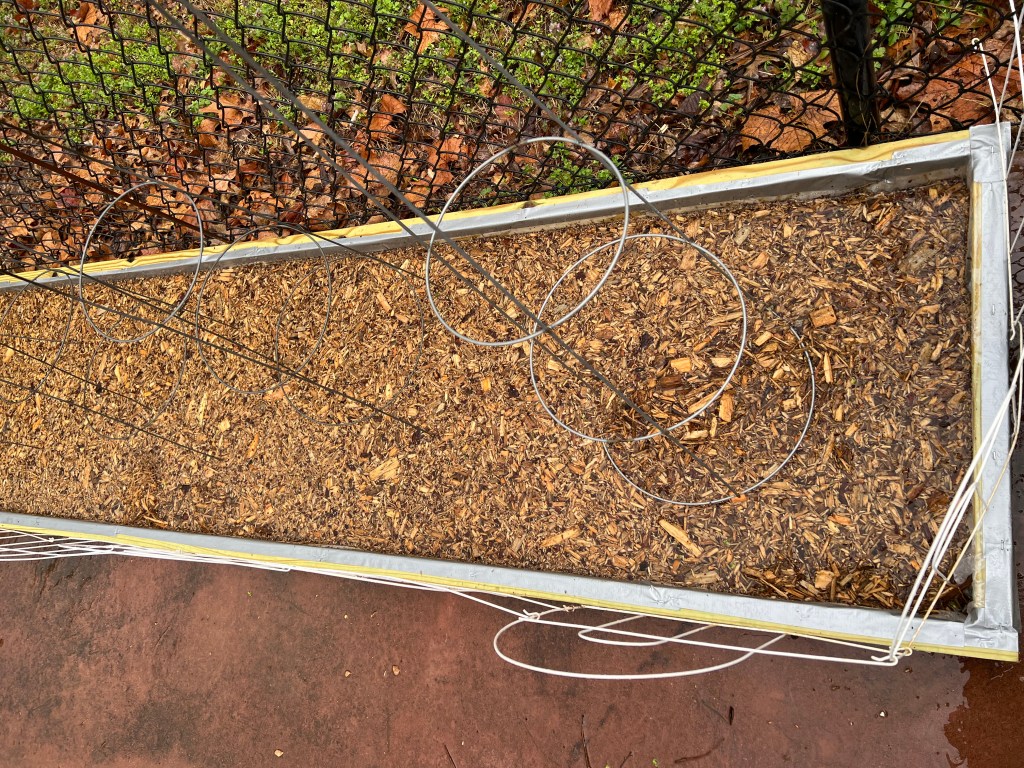
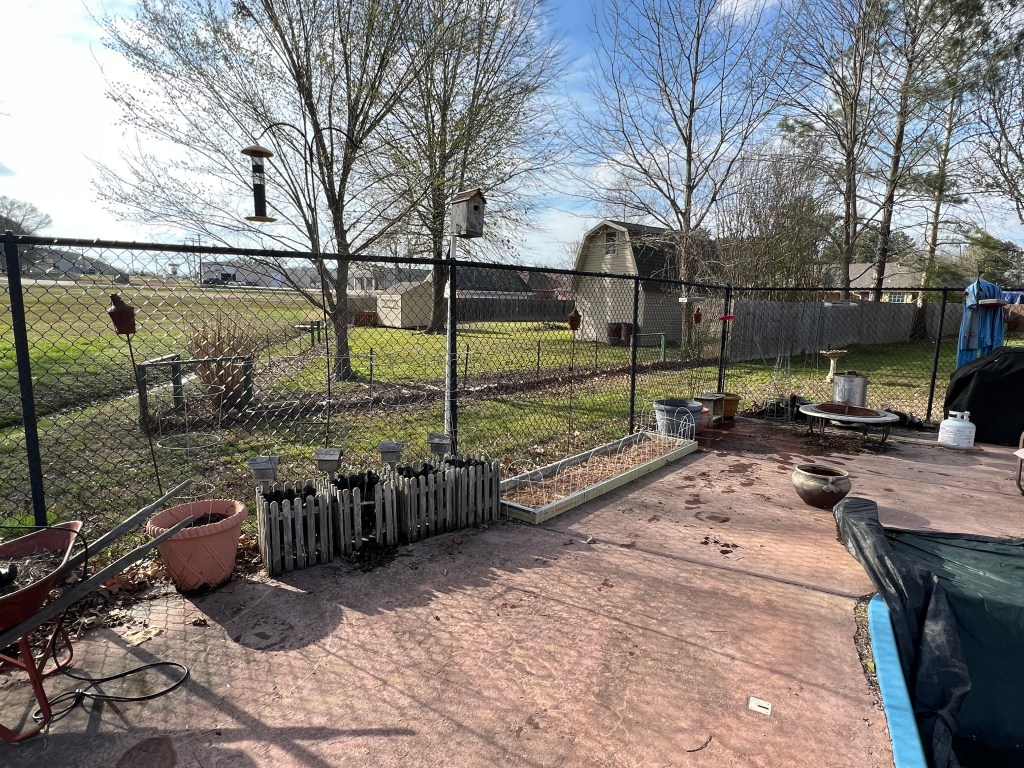
THOUGHTS:  While I did not enjoy hydroplaning on the highway, the good aspect of receiving so much water was it provided a test for the growbag bed I constructed.  When I checked the bed, it was holding water.  I had placed a bag of mulch in the bed to keep the growbags from sitting directly on the concrete and to allow for overwatering (or a big rain).  According to the YouTube videos I had watched, this water will be available to leach back up into the bag.  Many of life’s events carry positive and negative results.  The California snows have shut down transportation and trapped people in their homes, but the snowpack is a critical key for lessening the area’s three year drought.  The way to avoid hydroplaning is to prepare in advance and then to act sensibly.  The same is true water in the western US.  We need to make preparations in wet years and act sensibly every year to replenish critical groundwater.  Act for all.  Change is coming and it starts with you.

Growbag

March 23, 2023

I have been trying to grow vegetables in my back yard for the last three summers.  Every year I bemoan the lack of production from my plants and question whether or not to continue.  I have read that planting in containers tends to reduce the size of the fruit and assumed that was my problem.  Last year I tried larger pots and filled them higher to the top to increase the amount of dirt for the plants to use.  Last year I even put tomatoes directly in the ground to augment my pots.  Despite last year once more being a flop, I am still committed to container gardening as a way to grow vegetables without large tracts of land.  My online gardening group all said they had the same problem and blamed it on cold late Spring temperatures jumping immediately into a hot, dry summer.  The roots did not develop and could not save the plants from the heat.  Melissa told me a friend of hers had a good crop of tomatoes last year, although it was less than she usually grew.  She also used containers but had happened onto a form of container I had not heard of called a growbag.

When I looked online, I found a growbag is a planter filled with a growing medium and usually used for growing tomatoes or other salad crops. The bags were originally made of plastic, but modern growbags are also made from jute or fabric.  Prior to the introduction of growbags, greenhouse soil had to be replaced or sterilized each season between crops to prevent a buildup of pests and diseases in the ground.  Commercial growers could steam sterilize their ground, but this was not feasible for the amateur grower, so growbags were introduced.  Nutrients can be added to the soil (I used potting soil) so only planting and watering are required throughout the season.  Growbags were produced in the 1970’s for home use, but their use has since spread into market gardening and small farming.  The bags come in different sizes and designs suited to specific crops.  One of the sites I found advertised they had growbags ranging from 5 gallons to 400 gallons.  That might be a bit of overkill for my tomatoes.

Prior to committing to using growbags I researched them online for several days.  When it came to buying growbags, all the ads showed the bags set up on nice racks to make them easier to access.  When I watched YouTube videos on how to use the growbags they all said the same thing, this is not a good idea.  The growbags are porous which allows the air to circulate around the roots.  This provides oxygen and air pruning for the roots and discourages the roots from balling by wrapping around the bottom of the pot.  The porousness also allows water to run through the loosely packed soil in the pot.  Each video commented on wasting water or water based fertilizer if the growbags were not placed in some sort of low container.  If the container was too high, a big rain may fill it completely to the top, damaging or killing the roots.  If the growbag was placed on the ground or a rack, the water would quickly drain, and the pot’s soil would not be sufficiently moist.  Now I had another dilemma.

THOUGHTS:  It took me several days to try and find a suitable container for my growbag.  I decided on 20 gallon bags to ensure enough growing medium.  These were about 20 inches (50 cm) in diameter at the base and most of what I found was either too small or too expensive (3x more than the bags).  I decided to buy treated 2×4 boards screwed together in a 10×2 foot (3x.6 m) rectangle, line it with plastic (already had), and make my own.   It appears to work, but we will see when the five growbags arrive on Friday.  I guess I am committed to another year of container gardening.  With two dogs they have taken over any green space on the back patio anyway.  Humans have always been resilient and tend not to quit until we have resolved our problem.  We should use this trait to address our current tensions.  Act for all.  Change is coming and it starts with you.
Scale

March 22, 2023

Yesterday’s NY Time’s Morning feed addressed how scientists talk about climate change.  The latest United Nation’s report warned the Earth is on pace for severe climate change damage, but Americans may have a hard time understanding the report because the analysis talks about temperature shifts exclusively in degrees Celsius.  The US is among a few countries that still use a Fahrenheit scale.  Americans are a small global audience, but the US has historically emitted more greenhouse gases than any other country.  Improving Americans’ understanding could be crucial to any push for change.  For most Americans, scientists’ warning the Earth could warm by 1.5 C is a meaningless number.  When expressed as a 2.7 F equivalent it becomes clearer.  If your body temperature is raised 2.7 degrees you are running a fever, and that is an understandable analogy.  Exclusion of Fahrenheit in reports is not the main obstacle to more action on climate change, but including Fahrenheit figures could help push more action.

When I looked online, I found Celsius and Kelvin are the temperature scales used in the International System of Units.  The Celsius scale is named after the Swedish astronomer Anders Celsius (1701–1744) who developed a similar temperature scale in 1742.  This was called centigrade scale until being renamed in 1948 to honor Anders.  Centigrade comes from the Latin centum (100) and gradus (steps), and these 100 gradations are between water freezing (0 C) and boiling (100 C).  Fahrenheit scale is based on a proposal in 1724 by Daniel Gabriel Fahrenheit (1686–1736).  Fahrenheit’s paper suggests the lower defining point (0 F) was established as the freezing temperature of a solution of brine made from a mixture of water, ice, and salt.  For much of the 20th century, the Fahrenheit scale was defined by two fixed points, the temperature at which pure water freezes (32 F) and its boiling point (212 F).  While most countries use the Celsius scale, Fahrenheit is used in the US, some island territories, and Liberia.  The Kelvin scale is used in the sciences, with 0 K (−273.15 C) representing absolute zero, or the point when everything freezes.

A new synthesis of six previous reports by the United Nations’ climate group presents a mixed picture of the world’s climate change.  The world will likely hit what is considered safe levels of warming (1.5 C or 2.7 F) by the early 2030’s.  At the current rate, this means catastrophic flooding, deadly heat waves, crop-destroying droughts, and extreme weather.  The world has made progress.  Past climate reports warned that warming could surpass 4 C (7.2 F) by 2100 but we are now on a path toward 2 to 3 C (3.6 to 5.4 F).  This revision is based on increased use of cleaner energy and projections that coal use will continue to decline.  Despite progress, the world is still set to confront destructive change and scientists are calling for a massive effort from the world’s most powerful and richest countries.  This effort will require communicating the problem in a way relevant to all and excluding the temperature scale used by the US and some others hinders that mission.

THOUGHTS:  Language proficiency scales are indicators of how well you speak a language.  These scales provide a standardized measure of fluency as basic, conversational, business, and fluent.  We have all been baffled by instructions for the new product we are putting together and been stymied by the obvious mistranslation provided.  This is true with the English translation I receive and no doubt for the Spanish or Chinese translations read by others.  This also happens in conversation.  If you do not speak in a way relevant to another, they will not pay attention.  Talking past others with eloquent words or deep thoughts may indicate your scale of proficiency, but it is useless if they do not listen.  Act for all.  Change is coming and it starts with you.
Gregorian

March 21, 2023

©bigstockphoto.com/dubassy

The March equinox occurred yesterday, March 20, at 5:24 pm EDT.  This marks the astronomical beginning of the spring season in the Northern Hemisphere and the autumn season in the Southern Hemisphere.  While I have always thought of this happening on March 21, the date of the equinox shifts every year.  In the Northern Hemisphere the spring equinox, or March equinox or vernal equinox, occurs when the Sun crosses the celestial equator going south to north.  It is called the “celestial” equator because it’s an imaginary line in the sky above the Earth’s equator.  On the March equinox, the Northern Hemisphere and Southern Hemisphere receive roughly equal amounts of sunlight as neither hemisphere is tilted more toward or away from the Sun than the other.  Spring arrived on the 21st of March during most of the 20th century, but the event slides earlier and earlier during the 400-year Gregorian calendar cycle, and the final March 21st equinox for this Gregorian cycle was in 2007.

When I looked online, I found when Julius Caesar established the Julian calendar in 45 BCE, he set March 25th as the date of the spring equinox as this was already the starting day of the year in the Persian and Indian calendars.  The Julian year is longer than the tropical year by about 11.3 minutes on average (1 day in 128 years), which caused the two equinoxes to “drift” on the calendar.  This drift induced Pope Gregory XIII to establish the modern Gregorian calendar in 1582 CE.  Gregory wanted to continue to conform with the edicts of the Council of Nicaea in 325 CE concerning the date of Easter, and wanted to move the vernal equinox to the date on which it fell at that time and maintain it at around that date in the future.  This was achieved by reducing the number of leap years from 100 to 97 every 400 years.  There was still a small residual variation in the date and time of the vernal equinox of about ±27 hours from its mean position.  While the variation is less, the equinox date still has some drift in the Gregorian calendar.

Today the Gregorian calendar is the internationally accepted civil calendar and is also known as the Western or Christian calendar.  It is a solar calendar based on a 365-day common year divided into 12 months of irregular lengths.  Eleven of the months have either 30 or 31 days, while the second month, February, has only 28 days during the common year.  However, (nearly) every four years is a leap year when one extra (intercalary) day, is added on February 29th, making the leap year in the Gregorian calendar 366 days long.  The days of the year in the Gregorian calendar are divided into 7-day weeks, and the weeks are numbered 1 to 52 or 53.  The international standard is to start the week on Monday, but several countries, including the US and Canada, count Sunday as the first day of the week.  The Gregorian calendar was first adopted in Italy, Poland, Portugal, and Spain in 1582 and included the new formula for calculating leap years.  Leap years occur when the year is evenly divisible by 4, unless it can be evenly divided by 100, then it is not a leap year.  But, if the year is also evenly divisible by 400, it is a still a leap year.  Who says time is not relative?

THOUGHTS:  Equatorial countries abide by the Gregorian Calendar based on differences in sunrise and sunset even though these do not make sense.  My sister was traveling in Bali located close to the equator and mentioned the sun comes up and goes down around 6 am/pm every day of the year.  The Western or Gregorian calendar is international despite other existing systems.  This reflects the dominance exerted by western Europe during the Age of Discovery, even while many did not think they needed to be discovered.  The globalization of our world over the last decades has made a single reference point (calendar) convenient, but we need to remember the calendar used reflects Western culture and thought.  Act for all.  Change is coming and it starts with you.

Dunkleosteus

March 17, 2023

(public display, Cleveland Museum of Natural History, Cleveland, Ohio, USA)

After I blogged about students dressing up as blue sharks (Sharkansas) for the Kentucky basketball game (Arkansas lost by 9) I was interested to find an article in my local paper several days later about another extinct fish who was back in the news.  Dunkleosteus is an extinct genus of large arthrodire (armored and jawed) fish that existed during the Late Devonian period, or about 382–358 million years ago.  This is one of ten species which are the largest placoderms (the class name) to have ever lived, of which Dunkleosteus terrelli was the largest and is most well-known.  The largest collection of Dunkleosteus fossils in the world is housed at the Cleveland Museum of Natural History, but smaller smaller collections are held at the five other museums.  Specimens of Dunkleosteus are on display in many museums throughout the world, most of which are casts of the same specimen, CMNH 5768.  The original CMNH 5768 is on display in the Cleveland Museum of Natural History.

When I looked online, I found Dunkleosteus was named in 1956 to honor David Dunkle, former curator of vertebrate paleontology at the Cleveland Museum of Natural History.  The genus name Dunkleosteus combines Dunkle’s surname with the Greek word ostéon (bone), literally meaning ‘Dunkle’s-bone’.  The type species D. terrelli was first described in 1873 as a species of Dinichthys, its species name was chosen in honor of Jay Terrell, the fossil’s discoverer.  Dunkleosteus could quickly open and close its jaw and had a bite force of 4,414–6,000 N (450–612 kgf; 992–1,349 lbf) at the tip and 5,363–7,400 N (547–755 kgf; 1,206–1,664 lbf) at the blade edge.  Fossils of the various species have been found in North America, Poland, Belgium, and Morocco.  Dunkleosteus was a pelagic (oceanic) fish inhabiting open waters, and an apex predator of its ecosystem. 

One of the problems in estimating size is mainly the armored frontal sections of specimens have been fossilized, and the appearance of the other portions of the fish is mostly unknown.  Only 5% of the fossil Dunkleosteus specimens have more than a quarter of their skeleton preserved.  Reconstructions of the hindquarters are based on fossils of smaller species which have preserved hind sections.  This has caused the size estimates to vary widely.  Various estimations put the length of the largest known specimen between 13 to 33 feet (4.1 to 10 m) long with a weight from 1–4 tons (1.1–4.4 short tons).  A 15 foot (4.6 m) long adult individual has been estimated to have weighed 1,466 pounds (665 kg).   A 2017 study estimated a length of 28.8 feet (8.79 m) based on a regression analysis (statistical modeling), while a 2023 study argued the large sizes were overestimates and proposed a maximum length of 13.5 feet (4.1 m) for the largest known specimen. 

THOUGHTS:  I have found that scientists and theologians both have a hard time saying, “I do not know.”  Science is based on verifiable and reproducible events (facts?), and with the Dunkleosteus there is no evidence for the actual length of the species.  A “best guess” is then couched as an estimate.  Theology is based on the limited human understanding of the divine.  Paul described this as seeing, “through a glass darkly”.  If we already knew everything there would be no need for further scientific research.  If we already understood everything there would be no need for theological study.  We often find ourselves in positions where we do not know, but often choose to give an answer anyway.  Admitting we do not know is not a sign of weakness, it is a show of strength that can open us to other possibilities.  Act for all.  Change is coming and it starts with you.

Bluebirds

March 16, 2023

Melissa’s dad put up a bird house on the back patio to attract a pair of eastern bluebirds (Sialia sialis) that her mom loved to watch.  It worked and we have had a nesting pair every year except last when the box was taken over early by a pair of house sparrows (Passer domesticus).  The bluebirds got it back again this year and have been busily building the nest which will hopefully hold the clutch of young birds.  While I enjoy watching the birds as they flit in and out of the box scavenging for food, the male has become aggressive protecting the nest.  He is not fighting with the cardinals or jays, but instead with the phantom bluebird he sees in the bay window where Melissa has set up her home office.  Several times a day he will fly into the window and do battle with his reflection.

When I looked online, I found unlike window strikes, birds sometimes repeatedly and aggressively fly at reflective surfaces like windows and mirrors.  This attack behavior is most common in species that nest in the trees and shrubs in the yards that surround suburban houses.  These are often the American robin (Turdus migratorius) and Northern cardinal (Cardinalis cardinalis), and less commonly a Northern mockingbird (Mimus polyglottos), or American goldfinch (Spinus tristis).  The behavior is even found in a wild turkey (Meleagris gallopavo) and ruffed grouse (Bonasa umbellus).  The root of this behavior is territorial. When birds select a nest site, the surrounding area becomes their territory, and they defend it vigorously.  Bird territories vary in size depending on the bird species and available resources.  A typical suburban songbird like our bluebirds only needs a small backyard, whereas a pair of black-capped chickadees will chase off trespassers in a space from eight to 17 acres.

Melissa became concerned by the aggressiveness behavior of our bluebirds.  She was afraid it might injure itself and asked me to look up ways to keep him from attacking the window.  Despite its violent appearance the behavior is very rarely fatal, but birds can sustain injuries and especially to their beaks.  This activity may continue throughout the breeding season, which lasts from May to early August.  Territorial birds can be very persistent and if you cover up the window the bird may search for the perceived rival in another reflective surface.  If the bird is attacking a bedroom window and interfering with sleep, you may want to attach a piece of plastic or drop cloth to the outside.  If you only secure it at the top the wind movement will help scare away the bird.  Methods that do not remove the reflection, like fake owls and rubber snakes, will not deter a territorial bird.  The best course of action is to do nothing and wait.

THOUGHTS:  Reading up on the behavior of our bluebirds reminded me of the Canada goose (Branta canadensis) who took up residence on the concrete patio of our condo in Utah.  I first became aware of his presence at 2:00 am.  The patio had a sliding glass door that led into our bedroom that I slept next to.  We had crazy neighbors who lived upstairs so I was not surprised when I awoke to someone knocking on the glass.  I tried to ignore it thinking they would go away but the rapping persisted.  I got up and turned on the porch light to find the goose rapping on the window, believing it was fighting another goose.  Aside from the mess he caused and the occasionally rapping, the goose was aggressive when we tried to exit the door.  I was glad when he finally left.  Humans can be aggressive when we try and protect territory.  Unlike birds, these violent attacks often lead to injury.  Another difference is we should be able to tell the difference between a threat and a perceived rival.  We can work out our differences but that requires cooperation.  It is worth the trouble.  Act for all.  Change is coming and it starts with you.
Lacewing

March 7, 2023

The afterthought in today’s NY Times feed mentioned an insect found on the side of a Fayetteville, Arkansas, big-box store in 2012 has recently been identified as the species Polystoechotes punctata.  Michael Skvarla, now director of Pennsylvania State University’s Insect Identification Lab, spotted the Jurassic-era creature known as a giant lacewing when he was a doctoral student of entomology at the University of Arkansas.  Skvarla initially misidentified the lacewing as an antlion, which is a dragonfly-like insect that shares certain features like long transparent wings with the lacewing.  After presenting the insect to his online entomology course in the fall of 2020, he realized what he had was much rarer and more impressive.  DNA analyses confirmed the identity of the insect, and the giant lacewing has now become part of the Frost Entomological Museum’s collection at Penn State.

When I looked online, I found the giant lacewing (Ithonidae) is a small family of winged insects of the insect order Neuroptera.  The family contains ten living genera, and over a dozen extinct genera described from fossils.  Modern Ithonids have a notably separated distribution, while the extinct genera had a more global range.  The family is one of the most primitive living neuropteran families.   Neuropterans are soft-bodied insects with few specialized features and large lateral compound eyes.  Ithonid specimens have been described from fossils dating between the Early Jurassic and the late Eocene and indicate a wider geographic range than seen in modern groups. 

The giant lacewing vanished from eastern North America in the 1950’s where it had previously been widespread, and scientists thought the species had been completely wiped out in the region.  This recent identification of the lacewing in Arkansas is the first record of the species in the state.  The next closest place the lacewing is found is 1,200 miles (1,930 km) away, making it unlikely the specimen could have traveled that far.  The disappearance of the insect is suspected to have been the result of efforts to suppress natural forest fires in eastern North America.  The bigger mystery is how the insect ended up at a superstore in an urban area of Arkansas.  Skvarla said, “Entomology can function as a leading indicator for ecology.  The fact that this insect was spotted in a region that it hasn’t been seen in over half a century tells us something more broadly about the environment.”  The finding opens the door for future lacewing discoveries as insect enthusiasts check their own collections and search for the species in places they previously had not looked.  Dr. Floyd Shockley, collections manager for the department of entomology at the Smithsonian’s Museum of Natural History, said “Anytime that you find an insect species not in a place that you’re used to it being, that has a lot of implications for our understanding of that species . . . something that we thought was gone, at least from the Eastern US, may still be there, and it’s just hiding in small pockets.”

THOUGHTS:  Shockley noted how we tend to focus on big birds and mammals when we think about extinction or distribution, but insects can tell us a lot about biodiversity, and an appreciation of that diversity can be as close as your backyard.  I got a renewed appreciation for this diversity while smaller lacewing insects skittered across the grass and along the fence as I mowed my front yard yesterday.  We never seem to eradicate insects, even as we are good about causing the extinction of larger species.  Act for all.  Change is coming and it starts with you.
Spring

March 6, 2023

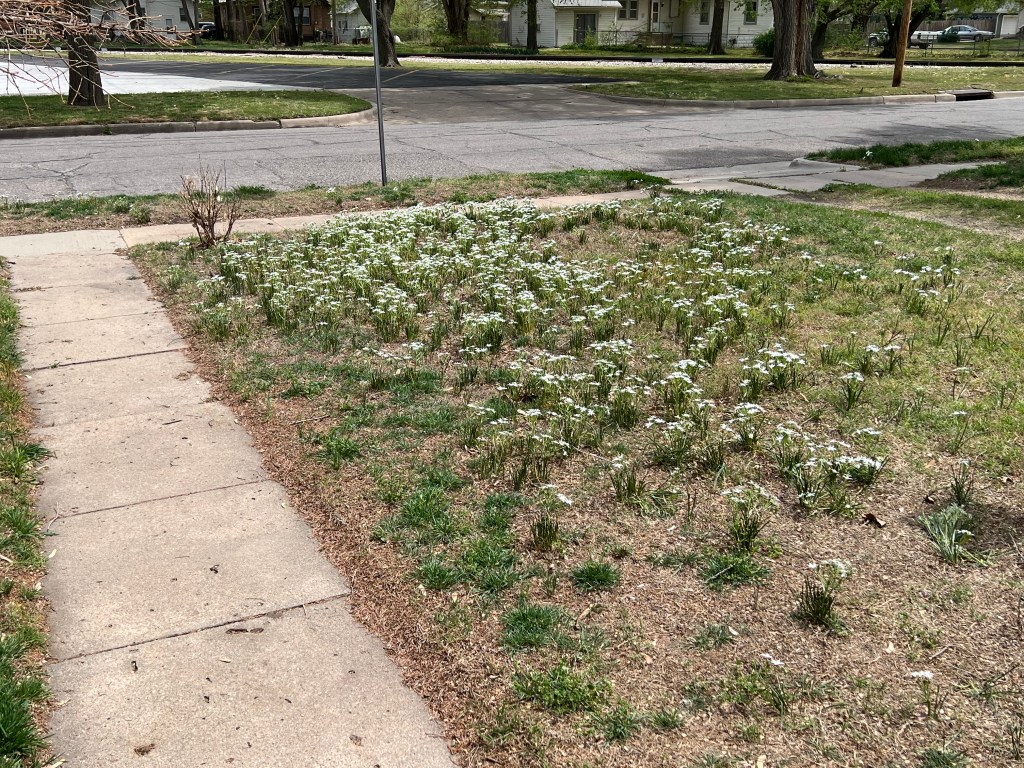
Now that the patio storm door is installed, we are ready for inclement weather.  While we did have freezing temperatures several weekends during February it has only dipped into the mid 30’sF (1’sC) once since.  March forecasts indicate the temps will range from the mid 50’sF (10’sC) to low 70’sF (20’sC) during the day and while there are a few days of 30’sF (1’sC) and 50’sF (10’sC) it should stay in the 40’sF (4.5’sC) all month.  The warmer temperatures have been met by the Naked Lady Lilies (Amaryllis belladonna) foliage in the back yard and the daffodils (Narcissus spp.) in the front.  The Grape Hyacinth (Muscari armeniacum) always seems to arrive early, but we also have a Hyacinth (Hyacinthus orientalis) crowding alongside the daffodils in the front bed.  Even though spring does not officially arrive in 2023 until March 20th (5:24 PM EDT), my yard and flowers are all saying it is Spring.

When I looked online, I found a website identifying the 16 flowers that are the earliest to arrive in Spring for growing zones 2a-7a (i.e., America).  The second and third on the list were the Daffodil and the creeping phlox (Pholox stolonifera) that Melissa’s mom had planted in the front bed.  The flowers are trumpet shaped and generally yellow, but varieties can be white, orange, red, and pink.  They are a hardy flower that prefers full sun or partial shade.  They prefer rich, moist, well-drained soil.  Daffodil flowers can be toxic to humans and pets if ingested.  The Creeping Phlox is a low-maintenance ground cover that bears small blossoms in dense clusters and is often massed on an inclined bank to make a powerful landscaping statement.  Phlox requires weekly watering and is not very drought tolerant.  Like the daffodil, phlox also prefers full or partial sun and well-drained soil.  Varieties can include red, white, blue, pink, rose, lavender, purple, and variegated flowers.  The small flowers in our bed are white.

I have mentioned how the front bed was the site of a dwarf Japanese maple (Acer palmatum) framed by a lush phlox groundcover and punctuated by daffodils and hyacinths during the spring.  The phlox had died back after years of neglect (i.e., watering) and two years ago Melissa decided to make this a showcase bed for her succulents.  None of the large aloe vera planted nor the decorative hens and chicks (Sempervivum tectorum) groupings survived the first winter.  Last winter we placed plant cloth over the bed for warmth and then plastic to protect the plants when it rained or snowed.  That seemed to work and although we again lost several plants, most survived.  Last Fall we set out ground cover mats around the back of the maple that contained varieties of sedums.  When the cold arrived in December I again covered the sedum mats and the aloe plants.  Now that Spring is here, I need to remove the covering and see the shape of the beds.  We will see how the plants fared.

THOUGHTS:  Removing the covers from the succulents is a time of hope and expectation that comes with Spring.  I never really know what to expect until the ground cloth is removed and the accumulated debris swept away.  Spring is also a time for hope and expectation in nature.  The hibernating animals begin to revive and venture back into the world.  The first mosquito has been bussing around in my office and the flies are now coming inside when Melissa leaves the back door open.  As flora and fauna spring back to life some things will be much the same, but others may be drastically different.  It depends on how much damage humans have done to the environment while nature rested.  Chief Seattle, a 19th century Native American of the Duwamish Tribe, is quoted as saying, “take only memories leave only footprints.”  This is still good advice 175 years later.  Act for all.  Change is coming and it starts with you.
Carp

March 4, 2023

One of the apps on my phone is called Fishbrain.  This app tracks fishing reports from other users.  I have set the reports to only cover my area.  My thought is to see what, and how, and where fish are being caught, and then decide if this might be a good place for me to fish.  Fishbrain also notifies me when someone I follow has posted along with other articles that might be of my interest.  I received an email this morning from Fishbrain on invasive carp in North America.  The article especially dealt with Canada’s attempt to keep all four species of carp out of their waters.

When I looked online, I found carp (Cyprinidae family) are a large freshwater fish native to central Asia that have been introduced in other countries.  Carp are the most widely distributed freshwater fish in the world.  Carp are extensively farmed in Europe, Asia, and the Middle East, are a popular angling fish in Europe, but in North America, Canada and Australia, carp are considered invasive and a pest.  Asian carp were brought to the US in the 1960’s and 1970’s for use as biological control.  Bighead Carp (Hypophthalmichthys nobilis) and Silver Carp (Hypophthalmichthys molitrix) were used to control algae and Black Carp (Mylopharyngodon piceus) were used to control snails in aquaculture facilities in Arkansas.  Flooding allowed them to escape their controlled ponds and make their way into the Mississippi River Basin.  The spread of Grass Carp (Ctenopharyngodon idella) in the US is largely the result of stocking for aquatic vegetation control.  Grass Carp can either be fertile (called, “diploid”) or sterile (called, “triploid”).  Some states allow fertile Grass Carp to be stocked, some only allow triploid Grass Carp to be stocked, and some states do not allow them at all.  Bighead Carp primarily eat zooplankton, Silver Carp primarily eat phytoplankton, Black Carp primarily eat mollusks (snails, mussels), and Grass Carp primarily eat aquatic vegetation.  Fertile fish can spawn several times a year depending on the conditions, and large populations take food from native fish.

I previously mentioned how carp have overrun the Mississippi River and its tributaries, but the article said there are no established populations of carp in Canada.  There have been individual captures of carp in the Canadian waters of the Great Lakes.  Three single specimens of Bighead Carp have been collected in western Lake Erie between 2000 and 2003 and are believed to have been intentionally released.  There have been 29 captures of Grass Carp since 2012 in the waters or tributaries of lakes Huron, Ontario, and Erie, and 9 tested fertile.  It is likely that these fish were escapees from areas where populations were being used for aquatic plant control, or by live releases.  No Silver Carp or Black Carp have been found in the Great Lakes to date.  While Canada is concerned about all four species, Grass Carp are the most immediate risk as they appear to be naturally reproducing in two US tributaries of Lake Erie.  Grass Carp can weigh over 80 pounds (36 kg), reach lengths of over 5 feet (1.5 m), and can eat up to 40% of their body weight a day in aquatic vegetation.  Since they are not established in Canada, this presents a threat to wetlands already under stress.

THOUGHTS:  When I was a boy the town’s hardware store held a competition for the largest fish.  I was an avid fisher person and caught a carp which I brought in as an entry.  The 3 pound 6 ounce (1.5 kg) fish was the largest carp entered, and I won a rod and reel combo.  It was only years later that my father told me carp were not a category.  While carp are considered trash fish in the US due to their image and boniness, they are a staple in other parts of the world.  There are a few chefs who are trying to introduce carp to the American palate, but generally by another name and often ground into a patty.  This is a huge food supply that is unused because of perception.  We can reject other cultures or persons due to our own perception.  Act for all.  Change is coming and it starts with you.
Sharkansas

March 3, 2023

In the lead story of the sports section of my local newspaper Christina Long reported on the origin of Sharkansas by the Razorback student section at basketball games.  The recent tradition of hundreds of Arkansas students clad in bright blue shark costumes has drawn both annoyance and adoration of fans.  This now typically happens when the Hogs play Kentucky at home.  Some fans believe the blue shark costumes are too close to the color of blue worn by Kentucky.  Others say the sharks remind them of the attempt by Ole Miss’ to switch from Colonel Reb to adopt the animal as its mascot.  Regardless, Sharkansas has persisted and is predicted to again make an appearance when the Hogs host the Wildcats for the last regular season basketball game this Saturday.

When I went online, I found the psychology for why we dress in costumes.  The adage says, “if clothes make the man, a blue polyester suit can make you Superman.”  The question is does dressing up really make you a different person, or does it just change your wrapping.  We realize we do not need to put on a costume to switch roles, and we do so several times a day as different situations arise (son, dad, co-worker).  We not only judge others depending on the clothes they wear, we also judge ourselves by the clothes we wear.  Clothes not only change your opinion about yourself but change your behavior.  Thinking you change your self-perception and behavior according to what you wear might seem ludicrous, it is another sign that we do switch roles according to what we are wearing, and each role influences your thinking and behavior.  This change may be slight, but it is enough to see yourself in a different light.  Sharkansas costumes encourage students to change their role from enthusiastic spectator to an active participant in the event.

The idea for wearing shark costumes began with two sophomores in 2017 who decided to “do something weird at a basketball game.”  They started a GroupMe chat that grew to nearly 100 people that decided on the awkward and clunky costume, then cut a deal with the seller for a pallet of shark costumes.  The participants concealed their outfits until the lights went down for the opening lineups, and when the lights came back up they revealed 120 sharks in the student section.  Arkansas went on to a 95-79 upset win over Minnesota.  Sharkansas returned in 2020 when the Hogs hosted Kentucky and this time was sponsored by the university and it appeared again for the Kentucky game in 2022.  The originators did not want this to become a sponsored event and envisioned Sharkansas as a one-time event.  While the originators have moved on (graduated) the prospect of Sharkansas lives on.  We will see on Saturday.

THOUGHTS:  While college may not be for everyone, participants find it a time marked by new freedom, new friends, and new experiences.  Some say one of the best things about college is how many socially abnormal things become acceptable.  It can be like entering a different world where normal adult rules do not apply because we are still figuring out how to be a proper adult.  Chase Arnold, one of the Sharkansas originators who now lives in Denver said, “Most of the Razorback community was just really confused, and that was the end goal.  We didn’t want it to make sense.”  This is at the heart of most college athletic traditions.  It is only the proper adults who are confused by these antics.  Act for all.  Change is coming and it starts with you.