Kerecis

July 12, 2025

In Wednesday’s local paper I found a USA Today article about a badly injured bald eagle (Haliaeetus leucocephalus) who was treated by veterinarians and released just in time for the 4th of July.  The bird was near death when volunteers brought her to the Winged Freedom Raptor Hospital (WFRH) in northern Wisconsin last August.  Her leg was ripped open from knee to ankle, and maggots and bacteria had filled the dried-out wound.  However, the bird was standing on its leg and its talons were still working.  Veterinarian Kim Ammann, reached out to an Icelandic company which transplants the skin of North Atlantic cod (Gadus morhua) to help heal human wounds and support tissue regeneration.  The treatment had never been used on a species of raptor before.  The company reached back almost immediately and offered the descaled, medical fish skin free of charge to the all-volunteer veterinary hospital.  Within weeks, Ammann gave Kere (named in honor of the company) the first of two successful surgical skin grafts.  Her recovery included 10 months of grueling wound care, bandage changes, and a mini vacation in the hospital’s Eagle flyway rehabilitation enclosure.  By June 22, the wild bald eagle was ready to soar free again thanks to the medical technology developed by Kerecis.

When I went online, I found Kerecis is an Icelandic company that uses fish skins to treat wounds. The decellularized skin of the Atlantic cod is used as a graft, which increases the elasticity, tensile strength, and compressibility of the wound.  In 2009 Fertram Sigurjonsson observed that the skin of the fish had qualities like human skin and could expedite skin regeneration and founded Kereceis in 2013.  Kerecis Omega-3 fish skin was first marketed in Europe in 2012 and cleared for use in the US for the treatment of wounds by the FDA in 2016.  In 2021, the FDA approved Kerecis Omega3 SurgiBind fish-skin for surgical use in plastic and reconstructive surgery.  The company was valued at more than 100 million euros in 2021.  Kereceis also works on medical research with the US Armed Forces and provides the grafts to branches of the military.  Kerecis was sold to the Danish company Coloplast in July 2023 for US$1.2 billion.

The skin grafts provided by Kerecis allowed for the June release of Kere.  The date was more about ensuring Kere had “the majority of the summer months” to reacclimate with being wild again than the holiday, but the symbolism of releasing a bald eagle so close to the 4th of July was not lost on Ammann.  A group of about a hundred viewers gathered to watch Kere take flight.  Amann said the day was “magical.”  The eagle population began plummeting in the late 1800’s due to habitat destruction and took another loss from DDT following WWII.  Bald eagles hit an all-time low in the 1960’s with just 417 nesting pairs in the continental US.  The use of DDT was banned in 1972 and The Endangered Species Act of 1973 helped protect quickly disappearing species like the bald eagle.  Today, there are an estimated 316,000 bald eagles in the US lower 48 states, and they became the US national bird in 2024.

THOUGHTS: Even though the process developed by Kerecis is relatively new, skin grafting has been practiced by the Egyptians and Greeks since ancient times and modern skin grafting was described in the mid to late 19th century.  Xenotransplants (non-human organs) have been around since the first two decades of the 20th century but have been subject to tissue rejection as well as controversy over morality and animal rights.  Xenogeneic grafts where the donor and recipient are of different species (like bovine cartilage or pig skin) are now common.  Kerecis’ groundbreaking research and the innovative application by WFRH have taken the process to a new level.  Act for all.  Change is coming and it starts with you.
Cherries

July 11, 2025

Our gardener friend is always on the lookout for fresh fruit and vegetables sourced from local farms and orchards.  She often buys in bulk and then splits the cost (and produce) with Melissa.  Several weeks ago, we got a baker’s dozen ears of corn (Zea mays), but we missed out on a bushel of fresh peaches (Prunus persica).  She texted Melissa several days ago and said she had found another farm selling peaches nearby and she was going to get them.  These were the free-stone variety that I really like, and I began to think of ways to use a half bushel of sweet Georgia peaches.  After she bought them, she called Melissa and said she also had 10 pounds (4.5 kg) of cherries.  When Melissa told me she was going to pick up the fruit, the only thought on my mind was, “What are we going to do with 10 pounds of cherries?”

When I went online, I found a cherry is the fruit of many plants of the genus Prunus and is a fleshy stone fruit (drupe).  Commercial cherries are obtained from cultivars of several species, such as the sweet Prunus avium and the sour Prunus cerasus.  The English word cherry derives from Old Northern French or Norman “cherise” from the Latin “cerasum”.  These are a reference to the ancient Greek region of Kerasous near Giresun, Turkey, where cherries were first thought to be exported to Europe.  The name ‘cherry’ also refers to the cherry tree and its wood and is sometimes applied to almonds and visually similar flowering trees in the genus Prunus, as in “ornamental cherry” (Prunus serrulate) or “cherry blossom”.  The word “cherry” is also used for some species that bear fruits with similar size and shape even though they are not in the same Prunus genus.  These include species like the “Jamaican cherry” (Muntingia calabura) and the “Spanish cherry” (Mimusops elengi).  Cherries, along with many other fruiting trees and plants, probably first arrived in North America around 1606 in the New France colony of Port Royal, which is modern-day Annapolis Royal, Nova Scotia.  

While Melissa was picking up the cherries, I googled to find out what to do with 10 pounds (4.5 kg) of cherries.  I was surprised to find several sites attempting to address the exact issue.  It seems unless you buy a controlled amount in the grocery store, they come in bulk.  The obvious choice (other than eating them fresh) was to turn them into jellies, jams, or preserves.  Melissa occasionally eats jam, but I rarely do, so 10 pounds of cherry jam seemed a bit much.  Then there was cherry cheesecake and other cherry desserts.  Again, we rarely eat dessert, let alone 10 pounds of such.  That is when I came across a recipe for brandied cherries (brandy, water, sugar).  This was said to be like maraschino cherries but with a wonderful flavor.  The suggestion was to replace the maraschino in your favorite cocktail, but they could be used in a variety of ways.  When the cherries arrived, it turned out to only be five pounds (2.25 kg), or 5 each.  Our friend also lent us her cherry pitter.  This quickly popped out the seed rather than cutting the pits out of a bulk of cherries with a knife.  Five pounds (2.25 kg) of cherries is still a lot.

THOUGHTS: As we were pitting the cherries Melissa came up with several ways to use them.  We made four cups into two pints brandied cherries, one of which was destined to become cheesecake.  Another four cups were reserved to become cherry crisp.  The last batch we left unpitted for Melissa to snack on.  The first cherry pitter dates to the 1880’s as home cooks sought to simplify the task of cutting the stones out of the cherries for canning, baking, or other food uses.  A straw or chopstick can also be used to push out the pit.  The pitter I used reminded me of the cotton gin invented by Eli Whitney in 1793.  Both were designed to speed up the process and reduce the tedious task of seed extraction.  Mechanical ingenuity saves time.  These savings could/should be put back into building your family or community.  Act for all.  Change is coming and it starts with you.
Food

July 09, 2025

I made some final harvests from my garden today.  That included all my carrots (Daucus carota) and red onions (Allium cepa), along with a continuation of my cucumbers (Cucumis sativus).  I grow enough vegetables to keep our family stocked with fresh produce during the season and have begun to can and freeze my produce for later.  Still, there is a surplus which gives me the opportunity to share with friends and family.  There always seems to be an overabundance of some vegetables.  I have tried to compensate this year by growing a greater variety of produce and even staggering when I plant.  I also planted this year’s crop with the intent of sharing a portion of the produce with our local food bank.

When I went online, I found a food bank or food pantry is a non-profit, charitable organization that distributes food to those who have difficulty purchasing enough to avoid hunger.  This is usually done through food pantries and soup kitchens, but some food banks distribute food directly with their food pantries.  St. Mary’s Food Bank was the world’s first food bank, established in the US in 1967.  Now thousands of food banks have been set up all over the world.  Their numbers grew rapidly in Europe after the global increase in food prices which began in late 2006, and as the 2008 financial crisis began to worsen economic conditions.  The inflation and economic crisis of the 2020’s has exponentially driven low and middle-income consumers to get at least part of their food from a food bank.

Some US cities have organizations that provide dog and cat food for pets whose owners qualify for food assistance.  Daffy’s Pet Soup Kitchen in Lawrenceville, Georgia is considered the largest pet food aid agency in Georgia, distributing over 800,000 pounds (362874 kg) of dog and cat food in 2012.  Daffy’s was started in 1997 by Tom Wargo, a repairman who was working in an elderly woman’s home when he noticed her sharing her Meals On Wheels lunch with her pet cat because she could not afford cat food.  Daffy’s was one of seven non-profit organizations recognized by Barefoot Wine in 2013 through a US$10,000 donation and by being featured on labels of the vintner’s Impression Red Blend wines.  Pet Buddies Food Pantry in Atlanta, Georgia is another establishment that provides food aid for pets.  The St. Augustine Humane Society in St. Augustine, Florida, distributes over 1,600 pounds (726 kg) of pet food each month to families who are experiencing economic hardship and cannot afford to feed their pets.

THOUGHTS: While food banks are a vital resource for those who are food insecure, they have also led to a rise in obesity and diabetes.  Many foods offered to clients in food banks are high in processed sugars and salts and low in vitamin and mineral content.  The low nutritional quality of foods available to clientele at food banks has led to further health effects. A study showed 33% of American households visiting food pantries had diabetes.  When you grow and share locally grown fruits and vegetables you can help alter this trend.  Community gardens are another way to help.  Act for all.  Change is coming and it starts with you.

Marrow

July 08, 2025

My MSN browser scroll reported on a new study that shows evidence of Neanderthal “fat factories” dating back as far as 125,000 years ago.  The inhabitants of the settlement strategically selected the lakeside location for the factory and harvested bone marrow by breaking open the bones as well as through a process of crushing and heating.  The fat factory suggests Neanderthals were able to understand their environment and plan for hunting and resource-gathering.  The recent research from Leiden University and published in the journal Science Advances adds to decades of previous research at the Neumark-Nord archaeological site near Leipzig, Germany.  According to a press release from Leiden University, there is also evidence of plant use in the area, though it’s rarely preserved.  Additionally, previous studies found proof that inhabitants used fire to manage vegetation.  Needless to say, Neanderthals have long been underestimated, and the new study does nothing to dissuade that notion.  This fat factory was created to extract marrow from bones.

When I went online, I found bone marrow is a semi-solid tissue found within the spongy (cancellous) portions of bones.  In birds and mammals, bone marrow is the primary site of new blood cell production (haematopoiesis).  Marrow is composed of hematopoietic cells, marrow adipose tissue, and supportive stromal cells.  In adult humans, bone marrow is primarily located in the ribs, vertebrae, sternum, and bones of the pelvis.  Bone marrow comprises approximately 5% of total body mass in healthy adult humans.  A person weighing 161 pounds (73 kg) will have around 8 pounds (3.7 kg) of bone marrow.  Human marrow produces approximately 500 billion blood cells per day, which join the systemic circulation via permeable vasculature sinusoids within the medullary cavity.  All types of hematopoietic cells, including both myeloid and lymphoid lineages, are created in bone marrow.  However, lymphoid cells must migrate to other lymphoid organs (like the thymus) to complete maturation.

Archeologists found the Neanderthals intentionally selected the lakeside location to process the bones of at least 172 mammals including deer (genus, Cervus), horses (Equus ferus caballus), and aurochs (Bos primigenius), an extinct species of bovine.  Inhabitants at the site broke open large mammal bones to extract the marrow and ground the bones into fragments and heated them in water to extract calorie-rich bone grease.  This indicates estimates of advanced resource collection began thousands of years earlier than previously thought.  Lutz Kindler, the study’s first author, said, “Neanderthals were clearly managing resources with precision.  They understood both the nutritional value of fat and how to access it efficiently.”  Experts believe Neanderthals understood there was a “fat quota” they had to meet to make the process worthwhile.  The authors emphasized the number of herbivores that Neanderthals at Neumark-Nord must have been hunting and were likely able to plan and use their environment effectively.  Research into marrow extraction at the Neumark-Nord site complex was possible because this was not a single site but an entire landscape and provided the opportunity to investigate how Neanderthals influenced their environment. 

THOUGHTS: The Neanderthals who created the marrow extraction factory at Neumark-Nord present a far different picture than the often-depicted primitive, club-wielding, nonsocial individual driven solely by animal instinct.  Modern humans tend to seek ways to differentiate ourselves from our homo sapiens ancestors as well as extant animals.  The more research done indicates we are often more alike than different.  All creation should be respected for both its similarity and difference.  Act for all.  Change is coming and it starts with you.
Wildflower Bed

July 07, 2025

Five years ago, I blogged about my stint as director of a conference center in Kansas.  The camp was located on 63 acres (25.5 ha) of mixed trees and (originally) prairie grass that was now mostly seeded with Bermuda grass (Cynodon dactylon) for lawns.  During the summer we spent 5 to 6 days a week on the mower cutting grass.  Part of our mission was to provide opportunities for education, so I decided to let the prairie grass return.  The first year we let most of the camp return to natural grass to evaluate where the prairie grass was still abundant.  The second year we selected about 12 acres (4.5 ha) to return to native prairie.  We also reseeded those acres with the Big Five grasses prominent in the Tall Grass Prairie that used to dominate Kansas.  This provided lawn for camp activities and nature trails with identification signage for eco-visitors.  To complete the prairie’s restoration, we seeded a variety of prairie wildflowers in prominent locations along the roads.  Being on the flyway of the Monarch butterfly, I transplanted 20 milkweeds (Asclepias syriacaplants) from the lawns into a wildflower bed near the entrance of the camp.

When I went online, I found a wildflower is a flower that grows in the wild, rather than being intentionally seeded or planted.  The term implies that the plant is neither a hybrid nor a selected cultivar that is any different from the native plant, even if it is growing where it would not naturally be found.  This can refer to the whole plant, even when not in bloom, and not just the flower.  The term “Wildflower” is imprecise, and more exact terms refer to specific types of flowers including native species naturally occurring in the area, exotic or introduced species not native to the area, invasive species that outcompete other plants (introduced deliberately or accidentally), and plants that have become naturalized (imported but considered native by the public).  Wildflowers can be annual (germinates from seed, live one year), perennial (live multiple years, return each growing season), or biennial (two-year life cycle, blooming in the second year).  In recent years, wildflower gardening has gained popularity.  A planted wildflower bed not only looks attractive but has the advantage of supporting pollinators, reducing maintenance, and conserving water. 

I wanted to duplicate my conference center experience when we moved to Arkansas, but I could never decide where to plant the wildflowers.  Melissa’s mom established several flower beds that I thought Melissa wanted me to maintain.  Melissa likes the look of a green lawn and symmetrical flower beds more than the asymmetrical look of a wildflower bed.  I was also interested in expanding my garden into the front beds to replace the roses neither of us liked.  Indecision meant we did nothing for five years.  Last year we did decide to place wildflowers in one of the beds in front of the house but never got around to doing so.  When Melissa retired this year, she decided she would plant a wildflower bed.  We sprayed to kill all the grass that had taken over the beds, spaded the soil and weeded the bed to prepare it, Melissa sowed the seed, and then we waited.  The first thing that grew was more grass and weeds, so I weeded the bed again.  The wildflowers finally began to grow.  Now we have a wildflower bed in the front of the house.

THOUGHTS: One of the problems with weeding the wildflower bed was knowing what to pull and what to leave.  Removing the grass was obvious, but how do you tell the difference between the wildflowers Melissa planted and the weeds that grew naturally?  In essence, all wildflowers are weeds if they are intruding in the vegetables or “planted” flowers.  I decided to leave any plants I could not identify.  If it grew a flower it was supposed to be there, whether Melissa sowed the seed or not.  The same could be said for people.  If they flourish in a new location they are meant to be there, no matter how they arrive.  Act for all.  Change is coming and it starts with you.

Smallmouth

June 30, 2025

My MSN browser scroll included an article on the attempts to eradicate an invasive fish from a midsized lake in the Adirondacks.  While the fish are native to North America, they were introduced widely across the Adirondacks in the 1900’s, where they took over many lakes.  Their arrival led to declines of native fish species and stunting of growth rates in prized brook and lake trout, which compete for the same prey.  A study published in the journal Proceedings of the National Academy of Sciences revealed that in response to the annual removal of a quarter of the invasive fish from the lake, the numbers of fish 5 inches (12.7 cm) and under have increased while fish larger than 12 inches (30.5 cm) were mostly eliminated.  The findings have important implications for fish management.  It highlights the importance of preventing non-native species invasions before they happen and illustrates how efforts to suppress a species may backfire, leading to the opposite effect.  The smallmouth bass rapidly evolved to grow faster and invest more in early reproduction, leading to an even larger population of smaller fish.

When I went online, I found the smallmouth bass (Micropterus dolomieu), also known as brown bass, bronze bass, and bareback bass, is a freshwater fish in the sunfish family (Centrarchidae).  It is the type species of its genus Micropterus (black basses) and is a popular game fish throughout the temperate zones of North America.  Males are generally smaller than females. The males tend to range around two pounds, while females can range from three to six pounds.  The maximum recorded size is approximately 27 inches (69 cm) and 12 pounds (5.4 kg).  The color of the smallmouth ranges from golden olive to dark brown dorsally which fades to a yellowish white ventrally with dark brown vertical bars or blotches along the body and dark brown horizontal bars on the head.  The combination of muscular fusiform body shape and camouflage like coloring make these fish highly effective ambush predators.  The color varies greatly depending on age, habitat, water quality, diet, and the spawning cycle.  The fish has spread through stocking, along with illegal introductions, to many cool-water tributaries and lakes in Canada and especially the US.  

Peter McIntyre, professor in the departments of Natural Resources and Ecology and Evolutionary Biology and among the senior authors, said, “Twenty-five years ago, Cornell’s Adirondack Fishery Research Program set out to test whether we could functionally eradicate smallmouth bass from a lake.  It took us 25 years to prove why the answer is no: the fish evolved to outmaneuver us.”  Efforts began in 2000 to suppress bass in Little Moose Lake in the Adirondacks by using a generator to electrify the water to temporarily stun fish (electrofishing).  Scientists then scooped them up, released the native species back into the lake, and removed all captured bass.  The removal of 1000’s of fish worked for several years, then the smallmouth began to make a comeback, especially the smaller fish.  Genetic analysis revealed that selection pressures from removing fish resulted in dramatic genetic changes between 2000 and 2019 in the genomic regions associated with increased growth and early maturation.  

THOUGHTS: The introduction of smallmouth bass to the mountain lakes presented a new apex predator.  The brook (Salvelinus fontinalis) and lake (Salvelinus namaycush) trout are threatened by warming surface waters and depleted oxygen levels in cooler deeper water during the summer, and then competition with the smallmouth.  The genetic evolution resulted in a lose-lose for anglers.  The trout are disappearing, and the smallmouth are too small to keep.  Ecosystems are delicate balance and human intervention is rarely positive.  Act for all.  Change is coming and it starts with you.
Leafcutter

June 29, 2025

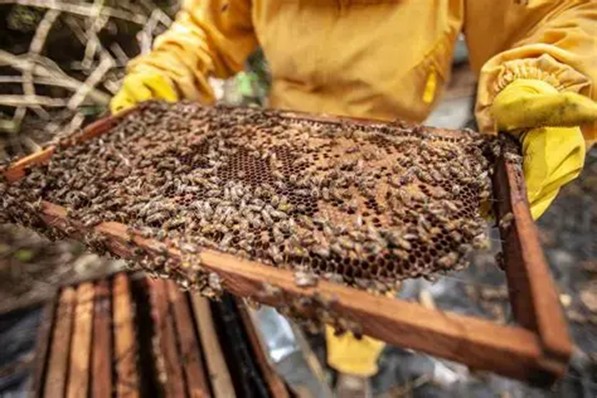
Melissa went shopping with me yesterday to get out of the house.  I needed to get some roasted peanut chips for the birds and Melissa wanted to look at the succulents.  She was surprised by the large number of inexpensive arraignments, and by their state of disrepair.  They were all soaked in water (causes root rot) and the leaves were starting to fall off.  Melissa bought a large arraignment to divide into separate plants and try and save them.  As we were checking out, I mentioned to the attendant that the plants were getting too much water.  She agreed and said she had also bought several to save them from dying.  When we got home Melissa began dividing the arraignment and repotting them into a cactus medium.  The plants were in potting soil (retains water) rather than cactus medium and the bright containers were made of plastic (retains heat).  Each of the plants were root-bound from their previous pots and the soil had not been broken up.  As Melissa dug through the potting soil she came across what looked like a leaf tube buried deep in the soil.  When she googled the odd structure, she found it was the egg nest of a leafcutter.

When I went online, I found leafcutter bees (Megachilidae), are part of a widespread (cosmopolitan) family of mostly solitary bees.  Characteristic traits of this family are the restriction of their pollen-carrying structure (scopa) to the ventral surface of the abdomen, rather than on the hind legs as in other bee families, and their typically elongated flap-like structure immediately in front of the mouth (labrum).  The scientific name Megachilidae refers to the genus Megachile, translating roughly as large lipped (Ancient Greek mégas – “big” and kheîlos – “lip”).  Their “large lips” and strong jaws are well-suited for collection of building materials for the nest.  These bees get their names from the materials they use to build their nest cells.  Leafcutter bees use leaves while mason bees use soil.  A few species collect plant or animal hairs and fibers (carder bees) while others use plant resins in nest construction (resin bees).  All species feed on nectar and pollen, but a few are kleptoparasites, which feed on the pollen collected by other megachilid bees.  The parasitic species do not possess scopae.  North America has an estimated 630 different megachilid species.  Most are native but a few are introduced, accidentally and intentionally.  Globally the number of species identified exceeds 4,000 and represents 15% to 20% of named species of bees.

The Nonparasitic Megachilidae divide their nests into cells with each cell receiving a supply of food and an egg.  The larva hatches from the egg and consumes the food supply.  After molting a few times, it spins a cocoon and pupates, then emerges from the nest as an adult.  Males die shortly after mating, but females survive for another few weeks, during which they build new nests.  Nest cavities are often linear, like the one found by Melissa, but not always.  Above ground megachilid bees are more commonly cultivated than ground nesting bees.  They accept nesting materials made from hollow stems, tubes, and blocks with preformed holes (“nest blocks”), and several megachilids have become important species for agricultural or horticultural pollination.  In North America these cultivated bees include the introduced alfalfa leafcutter bees (Megachile rotundata), used extensively in alfalfa pollination, and the orchard mason bee or blue orchard bee (Osmia lignaria), used in orchard pollination.  Other species are also in commercial use in North America, Europe and Asia.

THOUGHTS: Arkansas is home to at least 40 species of bees and the genus Megachile, has an estimated 15 to 20 species, including many leafcutter species.  Finding the nest tube of a leafcutter bee shows how easy it is to transport a species to another area.  While the leafcutter is beneficial, not all invaders are.  People criticize states like California which have tight controls on agricultural products.  Perhaps we should all be vigilant.  Act for all.  Change is coming and it starts with you.
Cucumber

June 27, 2025

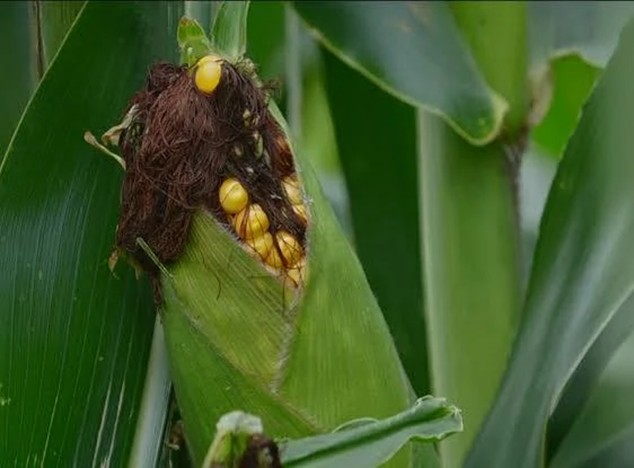
Earlier this month I commented on the pickling I was doing.  That post mentioned the sliced cucumbers I use in a variety of salads.  This year I decided to grow “pickling” cucumbers.  I enjoy dill pickles, so I ended up canning 11 jars of dill pickle spears and three jars of dill pickle slices.  The slices are the result of having to cut more off the ends of the spears to get them into the pint jars I used for canning.  The cucumbers have excellent taste, and I am looking forward to trying my first jar of dill pickles.  While some vegetables produce a single crop at around the same time, cucumbers do not.  I waited for the cucumber to grow and discovered when a pickling cucumber gets large (over about 8 in/20 cm) the seed becomes a prominent feature of the eating experience.  I now harvest daily to ensure the fruits do not grow too large.   I bring in a bag of cucumber every morning. 

When I went online, I found cucumber (Cucumis sativus) is a widely cultivated creeping vine plant in the family Cucurbitaceae that bears cylindrical to spherical fruits elongated with tapered ends.  The fruit may grow as large as 24 inches (62 cm) long and 4 inches (10 cm) in diameter.  Cucumber is considered an annual plant whose fruits consist of 95% water.  There are three main types of cucumber (slicing, pickling, and seedless) within which several cultivars have been created.  The cucumber originates in Asia, extending from India, Nepal, Bangladesh, China (Yunnan, Guizhou, Guangxi), and Northern Thailand.  The plants are now grown on most continents and many different types of cucumber are grown commercially and traded on the global market.  In botanical terms, the cucumber is classified as a type of botanical berry (pepo) with a hard outer rind and no internal divisions.  Much like tomatoes (Solanum lycopersicum) and squashes (genus Cucurbita), cucumber is often perceived, prepared, and eaten as a vegetable. 

After pickling my two batches of cucumber I decided that was enough.  Even there I gave a jar away to our gardening friend and to my sister-in-law.  They have also been the recipients of cucumber and squash bags, as has my next-door neighbor.  Melissa wants to use some of the fruit to make a sweet refrigerator pickle.  I took 20 pounds (9 kg) of cucumber and 10 pounds (4.5 kg) of squash to the local food bank (and will no doubt take more).  Still, the cucumber keeps coming which has gotten me to be more innovative with the cucumber.  Last night I made a cucumber salad which we enjoyed along with fresh corn (local farmer) and squash I roasted on the grill.  Melissa commented the salad did not look much different than the Greek salad we were served when we were there earlier this year.  I took some of the salad, added tomato, feta cheese, and Kalamata olives and turned it into a passable version of a Greek salad.  Since the larger cucumber gets seedy, I am going to remove the seeds and use the larger fruit to make one of our favorites, Tzatziki Sauce (it goes on everything!).  I am looking forward to a long and fruitful summer.

THOUGHTS: Harvesting and eating fresh vegetables, like cucumber and tomato, is one of the reasons we grow our garden.  I also like to share the harvest with others who do not have access or the ability to grow their own vegetables.  Picking fresh vegetables off the vine or out of the soil to make dinner is its own reward.  The produce is crisper, and you know exactly what went into the soil without the expensive “organic” label.  Growing your own vegetables can be inexpensive, but if you want to grow a larger crop it does take up an investment (annually).  Harvesting, processing, canning, and freezing the produce is another step toward reducing our carbon footprint.  Act for all.  Change is coming and it starts with you.
Cactus Barrel

June 24, 2025

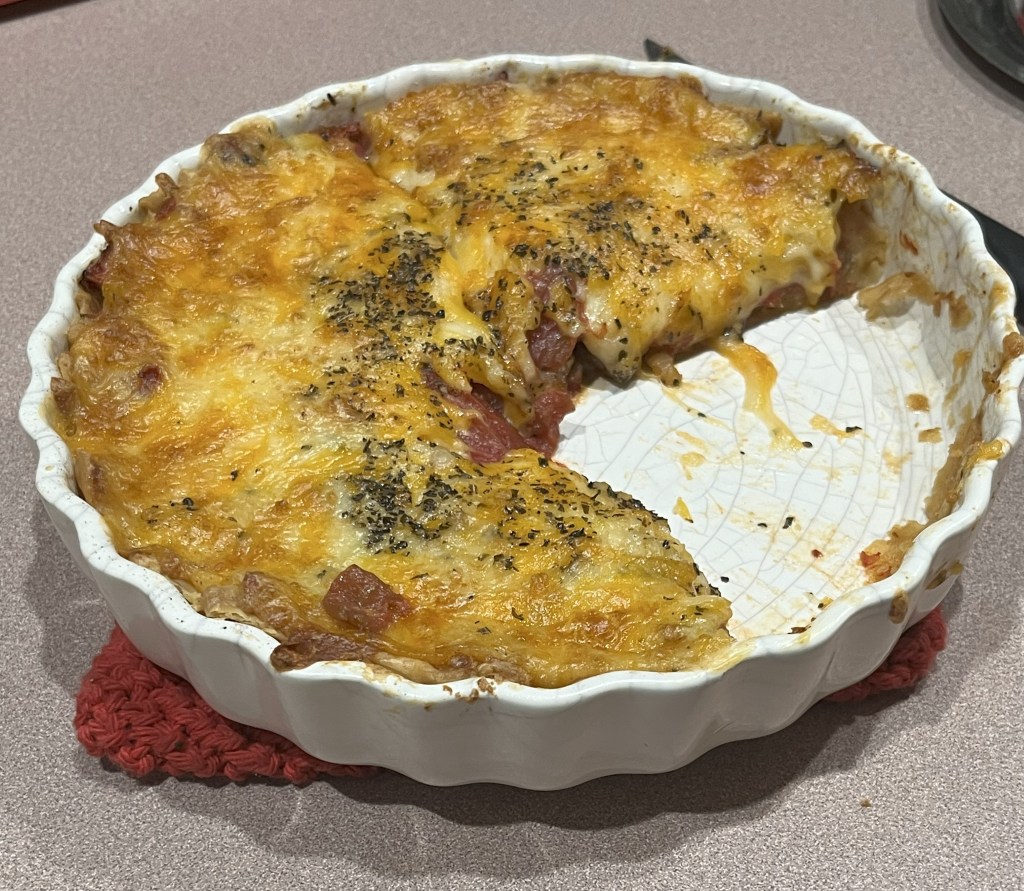
Earlier this week Melissa called me into the kitchen to take care of a “problem” she had found while working on her succulents.  Our pool/pond on the back patio has been teeming with grey tree frogs (Dryophytes versicolor) caught in the height of mating season.  This has resulted in successive scores of tadpoles that grow up to be adults.  I often see one of the small frogs hopping across the straw mulch that covers the potato plants as I am watering.  The frogs also like to hide behind the cushions on the Adirondack chairs on the patio.   It appeared one of the larger adult frogs was not content hiding on the patio or in the American elm (Ulmus americana) trees that line the back property line and had decided to take up residence in the “jungle” of succulents Melissa was working with on the kitchen table.  Melissa does not like hoppy things and called on me to remove it.  I thought it was interesting and snapped a photo before grabbing the frog and releasing it over our back fence (away from the kids).  It was not until I later looked at the photo that I realized the frog had been hiding next to a cactus barrel that appeared to have a bloom on its top.

When I went online, I found Cactus Barrel Milkweed (Larryleachia cactiformis), is a small perennial stem succulent with a globular body displaying a pattern of repeated shapes or polygons (tessellate) with either five pointed (pentangular), flat, or depressed projections (tubercles) on the surface.  The species can vary greatly, particularly in the color of flowers, which open in the summer.  The cactus barrel is native to South Africa and Namibia and grows at an altitude of a half to one mile (800 to 1600 m) above sea level.  It is found amongst a belt of natural shrubland (Fynbos) and desert (Succulent Karoo) vegetation on the quartz hills of the Kamiesberge mountain range.  The species is highly succulent (juicy) and adapted to the very harsh and bright habitats of the desert.  The plant is an excellent example of convergent evolution and is easily mistaken for a cactus.  It is widespread and the Red List of Threatened Species from the International Union for Conservation of Nature says it is common and not threatened.

One of my apps first misidentified my photo of the cactus barrel as a candelabra cactus (Euphorbia lactea).  This made sense as when I looked at the photo there appeared to be a yellow flame coming out of the top of the succulent.  When I mentioned this to Melissa, she pointed out the yellow bloom was on a low-lying elephant’s foot (Dioscorea elephantipes) succulent behind the cactus barrel.  Melissa had placed four different types of elephant’s foot in the bowl, and said the only way to tell the difference (even for most botanists) was by the color and shape of the bloom.  My flaming candelabra was an optical illusion formed by the angle from which I took the photo.  I obviously have a long way to go when it comes to succulent identification.

THOUGHTS: The cactus barrel milkweed succulent is like other members of the Apocynaceae genus in its difficulty for cultivation.  Propagation is a problem as the plant does not offset or seed readily and grows difficultly and slowly from seedling.  Melissa has had this small specimen for two years and it has yet to flower (despite my declaration).  Humans can also find it hard to propagate (spread) and are easy to be misidentified.  When we say other newcomers “all look alike” we lump individuals into categories that may not define their true nature.  We need to wait and take time to see what flowers (fruits) they produce to understand and accept them.  Act for all.  Change is coming and it starts with you.

Pestalotiopsis

June 20

In the middle of the back section of my local newspaper was a Reuters article on the discovery of a fungi that can break down the plastic found in landfills.  The discovery has launched a startup in Austin, Texas, which will sell disposable diapers paired with the fungi intended to break down the plastic.   Tero Isokauppila co-founded Hiro Technologies which now sells online “diaper bundles”.  Three sealed jars at the company’s lab show the stages of decomposition of the treated diaper overtime.  By 9 months the product appears as black soil.  The diapers the fungus attacks contribute significantly to landfill waste.  The Environmental Protection Agency says an estimated 4 million tons (907,000 metric tonnes) of diapers were disposed of in the US in 2018 with no significant recycling or composting.  It takes 100’s of years for the diapers to break down naturally.  Each of the Myco-Digestible Diapers comes with a packet of Pestalotiopsis microspore fungi which is added to the dirty diaper before it is thrown into the trash.

When I went online, I found Pestalotiopsis microspora is a species that lives within a plant for at least part of its life cycle without causing apparent disease (endophytic).  The fungus can break down and digest polyurethane (plastics).  Pestalotiopsis was originally described from Buenos Aires, Argentina in 1880 in the fallen foliage of common ivy (Hedera helix) by mycologist Carlo Luigi Spegazzini, who named it.  Pestalotiopsis also causes leaf spot in Hypericum ‘Hidcote’ (Hypericum patulum) shrubs in Japan.  The species polyurethane degradation activity was only discovered in the 2010’s in two distinct strains isolated from plant stems in the Yasuni National Forest within the Ecuadorian Amazon rainforest.  This was a discovery by a group of student researchers led by molecular biochemistry professor Scott Strobel as part of Yale’s annual Rainforest Expedition and Laboratory.  It is the first fungus species found to be able to subsist on polyurethane in low oxygen (anaerobic) conditions making the fungus a potential candidate for bioremediation projects involving large quantities of plastic.

The Pestalotiopsis fungi evolved to break down the lignin compound found in trees.  Isokauppila said the carbon backbone of the compound is very similar to the backbone of plastics.  Lignin is a class of complex organic polymers that form key structural materials in the support tissues of most plants.  Lignin is particularly important in the formation of cell walls, especially in wood and bark, because it lends rigidity and does not rot easily.  Most fungal lignin degradation involves secreted peroxidases.  Fungal laccases are also secreted, which aid degradation of phenolic lignin-derived compounds.  An important aspect of fungal lignin degradation is the activity of accessory enzymes to produce the hydrogen peroxide (H2O2) required for the function of lignin peroxidase.  More research is required to see how Pestalotiopsis will decompose in real world conditions.  That data should enable the company to make a “consumer-facing claim” by next year.  Hiro Technologies plans to experiment with the plastic eating fungi on adult diapers, feminine care products, and other items.

THOUGHTS: When my son was born the reaction of Pestalotiopsis on plastics was unknown.  I decided to avoid the waste of disposables by using cloth diapers.  While his mom agreed, it was my job to take care of the mess and cleaning required by the diaper pail.   There has been a resurgence of interest in cloth diapers recently among environmentally and financially conscious new parents.  While disposable diapers remain popular, a growing number of families are choosing to use cloth diapers.  This shift is driven by environmental concerns, cost savings, and improved cloth diaper designs.  The cost of the fungi diaper packs is not cheap (neither are the disposables), but it could make a significant difference environmentally.  Act for all.  Change is coming and it starts with you.