NO

July 19, 2021

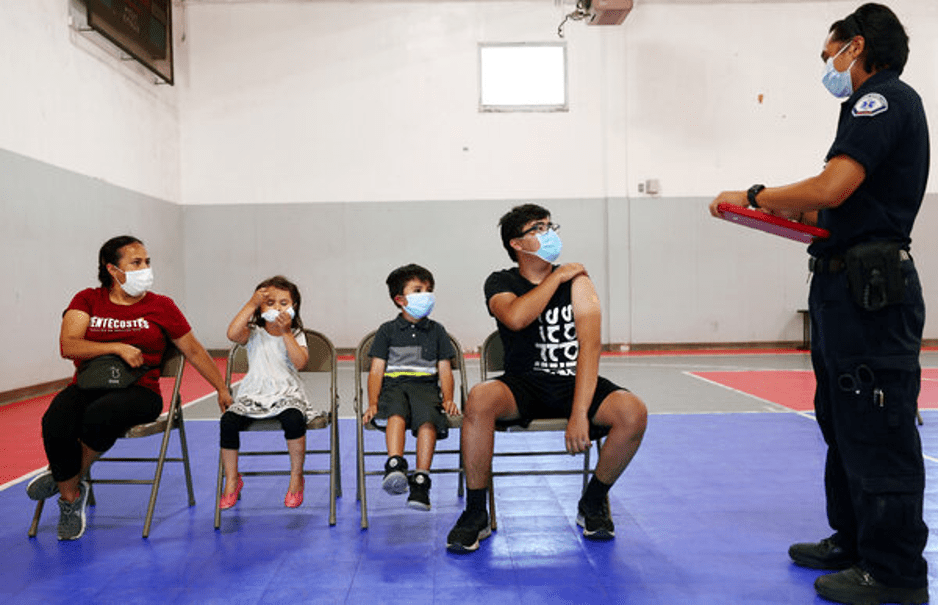
My NY Times news feed this morning lead with an article on the beginnings of a shift in people getting the virus vaccine.  It noted that while a few weeks ago it seemed the virus might be in permanent retreat, the Delta variant has changed the situation, and cases are rising in all 50 states.  While vaccinated people remain almost guaranteed to avoid serious symptoms, the variant has put unvaccinated people at a greater risk of hospitalization and death.  According to the CDC, more than 99 percent of recent deaths and more than 97 percent of recent hospitalizations have occurred among the unvaccinated in the US.  On Friday, Biden commented, “Now, the only pandemic we have is among the unvaccinated.”  Saying no appears to have consequences.

When I checked online, I found that all 50 states reported more covid-19 cases over the last week than the week before.  According to the CDC, this represents a nearly 70% spike overall in the average number of daily cases.  Arkansas continues to be the nation’s top state for new cases per capita.  Only 35% of the state’s population has been fully vaccinated, a number that has remained constant for the last month.  Arkansas has a history of a lax response to the pandemic and was one of only seven states that did not issue a stay-at-home order for nonessential activities in March and April 2020.   As the return to school approaches, Arkansas joined six other states in restricting public schools from requiring coronavirus vaccinations or documentation of vaccination status.  Saying no is now a legal matter.

The focus of the Times article was on a poll conducted by the Kaiser Family Foundation in January, which asked whether Adults in America planned to get vaccinated.  The survey found 23% of those polled said no.  When Kaiser recently followed up on the poll, they found about one quarter of those who said no had decided to get the shot.  The article pointed to three main themes for their rethinking.  The first was seeing millions of other Americans safely vaccinated.  This suggests emphasizing the safety of the vaccines, rather than just the danger of Covid, may help persuade more people to get a shot.  The second was hearing pro-vaccine messages from doctors, friends, and relatives.   Many Americans, and especially those without a college degree, do not trust mainstream institutions and hearing from people they know has a greater impact.  The third was learning that not being vaccinated will prevent people from doing some things they want to do.  While mandates may be unpopular, the requirements can influence skeptics to get shots.  Saying no is being reevaluated.

Thoughts:  I developed a habit in High School of saying no whenever my mom asked me to do something.  She understood my passive aggressive nature, but also knew that if I said no, I had heard the request and I would do what she had asked.  I acted the same way with my dad . . . once.  He asked me to do something, and I said no.  His response was, “Excuse Me?”  Apparently, this was not a request, it was a mandate.  I quickly accomplished the task.  The US has tried many ways to get people to take the covid-19 vaccine (lottery tickets, college tuition, million-dollar raffles, and even staying alive).  Still the response of many has been no.  I hope for their sakes they are only being passive aggressive, and they will get the shot.  Follow the science.  Change is coming and it starts with you.

Service

July 17, 2021

 Sunday’s front page of our local news had an article about service dogs being trained in a small community near where we live.   The owner had been diagnosed at an early age with post-traumatic stress disorder, anxiety, and attention deficit disorder.  She first got a job grooming dogs and realized how they relieved her anxiety.  That led to acquisition and training of their own service dog, and in October of 2020, they opened a training facility to help others find and train service dogs.  The mother-daughter team specialize in service animals and obedience training.  PTSD service dogs, diabetic service dogs, autistic service dogs, and seizure service dogs are all part of what they provide. 

The article made me wonder what the criteria were for classifying your dog as a service animal.  What I learned was there was a difference between a service animal (dog or miniature horse) and an emotional support animal (any animal).  According to Title II and Title III of the American Disabilities Act, a Service Animal is “any dog that is trained to perform tasks for the benefit of any person with a disability.”  The disability may include physical, sensory, psychiatric, intellectual, or other emotional disability.  Many people train their own service dogs, while others find trainers to work with the dogs.  Once your dog is trained, you can register the dog to be recognized in a national database.  Rather than assisting with a specific disability, emotional support animals ease a variety of mental disorders, like anxiety and depression.  Service animals are granted access wherever their owners go.  The same is true for emotional support animals, but you do require a note from your doctor or health care provider.

When I lived in California there was a group of trainers who asked to use the property where I worked to hold weekly meetings to train service dogs.  We had a large outdoor area for the dogs in addition to a large indoor auditorium, so the group could meet rain or shine.  The organization was accredited and had been training Labrador retrievers to assist with the blind.  This was a pilot program to see if they could get the same results with German shepherds.  Shepherds have a long history of being service dogs, but have a problem of attaching to the handler, making it harder for them to bond with the eventual owner.  The trainers used a staged approach to counter the bonding.  The puppies were raised by one handler, transferred to the discipline trainer, who handed them off for specialized training as a seeing eye dog.  That allowed the dog to finally create a strong bond with the owner.  When I looked online, it said German shepherds were among the four breeds most often used as seeing-eye dogs.  It must have worked.

Thoughts:  When our dog Bella was young, she was trained as a therapy animal.  This is a specialized service dog to provide affection and comfort in hospitals, schools, and nursing homes.  Bella spent many afternoons in the school library listening to children read.  When I later took Bella to my camp, I got her an official vest and attached her name tag and designation as a therapy animal.  Bella loved to greet visitors, but never forgave my assistant for stepping on her tail.  Bella would hide under my desk every time the woman came into my office (btw:  she’s watching the eclipse).  While we sometimes treat pets as part of the family, service animals are a literal extension of their owner.  While they are given more access than pets, they are also held to strict rules, and misbehavior can result in losing their service status.  They are not to be approached or petted without the expressed permission of the owner.  Follow the science.  Do the work.  Change is coming and it starts with you.
Roof

July 16, 2021

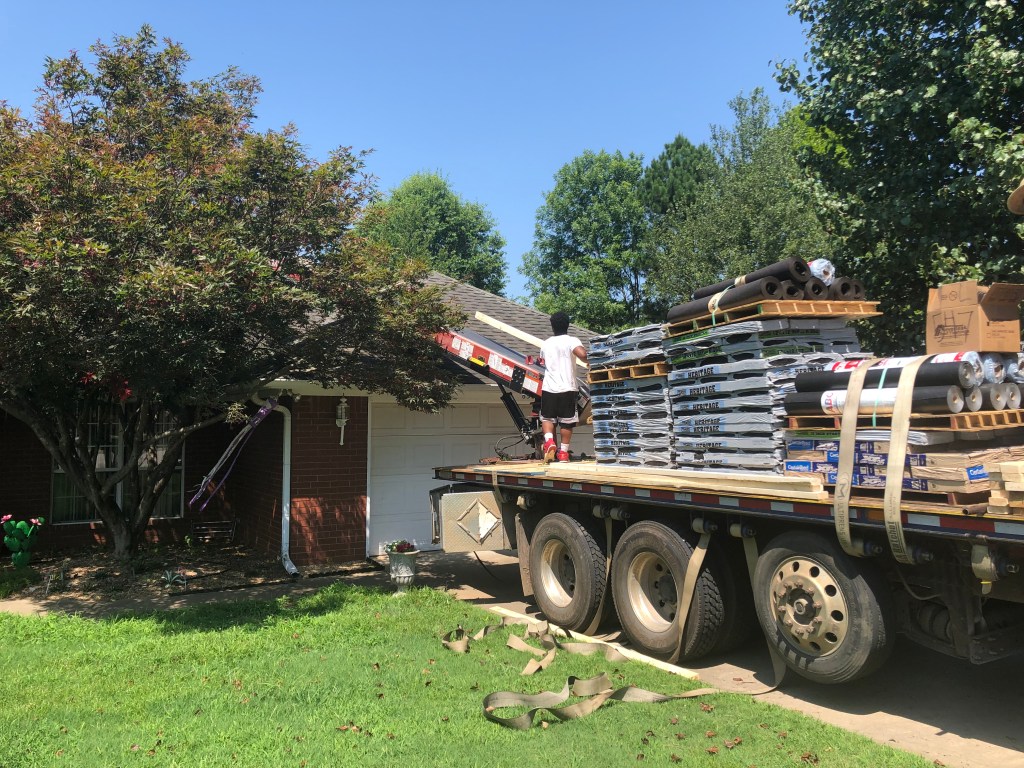
I have mentioned the chain of events that began as a vent falling into the attic and ended up with our entire roof being replaced.  While I am grateful to get the new roof, I was not prepared for the havoc the replacement would cause.  It started the day before when I received a text notifying me people would arrive to fix the roof at 5:30 the next morning, and that I needed to move my cars to allow them to park their dumpster in my driveway.  Not being a morning person, I grumbled but did as they asked.  I woke at 6:00 the next morning and checked to see if they had arrived.  They had not so I went back to sleep.  Apparently, they rang the doorbell around 6:20 and asked Melissa to be let into the back fence (I slept through the bell).  By 6:30 they were walking around on the roof.  That did wake me up. 

I was not surprised when I looked online and found that asphalt shingles were the most popular type of roof material across North America.  The shingles are “designed to protect your home through decades of weathering with minimal upkeep and are available in hundreds of colors and styles.”  The best quality asphalt shingles may last for 30 years without needing to be replaced, although their lifespan varies depending on your weather.  The downside is asphalt shingles are lightweight, which means they can easily blow away in strong winds.  While asphalt shingles may come in hundreds of styles and colors, I was given two styles (expensive and more so) and a choice of three colors.  I later found out our subdivision limited the style and color of shingles you can put on your roof.  Luckily, I choose the style and color found on the roof next to our house.

The noise of workers on my roof may have woke me up, but the fun was just beginning.  I have had a roof replaced before, but I went to work, and it was done when I got home.  Now Melissa and I both work from home.  It took a while for the workers to clear the old shingles off the roof, during which time I pointed out they had piled shingles on the succulents in the front succulent bed (they were removed).  The underlayment went on and the process of attaching the shingles to the roof began.  You can imagine what six men nailing shingles above your head would sound like.  Melissa had three zoom meetings during the day and her colleagues all enjoyed the sound.  When they were doing the roof above my office, insulation came out of the air vent and drifted down to my desk.  With the heat and hard work, I was amazed to see them finish the roof in one (12 hour) day. 

Thoughts:  When I was checking the different types of shingles and which was better given my criteria, the answer invariably was, “it depends.”  Apparently, what it depends on is when you want to spend the money.  I also found the “information” was being offered by roof contractors who wanted to contact me.  When I saw how much my standard asphalt roof cost, I knew why everyone was so interested in my roof.  Fixing a roof is labor-intensive and the feels-like temps climbed close to 100F in the morning.  By lunch, the crew was all sleeping on my lawn.  I noted only the foreman of the crew spoke English.  Fixing a roof must be one of the good jobs being taken by immigrants.  I hope they at least had ear protection.  Do the work.  Change is coming and it starts with you.
Ramen

July 15, 2021

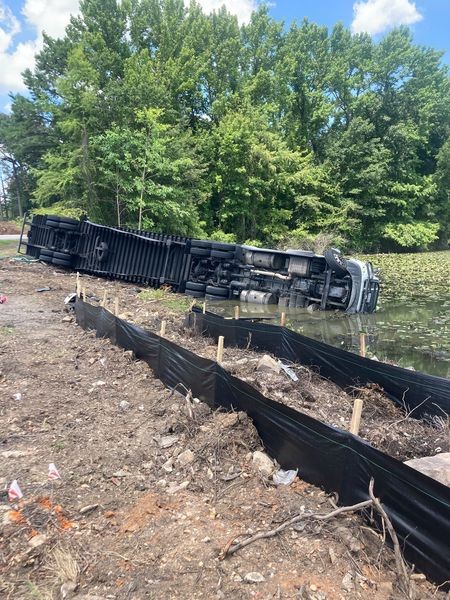
I received a news feed from the Arkansas Game and Fish Commission (AGFC) yesterday about a semitrailer that had crashed into a local lake.  The truck was carrying 20,000 pounds of ramen noodles when it toppled into the lake.  According to the Facebook post the semi was lying on its side in Lake Conway in Faulkner County around 3 pm CDT.  The driver of the truck was not injured, authorities told the television station.  The Arkansas Department of Environmental Quality was notified, and a HAZMAT crew was on the scene.  As the wrecker was removing the truck from the lake, the AGFC said there did not appear to be any contamination to the lake. 

When I checked online, I found that instant ramen noodles are made with wheat flour that has been fortified with synthetic forms of nutrients like iron and B vitamins to make the noodles more nutritious.  They still lack important nutrients, including protein, fiber, vitamin A, vitamin C, vitamin B12, calcium, magnesium, and potassium.  Ramen also has a lot of calories without the nutrients of a more balanced meal with a protein, vegetables, and complex carbs.  While one serving (43 grams) of ramen noodles has only 188 calories, most people consume the entire package, or two servings (371 calories).  The ramen can be made more nutritious by adding additional ingredients, but that takes time and effort, something most consumers (myself included) do not have, or they would not be eating ramen in the first place.

Apparently, I was not the only one who found the accident report humorous.  By Wednesday, the story had been picked up by the Miami Herald, which commented on the social media response to the event.  Most comments referred to the inexpensive cost of ramen.  One person wrote on Facebook, “Glad he only lost $120 in cargo.”  Another wrote, “Twenty thousand pounds of Ramen??? The load value of $26 was a total loss.”  Others commented on the heat wave that was buffeting Arkansas on Tuesday (93F).  “In this weather, the noodles should ‘bout be done!!”  I was glad to see I was not the only one with a twisted sense of humor.

Thoughts:  What intrigued me most about the story of ramen noodles was the response of the AGFC to send a HAZMAT team to the site.  I wonder what the HAZMAT team thought they were trying to prevent.  I am always amazed by the response government agencies take toward environmental risks.  While a ramen spill brought an immediate response, corporate water pollution results in decades of litigation to force any change.  In a report on water quality in the US in 2009, 44% of assessed stream miles, 64% of assessed lake acres, and 30% of assessed bays and estuarine square miles were classified as polluted.  Unsafe water kills more people each year than war and other forms of violence combined.  It is estimated that water pollution is the leading worldwide cause of death and diseases, accounting for 1.8 million deaths in 2015.  The extent of our polluted water resources is not humorous and needs to be addressed.  Otherwise, we will have no water for our ramen.  Follow the science.  Change is coming and it starts with you.

Bloom

With all the attention being given to the crepe myrtle that has appeared a year after I had tried to cut it out of the two front driveway beds, I had not realized what was going on right beside the crepe.  I knew one of the Hen and chick plants had produced a stalk, but I did not know what that meant.  When Melissa saw it, she immediately said, “How cool, it is growing a death bloom!”  While I did think the emerging stalk was cool, I did not like the ominous sound of “death bloom.”  After all the work I have put in trying to keep these plants alive through the freeze of winter and the heat of summer, now it appeared it was going to die anyway.  At least it was doing so on its own terms.

When I looked online, I found Hen and chick (Sempervivum) varieties are not typically known for their flowers, and many are unaware these succulents even produce flowers.  A rosette is the typical form of Hen and chick plant.  When the center of the hen rosette starts to grow upwards you know it is the beginning of the end.  The center of the plant will push up until it turns into a flower stalk.  Finally, the leaves on the end of the stalk will peel back to reveal a cluster of buds, and the buds will bloom into pink flowers.  While these are normally low-growing plants, but the flower stalk can grow from a few inches (7.5 to 10 cm) up to a foot (30.5 cm) in length.  The blooming stalk on the plant is called a “rooster.” 

Hen and chick are one of several types of succulents known as Monocarpic (once-fruiting), that bloom once and then die.  This generally does not happen until the center rosette is at least four years old and many pups (chicks) have been produced.  I noted our plant had already produced 11 pups, even though it had only been the ground for less than a year.  When a monocarpic succulent is throwing out a death bloom, it stretches taller and the lower leaves can start to look shabby, because all the energy is going to making the flower.  A death bloom is recognizable from other succulent blooms, as it comes from the very center (apex) of the plant.  If you see a bloom stalk (inflorescence) coming from somewhere else, it is a normal bloom, and the plant will not die.  Another oddity occurring in our anomalous yard.

Thoughts:  It never ceases to amaze me how much happens in the world of nature to which I had never paid much attention.  That is true for the rooster growing on our Sempervivum, the bird and squirrel battles over my backyard feeders, and the varieties of our perennials that provide a legacy to ancestors.  I have always been interested in nature, but more so in knowing “how it works.”  Identifying birds, growing vegetables, and nurturing succulents are not going to make us rich or make a dent in the ills of the world, but they do make a difference in understanding how to live my life.  Mark Twain is quoted saying, “Find a job you enjoy doing, and you will never have to work a day in your life.”  That is an adage on which to base your life.  Do the work.  Follow the science.  Change is coming and it starts with you.

Horseflies

July 13, 2021

When I got into my car yesterday morning there was a huge horsefly sitting on the hood of my vehicle.  While horseflies were a constant pest in the agricultural areas where I lived in Kansas, I have not noticed many in the urban area where we live in Arkansas.  Horseflies mostly occur in warm areas with suitable moist locations for breeding, but they can occupy a wide range of habitats from deserts to alpine meadows.  They are also adaptable to altitude and range from sea level to at least 10,800 feet (3,300 m).  I believe this was the first horsefly I have seen since we moved here three years ago.  It was huge.

Horseflies are true flies in the family Tabanidae in the insect order Diptera.  They are often large and agile in flight.  They avoid dark and shady areas and prefer to fly in sunlight and are inactive at night.  Horseflies are found all over the world, except for some islands and polar regions (Hawaii, Greenland, Iceland).  Both Horseflies and Botflies (Oestridae) are also called gadflies.  Adult horseflies feed on nectar and plant discharge, and the females bite animals (humans) to obtain blood.  While males have weak mouthparts, the females use specialized mouth parts that allows them to bite and then obtain enough protein from blood to produce eggs.  Female mouthparts have a stout stabbing organ with two pairs of sharp cutting blades.  They then use their spongelike “tongue” to lap up the blood that flows from the wound.  Horseflies act like tiny vampire bats.

Since female horseflies bite their hosts, they can transfer blood-borne diseases from one animal to another.  In areas where diseases occur, they have been known to carry equine infectious anemia virus, some trypanosomes, the filarial worm Loa loa, anthrax (among cattle and sheep), and tularemia. They can reduce growth rates in cattle and lower the milk output of cows if suitable shelters are not provided.  I have watched as horseflies have relentlessly aggravated both horses and cattle.  They seem to prefer the unprotected areas around the eyes and the animal’s backs, both outside the range of the animals’ tails.  Horseflies have appeared in literature since Aeschylus in Ancient Greece mentioned them driving people to “madness” through their persistent pursuit.  Shakespeare also included horseflies in three of his plays (gad flies) where they aggravated the madness of the character.  The do the same to horses.

Thoughts:  While some attribute the horseflies’ name to their size (as big as a horse, at least compared to a house fly), it comes from the fly’s persistence in attacking Equines.  Equine Infectious Anemia (EIA) is a viral disease affecting only members of the Equidae family (horses, ponies, zebras, mules, and donkeys).  There is no vaccine or treatment for the disease.  There is no evidence that EIA is a threat to human health.  While EIA is carried by horseflies, many believe covid-19 was originally transported by a bat.  Horses infected by EIA either die or become a lifelong carrier.  Regardless of where it started, humans do have a vaccine against covid-19.  The problem is getting people to receive the shot.  It seems some would rather risk death.  Follow the science.  Change is coming and it starts with you.
Crepe

July 12, 2021

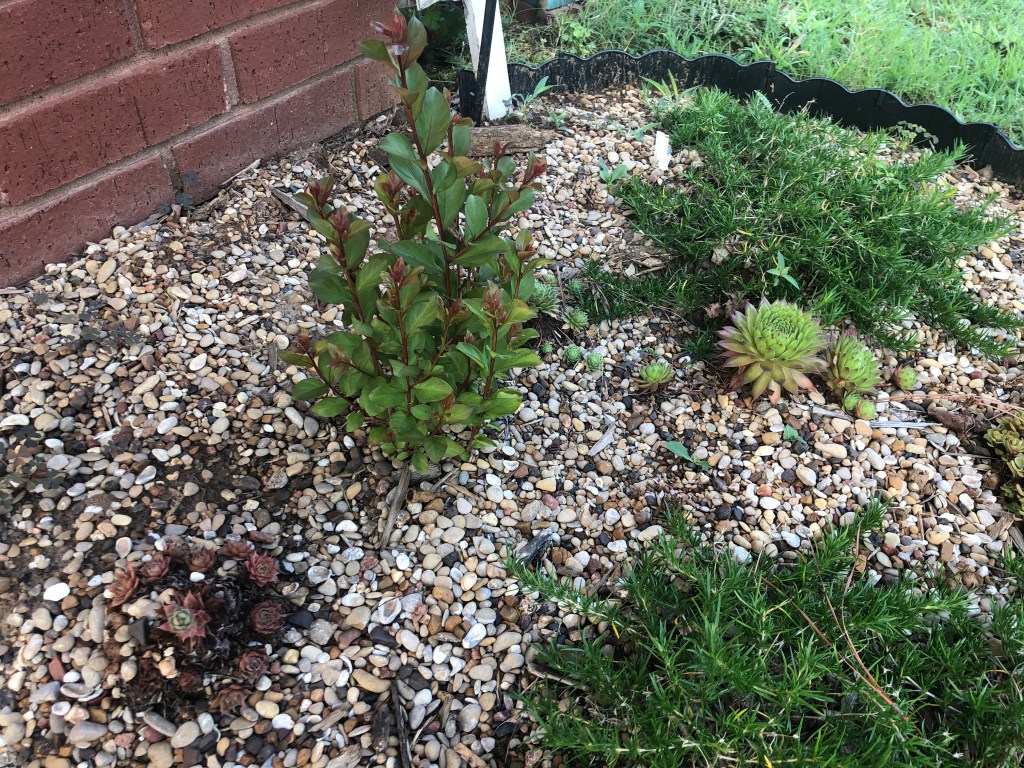
Several weeks ago, I noticed the beginnings of some small shoots coming up in both beds beside the driveway.  These beds had been dominated by crepe myrtle bushes for over twenty years until we decide to remove them last year.  It was not that they looked bad, we just wanted to try a new look.  I had cut off the trunks and even dug into the ground to remove as much root as posible.  After we cut out the crepe, melissa planted both beds with a large agave and several smaller hen-n-chick succulents.  You may recall that between the moles and the harsh winter we lost everything in the south bed, but the hen-n-chick in the north bed survived and are flourishing.  I pointed out the unknown plant last week to Melissa as we got ready to leave the house.  Without hesitation she told me it was the crepe myrtle.  Apparently, my eradication had not been enough.

When I looked online, I found that common crape myrtle bushes (Lagerstroemia indica) are “attractive varieties of multi-stemmed flowering shrubs with showy red, white, pink, or purple flowers.”  It seems the only difference between the crepe myrtle bush, tree, and dwarf varieties are their size.  Crape myrtle trees can be as much as 20 ft. (6 m) taller than the bushes and grow up to 35 feet (10 m) high.  Dwarf crape myrtle bushes may be as short as two feet (0.6 m). The larger crape myrtle shrubs can be between five feet and 15 feet (1.5 – 4.5 m), depending on whether the bush is a semi-dwarf variety or a small shrub-like tree.  Most types of flowering crape myrtle shrubs have a broad crown that is usually wider than the bush is tall.  The spread can be between five and 15 feet wide.  I recall that this is what we had before (and now), as it was about three feet high and four feet across.

Since our agave had died anyway, Melissa decided we should allow the crepe myrtle to regrow rather than cutting it out again.  It had looked nice, and she thought it would provide good shade for the hen-n-chick that would do well in the shade.  This time we are planning to monitor the bush.  Rather than allowing it to take over the beds, I am determined to keep it pruned and allow it to grow taller with the foliage confined to the top cap.  This will provide both protection and sun for the succulents and the creeping phlox that are currently in the bed.  At times you just need to bend with the will of nature.

Thoughts:  Just like with my crepe myrtle, there are times when we think we have resolved a problem when it comes back to haunt us.  That is the case with covid-19.  At the end of May it looked like we were approaching the end of the pandemic, at least in America.  That is when complacency set in.  Governors and states relaxed precautions and people went back to business as usual.  Biden’s prediction that we would be free from the worst of the virus by the Fourth of July was predicated on the rate of vaccinations we saw during April and May.  There were whisperings that the virus had been defeated, and America lost all sense of precaution.  The masks came off and gathering in large groups returned, but the required vaccinations to reach our goal of 70% stagnated.  Now cases of a deadly mutation are again rising, and the hospital beds are full.  Few of these cases are among those vaccinated.  Follow the science.  Change is coming and it starts with you.

Aspirin

July 10, 2021

I came across a new study yesterday from the University of Alberta saying researchers found common anti-inflammatory medications such as aspirin (acetylsalicylic acid), can help treat the most harmful outcomes of covid-19.  Most people infected with covid-19 recover without serious symptoms, but some develop inflammation in the lungs, causing coughing and shortness of breath.  A few develop hyper inflammation that can lead to organ failure and death.  That is especially true for men, people over the age of 60, and those with metabolic disorders such as obesity and diabetes.  Covid-19 interferes with a person’s natural immune response, causing them to produce inflammatory molecules rather than anti-inflammatory molecules.  Drugs like aspirin can help reduce the inflammation.  An aspirin a day!

When I looked online, I found that salicylic acid was first patented in 1890 and was cheaply produced as an effective inflammation reliever for rheumatoid arthritis.  The problem was it had some unpleasant side effects (nausea, gastric discharge).  Acetylsalicylic acid (or aspirin) was synthesized in 1897 by Felix Hoffmann at Bayer and was tested pharmacologically by Heinrich Dreser.  Production of this new drug started in 1899.  Aspirin was sold as the first pills ever in 1900 and became popular when the public realized it had fewer side effects compared with salicylic acid.  Aspirin is the first medicine produced at industrial level and is still manufactured in high amounts today.  An Aspirin a Day!

When I went in for my wellness visit last year, the doctor told me I should add a baby aspirin to the handful of vitamins I take every morning.  While aspirin has been used as a pain reliever for more than 100 years, since the 1970’s it has also been used to prevent and manage heart disease and stroke.  Studies say a low-dose aspirin each day for at least 10 years can lower your risk of cardiovascular disease by as much as 10%.  Aspirin helps the heart by easing inflammation.  Plaque may be more likely to cause a heart attack or stroke if the heart is inflamed.  Aspirin blocks an enzyme called cyclooxygenase, and that makes your body less likely to produce chemicals that can cause inflammation.  It also helps prevent blood clots.  I have only nine more years for it to take effect.  An aspirin a day!

Thoughts:  In High School I got extremely sick with a fever and body aches and called the emergency hotline.  The nurse gave me what I thought was a dismissive response, “Take two aspirin, drink plenty of fluids, and if the fever persists, call me in the morning.”  I did what she said, the fever broke, and I started feeling better.  The Marx Brothers were a family comedy act successful in vaudeville, on Broadway, and in motion pictures from 1905 to 1949.  I recall a sketch performed by Groucho where he played a doctor.  No matter what the patient’s malady, his response was, “Take two aspirin and call me in the morning.”  Given the recent discovery of this wonder drug, maybe Groucho was not too far wrong.  About 80 billion aspirin tablets are taken a year for swelling and inflammation, as well as to help prevent heart attacks.  There might be a good reason for a doctor to say, “Take two aspirin and call me in the morning.”  With aspirin now being used against covid-19, there might be another.  Follow the science.  Change is coming and it starts with you.
Wheat

July 09, 2021

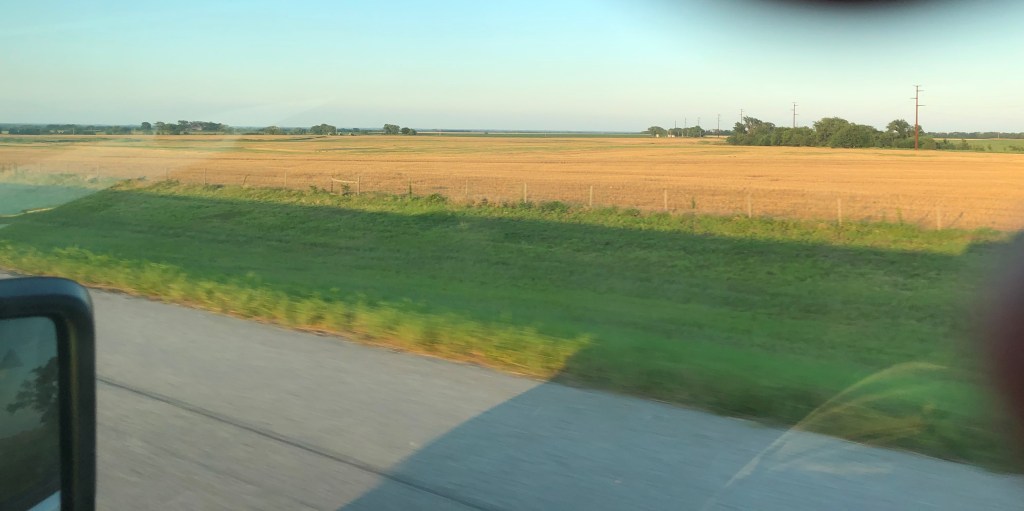
Even while we sped past the vast prairies of the Flint Hills, their competition was also evident.  Scattered along the highway were fields of cut wheat that seemed to go on forever.  While I never worked the wheat harvest, I knew others who did.  They would form great caravans of grain trucks pulling combines from field to field.  The wheat harvest would start in Texas and then work its way up to Canada.  The harvest always revolved around rain.  You needed the right amount (not too much) to make the wheat grow, but it also had to stop long enough to let the wheat dry out.  You needed to get into the dry field to cut the wheat before getting more rain.  It always seemed to be a juggling act.  I was once told if you held your tongue exactly right you might have a good crop.

Winter wheat (usually Triticum aestivum) are strains of wheat that are planted in the autumn to germinate and develop into young plants that remain in the vegetative phase during the winter and resume growth in early spring.  Classification into spring or winter wheat traditionally refers to the season during which the crop is grown.  For winter wheat, the physiological stage of heading (when the ear first emerges) is delayed until the plant experiences vernalization, a period of 30 to 60 days of cold winter temperatures (32F to 41F; 0C to 5C).  Winter wheat in the US is usually planted from September to November and harvested in the summer or early autumn of the next year.  Hard winter wheats usually yield more than spring wheat and have a higher gluten protein content. They are used to make flour for yeast breads or blended with soft spring wheats to make the all-purpose flour used in a variety of baked goods.  Pure soft wheat is used for specialty (cake) flour.  Durum is the hardest wheat and is primarily used for making pasta.  Bread, cake, and pasta.  Sounds like a meal!

The county where I grew up in Kansas had for years made the claim to be the Wheat Capital of the World.  The claim was supported by the fact the county grew the most wheat in Kansas (the Wheat State), which grew the most wheat in the US, which grew the most wheat in the world.  Even as a boy I recognized the potential flaw in this logic.  That did not keep my county from making the claim, or from holding the Wheat Festival every year in late July.  This event roped off three blocks of Main Street and filled them with rides, arcades, and food trucks calling for my attention.  I have fond memories of walking the five blocks to Main Street during the summers I lived there to wander about the fair.

Thoughts:  A recent study of the wheat harvest by Kansas State University researchers found that in the coming decades at least one-quarter of the world’s traded wheat will be lost to extreme weather from climate change unless adaptive measures are taken.  The USAID Feed the Future Sustainable Intensification Innovation Lab (how about that name!) at K-State found wheat yields are projected to decrease by 6 percent for each degree Celsius the temperature rises.  Based on the typical harvest worldwide of 700 million tons, the resulting temperature increase would result in 42 million tons less wheat per degree.  That amounts to a quarter of the global wheat trade.  That is more challenging as the world will have to double our food supply in the next 30 years if we are going to feed the estimated 9.6 billion people.  As my brother commented, “Hurricanes and wildfires are one thing, but now climate change is threatening my sandwich!”  Follow the science.  Change is coming and it starts with you.

Prairie

July 08, 2021

I find it interesting what people stop to view as they speed along the nation’s highways.  Kansas has two of these oddities located on either side of the state.  One is found out west on US 56 near Dodge City, where a scenic overlook allows weary travelers to stop and view the largest stockyard in the world.  As you might imagine, there is a distinct smell that comes with the privilege.  On the east there is another representation of the cattle industry with the Bazaar Cattle Pens located along I-35 near Emporia.  The cattle that range free across the Flint Hills are rounded up at the pens to be transported to stockyards like Dodge City for final fattening before being processed.  While the reason for the turnout is for trucks going to the cattle pens, the real view is the vast expanse of uninterrupted Tallgrass Prairie.

The tallgrass prairie is an ecosystem native to central North America.  The five grasses that dominate the tallgrass prairie community are Little Bluestem (Schizachyrium scoparium), Big Bluestem (Andropogon geraridii), Yellow Indiangrass (Sorghastrum nutans), Switchgrass (Panicum virgatum), and Side Oats Grama (Bouteloua curtipendula).  Natural fires caused by lightning strikes, anthropogenic fires set by the Indigenous people as a hunting technique, and grazing by large mammals (primarily bison), combined to keep the prairie intact.  As early pioneers crossed the prairie they called it the Great American Desert, and it covered 170 million acres stretched throughout the American Midwest and smaller portions of south-central Canada.  Within a generation after invention of the steel plow, most of the prairie had been transformed into farmland.  Today less than 4% remains intact, and most of that is in the Kansas Flint Hills.  This prairie is listed among the fastest disappearing ecosystems in the world.

When I directed a convention center in south central Kansas, I decided to restore 10 acres of the 62-acre camp to native tallgrass prairie.  There were two reasons for the restoration.  Pragmatically, mowing the grass on 62 acres was a constant chore during the summer.  Just removing 10 acres made a huge difference in time, gas, and equipment upkeep for the camp.  The real reason was to restore a rapidly vanishing resource.  We overseeded the Big Five that first winter, posted descriptive signs, and cut nature trails through the grass which grew as high as six feet.  The ecosystem was complete when we also overseeded the wildflowers that abound in the prairie system.  Over the course of five years the tallgrass reestablished and brought back the birds, animals, and insects that had once dominated all of Kansas.  While several deer did take up residence, there were no buffalo to roam our prairie.     

Thoughts:  I received a variety of comments when I decided to restore the Tallgrass Prairie at the camp.  The immediate response was offers to help mow.  I took several up on this offer and volunteers mowed most of the camp’s other acres.  Others decried the loss of the well-manicured lawns that were replaced by the overgrown tangle of grasses that initially grew.  I remained adamant and proudly told any who would listen that we were doing our part to maintain this rapidly diminishing ecosystem.  When you try to rebuild an ecosystem, you need to include the entire system.  That means the pretty flowers and towering grasses, but also the snakes, critters, and birds.  They need to interact and support each other for the system to work.  Humans are highly adaptable to live in any ecosystem.  The problem is, we always seem to destroy the “undesirable” species as we adapt.  We need to learn from extinctions in the past, eventually nature always wins.  Follow the science.  Change is coming and it starts with you.