Monday

June 14, 2021

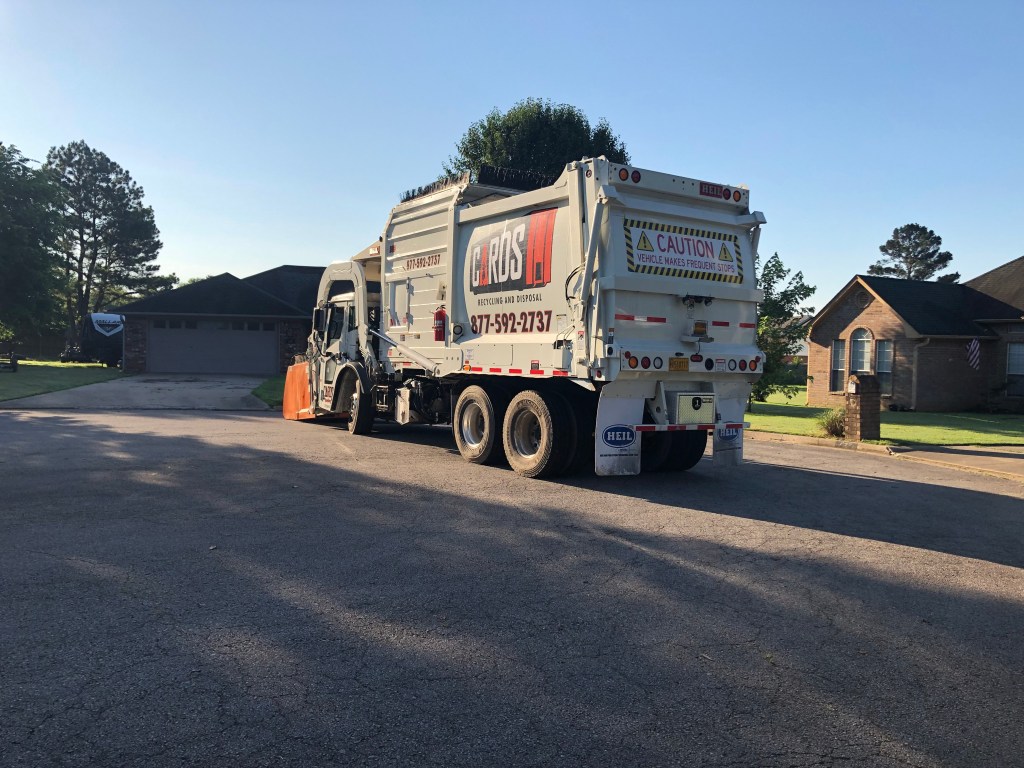
Last night I had asked Melissa to wake me up before she went to work this morning.  She has been recovering for the last weeks and I knew this would be a stressful day so I thought I would get up to support her.  When she did wake me, she mentioned the trash truck broke, and it was sitting in our cul-de-sac.  Then when she tried to log online for work, she found that the link that allowed her to get online had been dismantled and she did not have access.  To top it off, yesterday I had sent a link to a zoom call for later in the day and one of the recipients pointed out that I had forgotten to include the source of information we were going to discuss.  This was turning out to be a stressful Monday.

When I went out to get my paper the truck operator was standing in the street next to his truck, so I stopped to see how he was doing.  He told me that the hydraulics in the compactor were broke.  After trash is dumped into the truck, the hydraulics move a steel plate to smash the trash into the rear of the bin and then move it back into place in the front of the bin.  This is fitted with a sensor that does not allow the lift arm to work unless the plate is reset.  This keeps the unit from dumping trash behind the plate and causing the system to fail.  When the sensor malfunctioned, the arm was sitting on the ground.  The lift would not operate, and the truck would not move.  Another indication of a Monday.

Since the operator had begun the conversation, I decided to ask a question I have always wondered.  What happens to his route when a holiday falls on Monday (my scheduled pickup)?  He told me the entire route was just pushed back a day.  Monday trash was picked up on Tuesday, Tuesday on Wednesday, and so on.  While I sort of knew this, what I did not know was he worked a 40-hour week and Saturday was usually a day off.  With Monday holidays, he was paid for the holiday and then given overtime to work the following Saturday.  Trash is one of those essential services that need to happen.  The operator told me at least the truck broke in a spot where there was shade.

Thoughts:  I have always heard that Monday was the worst day of the week.  While I assumed this was because it meant having to go back to work, my online sources said there were scientific reasons for feeling bad on Monday.  You do not just feel less healthy on a Monday, you are less healthy.  Scientists have found that even people who generally maintain their weight weigh the most at the beginning of the week.  A Monday is the most common day for people to suffer heart attacks and strokes.  Even if you do not end up in the hospital, your blood pressure is higher on Monday, as is your chance of getting sick in general.  You can become negatively influenced in your attitudes and feelings about yourself more easily. Clemson’s national Ag Safety Database says that stress can cause as much as 90 percent of illness and disease.  Stress can interfere with your physical functioning and bodily processes.  We are stressed when the relaxation of the weekend meets the reality of work on Monday.  You are better off in a job you enjoy without so much stress.  For most of our essential workers, that is not an option.  Do the work.  Follow the science.  Change is coming and it starts with you.
Sets

June 12, 2021

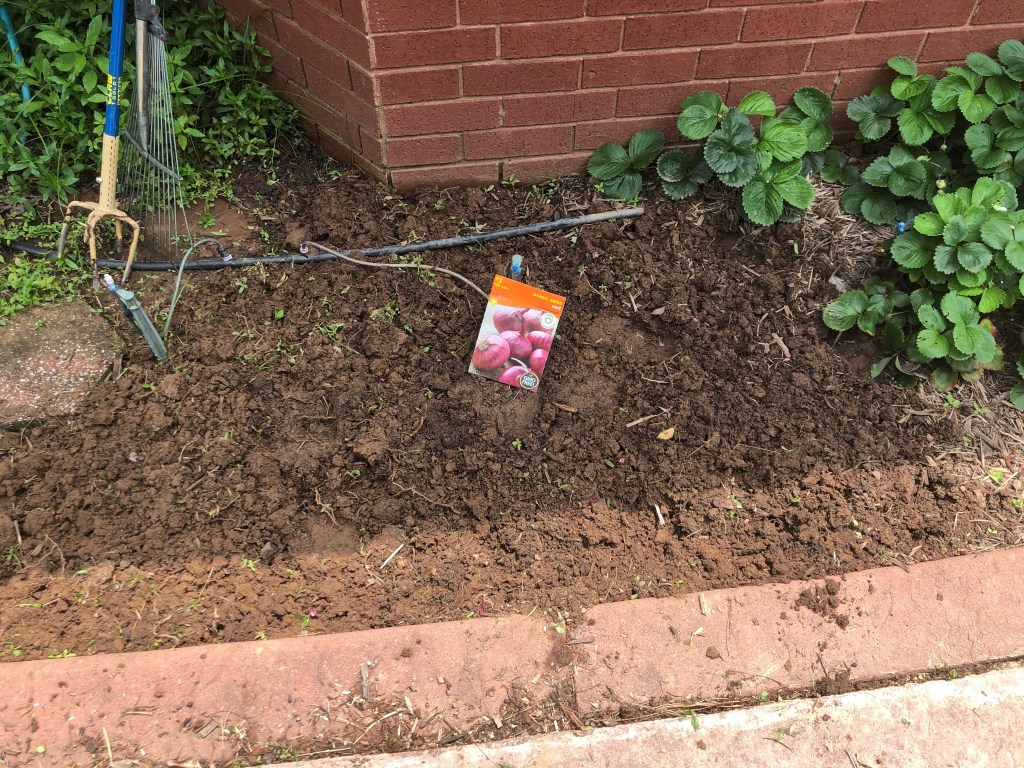
I got the first of my onion sets in the ground this last week.  While I still have about half of the bag to plant, at least I have not wasted them all (yet).  I have mentioned how I have tried to grow onions on three previous occasions with no luck.  My mom tells me it is Karma.  When I was four years old I “harvested” the onion sets a neighbor had planted earlier that morning.  He never was able to get his onions to grow.  Now I am being punished for my past deeds and my onions refuse to grow.   

When I looked online, I found that onion seeds take two years to grow into onion bulbs.  In the first season, onions (Allium cepa L.) will grow from a seed to a plant and then a dormant bulb.  After a period of cold temperatures, onion bulbs will grow and flower in the second season.  When you use onion sets, you are planting the dormant bulb of the previous season.   The small bulbs are harvested prematurely from the first year of an onion’s life cycle and stored through winter.  Sets are easy to find and plant, but typically yield smaller onions than when grown from seed.  Onions are cool season crops that prefer full sun yet cooler temperatures.  Onions are often planted in early spring and harvested in late fall.  I was close, getting mine in the ground in June.

My first attempt at onion sets was planting in containers in the public garden I was growing at work.  I dutifully watered them for two months and when I checked, none of them had grown.  I do not think there was enough soil or nutrients in the shallow containers I had used.  Part of the experiment was to show you could plant in anything.  It did not work.  I shifted to planting in the ground the next year to ensure they had enough soil to grow.  I am not sure why, but they did not work that year either.  Last year I again planted in the ground in a bed that constantly flooded.  Many of the sets washed out and those that did not failed to grow.  I am hoping this year will be different.

Thoughts:  When I bought the onion sets earlier this year Melissa reminded me that I had vowed to never try and grow onions again.  I am still determined to grow and make my own salsa, and onions are an integral ingredient.  I was able to make Pico last year, but the onions were store bought.  I have already lost my cilantro plant, but maybe my onions, tomatoes, and jalapenos will produce this year.  I find a lot of correlation with life in my garden.  Even when I work hard and put in the effort, it does not guarantee success.  Other times I become lackadaisical and do not put in the work and have no success.  Then there are those with green thumbs that find success regardless of what they do (probably because they know how to do it right).  Success in life is never guaranteed but I have found it happens more frequently when you take proven steps.  Do the work.  Follow the science.  Change is coming and it starts with you.
Official

June 11, 2021

I believe we have officially jumped into summer.  I know, there are still ten more days until the official summer, but it feels like it already.  The last several days have been over 90F which really is not too bad.  The problem is we have also had high humidity.  That means the heat index has been over 100F all week.  Today I decided I would beat the heat and get out into the yard early.  Even getting out in the morning the heat was oppressive.  I was able to weed two of the small succulent beds and the flower bed around the mailbox.  As usual, I threw the weeds into the yard since I planned on mowing later.  I also got most of the weed eating done at the front of the house.  By that time, it was around 11 am and the temperatures were rising.  Thankfully, a longtime friend of Melissa’s stopped by, and I had an excuse to stop.  I was just about done in. 

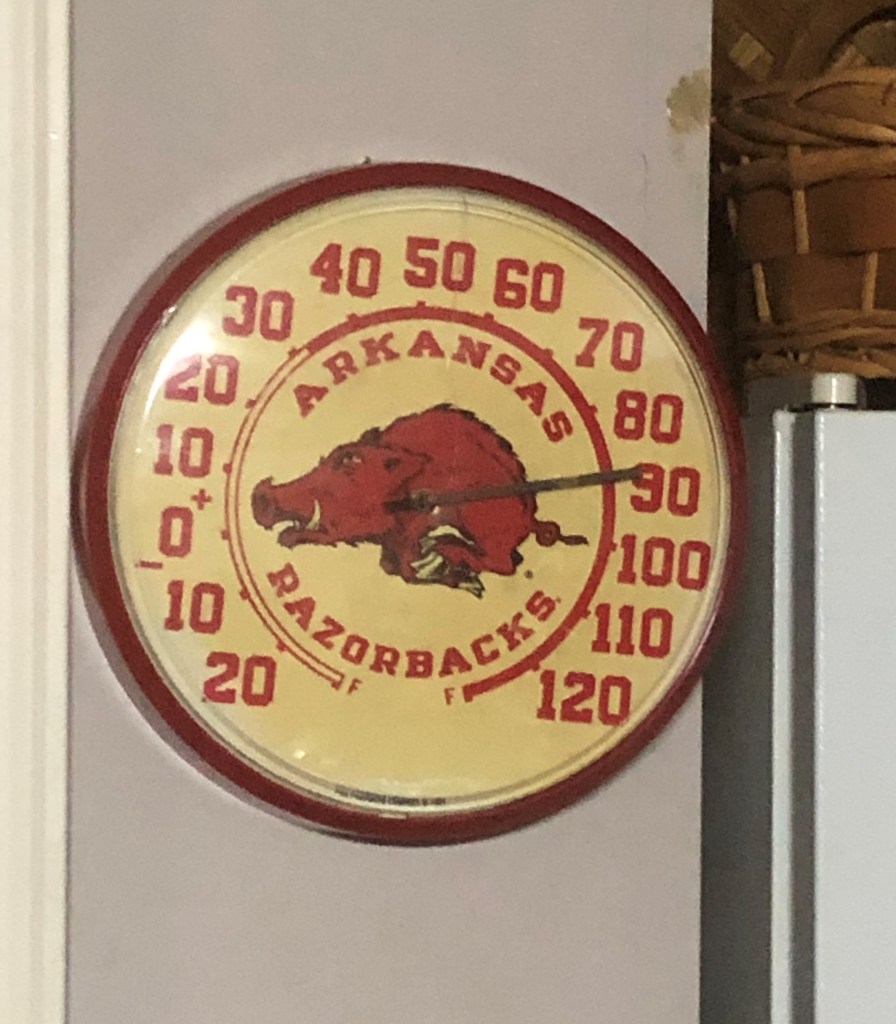
Weather forecasters seem to always be looking for new ways to describe the weather.  The official record has always been the temperature recorded at six feet above the ground on either the Fahrenheit or Celsius scale.  Then forecasters realized the official temperature could feel way colder or far warmer than the temperature recorded.  Now they talk about wind chill factor (winter) and heat index (summer).  During both seasons the forecasters now talk about the “feels like.”  Wind chill comes as the wind causes exposed skin to freeze.  Heat index combines temperature with humidity, and as the humidity increases, the heat index will rise.  While a temperature of 90F is not dangerous to most people, if the body cannot regulate heat because of 95% humidity, the heat index is dangerous and could cause heat heat-related disorders.

Melissa’s friend had a good visit and lunch, and I did not get back outside until after 3.  That meant I was mowing in the hot part of the day.  While the heat may have affected me, the combination of hot temps and scattered showers have been perfect for my grass to grow.  The problem is, I still cannot get into the back stretch of lawn.  The grass in this stretch is about 4 inches high and provides perfect cover to keep the low-lying soil damp.  I made one swath along the fence and decided that was all that was going to get cut.  I had gotten soaked when I weeded earlier, and even mowing got me there again.  When I checked my weather app, it said the official temperature was 90F.  The Feels Like was 100.

Thoughts:  I went out on the back deck to check my feeders after I finished mowing and noticed despite the nightly showers and official low temperature, the heat was causing my vegetables to dry out.  The tops of the tomatoes were wilted, and the bottom leaves and stems were yellowed.  I did notice the flowers were still intact and there was fruit on many of the plants.  It was late enough in the day that my plants were now in the shade, so I went ahead and broke out the hose to give them all a good dousing.  The effects of covid on some last beyond their official recovery.  These persons have become known as “long-haulers,” as some people report lingering symptoms of the illness for months.  While the official infection has run its course, secondary symptoms linger for months.  Another reason to get the vaccine.  Follow the science.  Change is coming and it starts with you.
Mystery

June 10, 2021

I have been faced by mystery in my back yard several times over the last two years.  Several days ago, I wrote about how the suet feeder I keep in the back yard had been robbed.  I blamed the squirrels for knocking the feeder open and then running off with the suet cake.  Although I had no proof, I assumed that was the most logical conclusion.  When I went out to my feeders today, I thought something was different, but could not place what it was.  Then I realized the suet feeder was no longer hanging from its pole.  I again assumed that being unable to open the feeder (I fastened it differently), the squirrels had knocked it to the ground.  When I looked for it, the feeder was no where to be seen.  Now it was no longer just a mystery, it was an enigma.

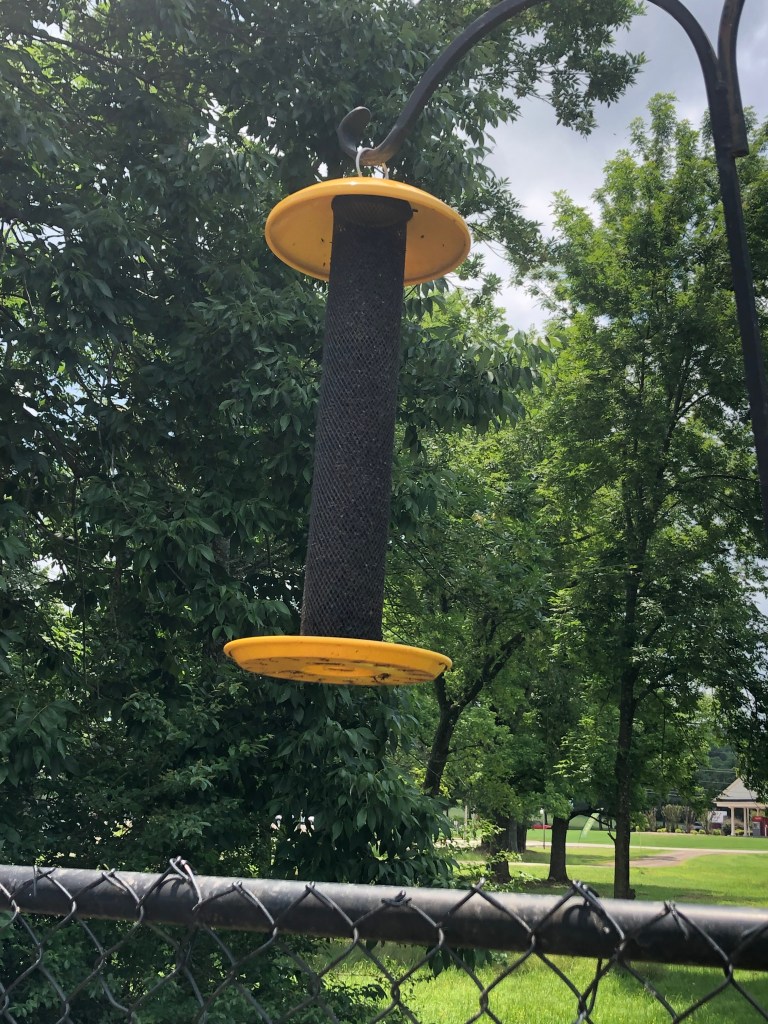
Another mystery involves my finch feeder.  I purchased the feeder in mid-summer with the hope of attracting the colorful birds to my yard.  I filled it and placed it in an unobstructed location.  The feeder sat in my yard untouched for the rest of the year.  It was not until last winter that the finches began to eat the thistle.  As the spring wore on, I had literally dozens of birds of different varieties fighting over the feeder at the same time.  The feeder has been vacant for the last two weeks.  When I looked online, I believe I resolved this mystery.  finches are migratory and move north to south and back during the fall and spring seasons.  The abundant birds have probably just moved on and my feeder will likely remain mostly uneaten until they return in the fall.

Last summer I also wrote about the tube mystery in our pool.  I kept getting pale brown tubes floating on the surface of the pool.  These were around 12 inches long and a good half inch in diameter.  I ruled out dead flower stocks or some sort of trash blown in by the wind after fishing them out of the pool and examining them.  I finally realized they were large earthworms when I came across a live one in the front of our house.  The ones in the pool had fallen into the water, drowned, and had then swelled in the water.  This mystery kept me wondering for several weeks.

Thoughts:  While I felt sheepish not realizing the mystery of the dead worms, I have found out I am not alone.  I am on a community chat site and a woman in our subdivision wondered if small brown snakes had been showing up in others houses (another also said they were).  She has had several inside and her husband has had to kill them for her (should have used them for bait instead).  While I knew the answer to her mystery, I did not want to embarrass her by saying they were worms.  Luckily, there was another woman on the chat who had no problem making fun of her fear of worms.  Mystery can cause fear because we do not know the answer to the situation we face.  That was true during the influenza pandemic in 1918 and the covid pandemic in 2020.  While they are still lethal, vaccines have since been developed for both and there is less of a mystery.  Knowing the answer to a mystery only helps if you take the steps necessary to resolve it.  Follow the science.  Change is coming and it starts with you.

E-Scooter

June 9, 2021

The buzz round our house lately has been the continued success of the OmaHogs.  The Arkansas Men’s baseball team won the conference, conference tournament, and now the Fayetteville Regional.  They will host the Super Regional and then hopefully back to Omaha for their third straight appearance (2020 was canceled).   If you were lucky enough to be in Fayetteville over the weekend, you probably saw someone on an e-scooter.  A year and a half after Fayetteville’s e-scooter program launched in November 2019, the two-wheelers are proving a popular way to make quick trips around the city.

Two different companies supply Fayetteville’s e-scooter corps, Veo and Spin.  Each have 500 e-scooters in the city with every scooter averaging one ride per day.  As of May 10, an ongoing Fayetteville community survey shows that nearly 60% of respondents are either “happy” or “very happy” with the program, and more than 67% would recommend visitors use e-scooters to explore Fayetteville.  The reason micro-mobility programs like e-scooters and bike share are so popular is their potential to reduce car trips, traffic, parking needs and carbon emissions.  Fayetteville has several price options for riders, ranging from monthly memberships ($17) to pay as you go options (unlock and minute charges averaging under $3 per ride). This provides the mobility demanded and avoids the hassle of parking.

The downside for both bike share and e-scooter programs comes when the devices are not used responsibly, putting pedestrians, other cyclists, and users at risk.  The National Association of City Transportation Officials (NACTO) says there were 18 shared scooter fatalities in the US in 2019.  There were 136 million shared micro-mobility trips on scooters and bikes during the year, up 60% from 2018.  A study conducted by Henry Ford Health System shows that nearly 28% of scooter accidents in the US result in head and neck injuries.  Dane Eifling, Fayetteville’s mobility coordinator, said there have been no fatalities or severe injury crashes reported through the city’s shared bikes or e-scooter programs.

Thoughts:  Micro-mobility is more common in countries where traffic is crowded, and cars are expensive to buy and maintain.  Typical trips on shared e-scooters and bikes in the US are around 12 minutes and usually range from 1 mile to 1.5 miles.  According to Fayetteville’s survey, 14% of respondents would have skipped a trip if not for an e-scooter.  While most folks ride responsibly, there are always those who do not, and there are accidents involving e-scooters.  Research has shown most activities would be safer if not for human error.  That is true as well with driverless cars.  The problem comes when human drivers act irresponsibly and defy traffic laws.  AI has yet to learn to compensate for “stupid.”  I admit, I struggle with this as well.  Follow the science.  Change is coming and it starts with you.
Cilantro

June 8, 2021

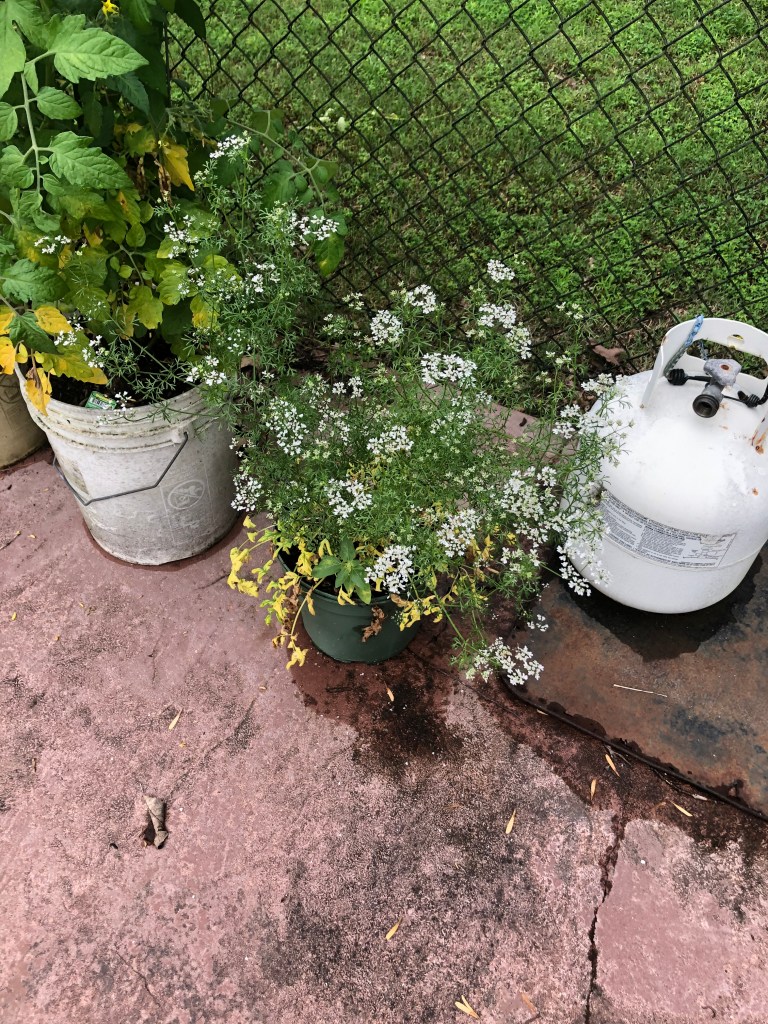
When I planted my container pots last year, I placed the small cilantro start in one of the large shallow pots.  It grew quickly and produced a large amount of leafy foliage.  I mentioned to a friend who also grows cilantro for salsa that mine was starting to top.  That was when she told me if I let them go to flower the leaves would become bitter and not be worth harvesting.  I mentioned I have not been as vigilant this year and the plant began to top two weeks ago.  I cut off the flowering portion in hopes of saving it, and again ignored the plant.   When I checked last weekend, it was apparently too late.  The leaves had turned yellow, and the plant had become covered with beautiful tiny white flowers.  I did not know if it was supposed to, but it no longer smelled like cilantro.

Cilantro (Coriandrum sativum L) is part of the Apiaceae family, which contains 3,700 species, including carrots, celery, and parsley.  All parts of the plant are edible, but people most commonly use the fresh leaves and dried seeds in cooking.  Cilantro has been a part of global cuisine for a long time.  One of the sites that came up when I looked up cilantro online was WebMD, which said cilantro can be used as a medicine.  It is known to be used for cancer, measles, toothache, and other conditions.  However, there appears to be no real scientific evidence to support these uses.  Instead, I saw “it might” remove metals from the body, or “it might” help antibiotics or antivirals work better, and “it might” help eliminate bacteria that cause infection.  In other words, while it works as a spice its use as a homeopathic medicine is at best dubious.

It was interesting to note cilantro is known to cause side effects.  When taken by mouth “it is LIKELY SAFE when taken in food amounts.”  It is uncertain what the effects are if taken in larger doses as a medicine (read, never studied it).  The site went on to say that some people might experience allergies after eating cilantro.  There are reports of hives, facial swelling, and throat swelling.  Others apply cilantro to the skin as a poultice.  Again, there is not enough reliable information to know if cilantro is safe or effective.  What is known is when cilantro contacts the skin, it can cause hives or itching.  This may be a cure I will avoid.  The flowers are nice though.

Thoughts:  When I told my mom I was harvesting my cilantro last year she said, “Keep that away from me!”  I assume she is one of the ones who have negative reactions to the plant.  In the US, cilantro refers to the leaves, and coriander refers to the seeds.  Since my plants have all gone to flower, I could collect the seeds.  I believe I have a jar of coriander seeds in my spice cabinet that I purchased about 10 years ago.  You could say I do not go through a lot of this spice.  I have found it is never a good practice to take folk remedies without understanding what they do.  While some are highly effective and have been proven to have known medicinal properties, others are not.  “What could it hurt,” is never a good reason to ingest or apply any treatment.  Follow the science.  Change is coming and it starts with you.
Trough

June 7, 2021

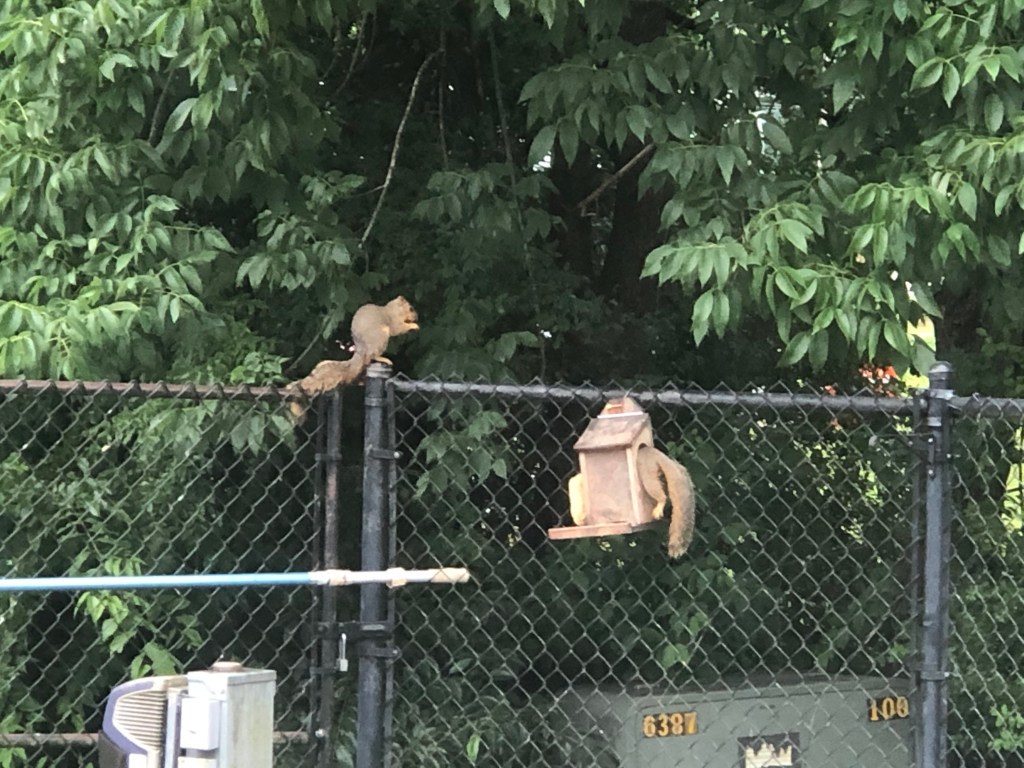
When I got up yesterday, I noticed two squirrels holding court over the squirrel feeder in my back yard.  What surprised me was that they had paid little attention to the feeder for the last year.  Now they were both squabbling over the contents.  One even entered the hole on the side of the feeder (something they had never done before) to make sure it got the best there was to offer.  Then they drove off a blue Jay who tried to horn his way in to get at the seed.  I have mentioned that while I do not begrudge the squirrels their fair share, I still consider them feeding off the public trough I set up for the birds to enjoy.

When I looked up “Feeding off the public trough” online, it defined this as using government funds to enrich oneself.  The phrase generally refers to activities which are legal, but which are morally shameful.  Someone who feeds at the public trough is fattening themselves at the expense of the public.  The term seems to come in vogue during the Gilded Age in late 19th century America.  At the time, the country was wealthier and more industrialized than ever before.  Historian Eric Foner said, these “riches more often derived from manipulating stock prices, driving out competitors, and feeding at the public trough, than from entrepreneurial genius.”  The phrase is universally understood to be negative.

Working for the State of Utah was one of my dream jobs.  I was able to do research and write papers I delivered at conferences.  On the weekends I often took my son Alex along as we researched historic or archeological sites across the state.  One day as we drove, Alex was sitting in the back of the car when he said, “Dad, when I grow up, I want to do what you do.”  After a ten second pause, he asked the appropriate question.  “Dad, what do you do?”  I told him I was a petty bureaucrat who fed at the public trough.  There was another pause, and then I heard, “I think I want to be a paleontologist.”  Although he never became one, I think he chose wisely.

Thoughts:  I found it interesting that when I saw my squirrel activity, I associated them with a pig trough.  When we see cartoons of politicians they are often depicted eating out of a trough.  Pigs are omnivores (like humans), which means they eat both animals and plants.  In the wild, they are foragers and will eat roots, grass, nuts, fruits, leaves, flowers, tubers, and particular kinds of large and small insects.  There are reported cases of people collapsing in a domestic pig pen and being eaten.  The pig eating habits site I looked up had more information on what pigs should not eat.  If you give it to them, they will eat it even if it is bad for them.  Here again, pigs are like people.  One theory is that eating the wrong thing is what started the pandemic.  Perhaps we should be more careful.  Follow the science.  Change is coming and it starts with you.
Traffic

June 5, 2021

We live along a busy stretch of road that runs north-south along the western section of our state and always has a lot of traffic.  Even though it is a divided four lane road, it cuts through a populated area and the speed limits around us run from 45 to 55 mph.  I have noticed it is also a favorite spot for both the highway police and the county sheriff.  When I first moved to Arkansas Melissa warned me not to speed because they were often waiting for the traffic to whizz by.  That is especially true on the weekends.

When I looked online, I found the city of Berkeley, California, moved forward Wednesday with a proposal to eliminate police from conducting traffic stops.  They decided instead to use unarmed civilian city workers as part of a broad overhaul of law enforcement.  The vote calls on the city manager to convene a “community engagement process” to create a separate department to handle transportation projects as well as enforcement of parking and traffic.  The plan seems to be the first of its kind in the US to separate traffic from law enforcement.   It comes as cities attempt broad safety reforms following the death of George Floyd while in police custody in May.  The reform also seeks to remove armed officers from homeless services, mental health and crisis management, establishes a community safety coalition and steering committee, and initiates an analysis of police calls and responses.

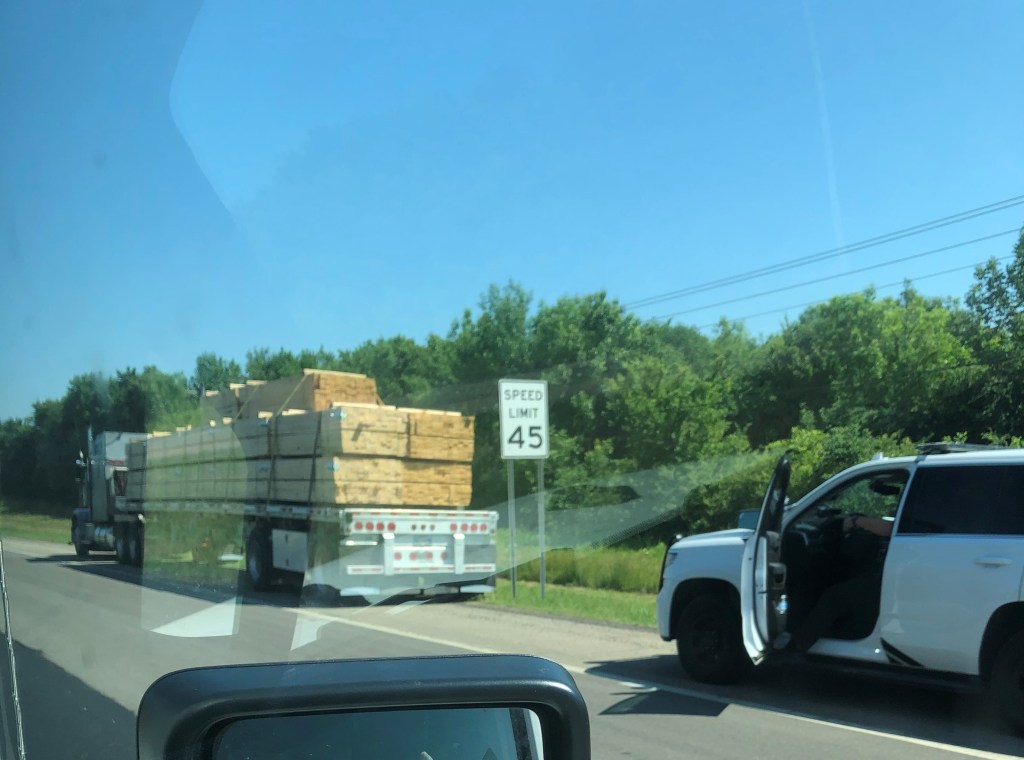
As I took off to the grocery last Saturday I turned onto the highway and looked down to set my cruise control.  I looked up as I crested the hill in time to see a patrol car sitting along the road.   As I looked in my rearview and wondered how long it would take to catch a speeder, I saw his lights flash as he pulled someone over.   I turned back to the road and noticed another patrol car just ahead.  Again, just after I passed his lights flashed and another car was pulled over.  In the next mile I saw two more sheriff cars, and one of them had also stopped a speeder.  On my way home I saw another had someone pulled over.  A mile passing the four cars searching for speeders, I passed a car broken down at the side of the road and the driver stranded.  I wondered if it might have been better to focus on “serve.”

Thoughts:  I worked as a security guard when I lived in Berkeley.  We had a constant stream of traffic coming onto our grounds at night to sleep.  My job was to ask them to move on.  While I never made one, I always wanted to make a tee shirt with our logo and the words, “To Harass and Badger” circling around the shield.  The Bureau of Justice web site indicates the most frequent interaction with police is from a traffic stop, and Black people are more likely than whites to be targeted for investigatory stops that have nothing to do with driving (to search for drugs or check for warrants).  These are inherently tense situations that result in a higher proportion of deadly shootings involving Black drivers.  If unarmed persons conducted the stop or cameras captured and issued tickets these situations would be far less confrontational.  That might allow the police time to provide protection.  Do the work.  Change is coming and it starts with you.

Profiling

June 4, 2021

When I went out to check on my bird feeders this week, I found one of them had been robbed.  This was a hanging suet feeder that had a new chunk of a berry and corn mix.  When I saw the cage open, I assumed the wind had knocked it open and the cake had fallen to the ground.  When I looked closer, I found the entire cake was missing.  I was also skeptical the wind could have opened the cage.  I have had it for over a year, and it had never happened before.  That made me think it was something large enough to carry the five-by-five-inch cake off, or at least to take it in large chunks.  It also needed to be an animal who liked suet cakes, or at least what was inside of them.  While I am not sure who the culprit was, I believe I can blame it on one of my squirrels.  I was profiling them as the usual suspect.

When I went to the ACLU website, I found that Racial Profiling refers to the discriminatory practice by law enforcement officials of targeting individuals for suspicion of crime based on the individual’s race, ethnicity, religion, or national origin.  The criminal profiling generally practiced by police is the reliance on a group of characteristics they believe to be associated with crime.  Examples of racial profiling are the use of race to determine which drivers to stop for minor traffic violations (referred to as “driving while black or brown”), or the use of race to determine which pedestrians to search for contraband.  Most persons targeted by profiling walk away with a ticket, but too often the result can be death. 

I also found and article where the New York Times reviewed files of INS raids and found profiling to be prevalent in department reports released as part of the settlement of a garment workers union selective enforcement suit filed against the agency in New York City.  The settlement included a summary that Latinos were 96 percent of the 2,907 people arrested in the 187 worksite raids carried out by the INS in the district.  This was far greater than their representation in the city’s population, legal or illegal.  This occurred even where the INS acknowledged that half the workers were not Latino but Asian, including undocumented immigrants.  Undocumented workers were discovered and arrested in all but a few of the reviewed raids, but nearly all arrested were Latino.  Since it is illegal to hire undocumented workers, I always wonder why the business is rarely targeted?

Thoughts:  I find it interesting how quickly I default to my squirrels as the cause of any mayhem that happens in my back yard.  Since I did not see it happen and I have no evidence of who knocked the suet out of the feeder and then ran off with it, I will never really know.  That leaves me with conjecture, and when I assume I am profiling the animals in my yard.  Profiling my animals will not result in adverse effects toward them.  I have placed special squirrel food in one of the feeders and although I sometimes grimace when either the squirrels or the grackles invade the feeders, I generally leave them alone.  Studies have found our attitude about a person or group of individuals greatly alter our response.  When we assume someone is guilty of a crime it does not make them guilty.  Neither does assuming they are going to be violent make them violent.  However, it does affect the response.  While profiling makes our response easier, it rarely works well for the one being profiled.  Do the work.  Change is coming and it starts with you.
Roots

June 3, 2021

The only history course I took as an undergrad was on farming technology.  I have always been interested in manufacturing and machinery and needed another liberal arts course, so this seemed like a no brainer.  The course covered the development from threshers to combines and the steel plow by John Deere in 1869.  The steel plow was the implement that transformed the central plains from the Great American Desert to the breadbasket of the world.  The other reason I took the course was because my family came from an agricultural background, and I thought this might help me understand what they faced when moving to rural Kansas.  This was a way to understand my roots.

When I checked an online photo reference on the millet plants I was growing along the back fence (that were run over by the mower), it identified the plant as Durham Wheat.   Durum wheat (Triticum durum or Triticum turgidum subsp. durum) is also called pasta wheat or macaroni wheat.  It is the second most cultivated species of wheat after common wheat, although it represents only 5% to 8% of global wheat production.  It was developed by artificial selection of the domesticated emmer wheat strains grown in Central Europe and the Near East around 7000 BC.  This wheat formed the roots of much of civilization.

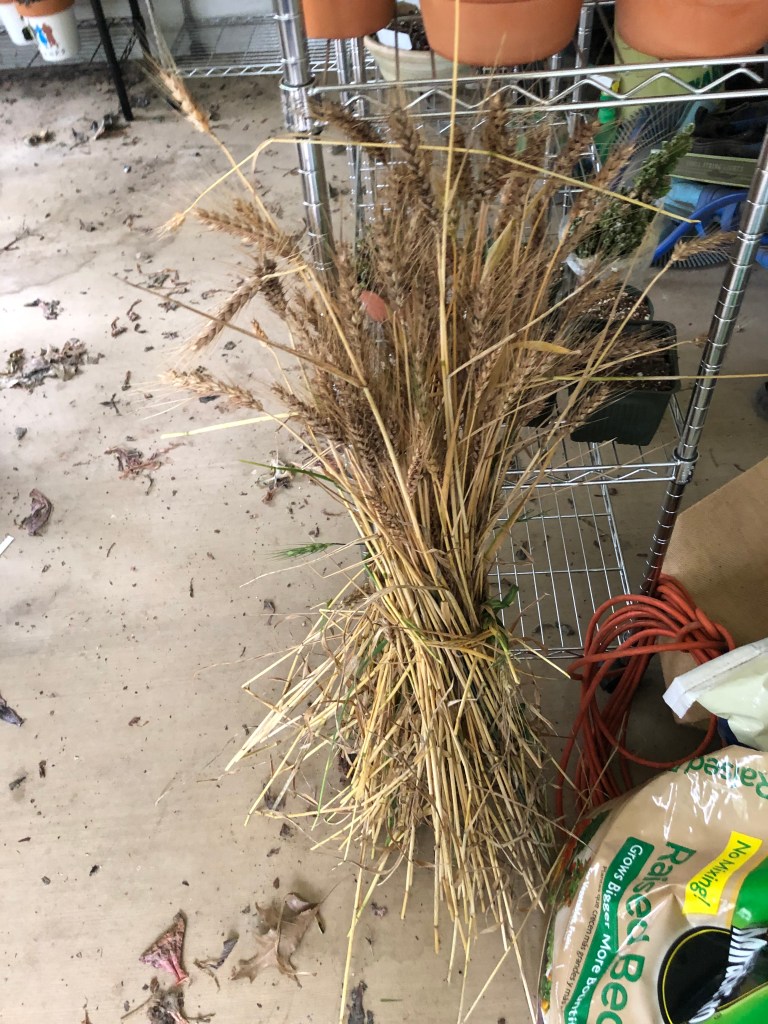
While I had thought the plants growing along the fence looked like wheat, when I checked the package ingredients it did not list wheat as an ingredient, only millet.  This showed I was a bit removed from my roots. Yesterday I decided to try another process that could take me closer to my agricultural roots.  I harvested the grain, tied it together in a shock, and placed it on the screened porch to dry.  My hope is to be able to thresh the rain and then again feed it to the birds who had pitched it out of the feeder in the first place.  I felt while it might help me connect to the roots of my ancestors, it would also help the birds connect to the grain they had rejected.  It could happen, right?

Thoughts:  I was part of an archeological survey on the high mesas of Utah when it began to snow.  We stopped and huddled together for warmth while we waited for the truck to arrive to pick us up.  I had read stories on my Kansas roots about the early settlers having no wood on the prairie and instead burned the buffalo chips (read poop) that littered the landscape.  Since the mesa was also a pasture, I suggested we collect dried cow chips and burn them for warmth.  They did not burn well and smelled horrendous.  I was glad this was a part of my roots I did not have to live with.  Every time I think how bad I have it, I remember things have been worse in the past.  The Influenza epidemic of 1918 and 1919 never had a vaccine to bring resolution.  It is estimated there were 50 million deaths worldwide with about 675,000 occurring in the US.  One hundred years later, there are those who choose to refuse to get the vaccine.  Follow the science.  Change is coming and it starts with you.