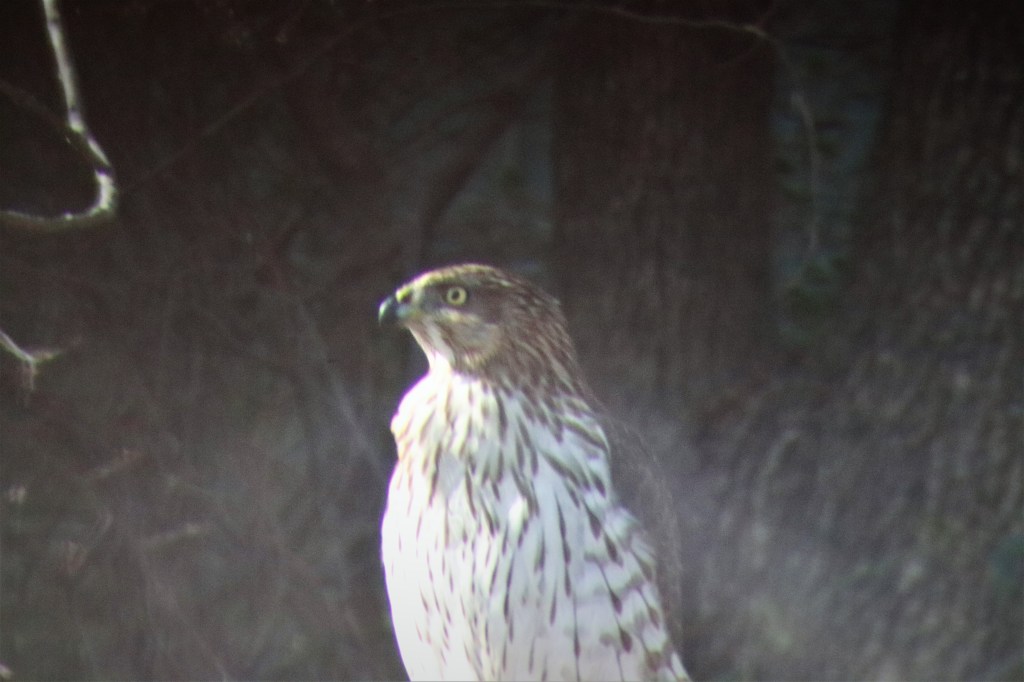
Tinsel

December 25, 2020

While I still enjoy the festivities around Christmas, I think what makes it special is seeing it through the eyes of a child.  My favorite memories of Christmas revolve around either my childhood or the times spent with my own son as a child.  We always had a real tree growing up and saved our ornaments and tinsel from year to year.  I recall several years that was what I gave my parents, either an ornament or a small nativity to go under the tree.  Tinsel was the big thing for my mom.  When we got old enough, we were “allowed” to help put the tinsel on the tree.  This was a laborious single strand at a time task.  After Christmas it came off the same way and was placed back in its box, ready to be used the next year.

When I had my own family, Alex and I would spend several nights preparing the tree.  We always had a real tree and would only adorn it with ornaments we made ourselves.  These involved hours of DIY projects that filled the weeks before Christmas.  One of my favorites (but tedious) was stringing popcorn and cranberries onto long ropes to be draped across the tree.  I eventually learned to tie knots in the thread so when the line inevitably broke, we did not lose the whole strand.  We also hung oranges with cloves stuck in them to produce a nice citrus/clove smell that filled the house. I remember several years we made construction paper chains of alternating red and green links.  Once Alex was in school, we had the addition of the “art” projects that hung proudly among the rest.  It was never about what the tree looked like.  It was about spending time together.

When Alex no longer lived with me, I quit decorating a tree.  I still liked the natural trees better than artificial.  The joy of decorating a tree became more like a waste of time and money without the camaraderie created by decorating together.  As I got older, I again began to decorate the inside of my house for the Christmas parties I would host.  This initially included a tree, but later I came up with an alternative, a Christmas tree cactus.  This began as a barrel cactus wrapped in a small string of lights.  I also found tiny Christmas balls to hang from the spines.  My Christmas cactus was another of the casualties with my move to Kansas.  Sadly, it did not survive the first winter. 

Thoughts:  My childhood memories are one of the things that allow me to relate so well to the tree decorating scene in, “It’s a Wonderful Life.”  As George wallows in sorrow, little Pete puts tinsel on his head.  My mom would have been aghast as he put clumps of strands on his dad’s head rather than placing them one at a time.  I hope you have good memories of Christmas’ past and are finding new ways to celebrate socially distanced this year.  Melissa and I are exploring ways to spend time with family through media even while staying apart.  I wish you all a Merry Christmas!  Change is coming and it starts with you.

Claus

December 24, 2020

I was notified on our community calendar that Santa and Mrs. Claus were scheduled to make a preview trip through our subdivision to make sure they had the route down for tonight.  Obviously, the sleigh only works on Christmas Eve, so they were forced to find alternative transportation.  In this case it was a cobalt blue roadster.  While it was not being pulled by the eight tiny reindeer (or even Rudolph), it seemed the 300 horses were doing just fine.  Since this is 2020, the ride was properly socially distanced.

Santa Claus can be traced back hundreds of years to a monk named St. Nicholas.  It is believed that Nicholas was born sometime around 280 CE in Patara, near Myra in modern-day Turkey.  Nicholas was greatly admired for his piety and kindness.  It is said he gave away all his inherited wealth and traveled the countryside helping the poor and sick.  One of the best-known St. Nicholas stories is the time he saved three poor sisters from being sold into slavery or prostitution by their father by providing them with a dowry so that they could be married.  Over the years, Nicholas’s popularity spread, and he became known as the protector of children and sailors.  His feast day is celebrated on the anniversary of his death, December 6th.  This was traditionally considered a lucky day to make large purchases or to get married.

Skipping forward 1800 years brought me to a question I have grappled with since my youth.   How does Santa make it around the world in just one night?  I immediately went to the source for such an important question.  “Although no one may ever know for sure just how Santa operates, we at HowStuffWorks have what we think are the most logical explanations for how the big guy accomplishes all that he does: science and technology.”  They went on to conclude Santa has mastered the power of Antimatter.  That means Santa has built a Stardust Antimatter Propulsion Engine.  This device would allow Santa to deliver toys around the world in one night and be back to the North Pole in time for a Christmas Day feast.  As impossible as this may sound, remember, it is always night somewhere, so Santa has a lot more time than just eight hours.

Thoughts:  The North American Aerospace Defense Command (NORAD) is a military organization run by both the United States and Canada.  Its job is to monitor all possible aerial attacks coming into North America.  NORAD is also the agency that tracks Santa arriving in North America on Christmas Eve.  This began in 1955 when Sears department store mistakenly listed Santa’s phone number as the Continental Air Defense Command (CONAD) operations hotline.  The tradition was passed to NORAD when it formed in 1958.      You can still call, and they even provide a mobile app.  Do the work.  Follow the science?  Change is coming and it starts with you.
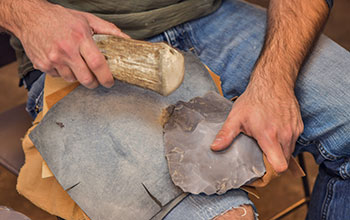
Fog

December 23, 2020

I was driving north toward the river earlier this week and encountered a bank of fog stretching across the road.  As I continued the fog lifted and the road was clear.  Then after crossing the river the fog returned, again lifting as I moved further from the water.  What I realized was the fog was being caused by temperature differences between the land, air, and water.  Fog develops when warm air collides with cold air and water particles are formed.  This is the same thing that causes clouds in the sky.  My fog came on either side of the river, but the temperatures were not right to allow fog on the river itself.

The Wasatch Mountains have some of the finest powder skiing in the world and there were four resorts within 45 minutes of my house.  The first year I learned to ski my Brother-in-Law came to Utah and I took him (or did he take me?) on four straight days of skiing.  He only skied black (expert) runs and not being willing to be left behind I followed.  On our last day it was so windy they closed the lift after we got to the top.  He took off and then vanished into the fog that was twenty feet below us.  I hesitated because I did not know what was beneath me.  I finally realized whatever was there, I did not have a choice.  This was the only way down.  I pointed my skis down the hill and took off into the fog.  The 15-degree slope at the top of the fog lasted about 100 yards and then sloped into a nice gradual bowl.

For the last six months we have been using a sanitizing fogger to clean our building over the weekend.  We were running low on the cans of foggers and tried for several weeks to find another supply.  We finally did and the foggers arrived a week later.  A problem was discovered when we opened the new box when the old one ran out.  These were not foggers; they were aerosol cans of disinfectant.  I only found out about the mix-up days later.  While the aerosols are not as convenient as the foggers, they contain the same ingredients and do the same job.  I was only cautious because it was different.

Thoughts:  And now, the rest of the story (ala Paul Harvey).  The fog lessened so I could at least see when I made it to the bowl.  What I saw was a dense line of trees immediately in front of me.  I was going too fast when I hit the tree line and cut too close to a large tree and got sucked into the powder drift at its base.  The drift powder blew up around me just as lighting flashed across the sky, followed by dead calm.  It was one of the most amazing sights I have ever witnessed as the light reflected through the fog.  If I had not faced my fear and ventured into the unknown, I would not have witnessed this amazing sight.  We need to do the same as we approach 2021.  The new year will not make everything magically go away, but we do not have to live in fear.  If we practice the CDC guidelines, we can still create amazing experiences.  Do the work.  Follow the science. Change is coming and it starts with you.

Solstice

December 22, 2020

Yesterday I was able to witness an 800-year event in the night sky.  This was the arrival of the Christmas Star, or the proximity of Jupiter and Saturn.  While this is not actually a star, the two planets are close enough together to appear as a double-planet or as shown in my picture, a single bright light.  The term “Christmas Star” is applied because during 2020 this event happens in conjunction with the Winter Solstice and Christmas.  “Alignments between these two planets are rather rare, occurring once every 20 years or so, but this conjunction is exceptionally rare because of how close the planets will appear to one another,” says Patrick Hartigan, a professor of physics and astronomy at Rice University.  “You’d have to go all the way back to just before dawn on March 4, 1226, to see a closer alignment between these objects visible in the night sky.”  Chock up another anomaly to 2020.

One of the areas I dreamed of making my expertise in graduate school was Archeoastronomy.  I searched through the libraries (there was no online way back when) and read every book and paper on the subject I could find.  Archeoastronomy is the study of how people in the past understood the phenomena in the sky, and how they used these phenomena in their cultures.  The study uses strategies from archaeology, anthropology, astronomy, statistics and probability, and history.  This worked well with my eclectic understanding of how to interpret the past (present and future?).  While people have dabbled in this field for hundreds of years, it only became recognized during the 1970’s, and still struggles to be recognized as legitimate.  Maybe that was another reason I liked it.

The winter solstice in the Northern Hemisphere occurs usually on December 21st or 22nd and is traditionally observed at sundown on the 21st. While the winter solstice itself lasts only a moment, the term generally refers to the day on which it occurs. Traditionally, the winter solstice is seen as the middle of winter, but today many calendars see it as the beginning of winter.  Since prehistory, the winter solstice has been a significant time of year and has been marked by festivals and rituals.  It marked the symbolic death and rebirth of the Sun.  The seasonal significance of the winter solstice is in the reversal of the gradual lengthening of nights and shortening of days.  This was an important observance for people who relied on the sun to provide warmth and crops.  The solstice celebration is behind why we now celebrate Christmas at the end of December.

Thoughts:  One of my favorite stories from archeoastronomy concerns Chichen Itza in the Yucatán Peninsula.   One of the buildings was called El Caracol (‘snail’ in Spanish), because of the spiral staircase inside the tower.  This is also called the Mayan Observatory.  Several teams of astronomers and archeologists used computers to define the astronomical observations that were made possible by numerous alignments of openings in the building walls.  While I do not doubt the authenticity of many of these observations, the building was “restored” (read rebuilt) during the 1920’s.  This is another example of why as we try to prove our point, we need to understand the facts behind what we say.  Follow the science.  Change is coming and it starts with you.
Earring

December 21, 2020

One of the problems I have found with wearing a mask is getting it tangled in my earring.  I started wearing a pierced earring in the 1980’s.  I stopped wearing the earring when I got to Kansas.  I was walking down the hall with a friend and she gave me an odd look, then asking, “Do you have an earring?”  When I said I did, she suggested perhaps I “should not wear it here.”  When we got married, Melissa and I bought matching diamonds when we were on our honeymoon in Hawaii.  I would wear it for Melissa when we were on vacations but did not wear it other times.

I started wearing my earring in Utah and continued to wear it when I moved to California.  I was living in the Bay Area, which along with Seattle is known as a gourmet coffee center.  I was always skeptical of the coffee I was served in other areas as I had become a coffee snob.  I remember going to a local favorite Kansas restaurant of my family and asking what brand of coffee they were serving.  My aunt apologetically suggested to the waitress that “it was a California thing.”  The waitress looked at me and touching my earring said, “I bet this is a California thing as well.”  

I am sure any who wear pierced earrings (or even clip-ons) have had the same problems I have had.   The diamonds we purchased in Hawaii were inexpensive cosmetic ones.  When I retired Melissa bought me a real one to wear.  I wore it for over two years without problems.  That was before the masks.  I do not think I had gone two weeks before I took my earring off along with my mask.  I looked all over my work office but could never find a trace.  I never did find it. 

Thoughts:  After coming home from work last week I took off my mask and put it in the hamper as usual.  After lunch I went back to my office and rubbed my ear, finding the earring was gone.  I looked everywhere I had been but to no avail.  I even went so far as sweeping the floor to see if I could find it.  Again, no luck.  On Saturday Melissa was wondering what was wrong with her shoe, as it had felt uncomfortable for several days.  When she looked, she found my earring stuck in the crepe sole of the shoe.  She had been walking on it for three days.  It seems there are good reasons to be uncomfortable.  Being uncomfortable is what allowed Melissa to find my earring.  Being uncomfortable wearing a mask can help stop the spread of the virus.  Just be careful of your earrings.  Follow the science.  Change is coming and it starts with you.
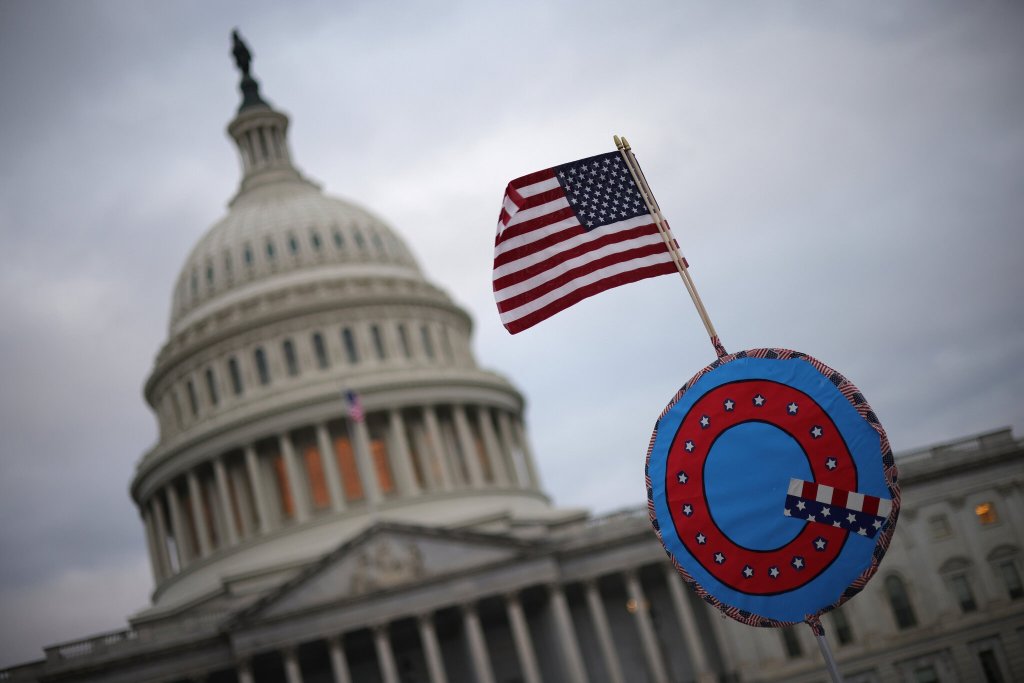
Interior

December 19, 2020

President Elect Biden has continued to make historic selections for his cabinet positions.  Today it was reported that Rep. Deb Haaland (D-N.M.) was nominated to fill the position Secretary of the Interior, marking a turning point for the U.S. government’s relationship with the nation’s Indigenous peoples.  In selecting Haaland, a member of Pueblo of Laguna, Biden placed a descendant of the original people to populate North America atop a 171-year-old institution that has often had a troubled relationship with the nation’s 574 federally recognized tribes.  Three divisions of Interior have a tremendous impact on Indian Country, including the Bureau of Indian Affairs, the Bureau of Indian Education, and the Bureau of Trust Funds Administration, which manages billions held in trust by the U.S. government.

I was able to see some of this “trouble” when I worked with the Native Tribes in Utah.   There are eight sovereign tribal governments in Utah:  Confederated Tribes of the Goshute Reservation, Navajo Nation, Northwestern Band of Shoshone Nation, Paiute Indian Tribe of Utah, San Juan Southern Paiute, Skull Valley Band of Goshute, Ute Mountain Ute Tribe, and the Ute Indian Tribe.  One case that stuck out was with the Ute Mountain Ute Tribe.  When I was there during the 1980’s the Corps of Engineers had constructed 12 different reservoirs in the Wasatch Mountains to store and divert water to the Colorado River to be used in California.  The original agreement specified this diversion would be compensated for by building three dams to send water to the Ute Reservation.  Even as I worked on additional reservoirs to store California water, none had been built or even started for the Utes.

Haaland was born in Arizona to a Native American mother who served in the Navy and a Norwegian American father who was an active-duty Marine.  Haaland bounced between 13 public schools as the family changed military bases.  At 15, she worked at a bakery, and later attended law school with the help of student loans and food stamps, occasionally experiencing homelessness as a single mother.  Now after serving a single term in Congress, Haaland will oversee a department that manages roughly one-fifth of land in the U.S.  While New Mexico is one of the top oil-and gas-producing states, Haaland has pledged to transform the department from a champion of fossil fuel development.  Instead, the focus will be on promoting renewable energy and policies to mitigate climate change.

Thoughts:  During the 1970’s the Keep America Beautiful campaign featured Iron Eyes Cody, the actor who played an Indian shedding a tear at the sight of a littered American landscape.  This became one of television’s best-known and most-honored commercials.  Cody had roles in nearly 100 movies, including ”Sitting Bull,” ”Paleface” and ”A Man Called Horse,” as well as guest appearances on television programs like ”Bonanza,” ”Gunsmoke” and ”Rawhide.”  Hopefully Haaland will be able to shed a tear seeing an opposite landscape, free from garbage, smoke, and other pollutants.  Follow the science.  Change is coming and it starts with you.
Classy

December 18, 2020

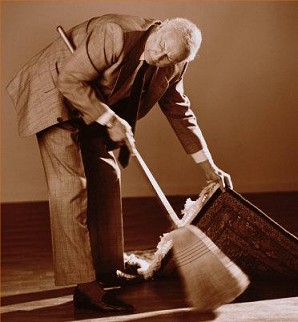
Demolition Man is a 1993 American science fiction action film starring Sylvester Stallone, Wesley Snipes, and Sandra Bullock.  Stallone is the risk-taking police officer and Snipes the evil crime lord.  Both have been cryogenically frozen for crimes in 1996 and are thawed in 2032.  The dystopian society has changed, and all crime has seemingly been eliminated.  The story alludes to many other works including Aldous Huxley’s 1932 dystopian novel Brave New World and H. G. Wells’ 1899 The Sleeper Awakes.  The film was released in the United States in October 1993 and earned a total of $159 million.  One of the humorous side notes was how in the future Taco Bell is the classy restaurant that everyone wants to go for sit down dining.

While the Taco Bell reference was supposed to be tongue-in-cheek in 1993, it may be closer to reality than you think.  The pandemic is splitting the restaurant industry in two.  Big, well capitalized chains like Chipotle and Domino’s Pizza are gaining customers and adding stores while tens of thousands of local eateries go bust.  About 17% (110,000) of America’s restaurants have already permanently closed this year.  One survey of open restaurants found a 36% drop in revenue and 83% expects sales to be “even worse” over the next three months, and 37% of restaurants said it is “unlikely” they will be open in six months from now without additional government help.

While that is true for small locally owned restaurants, the reverse is true for the large national chains.  Larger operators generally have the advantages of more capital, more leverage on lease terms, more physical space, more geographic flexibility and prior expertise with drive-throughs, carryout, and delivery.  Chipotle more than tripled its online business sales in the second quarter while Domino’s, Papa John’s International Inc. and Wingstop Inc. all reported double-digit same-store sales increases in the third quarter.  McDonald’s also said U.S. same-store sales rose 4.6% in the third quarter.  That included a rise in the low double digits during September, its best monthly performance in nearly a decade.  Just as with household income, the food divide continues to widen.

Thoughts:  With indoor seating either banned or limited, local restaurants have been forced to switch to curbside or drive thru to stay afloat.  Most of these restaurants do not have suitable locations for drive thru and curbside still requires interaction.  Add to this the inconvenience of either calling ahead or sitting in the parking lot waiting for a meal, then driving home and (usually) eating cold food.  While that works with gazpacho, most entrees are not the same.  When it comes to my favorite classy restaurants, I go there because they are not “fast food.”  Darwin might call this survival of the fittest.  The key is finding rapid ways to adapt.  Follow the science.  Change is coming and it starts with you.

Insecurity

December 17, 2020

As 2019 ended we received exciting news concerning both income and poverty rate in the US.  Income had grown and poverty had plummeted as a result.  The official poverty rate fell to a record low of 10.5 percent in 2019.  Over 4 million people were lifted out of poverty between 2018 and 2019 for a 1.3 percentage point decrease.  This was the largest reduction in poverty in over 50 years.  Even more encouraging was minority groups led the way in poverty alleviation.  Compared to the overall poverty rate reduction of 1.3 percentage points, black poverty fell by 2.0 percentage points, Hispanic poverty fell by 1.8 percentage points, and Asian poverty fell by 2.8 percentage points.  Notably, the black poverty rate fell below 20 percent for the first time in history.

That was then, this is now.  Statistics for 2020 indicate over 8 million people have slipped into poverty since May, or an average of over 1 million per month.  The reality is more staggering, as 6 million of these people have dropped into poverty during the last 3 months.  This is more concerning when you consider an estimated 4 million people came out of poverty in response to the stimulus checks received in May.  This coincides with the 885,000 claims for unemployment last week, up from 862,000 the previous week.  As we have learned, this does not include those who have given up or are no longer receiving assistance from government agencies.  Most of these workers are BIPOC.   

Other studies have found that Black and Latino people are more than twice as likely as whites to live below the poverty level (currently $26,200 for a family of four) and child poverty has risen an additional 2.5 million just since May.  Both minority groups disproportionately work in industries hard-hit by the recession and are prone to layoffs.  Blacks disproportionately live in Southern states where benefits are low, and some Latinos are disqualified because they lack legal status.  Many employers are still slashing jobs as the pandemic forces more business restrictions and leads many consumers to stay home.

Thoughts:  During the presidential debates Andrew Yang suggested a guaranteed income of $1,000 a month for every single adult in America.  Yang stated, “Putting money into peoples’ hands and keeping it there wouold be a perpetual boost and support to job growth and the economy.”  That means every couple with two children would be guaranteed to live below the poverty level.  While many defamed the idea as “socialism,” the only thing that has made an impact on the poverty level this year has been a one-time stimulus of $1,200 per adult.  Economic insecurity is the force driving much of the civil and political unrest in America.  It must be addressed.  Do the work.  Change is coming and it starts with you.
Bats

December 16, 2020

I came across an AP article in the newspaper that addressed the steps being taken to avert the next pandemic.  While the article focused on work being done in Brazil, it said similar studies were being done around the world.  Despite what some may claim, covid-19 appears to have originated in the open-air flesh markets of Wuhan, China, as the virus crossed from a bat to humans.  Studies on the spread of viruses from the five most common mammalian species found viruses spread from bats are the most virulent in humans.  The researchers begin by trapping representatives of the over 1,400 species of bats and checking to identify other viruses that may be highly contagious or lethal in humans.

My son Alex and I liked to hike and explore the wilderness canyons of Southeastern Utah.  While it was usually hot during the day, the air would cool down at night.  That would make for a perfect sleep lying on the rocks above the dry stream beds.  The cooler temps also brought out an array of night flying insects.  When we first began these trips, I was puzzled by the zipping noises we would hear.  It would be zzzt, zzzt, zzzt, all night long.  I finally realized this was the sound of bats feeding on the abundant insects.  Although we never saw a bat during the day, they were abundant at night.

Another reason to study bats is because of their highly developed immune system.  It seems the ability to recover from the stress caused by flying also gives them protection against pathogens.  It is hoped by studding the bat immune system scientists will learn how bats are able to shed the viruses, providing hints for future medical treatment strategies.  Examining the various species of bats can also identify existing viruses that may be spread by the creatures.  This could give us a head start on the next pandemic.

Thoughts:  An aside to the story on bat pathogens was the reason for increased human interaction with bats.  The increasing destruction and fragmentation of wild habitats across the world are forcing all wildlife into proximity with humans.  This is especially true in the biodiverse areas like tropical forests.  It has long been known that many cures to human ailments are available in these biomes.  Apparently, that goes both ways and pathogens deadly to humans are present as well.  Like most things, more research is needed to shift the good and the bad.  Sadly, funding tends to wax and wane depending on our sense of urgency.  We have been shown this is a world-wide problem.  It is time to launch a world-wide solution.  Follow the science.  Change is coming and it starts with you.

Shields

December 15, 2020

I have been so concerned with protecting Melissa’s succulents that I forgot about the annual protections I needed to be taking care of.  While the River Valley does not have many days below freezing, we do get a few.  Some nights even drop to the point of a hard freeze.  We have had several nights of sub-freezing and even temperatures into the low 20F.  While I was checking my patio beds, I noticed the hoses still connected to the faucet.  This is a good way to freeze the water left in the pipes.  I quickly removed the hoses from the front and back of the house and placed the Styrofoam shields over the faucets to provide protection.

While I have often heard (and obviously used) the term “hard freeze,” I have not known the true definition of the term until today.  A frost refers to the conditions that allow a layer of ice crystals to form when water vapor condenses and freezes without first becoming dew.  Frost may happen when the “surface” air temperature (officially measured at 4 or so feet above ground) is below 36F. (Ground temperature, meanwhile, may be below 32F, and below frost point.) Various factors must be present, such as clear skies, moisture, and calm or light winds.

A freeze can happen when the surface air temperature falls to 32F or below, and frost may or may not form.  A light freeze (between 32F and 29F) can kill vulnerable plants.  A moderate or “hard” freeze (between 28F and 25F) can cause wide destruction to most plants.  A severe or “killing” freeze (24F and below), causes heavy damage to most plants. Many plants can survive a brief frost, but very few can survive a severe freeze.  That is true for water faucets as well.

Thoughts:  When I left my house for a week my first winter back in Kansas, I was vigilant to turn off the heat and water to save energy.  When I returned I walked in on 45F.  I forgot that Kansas winters are colder than the Bay Area.  I turned everything back on and was glad it did not kill any of my plants.  The next time I turned the heat down but not off.  Shielding items (or people) from harm varies with what is being protected.  When I placed the shields over my faucets, I was trying to shield them from the freezing effect of the night air.  When I wear my mask shield, I am trying to protect my neighbors from exposure to the virus.  They have both been proven effective.  Follow the science.  Change is coming and it starts with you.