Bluetail

December 18, 2023

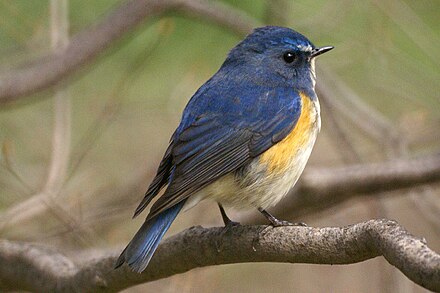
Tucked into the back section of my local newspaper was a USA Today article on the appearance of a new bird along the eastern coast of the US.  The rare bird popped up in the feeders outside of birder Harry Riker’s house in Ocean County, New Jersey.  Riker did not recognize the species, but took a photograph and had no luck finding it on his birding app.  When he posted to his local bird watching community on Facebook one of the members identified the bird as a red-flanked bluetail.  Cornell Lab of Ornithology says the birds are typically found in northern Europe and Asia.  Only a few confirmed reports of the bird have been made within the US, and those were all in the western half of the country.  Jenna Curtis, a bird expert for Cornell’s eBird.org website, confirmed Riker’s photographs marked “the first-ever confirmed red-flanked bluetail in the eastern US. . . The next nearest report was a bird in Laramie, Wyoming in November 2019.”  Since the appearance of the bluetail outside of Riker’s house, bird lovers have flocked to his community from across the country to catch a glimpse.

When I went online, I found the red-flanked bluetail (Tarsiger cyanurus), also known as the orange-flanked bush-robin, is a small passerine (Order of perching birds) bird that was formerly classed as a member of the thrush family (Turdidae) but is now classified as an Old World flycatcher (Muscicapidae).  The genus name (Tarsiger) is from Ancient Greek tarsos (“flat of the foot”) and Latin gerere (“to carry”).  The species name (cyanurus) is derived from Greek kuanos (‘dark-blue”) and oura (“tail”).  The small bird is from 5 to 5 1/2 inches (13–14 cm) long and .35 to .63 ounces (10–18 g) in weight, or just slightly smaller than the European robin (Erithacus rubecula).  Both sexes have a blue tail and rump, and orange-red flanks, along with a white throat and greyish-white underparts.  The adult male has additional dark blue upperparts, while females and immature males are plain brown above apart from the blue rump and tail and have dusky breasts.  Bluetail are insectivores, flying from perch to perch and catching insects in the air or on the ground.   

The red-flanked bluetail is a migratory species breeding in mixed coniferous forests with undergrowth in northern Asia and northeastern Europe, from Finland east across Siberia to Kamchatka, and south to Japan.  It mainly winters in southeastern Asia, in the Indian Subcontinent, the Himalayas, Taiwan, and northern Indochina.  The breeding range is slowly expanding westwards through Finland, and it is a rare but increasing vagrant to Great Britain.  There have been a few sighted in North America, mostly in western Alaska as well as one on San Clemente Island off the southern California coast, even one overwintering on the Central California coast in Santa Cruz, California, in 2023.  Sightings now include the one spotted in New Jersey this December.  According to the American Birding Association, it may be impossible to determine which direction the bird in Rikers’ yard came from, “as the species is a rare but increasing vagrant to western Europe with several records now in Iceland, including two earlier this fall.”  Apparently, this bird species likes to get around.

Thoughts:  I was amused by Riker’s saying bird lovers are now flocking to his community to try and catch a glimpse of the rare red-flanked bluetail and are all over the neighborhood.  “We’re all retired and we’re really enjoying it. … This is good excitement.”  Over the holidays it is easy to get caught up in the hustle and bustle and forget to take time to step back and enjoy the changing season.  Pleasure can be found most anywhere, from the birders watching the birds to the people watching the birders.  Take time to enjoy your surroundings.  Act for all.  Change is coming and it starts with you.

Fritta

December 17, 2023

Most days I practice intermittent fasting and skip eating until afternoon.  The idea is to designate 16 hours of fast followed by an 8 hour eating window.  This worked initially as a diet method, but I have not continued to lose weight.  I have continued the practice regardless and after three years it is now part of my daily habit.  The only problem I have with this routine is the foods generally served at breakfast are some of my favorite dishes.  I have compromised and sometimes make a breakfast entrée for lunch (or dinner).  Saturdays are the exception, and I generally fix a mid-morning breakfast.  I was sidetracked yesterday and around noon Melissa said she was going to reheat the chicken enchiladas I had made the night before.  I said OK but had been thinking about making another breakfast meal.  When I began putting the dish together Melissa changed her mind and decided she would also like to eat my frittata.

When I went online, I found Frittata is an egg-based Italian dish like an omelet, a crustless quiche, or even scrambled eggs that is enhanced with additional ingredients such as meats, cheeses, or vegetables.  Frittata is derived from the Italian word friggere and roughly means “fried”.  This was originally a general term for cooking eggs in a frying pan (skillet) and referred to anything from a fried egg to a conventional omelet to an Italian version of the Spanish omelet that was made with fried potato.  Outside Italy, frittata was the equivalent to “omelet” until at least the mid-1950s.  While British chef Delia Smith describes the frittata as “Italy’s version of an open-face omelet”, there are four key differences.  Additional ingredients are added to the beaten egg mixture while the eggs are still raw and not laid over the mostly cooked eggs which are then folded.  The eggs are often beaten vigorously to incorporate more air and create a fluffier result.  The mixture is cooked over a very low heat for at least 5 minutes (typically 15) to allow the underside to set up but the top to still be runny.  Finally, the partially cooked frittata is not folded like an omelet but is instead either turned over in full or briefly set under a grill or baked for 5 minutes.

While that may be the Italian way to make a frittata, it is not how I prepare the dish (surprised?).  I do not fry my dish at all, and instead bake it in the oven.  I am not alone in this method as many of the frittata recipes in the US use a similar process.  My frittata started with a base of shredded potatoes in a casserole dish.  I then diced onions and peppers and scattered them over the potatoes.  The egg mixture is scrambled along with the preferred meat (crumbled bacon or ham) and pored over vegetables.  A layer of cheese completes the dish, which is baked in the oven at 350 degrees for an hour.  This cooks the potatoes while the cheese protects the eggs from drying out.  While this is different than the recipes I have found, it tastes great.  The Pioneer Woman website states, “Use any ingredients you want!  Mushrooms, leeks, different cheeses, tomatoes, zucchini, squash, bell peppers.  Have fun!”  I will admit, what goes into my frittata often depends on what is available.

Thoughts:  The first frittata I made was for brunch served to 75 alums prior to a graduation ceremony.  I was the director’s assistant, and the school did not have money for catering.  I used a recipe supplied by my boss that had breadcrumbs for the base rather than shredded potatoes.  This egg casserole became the basis for what I now call frittata.  Frittata is not the only US dish that has been changed from its traditional recipe.   Most commercially prepared “traditional” dishes are altered to adhere to the US palate and “ethnic food” in America can be unrecognizable to native diners.  Our favorite Chinese restaurant has two menus, one for Americans and an authentic menu.  This includes many of the same dishes, but they are prepared differently.  We prefer to order from the authentic version.  Act for all.  Change is coming and it starts with you.

Sticker

December 16, 2023

Photo: Joseph DiTomaso

I recently started walking the two dogs together in the hopes that Zena will be able to calm Loki down.  They both get so excited when it is time to walk that I can hardly get their harnesses on as they jump over the top of each other wanting to be first.  Yesterday afternoon I decided to take the kids out for a walk around a local lake.  While the terrain makes it nearly impossible to walk “around” the lake, there are two parking areas/boat ramps, and one of those provides fishing access onto two mowed spits of land extending out into the lake.  That means I can park in the lot, walk several hundred yards (200 odd meters) out on the first, and then walk back to the lot.  Once there we stroll down the boat ramp to let the kids sniff and lap the water.  Then it is out and back a similar distance to the second fishing spit.  We have been closing our walk by circling the large parking lot.  As we walked around the lot, I noticed Loki began to limp and when I checked he had stepped on a sticker.  I removed it and we did not go more than another 20 yards (18 m) when he was limping again.  I never liked stepping on a sticker.

When I went online, I found Burr medic (Medicago polymorpha), also known as California burclover, toothed bur clover, and toothed medick, is a sticker-producing plant.  This herbaceous flowering plant (forb) is an annual broadleaf plant that inhabits agricultural land, roadsides, and other disturbed areas, as well as lawns.  The sticker is native to the Mediterranean basin but is found throughout the world.  New seedlings have seed leaves that are oblong, but the first true leaf is rounded.  Later leaves are tripartite, with a characteristic clover-like shape, appearing alternately on the stems.   The tiny yellow flowers attract small butterflies and other pollinating insects.  Full grown plant stems are up to 2 feet (60 cm) long, and usually sprawl along and/or under the ground.  The weed produces spiky sticker balls after it flowers that eventually dry up and turn brown.  The 0.27 inch (7 mm) seed heads are covered with hooked prickles that cling to the clothing or fur of any species that pass near it and facilitates the geographic spread of the seed capsules.  The plant leaves are good forage for most classes of livestock (except equine), but the stickers (fruit) are prickly.  It is also known to lodge in the paws of any dog (or human!) who steps on it.

As I removed the sticker from Loki’s paw it reminded me of the Aesop Fable about Androcles and the Lion.  Androcles ran away from his master and while wandering in the forest he came upon a Lion moaning and groaning.  Rather than run away Androcles turned back to help him.  The Lion put out his bleeding paw and Androcles removed a large thorn and bound up the paw.  When the lion was able to rise, he began to lick the hand of Androcles like a dog.  Shortly afterwards both Androcles and the Lion were captured, and the slave was sentenced to be thrown to the Lion who had been kept without food.  As soon the Lion was set loose, it bounded towards his intended victim.  The Lion recognized his friend, and again licked his hands like a friendly dog.  When the surprised Emperor heard the story of Androcles and the Lion, they were both set free.  The moral was that gratitude is the sign of noble souls.

Thoughts:  While Loki did not show the gratitude of Aesop’s Lion when I removed the sticker, he did appear to settle down.  That may have been because his foot was still tender after I removed the second sticker, but I prefer to believe it was out of gratitude.  Gratitude is defined as being thankful and having a readiness to show appreciation for and to return kindness.  We all face a sticker or two in life, and for some even greater.  Amid his desperate situation, Androcles took time to help a fellow traveler who stepped on his own sticker.  The Lion did not forget and repaid Androcles with gratitude.  We could all use a little more gratitude.  Act for all.  Change is coming and it starts with you.

Debris

December 11, 2023

Nearly a month ago I came across an article in my local newspaper that reported an astronaut’s tool bag had been lost in space.  The satchel-sized bag slipped away from two astronauts during a rare all female space walk on November 1 as they performed maintenance on the International Space Station (ISS).  No word was issued on what the bag contained, but it was spotted by a Japanese astronomer as it floated over Mount Fuji.  The bag is now catalogued as space junk and given the ID: 58229/1998-067WC.  This is not even the first tool bag to be lost in space.  In November 2008 another female astronaut lost her grip on a backpack sized tool kit while working on the Endeavor.  The US$100,000 tool bag circled the Earth for four months before it plunged into the atmosphere and disintegrated.  It is believed the current tool bag will have the same fate, but for now it is listed as space debris.

When I went online, I found Space debris (also known as space junk, space pollution, and space trash), are defunct human-made objects in space which no longer serve a useful function.  These generally refer to items in Earth orbit and include derelict spacecraft, launch vehicle stages, mission-related debris, and fragmentation debris from the breakup of derelict rocket bodies and spacecraft, still in Earth orbit.  Other examples include fragments from their disintegration, erosion, and collisions, paint flecks, solid liquids expelled from spacecraft, and unburned particles from solid rocket motors.  As of November 2022, the US Space Surveillance Network reported 25,857 artificial objects in orbit above the Earth, including 5,465 operational satellites, and these are just objects large enough to be tracked.  This September the European Space Agency estimated 11,000 tons of objects orbiting the Earth, with 36,500 debris pieces greater than 4 inches (10 cm).  Collisions with debris have become a hazard to spacecraft and even the smallest objects cause damage (like sandblasting).

Space debris began to accumulate in Earth orbit with the first artificial satellite (Sputnik 1) launched in October 1957.  The North American Aerospace Defense Command (NORAD) immediately began compiling a catalog of all known rocket launches and objects reaching orbit.  The database became publicly available in the 1970’s. During the 1980’s NASA and others attempted to limit the growth of space debris.  The ISS uses a type of spaced armor shielding (Whipple shielding) to protect its interior from minor debris, but exterior portions (and solar panels) cannot be easily protected.  In 1989, the ISS panels were predicted to degrade approximately 0.23% in four years due to the “sandblasting” effect of impacts with small orbital debris.  The ISS typically performs an avoidance maneuver if “there is a greater than one-in-10,000 chance of a debris strike”.  There were 16 such maneuvers in the first 15 years the ISS had been in orbit.  By 2019, over 1,400 meteoroid and orbital debris (MMOD) impacts had occurred.

Thoughts:  Space debris is not only a problem on the exterior of the ISS but also on the inside.  Today’s newspaper reported on the tomato that had gone missing in March of this year.  Toward the end of astronaut Frank Rubio’s historic 371 days in orbit he lost a zip-lock bag containing a tomato from the ISS’s space harvest project.  The crew jokingly accused Rubio of eating the fruit, but he was vindicated last Wednesday when they confessed the tomato had been found.  The orbits of debris gradually degrade, and it enters the atmosphere, but not all of it disintegrates.  The spacecraft cemetery (officially the South Pacific Ocean(ic) Uninhabited Area) east of New Zealand is where derelict spacecraft are routinely crashed.  New processes for space debris removal are being developed to reduce the exponential growth of space debris orbiting earth, such as nets and magnetized collecting arms.  It seems it is not enough to just pollute the land.  We also spread our debris in space and the ocean.  Act for all.  Change is coming and it starts with you.
Broomsedge

December 09, 2023

J .Froelich/KUAF

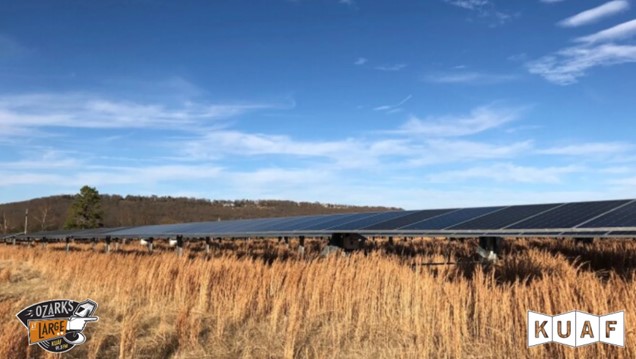
Melissa sent me an article reposted by the Northwest Arkansas Audubon Society describing a project in a local solar field.  The 5-megawatt grid-tied 20-acre solar array was installed four years ago by Today’s Power, Inc., in partnership with Ozarks Electric Cooperative on turf grass pasture owned by the city of Fayetteville.  Turf grass refers to the sod generally used in lawns and is often comprised of tall (Festuca spp.) and fine fescues (Festuca rubra, Festuca ovina, and Festuca trichophylla) or Bermuda grass (Cynodon dactylon).   As Isaac Ogle, who specializes in solar grounds maintenance, walked the solar field he found waist-high broomsedge bluestem.  Ogle’s maintenance company has a goal to plant low growing native plant species under the arrays and knew once the broomsedge was coming up there was no way to get rid of it.  Instead, they embraced it and the native broomsedge has completely overtaken the non-native grass.  Ogle said that compared to turf grass, native grasses on solar fields can boost power generation and provide natural habitat for native creatures.

When I went online, I found broomsedge bluestem (Andropogon virginicus) is a species of grass also known as yellowsedge bluestem and whiskey grass in Australia.  Broomsedge is native to southeastern US and as far north as the Great Lakes.  Broomsedge is a perennial grass forming narrow clumps of stems growing to around 3 feet 3 inches (just under a meter) in height. Its stems and leaves are green when new, then turn purplish to orange and finally straw-colored with age.  The species produces large amounts of seeds small enough to disperse on the wind.  It is an introduced species in California and Hawaii and is an introduced invasive species in Japan and Australia where it takes over pastures and grazing ranges and is less palatable and nutritious to cattle than other grasses.  The grass is successful in a wide range of habitats as it is a prolific seed producer, has a high germination rate and seedling survival rate, and it thrives in poor soils.  The Australian name comes from it being used as packaging for bottles of American whiskey, while the common name comes from use of the straw base to produce handmade brooms in the southeastern US.

Jennifer Ogle is Collections Manager at the University of Arkansas Herbarium, which documents the diversity and distribution of Arkansas plants.  She said native grasslands (like broomsedge) also provide benefits to large-scale solar system ecosystems.  Native grasses and wildflowers occupy much more of the soil profile and can grow up to 4 feet (1.2 m) deep, providing better soil stabilization, less erosion, and better water quality.  Using native plants on solar arrays also benefits pollinators.  Turf grass does not attract pollinators, but a diversity of native wildflowers and grasses will.  Insects also attract birds, reptiles, amphibians, small and even large mammals, and they use the native plants by eating the stems or seeds.  J.D. Willson, a herpetology professor in the Department of Biological Sciences at the University of Arkansas, is part of a research grant examining large-scale solar array habitats.  Willson praises solar development across the US over the past five years to reduce carbon emissions but creating biodiversity along with solar sites has tremendous potential, especially with grassland species. 

Thoughts:  One aspect of my job with the state of Utah was to monitor rehabilitation of mining and fossil fuel extraction sites to help find ways to mitigate the environmental destruction caused by the process.  Audubon pointed out the solar sites not only produced a clean energy source, but novel maintenance of the solar field also enhances output and creates viable grassland ecosystems.  The human thirst for energy can be achievable in a way that creates a win/win.  We just need to think in terms that prioritize the environment along with energy production.  Act for all.  Change is coming and it starts with you.
Nap

December 06, 2023

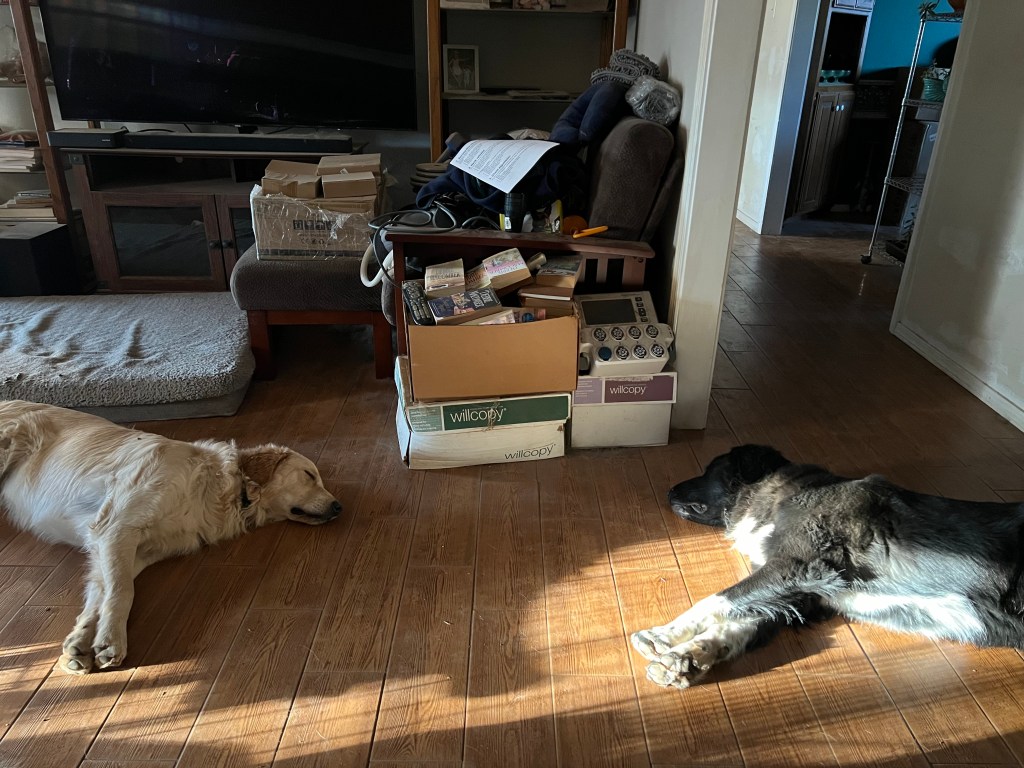
When we first got our dog Zena, I quickly found she seemed to have two speeds: asleep and full bore.  She would play by running around the house or outside around the pool.  This would go on for fifteen to twenty minutes and then she would unexpectantly stop.  This was followed by her lying down and quickly falling asleep.  Zena would spend the next hours lying on her side, occasionally getting up to shift positions or to get on (or off) her dog bed.  Melissa got Loki in part to give Zena a playmate to keep her active.  They do play together (“fighting” and struggling for possession of a “tugga” toy) and run around the house and pool daring the other to chase them or try to take the tug toy away.  However, the favorite way for both dogs to idle the hours away is to take a nap.

When I looked online, I found taking a nap during the day is not only healthy, but also recommended.  Getting healthy sleep is one of Life’s Essential 8, or the key measures for improving and maintaining cardiovascular health as defined by the American Heart Association.  The 8 include eating better, being active, quitting tobacco, managing weight, controlling cholesterol, managing blood sugar, managing blood pressure, and getting healthy sleep.  Better cardiovascular health helps lower the risk for heart disease, stroke, and other major health problems.  Taking an afternoon nap helps in several ways.  First, it increases your alertness and allows you to concentrate on the task.  A nap on the couch helps your memory and can make it easier to recall facts learned earlier that day.  Sleep gives you the ability to learn new skills and to be creative as your brain processes all the information we stuff into it, and a long nap can be like a good night’s sleep.  Finally, a nap may save you money on the coffee and energy drinks you normally use to stay awake.

In many locations taking a nap had been ingrained into the culture.  A siesta (Spanish, “nap”) is a short nap taken in the early afternoon, and often after the midday meal.  This nap is particularly common in warm-weather countries.  The “siesta” can refer to the nap itself, or to a period of the day, generally between 2–5 pm.  This period is used for sleep, as well as leisure, midday meals, or other activities.  Siestas are historically common throughout the Mediterranean and Southern Europe, the Middle East, mainland China, and the Indian subcontinent.  In the US, the UK, and a growing number of other countries, this short sleep has been referred to as a “power nap”, a term coined by Cornell University social psychologist James Maas.  The power nap is called “riposo” in Northern Italy and “pennichella” or “pisolino” in Southern Italy.  My dogs must be taking a power nap because when they are awake, they always seem raring to go (or to eat).

Thoughts:  The timing of sleep in humans depends upon a balance between the need for sleep as a function of the amount of time elapsed since the last adequate sleep episode, and circadian rhythms which determine the ideal timing of a correctly structured and restorative sleep episode (homeostatic sleep propensity).  The homeostatic pressure to sleep starts growing when we wake and the circadian signal for wakefulness starts building in the (late) afternoon.  In humans there is a dip when the drive for sleep has been building and the drive for wakefulness has not yet started.  This is the perfect time for a nap.  The term “power nap” seems a way for Anglos (in particular) to justify an afternoon nap.  Western culture often takes a dim view of those who practice the siesta as just being lazy, when in fac, they may get more (or better) work done because of the nap.  Act for all.  Change is coming and it starts with you.
Andrew’s

November 30, 2023

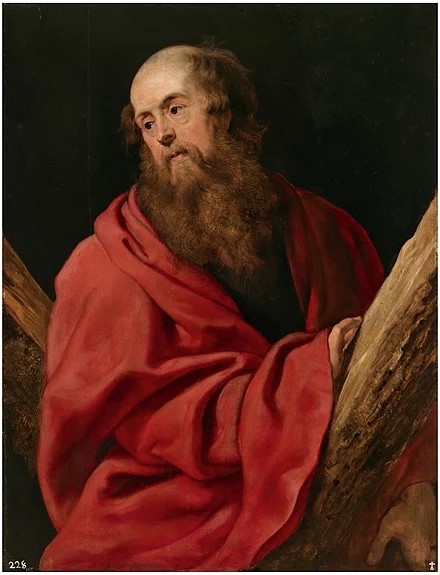
Saint Andrew (c. 1611) by Peter Paul Rubens

Being a Microsoft user, I receive a daily news feed called Bing Daily.  The email provides the typical mix of fluff and stories deemed “relevant to me” by an AI bot.  When Bing’s algorithm chooses which stories to display, it takes into consideration whether the source of the news ranks well for “newsworthiness, originality, authority, relevance, and readability.”  Bing also has search quality raters and defines “authority” as outlets that “identify sources, authors and attribution of all content.”  Readability includes sites that have correct grammar and spelling and where advertising does not interfere with the user’s experience.  Bing defines “originality” as sites with unique facts or points of view.  Bing also has a feature called “Spotlight” which provides overviews of a news topic by showing a timeline of events from “various perspectives”.  That said, today’s Bing Daily headline wished me a “Happy Saint Andrew’s Day”.

When I looked online, I found Saint Andrew’s Day, also called the Feast of Saint Andrew or Andermas (i.e., Andrew’s Mass), is the feast day of Andrew the Apostle celebrated on November 30th.  Andrew is the New Testament disciple who introduced his brother Simon (Peter) to Jesus at the beginning of Jesus’ ministry.  Saint Andrew’s Day marks the beginning of the traditional Advent devotion of the Saint Andrew Christmas Novena for the Roman Catholic Church.  The day is Scotland’s official national day and has been a national holiday in Romania since 2015.  In Scotland and countries with Scottish connections St. Andrew’s Day is marked with a celebration of Scottish culture and traditional Scottish food and music.  The day is also seen as the start of a season of Scottish winter festivals encompassing Saint Andrew’s Day, Hogmanay (last day of the old year), and Burns Night (celebration of Scottish poet Robert Burns) around January 25th.  There are week-long celebrations in the town of St Andrews and some other Scottish cities.  Andrew is also the patron saint of Cyprus, Scotland, Greece (city of Patras), Romania, Russia, Ukraine, the Ecumenical Patriarchate of Constantinople, San Andres Island (Colombia), Saint Andrew (Barbados), and Tenerife (Spain).

Saint Andrew’s Day is also important in the ancient fishing town of Póvoa de Varzim in northern Portugal on Cape Santo André (Portuguese for Cape of Saint Andrew).  Near the cape there are small depressions in a rock (mystery stone) that residents believe to be the footprints of Saint Andrew.  Saint Andrew’s Chapel is of probable mediaeval origin and is referenced in documents from 1546 CE and earlier.  The chapel is the burial site of drowned fishermen found at the cape.  Fishermen also request intervention from the saint for better catches.  Single girls wanting to get married threw a little stone to the chapel’s roof, hoping it would lodge and indicate an impending marriage.  The assimilation of Christian and pre-Christian beliefs (syncretism) has also associated the chapel with white magic up to the present day.  It was common to see groups of fishermen carrying lights and making a pilgrimage to the cape’s chapel along the beach on Saint Andrew’s Eve.  They believed Saint Andrew still fished from the depths of the sea for the souls of those who drowned, and those who did not visit the chapel in life would have to make the pilgrimage after their death as a corpse.  Might as well get this done early.

Thoughts:  There are federal observances of days, weeks, months, or other periods designated by the US Congress for various reasons that are different from federal holidays.  These observances appear in Title 36 of the United States Code (36 U.S.C. § 101 et seq.) and include 29 days, 9 weeks, and 6 months, along with the 21 day period from Flag Day to Independence Day to generally honor the US.  These are added to the religious days (St. Andrew’s) and periods (Advent), commercial days (Black Friday), product days (avocado day), and ethnicity (days, weeks, months), and that is just the US.  If you cannot find something to celebrate, you are not looking.  Enjoy the Day!  Act for all.  Change is coming and it starts with you.
Bugs

November 28, 2023

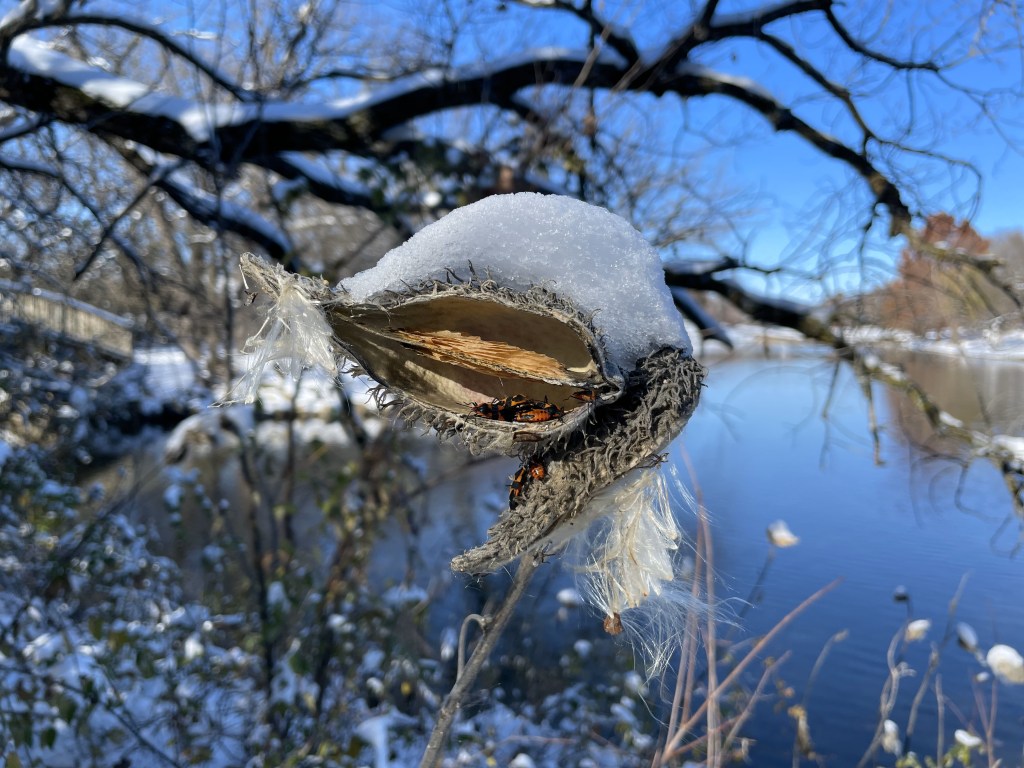
My brother in Kansas sent a picture that was taken shortly after the big snowstorm that came through their area last weekend. He lives next to a pond with a greenspace on the other side. While he was out for a walk, he took the picture that accompanies today’s blog. When I received the picture, I struggled to make out what was depicted. My sibs began a period of discovery to try and discern the nature of the photo. could not figure out what it was. My sister was the first to identify the dried husk (follicle) of the common milkweed (Asclepias syriaca). The plant requires a period of cold (cold stratification) to allow the pod to open and the seeds to germinate, and the cold weather is indicated by the covering of snow on top of the pod. The next clue came with the bugs contained inside the opened pod. My first thought was boxelder bugs (Boisea trivittata) because of their orange and black markings but they did not look quite right and their presence outside in winter belied the fact boxelder bugs often congregate in the siding and insulation of houses during this time. Then I realized these were milkweed bugs.

When I looked online, I found milkweed bugs (Oncopeltus fasciatus) are a medium-sized hemipteran (true bug) of the family Lygaeidae. The bugs are distributed throughout North America, from Central America through Mexico and the Caribbean to southern areas in Canada, with Costa Rica being its southern limit. Milkweed bugs often inhabit disturbed areas, roadsides, and open pastures. The widespread geographic distribution of the bugs creates a varying life history trade-off depending on the population location, including differences in wing length and other traits. Adults can range from .43 to .47 inches (11 to 12 mm) in length. They display a red/orange and black X-shaped pattern on their wings underneath the triangle that is typical to hemipterans. This feature makes the bugs easily seen and acts as a warning (aposematic) of distastefulness as the bugs are noxious to predators.

Milkweed bugs are a specialist herbivore that frequently consumes common milkweed seeds in the north, while the southern populations often consume a tropical milkweed (Asclepias curassavica). The toxic compounds in milkweeds are appropriated (sequestered) to give the insect its toxicity. Adults will wander in search of food in the daytime as milkweeds live in patches that can vary in size and distance from one another. When a follicle is found, they inject saliva into it through their long beaks (rostrums) to pre-digest the seed which allows the bug to suck it up through their anterior pump and pharynx (throat). Multiple individuals will feed on one follicle (as in my brother’s picture), suggesting that a signal is released by feeding bugs that indicates a good food source. While adults can survive on other types of seed, juveniles require milkweed seed for development and growth. During winter in temperate regions (Kansas) the bugs will exhibit a delay in development or dormancy (diapause). This occurs on short days and cold days and occasionally occurs during dry season in tropical regions.

Thoughts: Milkweed bugs can be separated into migrators and non-migrators. Northern populations have the greatest tendency for long-distance flight and migration while southern populations show the lowest tendency and are sedentary. Tropical populations also migrate shorter distances than temperate populations because spatial variation of their choice host (milkweed) is greater, and it is advantageous to seek congregations of new plants rather than tolerate depleted resources. The milkweed bugs seen by my brother were non-migratory and had gathered around the limited resources in the green space field. Humans take a similar tact and tend to stay put when resources are abundant, only leaving when they become depleted. Safety and adequate resources are what allow migrants to be able to stay in place. Act for all. Change is coming and it starts with you.
Chex

November 27, 2023

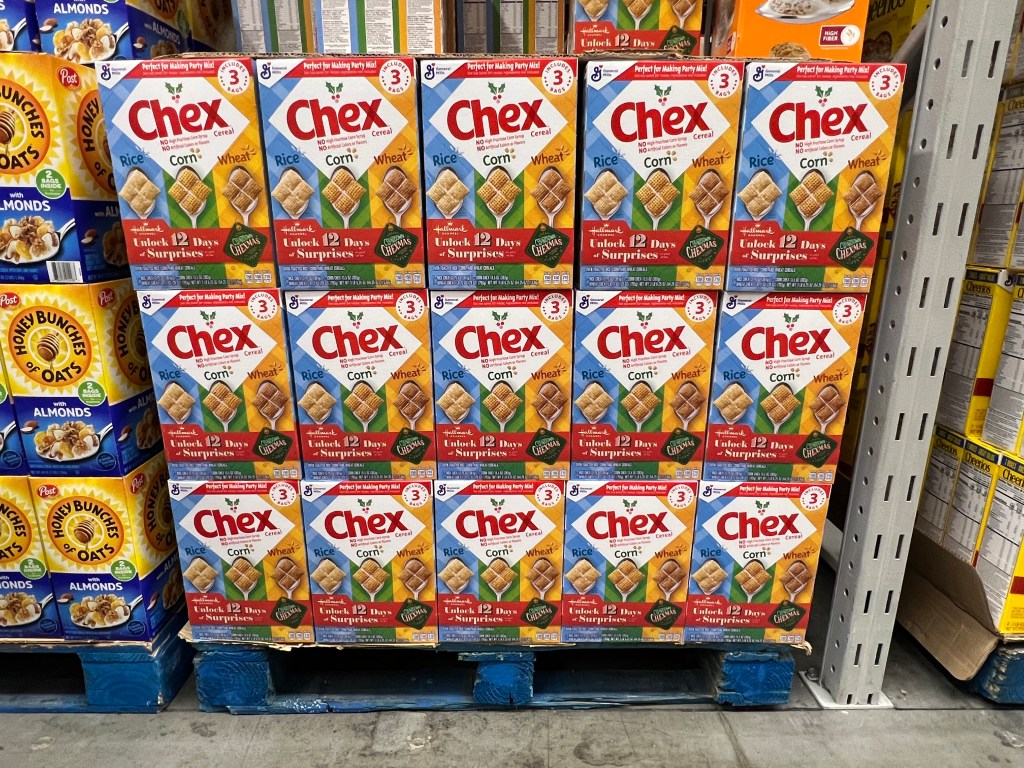
I must admit it, I love to make (and eat) Chex mix.  Chex puts out free seasoning packets that are stored along with the endcap displays beginning in November.  The endcaps all start the same way, with all three of the Chex cereals displayed together (corn, rice, and wheat).  The boxes of rice and corn are also displayed in the cereal aisle, along with the wheat during off periods (i.e., not around the holiday rush).  Whenever the free seasoning packets are displayed, I make sure to grab 4 or 5 knowing that everyone else will do the same and they will run out long before the last demand around Super Bowl parties (early February).  The problem I have found is the packets are not the only thing to run out.  While there always seems to be enough corn and rice Chex, the wheat runs out early.  I have tried making the mix without the wheat and it just does not taste the same.  I once tried an alternative brand of wheat squares and found they had a high sugar content.  I like Chex mix for the savory taste, and the sugary wheat squares ruined the mix (I still ate it however).  I have also tried alternative corn and rice squares and they have worked well.  As I walked down the aisles of the big box store, I noticed Chex had resolved the lack of wheat availability as well as buying counterfeit corn and rice and had boxed the three together.

When I looked online, I found Chex Mix (stylized as Chex mix) is a type of snack mix that includes Chex breakfast cereal (sold by General Mills) as a major component.  There are many recipes printed on boxes of Chex cereal (and even competitors) for homemade Chex Party Mix, which predates the commercial packaged version by more than thirty years.  Although the contents vary, the mixes generally include an assortment of Chex cereals, chips, hard breadsticks, pretzels, nuts, or bagel bites.  Wheat Chex cereal was introduced in 1937 and Rice Chex in 1950 by Ralston Purina.  An advertisement for Chex party mix appeared in Life Magazine in 1952 with a recipe that included Wheat and Rice Chex.  Corn Chex was introduced in 1958 and added to the recipe.  It was not until 1985 that the pre-packaged Chex mix products were introduced commercially by Ralston Purina and the trademarks registered to it.  There are several different recipes for homemade Chex mix including those found on the Chex cereal boxes.  The recipe for the “Original Chex party mix” has changed multiple times over the years and there are recipes from the 1960’s, 1970’s, and 1980’s that differ from the current “Original Chex Party Mix”.  That is also true for the ingredients of the commercial Chex mixes.

The new boxes that arrived on the shelves this year are called Triple Chex and contain individual one pound (453.6 g) sleeves of rice, wheat, and corn Chex.  I had always wondered why no one had come up with this marketing concept before.  Wheat Chex are not a popular item by themselves and during the holidays often run out before the demand.  This way you get all three together and can make your own Chex mix.  I find the commercial Chex mix too dry and the added seasonings and sugar used to make the varieties taste different than the “original”, and often too sweet.  Combining the three cereals together should also keep counterfeiters like me from mixing the wheat check with off brands of corn and rice.  I did notice the Triple Chex were also available online as well as the spice packets.  This should ensure I will be able to make homemade Chex party mix well into the Super Bowl (unless they run out). 

Thoughts:  By definition, original product is the product from which you are upgrading.  Chex seems to use the term to mean whatever is currently in vogue, and their commercial mix packaging labels this as “traditional” to differentiate it from the newer commercial varieties.  Chex mix became so popular it is now a generic name (like xeroxing for copies).  I cannot be too hard on Chex as my own party mix has also changed through time.  I now use the spice packets and add Worcestershire, Tabasco, and additional butter.  It is now my original mix.  Act for all.  Change is coming and it starts with you.
Abalone

November 24, 2023

While my local newspaper did not provide a print issue today, I was able to access the online version and found an article on how poaching is affecting the fishing villages of South Africa.  Over the last three decades poachers have cleaned out every snail they could find for US$25 a pound (0.45 kg).  Danie Keet, chairman of Community Against Abalone Poaching, has seen highly organized gang-related poaching grow for the last 15 years.  The poachers arrive in groups in broad daylight on pickup trucks towing their rubber duck boats.  The divers pry the abalone off the reefs and get them to shore in bags, runners hide them in the dunes, and others take them to stash houses.  Lookouts watch for police and warn the divers who keep cellphones sealed in watertight condoms.  The South African government initially banned fishing but has now established strict quotas for those lucky enough to get the right to harvest 264 pounds (119.7 kg) a year.  A 2022 report by the Global Initiative Against Transnational Organized Crime estimated the illegal trade heading to Hong Kong was worth nearly US$1billion between 2000 and 2016 and is growing.  The legal fishing quota in South Africa is set at a maximum of 110 tons (.11 kt) a year, yet Hong Kong imports between 2,200 to 3,550 tons (2.2 to 3.5 kt) of illegal South African abalone a year.

When I looked online, I found Abalone is a common name for a group of small to very large marine mollusks in the family Haliotidae whose family contains only one genus (Haliotis).  The original six subgenera are now considered alternative representations of Haliotis.  The number of species recognized worldwide ranges between 30 to 130.  The abalone shells have a low, open spiral structure, and are characterized by several open respiratory pores in a row near the shell’s outer edge.  Most abalone vary in size from 0.8 inches (20 mm) for Haliotis pulcherrima to 8 inches (200 mm).  The largest species (Haliotis rufescens) reaches 12 inches (300 mm).  The thick inner layer of the shell is composed of mother-of-pearl (nacre), which in many species is highly iridescent, giving rise to strong, changeable colors which make the shells attractive as decorative objects, jewelry, and as a source of colorful mother-of-pearl.  The flesh of abalone is considered a desirable food and is consumed raw or cooked by a variety of cultures.  Abalone is found in the coastal waters on every continent around the world, except for the Pacific coast of South America, the Atlantic coast of North America, the Arctic, and Antarctica.

The demand for these tasty snails has spurred the rise of farmed abalone as an alternative to wild caught abalone.  HIK Abalone has around 13 million abalone at any one time at their two South African coastal farms.  The farmed version is grown in rows of open-top tanks and has never felt the ocean or a rock.  They are bred, fed, and harvested at the farm to be shipped (dried or canned) to Hong Kong.  A few are exported live for Hong Kong’s high-end customers.  The farms are using selective breeding to tweak the abalone life cycle to get them to grow to a size they can be sold and eaten as fast as possible, said HIK CEO Bertus van Oordt.  The farms have no role in conservation, and it is unclear what effect the tank-bred abalone may have in the wild.  Van Oordt also said he is unwilling to put farmed abalone in the sea “to create a bigger poaching environment” but will work with the government if they control poaching.

Thoughts:  Raphael Fisher does fish his abalone quota, but it is part-time now and his job at HIK supports his two small fishing boats.  The article stated Fisher plans to go fishing this weekend, just not necessarily for abalone.  Just fishing.  “When it’s in you, it’s in you,” he said.  The International Union for Conservation of Nature says nearly half of all abalone species around the world are threatened with extinction.  Many are affected by the pollution and climate change that is part of the larger destruction of marine wildlife.  The human cost is added to the environmental.  Act for all.  Change is coming and it starts with you.