El Niño

May 18, 2023

Inside my Sunday newspaper I found an article on the rising global sea temperatures during March and April of this year.  Robert Rohde of Berkeley Earth reported above average temperatures nearly everywhere in the ocean.  The surface temperature of the sea rose to a higher level than ever recorded during this same time of March and stayed there for over a month.  Global sea surface temperatures for the first three months of 2023 are the fourth warmest in 174 years, at 1.87F (1C) above last century’s average.  The combined land and sea temperatures are especially concerning as this is a potential El Niño year.  If a strong El Niño develops there is a chance for a record warm year.  The National Oceanic and Atmospheric Administration recorded higher land temperatures over the winter and early spring.

When I looked online, I found an El Niño (Spanish, ‘The Boy’) is the warm phase of the El Niño–Southern Oscillation (ENSO) and is associated with a band of warm ocean water that develops in the central and east-central equatorial Pacific, including the area off the Pacific coast of South America.  The ENSO is the cycle of warm and cold sea surface temperature (SST) of the tropical central and eastern Pacific Ocean.  El Niño is accompanied by high air pressure in the western Pacific and low air pressure in the eastern Pacific.  El Niño phases are known to last around four years, but records show the cycles have lasted between two and seven years.  The cool phase of ENSO is La Niña (Spanish, ‘The Girl’), with SSTs in the eastern Pacific below average, and air pressure high in the eastern Pacific and low in the western Pacific.  The ENSO cycle (both El Niño and La Niña) causes global changes in temperature and rainfall.  In the El Niño phase of the Oscillation, the pool of warm water in the Pacific near South America is often at its warmest about Christmas.  The original phrase, El Niño de Navidad, arose centuries ago, when Peruvian fishermen named the weather phenomenon after the newborn Christ.

El Niño cycles affect both oceanic and terrestrial ecosystems.  On land, rodent outbreaks were observed in northern Chile and along the Peruvian coastal desert following the 1972-73 El Niño and nocturnal primates like the western tarsiers (Tarsius bancanus), the slow loris (Nycticebus coucang), and the Malayan sun bear (Helarctos malayanus) were either eradicated or greatly reduced on a local basis.  During the 1982–83, 1997–98 and 2015–16 ENSO events, large areas of tropical forests experienced a prolonged drought resulting in widespread fires and drastic changes in forest structure and tree species in Amazonian and Bornean forests.  Declines in insect populations accompanied the loss of vegetation f during El Niño 2015–16, and this brought declines in habitat-specialist bird species and in large Fruit eating (frugivorous) mammals in the burned Amazonian forests.  Most critically, global mass bleaching events were recorded in 1997-98 and 2015–16, when around 75-99% losses of live coral were registered across the world.  Collapse of Peruvian and Chilean anchovy populations led to a severe fishery crisis following the ENSO events in 1972–73, 1982–83, 1997–98 and in 2015–16.  These findings enlarge the role of ENSO events as strong climatic forces driving ecological change around the world, especially in tropical forests and coral reefs.  The little boy is becoming increasingly bad.

Thoughts:  While there is no consensus whether climate change has an influence on the occurrence, strength, or duration of El Niño events, research supports El Niño events are becoming stronger and longer, as well as shorter and weaker and recent scholarship has found climate change is increasing the frequency of extreme El Niño events.  Like so many effects human pollution has on the environment, we are causing greater extremes.  This will continue until all humans decide to make a difference.  Act for all.  Change is coming and it starts with you.

Stamp

May 17, 2023

Inside the Sunday newspaper I found an article on an honor bestowed on Chief Standing Bear of the Ponca tribe.  The US Postal Service released a Forever stamp on Friday honoring the Ponca tribe chief, a civil rights icon known for his “I Am a Man” speech.  The stamp’s release comes 146 years after the US Army forcibly removed Chief Standing Bear and some 700 other members of the tribe from their homeland in northeast Nebraska.  Standing Bear’s only son was among the more than 100 members of the tribe that died of hunger and disease during or shortly after their 600 mile walk from Nebraska to the Indian Territory in Oklahoma.  Standing Bear’s desire was to bury his son in their homeland in the Niobrara River Valley.  Standing Bear and 29 others were arrested for their attempt to return to Nebraska in 1879.  The ensuing lawsuit established that a Native American is a person under the law.

When I looked online, I found the US Postal Service created the Citizens’ Stamp Advisory Committee in 1957 to float ideas for stamps.  Members from the fields of art, education, science and technology, history, politics, and other areas of public life are appointed by the Postmaster General to evaluate stamp ideas from the public.  Today more than 30,000 submissions come to the committee every year.  The mail is opened in the office known as Stamp Development, which determines whether submissions meet stamp guidelines and criteria.  The staff create binders of potential stamps to be studied and evaluated by the committee members which meet four times a year and the final decision rests with the Postmaster General (Louis DeJoy since June 15, 2020).  There are five general guidelines for becoming a stamp.  A subject person must have been dead for at least three years.  Events of historical significance are commemorated on their 50-year anniversaries.  The committee focuses on “themes of widespread national appeal,” as determined by the Postal Service.  States are commemorated on stamps in 50-year intervals after the date of their entry into the union.  Finally, a stamp only commemorates positive contributions to American life, history, culture, and environment.

When Standing Bear made the perilous trip back to Nebraska in 1879 to honor his son with a burial in the tribe’s homeland, he was arrested and imprisoned at Fort Omaha.  His arrest was the catalyst for a lawsuit that led to an 1879 ruling by Judge Elmer S. Dundy in Omaha in favor of the defendants, saying that Chief Standing Bear and the others arrested members of the tribe were “persons”.  By determining a Native American was a person under the law they were also ensured the inherent right to “life, liberty and the pursuit of happiness”.  The US Government appealed the ruling, but the US Supreme Court refused to hear the case.  The members of the Ponca tribe were freed and returned to their old reservation along the Niobrara River.  Chief Standing Bear died there and was buried in 1908.  The US Postal Service issued a Forever stamp honoring Standing Bear for championing his 14th Amendment rights.

Thoughts:  The irony of Chief Standing Bear is that he went from being considered a “non-person” to the “person” behind the event that granted Native America rights under the law.  Section 1 of the 14th Amendment states, “All persons born or naturalized in the United States, and subject to the jurisdiction thereof, are citizens of the United States and of the State wherein they reside.”  Many residing in the US take this right for granted, but that has not always been the case for Blacks held in slavery, Native Americans forced onto reservations, or Japanese citizens housed in internment camps.  Freedom is more than just a word.  It was the founding principle of the US Constitution.  The “one” cannot be truly free until “all” are free.  Act for all.  Change is coming and it starts with you.
Floating

May 13, 2023

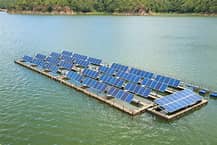
The lead article in yesterday’s Business section of my local newspaper ran with an idea that is becoming more popular in the US, after already experiencing rapid growth in China.  A study in the journal Nature Sustainability in March found more than 6,000 floating solar fields in 124 countries.  Not only do these solar fields produce electricity, but they also save water by reducing evaporation from the ponds they cover.  Floating solar farm company Ciel & Terre has built 270 projects in 30 countries.  Director Chris Bartle says workers like to install the panels because they get to go out on the water rather than rooftops.  They joke about having to bring life jackets for work rather than ladders, and they get to work in the cool shade over water rather than a hot rooftop.

When I looked online, I found floating photovoltaics (FPV), or floating solar (floatovoltaics), are solar panels mounted on a structure that floats on a body of water.  They are typically found on reservoirs or lakes, such as city water reservoirs, quarry lakes, irrigation canals, or remediation and tailing ponds.  A small number of systems exist in China, France, India, Japan, South Korea, the UK, Singapore, and the US.  Floating systems have advantages over photovoltaics (PV) on land.  Water surfaces often cost less than the surrounding land, and there are fewer rules and regulations for structures built on bodies of water.  Life cycle analysis indicates that foam based FPV have some of the lowest energy payback times (1.3 years) and the lowest greenhouse gas emissions to energy ratio (11 kg CO2 eq/MWh) in crystalline silicon solar photovoltaic technologies reported.  Unlike most land-based solar plants, floating arrays can be unobtrusive because they are hidden from public view.  They can achieve higher efficiencies than PV panels on land because water cools the panels. The panels can have a special coating to prevent rust or corrosion and are sealed which acts as a lid that brings evaporation down to nearly zero.

In May 2008, the Far Niente Winery in Oakville, California, pioneered the world’s first floatovoltaic system by installing 994 solar PV modules with a total capacity of 477 kW onto 130 pontoons and floating them on the winery’s irrigation pond.  Kyocera developed what was the world’s largest floating farm, a 13.4 MW farm on the reservoir above Yamakura Dam in Chiba Prefecture with 50,000 solar panels.  Salt-water resistant floating farms are being constructed for ocean use, but mastering the tides and rough seas is problematic.  The largest announced floatovoltaic project as of 2015 is a 350 MW power station in the Amazon region of Brazil.  The market for this renewable energy technology has grown rapidly since 2016. The first 20 plants with capacities of a few dozen kWp were built between 2007 and 2013.  Installed power reached 3 GW in 2020, with 10 GW predicted by 2025.  The costs for a floating system are about 10-20% higher than for ground-mounted systems.

Thoughts:  Floating solar panels save land for production of agriculture or habitation as the reservoirs already existed and no new land was used in construction of the floating fields.  The panels save water by reducing evaporation which shields the water resource from draught.  The only drawback seems to be the cost of higher installation.  In the US, the federal government may pay around half the cost through a HUD grant, and other grants are available.  It comes down to the environmental awareness of the entity paying for installation.  For Cohoes, NY (the city in the article), it was a matter of pride to be known as a city championing environmental justice.  This is an example more should emulate.  Act for all.  Change is coming and it starts with you.
Killer

May 10, 2023

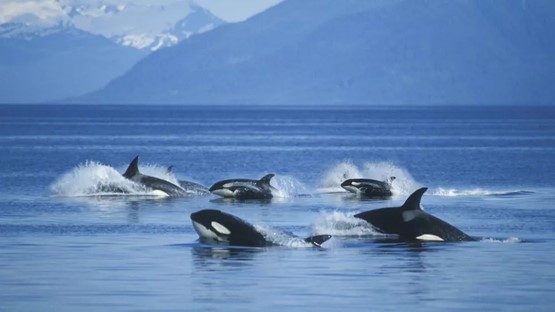
I came across an article in a previous newspaper (yes, I am behind in my reading) about the shorter life spans among killer whales.  The Northwest’s endangered population has long suffered with starvation, pollution, and the legacy of having many of their numbers captured for display in marine parks.  Recent attempts have been made to breach dikes and remove dams to create wetland habitat, and limiting commercial fishing for the Chinook salmon which are important food for the whales.  Regulations have been made to slow boats down and keep them further away to avoid collisions, and reduce the stress, and quiet the waters so the whales can hunt.  So far this has had limited success, and recent research published in Nature Ecology and Evolution suggests the cause appears to be that the inbred population is dying younger, and their numbers are not recovering.

When I looked online, I found Orcas (Orcinus orca), or killer whales, almost never attack humans.  The whale’s name was originally “whale killer,” as ancient sailors saw them hunting in groups to take down large whales, according to Whale and Dolphin Conservation (WDC).  Today, orcas are recognized as among the most widely distributed mammals on the planet, occupying every ocean.  They are incredibly social, diverse, and ferocious marine predators with a diet ranging from penguins to great white sharks.  The small size and isolation of the endangered population of Southern Resident Orcas in the Pacific Northwest have led to high levels of inbreeding, and this inbreeding has contributed to their decline, even while surrounding killer whale populations expand.

 The southern resident population is composed of three clans, known as J, K, and L pods.  These clans are socially distinct and communicate differently than other populations of killer whales.  While the southern range overlaps with other orca populations, researchers say they have not regularly interbred in 30 generations.  Today, only 73 southern residents remain.  Previous studies suggested interbreeding was a problem, but this new research sequenced the genomes of 100 living and dead southern whales.  The study found lower levels of diversity and higher levels of inbreeding than other populations of killer whales in the North Atlantic.  Inbreeding has also afflicted other populations of isolated or endangered species, such as the mountain lions of California (Felis concolor), gorillas in Africa (Troglodytes gorilla), and bottle nose dolphins (Tursiops truncatus) off the coast of western Australia.  Scientists were able to improve the gene pool by introducing animals from other populations.  That is not the case for killer whales, as the southern residents already have opportunities to interbreed and have not done so.  Ultimately, it is up to the whales to mate with whom they choose. 

Thoughts:  Inbreeding in animals can result in malformations or harmful traits due to two identical alleles of a particular gene or genes (high homozygosity rate).  Having a high homozygosity rate is problematic for a population because it will unmask recessive deleterious alleles generated by mutations and may be detrimental to the survival of endangered animal populations.  Despite all its disadvantages, inbreeding can also have a variety of advantages, such as ensuring a child produced from the mating will pass on a higher percentage of its mother/father’s genetics.  Orcas are akin to humans in that they do not become fertile until their teenage years and the inbreed population has led to in a shorter life span (down from an estimated 100 to 40 years in the wild) and a resulting drop in the number of calves to replenish the population.  Selective breeding in humans is called eugenics.  Eugenics or controlling the gene pool of humans has been tried in the past, with similar results as the killer whales.  Act for all.  Change is coming and it starts with you.
Lancetfish

May 09, 2023

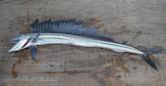
Inside yesterday’s newspaper I found an article about the “freaky-looking” fish that are washing up on the Oregon coastline.  Several of these fish have appeared on the beaches of central Oregon.  Oregon State Parks has asked beachgoers to take a photo and post it online when they are found.  Ben Frable who manages the Marine Vertebrate Collection at Scripps Institution of Oceanography at the University of California San Diego said it is not uncommon for these fish to wash up on beaches of the California and Oregon coast.  It is unclear what is causing these deep-water fish to wash ashore, or if this is more frequent, or is just being noticed more due to social media.  The slinky bodies of the Lancetfish have sharp protruding teeth and a sail-like fin.  The gelatinous flesh makes the Lancetfish something humans do not wish to eat.

When I looked online, I found Lancetfish are large oceanic predatory fish in the genus Alepisaurus (“scaleless lizard”) in the monogeneric family Alepisauridae.  Lancetfish grow up to 6.6 feet (2 m) in length.  Very little is known about their biology, though they are widely distributed in all oceans, except the polar seas, although they have been recorded as far north as Greenland and Alaska’s Bering Sea.  They are often caught by vessels long-lining for tuna.  The generic name is from Greek meaning a – “without”, lepis meaning “scale”, and sauros meaning “lizard”.  There are two recognized extant species in this genus, the short-snouted lancetfish (Alepisaurus brevirostris) and the long-snouted lancetfish (Alepisaurus ferox).  The anatomic difference between the two species is the shape of the snout (surprise!).  The long-snouted lancetfish is found in the tropical and northern sub-tropical waters of the Pacific Ocean and the short-snouted lancetfish lives in the Atlantic Ocean’s tropics, subtropics, and in the southern sub-tropics of the Pacific Ocean.  A third species (Alepisaurus paronai) is found in the fossil record from the Middle Miocene-aged strata from Italy. 

Reports of finding Lancetfish on the beaches date back to the 19th century and the collection Frable manages contain fishes found on the beach.  This includes a lancetfish who shot out of the water near the institution where he works late in 2021 and was immediately mobbed by seagulls.  It was unclear whether that fish was pursuing small fish as a predator or being pursued by another predator like a sea lion.  Lancetfish swim at depths of more than a mile (1.5+ km) beneath the surface.  The person who found the 4 foot (1.2 m) long specimen on April 28th originally believed it to be a barracuda, but it did not seem right.  When she posted a photo on Twitter, she got an immediate response and identification.  Frable asked people to report any unusual sightings as it could provide researchers useful information.

Thoughts:  While Lancetfish move between the surface and the deep ocean (pelagic) waters, only about 2% of known marine species inhabit the pelagic (no light penetration) environment, or in the deep water column as opposed to organisms that live in or on the sea floor.  Trawling samples indicate lanternfish account for as much as 65% of all deep-sea fish biomass and are among the most widely distributed, populous, and diverse of all vertebrates with an estimated global biomass of 550–660 million metric tons, or several times the entire world fisheries catch.  However, there are only a few commercial lanternfish fisheries, and many regulatory agencies warn against eating these abundant fish.  They are found to feed on the small bits of plastic debris accumulating in the oceans.  Human waste and pollution extend beyond the depth of light.  Act for all.  Change is coming and it starts with you.
Magical

May 08, 2023

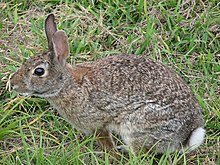
My niece and husband came to visit mom while we were in Wichita and brought their two young daughters with them.  They were staying in the apartment used for guests at mom’s complex and walked over to visit.  The quad in the middle of the complex has a small pond, a gazebo, and koi pond, and the grass is dotted with trees, flowers, and bushes.  As the older great niece (yes, she is), age 7, walked past the green space she stopped to marvel at the activity.  The koi (Cyprinus rubrofuscus) were swimming in the pond, two pair of Canada geese (Branta canadensis) were walking their newborn goslings on the grass, and a cottontail bunny (Lepus sylvaticus) came out of the bushes to hop in the yard.  It was a cool morning with a slight breeze and the girl commented, “This place is magical!”  I have heard Kansas called many names, but magical was never among them.

When I looked online, I found Magical or superstitious thinking is the belief that unrelated events are causally connected despite the absence of any plausible link between them.  Magical thinking is a common source of invalid assumptions and magical thinking does not require the events to be related.  The precise definition of magical thinking may vary when used by different theorists or among different fields of study.  In anthropology, the imagined cause is between religious ritual, prayer, sacrifice, or the observance of a taboo, and an expected benefit.  In psychology, magical thinking is the belief that one’s thoughts can bring about effects in the world or that thinking something corresponds with doing it.  In psychiatry, magical thinking defines false beliefs about the capability of thoughts, actions, or words to cause or prevent undesirable events.  Magical thinking is a common symptom of thought disorder, schizotypal personality disorder, and obsessive-compulsive disorder.  In this 7 year old, being magical seems to have more to do with wonder than disorder.

Children are primary make-believe enthusiasts, and they embrace fantasies like imaginary friends with passion.  Children also hold onto objects like a special stuffed toy (stuffy) or dirty torn blanket (cozy) to help keep their fears and anxieties at bay.  Children start to believe when they are toddlers and adults feed into their magical thinking with beliefs like Santa, the Easter Bunny, and the Tooth Fairy.  At around age 10 they do away with imaginary play, and question how feasible magical thinking is.  While they may dispense with such beliefs, they keep their superstitions within reach.  Researchers believe imaginary play and magical thinking promote creative divergent thinking.  One study found when children watched a film with magical undertones, their performance on creative tasks increased significantly when compared with children who watched a film with no references to magic.  On that day, perhaps Kansas was a magical place after all.

Thoughts:  One of the magical thoughts that brought immigrants to the shores of America is called The American Dream.  James Truslow Adams defined the phrase in his 1931 book, The Epic of America, as “a vision of a better, deeper, richer life for every individual, regardless of the position in society which he or she may occupy by the accident of birth.”  This idea is woven into the fabric of everyday life in America and plays a vital, active role in who we are, what we do, and why we do it.  The American Dream is more than just a powerful philosophy or ideology and is one of the few things in this country we all share.  While this may be a magical thought, we did not outgrow it at the age of 10 and it continues to draw immigrants to our shores.  The ability to create a better life for yourself and family should be a right granted no matter where you live.  It is up to all of us to make it happen.  Act for all.  Change is coming and it starts with you.

Meadowlark

May 05, 2023

We have been staying with my brother and sister-in-law this week while we have been in Kansas.  The last time in Wichita we stayed in a motel in the city rather than at my brother’s and I saw very few birds.  This visit I was amazed by the number and variety of species of birds that were living around the small pond and wooded green space that was behind their house.  I was aware of the Canada geese (Branta canadensis) and mallards (Anas platyrhynchos) but had no idea of the of the other species.  The trees across the pond roosted a great horned owl (Bubo virginianus) and an occasional Bald eagle (Haliaeetus leucocephalus).  The pond was frequented by a Great Snowy Egret (Egretta thula) and a blue heron (Ardea herodias) who both provided daily lessons on how to fish the small minnows and crappie (Pomoxis annularis) that remained after the onslaught by a group of cormorants (Phalacrocorax carbo) earlier in the spring.  On my last two visits to Kansas, I have come expecting to see a meadowlark which I could add to my birding list. 

When I looked online, I found the Western meadowlark (Sturnella neglecta) are a chunky, medium-sized songbird with short tails and long, spear-shaped bills.  The adult meadowlark measures about 8.5 inches (22 cm) in length.  It nests on the ground in open grasslands across western and central North America.  Meadowlarks feed mostly on bugs but will also feed on seeds and berries.  Females are smaller in all physical dimensions.  Adults have yellow underparts with a black “v” on the breast and white flanks with black streaks.  They have a long, pointed bill and the head is stripped with light brown and black.  The western meadowlark is the state bird of six states, Montana, Kansas, Nebraska, North Dakota, Oregon, and Wyoming.  What differentiates the eastern meadowlark (Sturnella magna) from its western cousin is the song.  The Eastern’s song is pure melancholy whistles and is simpler than the jumbled and flute-like song of the western meadowlark.  This variation in song is the easiest way to tell the two species apart, and the reason for their separation as different species.  The songs are used to attract a mate and the difference means the two do not interbreed. 

I found two interesting facts I did not know about the western meadowlark while I was online.  The first is the male meadowlark usually has two mates at the same time.  The females do the incubating and brooding, along with most of the feeding of the young.  This polygamous behavior has helped ensure the species thrive.  One of the main dangers to nesting birds are mowing activity as humans harvest the prairie grass for cattle forage used during the winter.  The second fact learned was the species is classified as part of the blackbird family (Turdus spp.).  While the species does have black markings, it could hardly be mistaken for a blackbird.  I am still waiting to see a western (or eastern) meadowlark.

Thoughts:  Western Kansas is known nationally as a bird hunting destination.  This includes ringneck pheasant (Phasianus colchicus), prairie chicken (Tympanuchus cupido attwater), and wild turkey (Meleagris gallopavo), as well as a variety of waterfowl.  One of the favorite hunted species is northern bobwhite quail (Colinus virginianus).  When I was young the story was told of the eastern hunter who had come to Kansas to hunt quail.  After a day of hunting, he was confronted by the game warden and proudly laid his catch on the hood of his car.  Apparently, he also had a problem with bird identification as the quail he procured turned out to be 40 meadowlarks.  The meadowlark is the state bird of Kansas and shooting the bird carries a fine of US$250 per bird.  Quite often we misidentify what we see, and this can cause us to wrongly accept or reject things or others.   It is only when we take time to identify others and understand their differences that we can accept them.  Act for all.  Change is coming and it starts with you.

Basket

May 03, 2023

My mom has been living in a care facility over the last year and I decided I would bring her a little basket of flowers to recognize the first day of May.  This is a tradition mom instilled in our family when we were children.  The idea was to make a small basket out of construction paper and then collect wildflowers to put in the basket.  We had a lilac bush in our yard, and I recall lilacs (Syringa vulgaris) played a prominent role in the presentation.  If the tulips (Tulipa spp.) or daffodils (Narcissus spp.) were still up, one of these would also make their way into the basket.  Once the two or three baskets were made, we would take the baskets (with construction paper handles) and put them on the doorknobs of several elderly women in the neighborhood.  The baskets were unidentified, and we would ring the doorbell and then run away before the women answered the door.  The May baskets were meant to be a nice way of saying they were remembered and that we were thinking of them. 

When I looked online, I found May Baskets are used to mark the turning of the chilly and rainy months of spring into the warmer months of summer.  The tradition dates to Germany during the 12th and 13th centuries.  Some records even place it as far back as the revelry around Flora, the goddess of flowers in ancient Rome.  The popularity of giving the baskets grew during the 19th and 20th centuries.  The baskets are often homemade and contain a few treats or flowers which are (sneakily) hung on the front door handle.  For a time, it was common for boys to leave a May basket on the door of the girl they were smitten with, and then run away.  If the recipient opened the door to see her admirer running away, she could chase him down and give him a kiss.  The site suggested if someone tried this tradition today they would be caught on the ring doorbell and would likely be charged with trespassing.        

While I had good intentions of delivering a May basket to mom, things were hectic, and I did not get the basket made or the flowers collected.  I figured mom was not expecting the basket, so it would not be missed.  I was surprised when I showed up at mom’s apartment and found a May basket had already been delivered.  Apparently, the staff had gotten together the day before and made small cone-shaped baskets (complete with handles), filled them with flowers, and put them on the door handle or ledge next to the door for every resident.  I heard many of the younger aides had never heard of this tradition and the older workers (my age) had passed the tradition along.  Perhaps the giving of May baskets to recognize the older members of our neighborhoods will survive.

Thoughts:  While the hanging of May baskets may not be among your family traditions, they did help form my early years.  Family traditions are more than just habits; they are ideas and practices that create your family culture.  These traditions shape our individual identities and keep us connected with our families.  The same is true for societies traditions.  Traditions are the fabric that form the backbone of our lives and cultures.  These traditions not only need to be respected, but also understood.  Act for all.  Change is coming and it starts with you.

Garbage

April 29, 2023

Last Thursday I came across an article in the back of the National & Local News section of my newspaper that reported on the variety of life forms taking over in the middle of the Pacific Ocean.   Marine animals that are normally only found in the coastal areas of the Pacific are growing and reproducing on the plastic debris found on the high seas.  Documentation of creatures living on this floating habitat was published in the British journal Nature Ecology and Evolution.  There were 484 separate marine organisms found on the debris, and 80% of those were species usually only found in coastal habitats.  The giant patch of floating trash is known as the Great Pacific Garbage Patch.

When I looked online, I found The Great Pacific garbage patch (also Pacific trash vortex and North Pacific Garbage Patch) is a whorl of marine debris particles located in the central North Pacific Ocean.  It is located roughly from 135°W to 155°W and 35°N to 42°N.  The collection of plastic and floating trash originates from the Pacific Rim, including countries in Asia, North America, and South America.  Despite the common public perception of the patch existing as giant islands of floating garbage, its low density of 3.1 cubic yards (4 particles per cubic meter) prevents detection by satellite imagery, or even by casual boaters or divers in the area.  The patch is a widely dispersed area of suspended “fingernail-sized or smaller” particles in the upper water column known as microplastics.  Researchers from The Ocean Cleanup project claim the patch covers 620 thousand square miles (1.6 million square kilometers) and consists of 50–142 thousand short tons (45–129 thousand metric tons) of plastic as of 2018.  The same study found while microplastic dominate the area by count, 92% of the mass of the patch consists of larger objects which have not yet fragmented into microplastics.  Some of the plastic in the patch is over 50 years old and includes items (and fragments) like plastic lighters, toothbrushes, water bottles, pens, baby bottles, cell phones, plastic bags, and small plastic pellets (nurdles), along with fishing nets.  The garbage patch is believed to have increased 10-fold each decade since 1945.

Unknown to researchers until this latest study, the garbage patch is not the only thing growing.  Animals discovered in the patch include crustaceans, sea anemones, mollusks, and worms.  Species known to thrive in the open ocean were thriving on plastic garbage.  While these were not unexpected, the prominent diversity of coastal species was.  These species are living long enough to take hold and reproduce.  Sexual reproduction was evident in both the open water and coastal species.  Coastal species diversity was highest on the ropes and fishing nets that are often lost at sea and end up in the garbage patch.   

Thoughts:  There are at least five garbage patches in the world, with the other four located in the Southern Pacific, Indian, Northern Atlantic, and Southern Atlantic (i.e., the major oceans except the polar regions), but the Great Pacific patch holds the most plastic.  Research indicates the patch contains approximately six pounds of plastic for every pound of plankton.  These growing patches contribute to other environmental damage to marine ecosystems and species.  While the first synthetic polymer was invented in 1869 by John Wesley Hyatt, and the first fully synthetic plastic was invented by Leo Baekeland in 1907, plastic production in the US increased by 300% during World War II.  Plastic is now critical to our modern way of life.  This is like the rise of fossil fuels in the 20th century and the devastating effect it has had on the environment.  Alternatives exist for both that should be produced in non-destructive ways, and utilized as replacements.  Act for all.  Change is coming and it starts with you.
Hydrogen

April 25, 2023

The business section of last Sunday’s paper had a full page article about Spain’s attempt to dominate the European Union’s (EU) clean hydrogen race.  Spain is betting it can rapidly build a new supply chain for sectors of the economy that require hydrogen for their industrial processes that have been harder to wean off fossil fuels.  The potential for green hydrogen is shown in the town of Puertollano.  The energy company Iberdrola and the fertilizer manufacturer Fertiberia have partnered to potentially create the first zero-carbon plant nutrients in the world.  The green hydrogen plant is Europe’s largest functioning facility and Iberdrola owns 100 megawatts’ worth of solar panels to power the electrolyzes to separate hydrogen from water.  Storage tanks pipe the gas directly to Fertiberia where they make ammonia, the chemical foundation in nitrogen fertilizers.  The fertilizer will be scattered onto malt barley used to make Heineken’s first “green malt” beverage.  This is perfect as Heineken is often served in green bottles.

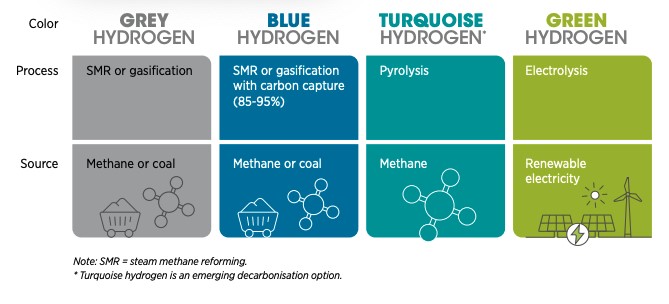
When I looked online, I found that while hydrogen is a colorless gas, scientists have assigned colors to distinguish the way it is produced.  Grey hydrogen is the most common and is generated from natural gas, or methane, through a process called “steam reforming”.  This process generates less emissions than black (bituminous coal) or brown (lignite coal) hydrogen where the CO2 and carbon monoxide generated during the process are not recaptured.  Blue hydrogen is when the carbon is captured and stored underground.  Blue hydrogen is referred to as carbon neutral as the emissions are not dispersed in the atmosphere, but some argue “low carbon” would be a more accurate as 10-20% of the generated carbon cannot be captured.  Green hydrogen, or “clean hydrogen”, is produced by using clean energy from renewable energy sources like solar or wind power to split water into two hydrogen atoms and one oxygen atom through a process called electrolysis.  Green hydrogen currently makes up 0.1% of overall hydrogen production, but this is expected to rise as the cost of renewable energy continues to fall.

Synthetic fertilizers are a highly polluting process.  A recent study found the fertilizers emit the equivalent of 2.6 gigatons of carbon per year, or more than global aviation and shipping combined.  One third of those emissions come from the production of fertilizers in plants like Fertiberia.  Most of the firm’s hydrogen is still drawn from natural gas (gray hydrogen), but the company plans to be 100% carbon neutral by 2035.  Spanish firms are pushing for EU subsidies to match the US$750 million for research and development announced by the US.  The second problem is where the demand for green hydrogen exists.  Spain and Portugal could produce a lot of green hydrogen and a demand may materialize in central Europe, but the supply and demand do not currently exist.  Neither does the infrastructure to transport the gas from Iberia to central Europe.  Hydrogen is difficult to store and highly flammable.  That is why the two plants in Puertollano are located close to each other. 

Thoughts:  While the most abundant element on earth, hydrogen rarely exists as a gas.  That means it needs to be separated from other elements.  When hydrogen is generated using renewables can be a clean alternative to burning fossil fuels.  The International Energy Agency (IEA) says hydrogen could play an important role in our clean energy future, but it notes that to make a real contribution to the energy transition, hydrogen will need to be used in sectors where it is almost absent, like transport, buildings, and power generation.  Producing hydrogen through electrolysis requires large amounts of land for solar panels and water, something that is hard to relinquish in the current European drought.  Quick and easy solutions powered by fossil fuels are what got the world into our climate crisis.  It will take hard long term solutions to bring us out.  Act for all.  Change is coming and it starts with you.