Megalodon

August 24, 2022

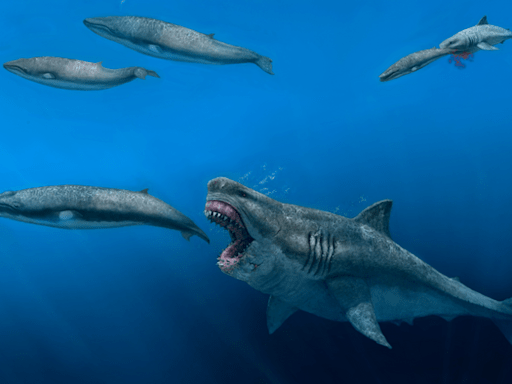
Yesterday’s NY Times reported the megalodon may have been larger and fiercer than previously thought.  A new study shows the megalodon was so big it could devour a 16 foot (5 m) killer whale and was the fastest cruising shark to ever swim the oceans.  The finds were revealed through a new 3D model of the extinct shark, based on data collected from fossilized teeth and vertebrae.  This has given scientists the best look yet at the size, speed, and diet of this “superpredator.”  In the new study, researchers combined measurements from an exceptionally well-preserved vertebral column uncovered in Belgium and a set of teeth found in the U.S. to create a rough blueprint of the megalodon’s skeleton.  The team then used body scans of a great white shark to fill in the gaps and estimate the amount of soft tissue that surrounded the megalodon’s bones.  The scientists then combined these data to create a digitally reconstructed 3D model.  Based on the model, “we estimate that an adult O. megalodon could cruise at faster absolute speeds than any shark species today and fully consume prey the size of modern apex predators,” the researchers wrote in the journal Science Advances published on August 17th. 

When I looked online, I found the Megalodon (Otodus megalodon), meaning “big tooth”, is an extinct species of mackerel shark that lived 23 to 3.6 million years ago, or from the Early Miocene to the Pliocene epochs.  The megalodon was originally identified as a relative of the modern great white shark (Carcharodon carcharias) but is now classified in the extinct family Otodontidae which diverged from the great white during the Early Cretaceous.  While regarded as one of the largest predators to ever live, the megalodon is only known from fragmentary remains.  Scientists differ on whether it would more closely resemble a stockier version of the great white shark, the whale shark (Rhincodon typus), the basking shark (Cetorhinus maximus), or the sand tiger shark (Carcharias taurus).  A recent estimate suggests a maximum length of 66 feet (20 m), although the average length is estimated at 34 feet (10.5 m).  Using the vertebral column and reconstructing a 3D model suggest a 52 foot (16 m) long individual may have reached more than 67.8 tons (61.5 metric tons).  The teeth were thick and robust, built for grabbing prey and breaking bone, and their large jaws could exert a bite force of 24,400 to 41,000 foot pounds (108,500 to 182,200 newtons).  You would not want to be swimming in their water.

Fossil records indicate the megalodon had a diverse distribution and probably targeted large prey.  Juveniles inhabited warm coastal waters and fed on fish and small whales.  While the great white attacks prey from the soft underside, megalodon probably used its strong jaws to attack the chest cavity and puncture the heart and lungs of its prey.  Since the megalodon preferred warmer waters, it is thought ocean cooling and lower sea levels from the ice ages may have resulted in the loss of suitable nursery areas contributing to its decline.  A reduction in the diversity of whales and a shift in their distribution toward polar regions may have also reduced megalodon’s primary food source.  If the megalodon’s stomach was a similar proportion to those of living apex sharks, researchers think the belly could have had a volume around 2,537 gallons (9,605 liters), an equivalent to 60 bathtubs.  The megalodon seems even more ferocious than recent movies indicate.

THOUGHTS:  Critics discredited Jurassic Park (1994) for the depicting the velociraptors (Velociraptor mongoliensis) hunting in packs as the main protagonists (not the larger T. Rex).  The Velociraptor is from Mongolia and appear to have been slow-witted and solitary, covered in feathers, and about the size of a chicken.  Others vindicated the film saying the Utahraptor (Utahraptor ostrommays) found near Moab, Utah, in 1975 may have looked and acted like the movie versions.  The “fossil record” depends on bones being preserved (fossilized) and found.  This is complicated for aquatic animals like the megalodon (and modern sharks) as they were chordates (cartilaginous) rather than bone.  That is why most remains have been skulls or teeth.  Chance discoveries still provide insights to our amazing world.  Act for all.  Change is coming and it starts with you.
Freya

𝘈𝘶𝘨𝘶𝘴𝘵 23, 2022

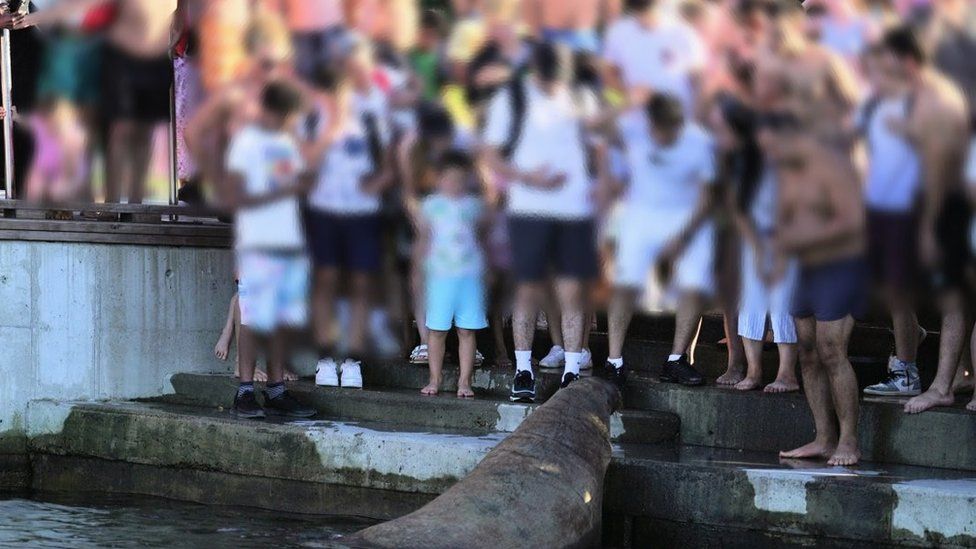
When I blogged about Dirk the Bison goring four individuals (separate occasions/animals) in Yellowstone National Park over a period of two months I was surprised they had not decided to euthanize the animals. The usual response for people doing stupid things that gets them injured is to kill the animal that was trying to protect itself. Later in July the Norwegian Ministry of Fisheries and Coastal Affairs shared a photograph of a crowd of humans standing within arm’s reach of a walrus they had named Freya, who was relaxing on the shore. On a different occasion, police had to physically block a bathing area after Freya chased a woman who had gotten too close to her into the water. Authorities said that humans had been seen swimming with Freya, throwing objects at her, and invading her personal space for photos. Unlike Dirk, Freya had not physically harmed any of these selfie seekers. The 1,320-pound female walrus was put down on Sunday, August 14 by Norway’s Directorate of Fisheries, “based on an overall assessment of the continued threat to human safety” (read, humans refused to leave her alone). Freya was the goddess of love and war in Norse mythology. The Directorate stated the people loved Freya so much they were forced to put her down. It seemed to be a love/hate relationship like the myth.

When I looked online, I found the walrus (Odobenus rosmarus) is a large flippered marine mammal with a discontinuous distribution about the North Pole in the Arctic Ocean and subarctic seas of the Northern Hemisphere. The walrus is the only living species in the family Odobenidae and genus Odobenus. The species is subdivided into two subspecies: the Atlantic walrus (O. r. rosmarus), which lives in the Atlantic Ocean, and the Pacific walrus (O. r. divergens), which lives in the Pacific Ocean. An adult walrus is distinguished by their prominent tusks and whiskers, and their considerable bulk. Adult Pacific walrus males can weigh more than 4,400 pounds (2,000 kilograms) and, among the pinnipeds, are only exceeded in size by the two species of elephant seals. Walruses live mostly in shallow waters above the continental shelves, spending significant amounts of their lives on the sea ice looking for benthic bivalve mollusks to eat. Walruses are relatively long-lived, social animals, and they are considered a “keystone species” in the Arctic marine regions.

The walrus has played a prominent role in the cultures of many Indigenous Arctic peoples, who have hunted the walrus for its meat, fat, skin, tusks, and bone. Skin and bone are used in some ceremonies, and the animal appears frequently in legends. During the 19th century and the early 20th century, walruses were widely hunted and killed for their blubber, walrus ivory, and meat, and the walrus population fell rapidly around the Arctic region. Their population has rebounded somewhat, though populations of Atlantic and Laptev walruses remain fragmented and at low levels compared with the time before human interference. Walruses are listed as vulnerable by the International Union for Conservation of Nature Red List of Threatened Species. However, several experts stated Freya’s death will have little impact on the walrus numbers. Try and tell that to Freya.

𝗧𝗛𝗢𝗨𝗚𝗛𝗧𝗦: Shortly after the Loma Prieta earthquake in 1989 a few sea lions began to arrive at Pier 39’s West Marina in San Francisco. By January of 1990 they had arrived in droves and the population grew to more than 300. The marina was closed, and the docks given over to the pinnipeds. Now each winter, the population can increase up to 900 sea lions, most of which are male. During the summer most of the sea lions migrate south to the Channel Islands for breeding season, but in recent years a small group has preferred to stay year-round. This has caused incidents when humans try and get too close to the animals, but rather than drive them away (or euthanize them), the city has made it illegal to approach or feed them. The sea lions have become one of San Francisco’s leading attractions. That was not the fate of Freya. Act for all. Change is coming and it starts with you.

Sandhill

August 22, 2022

Photo by: Patrick Donnelly/AP

I came across and AP article last week about a rare butterfly living in a remote area of northwest Nevada near the Oregon line.  Conservationists from the Center for Biological Diversity (CBD) says the project the Bureau of Land Management approved last year could ultimately lead to the extinction of the 2-inch-long butterfly.  The CBD is now petitioning the US Fish and Wildlife Service (USFWS) to list the bleached sandhill skipper under the Endangered Species Act at the only place it’s known to exist.  USFWS has 90 days to decide whether there’s enough evidence to conduct a yearlong review to determine if protection is warranted, so any formal listing is likely years away.

When I looked online, I found the sandhill skipper (Polites sabuleti), or Saltgrass skipper, is a butterfly in the family Hesperiidae found from southern British Columbia and eastern Washington, south through California and northern Arizona to Baja California, and east to south-eastern Wyoming, central Colorado, and north-eastern New Mexico.  It is also an introduced species in Hawaii.  The wingspan is 1-1¼ inches (22–32 mm).  There is one generation of adults on wing from June to August at high elevations and several generations from March to October in the southern part of its range and at low elevations.  The larvae feed on various grasses, while the adults feed on flower nectar.  While the sandhill skipper may be widely distributed, the bleached sandhill skipper is a subspecies found in only one place, in the meadows at Baltazor Hot Spring in Humboldt County, Nevada.  It is differentiated by its golden-orange wings.  There are no official government counts of the subspecies population, but scientific surveys from 2014-2019 indicate it is in decline and estimates place the numbers from fewer than 10,000 to hundreds.  The small geographic range and specific habitat of this subspecies make it highly vulnerable to extinction.

The Reno based firm Ormat Nevada wants to tap hot water beneath the earth to generate carbon-free energy the administration has made a key part of its effort to combat climate change with a shift from fossil fuels to renewable sources.  Opposition to those efforts in Nevada has come from conservationists, tribes and others who generally support greener energy.  The CBD and a Nevada tribe have been battling the Ormat in federal court since December over another power plant scheduled to begin operation in the Dixie Meadows 100 miles (160 kilometers) east of Reno.  The USFWS declared the quarter-sized Dixie Valley toad endangered on a temporary emergency basis in April.  The proposed power plant would sit outside the sandhill’s habitat, a single alkali wetland of around 1,500 acres (607 hectares) created by discharge from the Baltazor Hot Springs.  However, tapping the underground water would likely affect the flows that support the plants that host the larva that hatch from the butterfly’s eggs and provide nectar for adults.  While the original plans have been shifted so the geothermal plant is farther away from the butterfly’s habitat, no mitigation would offset the chances the project would alter the spring’s hydrology, potentially drying up the hot spring.  This would cause the bleached sandhill’s extinction.

THOUGHTS:  A report released by the US Department of the Interior’s Bureau of Land Management (BLM) forecasts they are on track to approve 48 wind, solar, and geothermal energy projects with the capacity to produce around 31.827 GW of electricity by the end of the fiscal 2025 budget cycle.  Most of these sites are in the Great Basin Desert of Nevada, Utah, and southeastern California.  The condition of high temperatures and arid landscape has historically made these areas unacceptable for most human habitation but have resulted in niche species and subspecies (like the bleached sandhill skipper and the Dixie Valley toad) who survive around the isolated water sources.  Taping geothermal is a good way to help wean the country off fossil fuels, but it cannot be done by disregarding the fragile environments we have neglected in the past.  Act for all.  Change is coming and it starts with you.
Whanganui

August 20, 2022

I came across and AP article in the back of my paper yesterday about a river in New Zealand that was given “personhood” status.  Five years ago, the Whanganui River was recognized as a living person in a groundbreaking New Zealand law.  For many who live along its banks, the official recognition validated the deep spiritual connection they have with the river.  They continue to feel the draw of its waters each day, whether to fish, canoe, or refresh their lives.  Geoff Hipango, who manages mental health and addiction services for a tribal provider, says it will take some time for the river’s health to be fully restored but it’s now on the right track.  The river’s status is a win for his tribe and the wider community, with all wanting to see the river’s health improved for future generations.  Hipango says it has been a privilege to see the river gain personhood after all the hard work of his elders.  “Really it was only embodying what our people have always acknowledged and lived by.  It’s just that the law caught up.”

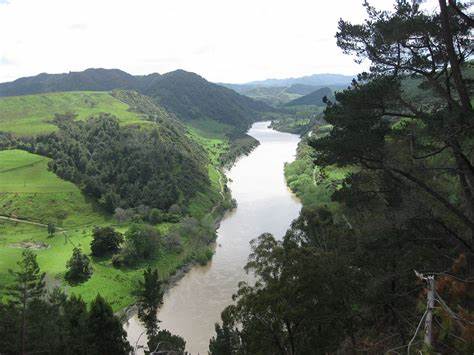
When I looked online, I found the Whanganui River is a major river in the North Island of New Zealand.  The Whanganui is the country’s third-longest river at 180 Miles (290 km).  Much of the land on either side of the river’s upper reaches are part of the Whanganui National Park, though the river itself is not part of the park.  The river begins on the northern slopes of Mount Tongariro, an active volcano on the central plateau close to Lake Rotoaira.  This navigable river flows from the volcanic mountains, through the bush-clad hill country, and past historic small settlements before reaching the coast at Whanganui.  While the river has been impacted by modern development and farming, the largest impact is ongoing eruptions from the nearby volcanos.  In the 1970’s a minor eruption from Mount Ruapehu spilled some of the contents from the Ruapehu Crater Lake.  The toxic water entered the Whanganui River and killed much of the aquatic life downstream.  Dead eels as large as 18 pounds (8.2 kg) and trout just over 5 pounds (2.3 kg) were washed up along the riverbanks.  The tributary Whakapapa River had fish losses due to a lahar (pyroclastic mud flow) from Ruapehu in April 1975.

The river has special and spiritual importance for Māori, who call it Te awa tupua.  It was the home for a large proportion of Māori villages in pre-European times and is regarded as a special treasure (taonga).  The river has been one of the most fiercely contested regions of the country in claims before the Waitangi Tribunal for the return of tribal lands.  The Whanganui River claim is the longest-running legal case in New Zealand’s history with petitions and court action beginning in the 1930’s.  More recently the Waitangi Tribunal hearings began in the 1990’s, the ongoing Tieke Marae land occupation since 1993, and the highly publicized Moutoa Gardens occupation in 1995.  An agreement was reached on August 30, 2012, that entitled the Whanganui River to a legal identity.  This was the first such designation in the world, and on March 15, 2017, the settlement was passed into law by the New Zealand Parliament.  Chris Finlayson, the Minister for Treaty of Waitangi Negotiations, said the river would have an identity “with all the corresponding rights, duties and liabilities of a legal person”.  The river will be represented by two officials, one from the Māori and the other from the government.

THOUGHTS:  When I learned the Whanganui River had been granted the rights as a person under New Zealand law it made me wonder what those rights might be.  It turns out there are seven specific rights granted to citizens.  You can live in New Zealand indefinitely (seems a given), can travel overseas with a New Zealand passport (seems unlikely), can vote (again, may be tough), can stand for parliament or local government (can a river stand?), can have full access to an education (hard for the waters to sit still),  can represent New Zealand in sports (water sports?), and to have full economic and social rights.  It seems the last right of personhood was what may have been intended.  Now it is up to the representatives from the Māori and the government to agree on what is best for the Whanganui, and its people.  Act for all.  Change is coming and it starts with you.
Sting

August 18, 2022

Melissa and I were working in our respective home office areas this afternoon when I heard her unclearly becoming angry and loud.  I knew she had been on Zoom calls all day and wondered if she had finally snapped (admit it, we have all been there).  After the commotion died down, she came back to my office to tell me what happened.  She had been on a call when a hornet had flown into her ear.  She instinctively swatted it away and it landed on the front of her shoulder.  The hornet returned the favor by stinging her before she knocked it to the ground.  Melissa was unsure what happened to the hornet, but the sting was still hurting.  All we had to treat the sting site was the calamine lotion I had bought when I got into poison ivy.  Even though I doubted this would do any good, she sprayed it on and went back to work.

When I looked online, I found most people have only minor symptoms from a wasp sting.  The initial result can include sharp pain or burning, redness, swelling, and itching at the sting site.  The sting may cause a raised welt with a tiny white mark where the stinger pierced the skin.  The pain and swelling usually recedes within several hours.  “Large local reactions” is a term used to describe more pronounced symptoms associated with a wasp or bee sting.  People who have large local reactions may be allergic to the stings, but do not experience the life-threatening symptoms or anaphylactic shock.  Reactions include extreme redness and swelling that increases for two or three days, nausea, and vomiting.  These reactions subside on their own over the course of a week.  The most severe allergic reactions to a wasp sting are referred to as anaphylaxis.  Anaphylaxis occurs when your body goes into shock in response to the wasp venom.  Most people who go into shock after a sting do so quickly, and it is important for the victim to seek immediate emergency care.  The final words of advice were, “Try to avoid being stung to prevent these uncomfortable symptoms.”  Hmm, otherwise I would not have known.

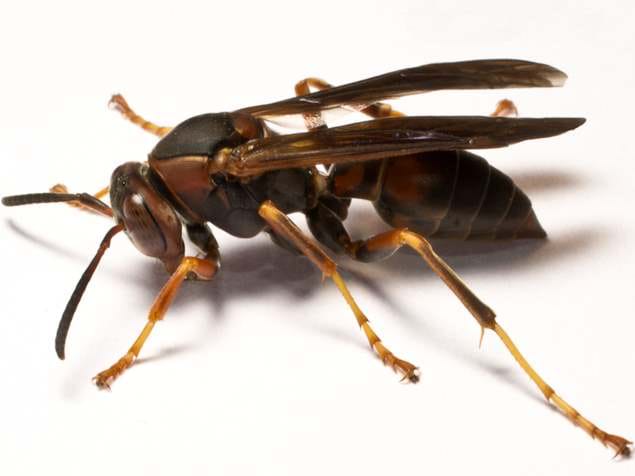
When Melissa talked about the sting, she said it was done by a hornet.  I have seen several brown paper wasps (Ropalidia revolutionalis) on the back porch and wondered if that was not what had caused the damage.  Wasps and hornets both belong to the Vespidae family (along with bees). There are over 100,000 known species of wasps, and hornets are one subspecies of wasps.  Hornets essentially are large wasps, with some species reaching up to 2 inches (5.5cm) in length.  True hornets are distinguished from other wasps by the wider heads and larger and more rounded abdomens. All hornets have two sets of wings.  They also have a different life cycle.  Wasps can vary greatly in appearance among species, with some even being wingless, but their common appearance is that of a long slender body, two sets of wings, a stinger, drooping legs in flight, and an extremely thin waist between the thorax and abdomen.  In all wasps, a stinger is present on females, as it derives from a female sex organ.  Certain species of wasps (including yellow jackets and hornets) are considered the most aggressive stinging insects.

THOUGHTS:  While bees have barbed stingers and die after stinging, wasps and hornets can sting multiple times.  The strength of the venom varies among species, but a hornet sting is generally more painful to humans than other wasp species, due to a large amount of acetylcholine.  The sting is rarely fatal to humans (except in allergic reactions), but swarms of hornets can be deadly.  I vividly remember walking into an open restroom when I worked at a lake in Kansas and immediately being attacked by a swarm of wasps.  They managed to sting me 5-6 times before I realized what was happening.  I quickly got out, but understood my job was to remove the wasps before they could sting anyone else.  This was one of those essential jobs you wished belonged to someone else.  During the pandemic people with essential jobs were put more at risk than others.  These jobs range from medical personnel to food production staff.  When we take precautions, it is not about self-preservation, but about reducing the risk for everyone.  Act for all.  Change is coming and it starts with you.
Gust

August 17, 2022

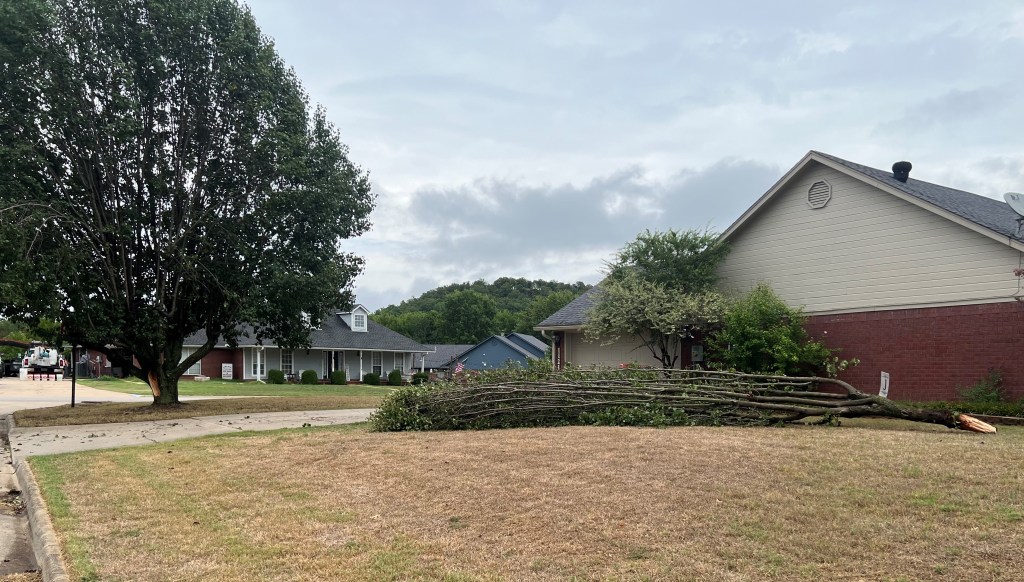
It started raining early this morning and continued through about 9:00 am.  When I looked at my weather app it noted the rains would cease around 9, and then resume around 1:00 pm.  That gave us a great window to get in our walk in between the storms and while the temperatures were still relatively low (70’sF/20’sC).  I had not expected or heard any wind last night, but I rarely hear anything when I am sleeping.  About the only thing that wakes me up is when Zena licks my hand or feet wanting to be let outside.  When we got to the corner of our cul-de-sac, there was a large tree limb about 1 foot (30 cm) across that had blown down during the night.  The debris indicated it had landed in the street, but when we arrived it had already been pulled into the yard and out of the way.  It appeared the storm brought at least one strong gust of wind.

When I looked online, I found the National Weather Service definition for a wind gust is “a sudden, brief increase in speed of the wind.”  Gusts are reported when the peak wind speed reaches at least 18 mph (16 knots) and the variation in wind speed between the peaks and the lulls is at least 10 mph (9 knots).  The duration of a gust is usually less than 20 seconds.  According to the Beaufort Wind Scale, at 19 to 24 mph (16.5 to 21 knots) smaller trees will begin to sway.  At 25 to 31 mph (21.5 knots to 27 knots) large branches will be in motion, whistling will be heard in overhead wires, and umbrellas may become tough to use.  At 32 to 38 mph (28 to 33 knots) whole trees will be in motion and you will experience some difficulty walking into the wind.  At 39 to 46 mph (34 to 40 knots) branches and limbs can be broken from trees and cars or high profile vehicles can possibly veer on the road.  At 47 to 54 mph (41 to 47 knots) light structural damage will occur.  At 55 to 63 mph (48 to 54.5 knots) entire trees can be uprooted and considerable structural damage can occur.  When the gust exceeds 64 mph (55.5 knots) you can expect widespread structural damage.  That suggests our gust was around 45 mph (39 Knots).

Two years ago, I had written about the gust of wind that had taken down a tree in the back of our lot.  This gust had come from the northeast and had torn a large oak tree up by its root ball.  That suggests the gust was around 50 mph (44 knots).  Luckily, the tree had fallen away from the shed that Melissa had built at the back of our property to serve as a workshop for her dad.  The storm that came in last night was from the northwest, so I assume the gust that snapped the branch was from the same direction.  That suggests the branch had fallen against the storm and into the street.  There are usually several vehicles parked in the drive and along the street where the debris indicated the branch had come down.  They were all gone this morning.  Hopefully, they were not damaged.

THOUGHTS:  When I worked for the camp in Kansas, we had a storm that brought down several trees on the acreage.  While most of the trees fell away from the buildings, one large gust had dropped an old cottonwood onto the side of the main hotel.  We had the insurance adjuster assess the damage (it did not cover deductible) and then cut the tree away from the building.  While I had help with the initial task of cutting the tree back, after that first day I was on my own.  That was when I realized one of my “other duties as assigned” was removing dead trees from the property.  Most jobs have hidden tasks that need to be completed.  There seem to be two approaches toward these extra duties.  We can say it is not in my job description, or we can do what needs to be done.  We are rarely able to move forward until someone completes the unwanted task faced, regardless of whether it was their job.  That is also true with the social ills faced by our country and world.  We are all the “someone” who needs to step up with a gust of fresh air.  Act for all.  Change is coming and it starts with you.

Shocked

August 16, 2022

Despite my intention to end my intermittent fasting, I still tend to get up late, then get involved with other projects, and end up not eating until after noon.  Fasting worked well as a diet routine when I first started but now it is just a routine that has little effect.  When I work on Tuesdays I drive in early and by the time I am through it is always after lunch.  I usually drive back to Fort Smith (halfway home) to shop at the market, fill up my gas tank, and then go home.  At times I will eat in town and other times I will wait until I get home, and regardless it is usually after 4:00 pm.  Today I got off early and stopped at an Asian market hoping to find wide rice noodles (for Pad See-Ew) and seaweed wraps (for sushi).  After making my purchases I was getting hungry and decided to get a medium fry and drink from a fast-food drive-thru.  I ordered the medium fry and was shocked to find it was nearly US$4 for what last week had been less than US$3 for the large.  Somehow the blog I had written last Saturday on russets had not registered.

I knew it was more expensive to eat out than cook at home, but when I looked online, I found there are other advantages as well.  Cooking at home is not only cheaper than meal kits or eating out, but it is also easier to maintain your health since you know what is in your food.  A meal like vegetable Pad Thai (or Pad See-Ew?) can be made at home for less than US$2 while a restaurant could charge 7 times more.  At home you spend less and can alter the ingredients in the meal to your taste.  According to the USDA 2020 food plans, a couple on a low-cost plan should spend around US$120 weekly on groceries, or US$60 per person.  If you eat out that may only account for 2-3 meals.  Although these numbers do not reflect special dietary restrictions, organic foods, or eating out, used wisely at home that US$120 could go a long way (hopefully until the end of the week!).  Melissa and I were shocked the last two Sunday’s when we ate out (with appetizers, entrees, tea, and tip), as each of those meals ran around US$60.  That meant each meal had already spent half of our weekly food budget.

After filling my tank today at the neighborhood market, I decided to check inside and see if there was anything I needed vegetable wise for my potential stir fry and sushi meals.  Nothing really looked good, but I did notice there were several 8# bags of Jumbo Russets lying on the shelf.  I did not see a price but knew there were only around US$5 when I bought them two weeks ago, so I grabbed one.  I meandered through the store and picked up several small items before working my way to the new self-checkout aisles that had been installed during the latest reorganization (there seems to always enough money for changes).  When I scanned my bag of potatoes, I was shocked to see it was nearly US$12 for the 8# bag.  While our local gas prices have dropped nearly US$1 over the last month, the rising price of potatoes seems to have to offset our gain.  That was when the shortage of russets did set in.   

THOUGHTS:  I was shocked at the beginning of the pandemic when items like toilet paper, bread, and milk flew off the shelves.  I have been periodically shocked when specific items like baby food, diapers, and eggs have disappeared for weeks at a time.  Many have begun to treat the local market as I do the big box stores.  If something is there you may need, buy it because it may not be there when you come back.  This only exasperates the problem as items unexpectedly fly off the shelf and panic buying may occur.  Like the russets, most items will return, although we may be shocked by the price increase.  Since I had ordered the fries, I went ahead and ate them, although I may not buy them for a while.  Melissa’s response to the russets was that we need to dole them out for special occasions.  Once more, we can afford to make these choices while many do not have that luxury.  Act for all.  Change is coming and it starts with you.
Uncovered

August 15, 2022

Credit: Newsflash

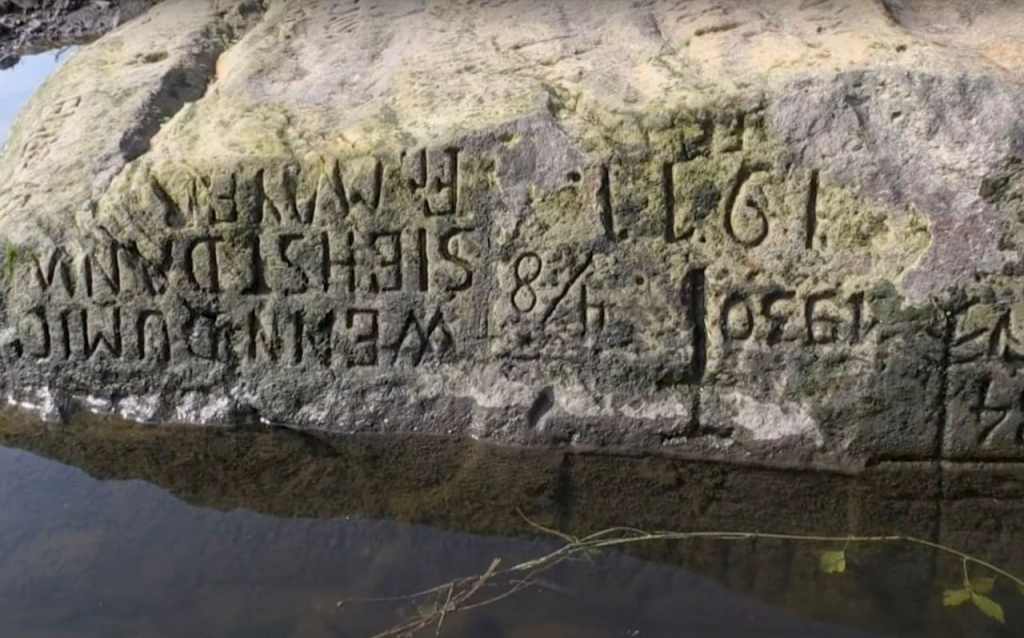
Yesterday I received a post in my email concerning the dropping water levels in major rivers across Europe as the region suffers under an historic drought.  According to German media outlet Deutsche Welle (DW), the extended heat, lack of rainfall, and prolonged drought across Europe have caused major rivers to dry up.  The Rhine River is one of the busiest waterways in the world as it flows from the Swiss Alps to the North Sea, and water levels are extremely low.  The low-water levels have snarled supply chains and created more problems for an already-struggling economy in Europe.  Container ships have had to reduce their load by at least 30% to pass through the obstructions the low-water levels have created in the Rhine.  As the water level has dropped, centuries-old warning messages known as hunger stones have been uncovered in the dry riverbeds. 

When I looked online, I found a hunger stone (German: Hungersteine) is a hydrological landmark used across central Europe.  Hunger stones serve as famine memorials and warnings and were erected in Germany and in ethnic German settlements throughout Europe in the 15th through 19th centuries.  The stones were embedded in the river during droughts to mark the water level as a warning to the future generations that they will have to endure famine-related hardships if the water sinks to this level again.  One famous example in the Elbe River in the Czech Republic, has “Wenn du mich siehst, dann weine” (lit. “If you see me, weep”) carved into it as a warning.  Many of the stones featuring carvings or other artwork were erected following the hunger crisis of 1816–1817, which was caused by the eruptions of the Tambora volcano.  In 1918, a hunger stone on the bed of the Elbe River, near Tetschen, became exposed during a period of low water coincident to the wartime famines of World War I.  Similar hunger stones in the Elbe were uncovered during a drought in 2018. 

Europe’s current drought is historic.  Scientists at the European Drought Observatory said the current drought is on track to be the worst in 500 years.  According to the drought observatory, 47% of Europe is in drought warning conditions, meaning the soil has a moisture deficit.  Another 17% is on alert, meaning the vegetation in the area is being affected by the dry conditions.  Major rivers in Italy (Po), Germany (Rhine), and England (Thames) are all drying out.  Water levels in the Rhine River are about half of their usual depth for this time of the year, with some sections having even lower water levels, DW reported.  The outlet reported that rivers are “too dry, too low, and too warm,” which has consequences on wildlife, the economy, and people.  In Italy, the prime minister said that the country is experiencing, “the most serious water crisis of the last 70 years.”  In addition to the hunger stones, dropping water levels have uncovered bombs and watercraft, hazards left over from World War II.

THOUGHTS:  Europe is not the only draught that has uncovered oddities.  The drought in the western US has caused water levels in Lake Meade to plunge 150 feet since 2000, to their lowest since 1937 and the construction of the nearby Hoover Dam.  Everything from World War II-era ships and bombs to four sets of modern skeletons have been recovered, including one stuffed in a barrel and at least one other the result of homicide.  When I worked with the State Archeologist in Utah, we had the opposite result as the waters of the Great Salt Lake rose during a period of high precipitation/snow fall.  The high water levels lapped along the shore and exposed dozens of Indigenous burials that had been placed beside the lake by peoples living hundreds of years ago.  These were all carefully excavated and ceremonially reburied with the direction of representatives of local tribes.  The rise and fall of rivers and lakes are always linked with inundation and exposure of past cultures which used the waters as a life source.  This can tell us about our past and give us a warning for the future.  Act for all.  Change is coming and it starts with you.

Russets

August 13, 2022

One of Melissa’s go to meals is a baked potato.  While size does not matter for most potato uses (mashed, potato salad, hash browns), since the potato is the meal when you bake one, we like to get the jumbo Russets as baking potatoes.  We were almost out of potatoes, so I put them on my list for the market.  When I entered the produce section, I could not find any of the large russets.  They did have several varieties of smaller types of potatoes.  There were red, golden, and 5 pound bags of small russets, but none of the jumbo russets.  Instead, there was an empty bin where the potatoes had been.  There were other items I had found last week that were no longer on the shelves either.  No problem.  I had seen bags of large russets earlier in the week at our town market.  I made my other purchases and then stopped in our local market on the way home.  Here again, all I found was empty bins where the russets used to be.

When I looked online, I found the potato (Solanum tuberosum) is a starchy root vegetable in the nightshade family (Solanaceae) native to the Americas.  Wild potato species range from the southern US to southern Chile.  The potato was originally believed to have been independently domesticated by the Indigenous peoples of the Americas in multiple locations, but genetic studies traced a single origin in southern Peru and extreme northwestern Bolivia to around 7,000-10,000 BP from a species in the Solanum brevicaule complex.  Potatoes were introduced to Europe in the second half of the 16th century by the Spanish and have become a staple food in many parts of the world and an integral part of much of the world’s food supply.  As of 2014, potatoes were the world’s fourth-largest food crop after corn, wheat, and rice.  There are now over 5,000 different varieties of potatoes and over 99% of today’s cultivars are descended from those originated in the lowlands of south-central Chile.  To improve disease resistance of Irish potatoes, Luther Burbank selected the potato that became known as Russet Burbank.  It was not patented as plants propagated from tubers were not granted patents in the US.  A russet potato is large, with dark brown skin and few eyes.  Russets are also known as Idaho potatoes in the US.

Throughout the pandemic consumers have been battling intermittent shortages of various food products and potatoes appear to be the latest item to join the list of food products that are in short supply.  China is the world’s largest producer of potatoes followed by India.  These are also the world’s most populous countries and are invariably among the top producers of most food products.  The US is the fifth-largest producer with Idaho and Washington accounting for over half the potato production.  Potato demand during the lockdowns was strong as people loaded up on snacks and most potatoes end up as processed foods like chips in the US.  As demand soared and supply fell, potatoes faced a supply chain problem like many other food products.  This was exacerbated in November 2021 as Canada stopped the potato exports to the US amid concerns about potato wart fungus.  Potato production in parts of Europe was also impacted negatively in 2021 due to floods.  The global potato shortage has gotten worse in 2022 and the Russia-Ukraine war has only added to the food shortage situation.  In the US the potato shortage is largely of the Russet variety, the baking potatoes used by restaurants and the popular base for French fries.

THOUGHTS:  The russet Burbank is more expensive to produce than other potatoes, as it consumes more water, takes longer to mature, and requires large amounts of pesticides.  Global fast food chains have been hardest hit as quality control regulations require using russets rather than local potatoes.  In nations like Japan and Kenya they have been forced to offer alternative sides to replace the absent French fries.  As dire as going without fries may sound, a real food shortage means there are no potatoes, onions, cabbages, flour, bread, canned goods, meat, or dairy products to be had at any store.  That is what many nations (and individual families) face daily.  Adequate food should not be considered a privilege.  Act for all.  Change is coming and it starts with you.

Happy

August 12, 2022

Just under four years ago I wrote about the two times you always mark as happy in your life: the day you buy your boat and the day you sell it.  This was my third attempt at boat ownership.  The boat was an old (1994) 17.5’ fish and ski.  Even though it had not been on the water for two years (why they were selling it) the motor ran, and it had an operable trolling motor and fish finder.  I had taken the boat out once the first year, prepped it for winter, and then got it out for two disastrous trips the following year.  On the second outing the engine died, and I drifted completely across the lake unable to get it started.  I then struggled for an hour trying to get the trolling motor going so I could get back to the dock.  That was the last time I took it out, and although I tried to get a man to work on it, he could never find time (read, he did not want to).  Several days ago, I was approached by a man who noticed the boat sat unmoved in my back yard and asked if I wanted to sell the boat.  I finally gave up and sold it for what I originally paid.  He hauled it off yesterday, making both Melissa and me happy.

I briefly wrote about the second boat I owned when we bought this boat in September of 2018.  This was an old ski boat that my brother used to have when he had a cabin on a small lake in Kansas and I had used the boat to fish several times when I visited.  After he sold his cabin, he put the boat in storage for several years.  When I moved back to Kansas, he gave me the boat.  Like my last boat, I was never able to get it running and back out on the water.  The boat sat in the driveway outside my bedroom window for three years as I tried to work on it.  One night the boat became the hiding place for the man involved in a police dragnet and I finally thought it was more trouble than it was worth and sold it for scrap to a local dealer.  Again, happy to get it, and happy to let it go.

My first boat was a motorless John boat (flat bottomed) I bought when I was in Jr. High.  I had visions of taking it out on the local lakes and ponds and catching massive bass.  I did not have a trailer and it was too big to put on top the car.  The only way I had to transport the boat was our family’s pop-up camper.  This ended up being a major undertaking and I did not take it out very often.  I do remember two trips.  The first was when I took it out on a windy day and the waves carried me to the other side of the lake.  I started rowing when it was time to go home, and the wind kept me from making any progress.  It took nearly an hour to get to the other shore, but it seemed much longer.  The second was when I took several friends and rafted down a river for a High School science project.  The trip was amazing, and we saw sights and wildlife I never knew still existed.  We were exhausted after a day on the water and pulled the boat up on the sand before we went back to get the trailer.  When we returned, someone had stollen the boat.  I had been happy to get the boat, and while I was not happy it was stollen, I was happy I longer had to deal with it.

THOUGHTS:  While owning a boat can make you happy it seems they are best owned by someone with mechanical expertise, or the money and willingness to pay someone who has.  I will probably get another smaller boat at some time as the allure of catching the big one is still in the back of my mind.  It is our dreams that keep us going, whether they are fishing the lily pads for a lunker or achieving your life-long goal.  We just need to decide what those goals are and how much we are willing to change to achieve them.  This is what can make you happy.  Act for all.  Change is coming and it starts with you.