Corn Sweat

July 23, 2025

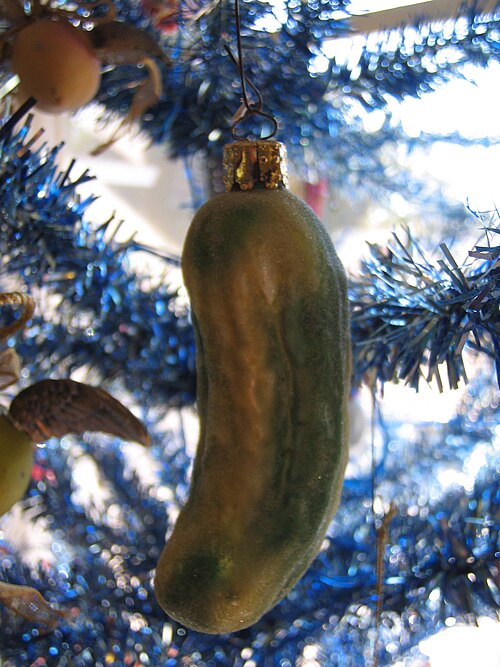
Hidden in the back of today’s local newspaper was a USA Today article about the heat and humidity pushing up the heat index.  This is typical during mid-summer, especially in the wetter eastern half of the US.  Bob Oravec, lead forecaster at the National Weather Service’s (NWS) office in College Park, Maryland, says it is unlikely to break records, but it can be dangerous.  On Monday the heat and humidity were centered over the Southeast and along the Gulf Coast.  By midweek, they moved northward along the Mississippi Valley and up into the Midwest, then shift toward the Mid-Atlantic and Northeast by the end of the week.  Highs are expected to be 95F to 100F (35C to 38C), but the humidity will make it feel closer to 110F (43C) in some areas.  This places most of the eastern US in the “major” Heat Risk category, an NWS classification that incorporates heat, humidity, and data on heat-related hospitalizations.  Pockets will be in the highest “extreme” category on the four-category scale.  Part of the reason for the humidity is that the wet weather pattern has saturated everything, causing more evaporation from soil and transpiration from plants.  This is particularly true in the Midwest, where huge fields of corn, soybeans, and other crops release moisture as the temperature climbs.  This is akin to how humans sweat in the heat and is nicknamed “corn sweat.”

When I went online, I found corn sweat is scientifically known as transpiration, the process of water movement through a plant and its evaporation from aerial parts, such as leaves, stems and flowers.  This is a passive process that requires no energy expense by the plant.  Transpiration also cools plants, changes osmotic pressure of cells, and enables mass flow of mineral nutrients.  When water uptake by the roots is less than the water lost to the atmosphere by evaporation, plants close small pores called stomata to decrease water loss, which slows down nutrient uptake and decreases CO2 absorption from the atmosphere by limiting metabolic processes, photosynthesis, and growth.  In growing season, an acre of corn gives off about 3,000 to 4,000 US gallons (11,000 to 15,000 liters) of water each day.  A large oak tree can transpire 40,000 US gallons (150,000 liters) per year.  Crop plants transpire 440 to 2200 pounds (200 to 1000 kg) of water for every 2.2 pounds (1 kg) of dry matter produced.  Roughly 95.3 million acres (38566541.7 ha) are planted with corn and soybean in the Midwest, representing approximately 75% of the region’s total agricultural land.

In Iowa, corn sweat releases 49 to 56 billion gallons (185,212 billion liters) of water each day.  The NWS said that it can add 5 to 10 degrees to the dew point, a measure of humidity, on a hot summer day.  Illinois boasts about 12 million acres (4,856,227.7 ha) of corn, that sweats up to 48 billion gallons (181.7 billion liters) of water daily.  The weather service in Chicago is warning that the heat index in Illinois could reach 115F (46.1C) by July 23-24.  Corn sweat will only add to the misery.  Iowa state climatologist Justin Glisan said, “Of course, there’s a local contribution from corn/bean transpiration which can add additional low-level moisture and exacerbate dew points.”  Weather patterns contribute more to the heat and humidity in the Midwest than corn sweat, which he said is “a more local or smaller-scale effect”. 

THOUGHTS: While corn sweat might make summer days feel more oppressive, it is a sign of healthy crops.  Evapotranspiration is essential for plant growth and helps crops reach their full potential.  Once the harvest begins, corn sweat is eliminated.  I had a summer job at a lake in the heart of Kansas corn country (7th largest producer in US).  While the humidity averages in the mid-60’s, we joked about the temps being “100 degrees and 100 percent humidity”.  The advantage of working at the lake meant whenever it got too unbearable, we jumped into the lake to cool off.  Not everyone is so lucky.  Act for all.  Change is coming and it starts with you.

Tomato Pie

July 21, 2025

One of the advantages of having a garden is being able to step outside and pick fresh vegetables for the night’s dinner.  One of the disadvantages is trying to figure out what to do when large quantities of a particular vegetable ripen at the same time.  I have mentioned how I have plied family and friends with the bounty of my crops, along with taking several loads to the local food bank.  I have also learned to prepare, freeze, can, and preserve several different vegetables and even fruits.  Whether it is fresh or preserved, the real question becomes how is it going to be served?  There are always “go to” dishes that are the reason for a particular vegetable was grown, but having an abundance provides an opportunity to get creative.  That means when a new harvest happens, I pour over recipes on the internet searching for ideas.  Melissa has begun to cook meals more frequently.  While I tend to focus on the Midwestern meat n’ potato dishes I grew up with, Melissa falls back on her Southern heritage.  Several nights ago, she decided to make a Southern tomato pie.

When I went online, I found Southern tomato pie is a tomato dish popular in the Southern US (hence, the name).  The dish consists of a pie shell with a filling of tomatoes (Solanum lycopersicum), that are sometimes with basil or other herb), then covered with a topping of grated cheese mixed with either mayonnaise or a white sauce.  Tomato pie is considered a summer dish that is to be made when tomatoes are in season.  While tomato pie has its roots in Italian American cuisine, and particularly Philadelphia, it has become a popular and classic dish in the South during the summer months when tomatoes are at their peak.  Southern tomato pie is enjoyed both as a main course and a side dish, and is a staple at potlucks, picnics, and casual gatherings.  A sweet version called green tomato pie uses buttered and sugared green tomatoes, with a recipe dating at least as far back as 1877.  The taste of green tomato pie is comparable to green apple pie.  The sweet version is less common than the savory Southern tomato pie.  In the US, tomato pie may also refer to some types of pizza, like Sicilian pizza (originated in Sicily), Italian tomato pie (thick dough with tomato sauce on top).  In its simplest form, a Philly tomato pie is pizza with no cheese.

When Melissa told me she was going to make tomato pie for dinner, I had my doubts.  Not being from the South, I had never tried tomato pie and wondered about the taste of eating a bunch of baked tomatoes.  Being a meat n’ potato person, I also recognized there was no meat.  Still, this was a way to sample one of Melissa’s family dishes, and to take on the growing number of tomatoes sitting on our kitchen counter.  The pie starts with a baked pastry shell.  Several large beefsteak tomatoes (we used Cherokee Purple) are peeled, cut into thin slices, and layered in the shell.  Salt and pepper, basil, and chopped chives are sprinkled on the tomatoes to taste.  Mayonnaise (always Duke’s if truly Southern) and grated cheese are mixed and spread over the top.  The pie is popped into a pre-heated 400F (200.4C) oven and baked for 30 to 35 minutes.  The pie did look good and tasted better.

THOUGHTS: My trepidation around eating my first Southern tomato pie was mitigated when Melissa chose to make it a side dish, with the entrée being fried chicken strips, mashed potatoes, and gravy.  Knowing my protein was secure, I admitted the pie was good.  My Midwestern bent and Melissa’s Southern come from the comfort food we each grew up with.  The term comfort food can be traced back to 1615 (at least) where in the beginning of the second part of Don Quixote his niece and her nurse/governess are told “to give him things to eat which are comforting and appropriate for the heart and the brain.”  Comfort food provides a nostalgic or sentimental value to a person or a specific culture.  Sampling another’s comfort may also provide insight into their soul.  Act for all.  Change is coming and it starts with you.

Miniature

July 16, 2025

The “big town” near us operates 29 parks and recreation areas scattered around the city.  These include everything from historic and nature trails, playgrounds and green space, aquatic and recreation centers, performing arts, and even two dog parks.  The parks include three stocked fishing lakes that I frequent as often as possible.  Another annual favorite is the light display located at Creekmore Park.  This is an expansive venture that provided inspiration for the light displays I put up when I was director of a camp and conference center in Kansas.  This summer, Creekmore has been undergoing needed improvements throughout the park.  The pool’s bathhouse (built 1948) was demolished, and a new facility and diving pool were finished in June, just in time to host the state swim meet.  The 18-hole mini-golf course (built 1959) was refurbished by volunteer labor from local businesses Graphic Packaging and IT Logistics and includes a little semi-trailer truck obstacle.  The city said it is also resurfacing and expanding the parking lot.  Sara Deuster, director of Fort Smith Parks and Recreation, said the upgrades are necessary to accommodate the growing number of families visiting the parks.  One project waiting for funding is the miniature train that circles the park in summer and tours the Christmas lights.

When I went online, I found A ridable miniature railway, or in the US a riding railroad or grand scale railroad, is a large scale, usually ground-level railway that hauls passengers using locomotives that are often models of full-sized railway locomotives powered by diesel or gas engines, live steam, or electric motors.  These miniature railways have a rail track gauge between 5 inches (127 mm) and under 15 inches (381 mm), though both larger and smaller gauges are used.  With gauges of 5 inches (127 mm) and less, the track is commonly raised above ground level.  Flat cars are arranged with foot boards so that a driver and passengers sit astride the track.  The smaller gauges of miniature railway track can be portable.  Portable track is used to carry passengers at temporary events such as festivals and summer fairs.  These miniature lines are frequently operated by nonprofit organizations, and often model engineering societies, though some are in private grounds and others run commercially. 

There are several national organizations representing and providing guidance on miniature railway operations including the Australian Association of Live Steamers, the Southern Federation of Model Engineering Societies (UK), and the National Model Railroad Association (NMRA).  The NMRA is a large, international organization focused on the hobby and business of model railroading.  It provides education, advocacy, standards, and social interaction for its members. The NMRA has a strong presence in the US and operates in Canada, Australia, the UK, and the Netherlands.  Deuster said the miniature railway at Creekmore is a favorite of park-goers of all ages.  There are three miniature trains housed at the park.  The #200 Electric Steam Engine was manufactured by Western Train Company out of Temecula, California.  There is also a standard diesel train named the Creekmore Express.  The steam engine is currently waiting for funding for its restoration.

THOUGHTS: I frequent a coffee shop across the street from Creekmore and last week saw the miniature train chugging by with a full load of passengers.  It reminded me of George Bailey’s comment from the movie, “It’s a Wonderful Life”.  George declares, “You know what the three most exciting sounds in the world are?  Anchor chains, plane motors, and train whistles.”  Travel blogs say many are like George and share a love for travel and adventure, associating these sounds with freedom and the allure of the unknown.  That is also the original impetus for this blog.  While content has expanded, the blog still tries to express the joy (and irony) of life.  Act for all.  Change is coming and it starts with you.

Carrot Cake

July 15, 2025

I have mentioned the great number of cucumbers and carrots I harvested from this year’s garden.  After taking a load of cucumbers to the food Bank I thought I would try and share the wealth by bringing a basket filled with both to a potluck on Sunday.  Although this could provide fresh vegetables, it would not do much for the meal itself.  Having lived in different parts of the country I have noticed regional variations in potluck customs.  Since this was going to be my first Arkansas potluck, I did not know what to expect.  The potlucks I attended people have mostly brought side dishes, with fewer entrees and desserts.  The organizations hosting the potluck often provide a main meat dish to make sure there is at least some protein.  Since I had a lot of carrots, I decided to make something to feature them.  Cooked or even glazed carrots did not sound like the zing I wanted to bring.  What I decided was to make carrot cake.

When I went online, I found carrot cake (also known as pastel de zanahoria) is a cake that contains carrots mixed into the batter.  While the origin of carrot cake is disputed there is an English recipe published in 1591 for “pudding in a Carret [sic] root”.  This is essentially a carrot stuffed with meat, but it includes elements common to the modern dessert.  That includes shortening, cream, eggs, raisins, sweetener (dates and sugar), spices (clove and mace), scraped carrot, and breadcrumbs (in place of flour).  Many food historians believe that carrot cake originated in the carrot puddings eaten by Europeans in the Middle Ages when sugar and sweeteners were expensive and many people used carrots as a substitute for sugar.  In volume two of L’art du cuisinier (1814), Antoine Beauvilliers, former chef to King Louis XVI, included a recipe for a “Gâteau de Carottes” which was popular enough to be copied verbatim in competitors’ cookbooks.  Beauvilliers published an English version of his cookbook in London (1824) which includes a recipe for “Carrot Cakes” in a literal translation of his earlier recipe.  The popularity of carrot cake was revived in the UK because of sugar rationing during WWII along with government promotion of carrot consumption.

My carrot cake mix became a conglomerate dessert.  I bought a white cake mike and tub of cream cheese frosting several weeks ago when I had a craving for a cupcake.  It seems almost impossible to find one cupcake in a store (my sister later reminded me I could have gone to a bakery).  I ended up not making the cupcakes for the same reason, I did not want 24, just one.  The potluck was different.  I could bring the dish, eat my one cupcake, and share the rest.  I took the boxed cake mix and added cinnamon, nutmeg, egg whites, candied pecans (it is The South, everyone keeps a batch in the fridge), and a cup of grated carrots.  I also added cinnamon and nutmeg to the frosting mix to give it an extra umph.  I only had 18 cupcake tins, so I turned the rest of the batter into a small carrot cake for Melissa and myself.  I arranged the 18 cupcakes in a large corning ware roaster dish and brought them to the party.  Walking in from the car the platter slipped and shattered in the street.  That was the end of my carrot cake cupcakes.

THOUGHTS: Without my carrot cake cupcakes, I felt bad about going to the potluck without a dish.  I told myself, “At least I have the vegetables to give away.”  I labeled them as giveaway and provided paper bags to take the vegetables home.  At the end of the meal not one was gone and I took them all home.  The first potluck I attended when I lived in Utah had another twist.  A friend and I both arrived “fashionably late” and ended up walking in together.  As we came through the door the host exclaimed, “They are here, now we can eat!”  Apparently, the custom was to arrive early and start the event “on time”.  Getting to know customs can be a matter of trial and error.  It could be more efficient to ask.  Act for all.  Change is coming and it starts with you.

Red-bellied

July 14, 2025

Last weekend Melissa called me into the kitchen to watch the large bird that had been battling two squirrels over “rights” to what was left in my soot feeder.  I grabbed my camera and by the time I arrived the squirrels had been driven off, but the bird was still there.  Melissa said she had watched the bird attack the two eastern gray squirrels (Sciurus carolinensis) for about 20 minutes.  The bird alternately flew at both squirrels keeping them at bay.  This was a new species identification for Melissa, and the bright red head led her to believe this was a red headed woodpecker (Melanerpes erythrocephalus).  I occasionally see one of these birds at my feeders and had even identified one early in January (although without a photo).  At first, I also thought it might be a red-headed woodpecker.  My apps instead identified this as a red-bellied woodpecker.

When I went online, I found the red-bellied woodpecker (Melanerpes carolinus) is a medium-sized woodpecker of the family Picidae.  While the species breeds mainly in the eastern US, it ranges as far south as Florida and as far north as Canada.  The most prominent feature is a vivid orange-red crown and nape, but this is not to be confused with a separate species in the same genus, the red-headed woodpecker.  The red-headed woodpecker has an entirely red head and neck, a solid black back, and white belly.  Red-bellied woodpeckers are 9 to 10.5 inches (22.85 to 26.7 cm) long, have a wingspan of 15 to 18 inches (38 to 46 cm), and weigh 2 to 3 ounces (57 to 91 g).  The red-bellied earns its name from the pale reddish tint on its lower underside.  Adults are mainly light gray on their face and underparts and have black and white barred patterns on their back, wings, and tail.  Adult males have a red cap going from the bill to the nape while females have a red patch on the nape and another above the bill.  White patches become visible on the wings in flight.  The reddish tinge on the belly is difficult to see in field identification.

I have never noticed the red spot on a red-bellied woodpecker and have instead identified them by the black and white barred pattern on their backs.  I always wondered why they were called red-bellied, and now I know.  Predators of adult, red-bellied woodpeckers include birds of prey such as sharp-shinned hawks (Accipiter striatus), Cooper’s hawks (Astur cooperii), black rat snake (Pantherophis alleghaniensis), and house cats (Felis catus).  Known predators of nestlings and eggs include red-headed woodpeckers, owls (Order, Strigiformes), pileated woodpeckers (Dryocopus pileatus), black rat snakes, and eastern gray squirrels.  When approached by a predator, the birds either hide from or harass the threat with alarm calls.  They will defend their nests and young aggressively and may directly attack predators that come near.  While this bird did not have a nest, it was aggressively defending its food supply.

THOUGHTS: By driving off the gray squirrels the red-bellied woodpecker was it was exerting its territorial rights.  A defended territory is typical of songbirds but is also found in many other orders of birds.  Territory may be held by one bird, a pair, or a flock and can be held for all or only part of a year.  It may be very large (eagles) and provide all the resources the bird needs or be very small such as nesting territories.  It may be vigorously defended or loosely guarded.  Typically, territories are defended against others of the same species but may also be defended against other species.  Humans also claim both small and large areas we define as ours and actively defend.  These are also shared, but generally only with those we define as “us”.  Globalization is forcing humans to make new choices on us and them.  Cooperation and sharing resources may provide for all.  Hoarding resources has and will always lead to conflict.  Act for all.  Change is coming and it starts with you.

Kerecis

July 12, 2025

In Wednesday’s local paper I found a USA Today article about a badly injured bald eagle (Haliaeetus leucocephalus) who was treated by veterinarians and released just in time for the 4th of July.  The bird was near death when volunteers brought her to the Winged Freedom Raptor Hospital (WFRH) in northern Wisconsin last August.  Her leg was ripped open from knee to ankle, and maggots and bacteria had filled the dried-out wound.  However, the bird was standing on its leg and its talons were still working.  Veterinarian Kim Ammann, reached out to an Icelandic company which transplants the skin of North Atlantic cod (Gadus morhua) to help heal human wounds and support tissue regeneration.  The treatment had never been used on a species of raptor before.  The company reached back almost immediately and offered the descaled, medical fish skin free of charge to the all-volunteer veterinary hospital.  Within weeks, Ammann gave Kere (named in honor of the company) the first of two successful surgical skin grafts.  Her recovery included 10 months of grueling wound care, bandage changes, and a mini vacation in the hospital’s Eagle flyway rehabilitation enclosure.  By June 22, the wild bald eagle was ready to soar free again thanks to the medical technology developed by Kerecis.

When I went online, I found Kerecis is an Icelandic company that uses fish skins to treat wounds. The decellularized skin of the Atlantic cod is used as a graft, which increases the elasticity, tensile strength, and compressibility of the wound.  In 2009 Fertram Sigurjonsson observed that the skin of the fish had qualities like human skin and could expedite skin regeneration and founded Kereceis in 2013.  Kerecis Omega-3 fish skin was first marketed in Europe in 2012 and cleared for use in the US for the treatment of wounds by the FDA in 2016.  In 2021, the FDA approved Kerecis Omega3 SurgiBind fish-skin for surgical use in plastic and reconstructive surgery.  The company was valued at more than 100 million euros in 2021.  Kereceis also works on medical research with the US Armed Forces and provides the grafts to branches of the military.  Kerecis was sold to the Danish company Coloplast in July 2023 for US$1.2 billion.

The skin grafts provided by Kerecis allowed for the June release of Kere.  The date was more about ensuring Kere had “the majority of the summer months” to reacclimate with being wild again than the holiday, but the symbolism of releasing a bald eagle so close to the 4th of July was not lost on Ammann.  A group of about a hundred viewers gathered to watch Kere take flight.  Amann said the day was “magical.”  The eagle population began plummeting in the late 1800’s due to habitat destruction and took another loss from DDT following WWII.  Bald eagles hit an all-time low in the 1960’s with just 417 nesting pairs in the continental US.  The use of DDT was banned in 1972 and The Endangered Species Act of 1973 helped protect quickly disappearing species like the bald eagle.  Today, there are an estimated 316,000 bald eagles in the US lower 48 states, and they became the US national bird in 2024.

THOUGHTS: Even though the process developed by Kerecis is relatively new, skin grafting has been practiced by the Egyptians and Greeks since ancient times and modern skin grafting was described in the mid to late 19th century.  Xenotransplants (non-human organs) have been around since the first two decades of the 20th century but have been subject to tissue rejection as well as controversy over morality and animal rights.  Xenogeneic grafts where the donor and recipient are of different species (like bovine cartilage or pig skin) are now common.  Kerecis’ groundbreaking research and the innovative application by WFRH have taken the process to a new level.  Act for all.  Change is coming and it starts with you.
Cherries

July 11, 2025

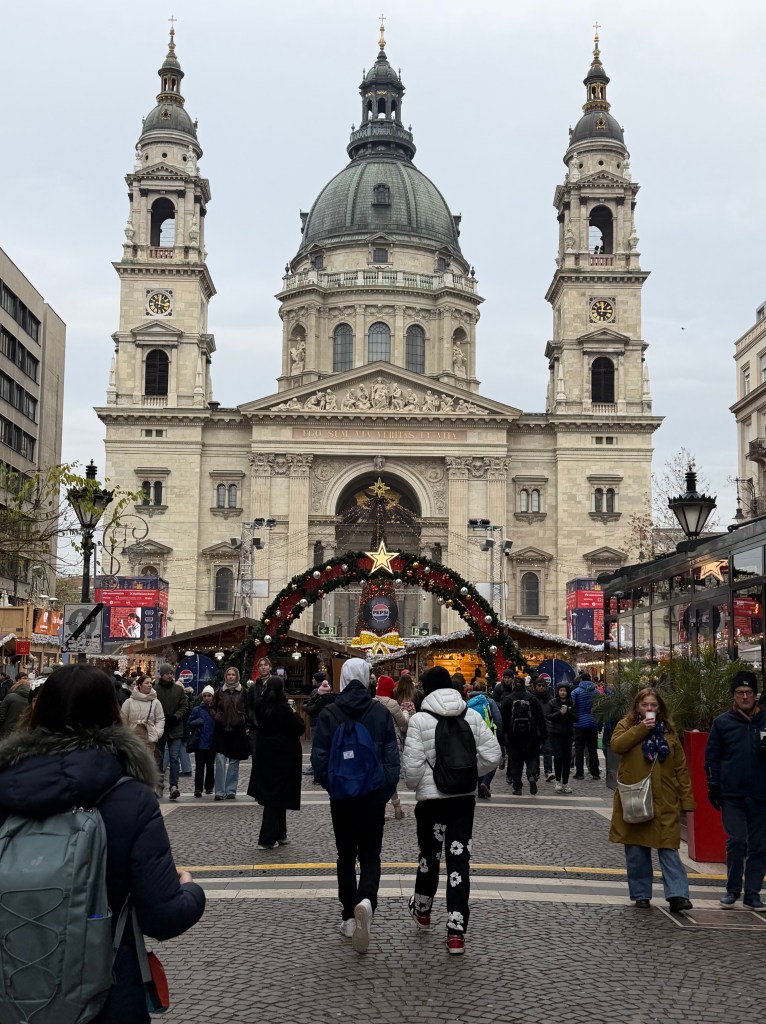
Our gardener friend is always on the lookout for fresh fruit and vegetables sourced from local farms and orchards.  She often buys in bulk and then splits the cost (and produce) with Melissa.  Several weeks ago, we got a baker’s dozen ears of corn (Zea mays), but we missed out on a bushel of fresh peaches (Prunus persica).  She texted Melissa several days ago and said she had found another farm selling peaches nearby and she was going to get them.  These were the free-stone variety that I really like, and I began to think of ways to use a half bushel of sweet Georgia peaches.  After she bought them, she called Melissa and said she also had 10 pounds (4.5 kg) of cherries.  When Melissa told me she was going to pick up the fruit, the only thought on my mind was, “What are we going to do with 10 pounds of cherries?”

When I went online, I found a cherry is the fruit of many plants of the genus Prunus and is a fleshy stone fruit (drupe).  Commercial cherries are obtained from cultivars of several species, such as the sweet Prunus avium and the sour Prunus cerasus.  The English word cherry derives from Old Northern French or Norman “cherise” from the Latin “cerasum”.  These are a reference to the ancient Greek region of Kerasous near Giresun, Turkey, where cherries were first thought to be exported to Europe.  The name ‘cherry’ also refers to the cherry tree and its wood and is sometimes applied to almonds and visually similar flowering trees in the genus Prunus, as in “ornamental cherry” (Prunus serrulate) or “cherry blossom”.  The word “cherry” is also used for some species that bear fruits with similar size and shape even though they are not in the same Prunus genus.  These include species like the “Jamaican cherry” (Muntingia calabura) and the “Spanish cherry” (Mimusops elengi).  Cherries, along with many other fruiting trees and plants, probably first arrived in North America around 1606 in the New France colony of Port Royal, which is modern-day Annapolis Royal, Nova Scotia.  

While Melissa was picking up the cherries, I googled to find out what to do with 10 pounds (4.5 kg) of cherries.  I was surprised to find several sites attempting to address the exact issue.  It seems unless you buy a controlled amount in the grocery store, they come in bulk.  The obvious choice (other than eating them fresh) was to turn them into jellies, jams, or preserves.  Melissa occasionally eats jam, but I rarely do, so 10 pounds of cherry jam seemed a bit much.  Then there was cherry cheesecake and other cherry desserts.  Again, we rarely eat dessert, let alone 10 pounds of such.  That is when I came across a recipe for brandied cherries (brandy, water, sugar).  This was said to be like maraschino cherries but with a wonderful flavor.  The suggestion was to replace the maraschino in your favorite cocktail, but they could be used in a variety of ways.  When the cherries arrived, it turned out to only be five pounds (2.25 kg), or 5 each.  Our friend also lent us her cherry pitter.  This quickly popped out the seed rather than cutting the pits out of a bulk of cherries with a knife.  Five pounds (2.25 kg) of cherries is still a lot.

THOUGHTS: As we were pitting the cherries Melissa came up with several ways to use them.  We made four cups into two pints brandied cherries, one of which was destined to become cheesecake.  Another four cups were reserved to become cherry crisp.  The last batch we left unpitted for Melissa to snack on.  The first cherry pitter dates to the 1880’s as home cooks sought to simplify the task of cutting the stones out of the cherries for canning, baking, or other food uses.  A straw or chopstick can also be used to push out the pit.  The pitter I used reminded me of the cotton gin invented by Eli Whitney in 1793.  Both were designed to speed up the process and reduce the tedious task of seed extraction.  Mechanical ingenuity saves time.  These savings could/should be put back into building your family or community.  Act for all.  Change is coming and it starts with you.
Food

July 09, 2025

I made some final harvests from my garden today.  That included all my carrots (Daucus carota) and red onions (Allium cepa), along with a continuation of my cucumbers (Cucumis sativus).  I grow enough vegetables to keep our family stocked with fresh produce during the season and have begun to can and freeze my produce for later.  Still, there is a surplus which gives me the opportunity to share with friends and family.  There always seems to be an overabundance of some vegetables.  I have tried to compensate this year by growing a greater variety of produce and even staggering when I plant.  I also planted this year’s crop with the intent of sharing a portion of the produce with our local food bank.

When I went online, I found a food bank or food pantry is a non-profit, charitable organization that distributes food to those who have difficulty purchasing enough to avoid hunger.  This is usually done through food pantries and soup kitchens, but some food banks distribute food directly with their food pantries.  St. Mary’s Food Bank was the world’s first food bank, established in the US in 1967.  Now thousands of food banks have been set up all over the world.  Their numbers grew rapidly in Europe after the global increase in food prices which began in late 2006, and as the 2008 financial crisis began to worsen economic conditions.  The inflation and economic crisis of the 2020’s has exponentially driven low and middle-income consumers to get at least part of their food from a food bank.

Some US cities have organizations that provide dog and cat food for pets whose owners qualify for food assistance.  Daffy’s Pet Soup Kitchen in Lawrenceville, Georgia is considered the largest pet food aid agency in Georgia, distributing over 800,000 pounds (362874 kg) of dog and cat food in 2012.  Daffy’s was started in 1997 by Tom Wargo, a repairman who was working in an elderly woman’s home when he noticed her sharing her Meals On Wheels lunch with her pet cat because she could not afford cat food.  Daffy’s was one of seven non-profit organizations recognized by Barefoot Wine in 2013 through a US$10,000 donation and by being featured on labels of the vintner’s Impression Red Blend wines.  Pet Buddies Food Pantry in Atlanta, Georgia is another establishment that provides food aid for pets.  The St. Augustine Humane Society in St. Augustine, Florida, distributes over 1,600 pounds (726 kg) of pet food each month to families who are experiencing economic hardship and cannot afford to feed their pets.

THOUGHTS: While food banks are a vital resource for those who are food insecure, they have also led to a rise in obesity and diabetes.  Many foods offered to clients in food banks are high in processed sugars and salts and low in vitamin and mineral content.  The low nutritional quality of foods available to clientele at food banks has led to further health effects. A study showed 33% of American households visiting food pantries had diabetes.  When you grow and share locally grown fruits and vegetables you can help alter this trend.  Community gardens are another way to help.  Act for all.  Change is coming and it starts with you.

Marrow

July 08, 2025

My MSN browser scroll reported on a new study that shows evidence of Neanderthal “fat factories” dating back as far as 125,000 years ago.  The inhabitants of the settlement strategically selected the lakeside location for the factory and harvested bone marrow by breaking open the bones as well as through a process of crushing and heating.  The fat factory suggests Neanderthals were able to understand their environment and plan for hunting and resource-gathering.  The recent research from Leiden University and published in the journal Science Advances adds to decades of previous research at the Neumark-Nord archaeological site near Leipzig, Germany.  According to a press release from Leiden University, there is also evidence of plant use in the area, though it’s rarely preserved.  Additionally, previous studies found proof that inhabitants used fire to manage vegetation.  Needless to say, Neanderthals have long been underestimated, and the new study does nothing to dissuade that notion.  This fat factory was created to extract marrow from bones.

When I went online, I found bone marrow is a semi-solid tissue found within the spongy (cancellous) portions of bones.  In birds and mammals, bone marrow is the primary site of new blood cell production (haematopoiesis).  Marrow is composed of hematopoietic cells, marrow adipose tissue, and supportive stromal cells.  In adult humans, bone marrow is primarily located in the ribs, vertebrae, sternum, and bones of the pelvis.  Bone marrow comprises approximately 5% of total body mass in healthy adult humans.  A person weighing 161 pounds (73 kg) will have around 8 pounds (3.7 kg) of bone marrow.  Human marrow produces approximately 500 billion blood cells per day, which join the systemic circulation via permeable vasculature sinusoids within the medullary cavity.  All types of hematopoietic cells, including both myeloid and lymphoid lineages, are created in bone marrow.  However, lymphoid cells must migrate to other lymphoid organs (like the thymus) to complete maturation.

Archeologists found the Neanderthals intentionally selected the lakeside location to process the bones of at least 172 mammals including deer (genus, Cervus), horses (Equus ferus caballus), and aurochs (Bos primigenius), an extinct species of bovine.  Inhabitants at the site broke open large mammal bones to extract the marrow and ground the bones into fragments and heated them in water to extract calorie-rich bone grease.  This indicates estimates of advanced resource collection began thousands of years earlier than previously thought.  Lutz Kindler, the study’s first author, said, “Neanderthals were clearly managing resources with precision.  They understood both the nutritional value of fat and how to access it efficiently.”  Experts believe Neanderthals understood there was a “fat quota” they had to meet to make the process worthwhile.  The authors emphasized the number of herbivores that Neanderthals at Neumark-Nord must have been hunting and were likely able to plan and use their environment effectively.  Research into marrow extraction at the Neumark-Nord site complex was possible because this was not a single site but an entire landscape and provided the opportunity to investigate how Neanderthals influenced their environment. 

THOUGHTS: The Neanderthals who created the marrow extraction factory at Neumark-Nord present a far different picture than the often-depicted primitive, club-wielding, nonsocial individual driven solely by animal instinct.  Modern humans tend to seek ways to differentiate ourselves from our homo sapiens ancestors as well as extant animals.  The more research done indicates we are often more alike than different.  All creation should be respected for both its similarity and difference.  Act for all.  Change is coming and it starts with you.
Wildflower Bed

July 07, 2025

Five years ago, I blogged about my stint as director of a conference center in Kansas.  The camp was located on 63 acres (25.5 ha) of mixed trees and (originally) prairie grass that was now mostly seeded with Bermuda grass (Cynodon dactylon) for lawns.  During the summer we spent 5 to 6 days a week on the mower cutting grass.  Part of our mission was to provide opportunities for education, so I decided to let the prairie grass return.  The first year we let most of the camp return to natural grass to evaluate where the prairie grass was still abundant.  The second year we selected about 12 acres (4.5 ha) to return to native prairie.  We also reseeded those acres with the Big Five grasses prominent in the Tall Grass Prairie that used to dominate Kansas.  This provided lawn for camp activities and nature trails with identification signage for eco-visitors.  To complete the prairie’s restoration, we seeded a variety of prairie wildflowers in prominent locations along the roads.  Being on the flyway of the Monarch butterfly, I transplanted 20 milkweeds (Asclepias syriacaplants) from the lawns into a wildflower bed near the entrance of the camp.

When I went online, I found a wildflower is a flower that grows in the wild, rather than being intentionally seeded or planted.  The term implies that the plant is neither a hybrid nor a selected cultivar that is any different from the native plant, even if it is growing where it would not naturally be found.  This can refer to the whole plant, even when not in bloom, and not just the flower.  The term “Wildflower” is imprecise, and more exact terms refer to specific types of flowers including native species naturally occurring in the area, exotic or introduced species not native to the area, invasive species that outcompete other plants (introduced deliberately or accidentally), and plants that have become naturalized (imported but considered native by the public).  Wildflowers can be annual (germinates from seed, live one year), perennial (live multiple years, return each growing season), or biennial (two-year life cycle, blooming in the second year).  In recent years, wildflower gardening has gained popularity.  A planted wildflower bed not only looks attractive but has the advantage of supporting pollinators, reducing maintenance, and conserving water. 

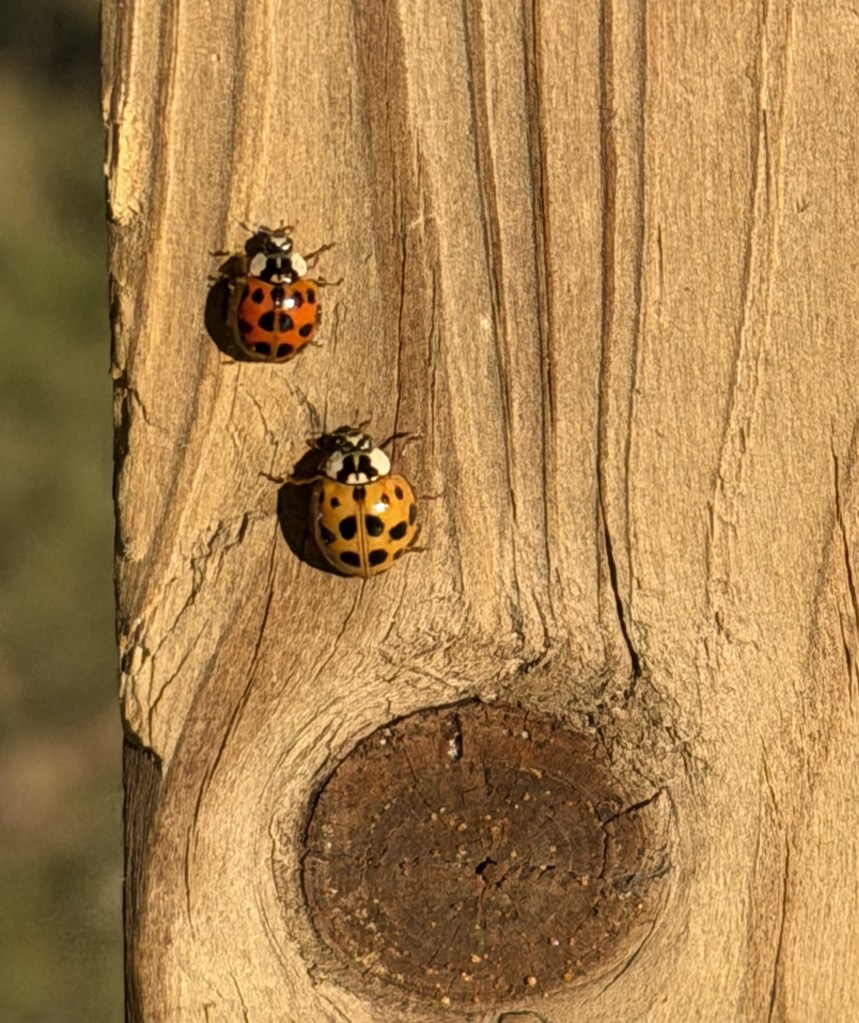
I wanted to duplicate my conference center experience when we moved to Arkansas, but I could never decide where to plant the wildflowers.  Melissa’s mom established several flower beds that I thought Melissa wanted me to maintain.  Melissa likes the look of a green lawn and symmetrical flower beds more than the asymmetrical look of a wildflower bed.  I was also interested in expanding my garden into the front beds to replace the roses neither of us liked.  Indecision meant we did nothing for five years.  Last year we did decide to place wildflowers in one of the beds in front of the house but never got around to doing so.  When Melissa retired this year, she decided she would plant a wildflower bed.  We sprayed to kill all the grass that had taken over the beds, spaded the soil and weeded the bed to prepare it, Melissa sowed the seed, and then we waited.  The first thing that grew was more grass and weeds, so I weeded the bed again.  The wildflowers finally began to grow.  Now we have a wildflower bed in the front of the house.

THOUGHTS: One of the problems with weeding the wildflower bed was knowing what to pull and what to leave.  Removing the grass was obvious, but how do you tell the difference between the wildflowers Melissa planted and the weeds that grew naturally?  In essence, all wildflowers are weeds if they are intruding in the vegetables or “planted” flowers.  I decided to leave any plants I could not identify.  If it grew a flower it was supposed to be there, whether Melissa sowed the seed or not.  The same could be said for people.  If they flourish in a new location they are meant to be there, no matter how they arrive.  Act for all.  Change is coming and it starts with you.