
Lilies

June 24, 2021

When I fished the lake last week there was a moderate patch of water lilies just off the shore.  While fishing these patches of aquatic cover can be taxing at time due to snags, I have always found them stocked with small fish.  I found this bed no different as I tossed my bobber on the outside corner of the pads.  I quickly caught fish, but not the larger fish I was looking for.  I did not pay much attention to the catch until the third or fourth fish.  That was when I noticed I was catching small crappie rather than the bluegill I had expected.  I guess the protection and food provided by the lilies was just as good for the crappie as it was for the bluegill.

When I looked online, I identified these lilies as the Yellow Water Lily (Nuphar lutea).  This is a common plant in our area that thrives in still or slow-moving water, growing in ponds, lakes, canals, and ditches.  It has large, lily-pad leaves that are up to 16 inches (40cm) across and grows in water up to 9 feet (3m) deep.  The leaves and flowers float at the surface, while the rest of the plant is submerged, growing from the mud bottom.  The Yellow water lily flowers during the summer, from June to September, and smells like the dregs of wine, giving it common names like ‘Brandy Bottle’.  Mine did not smell.

While invasive in some areas, water lilies are native and beneficial in other areas.  The lilies may become invasive if they are allowed to grow unchecked.  A single rhizome can reproduce and grow to cover an area 15 feet in diameter in as little as 15 years.  When spread to non-native habitats, water lilies can shade the water and make it too cold for native species of fish and plants.  Water lilies also compete with native plants for nutrients.  In moderate growths and native habitats, the lilies are a great benefit by providing shelter for fish and shade to keep the water cool. Water lilies provide safe spaces for frogs to perch on their leaves as they hide from underwater predators.  Lilies also produce natural oxygen that allows fish to breathe and beneficial bacteria to thrive.  Seems “everything in moderation” is the key.

Thoughts:  Another online site I found chastised anglers (like me) who shy away from fishing the interior of the lilies.  Lilies provide bluegills with all the amenities: protection, food, and oxygen.  The tangled vegetation keeps most of us along the edges, while the big fish are often deep in the greenery.  I watched a Bass fishing show awhile back that showed the same thing, as the angler tossed three feet into a weed bed to bring out the big bass feasting on bluegills.  Most tend to shy away from things they do not know.  That was true with fishing the interior of the lilies for me.  When the unknown is faced and understood, we may find it provides great benefits.  That is true for both different people and new practices.  Do the work.  Follow the science.  Change is coming and it starts with you.
Sun

June 23, 2021

The temps dropped yesterday, and the humidity came down with it as a cold front swept across the southeast.  Between health concerns and weather, I had not been able to get out to fish for the last month and it seemed like this was the perfect day.  I decided to try the stream Melissa and I had come across last month on one of our outings.  The stream was a tail stream of a reservoir about an hour from our house.  When I arrived, the sun was shining and the stream was clear, and even though the water level had dropped, there were still good holes to fish.  I rigged my line with a small (#10) black wooly (due to the sun) with a sow bug drop and added an indicator to let the line drift.  I fished three holes and quickly caught nine hybrid perch.  Then inexplicitly, the water silted from a disturbance upstream.  The bites stopped and I was forced to move on.

I fished the reservoir for another hour but found a way to stay in the shade and out of the sun.  I caught another five fish, but only later realized they were small crappie (really small!).  I decided to call it a day and headed home.   On my way home I came across a construction project that I had ignored on the trip out.  A large open field had been fenced (with barb wired on top) and rows of pipes sticking from the ground.  When I stopped at the site, the warning signs said to be aware of electric current.  The site was still under construction, and I initially thought this was a geothermal field, but the configuration seemed wrong.  I did notice the open field faced west and was in full sun. 

When I showed the picture to Melissa, she mentioned Arkansas had just announced availability of grants for solar farms.  A photovoltaic power station, also known as a solar farm, or solar power plant, is a large-scale photovoltaic system (PV system) designed to capture the sun to supply power into the electricity grid.  These are different than building-mounted units because they supply power at the utility level, rather than to local users.  The sun powered grid is made up of photovoltaic modules that convert the sun directly to electricity.  Most existing large-scale photovoltaic power farms are owned and operated by independent power producers, but the involvement of community and utility-owned projects is increasing.  This was the answer for the odd configuration, the solar panels had yet to be installed.

Thoughts:  To date, almost all PV systems have been supported in part by regulatory incentives such as feed-in tariffs, tax credits, or grants (as in Arkansas).  Another advantage of capturing power from the sun is the capability of multiple uses for the land to systems sit on.  While the best location for a solar park is on barren sites with no other valuable land use, in cultivated areas a significant proportion of the farm can be devoted to growing crops or other biodiversity projects.  Solar energy accounts for 1.6% of total US electricity generation and has ranked first or second in capacity added in the US since 2013.  The power of the sun is renewable, provides multiple uses for the site (including cultivation), and is becoming cost effective.  Once installed, the solar farm has no carbon footprint.  Follow the science.  Change is coming and it starts with you.
Discard

June 22, 2021

When I opened yesterday’s newspaper the front-page story was on a petition asking one of the large grocery stores to not discard unwanted plants.  Bryce Capocelli of Barling heard from a friend that plants were being dumped in Sallisaw, Oklahoma, and when he asked his local store if they did the same, he was told they did.  On May 20, Capocelli launched a petition on Change.org, asking the grocery chain to change its policy of disposing non-sellable or out-of-season plants and instead donate the plants to non-profits which can use them to feed the poor.  Capocelli’s petition states, “One tomato plant can yield up to 20 pounds of fruit per season.  Imagine how many people (the store) could stop from going hungry just by making a small change.”  Over 79,000 people have signed the petition as of June 16, with responses coming from across the US.

Every year, grocery stores discard more than 43 billion pounds of food (not including plants!).  Much of the food is technically edible, but most large grocery chains limit what food gets donated out of fear of litigation from vague laws and regulations.  Food banks or charitable organizations could evaluate the quality of the product prior to redistribution and determine whether it is edible.  In our litigious society large corporations are hesitant to donate items that could be deemed questionable.  There is some legal protection for those who donate under the Bill Emerson Good Samaritan Food Donation Act (BEGSFDA).  That act was put into law to encourage the donation of “food and grocery products to nonprofit organizations for distribution to needy individuals”.  It seems like a good idea.

Responding to a request for comment on the petition, a spokesperson highlighted the efforts of the company to meet its sustainability goals.  They are looking for ways to recycle rather than discard plant waste in select locations.  This is part of the companies zero waste strategy, which calls for diversion of approximately 80 percent of waste, including food waste, from landfills and incineration.  The goal is to create zero waste in the US operations by 2025.  Last year the company donated more than 627 million pounds of food in the US alone.  Inedible food is converted to animal feed, compost, or energy.  In 2020, more than 950 million pounds of discard went through these programs.  That leaves a lot of discard, and it does not address the petition on plant discard.

Thoughts:  The BEGSFDA is a federal mandate that requires States to adopt legislation to protect those who donate (not discard) food in good faith from civil or criminal liability should the donated food later cause harm to recipients.  On Dec. 20, 2018, the Agriculture Improvement Act of 2018 (Farm Bill) was signed into law.  The Bill directs the USDA to issue guidance to promote awareness of donations of wholesome food by qualified donors protected under the Child Nutrition Act of 1966 (GSFDA).  This guidance only applies to privately donated foods provided to The Emergency Food Assistance Program state and eligible recipient agencies.  It is daunting to even read this explanation paragraph.  Like so many good intentions, we are content to let the courts figure out what it means.  It is easier to discard what cannot be sold.  Do the work.  Change is coming and it starts with you.

Perspective

June 21, 2021

When I decided to plant strawberries in the back patio bed last year, I had the perspective that I first had to move a canna lily that Melissa’s mom had planted in the middle of the bed.  The bulb had come from Melissa’s grandmother and had been transplanted in our garden.  While it did flower last year, it struggled to get a hold in its new location.  While the canna grows from bulbs, I had transplanted both the bulb and the existing foliage.  I really did not know much about cultivation of the plant, but it somehow survived my fumbling and is thriving this year.  From Melissa’s perspective, it was worth my efforts.  This is described online as easy to grow.  I would agree.

The Red Canna Lily (Canna indica) is commonly known as Indian shot, African arrowroot, edible canna, purple arrowroot, and Sierra Leone arrowroot.  It is native to much of South America, Central America, the West Indies, and Mexico.  It is also naturalized in the southeastern United States, and much of Europe, sub-Saharan Africa, Southeast Asia, and Oceania.  The name Canna originates from the Latin word for “cane or reed”.  The plants have large foliage, so horticulturists have developed selected forms as large-flowered garden plants.  Canna indica (achira in Latin America) has been a minor food crop cultivated by indigenous peoples of the Americas for thousands of years as a source of starch for human and animal consumption.  This was one of the plants brought to Arkansas by Melissa’s ancestors along the Trail of Tears and transplanted in Arkansas.  From this perspective, this was a part of their culture. 

The seeds of the Canna Lily are small, globular, black pellets, hard and dense enough to sink in water.  They resemble shotgun pellets, giving rise to the plant’s common name of Indian shot.  The seeds are hard enough to shoot through wood and still survive and later germinate.  According to the BBC “during the Indian Mutiny of the 19th century, soldiers used the seeds of a Canna indica when they ran out of bullets.”  The seeds are widely used for jewelry.  The seeds are also used as the mobile elements of the kayamb, a musical instrument from Réunion (island off coast of Madagascar), as well as the hosho, a gourd rattle from Zimbabwe (Africa), where the seeds are known as “hota” seeds.  What you use the Canna seeds and bulbs for depends on your perspective of what is significant.

Thoughts:  Like so many species, the Canna Lily is used in a variety of ways.  The roots are eaten as starch, the seeds are used as parts of musical instruments, and can even be used as ammo.  That means depending on your perspective, the plant covers the major aspects of life: food, entertainment, and protection.  The Indian Rebellion of 1857 was a major, but unsuccessful, uprising in India in 1857–58 against the rule of the British East India Company that spread through the upper Ganges and central India.  The mutiny is also known as the First War of Independence.  It depends on your perspective.  We can see a similar perspective in our understanding of the unrest of the summer of 2020.  Some saw these as unfounded riots that needlessly destroyed property.  Others saw the protests as a wakeup call to action on systemic inequality.  While it depends on your perspective, it makes neither British nor American injustice acceptable.  Do the work.  Change is coming and it starts with you.
Bipartisan

June 19, 2021

For the first time in nearly 40 years, Congress has moved to establish a new national holiday, and it happened with bipartisan support.  The House voted Wednesday to pass the legislation to establish Juneteenth as the 11th Federal holiday.  The final vote in the House was 415-14.  The House vote came after a surprising unanimous consent by the Senate on Tuesday, after a single Republican senator dropped his opposition.  It is interesting to note we cannot get bipartisan agreement on infrastructure or health care, but we can on a day off.  Obviously, Juneteenth represents far more than just a day off for federal workers.  This June 19th marks the 156th anniversary of the day where the last African American slaves were freed as Federal troops marched into Galveston in the wake of the Civil War. 

The legislation headed to President Joe Biden’s desk for signature on Thursday, making it a federal holiday.  This is the first official holiday declared since Martin Luther King Jr. Day was signed into law in 1983.  MLK Day came after the restructuring of the holiday system with the Uniform Monday Holiday Act was enacted June 28, 1968, permanently moving Washington’s Birthday, Memorial Day, and Labor Day celebrations to a Monday.  It has been suggested Juneteenth will be celebrated on either the Friday or Monday closest to the actual date.  Biden was accompanied for the signing by Vice President Kamala Harris, one of the Democrats who introduced the legislation in the Senate last year.  The bill had strong bipartisan sponsorship from Sen. John Cornyn, R-Texas.  Texas already celebrates Juneteenth.

The lone Republican Sen. Ron Johnson of Wisconsin, who opposed the legislation last year, said in a statement that he would no longer raise his objections on the floor, even though the bill already had the support of 60 cosponsors to overcome a filibuster.  “Although I strongly support celebrating Emancipation, I objected to the cost and lack of debate,” Johnson said. “While it still seems strange that having taxpayers provide federal employees paid time off is now required to celebrate the end of slavery, it is clear that there is no appetite in Congress to further discuss the matter.”  Steve Williams, the president of the National Juneteenth Observance Foundation, thanked lawmakers in a press conference on Capitol Hill earlier for, “put(ting) that exclamation mark on the fabulous work.”  Even when bipartisan, there is still division.

Thoughts:  President Biden delivered a special greeting on Thursday to a central figure in the campaign to make Juneteenth a national holiday.  Biden got down on one knee to greet Opal Lee, the 94-year-old Juneteenth advocate and former educator from Texas, at the presidential signing ceremony.  Growing up in Texas, Lee celebrated Juneteenth every year.  In 2016, Lee walked 1,400 miles from her home in Fort Worth, Texas, to Washington, DC, to raise awareness and support for making Juneteenth a federal holiday.  Unlike past holidays which have been staggered into the calendar, Juneteenth will happen immediately.  Amid the divisiveness of politics over the last six years, it is positive to find any bipartisan gesture.  The fact it occurred around recognition of a past injustice is more so.  Do the work.  Change is coming and it starts with you.
Protocols

June 18, 2021

A year after implementing significant restrictions for an abbreviated offseason program due to the covid-19 pandemic, the NFL and NFL Players Association have agreed to new protocols for 2021.  The updated protocols significantly loosen restrictions on those who have been fully vaccinated for the virus during training camp and preseason games.  As NFL memos indicate, the protocols will affect everyone from players to media members.  Fully vaccinated players will no longer be required to undergo daily covid tests or wear masks or face coverings at team facilities or during travel and will be tested once every two weeks.  Vaccinated personnel are allowed to forgo social distancing and are not required to quarantine after high-risk exposure to the virus.  Finally, vaccinated players, coaches and staff will not be confined to a certain meeting capacity and will be free of gathering restrictions outside team facilities.

Since the beginning of the pandemic there has been a debate concerning receiving the vaccine or waiting until we achieve herd immunity.  The real difficulty with waiting for herd immunity is the number of persons who will die before we achieve that threshold (600,000+ and counting).  Herd immunity describes a situation where a large part of a population is immune to a particular disease due to vaccination or previously contracting the illness and developing anti-bodies.  This indirectly helps ensure protection of the remaining population and offers a higher chance of reducing transmission.  Herd immunity ensures that while not everyone is immune to the disease, everyone can enjoy a level of protection from it.  A higher number of immune people results in a lower risk of contracting the virus for everyone.  Other protocols need to be followed to reduce transmission until the level of immunity is met.  While it is difficult for certain segments of the population to get the vaccine, there are those who are willing to put others at risk by choosing to not get the vaccine.

In the NFL, those who are not fully vaccinated will still be required to follow protocols like those in 2020.  This includes daily testing, wearing masks, and practicing social distancing.  They are not allowed to eat meals with teammates, cannot participate in media marketing while traveling, are not allowed to use the sauna or steam room, and may not leave the team hotel or interact with people outside the team while traveling.  While several players have expressed concern about getting the vaccine, the updated protocols provide more incentive to receive one.  Players can be fined up to $50,000 for violations.

Thoughts:  Most conversations about getting the vaccine revolve around choice.  I am a huge proponent of giving people the right to choose what can happen to their own body.  However, what some refuse to acknowledge is the choices we make come with consequences.   The NFL is not requiring players or personnel to receive the vaccine.  If they chose not to do so, there are different protocols they are also choosing to follow.  The same should apply for the general population.  You have a choice to get the vaccine or follow a different set of protocols to keep others safe.  This does not require vaccination, but it should mean your decision will result in a different set of protocols you will need to follow.  It is your choice.  Follow the science.  Change is coming and it starts with you.
Trek

June 17, 2021

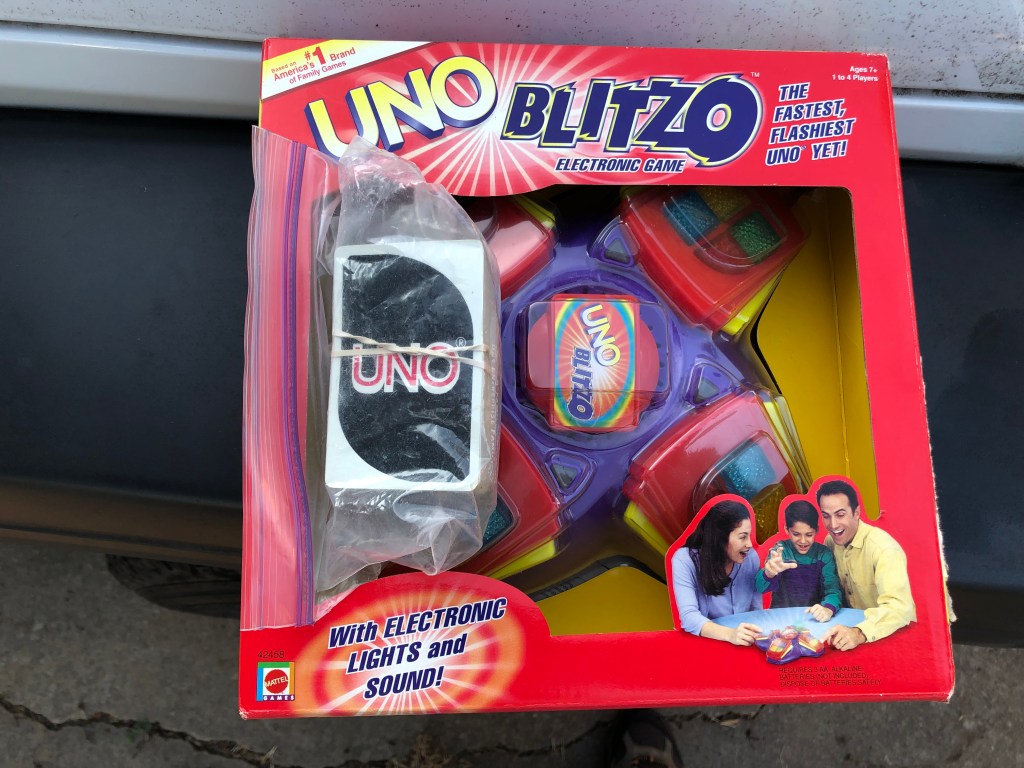
While they are already famous at home, China’s wandering elephants are rapidly becoming international stars.  Global media has been chronicling the herd’s yearlong, 300-mile (500-kilometer) trek from their home in a wildlife reserve in mountainous southwest Yunnan province to the outskirts of the provincial capital of Kunming.  Twitter and YouTube are full of clips of their various antics, particularly those of two calves who slipped into an irrigation ditch and had to be helped out of the ditch by older members of the group.  What motivated the elephants to make their epic trek remains a mystery.  I think they just went for a vacation trek during the lockdown.

The Asian elephant (Elephas maximus) is the only living species of the genus Elephas and is distributed throughout the Indian subcontinent and Southeast Asia.  There are three recognized subspecies, E. m. maximus from Sri Lanka, E. m. indicus from mainland Asia and E. m. sumatranus from the island of Sumatra.  The genus Elephas originated in Sub-Saharan Africa during the Pliocene and spread through Africa before they too went on a trek and expanded into the southern half of Asia.  The Asian elephant is the largest living land animal in Asia and has been listed on the endangered species list since 1986.  The population has declined by at least 50 percent over the last three elephant generations (60 – 75 years), primarily from loss of habitat, habitat degradation, range fragmentation, and poaching.  It seems their trek cannot get them away from people.

The 15-member herd has been caught at night trotting down urban streets by security cameras, filmed constantly from the air by more than a dozen drones and followed by those seeking to minimize damage and keep both elephants and people out of harm’s way.  They have raided farms for food and water (roadside café?), visited a car dealership (checking options for travel?), and even showed up at a retirement home (thinking ahead?), where they poked their trunks into some of the rooms.  While no animals or people have been hurt, reports put damage to crops at more than $1 million.  Sixteen animals were originally in the herd, but two ended their trek (typical tour group) and returned home.  A baby calf (not so typical) has also been born.  Some have speculated the reason for the trek is their leader simply got lost.  And they say elephants never forget.

Thoughts:  According to Nilanga Jayasinghe, manager for Asian species conservation at the World Wildlife Fund, Asian elephants are loyal to their home ranges unless there have been disturbances, loss of resources, or development, in which case they may go on a trek for new resources.  There are less than 50,000 Asian elephants left in the wild.  One YouTube follower made this comment about the elephant trek, “We should be more like the elephant and be more family oriented, take family vacations and help and care for and protect each other.”  While the thought may be anthropomorphic, these are wise words to live by.  Do the work.  Change is coming and it starts with you.
OmaHogs

June 16, 2021

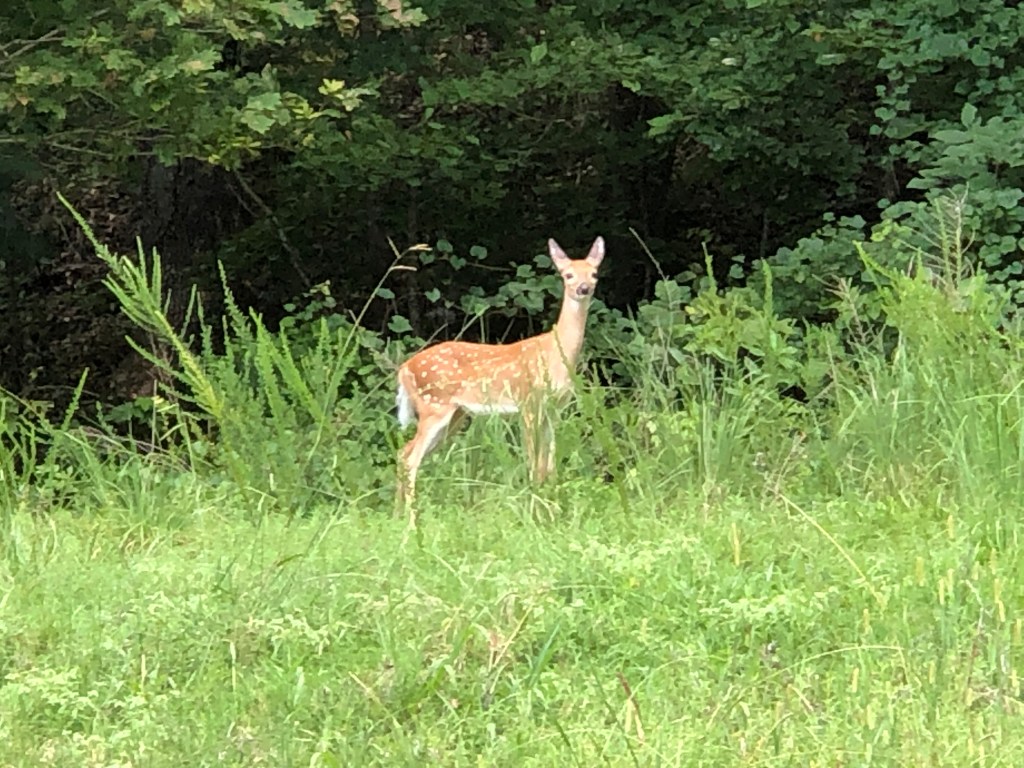
The OmaHogs, as they are affectionately known by the faithful, started the season with a weekend sweep over three top ten ranked teams from Texas and never looked back.  They continued to sweep rival Arkansas nines and then headed for the SEC, where they won ten straight weekend series and were crowned the regular season champion.  The next week they took home the tournament championship.  After being ranked #1 for 75% of the season, they entered the Regionals as a #1 seed and consensus overall #1.  While they rolled through their first two games, their starting pitching looked shaky, including a loss to Nebraska in their third game before winning the elimination game and retaining their series sweeps.  Kevin Kopps was a bright spot at relief, solidifying the victory with a seven inning, 90 pitch victory (12-0, 11 saves).  Kopps threw 185 pitches in three days in his three relief appearances.  There appeared to be a chink in the armor.

Garth Brooks sings the song, “Papa Loves Mama” about a wayward wife getting surprised by her husband.  One of the lines says, “It was bound to happen and last night it did.”  That is how I felt about the Arkansas Men’s Baseball team last weekend.  The OmaHogs continued their dominance in the first game blowing out NC State 21-2, including two grand slams.  Then they lost a close one 6-5 with Kopps sitting the bench.  That set up the final.  Kopps, the SEC Pitcher of the Year who only allowed six runs in 81 2/3 innings out of the bullpen in 2021, started his first game of the season in the winner-take-all game against NC State on Sunday.  Melissa and I both held our breath.

Kopps pitched a solid game but still ended up with a 3-2 loss, his first.  The loss came despite an incredible effort from the right-handed senior.  Kopps threw 118 pitches across 8+ innings and made just two mistakes (2 homeruns).  A ninth-inning homer by NC State’s Jose Torres ended up being the deciding factor.  This was Kopps first loss of the season.  This was also the OmaHogs first series loss of the season.  Even after this heartbreaking loss, Kopps did not forget his fans.  Kopps stayed on the field for an hour after the finale signing autographs and taking pictures for Razorback fans. 

Thoughts:  After the OmaHogs failed to return to Omaha for the College World Series for the third straight time, Kopps could have been crushed by the loss and rushed into the locker room, but he did not.  “One of the big things I think about is something Michael Jordan said about playing as hard as he can every single game because it might be someone’s one and only game”, Kopps said in his postgame interview, “I feel like it’s important to give back to the fans because they give so much to us.”  While Kopps numbers are staggeringly impressive, his attitude is more so.  While it is easy to be gracious in victory (at least for some), it is harder to accept defeat and remember those who stood beside you on the journey.  No one is an island, even if they act like it.  Do the work.  Change is coming and it starts with you.

Cicada

June 15, 2021

I was forwarded a post on CNN that told of an Ohio restaurant that found an innovative use for the Brood X cicadas emerging in parts of the East and Midwest.  The Pizza Bandit in Dayton, Ohio, tested out a Spicy Thai Cicada Pie.  In a Facebook post showing the new creation, they noted, “We’re not even sure if we legally can sell you locally foraged Cicadas.”  The restaurant did livestream a tasting panel trying out the pizza, which also featured miso hoisin sriracha sauce, mozzarella, provolone, mushrooms, cabbage, green onion, mango, cilantro, and a spicy Thai sauce.  The post said, “Opinions of the pizza range from absolutely delicious to . . .  well . . . uh . . . yeah . . .”.  Cicadas are not toxic, but the US Food and Drug Administration has warned people not to eat them if you are allergic to seafood.  “These insects share a family relation to shrimp and lobsters.”  This gives new meaning to “peal and eat.”

The Washington Post reports that Brood X is made up of three cicada species: Magicicada septendecim, Magicicada cassini and Magicicada septendecula.  The adult stage of the insect has a black body, long wings, and red eyes.  According to the University of Michigan’s Animal Diversity Web, Magicicada septendecim is the largest of the periodical cicadas and grows up to 1.5 inches (almost 4 cm) in length.  During their years underground, periodical cicada nymphs molt through five growth cycles, known as instars.   Then, when ground temperatures reach 64F (18C) at a soil depth of 8 inches (20 cm), the nymphs emerge together and metamorphose into winged adults.  Adult cicadas are fragile, white, and vulnerable for hours or even a few days until their new exoskeletons harden.

Cicada Broods are neither species nor populations.  They can best be described as “regional, multispecies groupings of periodical cicadas that emerge on a common schedule.”  The different species found in any given brood may also have separate evolutionary histories and may have joined the brood at different times or from different sources.  One hypothesis for brood formation is they are driven by climate shocks and temporary life cycle anomalies.  Brood XIX resides in the southern states and includes Arkansas.  This is a 13-year emerging Brood and is next prepared to emerge in 2024.  I can hardly wait for my pizza.

Thoughts:  I have two clear memories of visiting my great aunt and uncle in western Kansas.  The first was staying overnight and waking up the next morning to the largest plate of bacon I had ever seen.  My great aunt must have fried up five pounds of bacon and it was piled on a large platter at least four or five inches high.  The other was the cicada castings.  When I went outside the exoskeletons of the larva literally covered the trees in their yard.  I had never seen these before and was fascinated by the skins clinging to the trees.  There are times when humans get caught in the same lockstep that drives a Brood.  While we are all the same species, we do represent different languages and cultures.  Across the world the initial response to the virus was that it was a Chinese problem.  Even when it advanced it was not “our” problem.  Hopefully, the lesson learned will be that globalization means exactly that.  Whatever it is (climate, economic insecurity, pandemic), is OUR problem.  Do the work.  Follow the science.  Change is coming and it starts with you.

Monday

June 14, 2021

Last night I had asked Melissa to wake me up before she went to work this morning.  She has been recovering for the last weeks and I knew this would be a stressful day so I thought I would get up to support her.  When she did wake me, she mentioned the trash truck broke, and it was sitting in our cul-de-sac.  Then when she tried to log online for work, she found that the link that allowed her to get online had been dismantled and she did not have access.  To top it off, yesterday I had sent a link to a zoom call for later in the day and one of the recipients pointed out that I had forgotten to include the source of information we were going to discuss.  This was turning out to be a stressful Monday.

When I went out to get my paper the truck operator was standing in the street next to his truck, so I stopped to see how he was doing.  He told me that the hydraulics in the compactor were broke.  After trash is dumped into the truck, the hydraulics move a steel plate to smash the trash into the rear of the bin and then move it back into place in the front of the bin.  This is fitted with a sensor that does not allow the lift arm to work unless the plate is reset.  This keeps the unit from dumping trash behind the plate and causing the system to fail.  When the sensor malfunctioned, the arm was sitting on the ground.  The lift would not operate, and the truck would not move.  Another indication of a Monday.

Since the operator had begun the conversation, I decided to ask a question I have always wondered.  What happens to his route when a holiday falls on Monday (my scheduled pickup)?  He told me the entire route was just pushed back a day.  Monday trash was picked up on Tuesday, Tuesday on Wednesday, and so on.  While I sort of knew this, what I did not know was he worked a 40-hour week and Saturday was usually a day off.  With Monday holidays, he was paid for the holiday and then given overtime to work the following Saturday.  Trash is one of those essential services that need to happen.  The operator told me at least the truck broke in a spot where there was shade.

Thoughts:  I have always heard that Monday was the worst day of the week.  While I assumed this was because it meant having to go back to work, my online sources said there were scientific reasons for feeling bad on Monday.  You do not just feel less healthy on a Monday, you are less healthy.  Scientists have found that even people who generally maintain their weight weigh the most at the beginning of the week.  A Monday is the most common day for people to suffer heart attacks and strokes.  Even if you do not end up in the hospital, your blood pressure is higher on Monday, as is your chance of getting sick in general.  You can become negatively influenced in your attitudes and feelings about yourself more easily. Clemson’s national Ag Safety Database says that stress can cause as much as 90 percent of illness and disease.  Stress can interfere with your physical functioning and bodily processes.  We are stressed when the relaxation of the weekend meets the reality of work on Monday.  You are better off in a job you enjoy without so much stress.  For most of our essential workers, that is not an option.  Do the work.  Follow the science.  Change is coming and it starts with you.