
May 28, 2025
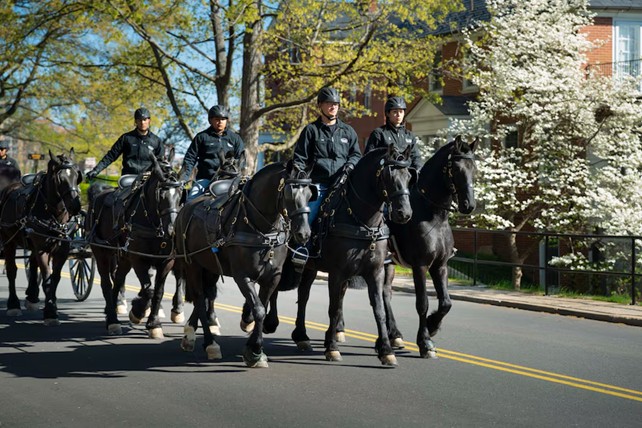
Inside the front section of my local newspaper was a USA Today article on funerals conducted at Arlington. For more than seven decades, the Caisson Platoon of the 3rd US Infantry Regiment (“The Old Guard”) has provided horse-drawn caisson funeral services at Arlington National Cemetery, Virginia. The tradition was formalized in 1948 and rooted in 19th-century military honors. These operations were paused in May 2023 after two horses died from intestinal impaction. A 2022 Army report detailing living conditions contributed to the halt. The report showed 4 equine deaths within a year, an aging herd averaging 15-20 years old, and a training system using soldier-to-soldier instruction. “We were doing things the historical way we’ve always done them, a practice common in The Old Guard,” said Army Major Wes Strickland, 3rd Infantry Regiment public affairs officer. The suspension triggered a comprehensive overhaul and rebranding the unit as the Caisson Detachment. The caissons were no longer rolling.
When I went online, I found caissons are a two-wheeled cart designed to carry artillery ammunition. Caissons were used in conjunction with a limber, the two-wheeled cart designed to support the trail of an artillery piece allowing it to be towed. The trail is the hinder end of the stock of a gun carriage, which rests or slides on the ground when the carriage is unlimbered. Six horses harnessed in pairs on either side of the limber pole were the preferred team for a field artillery piece. A driver rode on each left-hand (“near”) horse and held reins for both the horse he rode and the horse to his right (the “off horse”). After the end of WWII horses were replaced by trucks or artillery tractors to move artillery and the need for limbers and caissons died out. Caissons are also used to bear the casket of the deceased in some state and military funerals in certain Western cultures, including the US. Caissons are used for burials at Arlington National Cemetery for service members killed in action, Medal of Honor or Prisoner of War Medal recipients, senior noncommissioned and senior officers, and for state funerals for government dignitaries, including the President.
Upgrades were made to both the facilities and the caissons pulled to make horse health a priority. The 10 x 10 feet (3 x 3 m) stalls are expanded to 14 x 14 feet (4-1/4 x 4-1/4 m) with rubberized flooring and sloped designs for sanitation. The Fort Belvoir pasture was closed and replaced by a partnership with an equestrian center in Northern Virginia which offers 50 acres (20 ha) of pasture, along with rehabilitation tools like aqua treadmills. Herd management received a US$5 million budget increase which lowers the average horse age to 8-10 years. A veteran 14-year-old is now paired with a 6-year-old to allow the veterans to mentor the young. Equipment upgrades include replacing the wooden saddles with lightweight, custom fitted leather saddles specific to each horse. The caissons weight was reduced by 1,205 pounds (546.5 kg) and added rubber wheels and articulating limber poles to reduce strain on the animals. Training also shifted from impromptu to a 12-week Basic Horsemanship Course at a private stable, followed by a 6-week boot camp at a large climate-controlled equestrian sports facility in Ocala, Florida. On April 8, 2025, the Army announced caisson services would resume during the week of June 2, limited to two funerals daily and up to 10 a week. The caissons are ready to roll again.
THOUGHTS: “The Caissons Go Rolling Along” refers to these ammunition carts. The version adopted as the US Army’s official song replaced the word caissons with Army. The song is adapted from a 1908 work entitled “The Caissons Go Rolling Along”, which was in turn incorporated into John Philip Sousa’s “U.S. Field Artillery March” in 1917. While caissons are no longer a staple for the Army, they are still used to honor the fallen. Act for all. Change is coming and it starts with you.
 A travelers odyssey