
September 22, 2025
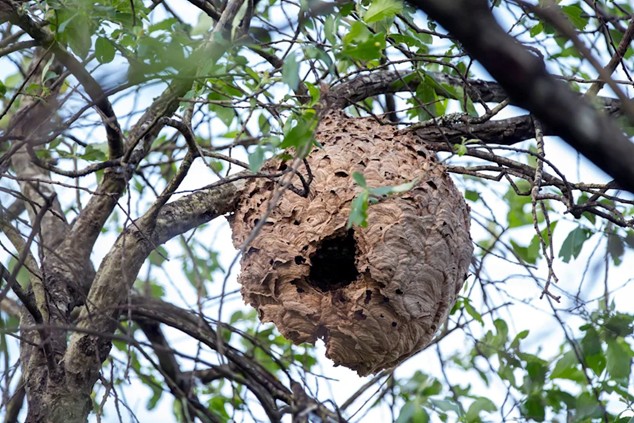
I found an article on yahoo!news about an innovative approach toward eradicating an invasive species in England. British scientists are attaching miniature tracking devices to the invasive insects which allow teams to locate and destroy their hidden nests within an hour instead of several days. Time is critical as the nest can reproduce within seven days. Inspectors capture individuals near bait stations, secure hair-thin transmitters around their bodies, and follow them straight to their colonies. According to The Guardian, Britain’s Animal and Plant Health Agency found 64 nests through August 2025, setting a seasonal record. Public participation drives much of the success for the eradication program. Citizens use the Asian Hornet Watch app to submit thousands of sightings and enabling rapid response teams to investigate reports near ports where the species often arrive hidden in shipments of wine, produce, or building materials. The invasion started when a single Asian Hornet female likely arrived in France aboard a pottery shipment from China back in 2004.
When I went online, I found the Asian hornet (Vespa velutina), also known as the yellow-legged hornet, Asian predatory wasp, or murder hornet, is a species indigenous to Southeast Asia. This is significantly smaller than the European hornet, with queens 1.2 inches (30 mm), males about 0.94 inches (24 mm), and workers about 0.79 inches (20 mm) in length. The species has distinctive yellow legs (tarsi), a velvety brown or black mid-section (thorax), and a brown abdomen. Each abdominal segment has a narrow posterior yellow border, except for an orange fourth segment. The hornet has a black head and a yellow face. The coloration of the species can vary regionally which causes difficulty in classification and resulted in several subspecies to have been identified and later rejected. The most recent taxonomic revision of the genus treats all subspecific names in the genus Vespa as synonyms, effectively relegating them to no more than informal names for regional color forms. The Asian hornet is an invasive species of concern in most of Europe.
The Guardian reported the Asian hornet feasts on honeybees (genus, Apis) and other pollinators that enable the production of approximately one-third of the crop humans consume. A single colony of hornets consumes about 24 pounds (10.9 kg) of insects during one season, putting pressure on the bee populations already struggling with habitat loss. Testing shows Britain has prevented permanent colonies from establishing, with only three of 24 nests last year originating from females that survived winter in England. While government teams fight Asian hornets with high-tech solutions, homeowners can help in their own yards with intelligent landscaping choices. Replacing portions of traditional lawns with native plants can create a refuge for local pollinators. Native plants also demand less water and maintenance than non-native species, which cuts both utility bills and maintenance. These plants support local bee populations naturally by providing the nectar and pollen sources these insects evolved to use.
THOUGHTS: The Asian hornet was declared eradicated by the US Department of Agriculture in December of 2024. Eradicated means there has not been a sighting in three years. Even without the threat of this hornet, we have taken two steps to assist pollinators in our yard. The wildflower bed in the front draws both bees and butterflies while also providing cover from any predators. The side yard has a bird bath that I fill every time I water the vegetables. This has a half brick in the middle to allow bees to cling to the brick and take a drink. It took little effort for either of these features and the result has provided food and water for countless pollinators. Act for all. Change is coming and it starts with you.
 A travelers odyssey