
Iguana

November 11, 2025

Credit…Daniel Mulcahy

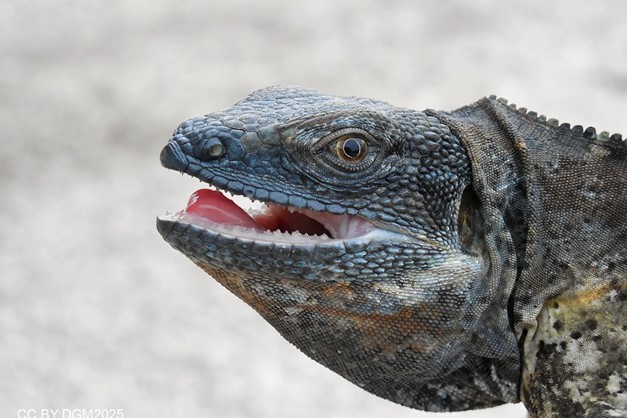
The Morning Read of the NY Times feed included an article on a possible reprieve for a previously invasive reptile species.  Biologists say DNA evidence proves the lizard landed on Clarion Island nearly half a million years ago, long before any humans might have transported them from the mainland.  Researchers reported the discovery last month in the journal Ecology and Evolution, and the finding means that the animals should be able to continue living on Clarion Island, a remote, mostly uninhabited Mexican archipelago in the Pacific Ocean.  There are around 100 iguanas there, and scientists and locals alike assumed that they had been introduced by humans in the late 20th century because they had gone unmentioned in prior accounts of the island’s fauna.  “It was all speculative that they were introduced — no one ever tested it,” said Daniel Mulcahy, an evolutionary biologist at the Museum of Natural History in Berlin who is an author of the new study.  The government was planning to exterminate the invaders to protect island’s delicate ecosystem.  Mulcahy and his colleagues compared mitochondrial DNA, passed down maternally, from the Clarion iguanas and the mainland spiny-tailed iguanas and found a 1.5 % difference in their DNA.  That meant these spiny-tailed iguana are genetically distinct and could not be recent invaders.

When I went online, I found the spiny-tailed iguana (Ctenosaura pectinata) is a species of is a species of iguanid lizard found in eastern Mexico and extreme western Guatemala.  This iguana has distinctive keeled scales on its long tail, to which its common name refers.  It is one of the larger members of the genus Ctenosaura, capable of growing to 4.3 feet (1.3 m) in total length (including tail), with females being slightly smaller than males at 3.3 feet (1.0 m).  It usually has a brown or grey-brown colored back (dorsally), with a yellowish underbelly (ventral surface).  It has a crest of long spines which extend down the center of its back.  Mating generally occurs in spring with the male showing dominance and interest by head bobbing before chasing the female until he can catch her and subdue her.  Within eight to ten weeks, the female will dig a nest and lay clutches of up to 24 eggs which hatch in 90 days with the babies digging their way out of the sand.  Hatchlings are often bright green with no body pattern and juveniles are typically green with brown markings, although all-brown hatchlings have been recorded.

Some wonder how a 4-foot (1.2 m) black-and-yellow lizard went unnoticed on Clarion Island for decades.  Clarion’s landscape has changed dramatically in recent years. The island was covered in prickly pear cactus (genus, Opuntiathat) that made exploration difficult, but was consumed by sheep (Ovis aries) and pigs (Sus domesticus) introduced by thew Mexican Navy in the 1970’s.  Those animals are gone and a shrubland community (chaparral) remains.  The iguanas are wary of humans and hide when approached.  The destruction by sheep and pigs underscores the damage invasive animals can cause.  Island ecosystems are particularly vulnerable.  Rayna Bell, an evolutionary biologist at the California Academy of Sciences said, “This type of work is fundamental to conserving some of the world’s most unique and imperiled diversity.”  Mulcahy’s colleagues are working to spread the news to government officials in Mexico to stop the eradication program.

THOUGHTS: The spiny-tail iguana is a traditional food in Mexico, listed as “Least Concern” by the IUCN Redlist, but the species is listed on the Mexican Red List as threatened and it is illegal to hunt them.  Their presence on Clarion suggests a 700-mile trip on a floating mat of vegetation.  It would be the second-longest known iguana aquatic journey, topped by another species of iguanas traveling 5,000 miles from North America to Fiji.  Humans thought the 1947 Kon-Tiki expedition was amazing.  We are always outdone by nature.  Act for all.  Change is coming and it starts with you.
Pterodactylus

September 24, 2025

Toward the back of the front section of my local newspaper was a Reuters article about the demise of two flying reptiles.  Scientists suggest both specimens were caught in the powerful winds of tropical storms which snapped the upper arm bone (humerus) that helped support its membranous wing, then flung the helpless animal into a lagoon where they drowned and were covered by mud.  The exact same wind-caused fracture appeared during examinations on fossils of two individuals unearthed years ago in separate locales in the southern German state of Bavaria.  The fossils, of slightly different ages, were stored in two museum collections.  Paleontologist Rab Smyth of the American Museum of Natural History in New York, and lead author of the study published in the journal Current Biology, said, “We noticed the injuries completely by chance.”  Researchers nicknamed the two hatchlings Lucky and Lucky II.  While it was bad luck to be doomed by storms, it was good luck that paleontologists have been able to learn from their fossils about the anatomy of young pterosaurs.

When I went online, I found Pterodactylus (Ancient Greek, ‘winged finger’) is a genus of extinct pterosaurs thought to contain a single species (Pterodactylus antiquus).  This was the first pterosaur to be named and identified as a flying reptile and one of the first prehistoric reptiles to ever be discovered.  Fossil remains of Pterodactylus are primarily found in the Solnhofen limestone of Bavaria, Germany, which dates from the Late Jurassic period (Tithonian stage), about 150.8 to 148.5 million years ago, but fragmentary remains have been identified elsewhere in Europe and Africa.  Pterodactylus was a small pterosaur, with an adult wingspan at about 3 feet (1 m).  They possessed relatively short and broad wings, a lightly built body and a long, pointed beak lined with small, conical teeth.  Pterodactylus was a generalist carnivore that fed on invertebrates and vertebrates.  The wings were formed by a skin and muscle membrane stretching from its elongated fourth finger to its hind limbs and supported internally by collagen fibers and externally by keratinous ridges.  The species was small compared to other famous genera such as Pteranodon longiceps and Quetzalcoatlus northropi which lived during the Late Cretaceous.

Pterodactylus was the first pterosaur described by science in 1784 and fossils of more than 50 individuals of various sizes have been discovered.  The two in the study were a few days to weeks old when they died, with a wingspan less than 8 inches (20 cm).  The fossils of both animals show the upper arm bone broken in a diagonal split along the shaft which suggests the wing was bent under tremendous pressure (i.e., strong winds or waves during a storm).  The storm likely carried them several miles (km), from their original habitat and into the lagoon.  Smyth said, “While a broken wing alone probably would not have been immediately fatal, the fact that they sank quickly to the bottom suggests they inhaled water and drowned.”  They were rapidly buried in the fine sediments of the storm beds where the oxygen-poor conditions protected their delicate bodies from scavengers.

THOUGHTS: I was fascinated with dinosaurs as a boy and one of my favorites was Pterodactylus.  My small plastic models were marked with the name, length, and weight that I had committed to memory.  Paleontology began as a formal science in the early 1800’s and the discovery of dinosaurs in England was crucial in establishing the field.  The end of the 1960’s saw a surge in dinosaur research activity that is ongoing.  The large predators first depicted as sluggish creatures have been replaced by agile (often smaller) individuals.  When we take time to examine what we do not know it always leads to new comprehension.  That is also true with other people and cultures.  Act for all.  Change is coming and it starts with you.
Digger

August 21, 2025

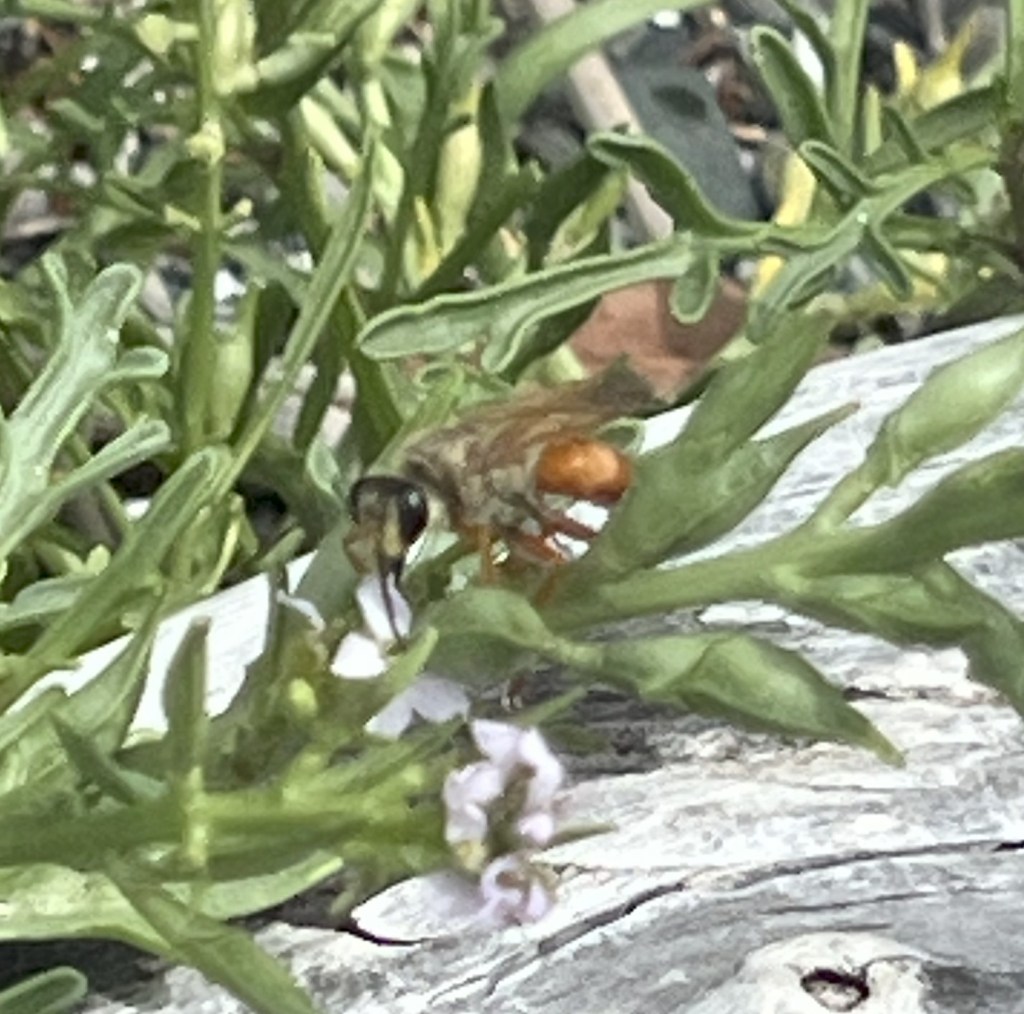
Following my disappointment fishing while at the coast last week I decided to walk through the beach community and see if I could spot some birds that were not yet on my list.  I took the road through the community first to try and spot land birds.  I was able to see two species I already recorded, an American Crow (Corvus brachyrhynchos) and a flock of house sparrows (Passer domesticus).  It was not until I returned along the beach that I picked out several forms of gulls (California gull, Larus californicus; western gull, Larus occidentalis; short-billed gull, Larus brachyrhynchus) and a flock of white-winged scoter (Melanitta deglandi) ducks.  The beaches along the Puget Sound tend to be small well-worn rock rather than the sand I associat with other coasts.  This is harder to walk on, and it took me a while to get back to the house.  When I arrived, my daughter-in-law showed me a picture of the unusual wasp they had encountered on their beach walk (other direction).  It was a large golden digger sand wasp.

When I went online, I found the golden digger sand wasp (Sphex ichneumoneus), or great golden digger wasp or great golden sand digger, is a wasp in the family Sphecidae.  The wasp’s name comes from the Greek word for “tracker,” and is most well-known for its parasitic nesting behavior.  It is identified by the golden pubescence on its head and thorax (chest), its reddish orange legs, and partly reddish orange body.  Golden hairs cover the head and thorax (hence “golden”).  The digger has a long, slender waist (petiole).  Their hind region (metasoma) is black with the first couple of segments a brilliant orange-red that matches their legs.  Size varies from 1/2 to over 1 inch (1-1/4 to 2.5+ cm) long.  This wasp is native to the Western Hemisphere, from Canada to South America, and provisions its young with various types of paralyzed Orthoptera (grasshoppers and crickets). 

From May through August, great golden digger wasp females build their nests in sandy soils.  These consist of a descending shaft and side chambers for the young at right angles.  This makes it difficult to pull prey into a brood chamber without getting stuck and is one possible reason why the wasp always checks to ensure the path is clear before pulling its prey down by its antennae.  Female wasps commonly build their burrows nearby those of other females of their species and may even share a nest.  However, they will fight other wasps if they encounter them inside their burrow during prey retrieval.  By inspecting the unattended nest, the wasp avoids risking an encounter with another wasp while carrying its prey.  The digger will track and hunt their prey (i.e., tracker) and sting it with a paralyzing venom that keeps it alive, then flies (or drags) the prey to the nest.  At the nest the digger wasp lays down their paralyzed prey and enters her tunnel and checks to ensure that all is well.  Then she brings the prey down into a side chamber, lays an egg on the prey, and seals the chamber.  When the egg hatches it feeds on the prey through the winter, and the new wasp emerges from its side chamber in the spring and begins the cycle again. 

THOUGHTS: The golden digger sand wasp is like the cicada killer (Sphecius speciosus) I saw last week in Arkansas.  Both are large, solitary, build nests in the ground, are harmless to humans, and do not defend their nest or behave aggressively.  While they have stingers, they rarely sting humans unless they are stepped on.  The digger is a pollinator that preys on insects that are harmful and are helpful to have around your garden (or beach house!).  These are possibly the only wasps known to be attacked by birds.  House sparrows and American robins (Turdus migratorius) will attack to force the digger to drop its prey for the bird to eat.  I guess both the young and the birds are looking for an easy meal.  Act for all.  Change is coming and it starts with you.
Red-bellied

July 14, 2025

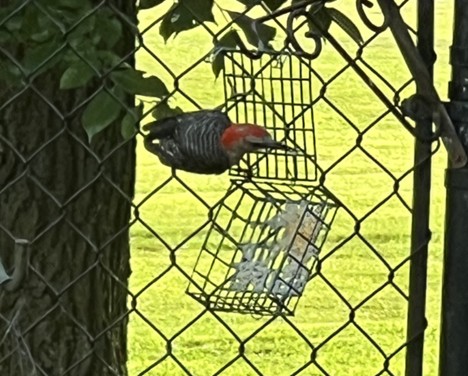
Last weekend Melissa called me into the kitchen to watch the large bird that had been battling two squirrels over “rights” to what was left in my soot feeder.  I grabbed my camera and by the time I arrived the squirrels had been driven off, but the bird was still there.  Melissa said she had watched the bird attack the two eastern gray squirrels (Sciurus carolinensis) for about 20 minutes.  The bird alternately flew at both squirrels keeping them at bay.  This was a new species identification for Melissa, and the bright red head led her to believe this was a red headed woodpecker (Melanerpes erythrocephalus).  I occasionally see one of these birds at my feeders and had even identified one early in January (although without a photo).  At first, I also thought it might be a red-headed woodpecker.  My apps instead identified this as a red-bellied woodpecker.

When I went online, I found the red-bellied woodpecker (Melanerpes carolinus) is a medium-sized woodpecker of the family Picidae.  While the species breeds mainly in the eastern US, it ranges as far south as Florida and as far north as Canada.  The most prominent feature is a vivid orange-red crown and nape, but this is not to be confused with a separate species in the same genus, the red-headed woodpecker.  The red-headed woodpecker has an entirely red head and neck, a solid black back, and white belly.  Red-bellied woodpeckers are 9 to 10.5 inches (22.85 to 26.7 cm) long, have a wingspan of 15 to 18 inches (38 to 46 cm), and weigh 2 to 3 ounces (57 to 91 g).  The red-bellied earns its name from the pale reddish tint on its lower underside.  Adults are mainly light gray on their face and underparts and have black and white barred patterns on their back, wings, and tail.  Adult males have a red cap going from the bill to the nape while females have a red patch on the nape and another above the bill.  White patches become visible on the wings in flight.  The reddish tinge on the belly is difficult to see in field identification.

I have never noticed the red spot on a red-bellied woodpecker and have instead identified them by the black and white barred pattern on their backs.  I always wondered why they were called red-bellied, and now I know.  Predators of adult, red-bellied woodpeckers include birds of prey such as sharp-shinned hawks (Accipiter striatus), Cooper’s hawks (Astur cooperii), black rat snake (Pantherophis alleghaniensis), and house cats (Felis catus).  Known predators of nestlings and eggs include red-headed woodpeckers, owls (Order, Strigiformes), pileated woodpeckers (Dryocopus pileatus), black rat snakes, and eastern gray squirrels.  When approached by a predator, the birds either hide from or harass the threat with alarm calls.  They will defend their nests and young aggressively and may directly attack predators that come near.  While this bird did not have a nest, it was aggressively defending its food supply.

THOUGHTS: By driving off the gray squirrels the red-bellied woodpecker was it was exerting its territorial rights.  A defended territory is typical of songbirds but is also found in many other orders of birds.  Territory may be held by one bird, a pair, or a flock and can be held for all or only part of a year.  It may be very large (eagles) and provide all the resources the bird needs or be very small such as nesting territories.  It may be vigorously defended or loosely guarded.  Typically, territories are defended against others of the same species but may also be defended against other species.  Humans also claim both small and large areas we define as ours and actively defend.  These are also shared, but generally only with those we define as “us”.  Globalization is forcing humans to make new choices on us and them.  Cooperation and sharing resources may provide for all.  Hoarding resources has and will always lead to conflict.  Act for all.  Change is coming and it starts with you.
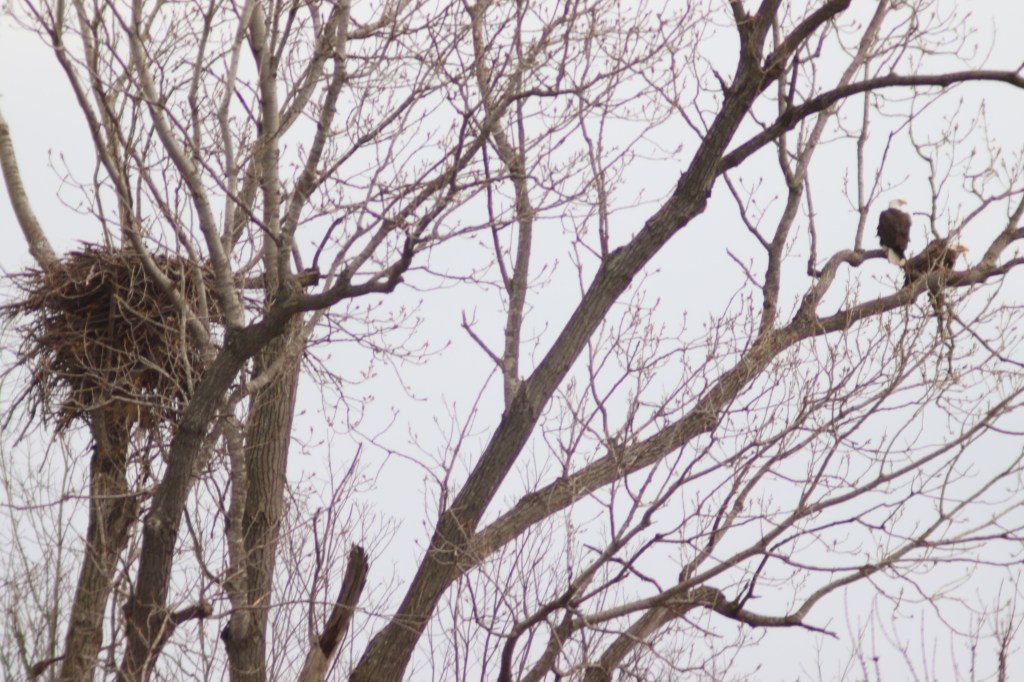
Long-beaked

June 14

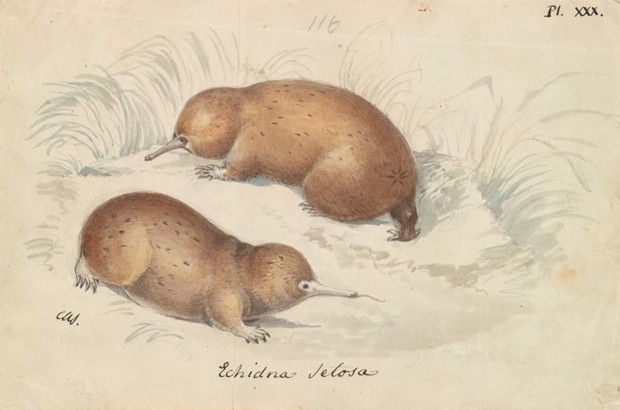
Charles Hamilton Smith circa 1837.

Biologists have confirmed the existence of a 200-million-year-old species of egg-laying mammal thought to be extinct.  Footage was captured in 2023 by Oxford University during an expedition to the Cyclops Mountains in Indonesia.  Researchers said the species had not been recorded in the region for more than 60 years (a dead specimen), but evidence of the animal’s existence was found in recent decades.  In 2007, researchers found “nose pokes” in the Cyclops, or the trace signs made when they forage underground for invertebrates.  Indigenous groups also reported sightings of the species in the past two decades.  In 2017 and 2018, researchers combined participatory mapping with indigenous and other knowledge to assess the probability the animals still existed.  Camera traps deployed in the Cyclops in 2022 and 2023 garnered 110 photos from 26 individual events.  In a paper published in the journal NPJ Biodiversity in May 2025, by combining modern technology with indigenous knowledge researchers confirmed the long-beaked echidna had been found,

When I went online, I found the Attenborough’s long-beaked echidna (Zaglossus attenboroughi), also known locally as Payangko, is one of three species from the genus Zaglossus that inhabits the island of New Guinea.  The species lives in the Cyclops Mountains near the cities of Sentani and Jayapura in the Indonesian province of Papua in Western New Guinea.  It is named in honor of naturalist Sir David Attenborough.  The long-beaked is the smallest member of the genus Zaglossus, being closer in size to the short-beaked echidna (Tachyglossus aculeatus).  The weight of the type specimen when it was alive was estimated to be 4.4 to 6.6 pounds (2 to 3 kg).  The male is larger than the female and is further differentiated by the spurs on its hind legs.  The species has five claws on each foot like the eastern long-beaked echidna, and has short, very fine and dense fur.  The diet of the long-beaked echidna consists primarily of earthworms, in contrast to the termites and ants preferred by the short-beaked echidna.  The long-beaked is listed as critically endangered by the IUCN, and there had been no confirmed sightings between its collection in 1961 and November 2023, when the first video footage of a living individual was recorded. 

The long-beaked echidna is not a social animal and only comes together once a year, in July, to mate.  The female then lays the eggs after about eight days, with the offspring staying in their mother’s pouch for around eight weeks.  The long-beaked is nocturnal and rolls up into a spiky ball like a hedgehog (family Erinaceidae) when it feels threatened.  According to the research paper, these are the “sole living representatives” of egg-laying (monotreme) lineage that diverged from marsupials and placental mammals (therians) more than 200 million years ago.  The long-beaked echidna also once lived in the Oenaka Range of Papua New Guinea, but the Cyclops Mountains are the only location where the long-beaked has been recorded in modern times.  The long-beaked echidna is one of just five egg-laying mammals in existence today, including the platypus and two modern echidnas.

THOUGHTS: The long beaked echidna were one of more than 2,000 “so-called lost species”, or species that have gone undocumented for sustained periods of time.  The research paper said, “Rediscoveries offer hope that others survive, especially in places where biological research has been limited.”  Only 3% of the earth’s land mass is unexplored, but over 80% of the ocean remains unexplored.  It is estimated that between 15,000 and 18,000 new species are discovered annually, in addition to lost species rediscovery.  While all types of species are discovered every year, insects are by far the most common.  There is still a lot that humans do not know about the earth and new discoveries are always possible.  Act for all.  Change is coming and it starts with you.

Inca

June 12, 2025

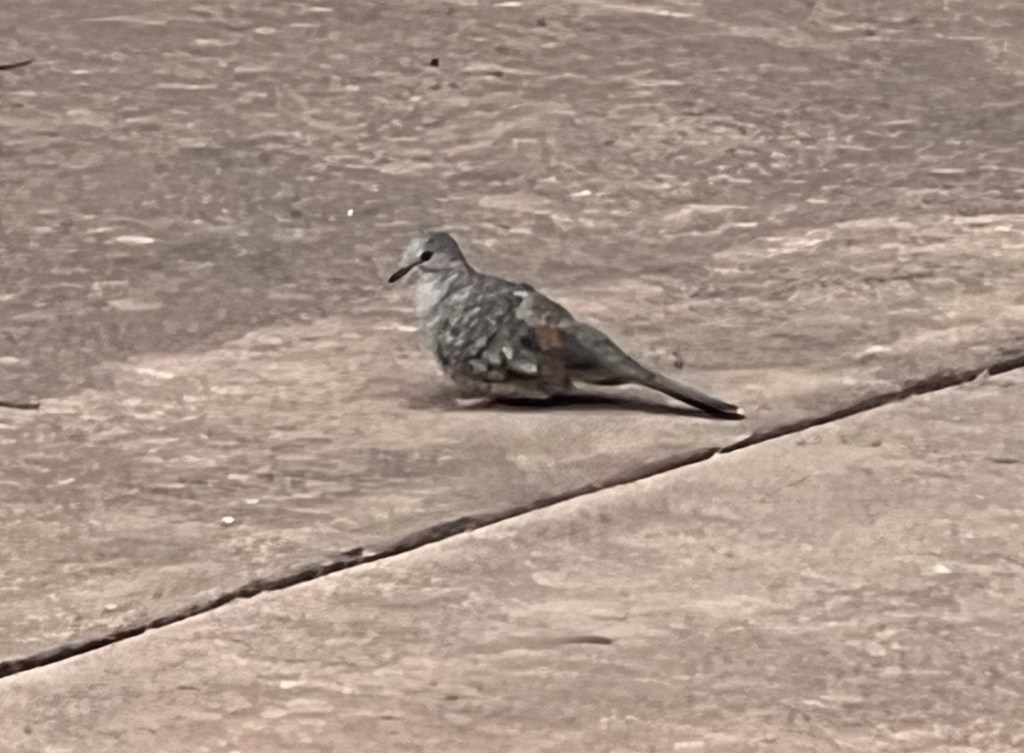
As I looked out my back window this afternoon, I saw a flash of copper as a bird flew from our window feeders to the pool deck.   At first, I thought it was one of the elusive mourning doves (Zenaida macroura) I see and hear frequently around our property (but not at our feeders or been able to get a picture).  The problem was that it seemed a little smaller than a mourning dove, and then there was that copper flash as the bird landed on the deck.  I enjoy watching the small passerines that flock to our feeders in the morning and evening.  I will even tolerate the common grackles (Quiscalus quiscula) that drive the other birds off and eat the entire feeder in short order.  That is as long as they do not arrive en masse.  I have watched them strip all eight feeders along the fence in less than 10 minutes.  Now I have taken to occasionally send Loki out to scare them away.  While he does not do anything except run into the yard, the grackles seem to be afraid of his size.  The bird on the deck seemed to be a species I was unfamiliar with.  I was able to get a photo of the bird before it flew off and I checked it against the google identification app.  It turns out it was a new bird, an Inca dove.

When I went online, I found the Inca dove (Columbina inca), also called the Mexican dove, is a small New World dove first described by French surgeon and naturalist René Lesson in 1847.  The Inca reaches 6.5 to 9.1 inches (16.5 to 23 cm) in length, weighs 1.1 to 2.0 ounces (30 to 58 g) and has an average wingspan of 11.2 inches (28.5 cm) and a max wingspan of 12.6 inches (32 cm).  The Inca is a slender species, with a gray-brown body covered in feathers that resemble a scaled pattern.  The tail is long and square and edged with white feathers that may flare out in flight.  The underwings are reddish (hence the copper I saw) and on takeoff produce a distinctive, quiet rattling noise.  The species ranges from Costa Rica in the south to the American Southwest in the north and is often common to abundant in suitable habitat.  This terrestrial species forms flocks in desert, scrubland, and cultivated areas and may also be found in urban settings where they feed on grass seeds and take advantage of the availability of water from agricultural and suburban irrigation.  During winter, Inca doves roost in communal huddles of 10 or more birds by making a pyramid formation that aids them retain body heat.  They often flock outside of their territories, with flocks growing up to 100 birds.  Its range has been expanding northward and southward in the past few decades. 

Despite being named after the Inca Empire, the species does not occur in any of the lands where the Inca empire existed.  When I looked at the range map for the Inca dove, I noticed it did not include Arkansas.  The closest it came was toward the top of Texas, or several 100 miles (320 km) to the south and west.  The Inca has in the past escaped or been deliberately released in the state of Florida in the US, but there is no evidence that the population is breeding.  It may only persist due to more releases or escapes.  The single bird I saw may have been blown off course by the current round of storms which have been coming up from Texas.  Or perhaps it just wanted to be a tourist in the Natural State (i.e., Arkansas).  Regardless, this qualifies as a rare bird sighting.  A rare bird sighting is observance of bird species that are uncommon in a particular region or that are considered at risk of extinction.  These sightings can include birds that are not typically found in a specific area due to changes in migration patterns, unusual weather conditions, or simply because they are very rare.

THOUGHTS: When I identified the Inca dove it became my first rare bird sighting.  I was a little skeptical being a newbie birder, but my daily rare bird notification listed another Arkansas sighting as well.  I posted the picture and have already gotten a Like.  Being an amateur and posting on a site of experts made me nervous.  Perhaps more of us should follow the advice of Eleanor Roosevelt – “Do one thing every day that scares you.” Act for all.  Change is coming and it starts with you.
Hiding

June 04, 2025

I woke this morning to the frantic yipping and growling of our dog Loki.  I went into the dining room to see what was wrong and he was standing at the picture window looking onto the flower bed.  This behavior is usually attributed to the neighborhood cats who like to stroll leisurely across our lawn.  Our yard has also been attracting a few eastern cottontail rabbits (Sylvilagus floridanus) that he barks at.  As I have left the house, I see them lying under the knockout rose bush (Rosa “Radrazz”) in the middle of the yard or sitting next to the hydrangeas (Hydrangea arborescens) in the front bed.  I am surprised they do not pay much attention to me as I leave the house.  Last week I found three rabbits sitting in the yard, but they took off when I came out.  Loki’s manner said this was something different.  When I looked closer, I saw a rabbit nestling beneath the tree.  She had made a little bed among the succulents and appeared to be preparing to have her kittens.  She was hiding in plain sight.

When I went online, I found Eastern cotton tails often make their nest in open areas, or hiding in plain sight.  This behavior is used to discourage the predators that are too timid to enter those areas.  The mother rabbit cares for the babies in a way that limits her time in the nest, making it less likely a predator will find the nest.  Rabbit mothers nurse for approximately 5 minutes a day, once in the morning and again in the evening.  They do not “sit” on the babies to keep them warm like some mammals and birds but instead build a nest with fur and grass which helps to keep the babies warm in between feedings.  The home range is roughly circular, and a rabbit typically inhabits one range throughout their life.  A range averages 1.4 acres (0.57 hectares) for adult males and 1.2 acres (0.49 hectares) for adult females but vary in size from 0.5 to 40 acres (0.20 to 16.19 hectares), depending on season, habitat quality, and individual.  Adult males have larger ranges during breeding season.  Multiple and a nesting rabbit say we will have rabbits hiding in our yard for the foreseeable future.  

When a nest hiding in plain sight is discovered many assume it has been “abandonded” and want to help.  Less than 10% of orphaned rabbits survive a week and the care attempted can be illegal, unnecessary, and potentially harmful.  To determine if the mother is returning, create a tic-tac-toe pattern over the nest with twigs and wait 24 hours to see if the twigs have been removed.  If they have been moved the mother is coming back.  You can also listen to the amount of time the kittens spend crying.  The kittens should be quiet most of the day, and if they are constantly crying, they are not being fed.  If you find a nest that has been disturbed, do all you can to restore and protect it rather than bring the kittens inside.  If a dog has discovered the nest (Loki is not out front), you can put a wheelbarrow or a wicker laundry basket with a hole cut in it to allow the mother to enter.  If you come across a rabbit nest in the wild and the mother is not there, leave them alone.  If you remove them from the nest, you will greatly reduce their chance of survival.  If you are in doubt about what to do and want to help, the best thing is to contact a wildlife rehabilitator in your area. 

THOUGHTS: Finding the rabbit trying to build a nest hiding in plain sight gave me pause.  The presence was driving Loki nuts, and I knew if I did not do something we would have an active nest.  This year the bed includes tomatoes (Solanum lycopersicum), squash (Cucurbita pepo), and red onions (Allium cepa), so I will be weeding close to the nest.  Melissa pointed out the rabbit did not move when we went to look at it, and even when I went to the mailbox it ran away and immediately came back.  I have decided to leave the choice to the mother.  Wanting to help has often put humans in conflict.  While humanitarian aid should be provided, changing lifestyle is the choice of the person wanting help, not the aid giver.  Act for all.  Change is coming and it starts with you.
Returned

May 17, 2025

Last May I blogged about the nest an American Robin (Turdus migratorius) had made on top of the curve in the downspout on the side of our house.  While this stuck me as amusing, it prompted an exploration into what I could (and could not) do with the nest.  I was not too keen about having a bird nest attached to my house (neighbors: how unsightly!).  The nest was just above my raised vegetable beds, so I wondered about being attacked every time I came out to water or pick new fruit.  The birds were not overly territorial but would always make a scene of flying to the fence along the yard in an apparent effort to divert my attention from the nest.  Since I did not want this to become a permanent nesting site, I checked Arkansas law and found the nest was protected by the Migratory Bird Treaty Act (1918) if the nest was active (eggs or chicks present).  If the nest has been abandoned or has no eggs it can be removed.  I waited until late September before I removed the nest.  This year another pair of robins built a nest in the exact same location.  That got me wondering if the pair returned or if this was just a great place to build a nest and raise a family.

When I looked online, I found the American robin has an extremely high rate of return to the same breeding site each season (nest fidelity).  Why birds returned to nest was not really understood until the early part of the last century when Oliver Austin, with the Wellfleet Bay Wildlife Sanctuary in Massachusetts, started banding the Common tern (Sterna hirundo) which nested there.  Austin found that the same terns returned to Wellfleet each spring and often laid their eggs in the exact spot on the ground as they did the year before.  While robins return to old nesting sites, they typically do not reuse nests.  They might repair or build on top of an old nest, but they generally build a new nest for each brood they raise.  Old nests can harbor parasites and diseases, so building a new nest helps keep the nestlings healthy.  Robins return to a previous nesting site if they had a successful hatch.  They may instead prefer a new nest site, especially if they have found a more protected location or have discovered a potential predator eyeing their old nest.

A bird building a nest in your house is often seen as a positive omen, symbolizing new beginnings, a safe and peaceful environment, and a connection to higher powers.  The nest can also represent the presence of loved ones (living or dead), and a message of love and care.  Birds are often seen as messengers of hope and faith, and their presence can be a reminder of your spiritual connection to the universe.  Birds are drawn to places with positive vibrations and a sense of peace so the nest in your home suggests your house is a harmonious and safe space.  The act of building a nest symbolizes new beginnings and a sense of starting anew.  A nest in your home can be seen as a message from loved ones who recently died and a reminder of their continued presence and love.  The nest itself is a symbol of home and the importance of creating a safe and nurturing environment.  Finally, in Buddhist traditions the bird’s nest symbolizes a nurturing environment and the importance of caring for new life.  I guess that means when they return you have been doubly blessed.

THOUGHTS: Last year’s arrival of the robins met with concern over what the nest said about me as a homeowner.  When they returned to the down spout it was met with a sense of joy at the wonder of life on display (including the two chicks in the photo).  I work hard to keep the feeders full and water on hand.  The nesting pair acknowledges our yard is a safe haven.  Safe havens need to be available for both birds and humans.  These places usually take hard work to ensure they are not lost.  Act for all.  Change is coming and it starts with you.
Fledging

May 06, 2025

When I let the kids out into the side yard yesterday afternoon for a constitutional Loki immediately ran to the fence.  That was not a real surprise as he usually runs to the fence to see if the next-door dogs were outside.  This time he instead started scrambling after something he found on the ground.  Although I did not know what he had found, I was certain it was not something he needed to have in his mouth.  I shooed him away and saw a fledgling bird lying on the ground.  The frightened bird started scittering around as I tried to trap it in my hands.  I finally grabbed the small bird.  The bird was obviously frightened and distressed, but other than being wet from being in Loki’s mouth it appeared to be unharmed.  I placed the bird on the top of the 6-foot (1.8 m) fence to keep it out of harms way and to give it a chance to gain some air before it hit the ground again trying to fly away.  This was a fledgling blue jay that must have fallen from its nest trying to learn to fly.

When I went online, I found the blue jay (Cyanocitta cristata), or the jaybird, is a passerine bird in the family Corvidae that is native to eastern North America.  The blue jay lives in most of the eastern and central states of the US.  Some US populations are migratory.  Resident populations are also found in Newfoundland, Canada, while breeding populations are found across southern Canada.  The blue jay measures 9 to 12 inches (22 to 30 cm) from bill to tail and weighs 2.5 to 3.5 ounces (70 to 100 g), with a wingspan of 13 to 17 inches (34 to 43 cm).  The color is predominantly blue, with a white chest and underparts, a blue crest, and a black, U-shaped collar around its neck and a black border behind the crest.  Males and females are similar in size and plumage.  The blue jay feeds mainly on seeds and nuts, soft fruits, arthropods, and an occasional small vertebrate.  It typically gleans food from trees, shrubs, and the ground, and will “hawk” insects from the air.  Blue jays can be very aggressive to other birds and have been seen to raid nests and have even to kill other birds.  The nest is an open cup in the branches of a tree built by both sexes.  The clutch has from two to seven eggs, which are blueish or light brown with darker brown spots.  Young are underdeveloped at birth (altricial) and are brooded by the female for 8 to 12 days after hatching.  The fledgling will leave the nest between 17 to 21 days old

Blue jays are monogamous during nesting and do not typically abandon their young.  Even after the fledgling leaves the nest the parents will care for and feed them for at least a month, and sometimes for up to two months.  If a young jay wanders far from the nest, parents may still feed it if it can be restored to or near the nest.  The rare cases where the young are abandoned are due to some disturbance or other unforeseen circumstances.  If you find a young blue jay, it is best to leave it alone unless it is in immediate danger.  It is likely the parents are likely to be nearby and will continue to care for the fledgling bird. 

THOUGHTS: The fledgling blue jay I found appeared to be in imminent danger when I put it on the fence.  Fledgling is a dangerous time of life, with an average mortality rate of 42% over a week or two, with most mortality just after they leave the nest.  Humans are born altricial and take even longer to learn to be self-sufficient, typically around 30 years to become fully self-sufficient.  This lengthy process is due to factors like the large human brain taking time to develop, premature birth, and the need to learn complex skills from caregivers.  Self-sufficiency is a gradual progression and not an event and involves developing practical skills and emotional independence.  Being labeled an adult at 18 has little to do with being self-sufficient.  Care networks need to be extended rather than cut off when a child comes of age or decides to become a fledgling.  Act for all.  Change is coming and it starts with you.
Indigo

May 05, 2025

My MSN browser carried an article about the annual reintroduction of a snake into Florida’s forests.  The 41 snakes were released on April 30 at Apalachicola Bluffs and Ravines Preserve (ABRP).  The 21 males and 20 females are part of a long-term effort to restore a once-common species.  This is the eighth year that The Nature Conservancy and its partners have conducted the release.  “The snakes are native, non-venomous, and critical to this ecosystem,” said Catherine Ricketts, preserve manager at ABRP.  This latest release brings the total number of snakes returned to the site to 167.  In 2023, conservationists spotted two hatchlings born in the wild, the first natural offspring of previously released snakes.  Each snake hatches at the Orianne Center for Indigo Conservation (OCIC) and at one year are moved to the Welaka National Fish Hatchery.  The Apalachicola Bluffs and Ravines Preserve is the only site in Florida where Eastern Indigo snake reintroduction is happening.

When I went online, I found the eastern indigo snake (Drymarchon couperi), also called the indigo snake, blue indigo snake, black snake, blue gopher snake, and blue bull snake, is a species of large, non-venomous snake in the family Colubridae.  The species is native to the southeastern US.  The Eastern Indigo was first described by John Edwards Holbrook in 1842.  Until the early 1990’s the genus Drymarchon was considered monotypic with one species (Drymarchon corais) and 12 subspecies.  Drymarchon corais couperi was then elevated to full species status according to the Society for the Study of Amphibians and Reptiles.  The generic name (Drymarchon) is from the Greek words drymos (“forest”) and archon (“lord” or “ruler”), roughly translating to “lord of the forest”.  The eastern indigo has uniform blue-black dorsal scales, with some specimens having a reddish orange to tan color on the throat, cheeks, and chin.  This smooth-scaled snake is considered e the longest native snake species in the US.  The longest recorded specimen measured 9.2 feet (2.8 m) long and the mature male are slightly larger than females.  A typical mature male measures 3.0 to 7.7 feet (1.2 to 2.36 m) and weighs 1.6 to 9.9 pounds (0.72 to 4.5 kg).  Specimens over 8,5 feet (2.6 m) can weigh up to 11pounds (5 kg).

The eastern indigo snake is listed as a federally threatened species in Georgia and Florida due to habitat loss.  In 2012 the Alabama Department of Conservation and Natural Resources had listed the species as possibly extirpated within the state, but a reintroduction program has shown signs of success.  The eastern indigo was largely eliminated from northern Florida due to habitat loss and fragmentation. A restoration program is currently underway at Apalachicola Bluffs and Ravines Preserve (ABRP) in northern Florida. The eastern indigo snake was last observed at ABRP in 1982, until 2017 when 12 snakes were released as part of the program. Twenty more snakes were released in 2018, and another 15 (10 female and 5 male) in 2019.  The 10-year program is a collaborative effort between the Florida Fish and Wildlife Conservation Commission and private partners.  The snakes are also dealing with infections due to the snake fungal disease (Ophidiomyces ophiodiicola) which infects the dermal layer of skin, causing a variety of lesions that commonly manifest on the head and near the vent.  NatureServe considers the species to be Vulnerable.

THOUGHTS: The docile nature and appearance can make the eastern indigo snake to be a desirable pet but owning one may be illegal without a permit.  While only a few states require permits, a federal permit is required to buy one from out of state anywhere in the US.  Most states allow unrestricted in-state sales.  The snake requires a larger enclosure than most species and preferably with something to climb on.  As a vulnerable species, it is perhaps best to leave them to the Nature Conservancy.  Act for all.  Change is coming and it starts with you.