Jumper

October 01, 2025

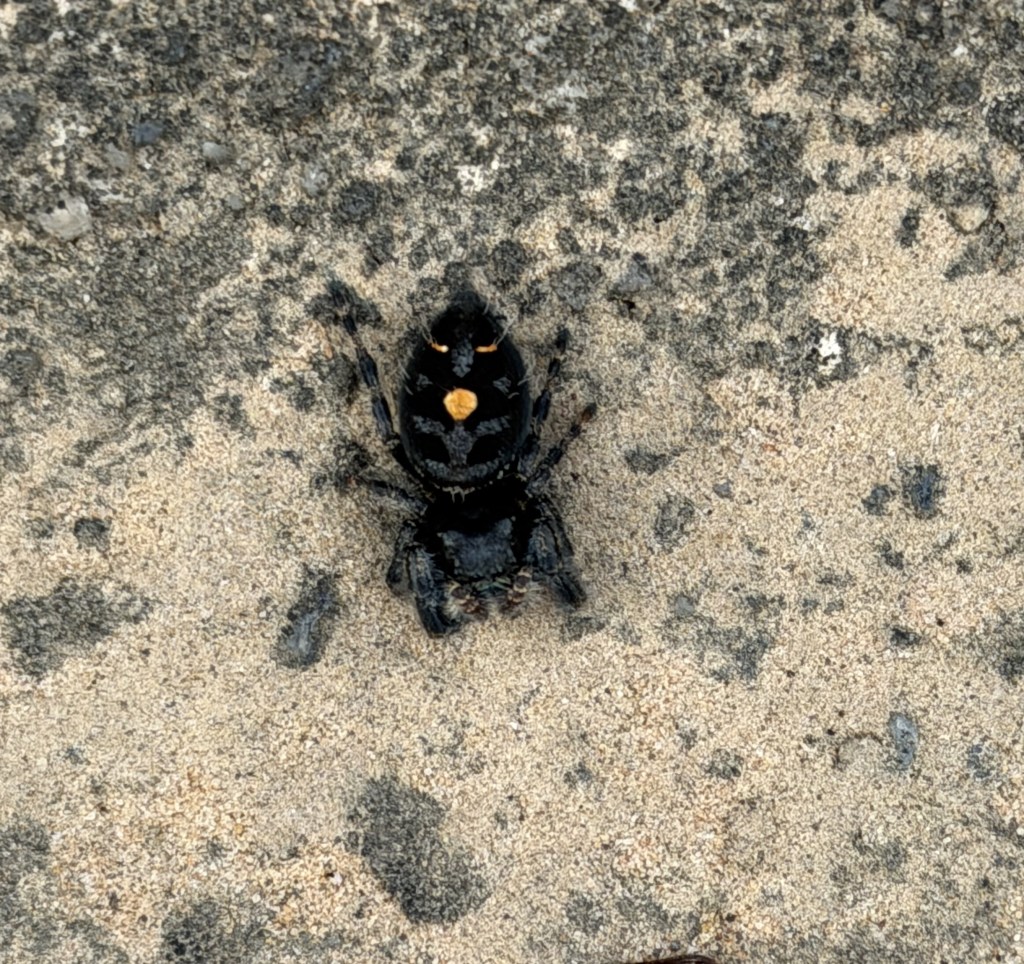
When I opened my mailbox this morning to retrieve my newspaper, I was surprised by something jumping out of the mail.  The mail itself was covered by a fine gauze-like webbing.  I figured this was some sort of spider that had decided to take up residence in the dark confines of my closed mailbox.  This did not strike me as unusual as many spiders are on the move at this time of year seeking a place to overwinter.  I was surprised by the distance the spider had jumped.  It had shot off my paper and onto the ground several feet away.  When I Goggled a picture of the spider, I found it was aptly named a Bold jumper.

When I went online, I found the bold jumper (Phidippus audax), also known as the daring jumping spider, is a common species of spider belonging to the genus Phidippus.  This group of jumping spiders easily identified by their large eyes and their iridescent mouth parts (chelicerae).  They are typically black with a distinct white triangle on their abdomen.  Like all jumping spiders, they have excellent stereoscopic vision that aids them in stalking prey and facilitates visual communication with potential mates during courting.  The species are native to North America and have been introduced to Hawaii, Nicobar Islands, Azores, and the Netherlands.  The Bold jumper is a solitary carnivore that uses their highly specialized eyesight to actively hunt and stalk a variety of insects and non-insect terrestrial arthropods such as caterpillars (order Lepidoptera), dragonflies (infraorder Anisoptera), grasshoppers (suborder Caelifera), and other spiders (order Araneae).  They are one of the most common spiders found in agricultural areas and have been studied to determine their impact on crop pest populations.  New Hampshire Governor Chris Sununu signed the HB 318 bill on June 11, 2021, designating the bold jumper as the state spider following a campaign by a class in Hollis, New Hampshire.

The bold jumper is often found living near humans.  Bites are rare but may occur if they feel threatened or are mishandled.  Bites are often described as mildly painful and are not considered dangerous.  Symptoms often include localized redness, itching, and swelling for one to two days, if at all.  Medical attention is only advised if symptoms worsen or abnormal symptoms arise.  If bitten, you should wash the area with water and a mild soap.  A cold compress may be used to treat swelling and aspirin, and acetaminophen may be used for pain.  As a major predator of crop pests, they have been studied to determine their impact on pest insect populations.  However, in addition to eating pests, they also eat beneficial insects such as pollinators.  My jumper went to the ground and then calmly stayed in place as I maneuvered my camera to take a photo.  It obviously did not consider me a threat and having been around them frequently I did not consider it a threat either.  Unlike most spiders, the bold jumper does not build webs to catch prey.

THOUGHTS: I found it curious that the bold jumper does not build a web to catch prey, yet there was an obvious webbing on my newspaper.  This was the start of the thin sheet of silk that would become the nest for an egg-sac.  This is usually built in hidden areas under rocks, bark, or leaves, but the inside of my mailbox seemed to serve.  The jumper was preparing to create a secluded nest to provide for the next generation in the spring, but my mailbox was not the secluded location she sought.  Humans find similar radical shifts in environment.  A site along the ocean seems perfect, until the storm surge from a hurricane washes out the foundation and sweeps the house into the sea.  Building needs to take potential environmental shifts into account.  Both for weather impact and the impact of encroaching on fragile ecosystems.  Act for all.  Change is coming and it starts with you.
Hammerhead

June 17

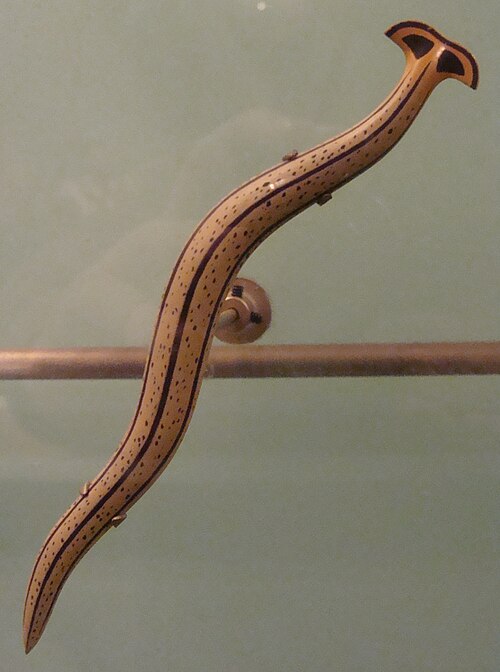
Inside the back section of my local newspaper was an article on an invasive species that has been reported in Texas.  The worms have been reported throughout Texas for decades but several weeks of excessive rainfall have literally flushed the creatures into the open.  Usually, during the day the worms can be found under leaves, rocks, or logs.  The rain has brought them out to driveways, patios, and sidewalks.  Ashley Morgan-Olvera, director of the Texas Invasive Species Institute, said while the worms are not a direct threat to humans or household pets, they do have a lasting effect on the ecosystem as they prey on the earthworms that are responsible for distributing oxygen, draining water, and creating space for plant roots.  This genus is collectively known as hammerhead worms.

When I went online, I found hammerhead worms (Bipalium) are a genus of large predatory land flatworms (planarians), also known as broadhead planarians.  The name Bipalium comes from Latin bi- (two) and pala (shovel or spade), because species in this genus resemble a pickaxe.  Hammerhead worms are unique in that they possess a highly ciliated (hair-like) region on the ventral epidermis (a creeping sole) that helps them to creep over the substrate.  The worm is typically light honey colored with a darker collar and one to five strips on its body.  The worm can grow up to 15 inches (38 cm) in length.  Bipalium species are predatory and some species prey on earthworms while others also feed on mollusks.  These flatworms can track their prey.  To feed on their prey, the hammerhead often turns the pharynges out of their mouths (evert), which are located on the midventral portion of their bodies and secrete enzymes that begin the digestion of the prey.  The liquefied tissues are sucked into the branching gut of the flatworms by ciliary action.  Hammerhead worms are native to Asia, but several species are invasive to the US, Canada, and Europe.

The hammerhead does not bite but they do secrete a poisonous chemical for protection from predators which can cause skin irritation.  If a cat or dog eats a hammerhead it will likely get nauseated and throw it up, but there is no long-term threat.  Morgan-Olvera said if you see a hammerhead do not try to kill it or cut it up.  The worm can reproduce asexually and if you cut it up and leave it in the yard a new head could form within about ten days.  To dispose of the worm, place the whole worm in a resealable bag with salt or vinegar and put it in the trash.  The worms can also be sprayed with a combination of citrus oil (orange essence) and vinegar.  You should always wear gloves when handling the worms to avoid irritation and wash your hands thoroughly with soap and water followed by hand sanitizer.  The Texas Invasive Species Institute is asking if you spot a hammerhead that you contact your local extension agent to let them know

THOUGHTS: Four invasive species of hammerhead worms have been found in the US which are thought to have come via infected plants and soil.  The worms are veracious predators and have been identified as a nuisance in the earthworm raising beds of the southern US.  In 2019, the worms were found as far north as Montreal, Canada.  The worms have few natural enemies due to their toxic surface secretions and control is difficult.  However, because of their cannibalistic tendencies they may be their own worst enemy.  While humans are rarely cannibalistic, we are also considered our own worst enemy.  Rather than following an innate need to survive, the danger comes from a conscious choice to harm each other.  The choice can also provide compassion and aid.  Act for all.  Change is coming and it starts with you.

Decorations

November 29, 2024

Inside today’s Black Friday edition of my local newspaper was an article on another aspect of the US’s busiest time of the year. Millions of Americans will venture out to buy a live Christmas tree this weekend. This year tree growers were particularly hard hit. Growers faced the usual challenges of root rot, a lack of labor, and foreign competition, and inflation hit hard on everything from seeds to tractors. That was before Hurricane Helene left a path of destruction. The western part of North Carolina produces more Christmas trees than any US state except Oregon. Roughly 21.6 million live Christmas trees were purchased in the US last year at a median price of US$75, according to the National Christmas Tree Association. The day after Thanksgiving is the peak sales day for live trees, but Thanksgiving comes late this year, making for an unusually short selling season, another pressure on growers. Once the tree is purchased, you still need to add the decorations.

When I looked online, I found setting up and taking down Christmas decorations are associated with specific dates. Many Christian churches begin (liturgically) with a “hanging of the greens”. It is customary to set up the Christmas tree on Advent Sunday, the first day of the Advent season but many churches set the decorations after service on the last Sunday before Thanksgiving. More traditionally, a Christmas tree was not brought in and decorated until Christmas Eve (24 December). This marks the end of the Advent season and the start of the twelve days of Christmastide. Christians in many localities remove their Christmas decorations on Epiphany Eve (January 5th), the last day of the twelve days of Christmastide. Other Christian countries remove their decorations on Candlemas, the conclusion of the extended Christmas-Epiphany season (Epiphanytide). English tradition says it is acceptable (desirable) to leave your tree and decorations up until February 1st. In reality (except churches), decorations tend to go up and down depending on the weather and mood of the residents.

A growing trend in Christmas decorations is to leave your lights up year round. There are two problems with this. The lights can look unsightly, and they will also wear out quickly. While Christmas lights are weather-resistant they are not intended to be left on your home for years at a time. Permanent Christmas lights are a kind of residential architectural lighting you install once and use at Christmas, other holidays throughout the year, and even as day-to-day lighting. The lights are made up of a series of LED modules affixed along the soffit, trim work, or both, and concealed in specialty plastic or aluminum channels designed to blend in with your home’s color. If you look closely when the lights are turned off, you can see them, but they blend in well enough to look like part of the home, not strings of wires everywhere. Then you need to choose if you want to buy commercial lights, pay a professional to put them up, or just go with an off the shelf product. Who knew that Christmas decorations could be so complicated.

THOUGHTS: Scant labor is a problem for both the Christmas tree growers and the installation of outside decorations. North Carolina is one of the biggest users of the H-2A visa program for agricultural workers. The regulations around hiring foreign workers have become increasingly cumbersome, hourly rates are increasing to more than $16 next year, and the incoming administration has pledged to crack down on illegal immigration. Some are also nervous about the rhetoric around clamping down on legal immigration. The trees will not get harvested or the decorations put up without this outside labor force. German pastor Martin Niemöller is quoted saying, “First they came for the Socialists . . .” Act for all. Change is coming and it starts with you.