
November 05, 2025
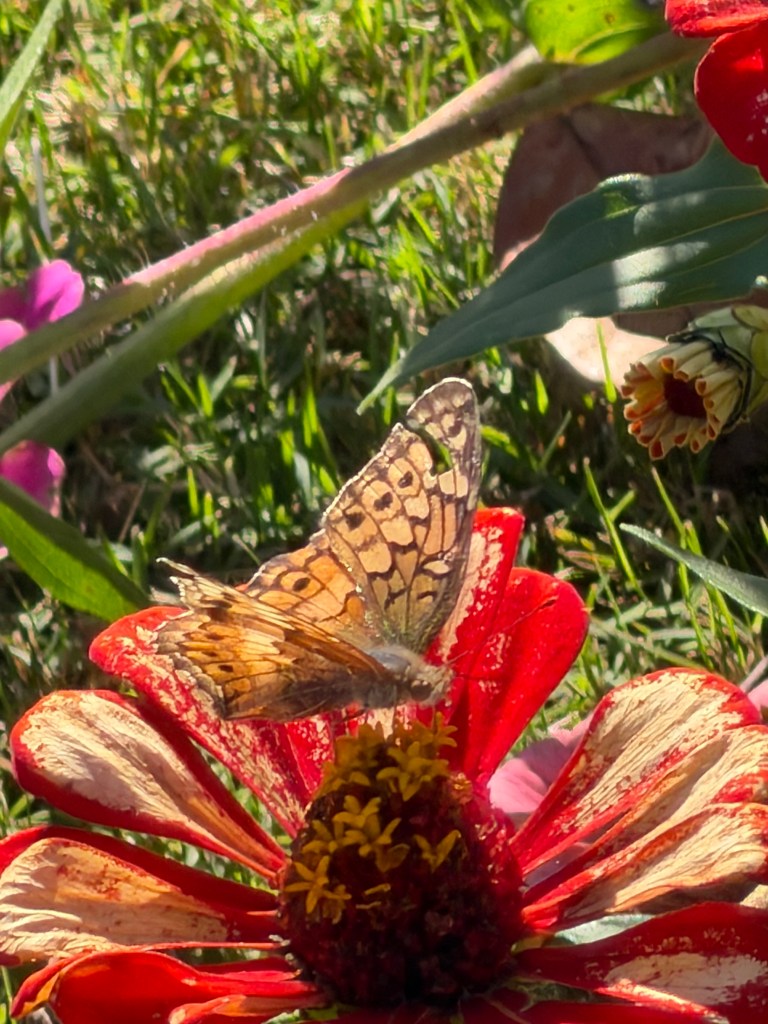
As Fall stretched into late October, I was amazed by the dozens of pollinators which still flocked to the wildflower bed in front of our house. My guess is they are still stocking up for a flight south or survival during the long winter. We have several coneflowers (family, Asteraceae) along with a proliferation of orange sulfur cosmos (Cosmos sulphureus). Yesterday afternoon was bright, sunny, and in the mid-70 F’s (24 C’s) and they were still out in full force. There were several late traveling monarch butterflies (Danaus plexippus) along with dozens of bumblebees (Genus, Bombus) flitting from flower to flower. There was also a new arrival (at least I had not noticed) with several smaller brightly colored butterflies. Two characteristics struck me about these Lepidoptera. First was the speed they were traveling as they drew nectar from around the bed, the second was variegated wings.
When I went online, I found the variegated fritillary (Euptoieta claudia) is a North and South American butterfly in the family Nymphalidae. The variegated flight is low and swift and even when collecting nectar, the species is extremely difficult to approach. This has earned the genus name which taken from the Greek “euptoietos” meaning “easily scared”. The wingspan of the adult variegated measures 1.75 to 2.25 inches (44 to 57 mm). The upper side of the wings is checkered with orange and black, and both the fore and hind wings have a row of submarginal black spots and black median lines running across them. The underside of the forewing is orange with a pale orange spot rimmed in black in the forewing cell. The underside of the hindwing is mottled with browns and grays with a pale postmedian band. The variegated fritillary has three very different characteristics that distinguish them from the genus of greater fritillaries (Speyeria fritillaries), but it is still closely related to them. Variegated fritillaries have two or three broods per year (Speyeria one), are nomadic (Speyeria sedentary), and use a wide variety of host plants (Speyeria only violets).
While the variegated fritillary is nomadic, it is not (officially) migratory like the monarch. Instead, it overwinters in its caterpillar stage in the leaf litter, seeking shelter and entering a dormant state (diapause). In warmer climates, adult butterflies may also overwinter. In Arkansas the adults need to either migrate south or they will die (freeze). Caterpillars can survive Arkansas’ winter temperatures and will emerge from their hibernation to form cocoons (pupate) in the spring. The survival of the caterpillars (or adults farther South) depends on factors like predation, temperature, and the amount of insulation provided by leaf litter. When weather conditions improve in the Spring the caterpillars emerge from their winter hibernation to continue their life cycle. While I was planning on clearing the bed and scattering the seed, perhaps I should wait until new life emerges in Spring.
THOUGHTS: I can attest to the “euptoietos” nature of the variegated fritillary. It took me 10 minutes for one to wait long enough on a flower to get a picture. The butterflies would fly up to 30 feet (10 m) away and then dart back to seek out another flower or two before repeating the maneuver. I find it interesting how different species have adapted to survival during the cold months of winter. This also explains how a warm day can bring out a swam of flying insects as they emerge from their sheltered refuge. Humans do not naturally go dormant (hibernate) because our bodies lack the necessary biological adaptations to enter a state of deep sleep with a significantly lower body temperature and metabolic rate. The earliest evidence of controlled use of fire dates back at least 1.8 million years ago, but evidence for habitual or widespread use of fire does not become clear until around 400,000 years ago. We rely on protective structure, clothes, or sources of heat to achieve what nature has given other species. Act for all. Change is coming and it starts with you.
 A travelers odyssey