
March 19, 2026
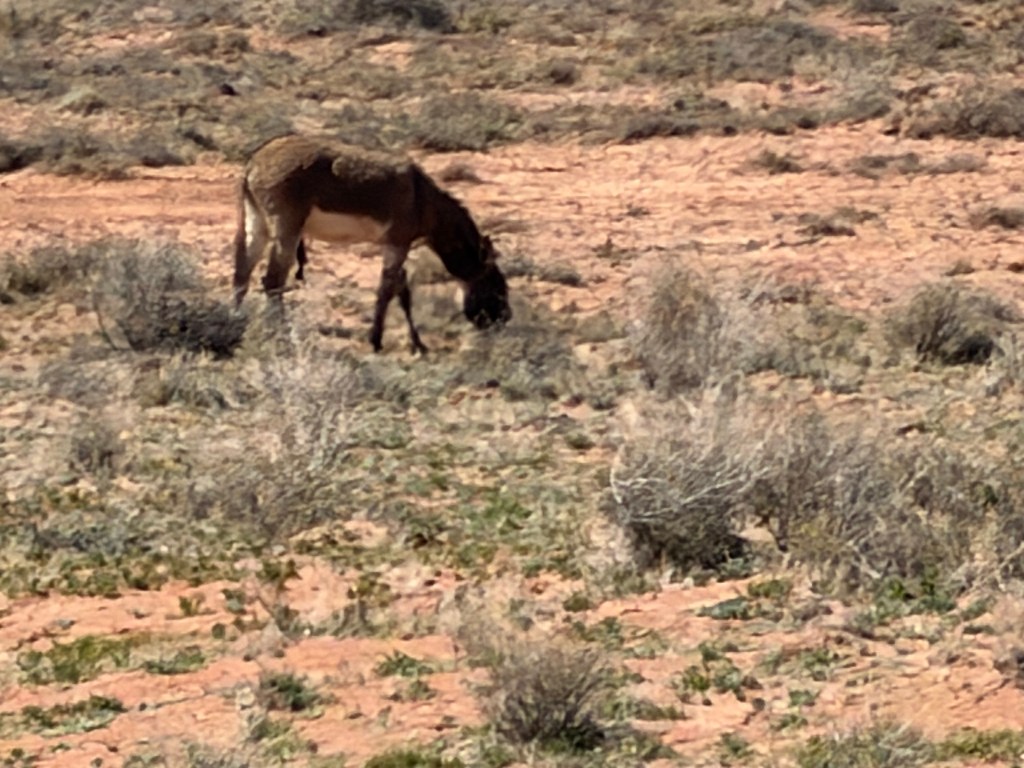
Several days ago, we camped in the Homolovi State Park in Winslow, Arizona. I was excited to camp in the park as it contains the remains of two pueblos along with a petroglyph panel. Homolovi now serves as a center of research for the late migration period of the Hopi from the 1200’s to the late 1300’s. The park is over 4000 acres (1618.74 ha) and includes a visitor center and museum, various trails and the campground where we spent the night. We arrived early as I wanted to explore the ruins and walk the trails. As we entered the gated park, we saw a sign indicating it was an open range (animals roam free inside the fenced area). We explored the partially excavated Homolovi II site and then took the kids for a walk around the parking lot. The docent at the museum had shown me where the petroglyph (pecked rather than drawn) panel was located and that became our second stop. On the way to the ruin, we noticed several animals grazing off in the brush. On our return the animals had moved closer to the road, and we saw they were wild burros.
When I went online, I found Wild burros (Equus asinus) in Arizona are primarily found in the western desert mountains, most famously in the historic mining town of Oatman, where they roam freely and interact with visitors. The burros are descendants of 19th-century mining pack animals. The protected animals can also be found near Lake Pleasant, near Peoria, Arizona. While the burros are a popular attraction, they are wild. They can bite or kick and feeding them is discouraged to protect their health and safety. The burros are often found in various Bureau of Land Management (BLM) areas in western Arizona and are particularly active during early morning and late afternoon. There are over 10,000 estimated wild burros in Arizona, which is far above the sustainable level for the environment (less than 1,500), leading to BLM efforts to manage the population and reduce their impact on the desert. The burros are protected under the federal Wild and Free-Roaming Horses and Burros Act (Public Law 92-195) of 1971, which means it is illegal to harass or harm them. BLM suggests the best way to see the animals is from a distance, without pulling off the road.
While the burros we saw at Homolovi were from a distance, we found them close when we arrived at our Lake Pleasant campground. There was a group of three who were feeding among the campers across from where we were assigned. I had been wary of camping at several of the “Horse Motel” campgrounds set up to accommodate equestrian travelers along our route as I was unsure how the kids would react to the large animals. Now I had no choice as we were invading their protected land. We kept the kids inside while we set up camp and placed the night shade over the front windshield of the RV. I checked outside before taking the kids for a walk to burn off energy before feeding them. We all settled in together inside the RV as it was too hot to be outside. Later that evening I put on their lease to take them out for a final trip. I always go out before them to make sure I have control of the lease. When I opened the door, Zena nearly knocked me down as she tore through the opening with her VERY loud protective bark. One of the burros was standing about 15 feet (3 m) from our front door. I do not know who was more surprised, the burro, the dogs, or me.
THOUGHTS: While wild burros are predated by mountain lions, this is not enough to keep their population in check. The Wild and Free-Roaming Horse and Burro Act charged BLM with managing wild burros in a thriving natural ecological balance with other plants and animals to maintain healthy ecosystems. Wild burros removed from management areas due to overpopulation, emergency situations, or through nuisance are available for adoption through the BLM’s Wild Horse and Burro Adoption Program. Protecting an invasive species is always a fine line. Act for all. Change is coming and it starts with you.
 A travelers odyssey