Pestalotiopsis

June 20

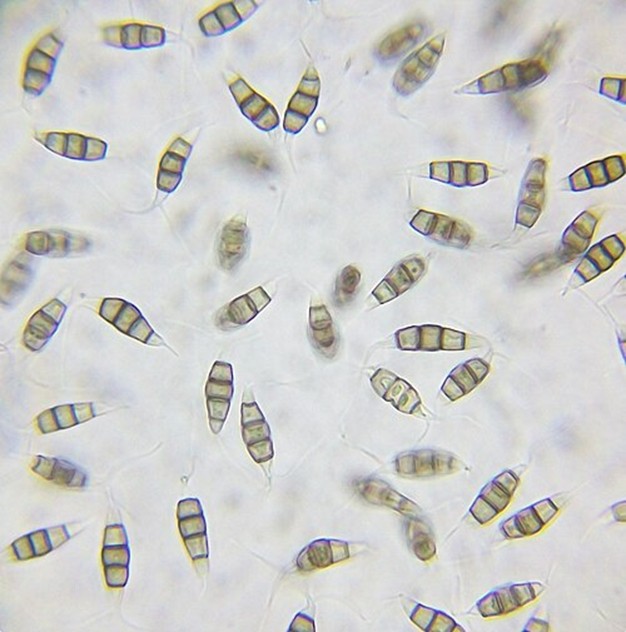
In the middle of the back section of my local newspaper was a Reuters article on the discovery of a fungi that can break down the plastic found in landfills.  The discovery has launched a startup in Austin, Texas, which will sell disposable diapers paired with the fungi intended to break down the plastic.   Tero Isokauppila co-founded Hiro Technologies which now sells online “diaper bundles”.  Three sealed jars at the company’s lab show the stages of decomposition of the treated diaper overtime.  By 9 months the product appears as black soil.  The diapers the fungus attacks contribute significantly to landfill waste.  The Environmental Protection Agency says an estimated 4 million tons (907,000 metric tonnes) of diapers were disposed of in the US in 2018 with no significant recycling or composting.  It takes 100’s of years for the diapers to break down naturally.  Each of the Myco-Digestible Diapers comes with a packet of Pestalotiopsis microspore fungi which is added to the dirty diaper before it is thrown into the trash.

When I went online, I found Pestalotiopsis microspora is a species that lives within a plant for at least part of its life cycle without causing apparent disease (endophytic).  The fungus can break down and digest polyurethane (plastics).  Pestalotiopsis was originally described from Buenos Aires, Argentina in 1880 in the fallen foliage of common ivy (Hedera helix) by mycologist Carlo Luigi Spegazzini, who named it.  Pestalotiopsis also causes leaf spot in Hypericum ‘Hidcote’ (Hypericum patulum) shrubs in Japan.  The species polyurethane degradation activity was only discovered in the 2010’s in two distinct strains isolated from plant stems in the Yasuni National Forest within the Ecuadorian Amazon rainforest.  This was a discovery by a group of student researchers led by molecular biochemistry professor Scott Strobel as part of Yale’s annual Rainforest Expedition and Laboratory.  It is the first fungus species found to be able to subsist on polyurethane in low oxygen (anaerobic) conditions making the fungus a potential candidate for bioremediation projects involving large quantities of plastic.

The Pestalotiopsis fungi evolved to break down the lignin compound found in trees.  Isokauppila said the carbon backbone of the compound is very similar to the backbone of plastics.  Lignin is a class of complex organic polymers that form key structural materials in the support tissues of most plants.  Lignin is particularly important in the formation of cell walls, especially in wood and bark, because it lends rigidity and does not rot easily.  Most fungal lignin degradation involves secreted peroxidases.  Fungal laccases are also secreted, which aid degradation of phenolic lignin-derived compounds.  An important aspect of fungal lignin degradation is the activity of accessory enzymes to produce the hydrogen peroxide (H2O2) required for the function of lignin peroxidase.  More research is required to see how Pestalotiopsis will decompose in real world conditions.  That data should enable the company to make a “consumer-facing claim” by next year.  Hiro Technologies plans to experiment with the plastic eating fungi on adult diapers, feminine care products, and other items.

THOUGHTS: When my son was born the reaction of Pestalotiopsis on plastics was unknown.  I decided to avoid the waste of disposables by using cloth diapers.  While his mom agreed, it was my job to take care of the mess and cleaning required by the diaper pail.   There has been a resurgence of interest in cloth diapers recently among environmentally and financially conscious new parents.  While disposable diapers remain popular, a growing number of families are choosing to use cloth diapers.  This shift is driven by environmental concerns, cost savings, and improved cloth diaper designs.  The cost of the fungi diaper packs is not cheap (neither are the disposables), but it could make a significant difference environmentally.  Act for all.  Change is coming and it starts with you.

Barrier

April 19, 2025

My MSN browser reported on a recent discovery in Australia on the region’s marine life.  The research was published in Science Advances and shows how marine dynamics could have far-reaching implications for understanding the resilience of oceanic ecosystems.  Research found that the Marine reserves on the Great Barrier Reef outperformed expectations, with fish densities two to three times higher than in zones where fishing is allowed.  This is especially true for the leopard coral grouper (Plectropomus leopardus), or coral trout, which is a key species for both biodiversity and commercial fisheries.  The sanctuaries serve as critical breeding grounds where the fish grow larger and produce more offspring.  The baby fish then migrate to fishing zones, maintaining catch levels without depleting stocks.  Researchers found that even though the reserves make up less than a third of the Great Barrier Reef, about 55% of all coral trout reproduction and 47% of the total catch across the reef originates from these protected areas.

When I looked online, I found the Great Barrier Reef is the world’s largest coral reef system.  The system is composed of over 2,900 individual reefs and 900 islands stretching for over 1,400 miles (2,300 km) over an area of approximately 133,000 miles2 (344,400 km2).  The reef is in the Coral Sea, off the coast of Queensland, Australia, separated from the coast by a channel up to 100 miles (160 km) wide and over 200 feet (61 m) deep.  The Great Barrier Reef can be seen from outer space and is the world’s largest single structure made by living organisms.  The reef is composed of and built by billions of tiny coral polyps (phylum Cnidaria, subphylum Anthozoa) and supports a wide diversity of life.  The reef was selected as a World Heritage Site in 1981, and CNN labelled it one of the Seven Natural Wonders of the World in 1997.  Australian World Heritage places included it in its list in 2007 and the Queensland National Trust named it a state icon of Queensland in 2006.

The study used an innovative mix of fish surveys, genetic testing, ocean current modeling, and reef mapping to pull together decades of data.  Researchers found the benefits of marine reserves extend far beyond their boundaries.  Nearly 95% of reefs receive at least 30% of their baby fish from reserves, and 93% of fished reefs get at least 30% of their catch from protected areas, demonstrating the far-reaching impact of conservation strategies.  As fish from protected areas travel and repopulate nearby reefs, the entire ecosystem becomes more resilient.  Michael Bode, of the QUT School of Mathematical Sciences, said, “By protecting fish populations within these no-take zones, we not only safeguard biodiversity but also guarantee that there will be a new generation of fish on the reefs that are open to fishing.”  Environmental pressures on the Barrier Reef come from runoff of human made pollutants, climate change (mass coral bleaching), dumping of dredging sludge, and cyclic population outbreaks of the crown-of-thorns starfish.  The reef has lost more than half its coral cover since 1985.

THOUGHTS: This recent study of the protected areas in the Great Barrier Reef shows the synergy between conservation and economic security.  By ensuring that fish populations remain healthy and abundant, marine reserves support sustainable fishing practices, helping local fishers and coastal communities maintain their livelihoods without compromising long-term ocean health.  The Australian government is investing millions into reef protection and this study offers evidence that marine conservation is not at odds with economic growth.  While some consider such government-funded studies to be frivolous, they can guide better practices to benefit the economy and natural ecosystems.  Sticking your head in the sand or ignoring problems has never proven to be viable for long-term growth.  Act for all.  Change is coming and it starts with you.
Colossal

April 18, 2025

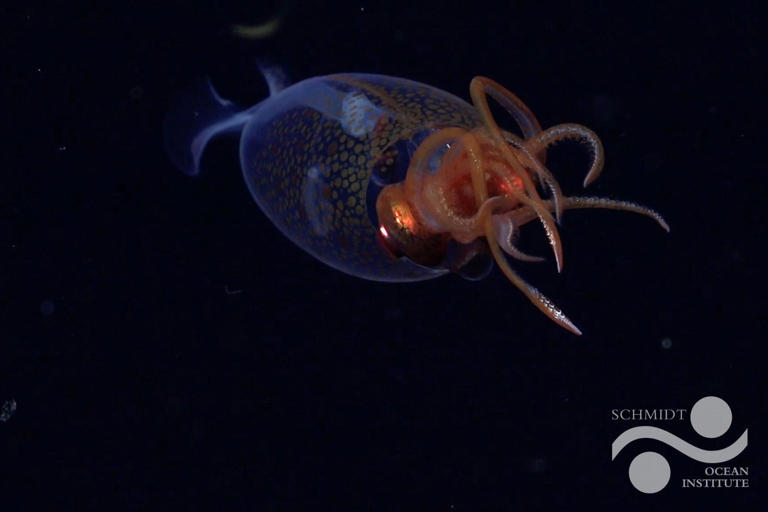
My MSN browser reported that the world’s largest squid species was filmed and photographed in its natural habitat for the first time since scientists discovered it about a century ago.  The video was recorded in the South Atlantic on March 9th by the crew of a vessel owned by the Schmidt Ocean Institute.  The crew’s remotely operated vehicle sighted the animal 2,000 feet (609.6 m) below the surface around the South Sandwich Islands, a volcanic archipelago located between the tip of South America and Antarctica.  The squid caught on video was a juvenile and much smaller than a full-grown adult.  The research team estimated its size at around 11 inches (28 cm) long.  According to the Schmidt Ocean Institute, the expedition occurred during a 35-day voyage where researchers sought to find new marine life.  Although this was a juvenile, the squid can become enormous and have been named colossal squid.

When I looked online, I found the colossal squid (Mesonychoteuthis hamiltoni) is a species of large squid belonging to the family Cranchiidae, known as cockatoo squids or glass squids. Glass squid are a group of about 60 squid species that have transparent bodies.  As the squid grow their bodies become opaque over time.  The colossal is sometimes called the Antarctic cranch squid or giant squid (not to be confused with the genus Architeuthis) and is believed to be the largest squid species in terms of mass.  Individuals have been confirmed to reach at least 1,091 pounds (495 kg).  Beaks found in sperm whale stomachs suggest some may weigh as much as 1,300 to 1,500 pounds (600 to 700 kilograms).  That would make it the largest extant invertebrate.  The maximum total length has been estimated between 33 to 46 feet (10 to 14 m).  The colossal squid has the largest eyes of any known creature to ever exist, with an estimated diameter of 11 to 12 inches (27 to 30 cm), with a whopping 15 inches (40 cm) for the largest collected specimen.  The colossal is presumed to be an ambush predator, with a diet including various fish, and is likely a key prey item of the sperm whale.

Chief scientist Dr. Michelle Taylor said the team was initially unsure what the squid was but filmed the animal because it was “beautiful and unusual”.  The footage was later verified by Dr. Kat Bolstad, who said previous squid encounters had mostly been as remains in whale and seabird stomachs.  A distinguishing feature of the species is the presence of hooks on the middle of their eight arms.  Dying adults have previously been filmed by people fishing but they have never been seen alive at depth.  The Natural History Museum has suggested it is hard to estimate the global population of colossal squids.  In 2022, the institution said the lack of observations meant that, “even to this day, the enormous invertebrates still straddle the line between legend and reality”.  The Schmidt Ocean Institute’s research trips have led to the first sightings of four species of squid, including the colossal squid sighting.  The institute’s executive director Jyotika Virmani described the encounters moments which “continue to remind us that the Ocean is brimming with mysteries yet to be solved.”

THOUGHTS: The recording of the colossal and other three species of squid is another reminder of the amazing diversity yet to be discovered in the oceans of the earth.  Yet even as we seek and find new life, the actions of humans are threatening to destroy the species and ecosystems that are known.  It is unclear whether the Ocean depths are so far immune from human intervention, or just so far out of our radar that we do not see the changes we are making.  It is known that microplastics have been found in the bodies of deep-water fish.  We need to take steps to preserve these fragile ecosystems while there is still time.  Act for all.  Change is coming and it starts with you.

Recapture

December 23, 2024

Ariana Gomez for The New York Times

Back in 2022 I blogged on growing battle surrounding carbon recapture in the US’s Mississippi River Chemical Corridor, commonly known as Cancer Alley. While critics acknowledged the process worked, they objected to the pollution caused by the facility itself, and the energy required to power the equipment. Today, my NY Times feed reported that more than 2 years later over 1,000 big companies have pledged to eliminate their carbon emissions over the next few decades, and part of those efforts came from paying for carbon dioxide removal. During 2024, Microsoft, Google, and British Airways were among the companies that committed a total of US$1.6 billion to purchase carbon removal credits. This is up from less than US$1 million in 2019, and it is believed this will grow to US$10 billion during 2025, and reach US$1.2 trillion by 2050. While huge sums of money are being dedicated to the emerging field, these projects will not have a meaningful effect on global temperatures anytime soon. There are only a few dozen operational facilities today that capture only a trace of carbon emissions. It is estimated that if 100’s of more such plants were built it would only recapture about 1% of the worlds annual carbon dioxide emissions.

When I looked online, I found that while there are several ideas for geoengineering plans and technologies designed to cool the planet, carbon dioxide recapture is attracting the big money. Investors believe while this will have a negligible short term impact on temperatures, it will begin to make a difference as emissions fall and the technology becomes more powerful. While some carbon polluters have committed to reducing carbon emissions, more are opting to continue to pollute and instead paying for carbon recapture credits. The US government is supporting the recapture movement through the Inflation Reduction Act that has tripled tax credits for capture and storage of carbon directly from the atmosphere. This 2021 bipartisan bill included US$3.5 billion to build four demonstration projects.

Pulling greenhouse gases out of the air is expensive and currently costs as much as US$1,000 per ton to capture and sequester carbon dioxide. Analysts say the price would need to drop to US$100 a ton for the industry to be viable. Damien Steel, chief executive of the carbon recapture firm Deep Sky, says, “This isn’t a market. A market means liquidity, repeatability, standards. We have none of that here.” As the NY Times reported, the industry is still creating a form of gold rush as investors readily fund new companies hoping that some of their bets will pay off. Many scientists and activists say the most effective way to combat global warming is to rapidly phase out oil, gas, and coal, as it is the burning of these fossil fuels which heat the planet. Former Vice President Al Gore, co-founder of Climate Trace, said, “We need to obey the first law of holes. When you’re in one, stop digging.”

THOUGHTS: Carbon recapture is only the latest technological innovation humans employed to try and resolve a problem of our own making. As an archaeologist the irony was not lost on me that I was digging through the trash dumps that the next culture had buried as they created a new living space on the remains of the past. When the pollution became too great, people would move to the next pristine site and begin again. The problem now is the pristine places are diminishing, and the polluted locations are broadening. This is particularly evident as our land, water, sea, and air are polluted on a globalized scale. If we do not “stop digging” our holes, the earth will be left for the next interplanetary archaeologists to dig. Act for all. Change is coming and it starts with you.
TREES

December 02, 2024

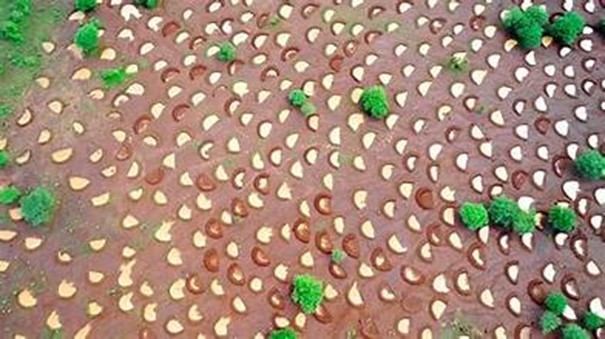
Last week my browser featured an effort sponsored by the UN that received designation as a Flagship project. The Flagship award is part of an effort by the UN Decade on Ecosystem Restoration to ensure that measurable progress is made on the UN’s environmental goals by 2030. When Africa’s fertile terrains become drylands, farmers are thrown into poverty and biodiversity shrinks. Trees for the Future (TREES) is successfully reversing this trend by assisting hundreds of thousands of smallholder farmers in several African countries to fight soil degradation, biodiversity loss, and climate change. TREES has restored 102,165.72 acres (41,345 ha) since 2014. The restoration supports over 50,000 households and captures 382.5 tons (347 metric tons) of CO2 per hectare through its model, the equivalent of emissions from over 26,420 gallons (100,000 liters) of diesel fuel. Restoration of the drylands helps increase the income and improve the health of farmers and their families. TREES is expecting to create 230,000 jobs by 2030 in Kenya, Mali, Senegal, Tanzania, and Uganda, and is recognized as one of the best large-scale ecosystem restoration efforts on the planet. Central to the TREES model is the creation of a series of structures known as a bund.

When I looked online, I found a bund, also known as a demi-lune or half-moon, is a rainwater harvesting technique consisting in digging semi-lunar holes in the ground with the opening perpendicular to the flow of water. The holes are oriented against the slope of the ground which generates a small dike in the curved area with the soil from the hole itself. The dikes capture the rainwater as it runs downhill, allows the water to seep into the subsoil, and prevents the loss of fertile soil by erosion. Semi-circular bunds are used to reforest arid zones with irregular rain patterns and allow the growth of plants and trees. The TREES initiative works closely with tens of thousands of farmers living in poverty on degraded lands following decades of unsustainable agriculture practices, deforestation, pollution, and climate change by providing training in a regenerative agroforestry technique called the Forest Garden Approach. In this four-year program, farmers receive training, seeds, and other resources, while planting thousands of trees and dozens of food and resource crops on their property. The small farmers typically own less than 2.5 acres (1 ha) of land.

TREES projects in Senegal and Mali are a part of the African Union’s initiative as part of the Great Green Wall. Elvis Tangem, Great Green Wall Initiative Coordinator, says, “Once it’s completed, the Great Green Wall will be the largest natural structure on the planet. It’s a massive undertaking, but the dedication and teamwork of organizations like TREES will ultimately make it a reality.” The Great Green Wall project was adopted by the African Union in 2007 to combat desertification in the Sahel region and hold back expansion of the Sahara Desert. The original dimensions of the “wall” were to be 9 miles (15 km) wide and 4,831 miles (7,775 km) long. The program has evolved to encompass nations in both northern and western Africa and promotes water harvesting techniques, greenery protection, and improving indigenous land use techniques, aimed at creating a mosaic of green and productive landscapes across North Africa.

THOUGHTS: TREES is recognized as one of the best examples of large-scale and long-term ecosystem restoration in any country or region, embodying the 10 Restoration Principles of the UN Decade on Ecosystem Restoration. The announcement was made ahead of the 6th UN Environment Assembly, held from February 26 to March 1, 2024. The Assembly convenes to address the triple planetary crisis of climate change, nature and biodiversity loss, and pollution and waste. This should represent an ongoing emphasis not just for the developing countries of Africa, but for the world. Act for all. Change is coming and it starts with you.