November 19, 2024
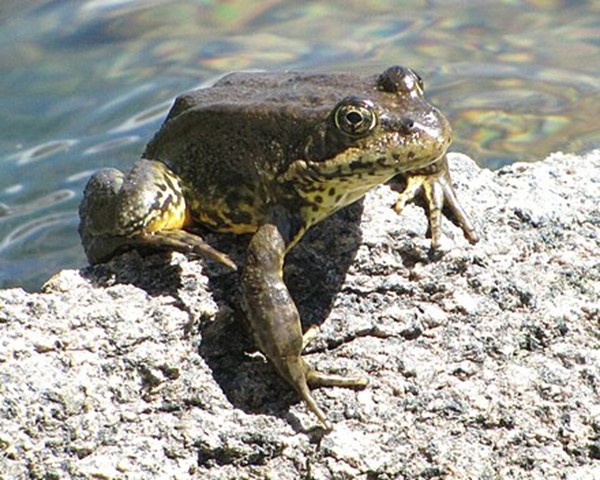
Inside the front section of my local newspaper was a USA Today article on the recovery efforts for a nearly extinct frog. The High Sierra lakes in Yosemite National Park have been biologically upset for over 100 years by the stocking of non-native fish. The rainbow, golden, brown, brook, and cutthroat trout, along with Atlantic salmon and grayling, were originally carried in buckets to these fishless lakes. After World War II, a generation of pilots who were adept in aerial bombing sped up the process in all but 20% of the smallest mountain lakes. While these lakes contained no fish, they were bursting with life. Within a few years of stocking the frog populations that had flourished were gone. The National Park Service ended fish stocking in the 1990’s out of concern for the native species. In 1992, Roland Knapp, a research biologist from the University of California, Santa Barbara, got permission to use gill nets to remove the fish from a small number of lakes. The frogs began to make a comeback, but in the early 2000’s research showed the arrival of amphibian chytrid fungus. The Sierra Nevada yellow-legged frog was added to the endangered species list in 2014.
When I looked online, the Sierra Nevada yellow-legged frog (Rana sierrae), also known as the Sierra Nevada Mountain yellow-legged frog, is a true frog endemic to the Sierra Nevada of California and Nevada in the US. The yellow-legged was formerly considered the southern mountain yellow-legged frog (Rana muscosa) until a 2007 study elevated the more central and northern populations to full species status and restricting the latter to the southern Sierra Nevada and southern California. Both mountain frogs are similar in appearance but are separated by differences in mitochondrial DNA. The yellow-legged grow up to 1.5 to 3.5 inches (3.8 to 8.9 cm) long and females tend to be larger than males. The frogs have brown backs, often with dark spots or bands, and yellow legs and underbellies. Considerable variance exists in species coloration and yellow-legged frogs can also be grey, red, or greenish brown with dark splotches. Tadpoles appear black or brown and require one to four years to fully develop. These frogs hibernate during the winter, staying submerged in the mud and may only be active around three months a year depending on the weather. Studies showed 92.5% of the yellow-legged populations have gone extinct and are estimated to have declined by over 90% over their range. They are considered an endangered and vulnerable species by the IUCN.
In 2006, Yosemite National Park and the Yosemite Conservancy began a project to introduce frogs into lakes without fish. In 2007, a project was started to restore frog habitat by removing non-native fish from remote sites. Once the site is fishless, lakes are inhabited by native species, including the yellow-legged frog. The ecological effects of their loss have been significant as the yellow-legged were a keystone species and important for nutrient and energy cycling in the aquatic and terrestrial ecosystems. A 2016 survey in Yosemite indicated a sevenfold increase in their numbers reported, but recent studies discovered amphibian chytrid fungus is contributing to the decline of the Sierra yellow-legged frog. Chytrid fungus leads to a usually fatal disease (Chytridiomycosis). Chytrid fungus lives on keratin which is found on the external mouthparts of tad poles and the outer skin layer of adults. Fungus growth on adults disrupts the ability to breathe through skin (osmoregulate). The species also suffers from habitat fragmentation as populations have become separated.
THOUGHTS: Stocking fish in the High Sierra’s began as early as the California Gold Rush in 1849. The fishless lakes seemed like a waste to the miners hiking into the backwoods. Stocking fish did provide food, but it nearly destroyed the delicate habitat of the high mountains. While introducing an invasive species may seem like a good idea, it is rarely the case. Life in fragile environments is especially vulnerable. Act for all. Change is coming and it starts with you.