
November 13, 2024
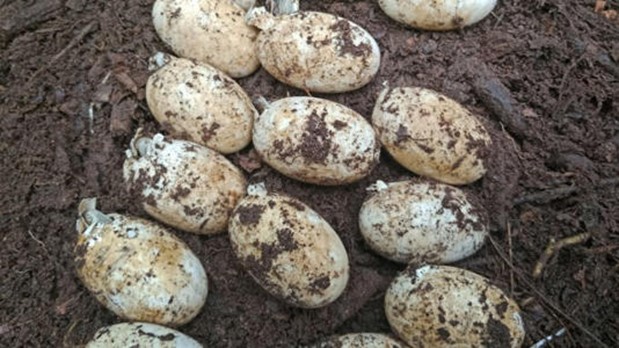
Today’s MSN browser featured a report on a crocodile thought to be extinct in the wild a generation ago that is making a comeback. The animals are being bred in captivity and reintroduced to their natural habitat. The conservation effort began in 2012 and last June the crocodiles laid 106 eggs and produced 60 hatchlings. There are about 1,000 of the crocodiles in the wild, including 400 in Cambodia. The species was nearly killed off by habitat destruction, poaching, and crossbreeding. Ironically, the hunters who captured, bred, and killed the crocodiles to sell their skins helped them bounce back. These captured crocs are the source of purebred, fertile crocodiles that were pulled from a population of 1.5 million (mostly hybrids) being bred for leather. After the females lay eggs, the eggs are incubated at the Phnom Tamao Wildlife Rescue Centre, allowing the crocodiles to develop before they are brought to a national park in the Cardamom Mountains. According to Pablo Sinovas of Fauna & Flora, only one in 20 crocodiles born in the wild survives, but if they are bred captively and not released until they reach 1 meter in length, “their chances of survival increase exponentially.”
When I looked online, I found the Siamese crocodile (Crocodylus siamensis), also known as the Singapore small-grain and soft-belly crocodile, is a medium-sized freshwater crocodile native to Indonesia (Borneo and possibly Java), Brunei, East Malaysia, Laos, Cambodia, Myanmar, Thailand, and Vietnam. The animal is medium-sized, with a relatively broad, smooth snout and an elevated, bony crest behind each eye. It is generally olive green but can range to a dark green. Immature crocodiles measure 4 to 5 feet (1.2 to 1.5 m) and weigh from 13 to 26 pounds (6 to 12 kg). Adults can grow to a length of 7 to 10 feet (2.1 to 3 m) and weigh from 88 to 265 pounds (40 to 120 kg). Adults have a bite force of 466 to 1,029 pounds per foot (2,073 to 4,577 N). Large males can reach over 13 feet (4 m) and weigh 770 pounds (350 kg). The species is critically endangered and already extinct in many regions.
The Siamese crocodile is critically endangered on the International Union for Conservation of Nature (IUCN) Red List and is listed on Appendix I of Convention on International Trade in Endangered Species of Wild Fauna and Flora (CITES). In Cambodia, Fauna and Flora International and the Government of Cambodia’s Forestry Administration have established the Cambodian Crocodile Conservation Programme for the protection and recovery of Siamese crocodiles. This program works with a network of indigenous villages who are helping to protect key sites such as Veal Veng Marsh (Veal Veng District), the Tatai River (Thmar Bang District), and the Araeng River. The Araeng is thought to have the second largest population of Siamese crocodiles in the world but is being threatened by proposed construction of a massive dam. The Siamese take advantage of the increase in water levels during the Monsoon season (June to November) to move out of the river and onto large lakes and other local bodies of water, returning to their original habitat once water levels receding back to their usual levels. Since 2012, approximately 50 purebred Siamese crocodiles have been released into community-protected areas to reinforce the depleted wild populations.
THOUGHTS: Conservationists are also trying to protect Siamese crocodile’s habitat as 32% of the Cambodia’s tree cover was lost from 2001 to 2023 due to climate change and deforestation. Sean Pang stated, “Policymakers must recognize that addressing both climate and land use change is crucial for protecting the fate of South-east Asia’s trees, and likely for much of the region’s biodiversity.” The world’s natural resources are at peril without a combined effort by government, conservationist, and the local population. Act for all. Change is coming and it starts with you.
 A travelers odyssey