
February 13, 2026
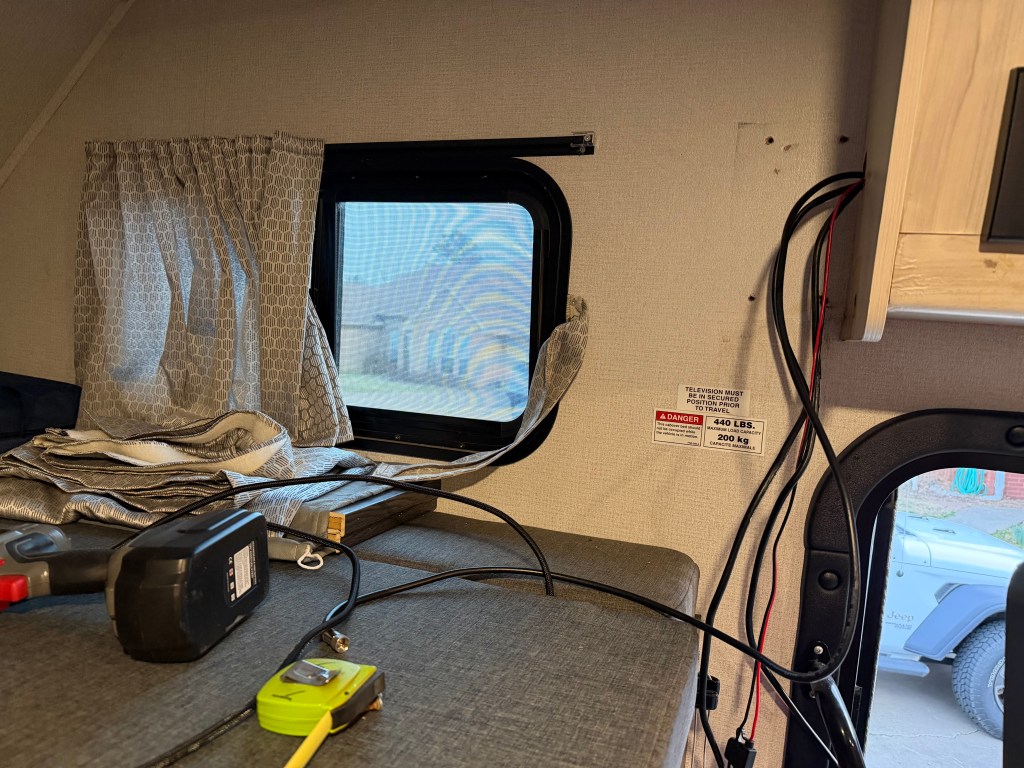
The weather is finally warming (and staying so) enough for me to feel comfortable enough to de-winterize the RV. This is my first season for this, so it made me a little nervous as I am not the mechanically inclined sort. I had researched the process several weeks ago and the videos all said how easy it was. When I woke up this morning all I could think about was I needed to get this done. I procrastinated for another half-hour in bed and then decided to start. I let the kids out for their morning constitutional, got my coffee, and went back to my office to restudy how it is done. I watched 4 different YouTube videos claiming to be my year-make-model RV and while they were the same steps, they all showed slightly different versions of where the valves and settings were. I finally felt comfortable enough to make the attempt and checked on the weather. I saw the outside temps were in the mid-50’sF (mid-10’sC) but were expected to be around 70F (21C) this afternoon. When I walked outside it felt a little cool and I decided to wait for my attempt at de-winterization. I blogged in November that we purchased a 50-inch 4K QLED Smart TV (streaming and Bluetooth ready) so I figured this might be a good time for me to get it installed.
I had moved the TV from the garage into the RV several days ago and told Melissa the box made it look like it would not fit. She assured me she had used the dimensions I had given her for the TV and measured them against the size of the overhead where it was going to be installed. When I took the TV out of the box, sure enough it was more than able to fit in the overhead area. I did notice the screws we were told to buy to hang the TV were the wrong size. Also, when I held the TV up to the bracket the screw holes on the TV did not match up with the bracket holes. They were off by 3 inches (7.5 cm). I spent the next hour trying to figure out how to drill new holes in the bracket to make them line up. Just as I was prepared to go to the hardware store and buy a metal bit for my drill (I only had masonry and wood bits) I realized I would need to remove the bracket to get enough leverage to punch through the metal. That put me on a different line of thought. If I had to remove the bracket anyway, why not just reposition it 3 inches lower on the wall?
While this sounded easy, the cabinet the bracket was screwed into was not low enough to give me the 3 inches I needed. No problem. I could cut out a wooden extension, screw it to the cabinet to give me the required length, and then screw the bracket into the wall and extension. While this would leave screw holes in the wall, I figured I could cover them with putty, and they would be behind the TV bracket anyway. I cut a 6 x 10-inch (15 x 25-cm) piece of leftover 1/2-inch (1.25 cm) plywood and checked it against the cabinet I was going to attach it to (“measure twice, saw once”). Now I went to the hardware store and bought the screws along with antique white spray paint to (kind of) match the extension to the existing cabinets. I applied two coats to each side of the plywood, letting it dry between coats, and then screwed the extension on the cabinet. By this time Melissa had returned from her appointment, and she was able to help me get the bracket and larger TV installed. Another simple job that I had taken all day to complete. I still need to de-winterize the RV.
THOUGHTS: One of the better parts of being retired is I have a lot of time to work on projects like getting the TV installed. It is a good thing too, because it always takes me twice as long as it should. My younger brother and brother-in-law are both mechanically inclined and are constantly working on fix-it-up projects around the house and office. Unfortunately, I take after my dad. He grew up on a farm and was able to do minor repairs, but he left the real projects to the pros. Most humans should take a similar approach toward life in general. When we disregard the information from “the pros” and go with “it’s possible” we get into trouble. Act for all. Change is coming and it starts with you.

 A travelers odyssey