Pyrenees

May 18, 2026

We are planning a cruise to Alaska and the inner passage this summer and I decided to do some clothes shopping before we left.  July is the warmest month of the year in Alaska, but temperatures vary drastically by region.  The Coastal and Southeast areas (Juneau) where we will travel typically range from 55F to 65F (13C to 18C).  That meant I needed to find additional transitional wear that I could layer.  I tend to follow my father’s rule-of-thumb when it comes to clothes and closets.  I keep three pairs of each type of outer wear, along with 10 shirts and 10 tee shirts.  I do have a variety of pants for different occasions (dress, daily, work).  This can drive Melissa crazy because every time she buys me a shirt, I donate one of my older shirts to charity.  In contrast, the other three closets are dedicated to her clothes, which she alternates between winter and summer outfits.  We went to the new big box sports store, and I got and nice short sleeved collared shirt to wear for dinners and a lightweight hoodie I could layer for sight-seeing.  I tried the hoodie on today and walked into the living room to show Melissa how it looked.  Our Pyrenees (Zena) was asleep on my spot on the couch (her favorite) when I walked in with the hood up.  She saw me and went nuts.

When I went online, I found the Pyrenean Mountain Dog or Chien de Montagne des Pyrénées, is a French breed of livestock guardian dog.  The Pyrenees breed originates from the eastern or French side of the Pyrenees Mountains that separate France and Spain and is recognized as a separate breed from the Mastín del Pirineo or Pyrenean Mastiff from the Spanish side of the mountains, although they are closely related.  It is sometimes claimed that the forebears of both breeds were white livestock guardian dogs brought to the area from Asia in Roman times.  The Pyrenean is large and heavily built, with males standing from 28 to 31 inches (70 to 80 cm) and bitches from 26 to 30 inches (65 to 75 cm).  Healthy adults typically weigh between 120 and 165 pounds (55 and 75 kg).  The neck is short and strong, the chest broad and moderately deep, and the tail long, hanging low when the dog is at rest but curling over the back when the dog is roused.  The dogs are widely used throughout France as a livestock guardian, particularly in the French Alps and the Pyrenees, protecting flocks from predation by wolves and bears.  It is known as the Great Pyrenees in the US.

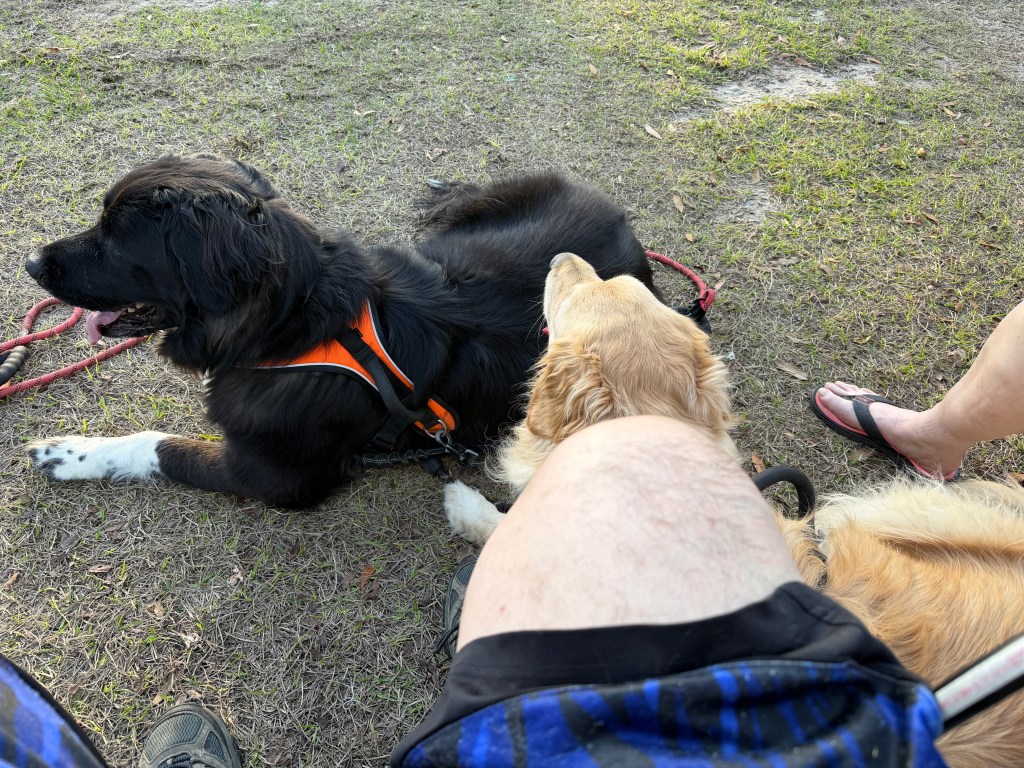
Beginning in the late 1970’s, sheep farmers in the US began employing livestock guardian dogs to protect their flocks from predators, particularly coyotes (Canis latrans) and black bears (Ursus americanus), but also cougars (Puma concolor) and grizzly bears (Ursus arctos horribilis).  A 1986 survey of over 400 farmers employing 763 livestock guardian dogs in the US found 57% of them used Great Pyrenees.  While we do not own sheep, we have toyed with the idea of living off grid.  Our black Pyrenees (common but not AKC worthy) was the runt of the litter and now considered small at 90 pounds (41 kg), but she is still a very good protector, always patrolling our fence.  She did not recognize me in my hoodie and shot off the couch ready to protect Melissa, sounding her warning bark and her tail was tightly curled over her back.  She stopped being aggressive when she realized it was me, but it took a good five minutes of consoling to settle her and down.

THOUGHTS: We did not have a Great Pyrenees when I was growing up, but we did have a large Boxer named Lucky.  My sister never cared much for the dog until one day when she was alone at the house.  People knew our home as a place to get help with food or even money.  One day a man came onto the porch and tried to open the locked front door.  Lucky saw the threat and immediately slammed into the door barking, startling the man who quickly ran away.  Dogs give protection and keep alert to threats.  That is why many people on the streets keep dogs, and why we support a local feeding program by providing dog food.  Act for all.  Change is coming and it starts with you.
Withdrawn

February 06, 2026

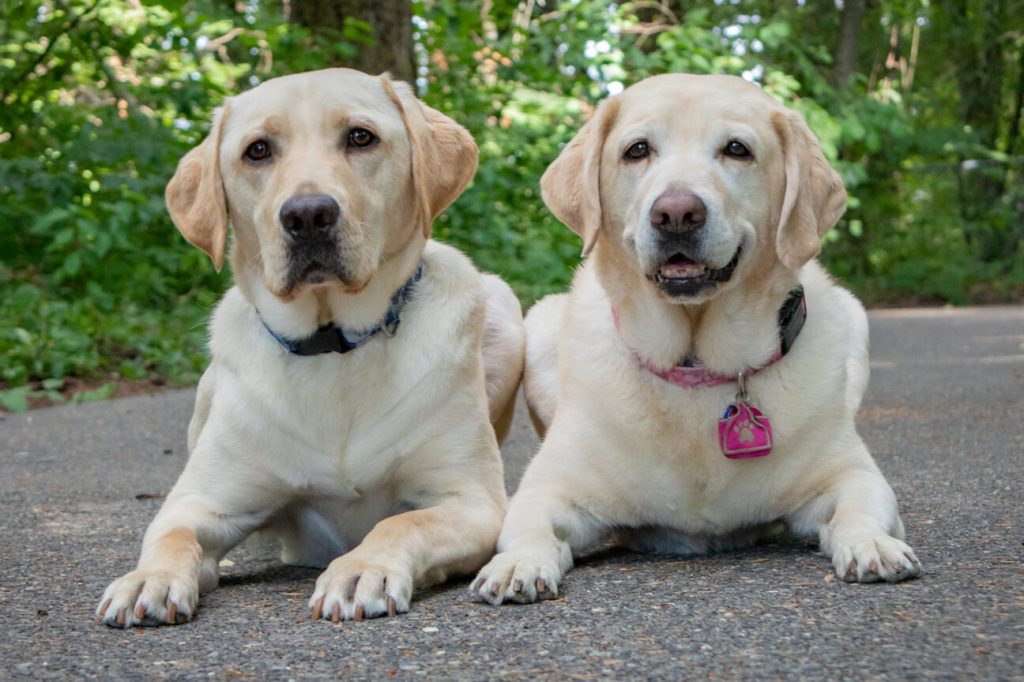
The back section of today’s newspaper carried a USA Today article on what happens to dogs who retire from their training programs.  These dogs are often well trained and well-bred and can be in high demand by potential owners.  Different organizations have different processes for placing these dogs with new owners, but most have criteria such as location or yard requirements as well as a fee and a waiting list.  For dogs from the Guide Dog Foundation or America’s Vet Dogs, the opportunity is first given to the person they worked alongside.  If that person cannot keep the dog the offer goes to the puppy raiser.  After that, the offer goes to the person who financially sponsored the dog.  Only then is the dog added to the foundation’s private adoption list.  Other groups that train guide dogs have sign-ups on their websites for dogs that experience a career change.  You may want to consider volunteering with one of the organizations in the meantime to get an animal to love while you help prepare it for someone who needs it.  The Seeing Eye’s website calls adopting one of its dogs a “rare opportunity” and says it can be a multiyear wait for a dog to be withdrawn from service.  

When I went online, I found you can adopt a dog from Guide Dogs for the Blind’s (GDB) that has been withdrawn from service that has not become a program dog (or been placed with another working dog organization.  GDB is committed to finding the perfect home for career change dogs and uses a selection and matching process based on suitability and the needs of both the dog and the potential adopting home rather than a first-come, first-served basis.  Dogs require a commitment from their adoptive families to spend the time, energy, and possible expense of addressing the individual dog’s issues to make the match work.  Most of the adoption dogs are between 10 and 16 months of age and are one of three breeds (Labrador Retrievers, Golden Retrievers, and Lab/Golden crosses).  The adoption fee for these dogs is US$2000.  Dogs may be dropped from the program for either medical or behavioral reasons.  Medical reasons can include allergies, cataracts, or orthopedic (joint) problems.  Behavioral reasons can be high activity level, poor house manners, low confidence or fearfulness, high distractibility, incompatibility with cats or other dogs, or assertiveness requiring a strong handler.  These dogs are not suitable to be trained as service dogs.

A study by Geoffrey Caron-Lormier (University of Nottingham) et al looks at twenty years of data from Guide Dogs (UK).  There were 7,770 working guide dogs who had worked with blind or partially sighted people which were withdrawn from service.  The most common reason for withdrawal was retirement (6,465 dogs or 83%).  The authors found three main behavioral reasons why guide dogs were withdrawn from service: environmental anxiety, training issues (a lack of willingness to work or confidence), and fear and aggression.  Other reasons included chasing, attentiveness, social behavior, excitability and distraction.  Dogs would only have been withdrawn if these problems were serious enough to stop them from working; whenever possible, training was used to try and solve the problem.

THOUGHTS: Dogs who have not been withdrawn from service are of three types and differ in training, legal access, and purpose.  Service dogs (SD) are trained to perform specific tasks for an individual with disabilities and have full public access.  Emotional Support Animals (ESAs) provide companionship for mental health, lacking public access rights but allowing housing accommodations.  Therapy dogs provide comfort to many people in clinical or public settings.  Melissa’s sheltie was a therapy dog who went into school libraries for children.  She would sit quietly and attentively with the child and provide emotional support while the child read to her.  Being quiet and paying attention is a much-needed human response as well.  Act for all.  Change is coming and it starts with you.

Loki

March 13, 2025

We have been getting quite a bit of activity on our feeders over the last month.  When the snow came and the temps dropped, there was a scarcity of natural seeds, and the birds flocked to the feeders.  Now the temps are warming up and the birds are getting frisky and need to replenish their energy.  I also have a group of about ten common grackles (Quiscalus quiscula) that quickly wipe out the feeders.  I have been filling the feeders every morning and finding them completely empty the next day.  I have also noticed the birds are getting more familiar with having the dogs around while they are feeding.  It used to be they would scatter when I let the kids out, but now they tend to either stay or at least do not stray too far.  Several days ago, we were visited by a small American gold finch (Spinus tristis) who refused to move.  Loki ran out of the house and the bird continued to sit on the feeder.  Loki became fascinated and stood looking at the bird for at least a minute.  Even after running away, Loki repeatedly returned to look at the bird, giving it full attention.    

When I looked online, I found (if you do not have a gold finch handy) there are four ways to teach your dog to pay attention.  This is focused on the reward-based method, and since Loki is already food-oriented these should work well.  The method begins by establishing a clear “Watch Me” cue.  This is done by beginning to hold the treat by your face and letting your dog sniff them.  Then slowly move the treats away and reward them the moment they refocus on your face.  Vocal clues like “watch me” or “look at me” are added to positive reinforcement like “Yes” or by using a clicker.  The key is consistency.  Distractions should be added gradually.  Once your dog focuses on you in a quiet environment you can add distractions like toys or other people.  Another technique is to teach your dog that good things happen when they regularly make eye contact.  Here again treats and toys are used as a reward.  Finally, learn to understand tension seeking behaviors and teach them alternative behaviors like sitting to say hello, or fetching a toy to get your attention.

Loki displays several attention-seeking behaviors that can be overpowering.  We have worked on his jumping when we enter the house, and he is getting better.  Loki will also sidle into you or try to get on your chair when you sit down.   These actions could stem from anxiety, lack of exercise or stimulation, a change in routine, or even a natural tendency for companionship.  Dogs can experience anxiety and stress just like humans, and this can trigger clingy behavior as they seek reassurance.  A dog who is not getting enough physical and mental stimulation may resort to these attention-seeking behaviors to release pent-up energy or boredom.  Separation anxiety happens when they anticipate or experience your departure.  Dogs crave attention and affection, and needy behavior may be a way to get more interaction.  Dogs are social animals that need companionship.  A dog who does not get enough social interaction may become more needy in their attempts to bond with their humans.  I think for Loki the behavior comes from a desire for attention.  Loki and Zena sometimes get into pushing matches to force the other dog away and command the attention of both Melissa and me. 

THOUGHTS: Knowing the needy behavior Loki exhibited was a desire for attention means we need to provide more.  When Loki gets on the chair, we tell him to get down but then reward the good behavior by petting and talking to him.  When Loki and Zena get into pushing matches to get close and force the other away, we try to love both, or Melissa will call one to her so they both get full attention.  Attention theory was developed to account for how humans learned based on rewards (approval) for their response.  Everyone requires attention and if they do not get enough, they will act out to receive it.  It seems negative attention is better than none.  Like Loki, society needs to provide positive attention for children and adults.  Act for all.  Change is coming and it starts with you.