PFAS

December 09, 2025

While perusing the newspapers which had been held in my mail while I was gone (yes, I have gone paperless, but they send hardcopy), I came across a USA Today article on a new bill to allow fire departments across Wisconsin to have access to new technology to fight forest fires.  The bill would make firefighting foam derived from ground-up soybeans eligible for a Department of Natural Resources grant up to 50% of the cost of acquiring supplies, equipment, and training related to forest fires.  Dave Garlie, the chief technology officer for Cross Plains Solutions, has been working on creating foam using organic materials for years.  In a November 4th hearing of the Senate Committee on Agriculture and Revenue, Garlie said using soybeans is not a new idea as the substance was used before the 1960’s.  When PFAS was introduced, it took over the market as the foam was easier to handle because it did not go rancid and it was not as thick of a solution as the soybean paste.

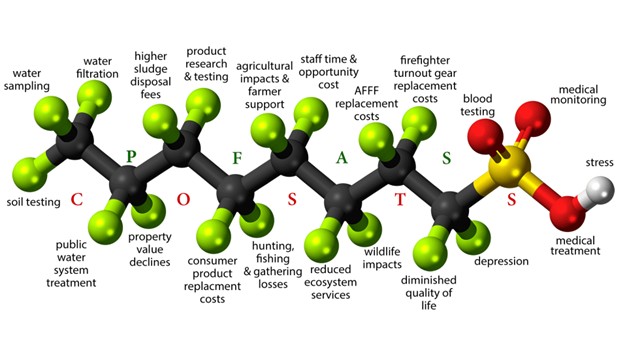
When I went online, I found PFAS, or per- and polyfluoroalkyl substances, are a family of man-made chemicals used for their water and stain resistant qualities in products like clothing, carpet, nonstick cookware, packaging, and firefighting foam.  PFAS are a group of synthetic organofluoride chemical compounds that have multiple fluorine atoms attached to an alkyl chain.  Different organizations use different definitions for PFAS, leading to estimates of between 8,000 and 7 million chemicals within the group.  The family includes 5,000 compounds which remain in both the environment and human body over time (persistent).  The chemicals have been linked to types of kidney and testicular cancers, lower birth weights, harm to immune and reproductive systems, altered hormone regulation, and altered thyroid hormones.  The US Environmental Protection Agency (EPA) toxicity database (DSSTox) lists 14,735 unique PFAS chemical compounds while 7 million are listed in PubChem.

Garlie started to hear from firefighters who were afraid of using PFAS, and he started looking into using soybeans again.  It is safer for firefighters to use, as well as community members nearby.  When soybean foam is deployed, it breaks down naturally, so there’s no need for a pricey cleanup, or for water filtration.  During the hearing, Garlie told lawmakers testing at Chippewa Valley Technical College has shown that the foam is just as successful at putting out fires as PFAS-containing foam.  The soybean product could also lessen firefighters’ exposure to toxic PFAS in an occupation that already exposes them to numerous toxins every fire.  According to the National Institute for Occupational Safety and Health, firefighters have a 9% higher risk of being diagnosed with cancer and a 14% higher risk of dying from cancer than the general population.  The use of soybean-based foam could also help drive up domestic sales of soybeans.  While it will not make up for the loss of trade with China, it will help in the long run.  Senator Howard Marklein, listed as a co-author on the bill, said, “This is good for farmers, good for our fire departments and good for the environment.”

THOUGHTS: Several companies have ended or plan to end the sale of PFAS or products that contain them as PFAS producers have paid billions to settle litigation claims.  Studies have shown that companies have known of health dangers from ingestion of PFAS since the 1970’s.  The PFAS market includes the chemical production side (US$28 billion in sales globally pre-2023) and rapidly growing related markets like treatment, testing, and waste management, (from regulations) with projections reaching tens of billions.  According to ChemSec, external costs for remediation of contamination, treatment of related diseases, and monitoring of pollution, may be as high as US$17.5 trillion annually.  While health concerns were not enough to end production and sales, it seems the cost of remediation may.  Act for all.  Change is coming and it starts with you.

Squash

November 12, 2025

Following a second night of hard freeze (28F/-2C or lower for several hours) temps are forecast to be in the 60’sF (15.5+C) and 70’sF (21+C) for the next week or two.  I had removed the sheets covering the last vegetables during the day between the freezes but permanently removed them yesterday as the daytime temps will remain well above freezing until we leave for a trip later in November.  By that time any 2nd crop vegetables that are going to produce fruit will have done so.   I already have a few peas (Pisum sativum), and the cabbage (Brassica oleracea) is beginning to curl into heads.  My garden activity got me motivated to make something with the butternut squash (Cucurbita moschata) I harvested several weeks ago.  The two ways I prefer to eat squash are roasted or in a cream soup.  I had a variety of vegetables in the refrigerator to go along with the squash, so I decided to make both.  

When I went online, I found squash, or Cucurbita (Latin ‘gourd’) is a genus of herbaceous fruits in the gourd family, Cucurbitaceae (also known as cucurbits or cucurbi), native to the Mesoamerica and the Andes.  The five edible species are variously known as squash, pumpkin, or gourd, depending on species, variety, and local jargon.  Other kinds of gourd, called bottle-gourds, are native to Africa and belong to the genus Lagenaria.  These are in the same family and subfamily as Cucurbita but in a different tribe.  The young fruits of bottle gourds are eaten like those of the Cucurbita species while the dried gourds are used as kitchen utensils.  There is debate about the taxonomy of the genus and the number of accepted species varies from 13 to 30.  The five domesticated species are Cucurbita argyrosperma, C. ficifolia, C. maxima, C. moschata, and C. pepo, all of which are called winter squash because the full-grown fruits can be stored for months.  Most squash species are herbaceous vines that grow several meters in length and have tendrils.  The yellow or orange flowers are either female (fruit) or male (pollen).  While botanical fruits, squash are cooked and eaten as vegetables.

I make my squash soup differently than most recipes (surprising, right?).  They suggest roasting squash and onion (Allium cepa) and adding it to a base of chicken broth and cream.  Nutmeg (Myristica fragrans) and sage (Salvia officinalis) then give the soup a sweeter taste.  I begin with roasting but add other vegetables and forego the spices.  Yesterday I roasted a sheet of baby carrots (Daucus carota), green bell peppers (Capsicum annuum), cauliflower (Brassica oleracea), potatoes (Solanum tuberosum), and red onions at 425F (218C) for 20 minutes to let them caramelize.  Next, I placed four small squashes, cut in half and seeded, on a sheet with salt, pepper (Piper nigrum), and olive (Olea europaea) oil.  I added a half cup of water (steam) and roasted them for 45 minutes.  During the last 20 minutes I added the same vegetables (minus the potatoes) to another sheet to roast.  I added the vegetables to the cream and broth base and used a hand mixer to puree the vegetables.  Melissa likes chunkier soup, so I did not make smooth puree.  I tasted the soup, and it seemed bland.  Melissa suggested more salt (tried to be low sodium) and black pepper (Piper nigrum) along with red pepper (Capsicum annuum) flakes.  That made it.

THOUGHTS: Melissa and I enjoyed the squash soup yesterday.  I kept some of the extra in a bowl for later this week and the rest went into a freezer bag, along with the two freezer bags of first batch roasted vegetables.  These went into the freezer for later meals.  Canning and freezing have become my go-to for excess produce and even leftovers.  While I enjoy the dishes I make, they are often too much for the two of us.  I also share as much as I am able with neighbors or the local food bank (produce).  Residential and community gardens can make a difference for those who face food insecurity.  Act for all.  Change is coming and it starts with you.
Fall Alert

October 22, 2025

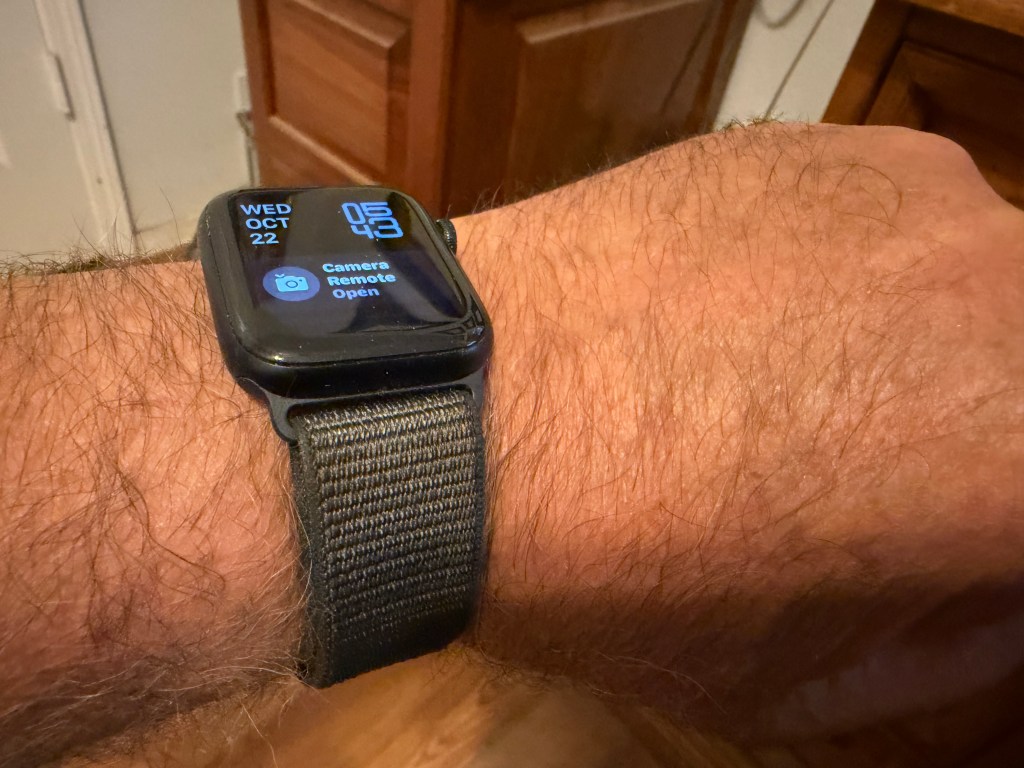
Earlier this week I saw the dogs both laying on their beds asleep and I decided it was time to create some mischief by getting down on their beds between them.  While I do rough house with them, it is generally while I am sitting on the edge of my chair.  Zena plays by turning back and forth while pressing her side against my legs.  She will also use the “power paw” (if you have a dog, you know what this whack is) to get my attention.  Loki’s go-to is to turn his back to me and slam his rear into my legs.  At times he does this so hard it can begin to hurt.  This time I got on the floor and started to roughly play with the two of them.  They got all worked up and began to bark and prance around, Zena pushing in with her side and Loki slamming me with his rear.  That is when I decided to use his tactics against him.  I lowered my head and started head butting him like he did me.  I had been doing this for less than a minute when the AI fall alert went off on my watch.

When I went online, I found AI fall alert systems use technologies like radar, cameras, and sensors to detect falls in real-time and can also predict a person’s fall risk.  Implementation in the US was envisioned in 1973 by Andrew Dibner, a psychologist on leave from Boston University studying personality in advanced age.  Also, in the early 1970’s in Germany, Wilhelm Hormann thought about developing a comprehensive structure for ambulatory and non-ambulatory care for the sick, the elderly, those who live alone, and people with disabilities.  These systems are designed to send immediate alerts to caregivers, family, or emergency services.  Some can even analyze movement patterns to help prevent future falls.  Privacy is often maintained using non-wearable sensors that convert human figures into abstract data.  Vision-based alert systems examine real-time video feeds to recognize fall events.  Radar and sensor-based systems (like my watch) track changes in height and sudden movement (like when a person falls out of bed or to the floor).  When a fall is detected a notice can be sent to the person to confirm or send alerts to pre-determined contacts.  The alerts can be sent via text, email, or to a dedicated app.  In high-risk environments, the system can immediately contact first responders. 

Medical fall alert devices can be a pendant around the neck, a wristband, or a smart watch.  Monitors, motion detectors, or radar-based detectors can also be placed in the home.  Active systems require the user to take some action to trigger an alarm condition, while passive systems monitor the user and raise an alarm based on an algorithm (a fall or lack of activity).  Alert systems can analyze patterns in movement, gait, and activity to identify individuals at higher risk of falling before an incident occurs, allowing for more proactive intervention and personalized prevention plans.  A weakness of active devices is that the user must be conscious to trigger the alarm.  Both passive and active devices require that the user wear the device.  Installed systems can be expensive and difficult to deploy.  My watch alert system detected that I had dropped to the floor (loss in height) and then forcibly hit another object (Loki). 

THOUGHTS: My watch fall alert was an alarm and (thankfully) asked if I had fallen and needed assistance.  This reminded me of the 1989 catchphrase of LifeCall Medical Alert System’s television commercial, “I’ve fallen and I can’t get up!”  The unintentional humor in the commercial made it a frequent punchline.  My watch had the option of having an SOS sent to EMT services or to decline assistance.  This was a timed alert and if I did not respond it would act automatically.  The alert surprised me but seemed like a good idea if it was required.  I never thought I would be the one who had fallen and could not get up.  Human and AI monitoring should be interchangeable to protect those with a possibility of a fall.  Act for all.  Change is coming and it starts with you.

Cramps

August 15, 2025

We decided it was time to visit my son and his wife (and especially the grandkids!) and arraigned for the flight to Seattle, Washington.  We previously took advantage of a direct flight when we lived in Wichita, Kansas.  The flight was set up to quickly fly air manufacturers and reps between their factories in both cities.  Even after moving to Arkansas, we took this flight since both mom and my brother lived in Wichita.  We would drive to see them and then fly direct to Seattle.  This time we decided to fly from the regional airport next to us rather than drive 5 hours prior to the 3-1/2 hour flight.  The difficulty with our local airport is they only fly to big hubs and then you still need the same amount of time to get to your location.  That meant we took a short flight to Dallas/Fortworth, had a quick layover, and still had the 3-1/2 hour flight to Seattle.  This was complicated further as our puddle jumper got in 20 minutes late and left us only 35 minutes to catch our next flight (no stress here).  Luckily, that flight had difficulty boarding passengers and we easily made the next leg.  We arrived just after my son flew into the same airport and had an exciting evening watching grandkid activities (football and cheer).  We went to bed early after the long day, but both Melissa and I both woke up in the middle of the night with leg cramps.

When I went online, I found that long flights can result in leg cramps.  Everyday leg cramps are often caused by muscle strain, exercise, or dehydration, but long flights can introduce extra complications that increase the risk of cramps.  The main cause is long periods of sitting still in cramped conditions. Even when sitting for long periods at work or at home, we have the freedom to move and stretch.  Sitting on a long flight has limited leg room that reduces the natural muscle contractions in your legs crucial for pumping blood back to your heart.  This causes sluggish circulation, allows blood to pool, and makes muscles far more vulnerable to cramping.  Long flights can also create dehydration from the dry cabin air (humidity is often 10 to 20% compared to 40 to 50% on land) and pressure changes during take-off and landing.  This makes your muscles more prone to painful cramps.  However, there are ways to help prevent painful cramps.

I found a site that listed five ways to prevent the painful cramps we both experienced.  The first is to start hydrating 1-2 days pre-flight, wear loose fitting clothing, and consider wearing compression socks to promote better blood flow.  Once on the flight, make it a priority to get up and move around the cabin at least once every hour and resist the urge to cross your legs (impedes blood flow).  There are simple exercises you can perform to maintain circulation.  These include ankle circles, foot pumps, knee lifts, calf raises, and leg extensions.  Next, find ways to stay hydrated while in the air by drinking at least 8.5 ounces (250 ml) of fluid every hour you are in the air.  Finally, avoid alcoholic beverages (a diuretic) as these encourage your body to lose more fluids and increase your risk of cramps.  Drinks with high sugar content (fruit juices and soda) can also pull water from your system as your body tries to process it.  While not glamorous, plain water is best for preventing leg cramps.

THOUGHTS: When Melissa and I woke up with cramps we both immediately thought of grabbing an electrolyte drink which provides minerals in your body fluids that carry an electric charge.  My son is a fitness aficionado, so I figured he would have something.  I looked through the drinks stored in the garage and checked the refrigerator, but to no avail.  Getting moving seemed to help.  When he got up, I asked, and he had several powdered remedies rather than a liquid version.  Between the electrolytes and moving the cramps went away.  Now that I know the secret to avoiding cramps, I am ready for our return flights.  Like most things, planning in advance and proper execution can make life easier.  Act for all.  Change is coming and it starts with you.
Mite

August 13, 2025

It was only fitting after blogging on the cicada-killer wasp (Sphecius speciosus) that I found another species that attacks the broods as they emerge.  Buried in the back section of my local newspaper was an article about a mite that attacks the periodical egg nests of cicadas.  The species commonly feeds on the larvae of midges (various Suborders of Diptera) or flies and form an abnormal outgrowth (gall) as a reaction to both the insects and the mites feeding on them on the edges of pin oak (Quercus palustris) leaves.  Once their development is complete, they drop from the tree and can land on, and subsequently bite, humans and animals.  According to Penn State Extension, the bite can cause an itchy rash, redness of the skin, and a small, raised pimple-like bump.  They usually bite humans while searching for other food sources. 

When I went online, I found oak leaf itch mite (Pyemotes herfsi), also known as the oak leaf gall mite, was first identified in Europe and subsequently found in India, Asia, and the US.  The mites live on the surface of the host’s skin (ectoparasitic) feeding on blood or skin cells.  The mite is barely visible, measuring about 0.008 to 0.03 inches (0.2 to 0.8 mm).  Newly emerged and mated females inject a neurotoxin-containing saliva into their hosts, which paralyzes the host and enables the pregnant (gravid) female to feed on the host’s body fluid (hemolymph).  The posterior portion (opisthosoma) of the female enlarges as its young develops inside, and after several days up to 250 adult mites emerge, of which 92% were females.  Males emerge before the females, position themselves around the mother’s genital opening, and mate with emerging females.  The mated females then disperse to find new hosts.  The mites are often dispersed by wind, and when they land on vertebrate hosts, they attempt to feed, resulting in the bites.  Their great reproductive potential, small size, and high capacity for dispersal by wind make them difficult to control or avoid.

Humans are most likely to get bites while doing yard work or outdoor activities under trees that may be infected.  The University of Maryland Extension recommends you avoid scratching the bite as this may lead to a secondary infection.  Instead, use an itch relief product.  If the itchiness or redness persists or signs of infection appear you should consult a doctor.  The best way to avoid bites is to limit time underneath potentially infected trees and to immediately remove and wash clothing once coming inside.  While that may be good advice, it does not seem like I would remember to do either.  The mite is most active for a four-to-six-week period surrounding cicada brood hatches.  Studies have shown in some cases the mite can survive mild winters in protected areas.  A suggested preventive measure is the application of DEET before outdoor activity.  However, anecdotal reports suggest DEET might not provide complete protection.   

THOUGHTS: The oak leaf itch mite was first recognized in the US with an outbreak in Kansas which affected around 19,000 people in 2004.  The mite was also linked to a 2007 outbreak of rashes in Chicago where they were feeding on the eggs of the 17-year cicada.  The double brood hatch in 2025 again brought the mite back in force.  I have noticed a proliferation of YouTube videos depicting humans assisting other animals in removing parasites or other things that have overwhelmed a larger animal (perhaps because I watched one and it is now on my feed radar?).   Even at the top of the food chain it does not keep humans from becoming food themselves.  Being wary of your surroundings can help keep you safe, but living in fear restricts your appreciation of the beauty of nature.  Act for all.  Change is coming and it starts with you.
Food

July 09, 2025

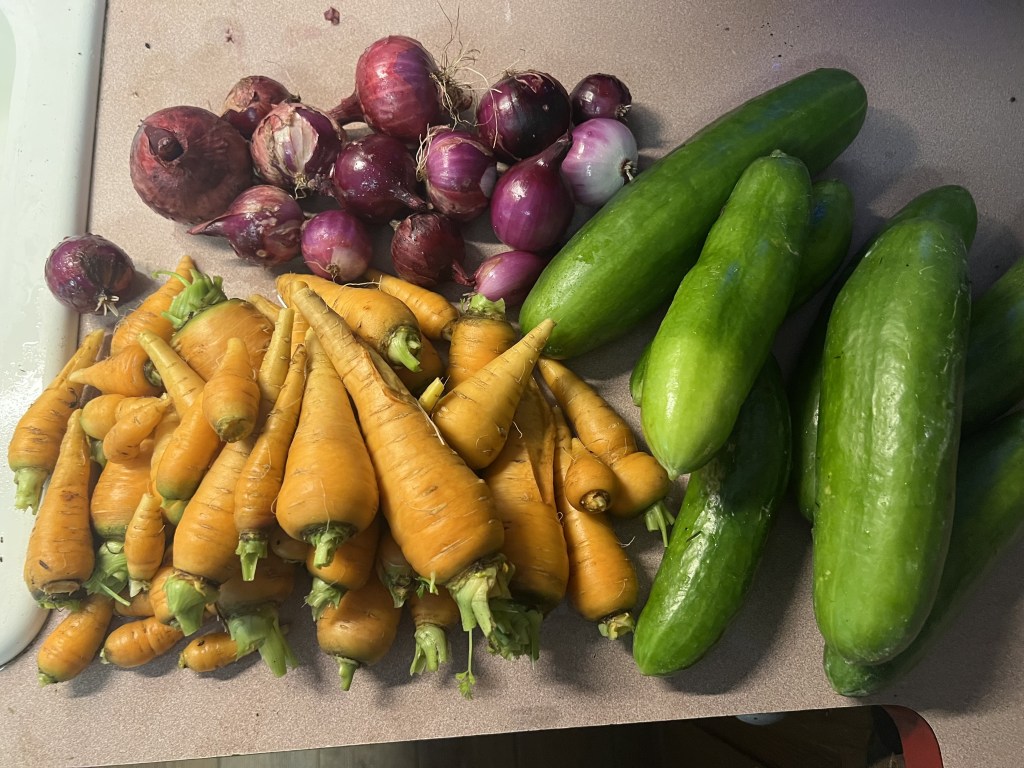
I made some final harvests from my garden today.  That included all my carrots (Daucus carota) and red onions (Allium cepa), along with a continuation of my cucumbers (Cucumis sativus).  I grow enough vegetables to keep our family stocked with fresh produce during the season and have begun to can and freeze my produce for later.  Still, there is a surplus which gives me the opportunity to share with friends and family.  There always seems to be an overabundance of some vegetables.  I have tried to compensate this year by growing a greater variety of produce and even staggering when I plant.  I also planted this year’s crop with the intent of sharing a portion of the produce with our local food bank.

When I went online, I found a food bank or food pantry is a non-profit, charitable organization that distributes food to those who have difficulty purchasing enough to avoid hunger.  This is usually done through food pantries and soup kitchens, but some food banks distribute food directly with their food pantries.  St. Mary’s Food Bank was the world’s first food bank, established in the US in 1967.  Now thousands of food banks have been set up all over the world.  Their numbers grew rapidly in Europe after the global increase in food prices which began in late 2006, and as the 2008 financial crisis began to worsen economic conditions.  The inflation and economic crisis of the 2020’s has exponentially driven low and middle-income consumers to get at least part of their food from a food bank.

Some US cities have organizations that provide dog and cat food for pets whose owners qualify for food assistance.  Daffy’s Pet Soup Kitchen in Lawrenceville, Georgia is considered the largest pet food aid agency in Georgia, distributing over 800,000 pounds (362874 kg) of dog and cat food in 2012.  Daffy’s was started in 1997 by Tom Wargo, a repairman who was working in an elderly woman’s home when he noticed her sharing her Meals On Wheels lunch with her pet cat because she could not afford cat food.  Daffy’s was one of seven non-profit organizations recognized by Barefoot Wine in 2013 through a US$10,000 donation and by being featured on labels of the vintner’s Impression Red Blend wines.  Pet Buddies Food Pantry in Atlanta, Georgia is another establishment that provides food aid for pets.  The St. Augustine Humane Society in St. Augustine, Florida, distributes over 1,600 pounds (726 kg) of pet food each month to families who are experiencing economic hardship and cannot afford to feed their pets.

THOUGHTS: While food banks are a vital resource for those who are food insecure, they have also led to a rise in obesity and diabetes.  Many foods offered to clients in food banks are high in processed sugars and salts and low in vitamin and mineral content.  The low nutritional quality of foods available to clientele at food banks has led to further health effects. A study showed 33% of American households visiting food pantries had diabetes.  When you grow and share locally grown fruits and vegetables you can help alter this trend.  Community gardens are another way to help.  Act for all.  Change is coming and it starts with you.

Marrow

July 08, 2025

My MSN browser scroll reported on a new study that shows evidence of Neanderthal “fat factories” dating back as far as 125,000 years ago.  The inhabitants of the settlement strategically selected the lakeside location for the factory and harvested bone marrow by breaking open the bones as well as through a process of crushing and heating.  The fat factory suggests Neanderthals were able to understand their environment and plan for hunting and resource-gathering.  The recent research from Leiden University and published in the journal Science Advances adds to decades of previous research at the Neumark-Nord archaeological site near Leipzig, Germany.  According to a press release from Leiden University, there is also evidence of plant use in the area, though it’s rarely preserved.  Additionally, previous studies found proof that inhabitants used fire to manage vegetation.  Needless to say, Neanderthals have long been underestimated, and the new study does nothing to dissuade that notion.  This fat factory was created to extract marrow from bones.

When I went online, I found bone marrow is a semi-solid tissue found within the spongy (cancellous) portions of bones.  In birds and mammals, bone marrow is the primary site of new blood cell production (haematopoiesis).  Marrow is composed of hematopoietic cells, marrow adipose tissue, and supportive stromal cells.  In adult humans, bone marrow is primarily located in the ribs, vertebrae, sternum, and bones of the pelvis.  Bone marrow comprises approximately 5% of total body mass in healthy adult humans.  A person weighing 161 pounds (73 kg) will have around 8 pounds (3.7 kg) of bone marrow.  Human marrow produces approximately 500 billion blood cells per day, which join the systemic circulation via permeable vasculature sinusoids within the medullary cavity.  All types of hematopoietic cells, including both myeloid and lymphoid lineages, are created in bone marrow.  However, lymphoid cells must migrate to other lymphoid organs (like the thymus) to complete maturation.

Archeologists found the Neanderthals intentionally selected the lakeside location to process the bones of at least 172 mammals including deer (genus, Cervus), horses (Equus ferus caballus), and aurochs (Bos primigenius), an extinct species of bovine.  Inhabitants at the site broke open large mammal bones to extract the marrow and ground the bones into fragments and heated them in water to extract calorie-rich bone grease.  This indicates estimates of advanced resource collection began thousands of years earlier than previously thought.  Lutz Kindler, the study’s first author, said, “Neanderthals were clearly managing resources with precision.  They understood both the nutritional value of fat and how to access it efficiently.”  Experts believe Neanderthals understood there was a “fat quota” they had to meet to make the process worthwhile.  The authors emphasized the number of herbivores that Neanderthals at Neumark-Nord must have been hunting and were likely able to plan and use their environment effectively.  Research into marrow extraction at the Neumark-Nord site complex was possible because this was not a single site but an entire landscape and provided the opportunity to investigate how Neanderthals influenced their environment. 

THOUGHTS: The Neanderthals who created the marrow extraction factory at Neumark-Nord present a far different picture than the often-depicted primitive, club-wielding, nonsocial individual driven solely by animal instinct.  Modern humans tend to seek ways to differentiate ourselves from our homo sapiens ancestors as well as extant animals.  The more research done indicates we are often more alike than different.  All creation should be respected for both its similarity and difference.  Act for all.  Change is coming and it starts with you.
Pestalotiopsis

June 20

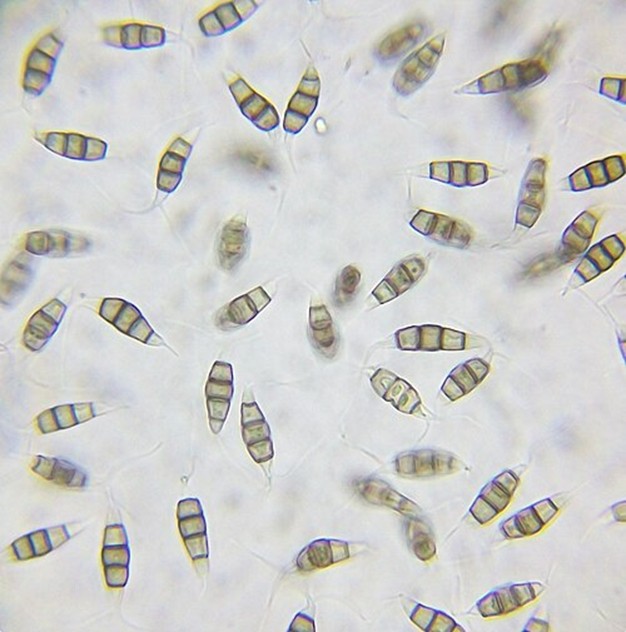
In the middle of the back section of my local newspaper was a Reuters article on the discovery of a fungi that can break down the plastic found in landfills.  The discovery has launched a startup in Austin, Texas, which will sell disposable diapers paired with the fungi intended to break down the plastic.   Tero Isokauppila co-founded Hiro Technologies which now sells online “diaper bundles”.  Three sealed jars at the company’s lab show the stages of decomposition of the treated diaper overtime.  By 9 months the product appears as black soil.  The diapers the fungus attacks contribute significantly to landfill waste.  The Environmental Protection Agency says an estimated 4 million tons (907,000 metric tonnes) of diapers were disposed of in the US in 2018 with no significant recycling or composting.  It takes 100’s of years for the diapers to break down naturally.  Each of the Myco-Digestible Diapers comes with a packet of Pestalotiopsis microspore fungi which is added to the dirty diaper before it is thrown into the trash.

When I went online, I found Pestalotiopsis microspora is a species that lives within a plant for at least part of its life cycle without causing apparent disease (endophytic).  The fungus can break down and digest polyurethane (plastics).  Pestalotiopsis was originally described from Buenos Aires, Argentina in 1880 in the fallen foliage of common ivy (Hedera helix) by mycologist Carlo Luigi Spegazzini, who named it.  Pestalotiopsis also causes leaf spot in Hypericum ‘Hidcote’ (Hypericum patulum) shrubs in Japan.  The species polyurethane degradation activity was only discovered in the 2010’s in two distinct strains isolated from plant stems in the Yasuni National Forest within the Ecuadorian Amazon rainforest.  This was a discovery by a group of student researchers led by molecular biochemistry professor Scott Strobel as part of Yale’s annual Rainforest Expedition and Laboratory.  It is the first fungus species found to be able to subsist on polyurethane in low oxygen (anaerobic) conditions making the fungus a potential candidate for bioremediation projects involving large quantities of plastic.

The Pestalotiopsis fungi evolved to break down the lignin compound found in trees.  Isokauppila said the carbon backbone of the compound is very similar to the backbone of plastics.  Lignin is a class of complex organic polymers that form key structural materials in the support tissues of most plants.  Lignin is particularly important in the formation of cell walls, especially in wood and bark, because it lends rigidity and does not rot easily.  Most fungal lignin degradation involves secreted peroxidases.  Fungal laccases are also secreted, which aid degradation of phenolic lignin-derived compounds.  An important aspect of fungal lignin degradation is the activity of accessory enzymes to produce the hydrogen peroxide (H2O2) required for the function of lignin peroxidase.  More research is required to see how Pestalotiopsis will decompose in real world conditions.  That data should enable the company to make a “consumer-facing claim” by next year.  Hiro Technologies plans to experiment with the plastic eating fungi on adult diapers, feminine care products, and other items.

THOUGHTS: When my son was born the reaction of Pestalotiopsis on plastics was unknown.  I decided to avoid the waste of disposables by using cloth diapers.  While his mom agreed, it was my job to take care of the mess and cleaning required by the diaper pail.   There has been a resurgence of interest in cloth diapers recently among environmentally and financially conscious new parents.  While disposable diapers remain popular, a growing number of families are choosing to use cloth diapers.  This shift is driven by environmental concerns, cost savings, and improved cloth diaper designs.  The cost of the fungi diaper packs is not cheap (neither are the disposables), but it could make a significant difference environmentally.  Act for all.  Change is coming and it starts with you.