Fools

April 04, 2025

When I was growing up my dad had a running joke that occurred every April 1st.  As the boys would come sleepily downstairs and sit around the breakfast table, dad would rush in and exclaim, “There is a big brown dog outside!”  This would cause the three of us to jump up and run to the window hoping to get a glimpse of this large dog.  Later, dad was forced to change the joke as we owned a large brown boxer dog (Canis lupus familiaris) named Lucky.  Instead, dad would exclaim there was a large black dog outside.  The joke still worked and went on for years.  After we had looked expectantly out of the window for several seconds the punch line was delivered.  April Fools!  

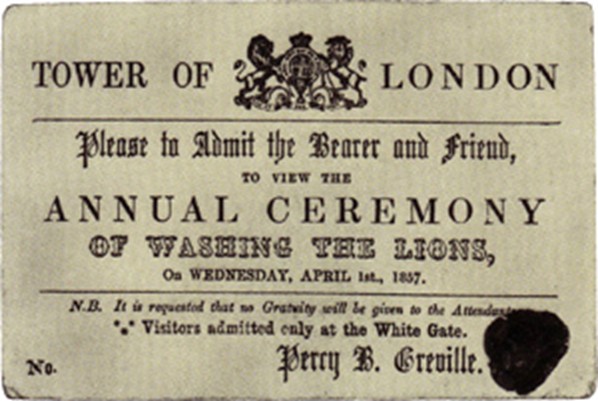
When I looked online, I found April Fools’ Day, or April Fool’s Day, is an annual custom on April 1st consisting of practical jokes and hoaxes.  Participants often complete their prank by shouting “April Fools!” at the recipient.  Mass media can be involved with these pranks, which are often revealed the following day.  The custom of setting aside a day for playing harmless pranks on one’s neighbor has been relatively common historically throughout the world.  While many theories have been proposed for the origin of April Fools’ Day, it is not exactly known.  A disputed association between April 1st and foolishness is found in Geoffrey Chaucer’s The Canterbury Tales (1392) when in the “Nun’s Priest’s Tale”, a vain cock (Chauntecleer) is tricked by a fox on the first of April.  In 1508, French poet Eloy d’Amerval referred to a poisson d’avril (April fool, literally “April’s fish”), possibly the first reference to the celebration in France.  Some historians suggest April Fools originated because during the Middle Ages New Year’s Day was celebrated on March 25th in most European towns, and the festivities continued until April 1st.  Those who celebrated New Year’s Day on January 1st made fun of those who celebrated on other dates by the invention of April Fools’ Day.  The first British reference came from John Aubrey in 1686 who referred to the celebration as “Fooles holy day”.  

My best April Fool’s joke happened when I was working for the Division of State History in Utah.  I was monitoring a particular thorny case where a pipeline installation was running roughshod over the archeological resources that stood in the way.  I sent a scathing memo to my boss on April 1st that detailed a new set of offenses and demanding he do something about this clear breach of contract.  When he received the memo, he immediately took it to his boss and demanded something be done.  His boss calmly read the memo and began to laugh.  My boss had failed to read the complete memo, as the last line said, April Fool’s!”  Both his boss and I thought the joke was extremely funny.  My boss did not think it was funny.

THOUGHTS: Most can attest to the fact that if you are around someone long enough, they will repeat the same joke time and again.  My dad’s April Fool’s joke was done purposefully (and as it always worked).  Dad also had the reputation for telling a joke and either forgetting or screwing up the punchline.  The black dog did not have that issue.  Repetitive storytelling is such a widespread phenomenon across age groups that a group of researchers at the University of Waterloo in Ontario studied both short-term and long-term memory and discovered there is a particular kind of memory (destination memory) where humans do not excel.  Destination memory is the inability to remember to whom we have told our stories.  Another reason for repetition is when you hear (or live) a good story you want to share it with others, even if it is again and again.  Laughter is used to ease tension, to amuse, or to introduce yourself.  Knowing what another finds funny can tell a lot about their thoughts and values, but only if you listen.  Act for all.  Change is coming and it starts with you.
Shovel

January 13, 2025

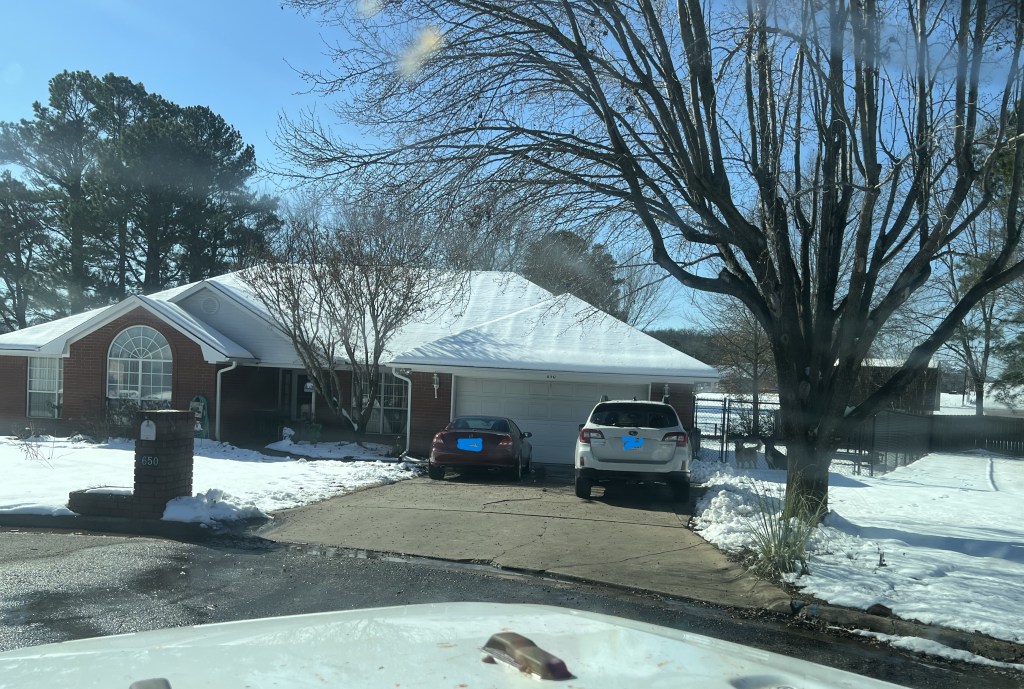
We are now well into recovery from the snowstorm that dumped 9 inches (23 cm) of snow on our town before the weekend.  That gave me a day to recoup as I had no intention of getting out in the snow.  I did take time Saturday afternoon to shovel the portion of the patio that was being trampled by the kids at play and myself as I stocked the feeders.  It was in the 30’sF (0’sC) during the day and I knew if I did not remove the snow, it would become a sheet of ice.  That would make it harder to remove and slicker as I walked (it did not seem to bother the kids either way).  I always had a snow shovel when I lived in Kansas and used it several times over the winter.  The shovel was something I did not bring when we moved to Arkansas.  While it usually snows once over the winter, it is rarely deep enough to worry about shoveling.  Since we got deep snow, that meant I got to dig out using a square 8-inch (20cm) shovel rather than the 18-inch (46 cm) snow shovel I am used to.  If you do the math, you know it took twice as long to shovel my patio than if I had the proper equipment.        

When I looked online, I found whether to shovel the snow or not is one of the biggest questions for homeowners.  Questions arise about who is responsible, how much you should shovel, and what to do with the snow you shovel.  This was a moot point as I began to shovel my patio.  The city could care less if I shoveled my back yard or not, but the front yard is a different situation.  The news stations all suggested you move your vehicles off the street to allow access for the street crews.  They also suggested if you did not move them you may end up buried in the drift the plows create as they scoop the snow onto the easement.  I knew I had responsibility for my sidewalk when we lived in Kansas, but we do not have a sidewalk in our cul-de-sac, so I was free from any responsibility there.  Like my patio, I knew clearing my drive was more for my personal convenience than for others.  What I found online is that the rules and regulations on whether you shovel snow vary from state to state, and some cities, towns, and homeowners’ associations (HOA) have their own rules about how to shovel snow.  Like most US states in the south, Arkansas currently has no laws on snow removal.

Knowing it was not my responsibility to shovel snow did not help with maneuvering my driveway and front walk.  We had several packages delivered after the snow let up and the mail and delivery people had forced their way through the snow.  On Sunday I took on the larger task and prepared to shovel the front of our house.  The winds had died down and the temperatures were now comfortably in the high 30’sF (0’sC) so it was ideal weather to shovel.  I took my little flat shovel and scooped the snow into my yard on both sides of the sidewalk and driveway.  I was glad I decided to shovel when I did because the snow was sitting on an inch (2.5 cm) of slush.  The temperatures were predicted to again drop into the low 20’sF (-0’sC) and the slush was going to freeze.  This would be compounded by the footsteps that compact the snow and aid in the freezing.  When I woke up this morning the snow was completely gone and the cement dry.  I am glad I decided to shovel.

Thoughts: As I continued to shovel my driveway, I noticed I was the only one on my cul-de-sac who was doing so.  The snow was only on their drives and streets, and once you got out of our subdivision the roads were clear.  I was not required to shovel, but I felt better knowing I was protecting myself and any delivery people that might venture onto our property.  Every time I shovel snow (Kansas or Arkansas) the same thing happens.  As my neighbor struggled to get out of the cul-de-sac, he stopped and jokingly asked if I would shovel his drive next.  I declined.  While major climate events can be devastating, they seem to bring people together.  Surviving a climate event gives humans a sense of camaraderie that may not have been there previously.  It would be better to connect prior to an event rather than because of one.  Act for all.  Change is coming and it starts with you.