
August 13, 2025
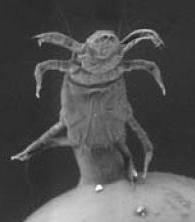
It was only fitting after blogging on the cicada-killer wasp (Sphecius speciosus) that I found another species that attacks the broods as they emerge. Buried in the back section of my local newspaper was an article about a mite that attacks the periodical egg nests of cicadas. The species commonly feeds on the larvae of midges (various Suborders of Diptera) or flies and form an abnormal outgrowth (gall) as a reaction to both the insects and the mites feeding on them on the edges of pin oak (Quercus palustris) leaves. Once their development is complete, they drop from the tree and can land on, and subsequently bite, humans and animals. According to Penn State Extension, the bite can cause an itchy rash, redness of the skin, and a small, raised pimple-like bump. They usually bite humans while searching for other food sources.
When I went online, I found oak leaf itch mite (Pyemotes herfsi), also known as the oak leaf gall mite, was first identified in Europe and subsequently found in India, Asia, and the US. The mites live on the surface of the host’s skin (ectoparasitic) feeding on blood or skin cells. The mite is barely visible, measuring about 0.008 to 0.03 inches (0.2 to 0.8 mm). Newly emerged and mated females inject a neurotoxin-containing saliva into their hosts, which paralyzes the host and enables the pregnant (gravid) female to feed on the host’s body fluid (hemolymph). The posterior portion (opisthosoma) of the female enlarges as its young develops inside, and after several days up to 250 adult mites emerge, of which 92% were females. Males emerge before the females, position themselves around the mother’s genital opening, and mate with emerging females. The mated females then disperse to find new hosts. The mites are often dispersed by wind, and when they land on vertebrate hosts, they attempt to feed, resulting in the bites. Their great reproductive potential, small size, and high capacity for dispersal by wind make them difficult to control or avoid.
Humans are most likely to get bites while doing yard work or outdoor activities under trees that may be infected. The University of Maryland Extension recommends you avoid scratching the bite as this may lead to a secondary infection. Instead, use an itch relief product. If the itchiness or redness persists or signs of infection appear you should consult a doctor. The best way to avoid bites is to limit time underneath potentially infected trees and to immediately remove and wash clothing once coming inside. While that may be good advice, it does not seem like I would remember to do either. The mite is most active for a four-to-six-week period surrounding cicada brood hatches. Studies have shown in some cases the mite can survive mild winters in protected areas. A suggested preventive measure is the application of DEET before outdoor activity. However, anecdotal reports suggest DEET might not provide complete protection.
THOUGHTS: The oak leaf itch mite was first recognized in the US with an outbreak in Kansas which affected around 19,000 people in 2004. The mite was also linked to a 2007 outbreak of rashes in Chicago where they were feeding on the eggs of the 17-year cicada. The double brood hatch in 2025 again brought the mite back in force. I have noticed a proliferation of YouTube videos depicting humans assisting other animals in removing parasites or other things that have overwhelmed a larger animal (perhaps because I watched one and it is now on my feed radar?). Even at the top of the food chain it does not keep humans from becoming food themselves. Being wary of your surroundings can help keep you safe, but living in fear restricts your appreciation of the beauty of nature. Act for all. Change is coming and it starts with you.
 A travelers odyssey