
March 25, 2026
I moved to Salt Lake City in 1979 to attend graduate school. I grew up in Kansas (various), and was used to living in towns surrounded by agricultural fields or the remnants of the big bluestem (Andropogon gerardi) that dominated the tall grass prairie. What I found in Salt Lake was the Uinta Mountains on one side and a salt desert on the other. While I quickly adapted to the mountains (skiing) I did not like the desert, finding it hot, salty, and barren. After a few years I was drawn to the archeological sites of the four corners region and southeastern Utah (Anasazi cliff dwellings). I later worked for the Division of State History mapping and encoding sites and participated in several archeological surveys in the area. The more I worked in the area the more I was drawn to it. By the time I left for California I found it was the desert I missed the most. The largest city in the area at that time was the declining town of Moab with 4000 people.
When I went online, I found Moab is the largest city and county seat of Grand County and is known for its dramatic scenery. The population has risen from 4800 in 2010 to 5400 at the 2020 census. Moab attracts lover 3 million tourist annually, mostly visitors to the nearby Arches (4 miles/6.5 km) and Canyonlands (22 miles/35.5 km) National Parks. The town is also a popular base for mountain bikers who ride the extensive network of trails, including the Slickrock Trail. Off roaders also come to for guided Jeep tours and the annual Moab Jeep Safari. Moab has experienced a surge of second-home owners as the mild winters, and enjoyable summers attract people to the area. This mirrors other resort towns in the American West and controversy has risen over the new residents and their houses, many of which are unoccupied most of the year. Moab citizens are concerned the town is changing like the towns of Vail and Aspen in Colorado. This means skyrocketing property values, a rising cost of living, and corresponding effects on local low- and middle-income workers.
I was anxious to revisit the quaint town of Moab and enjoy the solitude of the surrounding desert. Melissa had been talking about visiting the area I loved ever since she heard stories of the many weekend trips taken by me and my son Alex. Often, we would not see another human from the time we left the main road until we returned. The desolation and isolation that had initially turned me off became the basis for my attraction. What we found now was dramatically different. Construction started several miles outside of town, with light industrial sites, gas stores, and fast-food chains. These were interspersed with motels, residences, and RV parks. The street was lined with businesses offering scenic tours by jeep and mountain bike. If you did not want a tour, you could rent either to go on your own. There were offers for ziplines along the canyon rim and plane rides. What struck me most was the change from quiet isolation to the hundreds of people walking or biking along the main throughfare. While the residents may be only 1500 more than I remembered, tourists overwhelmed the city. Moab embraced the niche market of adventure tourism.
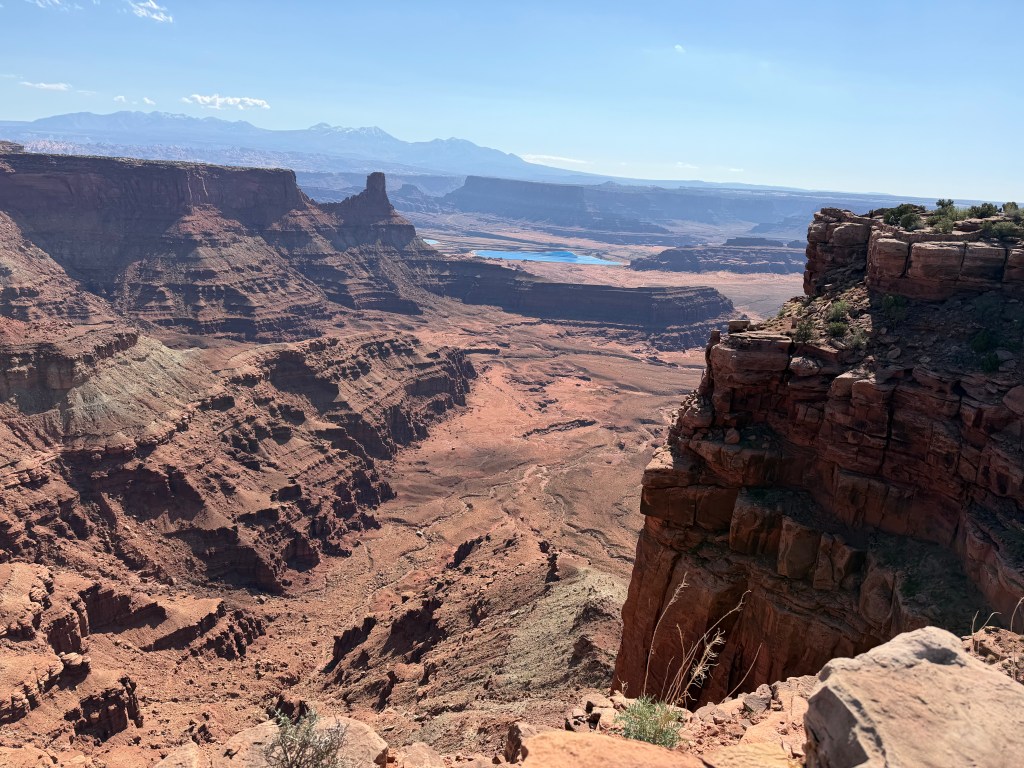
THOUGHTS: Melissa and I camped our RV about 15 miles (24 km) north of Moab in the new (2021) Utahraptor (yes, found there) State Park. This was centrally located to spend time at two sites I fondly remember, Dead Horse Overlook and Arches National Park. We found Arches often has long wait lines to enter (exceeding 60 minutes from spring through fall) and the park temporarily restricts access if parking lots fill up. We opted to go straight to Dead Horse. Here again we found 100’s of people. Most were hiking or mountain biking the roads and trails that wind through the park. My recollection was seeing one or two other cars at the overlook. While you can go home again, it may not be recognizable. Still, the trip was worth it and the scenery spectacular! It was worth the crowds. Act for all. Change is coming and it starts with you.
 A travelers odyssey