Cactus Barrel

June 24, 2025

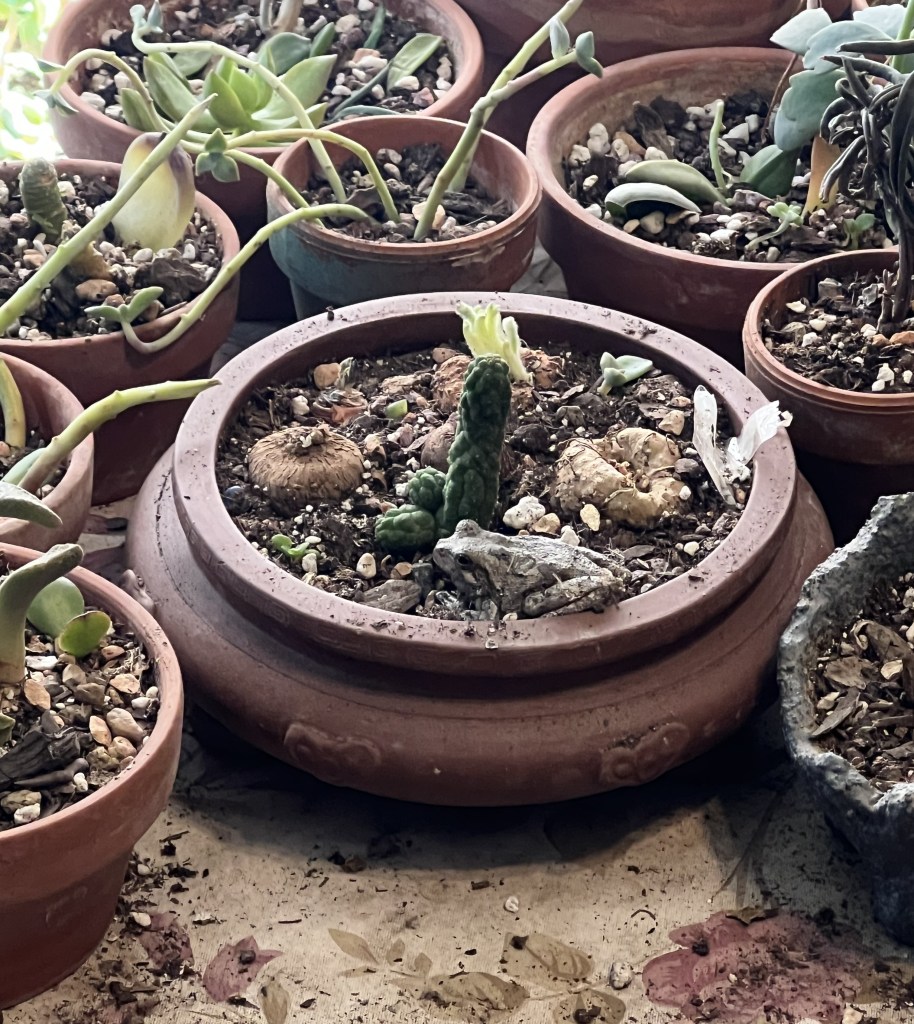
Earlier this week Melissa called me into the kitchen to take care of a “problem” she had found while working on her succulents.  Our pool/pond on the back patio has been teeming with grey tree frogs (Dryophytes versicolor) caught in the height of mating season.  This has resulted in successive scores of tadpoles that grow up to be adults.  I often see one of the small frogs hopping across the straw mulch that covers the potato plants as I am watering.  The frogs also like to hide behind the cushions on the Adirondack chairs on the patio.   It appeared one of the larger adult frogs was not content hiding on the patio or in the American elm (Ulmus americana) trees that line the back property line and had decided to take up residence in the “jungle” of succulents Melissa was working with on the kitchen table.  Melissa does not like hoppy things and called on me to remove it.  I thought it was interesting and snapped a photo before grabbing the frog and releasing it over our back fence (away from the kids).  It was not until I later looked at the photo that I realized the frog had been hiding next to a cactus barrel that appeared to have a bloom on its top.

When I went online, I found Cactus Barrel Milkweed (Larryleachia cactiformis), is a small perennial stem succulent with a globular body displaying a pattern of repeated shapes or polygons (tessellate) with either five pointed (pentangular), flat, or depressed projections (tubercles) on the surface.  The species can vary greatly, particularly in the color of flowers, which open in the summer.  The cactus barrel is native to South Africa and Namibia and grows at an altitude of a half to one mile (800 to 1600 m) above sea level.  It is found amongst a belt of natural shrubland (Fynbos) and desert (Succulent Karoo) vegetation on the quartz hills of the Kamiesberge mountain range.  The species is highly succulent (juicy) and adapted to the very harsh and bright habitats of the desert.  The plant is an excellent example of convergent evolution and is easily mistaken for a cactus.  It is widespread and the Red List of Threatened Species from the International Union for Conservation of Nature says it is common and not threatened.

One of my apps first misidentified my photo of the cactus barrel as a candelabra cactus (Euphorbia lactea).  This made sense as when I looked at the photo there appeared to be a yellow flame coming out of the top of the succulent.  When I mentioned this to Melissa, she pointed out the yellow bloom was on a low-lying elephant’s foot (Dioscorea elephantipes) succulent behind the cactus barrel.  Melissa had placed four different types of elephant’s foot in the bowl, and said the only way to tell the difference (even for most botanists) was by the color and shape of the bloom.  My flaming candelabra was an optical illusion formed by the angle from which I took the photo.  I obviously have a long way to go when it comes to succulent identification.

THOUGHTS: The cactus barrel milkweed succulent is like other members of the Apocynaceae genus in its difficulty for cultivation.  Propagation is a problem as the plant does not offset or seed readily and grows difficultly and slowly from seedling.  Melissa has had this small specimen for two years and it has yet to flower (despite my declaration).  Humans can also find it hard to propagate (spread) and are easy to be misidentified.  When we say other newcomers “all look alike” we lump individuals into categories that may not define their true nature.  We need to wait and take time to see what flowers (fruits) they produce to understand and accept them.  Act for all.  Change is coming and it starts with you.

Hammerhead

June 17

Inside the back section of my local newspaper was an article on an invasive species that has been reported in Texas.  The worms have been reported throughout Texas for decades but several weeks of excessive rainfall have literally flushed the creatures into the open.  Usually, during the day the worms can be found under leaves, rocks, or logs.  The rain has brought them out to driveways, patios, and sidewalks.  Ashley Morgan-Olvera, director of the Texas Invasive Species Institute, said while the worms are not a direct threat to humans or household pets, they do have a lasting effect on the ecosystem as they prey on the earthworms that are responsible for distributing oxygen, draining water, and creating space for plant roots.  This genus is collectively known as hammerhead worms.

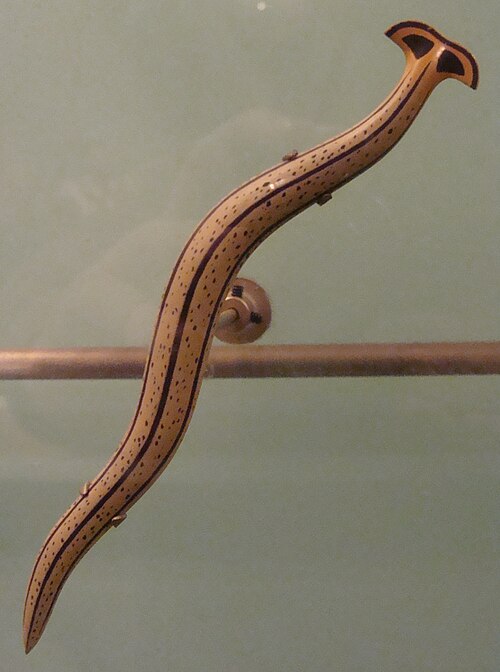
When I went online, I found hammerhead worms (Bipalium) are a genus of large predatory land flatworms (planarians), also known as broadhead planarians.  The name Bipalium comes from Latin bi- (two) and pala (shovel or spade), because species in this genus resemble a pickaxe.  Hammerhead worms are unique in that they possess a highly ciliated (hair-like) region on the ventral epidermis (a creeping sole) that helps them to creep over the substrate.  The worm is typically light honey colored with a darker collar and one to five strips on its body.  The worm can grow up to 15 inches (38 cm) in length.  Bipalium species are predatory and some species prey on earthworms while others also feed on mollusks.  These flatworms can track their prey.  To feed on their prey, the hammerhead often turns the pharynges out of their mouths (evert), which are located on the midventral portion of their bodies and secrete enzymes that begin the digestion of the prey.  The liquefied tissues are sucked into the branching gut of the flatworms by ciliary action.  Hammerhead worms are native to Asia, but several species are invasive to the US, Canada, and Europe.

The hammerhead does not bite but they do secrete a poisonous chemical for protection from predators which can cause skin irritation.  If a cat or dog eats a hammerhead it will likely get nauseated and throw it up, but there is no long-term threat.  Morgan-Olvera said if you see a hammerhead do not try to kill it or cut it up.  The worm can reproduce asexually and if you cut it up and leave it in the yard a new head could form within about ten days.  To dispose of the worm, place the whole worm in a resealable bag with salt or vinegar and put it in the trash.  The worms can also be sprayed with a combination of citrus oil (orange essence) and vinegar.  You should always wear gloves when handling the worms to avoid irritation and wash your hands thoroughly with soap and water followed by hand sanitizer.  The Texas Invasive Species Institute is asking if you spot a hammerhead that you contact your local extension agent to let them know

THOUGHTS: Four invasive species of hammerhead worms have been found in the US which are thought to have come via infected plants and soil.  The worms are veracious predators and have been identified as a nuisance in the earthworm raising beds of the southern US.  In 2019, the worms were found as far north as Montreal, Canada.  The worms have few natural enemies due to their toxic surface secretions and control is difficult.  However, because of their cannibalistic tendencies they may be their own worst enemy.  While humans are rarely cannibalistic, we are also considered our own worst enemy.  Rather than following an innate need to survive, the danger comes from a conscious choice to harm each other.  The choice can also provide compassion and aid.  Act for all.  Change is coming and it starts with you.
Long-beaked

June 14

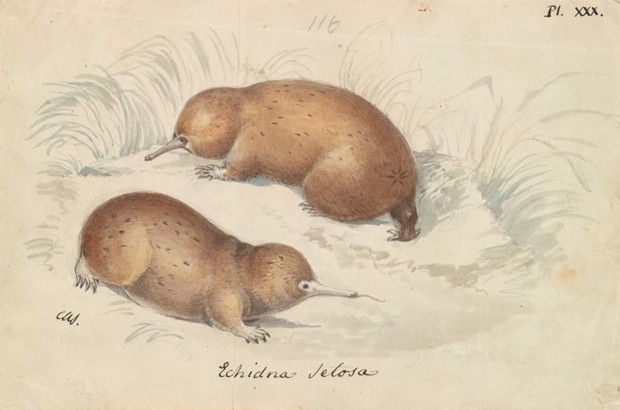
Charles Hamilton Smith circa 1837.

Biologists have confirmed the existence of a 200-million-year-old species of egg-laying mammal thought to be extinct.  Footage was captured in 2023 by Oxford University during an expedition to the Cyclops Mountains in Indonesia.  Researchers said the species had not been recorded in the region for more than 60 years (a dead specimen), but evidence of the animal’s existence was found in recent decades.  In 2007, researchers found “nose pokes” in the Cyclops, or the trace signs made when they forage underground for invertebrates.  Indigenous groups also reported sightings of the species in the past two decades.  In 2017 and 2018, researchers combined participatory mapping with indigenous and other knowledge to assess the probability the animals still existed.  Camera traps deployed in the Cyclops in 2022 and 2023 garnered 110 photos from 26 individual events.  In a paper published in the journal NPJ Biodiversity in May 2025, by combining modern technology with indigenous knowledge researchers confirmed the long-beaked echidna had been found,

When I went online, I found the Attenborough’s long-beaked echidna (Zaglossus attenboroughi), also known locally as Payangko, is one of three species from the genus Zaglossus that inhabits the island of New Guinea.  The species lives in the Cyclops Mountains near the cities of Sentani and Jayapura in the Indonesian province of Papua in Western New Guinea.  It is named in honor of naturalist Sir David Attenborough.  The long-beaked is the smallest member of the genus Zaglossus, being closer in size to the short-beaked echidna (Tachyglossus aculeatus).  The weight of the type specimen when it was alive was estimated to be 4.4 to 6.6 pounds (2 to 3 kg).  The male is larger than the female and is further differentiated by the spurs on its hind legs.  The species has five claws on each foot like the eastern long-beaked echidna, and has short, very fine and dense fur.  The diet of the long-beaked echidna consists primarily of earthworms, in contrast to the termites and ants preferred by the short-beaked echidna.  The long-beaked is listed as critically endangered by the IUCN, and there had been no confirmed sightings between its collection in 1961 and November 2023, when the first video footage of a living individual was recorded. 

The long-beaked echidna is not a social animal and only comes together once a year, in July, to mate.  The female then lays the eggs after about eight days, with the offspring staying in their mother’s pouch for around eight weeks.  The long-beaked is nocturnal and rolls up into a spiky ball like a hedgehog (family Erinaceidae) when it feels threatened.  According to the research paper, these are the “sole living representatives” of egg-laying (monotreme) lineage that diverged from marsupials and placental mammals (therians) more than 200 million years ago.  The long-beaked echidna also once lived in the Oenaka Range of Papua New Guinea, but the Cyclops Mountains are the only location where the long-beaked has been recorded in modern times.  The long-beaked echidna is one of just five egg-laying mammals in existence today, including the platypus and two modern echidnas.

THOUGHTS: The long beaked echidna were one of more than 2,000 “so-called lost species”, or species that have gone undocumented for sustained periods of time.  The research paper said, “Rediscoveries offer hope that others survive, especially in places where biological research has been limited.”  Only 3% of the earth’s land mass is unexplored, but over 80% of the ocean remains unexplored.  It is estimated that between 15,000 and 18,000 new species are discovered annually, in addition to lost species rediscovery.  While all types of species are discovered every year, insects are by far the most common.  There is still a lot that humans do not know about the earth and new discoveries are always possible.  Act for all.  Change is coming and it starts with you.
Inca

June 12, 2025

As I looked out my back window this afternoon, I saw a flash of copper as a bird flew from our window feeders to the pool deck.   At first, I thought it was one of the elusive mourning doves (Zenaida macroura) I see and hear frequently around our property (but not at our feeders or been able to get a picture).  The problem was that it seemed a little smaller than a mourning dove, and then there was that copper flash as the bird landed on the deck.  I enjoy watching the small passerines that flock to our feeders in the morning and evening.  I will even tolerate the common grackles (Quiscalus quiscula) that drive the other birds off and eat the entire feeder in short order.  That is as long as they do not arrive en masse.  I have watched them strip all eight feeders along the fence in less than 10 minutes.  Now I have taken to occasionally send Loki out to scare them away.  While he does not do anything except run into the yard, the grackles seem to be afraid of his size.  The bird on the deck seemed to be a species I was unfamiliar with.  I was able to get a photo of the bird before it flew off and I checked it against the google identification app.  It turns out it was a new bird, an Inca dove.

When I went online, I found the Inca dove (Columbina inca), also called the Mexican dove, is a small New World dove first described by French surgeon and naturalist René Lesson in 1847.  The Inca reaches 6.5 to 9.1 inches (16.5 to 23 cm) in length, weighs 1.1 to 2.0 ounces (30 to 58 g) and has an average wingspan of 11.2 inches (28.5 cm) and a max wingspan of 12.6 inches (32 cm).  The Inca is a slender species, with a gray-brown body covered in feathers that resemble a scaled pattern.  The tail is long and square and edged with white feathers that may flare out in flight.  The underwings are reddish (hence the copper I saw) and on takeoff produce a distinctive, quiet rattling noise.  The species ranges from Costa Rica in the south to the American Southwest in the north and is often common to abundant in suitable habitat.  This terrestrial species forms flocks in desert, scrubland, and cultivated areas and may also be found in urban settings where they feed on grass seeds and take advantage of the availability of water from agricultural and suburban irrigation.  During winter, Inca doves roost in communal huddles of 10 or more birds by making a pyramid formation that aids them retain body heat.  They often flock outside of their territories, with flocks growing up to 100 birds.  Its range has been expanding northward and southward in the past few decades. 

Despite being named after the Inca Empire, the species does not occur in any of the lands where the Inca empire existed.  When I looked at the range map for the Inca dove, I noticed it did not include Arkansas.  The closest it came was toward the top of Texas, or several 100 miles (320 km) to the south and west.  The Inca has in the past escaped or been deliberately released in the state of Florida in the US, but there is no evidence that the population is breeding.  It may only persist due to more releases or escapes.  The single bird I saw may have been blown off course by the current round of storms which have been coming up from Texas.  Or perhaps it just wanted to be a tourist in the Natural State (i.e., Arkansas).  Regardless, this qualifies as a rare bird sighting.  A rare bird sighting is observance of bird species that are uncommon in a particular region or that are considered at risk of extinction.  These sightings can include birds that are not typically found in a specific area due to changes in migration patterns, unusual weather conditions, or simply because they are very rare.

THOUGHTS: When I identified the Inca dove it became my first rare bird sighting.  I was a little skeptical being a newbie birder, but my daily rare bird notification listed another Arkansas sighting as well.  I posted the picture and have already gotten a Like.  Being an amateur and posting on a site of experts made me nervous.  Perhaps more of us should follow the advice of Eleanor Roosevelt – “Do one thing every day that scares you.” Act for all.  Change is coming and it starts with you.
Catchments

June 09, 2025

I found it fitting after blogging last month about the wildlife structures in Southern Colorado that allow animals to safely cross highways to come across an article in Sunday’s paper addressing the drought wildlife faces in the Arizona desert.  The article began with the parade of animals coming to the human-made watering hole on a night in May.  First a coyote (Canis latrans), then a gray fox (Urocyon cinereoargenteus), followed by a great horned owl (Bubo virginianus), and finally a herd of mule deer (Odocoileus hemionus).  As dawn broke the watering hole began to serve its daytime visitors.  These were the scaled quail (Callipepla squamata), ravens (Corvus corax principalis), vultures (Cathartes aura), doves (genus Streptopelia), and the occasional lizard (genus Tupinambis).  This activity was recorded at the “Teddy Bear” water catchment, nicknamed for the teddy bear cholla (Cylindropuntia bigelovii) that grows around it.  This is one of the thousands of catchments managed by Arizona Game and Fish (AGF) built to boost game numbers for hunting and compensate for habitat fragmentation.  The catchments have satisfied thirsty animals since the 1940’s.

When I went online, I found Teddy Bear (catchment No. 436) was built to draw deer away from the Central Arizona Project (CAP) Canal.  The site has a large sheet of metal that directs rainwater into a gutter and feeds it into an underground tank.  The water resurfaces a few yards away as a square of slick green in the arid desert.  A fence surrounds the catchment to keep livestock out yet allows wild animals in.  Joe Currie, AGF habitat planning program manager, said the catchments are a great support for creatures who live in Arizona’s unforgiving deserts.  Many animals can only live a few days without water or the water-rich food the catchments provide.  When they were built, many of these watering holes thrived on the more consistent rain.  Now, state officials say the drought has forced them to use trucks, and even helicopters, to keep the catchments full.  Each year AGF hauls more than 1 million gallons of water to nearly 3,000 catchments.  As severe drought deepened in Arizona in 2024, hauling has picked up.

After decades of long-term drought throughout the Southwest, Arizona suffered its hottest summer on record in 2024 and a near-record dry spell back-to-back.  These short-term drought conditions persisted through the first half of 2025.  Every region of Arizona has been under an official drought designation since January.  The Forest Service and Bureau of Land Management own two-thirds of the catchments.  Those departments used to have robust wildlife management programs but now have no budget to maintain the sites.  Arizona has taken responsibility for the entire network, spending roughly US$1 million each year maintaining the catchments.  Helicopter deliveries, with the same equipment used to dump water on wildfires, cost more than US$10,000 each.  The AGF maintains a donation program where donors have contributed US$1.3 million since 2018.

THOUGHTS: Along with the catchments, Arizona has invested in wildlife structures for animals crossing highways and neighborhoods.  Both allow animals to reach the water and food they need in dry times.  The CAP also has 30 crossings dispersed along the canal system.  These linkages also support genetic diversity in animal populations and allow wildlife to adjust to the effects of climate change.  Deer are ruminants (like cows) and cud-chewing animals in dry areas struggle to digest the vegetation.  Deer stuck in dry areas might also give birth to fewer fawns.  The same goes for a range of other species.  While hunting may provide emphasis (and funding) for the structures and the catchments, like most conservation projects they serve the entire ecosystem.  If showing how such projects provide for human interests works, I say, “make it so #1!”  Act for all.  Change is coming and it starts with you.
Domino

June 05, 2025

Yesterday morning Melissa asked me to come to the front porch and look at the beautiful flower that had sprung up overnight on one of her cacti.  With warmer weather she has placed many of her summer growing cacti on shelves along the front entryway.  This allows them to catch the early rays of sun and protects them from the rain we have been getting.  I have mentioned how Melissa says one of the worst things you can do for a cactus is to water it.  While they need moisture, if you over water it will cause root rot and kill the plant.  This is one of melissa’s newer cactus and the first time it has bloomed.  The domino cactus flower dwarfed the small globe of cactus it sprouted from.

When I went online, I found the domino cactus (Lobivia ancistrophora) has a globular shape, few spines, with large, white flowers attached to long, green tubes.  The domiono is endemic (native) to Bolivia at altitudes of 1,968.5 to 5,905.5 feet (600 to 1800 m).  It has gained the Royal Horticultural Society’s Award of Garden Merit under the synonym Echinopsis ancistrophora.  The domino has a single spherical shaped grey-green body, slightly depressed at the top.  The plant grows to heights of 2 to 3 inches (5 to 8 cm) with diameters of 2.7 to 4.7 inches (7 to 12 cm).  It has 10 to 12 straight, sharp ribs with small, cream-colored, elongated-elliptical bumps (areoles) that are 1/2 inch (1.5 cm) apart.  The small thorns are grayish brown and often hidden in the areole wool.  The upright central spine is again small (2 mm) with 3 to 7 tiny 1.5 mm) thorns at the base.  The narrow funnel shaped flowers are white to light pink and slightly curved above the ovary, are 6.5 to 7.8 inches (17 to 20 cm) long.  They appear on the side near the top of the shoot and open at night. The pale green flower tube is up to 5 inches (15 cm) long.  Its purple scales are pointed with long white and black hairs.  The flower blooms at night and then closes during the day.

The domino cactus is one of the many cacti that are night bloomers.  The night bloom is primarily to facilitate pollination by nocturnal creatures and to conserve water.  These cacti have evolved to attract pollinators which are active at night, like bats and moths.  Since the habitat where they thrive is cooler and more humid at night, a night bloom reduces water loss through evaporation from the plant’s leaves and flowers (transpiration).  The timing of cactus blooms is also part of a broader adaptation known as a pollination syndrome, where plants co-evolve with their primary pollinators to maximize pollination efficiency.  Melissa’s domino cactus is continuing its genetic predisposition.  While we do not have a lot of bats swooshing through our front porch, there are a lot of moths which could facilitate pollination.

THOUGHTS: The domino cactus is not native to the desert of Southeast Utah, but pollinating bats are plentiful.  My son and I used to camp by rolling our bedrolls out on the slickrock above the wadi beds.  Although the sand may have been softer, the rock got you above any possible flash flood from a rain 20 miles upstream.  One of my memories was listening to the swishing sound as the bats zipped through the air in search of insects.  I never saw a bat in the dark, but the sound of their wings was unmistakable.  Many desert plants have adapted to produce bright showy flowers, and a number of those produce a strong aroma, to attract pollinators.  Different environments have created selective ecosystems that have adapted to their conditions.  When humans interject new species or radically change the environment it can have devastating effects.  Some species will survive by adapting to the new environmental conditions, but many will either lose out to competition from the invasive species or die from lack of suitable habitat.  While change itself is inevitable, forcing change from artificially created human conditions is rarely good for an existing ecosystem.  Eventually however, mother nature wins, and often in surprising ways.  Act for all.  Change is coming and it starts with you.
Hiding

June 04, 2025

I woke this morning to the frantic yipping and growling of our dog Loki.  I went into the dining room to see what was wrong and he was standing at the picture window looking onto the flower bed.  This behavior is usually attributed to the neighborhood cats who like to stroll leisurely across our lawn.  Our yard has also been attracting a few eastern cottontail rabbits (Sylvilagus floridanus) that he barks at.  As I have left the house, I see them lying under the knockout rose bush (Rosa “Radrazz”) in the middle of the yard or sitting next to the hydrangeas (Hydrangea arborescens) in the front bed.  I am surprised they do not pay much attention to me as I leave the house.  Last week I found three rabbits sitting in the yard, but they took off when I came out.  Loki’s manner said this was something different.  When I looked closer, I saw a rabbit nestling beneath the tree.  She had made a little bed among the succulents and appeared to be preparing to have her kittens.  She was hiding in plain sight.

When I went online, I found Eastern cotton tails often make their nest in open areas, or hiding in plain sight.  This behavior is used to discourage the predators that are too timid to enter those areas.  The mother rabbit cares for the babies in a way that limits her time in the nest, making it less likely a predator will find the nest.  Rabbit mothers nurse for approximately 5 minutes a day, once in the morning and again in the evening.  They do not “sit” on the babies to keep them warm like some mammals and birds but instead build a nest with fur and grass which helps to keep the babies warm in between feedings.  The home range is roughly circular, and a rabbit typically inhabits one range throughout their life.  A range averages 1.4 acres (0.57 hectares) for adult males and 1.2 acres (0.49 hectares) for adult females but vary in size from 0.5 to 40 acres (0.20 to 16.19 hectares), depending on season, habitat quality, and individual.  Adult males have larger ranges during breeding season.  Multiple and a nesting rabbit say we will have rabbits hiding in our yard for the foreseeable future.  

When a nest hiding in plain sight is discovered many assume it has been “abandonded” and want to help.  Less than 10% of orphaned rabbits survive a week and the care attempted can be illegal, unnecessary, and potentially harmful.  To determine if the mother is returning, create a tic-tac-toe pattern over the nest with twigs and wait 24 hours to see if the twigs have been removed.  If they have been moved the mother is coming back.  You can also listen to the amount of time the kittens spend crying.  The kittens should be quiet most of the day, and if they are constantly crying, they are not being fed.  If you find a nest that has been disturbed, do all you can to restore and protect it rather than bring the kittens inside.  If a dog has discovered the nest (Loki is not out front), you can put a wheelbarrow or a wicker laundry basket with a hole cut in it to allow the mother to enter.  If you come across a rabbit nest in the wild and the mother is not there, leave them alone.  If you remove them from the nest, you will greatly reduce their chance of survival.  If you are in doubt about what to do and want to help, the best thing is to contact a wildlife rehabilitator in your area. 

THOUGHTS: Finding the rabbit trying to build a nest hiding in plain sight gave me pause.  The presence was driving Loki nuts, and I knew if I did not do something we would have an active nest.  This year the bed includes tomatoes (Solanum lycopersicum), squash (Cucurbita pepo), and red onions (Allium cepa), so I will be weeding close to the nest.  Melissa pointed out the rabbit did not move when we went to look at it, and even when I went to the mailbox it ran away and immediately came back.  I have decided to leave the choice to the mother.  Wanting to help has often put humans in conflict.  While humanitarian aid should be provided, changing lifestyle is the choice of the person wanting help, not the aid giver.  Act for all.  Change is coming and it starts with you.
Crossings

May 27, 2025

My NY Times feed highlighted an article by Catrin Einhorn that told of an attempt to save both motorists and animals from deadly highway collisions.  Aran Johnson, a wildlife biologist for the Southern Ute Indian Tribe in Colorado, has been working for the last 15 years to provide a way for large animals to avoid being hit while maneuvering road crossings.  Now entire herds of mule deer (Odocoileus hemionus) and elk (Cervus canadensis) use the structures, as well as black bears (Ursus americanus), mountain lions (Puma concolor), bobcats (Lynx rufus), coyotes (Canis latrans), and red foxes (Vulpes vulpes).  They are expensive, but research has shown they can save money when installed on stretches of highway with at least an average of three collisions between motorists and deer per mile per year.  For collisions with elk and moose (Alces alces), which are bigger and cause more damage to vehicles and people (let alone the animal), that threshold goes down to less than one collision per mile per year.  Johnson started collaring mule deer to better understand how they moved around the reservation and superimposed his findings on state records of wildlife-vehicle collisions.  “It couldn’t be more perfect,” he said. “These things line up so precisely.”

When I went online, I found wildlife crossings are structures that allow animals to cross human-made barriers safely.  Wildlife crossings include underpasses or wildlife tunnels, viaducts, and overpasses or green bridges for large or herd-type animals.  The crossings also provide for smaller animals with amphibian tunnels, fish ladders, canopy bridges (monkeys and squirrels), culverts for otters (Lutra lutra), hedgehogs (subfamily Erinaceinae), and badgers (Taxidea taxus), and green roofs for butterflies and birds.  Wildlife crossings are a practice in habitat conservation, allowing connections or reconnections between habitats to combat habitat fragmentation.  Crossings also assist in avoiding collisions between vehicles and animals, which in addition to killing or injuring wildlife may cause injury or death to humans and property damage.  Similar structures can be used for domesticated animals, such as cattle creeps.

Wildlife crossings are growing in popularity across the country, and Colorado has emerged as a leader building 28 large game crossing structures since 2015, according to the state Transportation Department.  Many of the species which use the structures travel from higher elevations in the summer to lower ones in the winter and are often forced to cross existing highways.  The Colorado General Assembly passed a law in 2022 creating a cash fund for the department to use for animal crossings and the state has evaluated its highways to create a priority list for future projects.  Wildlife crossings are combined with long stretches of fencing to funnel animals to the right location and have been found to reduce vehicle collisions with large animals by more than 80 percent.  The Colorado Department of Transportation covered most of the cost for wildlife crossings.  The tribe came up with US$1.3 million from the Bureau of Indian Affairs and an additional US $12 million for the project came from the state department of wildlife, nonprofit groups, and a private donor.  A bonus of wildlife crossings is the photos from trail cameras which bring attention to the programs.

THOUGHTS: Wildlife crossings transcend political divisions and have bipartisan support.  The crossings also fit in with the cultural importance of being stewards of the land for the Southern Ute.  As the current administration cuts federal spending the grant program that helps states and tribes pay for wildlife crossings in collision hot spots is now in doubt.  A chainsaw is effective if you want to remove the whole tree.  Pruning is effective if you want to save the tree and remove unwanted parts.  Act for all.  Change is coming and it starts with you.
Returned

May 17, 2025

Last May I blogged about the nest an American Robin (Turdus migratorius) had made on top of the curve in the downspout on the side of our house.  While this stuck me as amusing, it prompted an exploration into what I could (and could not) do with the nest.  I was not too keen about having a bird nest attached to my house (neighbors: how unsightly!).  The nest was just above my raised vegetable beds, so I wondered about being attacked every time I came out to water or pick new fruit.  The birds were not overly territorial but would always make a scene of flying to the fence along the yard in an apparent effort to divert my attention from the nest.  Since I did not want this to become a permanent nesting site, I checked Arkansas law and found the nest was protected by the Migratory Bird Treaty Act (1918) if the nest was active (eggs or chicks present).  If the nest has been abandoned or has no eggs it can be removed.  I waited until late September before I removed the nest.  This year another pair of robins built a nest in the exact same location.  That got me wondering if the pair returned or if this was just a great place to build a nest and raise a family.

When I looked online, I found the American robin has an extremely high rate of return to the same breeding site each season (nest fidelity).  Why birds returned to nest was not really understood until the early part of the last century when Oliver Austin, with the Wellfleet Bay Wildlife Sanctuary in Massachusetts, started banding the Common tern (Sterna hirundo) which nested there.  Austin found that the same terns returned to Wellfleet each spring and often laid their eggs in the exact spot on the ground as they did the year before.  While robins return to old nesting sites, they typically do not reuse nests.  They might repair or build on top of an old nest, but they generally build a new nest for each brood they raise.  Old nests can harbor parasites and diseases, so building a new nest helps keep the nestlings healthy.  Robins return to a previous nesting site if they had a successful hatch.  They may instead prefer a new nest site, especially if they have found a more protected location or have discovered a potential predator eyeing their old nest.

A bird building a nest in your house is often seen as a positive omen, symbolizing new beginnings, a safe and peaceful environment, and a connection to higher powers.  The nest can also represent the presence of loved ones (living or dead), and a message of love and care.  Birds are often seen as messengers of hope and faith, and their presence can be a reminder of your spiritual connection to the universe.  Birds are drawn to places with positive vibrations and a sense of peace so the nest in your home suggests your house is a harmonious and safe space.  The act of building a nest symbolizes new beginnings and a sense of starting anew.  A nest in your home can be seen as a message from loved ones who recently died and a reminder of their continued presence and love.  The nest itself is a symbol of home and the importance of creating a safe and nurturing environment.  Finally, in Buddhist traditions the bird’s nest symbolizes a nurturing environment and the importance of caring for new life.  I guess that means when they return you have been doubly blessed.

THOUGHTS: Last year’s arrival of the robins met with concern over what the nest said about me as a homeowner.  When they returned to the down spout it was met with a sense of joy at the wonder of life on display (including the two chicks in the photo).  I work hard to keep the feeders full and water on hand.  The nesting pair acknowledges our yard is a safe haven.  Safe havens need to be available for both birds and humans.  These places usually take hard work to ensure they are not lost.  Act for all.  Change is coming and it starts with you.
Wheel Bug

May 14, 2025

Last weekend I decided to weed the succulent bed beside the drive.  Melissa planted the bed with white stonecrops (Sedum album) mats placed around the 4-foot by 3-foot (1.2 m by .9 m) bed.  The bed sits under the Bradford pear (Pyrus calleryana) tree I had trimmed for the limbs and branches that made up the base layer of my hügelkultur raised beds made last year.  The problem was the bed was filled with dead leaves and the invasive Bermuda grass (Cynodon dactylon) from the surrounding yard.  After an hour of concentrated effort, I amassed a large pile of grass, leaves, and weeds on the driveway.  I raked the debris into a pile and scooped it up to place in the trash bin (I do not have a large compost pile, yet).  When I came back to blow the remaining debris onto the yard, I noticed a small insect with a red back scurrying across the drive.  At first, I thought it was a Black widow (Latrodectus hesperus) spider dislodged from the debris.  A closer look showed the creature had 6 legs, meaning it was an insect rather than a spider.  I took a picture and googled the bug, and it was identified as an assassin bug, or more specifically a North American wheel bug.

When I went online, I found the North American wheel bug (Arilus cristatus), or simply wheel bug, is a species of large assassin bug in the family Reduviidae and the only species of wheel bug found in the US.  It was described in 1763 by Carl Linnaeus.  It is one of the largest terrestrial true bugs in North America and reaches up to 1.5 inches (38 mm) in length in its adult stage.  It is sexually dimorphic with males slightly smaller than females.  The characteristic feature of the species is the wheel-shaped armor on the first segment of the thorax which also bears the first set of legs.  Adults are gray to brownish gray in color and black shortly after molting, but the nymphs (which have not developed the wheel-shaped structure) have bright red or orange abdomens.  Wheel bugs prey on caterpillars and beetles by piercing them with their beak to inject salivary fluids that dissolve soft tissue.  Wheel bugs are the most active in daylight but may feed at night in areas illuminated by lights.  A wheel bug uses camouflage and hides in leafy areas (like my overgrown bed) whenever possible.  Despite the prevalence of the wheel bug in many habitats, the information on the species is haphazard and incomplete.  Most of its prey are pests, so the wheel bug is considered beneficial.

The wheel bug I found scurried off and I did not think any more about it until I noticed another one on my rake 20 minutes later.  My app initially identified the insect as an assassin bug, but this refers to over 7,000 species of Reduviidae, a large wide-ranging (cosmopolitan) family of the suborder Heteroptera of the order Hemiptera (true bugs).  Scanning pictures of the 5 different types of assassin bug, I determined it was a wheel bug, which also had 5 species.  I narrowed this to the North American wheel bug because it was the only one native to North America.  North American wheel bugs are highly regarded by organic gardeners because they consume a variety of insects, and their presence indicates a healthy, pesticide-free ecosystem.  “They are the lion or the eagle of your food web,” according to Michael J. Raupp, an entomologist at the University of Maryland.  I was glad I had left it alone.

THOUGHTS: The pictures of wheel bugs all showed a large black or gray adult, unlike the tiny (.25 inch/6 mm) insect I found.  This was a nymph version of the wheel bug that hatches at the beginning of May and matures (after 5 molts) in July.  That explains the second individual on my rake.  I had disturbed a group of hatchlings hidden in the leaves.  When I saw the wheel bug my first reaction was to squash it because it was unknown.  Taking time to know, I found it was beneficial.  Taking time to know (things or people) can often change our understanding.  We just need to be willing to spend the time.  Act for all.  Change is coming and it starts with you.