Prevention

October 17, 2025

Browsing my NY Times app, I came across an illustrated article that explained what New York City will need to do to survive the predicted flooding over the next 50 years.  New York’s coastal location allowed it to thrive but has now become a threat.  Future models predict tidal flooding will mainly hit Southern Brooklyn, Queens, and Lower Manhattan.  By 2080, many areas will face an increased risk of tidal flooding because of rising sea levels.  At the same time, more neighborhoods will become vulnerable to extreme rainfall and wide swaths of the city face increasing risk from storm surge from a hurricane.  Nearly 30 % of the city’s land mass could be at risk of significant flooding by 2080, and 17% of the city’s population (1.4 million) currently live in these areas.  Climate experts recommend three strategies for the city to adapt.  The city could increase its ability to absorb water by converting 5areas of asphalt and concrete to green space.  It could be fortified by building barriers along its shores, and possibly a gate around the harbor.  Or it could retreat, relocating people out of the most hazardous regions.  Flood prevention will likely have to embrace all three approaches.

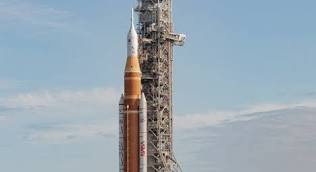
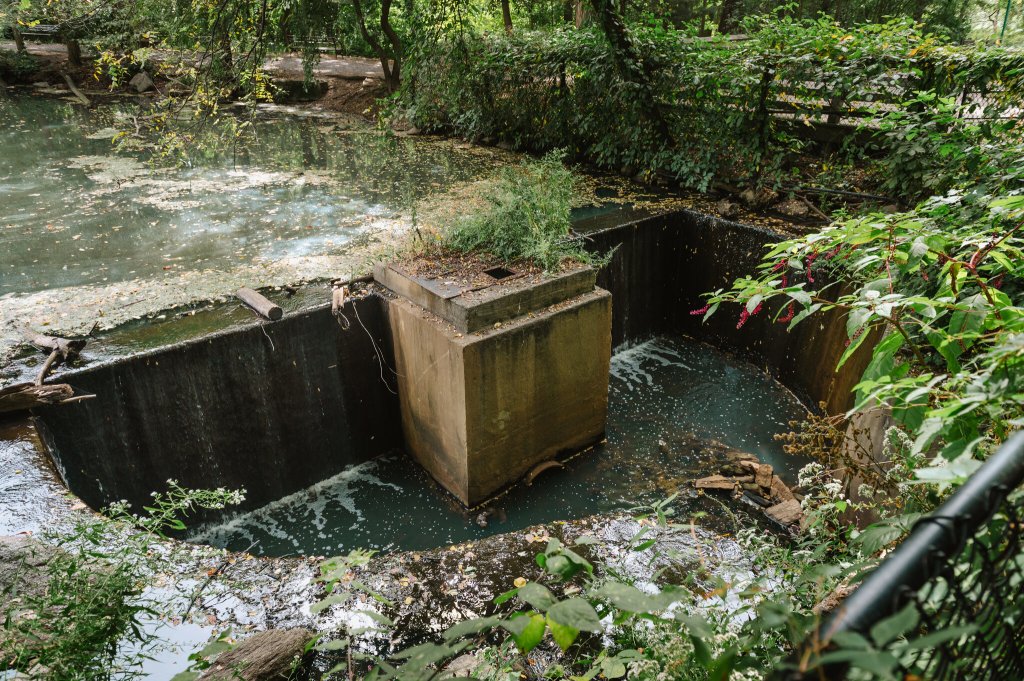
When I went online, I found New York’s flood prevention strategies include large-scale infrastructure projects along the East and Hudson Rivers to protect against storm surges and rising sea levels.  New York is installing continuous flood protection systems along its coastlines, including flood walls, elevated landscapes, and discreet barriers like flip-up gates and stop logs.  The Big U is a series of interconnected flood resilience projects to create a 5.5-mile (8.9 km) protective system around lower Manhattan to shield against sea level rise and storm surges.  Projects like Battery Park have improved drainage infrastructure with systems of tide gate chambers to manage water during coastal surge events.  Other initiatives include creating “cloudburst” sunken public spaces to temporarily hold water and providing residents with flood protection resources like sandbags, dams, and flood-resistant materials to help protect individual properties.  FloodHelpNY provides information and connects eligible homeowners with engineers to help reduce flood risk.  Finally, residents are encouraged to install features like sump pumps and drain plugs to protect their homes.

A 2024 study in Nature emphasizes how New York needs prevention measures to combat extreme rainfall events.  Since 1970, the city’s stormwater system has been built to handle up to 1.75 inches (4.5 cm) of rain per hour.  Hourly precipitation recorded in Central Park did not exceed this limit until 1995, but it has been eclipsed in three of the last five years.  Little of that rainfall is absorbed or stored before reaching the stormwater system.  Today, only about 30% of the city’s surface area is composed of absorbent surfaces.  The remaining 70% is covered by impervious surfaces that replaced the original porous landscapes.  The contemporary city was built atop wetlands and ponds that absorbed and stored water and the original shoreline was artificially expanded with landfill over the course of centuries.  The areas at risk of flooding in the modern city overlap to a striking degree with the city’s historical wetlands.  Understanding New York’s historical environment is crucial to imagining a more resilient urban future based on the city’s past topography. 

THOUGHTS: In “Mannahatta: A Natural History of New York City,” author Eric Sanderson, a landscape ecologist at the New York Botanical Garden, addressed the prevention measures needed.  “I was trying to imagine a configuration of the landscape . . . restoring streams, wetlands and agricultural lands, connecting the urbanized parts of the city, and depaving a lot of what we have.”  Islands and coastal cities around the globe are struggling to keep up with the rising oceans caused by climate change.  Sounds like sink or swim is more than an adage.  We can no longer wait.  Act for all.  Change is coming and it starts with you.
Cloud Seeding

September 09, 2025

I thought it was appropriate after a recent blog on planting my second set of seeds that yesterday’s local newspaper carried a USA Today article responding to the July storm that dumped 20 inches (50.8 cm) of rain in parts of central Texas.  This was the equivalent of a month’s worth of rain and swelled the Guadalupe River over its banks, resulting in the death of 130 people.  As is typical for most disasters, people sought to place the blame in a variety of places.  One unexpected place was on the activity of a small startup called Rainmaker two days prior and 100 miles (160 km) away.  The flight had lasted 20 minutes and released 2.5 ounces (70 grams) of silver iodide into a set of clouds, resulting in a drizzle of less than 0.2 inches (1/2 cm) of rain on farmlands struggling with drought.  Scientists said the distance made it scientifically impossible for this cloud seeding to have played a role in the flooding.       

When I went online, I found cloud seeding is a type of weather modification that aims to change the amount or type of precipitation, mitigate hail, or disperse fog.  The usual objective is to increase rain or snow.  Cloud seeding involves dispersing particulate substances into the atmosphere to serve are the center (nuclei) that water vapor or ice condenses on.  Common agents include silver iodide, potassium iodide, and dry ice, but water attracting (hygroscopic) materials like table salt are gaining popularity.  Techniques include a static seed which encourages ice particle formation in supercooled clouds to increase precipitation or dynamic seeding which enhances cloud development through the release of latent heat.  The substance is usually dispersed by aircraft or ground-based generators, but newer approaches involve drones delivering electric charges to stimulate rainfall or infrared laser pulses aimed at inducing particle formation.  The effectiveness of cloud seeding remains a subject of debate among scientists despite decades of research.  Environmental and health impacts are considered minimal due to the low concentrations of substances used, but concerns persist.

Cloud seeding has been used as far back as the 1940’s for various purposes, including agricultural benefits, water supply augmentation, and event planning.  Eric Betterton, professor emeritus in atmospheric sciences at the University of Arizona, said “people have been worried about using silver iodide in the past, but the amounts are so small it’s insignificant . . . there are no known effects on the environment.”  The technique also has limitations.  You cannot create a storm or control the climate.  Seeding simply speeds up the natural process that causes rain or snow to fall.  As extreme weather events increase along with climate change, so do explanations offered by conspiracy theorists, including possible military involvement.  Lawmakers in several states have introduced bills to ban or restrict cloud seeding and other forms of weather modification.  Legal frameworks primarily focus on prohibiting the military or hostile use of weather modification techniques, leaving the ownership and regulation of cloud-seeding activities to national discretion. Despite skepticism and debate over its efficacy and environmental impact, cloud seeding continues to be explored and applied worldwide as a tool for weather modification.

THOUGHTS: Rainmaker’s 20-minute cloud seeding flight was part of a local program and these are usually funded by a water district or utility.  While it did not fuel the distant flooding disaster it did produce fear and legislation to ban or restrict weather modification.  As global warming increases, understanding how clouds behave and interact with our warming and ever more polluted atmosphere is why scientists want to study cloud seeding and not ban it.  Information is critical in understanding how our planet works.  The article closed, “You can’t engineer a flood.”  Act for all.  Change is coming and it starts with you.

Beavers 3

April 22, 2025

© Pavel Mikoska/Shutterstock

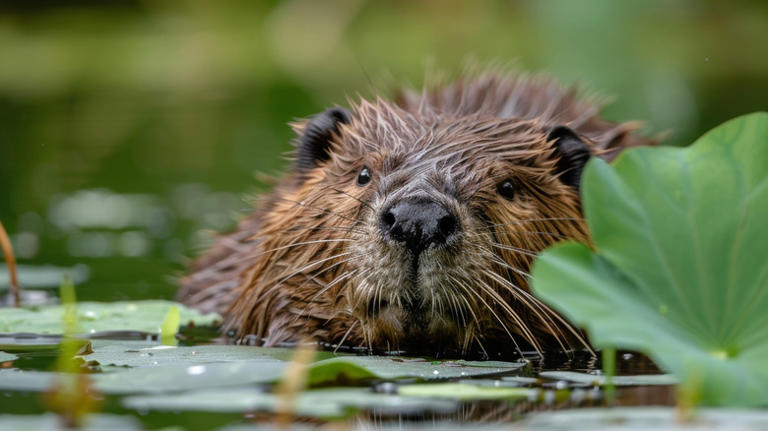
My MSN browser provided an update to the ongoing saga of a family of beavers in Northern California.  On a 2,325-acre valley in Northern California named Tásmam Koyóm, conservation efforts are underway to reintroduce beavers (Castor canadensis) after a nearly 75-year absence.  The result has been an explosion in population.  The beaver family in Tásmam Koyóm is one part of the continued efforts in California.  The state released a family of seven on June 12, 2024, at nearby South Fork Tule River, marking the first time the beaver had homed in the region in over a century.  The Tásmam Koyóm family has had a year and a half to get used to the new environment and are thriving, with two litters of kits and one of the beavers finding a mate in the wild.  The California Department of Fish and Wildlife says population growth offers a chance for beavers to thrive again. The species is endemic to Northern California, but its population was decimated by the fur trade in the 1800’s with numbers dwindling to fewer than a thousand by 1912.  The beaver is not only beginning to make a comeback, but it can also protect the landscape from wildfire threats.

When I went online, I found California has been affected by thousands of wildfires between 1987 and 2023.  The Palisades Fire began burning in the Santa Monica Mountains of Los Angeles County on January 7, 2025, and grew to destroy large areas of Pacific Palisades, Topanga, and Malibu before it was fully contained on January 31, 24 days later.  The fire was driven by hurricane-force Santa Ana winds and burned 23,448 acres (9,489 ha), killed 12 people, and destroyed 6,837 structures.  The fire was the tenth deadliest and third-most destructive California wildfire on record and the most destructive to occur in the history of the city of Los Angeles.  While the wildfire-prone area requires a multifaceted approach to future prevention, the recent reintroduction of beavers across the state could help.

The beavers come into play as they naturally create and maintain wetland environments.  Beaver dams have been mimicked in conservation efforts with volunteers creating Beaver Dam Analogues (BDA) to help bring water to drought-prone areas.  The state’s largest (real) beaver dam was over 320 feet (97.5 m) long before it was consumed in a wildfire in 2021.  One of the groups of the Tule River beavers began building off a BDA, strengthening the man-made dam already there.  Conservation efforts for the beaver help prevent wildfires and benefit the region’s wildlife, from the long-lived Desert Tortoise (Gopherus agassizii) to the state bird, the California quail (Callipepla californica).  The beavers’ explosive growth has given rise to the title of “Swiss army knife” of the animal kingdom for its utility.  The Tásmam Koyóm beaver family should be a rallying cry for more conservation as well as a case study of how important it is to protect ecosystems to the benefit of every living creature.  

THOUGHTS: The International Union for Conservation of Nature lists over 47,000 species as threatened with extinction.  Success stories like the Tule River beavers provide a cause for celebration.  Another family of beavers have taken up living in Alhambra Creek in downtown Martinez, California.  A male and female beaver arrived in Alhambra Creek in 2006 and proceeding to produce 4 kits over the course of the summer.  After the city decided to exterminate the beavers, local conservationists formed an organization called Worth a Dam which got the decision overturned.  Subsequently, wildlife populations have increased in diversity along the Alhambra Creek watershed.  Living in proximity to wildlife can be beneficial, if humans take time to figure out how to create a symbiotic relationship.  Act for all.  Change is coming and it starts with you.
Blue Ghost

March 07, 2025

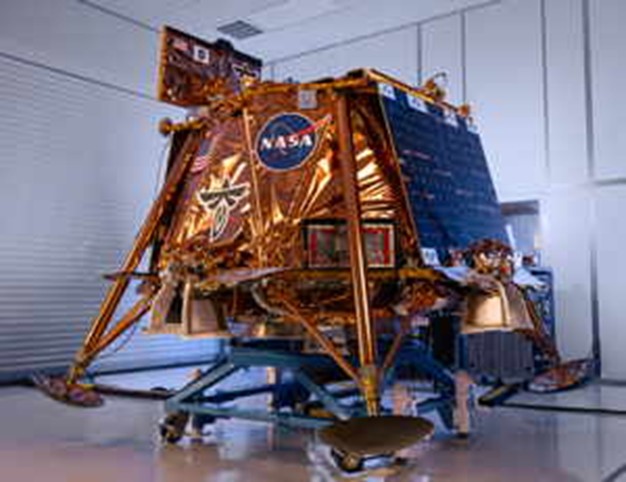
Inside the back section of Thursday’s newspaper was a USA Today article on the lunar lander that touched down early Sunday morning, March 2nd.  NASA’s Janet Petro said, “This incredible achievement demonstrates how NASA and American companies are leading the way in space exploration for the benefit of all.”  The Texas based Firefly Aerospace was hired by NASA to carry scientific instruments to the moon’s Earth-facing side to study its environment ahead of a manned return.  The 10 instruments will be used for lunar subsurface drilling, sample collection, X-ray imaging, and dust mitigation.  The craft has already sent striking images of the moon since it arrived in Lunar Orbit on February 10th.  Firefly has named this class of lunar lander the Blue Ghost.

When I looked online, I found the Firefly Aerospace Blue Ghost, or simply Blue Ghost, is a class of lunar landers designed and manufactured by the private American company Firefly Aerospace designed to deliver small payloads to the surface of the Moon.  The first Blue Ghost mission was launched January 15, 2025, at 1:11 a.m. EST and successfully landed on the Moon on March 2, 2025.  The landers are named after the firefly (Phausis reticulata) known as the Blue Ghost.  Firefly is the prime contractor for lunar delivery services using Blue Ghost landers which provide payload integration, launch from Earth, landing on the Moon, and mission operations.  Blue Ghost has four landing legs and is designed and built to be easily adapted to each customer’s needs between the earth and moon or in the moon’s orbit (cislunar).  Blue Ghost can be customized to support larger, more complex missions and is compatible with multiple launch providers. NASA awarded Firefly the first Blue Ghost lunar delivery task order in February 2021 as part of the Commercial Lunar Payload Services (CLPS) initiative.

The lander’s blue ghost namesake is a species of firefly found in the eastern and central US and is common in the southern Appalachians.  Adults are found in a variety of habitats, including dry and moist woods, near water, and along high, dry ridges.  The male of the beetle species is all-brown and about 0.2 to 0.4 inches (6 to 9 mm) long with large eyes.  The female is smaller, measuring 0.2 to 0.4 (4 to 9 mm) long.  Female blue ghosts are wingless, are yellow. and remain in larval form through adulthood (paedomorphic).  The females glow continuously from 4 to 9 spots on her body so they can be spotted by the males.  Once a female lays her clutch of 20 to 30 eggs, she guards them until she dies in one to two weeks.  The eggs hatch approximately 4 to 5 weeks after the mother dies. The larvae are extremely tiny, approximately 0.05 in (1 – 2 mm) and are bioluminescent.  Unlike many firefly species in the US, the blue ghost displays a steady glow rather than the typical flashing pattern.  The light emitted appears (to humans) as blueish-white when seen from a distance, but bright green when examined at close range.

THOUGHTS: The discrepancy in the observed color of the blue ghost is likely due to the Purkinje effect.  While the effect is often described from the perspective of the human eye, it occurs in other animals under the same name.  This effect describes the general shifting of spectral sensitivity due to pooling of rod and cone output signals as a part of dark/light adaptation.  The colors seen by different animals vary greatly depending on the makeup of those rod and cone features.  Humans seem to be in the middle of both color detection and acuity.  This is also true about our ability to make observations and gain understanding.  “Not like us” means different, not better or worse.  That is true for other animals and other humans.  Act for all.  Change is coming and it starts with you.
Barriers

February 04, 2025

After a quick 20-hour travel flight (yesterday) we arrived in Athens, Greece.  A tour of Greece and the Greek Isles had been on my bucket list for the last 40 years, so I was excited.  After arriving in Athens, we boarded a bus which would take us to the waiting ship where we would spend the next week.  The bus chaperone pointed out several points of interest as we ‘whizzed by’ amid rush hour traffic, but the drive was mainly accomplished in silence.  As we moved along, I noticed the retainer walls that flanked both sides of the motorway.  The noise barriers were made of metal posts that had clear 10-foot (3 m) inserts, not the concrete sound walls I am used to seeing in the US.  The other aspect that interested me were the bird silhouettes placed on each panel of the noise barrier.

When I looked online, I found noise barriers (also called a soundwall, noise wall, sound berm, sound barrier, or acoustical barrier) are exterior structures designed to protect inhabitants of sensitive land use areas from noise pollution. Noise barriers are the most effective method of mitigating roadway, railway, and industrial noise sources, other than cessation of the source activity itself.  Extensive use of noise barriers began in the US after noise regulations were introduced in the early 1970’s.  Several different materials are used for noise barriers, including masonry, earthwork or berms, steel, wood, concrete, plastics, insulating wool, or composites.  Walls made of absorptive material mitigate sound differently than hard surfaces.  It is also possible to make noise barriers with active materials such as solar photovoltaic panels to generate electricity while reducing traffic noise.  Noise barriers can be effective tools for noise pollution abatement, but certain locations and topographies are not suitable for their use.  Cost and looks also play a role in the choice of noise barriers.  Potential disadvantages of noise barriers can be blocked vision for motorists and rail passengers.  While glass elements in the barriers can reduce visual obstruction, they require regular cleaning, provide an expanded target for graffiti, and create a possibility of bird strikes in the clear barriers

These disadvantages were evident in the barriers along the motorway in Athens.  Environmental noise barriers are common in Greece to reduce noise being emitted from outdoor installations or sources of traffic/railway noise.  Most such projects involve the construction of opaque or transparent noise barriers or even entire enclosures in cases of small/medium-size installations.  Each of the clear glass panels along the motorway had a bird silhouette emblazoned on it.  It took me a while to figure out why these silhouettes were on the panels.  Then I remembered several past blogs where I discussed the problem of bird strikes.  The bird figures warned any birds there was a solid surface, or at least another bird they needed to avoid.  There were a few sections of barriers that did not contain bird silhouettes.  Interestingly, these sections were heavily tagged with graffiti.  While such tags are considered an act of vandalism by some, many display an elaborate style and can often be identified through their uniqueness and methods.

Thoughts: The bird silhouettes and graffiti tags on the noise barriers were both a way of making a presence known.  The creators of the barriers wanted to make their presence known to keep birds from flying into the walls.  The graffiti was an effort by the taggers to let others in the city know they existed, and their presence mattered.  The desire to be recognized seems innate to humans.  It is even more so as we seek to create respect and unity among us all.  Act for all.  Change is coming and it starts with you.

Lunar

January 30, 2025

Listening to the radio yesterday I was inundated by references to the start of the Lunar New Year on January 29th.  I was somewhat surprised as there is not a large Asian population in our state.  As of 2022 there were 47,413 (1.7%) Asian Americans living in Arkansas.  This was a national broadcast, but again it was a country music station.  Still, the references got me hankering for dumplings and egg rolls.  I texted Melissa on my way home and she agreed this sounded like a good dinner.  Not having a “go to” Asian restaurant in town I decided to buy a frozen variety from the market and cook them in the air fryer.  I realized this was not the same as dim sum (small bites) but it was the closest I could come to it on short notice.  I came home excited by the prospect of a tasty meal to kick off our unofficial celebration of the Lunar New Year.

When I looked online, I found there is a difference between Chinese New Year and Lunar New Year.   While they are can be used interchangeably, Chinese New Year is primarily celebrated in China, where it is a public holiday and one of the biggest celebrations of the year.  Countries like Vietnam, Malaysia, Indonesia, Brunei, Singapore, South Korea, and parts of southeast Asia instead celebrate this as Lunar New Year.  Traditionally, the celebration begins with a large family meal on Lunar New Year’s Eve and continues for the next 15 days, or until the following Lantern Festival (the next full moon).  Symbolic traditions include eating fish (associated with wealth) or noodles (for longevity).  People may also give red envelopes with money inside (hóngbāo) to express good wishes, set off fireworks and dragon dances to ward off evil spirits (Nian, the monster afraid of red), offer sacrifices to their ancestors for protection, and reunite with family to enjoy the celebrations.  In China and Vietnam, the event correlates with the start of spring so floral arrangements adorn houses, streets, and businesses.  In South Korea, bird decorations like paper cranes are hung up for longevity and good fortune.  In Tibet, children bring gifts to their elders, and in Mongolia, a pastry tower is made to represent Mount Sumeru (a holy mountain).  Many people with Asian heritage living in other parts of the world still participate in the Lunar celebrations.

Lunar New Year is a time to look towards a new year and good fortune but there are also plenty of superstitions around this time.  In preparation, people will “sweep out” the misfortune of the old year from their home and hang up poems on red paper (couplets) for good luck and prosperity.  It is widely believed you should avoid any washing or sweeping on the New Year to avoid “washing” the good fortune away, to avoid unlucky words like “illness” or crying, and to avoid colors associated with mourning such as black and white.  Door Gods (mén shén) are hung up in entranceways facing each other to ward off evil spirits.  Red is known as a lucky color and symbolizes happiness, prosperity, luck, and good fortune, and appears on envelopes, clothing, lanterns, and decorations especially during this time.

Thoughts: Our celebration of Lunar New Year was derailed by a major thunderstorm that repeatedly knocked out the power.  We did not want to risk a power surge on our new air fryer and decided to go to the local Chinese buffet instead.  The power was back on when we arrived, and I anticipated the egg rolls and pork dumplings.  To my dismay they had no dumplings, and the egg rolls were soggy.  The power flickered several more times before finally going out completely.  Several local police had also come for the buffet, and they turned on their flashlights and placed them around the restaurant so we could see to eat.  We left paying cash to the delight of the cashier (register was out).  Although the food did not rival the dim sum I experienced in the Bay Area, it was memorable.  I hope this inauspicious start will lead to a good year.  Act for all.  Change is coming and it starts with you.