
September 19, 2025
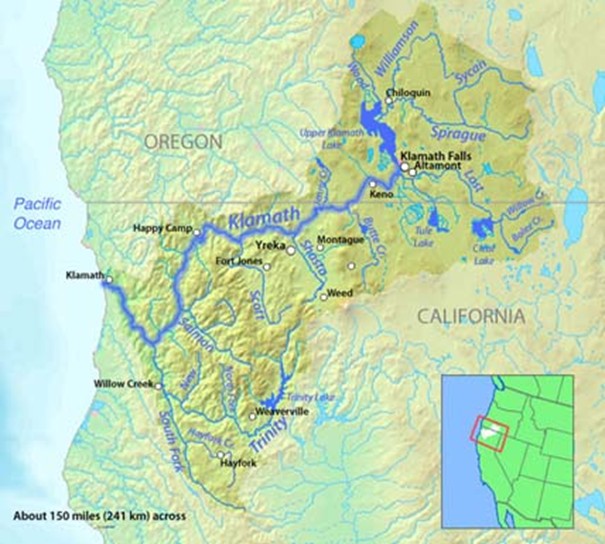
Inside the front section of my local newspaper was a USA Today article following up on a blog I posted a year ago on the dam removal along the Klamath River in California/Oregon. The Klamath had been pushed to the point of extinction with construction of two hydroelectric and two reservoir dams. A key tributary was channelized resulting in massive amounts of phosphorus flowing into the lake and lower river. The dams deprived the Chinook (Oncorhynchus tshawytscha) and threatened coho (Oncorhynchus kisutch) salmon and other fish species from reaching the headwaters to spawn. Dam removal began in 2024. This initially released millions of tons of accumulated sediment but began a natural part of the river’s restoration. The salmon many said would never return appeared upstream almost overnight. This summer members of the Yurok Tribe were joined by other tribal participants to take a historic 310-mile kayak journey from Klamath Falls to the Pacific Ocean. Central to this trek were the teenage participants in the Paddle Tribal Waters program.
When I went online, I found the Paddle Tribal Waters program was formed in July of 2022 as a collaboration of the groups Ríos to Rivers and Maqlaqs Paddle. The program started with a two-and-a-half-week kayak and river advocacy training program for 15 Indigenous youth from the Klamath Basin and continued with weekend kayaking trips and kayak roll training sessions. The program continued in the summer of 2023 with a second cohort of 15 Native students participating and a third cohort in in the summer of 2024 with 13 participants, for a total number of 43 indigenous youth completing the beginner program. In January 2024, the first two cohorts combined to participate in a semester-long kayak training and high school program that Ríos to Rivers created in collaboration with World Class Kayak Academy. The semester-long kayaking and high school program is key to setting these students on the path to truly having the skills needed to make the first descent of the Klamath. The long-term vision of the Paddle Tribal Waters program is to support the youth who participated in the first descent of the Klamath to go on to create tribally led river programs in their communities. The descent was completed in September 2025.
Another of the Paddle Tribal Waters programs’ goals is continued restoration and conservation of the entire Klamath Basin. Wetlands need to be restored to impound the phosphorus and prevent the growth of deadly algae. Much of this comes from the extinct volcanoes at the head of the Sprague River around Mount Mazuma. The channeling needs to be replumbed to bring back the meandering stream and water plants to hold back the phosphorus. Two other dams still bar salmon migration as the fish ladders constructed by the Bureau of Reclamation were not built to accommodate large fish. Wetland removal from the Upper Klamath Lake and some of its tributaries allow the toxic algae to feast off the phosphorus and suffocate the fish. Ashia Wilson, member of the Klamath Tribe at the rivers’ headwaters, said the Upper Klamath is still too toxic to touch, even as the kayakers paddled their way to the mouth. The endemic c’waam (Deltistes luxatus) or lost river sucker, and the koptu (Chasmistes brevirostris) or short nosed sucker, used to feed the tribe but are now endangered.
THOUGHTS: The arrival of the small Paddle Tribal Waters group of natives and their allies marked a milestone. Removal of the four dams (all beyond their service life) will make restoration of the rest of the basin possible. An ending ceremony at Requa and a celebration the next day in Klamath told of the 20-year struggle to restore the river and seemed to suggest anything is possible. The wetlands of headwaters and river deltas are critical habitat and must be both preserved and restored. Act for all. Change is coming and it starts with you.
 A travelers odyssey