Garbage Patch

December 17, 2025

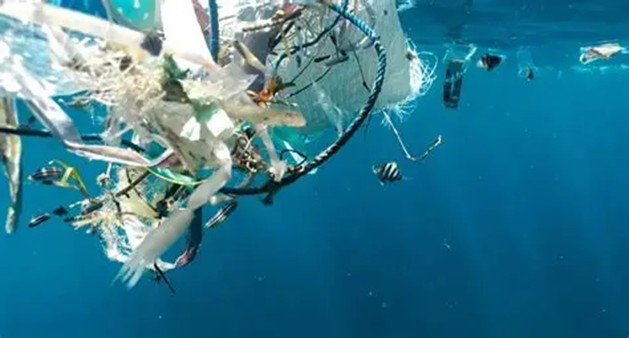
When I opened my MSN browser this morning I found an article on life flourishing in the open ocean.  This is a mix of natural, surface-dwelling ocean creatures and resilient coastal species that use floating plastic as rafts to colonize the open sea, forming new (artificial) ecosystems even as they face dangers from entanglement, plastic ingestion, and toxic contamination.  This biological hotspot is also an ecological nightmare as the plastics disrupt feeding, growth, and development of other marine animals.  Life on the plastics includes coastal species like barnacles (subphylum Crustacea), bryozoans (Phylum Bryozoa), anemones (class Anthozoa), and crustaceans (Subphylum Crustacea) that were carried from home by currents from the 2011 Japan tsunami.  Open-Ocean species like violet snails (Janthina exigua) and blue button jellies (Phylum Ctenophora) also thrive using floating plastic for shelter and feeding.  The non-biodegradable plastics allow these diverse communities to form and even reproduce, bringing life to the Great Pacific Garbage Patch

When I went online, I found the Great Pacific Garbage Patch, or Pacific trash vortex, is a spiral (gyre) of marine debris particles in the central North Pacific Ocean.  The patch is located roughly from 135°W to 155°W and 35°N to 42°N and originates from the Pacific Rim, including countries in Asia, North America, and South America.  Despite the common perception of the patch as giant islands of floating garbage, it is of low density (4 particles per 3.1 yd2 or 1 m2) which prevents its detection by satellite imagery or boaters or divers in the area.  The patch is a widely dispersed area consisting primarily of suspended “fingernail-sized or smaller” (often microscopic) particles (microplastics) in the upper water column.  Researchers from The Ocean Cleanup project claimed the patch covers 620,000 square miles (1.6 million km2) and consists of 50,000 to 142,000 tons (45,000 to129,000 metric tons) of plastic as of 2018 and has grown to twice the size of Texas.  By 2024, the group had removed more than 1 million pounds (453592 kg) of trash from the Patch.

Rehabilitating the Garbage Patch poses a significant challenge due to its immense size and location far from any country’s coastline, making it difficult for any nation to bear the financial responsibility for cleanup.  Various international organizations have pledged to stop the growth of the Garbage Patch.  Charles Moore (who initially uncovered the patch in 1997) is actively involved in raising awareness through the Algalita Marine Research Foundation.  The Ocean Cleanup, led by Boyan Slat, aims to eliminate 90% of ocean plastic pollution by 2040.  The organization is developing technology to extract plastic from the oceans and intercept it in rivers before it reaches the sea.  Their approach is to concentrate the plastic in “artificial coastlines” before collecting and removing it with a long U-shaped barrier that directs the plastic towards a retention zone.  The group’s collection exceeds hundreds of tons (90+ metric tons) and continues to grow.  While microplastics dominate the patch, 92% of the mass consists of larger objects like plastic lighters, toothbrushes, water bottles, pens, baby bottles, cell phones, and plastic bags.  The patch contains around 6 pounds (2.7 kg) of plastic for every pound (0.45 kg) of plankton.  A similar patch of floating plastic is found in the Atlantic called the North Atlantic garbage patch.

THOUGHTS: As plastics are being removed from the Garbage Patch the question remains about the life that exists there.  A team of scientists found almost every piece of plastic removed was carrying (mostly invertebrate) life.  On average, each plastic item carried about 4 to 5 different species and nets and ropes tended to have especially dense communities.  Nature seems to adapt to humans’ worst levels of pollution.  Act for all.  Change is coming and it starts with you.
Pestalotiopsis

June 20

In the middle of the back section of my local newspaper was a Reuters article on the discovery of a fungi that can break down the plastic found in landfills.  The discovery has launched a startup in Austin, Texas, which will sell disposable diapers paired with the fungi intended to break down the plastic.   Tero Isokauppila co-founded Hiro Technologies which now sells online “diaper bundles”.  Three sealed jars at the company’s lab show the stages of decomposition of the treated diaper overtime.  By 9 months the product appears as black soil.  The diapers the fungus attacks contribute significantly to landfill waste.  The Environmental Protection Agency says an estimated 4 million tons (907,000 metric tonnes) of diapers were disposed of in the US in 2018 with no significant recycling or composting.  It takes 100’s of years for the diapers to break down naturally.  Each of the Myco-Digestible Diapers comes with a packet of Pestalotiopsis microspore fungi which is added to the dirty diaper before it is thrown into the trash.

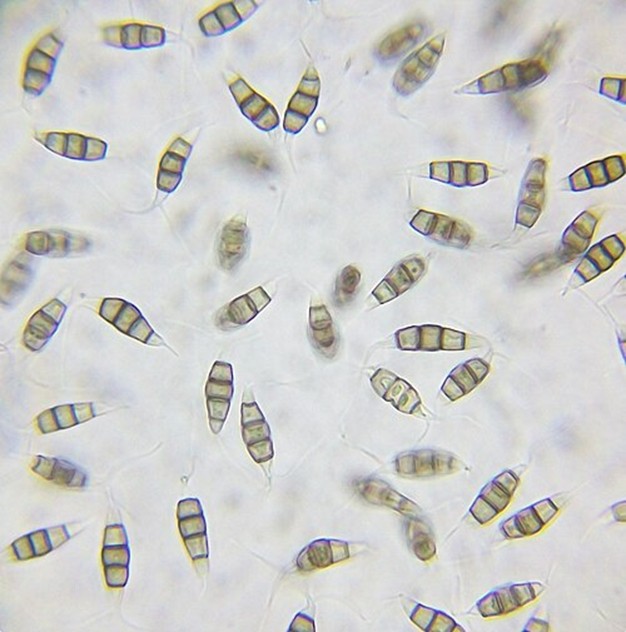
When I went online, I found Pestalotiopsis microspora is a species that lives within a plant for at least part of its life cycle without causing apparent disease (endophytic).  The fungus can break down and digest polyurethane (plastics).  Pestalotiopsis was originally described from Buenos Aires, Argentina in 1880 in the fallen foliage of common ivy (Hedera helix) by mycologist Carlo Luigi Spegazzini, who named it.  Pestalotiopsis also causes leaf spot in Hypericum ‘Hidcote’ (Hypericum patulum) shrubs in Japan.  The species polyurethane degradation activity was only discovered in the 2010’s in two distinct strains isolated from plant stems in the Yasuni National Forest within the Ecuadorian Amazon rainforest.  This was a discovery by a group of student researchers led by molecular biochemistry professor Scott Strobel as part of Yale’s annual Rainforest Expedition and Laboratory.  It is the first fungus species found to be able to subsist on polyurethane in low oxygen (anaerobic) conditions making the fungus a potential candidate for bioremediation projects involving large quantities of plastic.

The Pestalotiopsis fungi evolved to break down the lignin compound found in trees.  Isokauppila said the carbon backbone of the compound is very similar to the backbone of plastics.  Lignin is a class of complex organic polymers that form key structural materials in the support tissues of most plants.  Lignin is particularly important in the formation of cell walls, especially in wood and bark, because it lends rigidity and does not rot easily.  Most fungal lignin degradation involves secreted peroxidases.  Fungal laccases are also secreted, which aid degradation of phenolic lignin-derived compounds.  An important aspect of fungal lignin degradation is the activity of accessory enzymes to produce the hydrogen peroxide (H2O2) required for the function of lignin peroxidase.  More research is required to see how Pestalotiopsis will decompose in real world conditions.  That data should enable the company to make a “consumer-facing claim” by next year.  Hiro Technologies plans to experiment with the plastic eating fungi on adult diapers, feminine care products, and other items.

THOUGHTS: When my son was born the reaction of Pestalotiopsis on plastics was unknown.  I decided to avoid the waste of disposables by using cloth diapers.  While his mom agreed, it was my job to take care of the mess and cleaning required by the diaper pail.   There has been a resurgence of interest in cloth diapers recently among environmentally and financially conscious new parents.  While disposable diapers remain popular, a growing number of families are choosing to use cloth diapers.  This shift is driven by environmental concerns, cost savings, and improved cloth diaper designs.  The cost of the fungi diaper packs is not cheap (neither are the disposables), but it could make a significant difference environmentally.  Act for all.  Change is coming and it starts with you.