Lunar

January 30, 2025

Listening to the radio yesterday I was inundated by references to the start of the Lunar New Year on January 29th.  I was somewhat surprised as there is not a large Asian population in our state.  As of 2022 there were 47,413 (1.7%) Asian Americans living in Arkansas.  This was a national broadcast, but again it was a country music station.  Still, the references got me hankering for dumplings and egg rolls.  I texted Melissa on my way home and she agreed this sounded like a good dinner.  Not having a “go to” Asian restaurant in town I decided to buy a frozen variety from the market and cook them in the air fryer.  I realized this was not the same as dim sum (small bites) but it was the closest I could come to it on short notice.  I came home excited by the prospect of a tasty meal to kick off our unofficial celebration of the Lunar New Year.

When I looked online, I found there is a difference between Chinese New Year and Lunar New Year.   While they are can be used interchangeably, Chinese New Year is primarily celebrated in China, where it is a public holiday and one of the biggest celebrations of the year.  Countries like Vietnam, Malaysia, Indonesia, Brunei, Singapore, South Korea, and parts of southeast Asia instead celebrate this as Lunar New Year.  Traditionally, the celebration begins with a large family meal on Lunar New Year’s Eve and continues for the next 15 days, or until the following Lantern Festival (the next full moon).  Symbolic traditions include eating fish (associated with wealth) or noodles (for longevity).  People may also give red envelopes with money inside (hóngbāo) to express good wishes, set off fireworks and dragon dances to ward off evil spirits (Nian, the monster afraid of red), offer sacrifices to their ancestors for protection, and reunite with family to enjoy the celebrations.  In China and Vietnam, the event correlates with the start of spring so floral arrangements adorn houses, streets, and businesses.  In South Korea, bird decorations like paper cranes are hung up for longevity and good fortune.  In Tibet, children bring gifts to their elders, and in Mongolia, a pastry tower is made to represent Mount Sumeru (a holy mountain).  Many people with Asian heritage living in other parts of the world still participate in the Lunar celebrations.

Lunar New Year is a time to look towards a new year and good fortune but there are also plenty of superstitions around this time.  In preparation, people will “sweep out” the misfortune of the old year from their home and hang up poems on red paper (couplets) for good luck and prosperity.  It is widely believed you should avoid any washing or sweeping on the New Year to avoid “washing” the good fortune away, to avoid unlucky words like “illness” or crying, and to avoid colors associated with mourning such as black and white.  Door Gods (mén shén) are hung up in entranceways facing each other to ward off evil spirits.  Red is known as a lucky color and symbolizes happiness, prosperity, luck, and good fortune, and appears on envelopes, clothing, lanterns, and decorations especially during this time.

Thoughts: Our celebration of Lunar New Year was derailed by a major thunderstorm that repeatedly knocked out the power.  We did not want to risk a power surge on our new air fryer and decided to go to the local Chinese buffet instead.  The power was back on when we arrived, and I anticipated the egg rolls and pork dumplings.  To my dismay they had no dumplings, and the egg rolls were soggy.  The power flickered several more times before finally going out completely.  Several local police had also come for the buffet, and they turned on their flashlights and placed them around the restaurant so we could see to eat.  We left paying cash to the delight of the cashier (register was out).  Although the food did not rival the dim sum I experienced in the Bay Area, it was memorable.  I hope this inauspicious start will lead to a good year.  Act for all.  Change is coming and it starts with you.

Traction

January 14, 2025

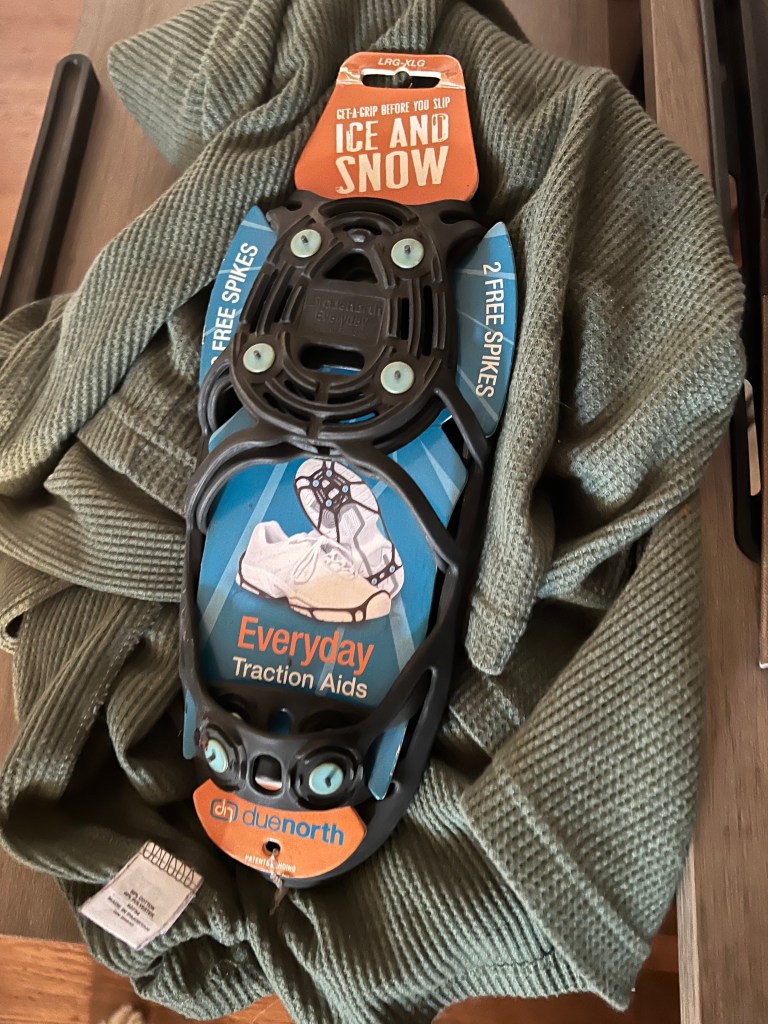
Yesterday I decided it was time to get out into the weather and take the kids for a walk.  I decided to go to the lake as it was more open and had a better probability for the parking lot to be cleared by road crews.  The temperatures in the morning were below freezing (-0C) but were set to warm up to 40F (4.5C) by the afternoon.  I did have two concerns.  The first was the possibility for windchill which would negate any increase in temperature.  I decided to dress for the cold.  That meant a pair of long johns under my sweatpants.  Then a tee shirt, a long sleeve undershirt, and a long-sleeved thermal undershirt.  I topped this off with a light ski jacket.  The first concern was covered.  The second concern was the potential for ice and snow on the spits we walk at the lake.  The kids have been romping in the snow in the side yard, and I knew this would not be their concern.  That is different for me and was my reason to shovel over the weekend.  Melissa was a runner when we met and one of her first Christmas presents was cold weather gear for running in Kansas.  That meant running gloves, hand and foot warmers, and a set of spikes in a rubber harness.  The spikes were billed as “everyday traction aids”.  The spikes should provide the traction I needed to walk the kids.   

When I looked online, I found Merriam-Webster defines traction in several ways.  The first definition (and applicable for me) is “the adhesive friction of a body on a surface on which it moves”.  A variation of this meaning says traction can refer to “a pulling force exerted on a skeletal structure (as in a fracture) by means of a special device” (splint).  A second definition is “the force exerted in the act of drawing or being drawn”.  The third meaning took a different approach with “the support or interest that is needed for something to make progress or succeed”.  This indicates something “gains traction” as people begin to accept and/or adopt an idea or methodology.  Finally, traction refers to “the drawing of a vehicle by motive power”.  Here a tractor is something that pulls something else.  This is often a piece of farm machinery or the part of a big truck that includes the engine and the cab.  The word tractor comes from the Medieval Latin “traction”, or from the Latin “trahere”.  The first known use of traction in English occurred in 1608, in the meaning defined by the second sense.

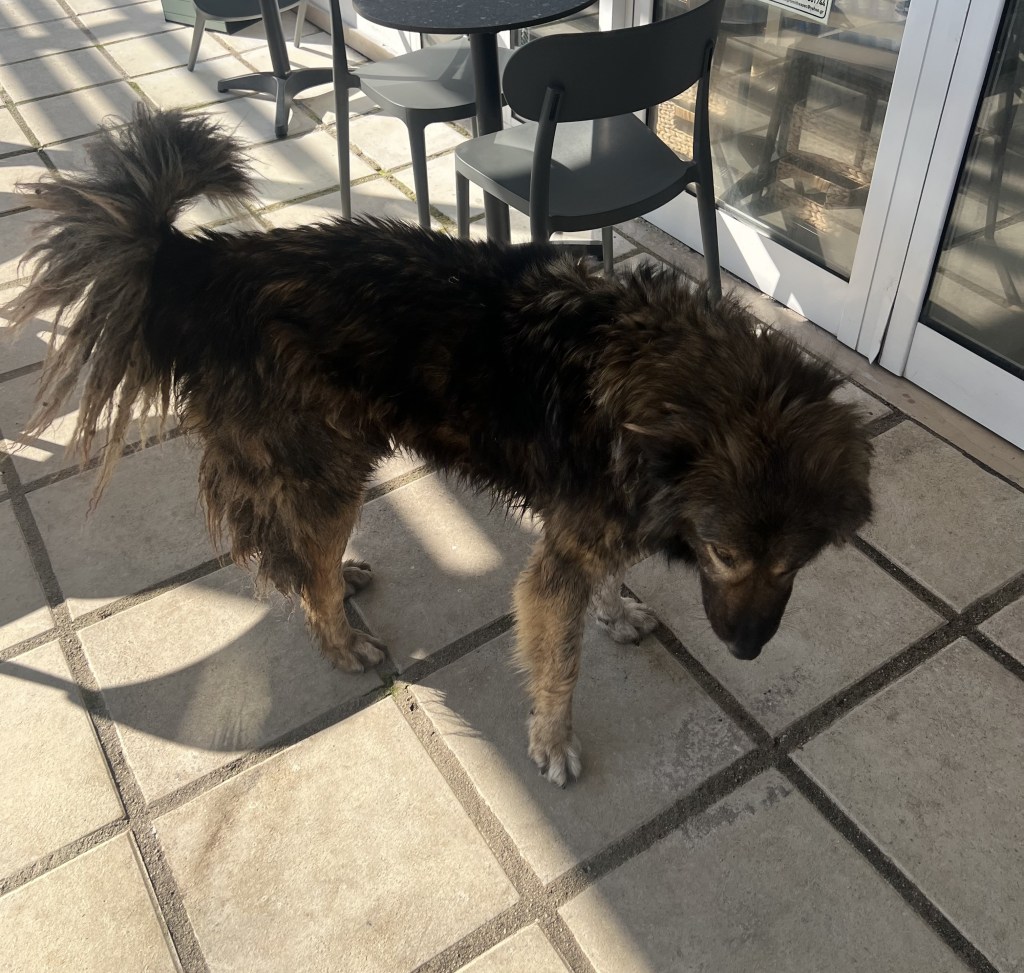
I was intrigued by the spikes guarantee to provide traction as I walked the kids.  After I bought them, Melissa had never had an occasion to use them.  They sat (in the original package) in my closet along with our shoes for 15 years.  When we pulled into the lake for our walk, I found the parking lot was generally clear of ice and snow.  Even the roads leading out to the end of the spits were clear, even though the grass on either side was snow covered.  I left the traction spikes (still in their packaging) in the car and started on our hike.  The temperature was higher than forecast at 45F (7C) and my decision to bundle against the cold seemed unnecessary.  Neither of my concerns were warranted.  I was toasty in my layers and the snow and ice were gone.  However, I was not anticipating the mud.  The ground was mostly frozen, but my four-wheeler buddies had been taking laps in the snow and over the roads.  As we walked the spits, Loki’s legs and underbelly quickly became covered in mud.  We took most of our laps circling the parking lot.  Luckily there was enough snow on the grass to wash Loki off before I let him back into the car.

Thoughts: This was one of the (rare) occasions where I over planned for the cold and loss of traction.  Even though I did not need all the extra layers, it was nice to be warm and snug while we walked.  The traction aid I bought for Melissa went back into the closet next to my shoes to wait for another day.  I do not know if my over planning can be accredited to experience or unwarranted caution as I age.  As a Boy Scout our motto was “Be Prepared”.  That is still a good motto for hiking, camping, and even for life in general.  Act for all.  Change is coming and it starts with you.
Capybara

December 19, 2024

As the year ends, yet another baby animal is going viral on social media. Tupi was born at the San Antonio Zoo on December 3rd and the zoo has been sharing pictures and videos of him, his mother, (Luna), and other animals in his enclosure. As the largest rodent in the world, most capybaras spend their days munching on grass and water plants in dense vegetation around bodies of water. Tupi is the first of his species to be born at the facility in 25 years, according to a statement from the zoo.
Jacob Downing, a spokesman for the zoo, said, “Their births are not super rare. At the end of the day, they are still rodents.” There has not been any capybara at the zoo since 2018 and no babies since 2000. The zoo announced Tupi’s birth on its social media accounts late last week, getting an outpouring of internet love as Tupi was embraced on social media. An hour later the zoo distanced itself from a memecoin ($TUPI) named after the new capybara.

When I looked online, I found the capybara or greater capybara (Hydrochoerus hydrochaeris) is the largest living rodent and is native to South America. The genus Hydrochoerus has only two member species, the greater capybara and the lesser capybara (Hydrochoerus isthmius). Close relatives of the capybara are the domestic guinea pig (Cavia porcellus) and rock cavy (Kerodon rupestris) both endemic to the Andes. The capybara is distantly related to the agouti (genus Dasyprocta), the two species of chinchilla (Chinchilla chinchilla and Chinchilla lanigera), and the semiaquatic nutria (Myocastor coypus), all from South America. Adult capybaras grow to 3.5 to 4.5 feet (106 to 134 cm) in length, stand 20 to 24 inches tall (50 to 62 cm) at the withers, and typically weigh 77 to 146 pounds (35 to 66 kg). Females are slightly heavier than males. Capybaras have slightly webbed feet and vestigial tails. Their hind legs are slightly longer than their forelegs, with three toes on their rear feet and four toes on their front feet. Their muzzles are blunt, with nostrils, eyes, and ears near the top of their heads. The capybara inhabits savannas and dense forests near bodies of water. The species is highly social and can be found in groups (herds) as large as 100 individuals, but usually closer to 10 to 20. The capybara is hunted for its meat, hide, and the grease from its thick fatty skin.

The San Antonio Zoo quickly posted on X that the facility was not associated with or benefiting from the Cryptocurrency named after Tupi, the new baby capybara born at the zoo. Memecoins are a form of cryptocurrency which are named after memes, characters, animals and other things related to the internet in hopes of drawing interest. The pygmy hippopotamus (Choeropsis liberiensis) born in Thailand in July 2024 also has a memcoin named after it. As the crypto market experienced a revival this year, memecoins also surged, even as some, like the $HAWK coin created by Haliey Welch, appeared to exist solely to benefit the group of people behind the coin. The zoo is providing plenty of footage of the nearly 3-week-old capybara. Tupi is still nursing but has already begun eating solids. In one of the videos shared Tupi climbed entirely into a bowl of food in order to feast. 2024 has been a good year to be a cute baby animal at a zoo as social media users have personified them with popular internet lingo. The zoo gave Tupi a mantra for the new year:
“Unbothered. Moisturized. Happy. In My Lane. Focused. Flourishing.”

THOUGHTS: My first encounter with a capybara happened as a young boy at a small town fair in Kansas. The side show included a number of exotic animals. I paid my hard earned US50 cents to wonder at the bearded lady, sword swallower, and what had really caught my eye, a “Paris Sewer Rat”. The small town fairs have passed and have been replaced by the wonders of social media. The scam (and wonder) is still available to intrigue a young boy’s mind. “If its online, it must be true. Right?” Act for all. Change is coming and it starts with you.

Siamese

November 13, 2024

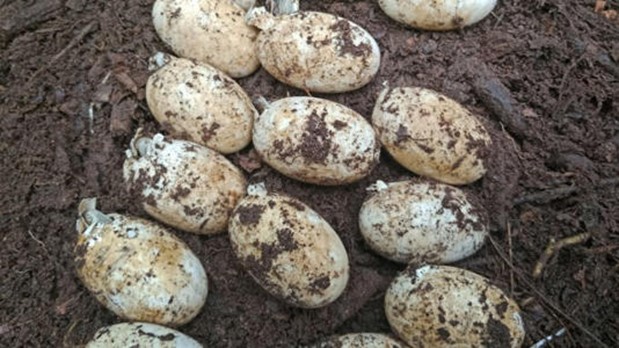
Today’s MSN browser featured a report on a crocodile thought to be extinct in the wild a generation ago that is making a comeback. The animals are being bred in captivity and reintroduced to their natural habitat. The conservation effort began in 2012 and last June the crocodiles laid 106 eggs and produced 60 hatchlings. There are about 1,000 of the crocodiles in the wild, including 400 in Cambodia. The species was nearly killed off by habitat destruction, poaching, and crossbreeding. Ironically, the hunters who captured, bred, and killed the crocodiles to sell their skins helped them bounce back. These captured crocs are the source of purebred, fertile crocodiles that were pulled from a population of 1.5 million (mostly hybrids) being bred for leather. After the females lay eggs, the eggs are incubated at the Phnom Tamao Wildlife Rescue Centre, allowing the crocodiles to develop before they are brought to a national park in the Cardamom Mountains. According to Pablo Sinovas of Fauna & Flora, only one in 20 crocodiles born in the wild survives, but if they are bred captively and not released until they reach 1 meter in length, “their chances of survival increase exponentially.”

When I looked online, I found the Siamese crocodile (Crocodylus siamensis), also known as the Singapore small-grain and soft-belly crocodile, is a medium-sized freshwater crocodile native to Indonesia (Borneo and possibly Java), Brunei, East Malaysia, Laos, Cambodia, Myanmar, Thailand, and Vietnam. The animal is medium-sized, with a relatively broad, smooth snout and an elevated, bony crest behind each eye. It is generally olive green but can range to a dark green. Immature crocodiles measure 4 to 5 feet (1.2 to 1.5 m) and weigh from 13 to 26 pounds (6 to 12 kg). Adults can grow to a length of 7 to 10 feet (2.1 to 3 m) and weigh from 88 to 265 pounds (40 to 120 kg). Adults have a bite force of 466 to 1,029 pounds per foot (2,073 to 4,577 N). Large males can reach over 13 feet (4 m) and weigh 770 pounds (350 kg). The species is critically endangered and already extinct in many regions.

The Siamese crocodile is critically endangered on the International Union for Conservation of Nature (IUCN) Red List and is listed on Appendix I of Convention on International Trade in Endangered Species of Wild Fauna and Flora (CITES). In Cambodia, Fauna and Flora International and the Government of Cambodia’s Forestry Administration have established the Cambodian Crocodile Conservation Programme for the protection and recovery of Siamese crocodiles. This program works with a network of indigenous villages who are helping to protect key sites such as Veal Veng Marsh (Veal Veng District), the Tatai River (Thmar Bang District), and the Araeng River. The Araeng is thought to have the second largest population of Siamese crocodiles in the world but is being threatened by proposed construction of a massive dam. The Siamese take advantage of the increase in water levels during the Monsoon season (June to November) to move out of the river and onto large lakes and other local bodies of water, returning to their original habitat once water levels receding back to their usual levels. Since 2012, approximately 50 purebred Siamese crocodiles have been released into community-protected areas to reinforce the depleted wild populations.

THOUGHTS: Conservationists are also trying to protect Siamese crocodile’s habitat as 32% of the Cambodia’s tree cover was lost from 2001 to 2023 due to climate change and deforestation. Sean Pang stated, “Policymakers must recognize that addressing both climate and land use change is crucial for protecting the fate of South-east Asia’s trees, and likely for much of the region’s biodiversity.” The world’s natural resources are at peril without a combined effort by government, conservationist, and the local population. Act for all. Change is coming and it starts with you.
Mud Tracks

November 06, 2024

We have received heavy rain over the last two days, and I tried to keep the kids out of the side yard. I monitor them when I do let them out to make sure they are not mischievous (Loki is a digger and Zena is a roller) and end up covered in mud. Today the rain stopped, and I decided to brave our walk site at the lake. A portion of the walk is on a paved parking lot, but the majority covers packed dirt tracks that lead out to the end of two spits. We were the only ones there when we arrived to begin our walk. We walked to the end of the first spit and while it was wet, we were able to pick our way through the puddles without getting our paws muddy. As we were coming off the spit two 4-wheel drive pickups pulled out onto the other spit and began to cut mud tracks through the vegetation. As we walked around the paved lot on the trail the trucks moved to the area we had just left. This had a wider area that had been torn up by previous off-road activity. It did not take long for one of the trucks to get stuck axel deep in the mud. This was obviously why they had come in the first place. After extricating the truck, they drove to the boat ramp and took selfies of the mud covered truck to share with their friends. Teenagers in pickups are not the only ones that leave mud tracks.

When I looked online, I found one of the more famous mud tracks is located at Racetrack Playa in Death Valley. Racetrack playa is approximately 3 miles (4.8 km) long and 1.2 miles (1.9 km) wide and is located at a height of 3708 feet in a north-south valley east of the Panamint Range within Death Valley National Park. The playa receives only 3 inches of annual precipitation and is bounded on all sides by north-south ranges rising 1500 to 2000 feet (457 to 610 m). The surface of the playa is mainly dried clay and provides a hard, smooth, and level pavement. The sailing stones, also called sliding or walking rocks, move and inscribe long tracks along a smooth valley floor without animal intervention. The movement of the rocks occurs when large, thin sheets of ice floating on a brief winter pond break up in the sun. Rocks weighing up to 705.5 pounds (320 kg) travel across the playa and leave mud tracks. Stones with rough bottoms leave straight striated tracks, while those with smooth bottoms tend to wander. The mud trails differ in both direction and length. Rocks that start next to each other may travel parallel for a time and then one abruptly changes direction to the left, right, or even back to the direction from which it came. This phenomenon has been documented since 1948 and is not unique to Racetrack Playa. Tracks in the mud have been observed around the world.

Traditionally, these rocks were considered to be pushed by wind over a wet and slippery playa surface but observations from 2014 called this assumption into question and several aspects of the mud tracks remain a mystery. A thorough system was put up to investigate the rock movement that included a weather station near the playa, time-lapse cameras centered on the southeast corner, and 15 GPS-equipped boulders on the surface. The researchers went to the location for maintenance and data retrieval 5-8 times per year and from November to March of each year the time-lapse camera recorded hourly conditions. Interwoof GPS loggers were also installed in limestone blocks northeast of natural stones and captured GPS and temperature data every 60 minutes. The GPS trackers began recording constantly at one-second intervals after being triggered. The shape of the shallow lake named Ontario Lacus on Saturn’s moon Titan has been compared to that of Racetrack Playa.

THOUGHTS: Despite the signs and barriers forbidding driving on the surface and making mud tracks posted along parts of the playa, park rangers still find new tire tracks on it every couple of years. The walking rocks will not slide if the surface is defaced. Destruction of such natural wonders takes decades to repair. Act for all. Change is coming and it starts with you.

Flat Stanley

October 31, 2024

Last week we received a text from my son saying we would receive a package from our grandson.  His second grade teacher in Washington state started a project for the students to connect with their relatives living in different parts of the country.  The idea was to get responses over the next month and a half by sending a journal to track the progress of his avatar, a two dimensional representation of himself.  When the package arrived, I took pictures of the avatar participating in activities around our house.  He joined the fall pumpkin display, hung out with the succulents on the porch, and spent time in the garden among the tomatoes.  I e-mailed these back to his teacher to share and sent a letter to describe the fun he was having in Arkansas.  As requested, I sent the package along to my sister in Maine for her to do the same.  The project was based on the children’s book character, Flat Stanley.         

When I looked online, I found Flat Stanley is an American children’s book series written by author Jeff Brown.  The idea began as a bedtime story for Brown’s sons, which Brown turned into the first Flat Stanley book published in 1964 featuring illustrations by Tomi Ungerer.  Brown did not continue the series until two decades later, when he published five more books: Stanley and the Magic Lamp, Stanley in Space, Stanley’s Christmas Adventure, Invisible Stanley, and Stanley, Flat Again!  By 2003, the Flat Stanley series had sold almost one million copies in the US and had been translated into French, German, Spanish, Italian, Japanese, and Hebrew.  Brown died in December 2003, but other children’s book authors have continued the series under a new name, Flat Stanley’s Worldwide Adventures.  The Flat Stanley Project began in 1995 under the direction of Dale Hubert, a third grade teacher in London, Ontario, Canada.  The project is meant to facilitate letter-writing between schoolchildren as they document Flat Stanley accompanying them around the world.  The goal of the project is to increase reading and writing skills, as well as teaching children about people and cultures from different places.  In 2008, more than 6,000 classes from 47 countries took part in the Flat Stanley Project.

My grandson’s teacher gave the Flat Stanley project a different twist.  Rather than having Stanley travel around the states, it was a (flat) picture of himself who was to participate in the adventures.  The students begin by reading the book to become familiar with Flat Stanley’s story.  Stanley is flat because a bulletin board had fallen on him, but he was able to overcome this drawback to excel and travel.  The journal will document the places and activities along the avatars’ journeys.  Each student’s journal is to be mailed back to the school with entries from family and friends.  Postcards or letters returned to the class during the project help track the various places their avatars travel.  The project is similar to the traveling gnome prank, except that the Flat Stanley Project has a focus on childhood literacy.  While the project is focused on writing letters, my grandson’s teacher also suggested using email (as well) to assist with quicker travel time.  I wrote in the journal, sent three pictures via email, and wrote a “flat” letter to the class about the wonders of Arkansas. 

THOUGHTS: When I asked my sister if she would participate, she mentioned she had met the Flat Stanley author.  She was with her daughter and entered a café in Maine that had cutouts of Stanley on the tables.  They had read the book, recognized the character, and exclaimed, “Flat Stanley!”  A man behind them answered “Yes?” and identified himself as the author.  Education can be innovative and fun when teachers take time to present learning as more than “just the 3 R’s”.  More critical is for the parents and larger family to participate.  It is one thing to force a child to do math at the kitchen table, it is quite another way to sit with them as they read or do their math tables.  It may not always take a village, but village support certainly helps.  Act for all.  Change is coming and it starts with you.
Sea Robins

September 30, 2024

David Kingsley, the Rudy J. and Daphne Donohue Munzer Professor in the department of developmental biology at Stanford University’s School of Medicine, first came across an odd looking fish in 2016 when he stopped into a small public aquarium in Woods Hole, Massachusetts.  “The fish on display completely spun my head around because they had the body of a fish, the wings of a bird, and multiple legs like a crab,” Kingsley said.  Kingsley and his colleagues decided to study the fish in the lab and found differences between the sea robin species and the genetics responsible for their unusual traits.  The findings of the study team’s new research show how evolution leads to complex adaptations in specific environments, such as the ability of sea robins to be able to “taste” prey using their highly sensitive appendages.  According to their research, some types of the bottom-dwelling ocean fish use taste bud-covered legs to sense and dig up prey along the seafloor.  Sea robins are so adept at rooting out prey on the ocean floor with their leglike appendages that other fish follow them around hoping to snag some of the freshly uncovered prey themselves.

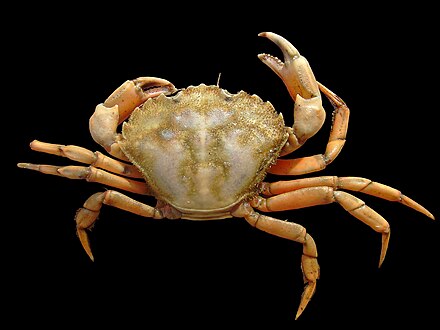
When I looked online, I found sea robins (order, Triglidae), commonly known as gurnards, are a family of bottom-feeding scorpaeniform ray-finned fish.  Triglidae is one of the five largest orders of bony fishes and is divided into 3 subfamilies and 8 genera that include 125 species distributed in temperate and tropical seas worldwide.  Most species are around 12 to 16 inches (30 to 40 cm) in length with the females typically being larger than the males.  They have an unusually solid skull, and many species possess armored plates on their bodies.  Another distinctive feature is the presence of a “drumming muscle” that makes sounds by beating against the swim bladder.  Sea robins have three “walking rays” on each side of their body that are derived from the supportive structures in the pectoral fins (fin-rays).  During development, the fin-rays separate from the rest of the pectoral fin and develop into walking rays.  These walking rays have specialized muscle divisions and unique anatomy that differ from typical fin-rays to allow them to be used as supportive structures during underwater locomotion.  The rays are used for locomotion and prey detection on the seafloor via tasting (chemoreception) and are highly sensitive to the amino acids in marine invertebrates.

While all sea robins have leglike appendages, only some have the macroscopic sensory organs that allow them to taste the environment.  Research revealed digging sea robins depend on a regulatory gene called tbx3a not only to develop their specialized fin adaptations but also to form the papillae that cause them to dig. Tbx3 also plays a role in limb development in humans, chickens, mice, and other fish species.  The fish grew legs using the same genes that contribute to the growth of our limbs and then repurposed these legs to find prey using the same genes our tongues use to taste food.  Sea robins stand out among other walking fishes because their pectoral fins (walking fin rays) are highly jointed and their skeletal and muscular anatomy showcase unique modifications that enable the sea robins to walk. 

THOUGHTS:  Sea robins have firm white flesh that holds together in cooking, making them well-suited to soups and stews such as the French bouillabaisse.  They were often caught in British waters as a bycatch and discarded, but as other species became less sustainable and more expensive, they became more popular.  Sea robins (gurnards) are used as bait by lobster fishers but are also now appearing in fish markets in the US.  As desirable species are overfished or become scarce humans turn to the “next one up” to meet our food needs.  We need to find ways to make fishing sustainable, or even the rough (trash) fish will be in short supply.  Act for all.  Change is coming and it starts with you.

Moo Deng

September 28, 2024

Moo Deng is a pygmy hippopotamus living in Khao Kheow Open Zoo in Si Racha, Chonburi province, Thailand, born on 10 July 2024.  Her name was chosen through a public poll with over 20,000 people voting for “Moo Deng”, translating to “bouncy pig”.  The zoo posted images of her on its Facebook page and Moo Deng quickly became a fan favorite for her playful and energetic romps.  Her popularity led the zoo to sell clothing and other merchandise featuring designs based on her likeness.  Other companies produced merchandise, including a cake shop (Vetmon Café) which created a realistic cake shaped like her.  Moo Deng’s viral popularity resulted in a doubling of daily visitors in early September.  The zoo is in the process of copyrighting and trademarking “Moo Deng the hippo” to raise funds for the zoo and plans to launch a livestream to allow fans to watch Moo Deng over the Internet.

When I looked online, I found Moo Deng is a pygmy hippopotamus (Choeropsis liberiensis) or pygmy hippo, a small hippopotamid native to the forests and swamps of West Africa.  The pygmy is one of only two extant species in the family Hippopotamidae, the other being the larger common or Nile hippopotamus (Hippopotamus amphibius).  The pygmy hippo was unknown outside West Africa until the 19th century and is a reclusive and nocturnal forest creature difficult to study in the wild.  Like the common hippo, the pygmy hippo displays terrestrial adaptations but is semiaquatic and relies on water to keep its skin moist and its body temperature cool.  Mating and birth may occur in water or on land.  The pygmy is herbivorous and feeds on ferns, broad-leaved plants, grasses, and fruits it finds in the forests.  Current pygmy populations are primarily in Liberia, with small groups in Sierra Leone, Guinea, and Ivory Coast.  It has been extirpated (eradicated) from Nigeria.  Pygmy hippos are primarily threatened by loss of habitat, as forests are logged and converted to farmland.  The Pygmy are also vulnerable to poaching, hunting for bushmeat, natural predators, war, and are illegally hunted for food in Liberia.  The species breed well in captivity and the vast majority of research is derived from zoo specimens.  A 2015 assessment by the International Union for Conservation of Nature estimated that fewer than 2,500 pygmy hippos remain in the wild.

As a viral sensation Moo Deng has prompted a makeup trend popular with beauty influencers.  Moo Deng makeup is in line with what beauty enthusiasts look for, super dewy skin and lots of blush.  The trend is perfect for fall as the skin will be hydrated and glass-like as the drier months approach.  The trend started with influencers trying to recreate her iconic look by achieving the baby pygmy’s glass-like skin with the prettiest shade of blush.  Before applying makeup, you need to ensure the base is nice and dewy to capture the baby hippo’s glistening skin.  The trend incorporates lots of grey hues to represent Moo Deng’s skin color.  An element common among influencers’ is the heavily flushed cheeks.  Any blush shade will do, as long as it has a great color payoff.  Grey eyeshadow or lip gloss, followed by a particular shade of blush create the final makeup look.

THOUGHTS:  While Moo Deng may create viral views, sales, and makeup, she is at risk.  Some visitors harassed Moo Deng by splashing her with water and throwing objects to wake her up, forcing the zoo to install security cameras around her enclosure.  The zoo also implemented a 5-minute time limit for visitors to accommodate the high volume of visitors.  While most marvel at the wonder of nature, there are others who find pleasure in destruction.  Whether it is throwing objects at Moo Deng or toppling 100,000 year old rock formations the seconds of fame being sought are not worth the cost.  “Influence” comes with responsibility.  Act for all.  Change is coming and it starts with you.

Leopard Darters

September 25, 2024

Last week the Arkansas Game and Fish Commission (AFGC) released 80 leopard darters into the wild with the help of state and federal partners along with Conservation Fisheries LLC, a private hatchery specializing in propagating rare and threatened species.  According to Chance Garrett, fish ecologist for the AGFC, this release is the first of two scheduled for the Cossatot River in western Arkansas this year and is the first historical reintroduction effort of leopard darters anywhere.  The fish were grown from broodstock taken from the Mountain Fork River which flows from Arkansas into Oklahoma.  Another 250 fish are planned for release in early October.  Garrett said, “They originally thought it was only found in Oklahoma, but some populations were found in the Rolling Fork and Cossatot after its listing.  Those two populations are thought to no longer exist, so this effort to re-establish them is extremely important.”  This is the second year of the project, but the first year saw a low survival rate as the hatchery and were added to the broodstock rather than being released.  The leopard darters measured and an inch or two (2.5 to 5 cm) at stocking size and were transported from the hatchery to their destination in one day.

When I looked online, I found leopard darters (Percina pantherina) are a species of freshwater ray-finned fish, from the subfamily Etheostomatinae.  The family (Percidae) also contains the perches (Genus, Perca), ruffes (Gymnocephalus cernua), and pikeperches (Genus, Sander).  The species is native to the US and is only be found in the Little River drainage in Oklahoma and Arkansas.  A typical habitat is medium to large streams with rubble and boulder substrate.  The leopard darter feeds on small invertebrates on the riverbed and spawns in March and April.  Adults rarely exceed 3 inches (8 cm) in length and have 11 to 14 large, dark spots on their sides, which contrast against a light background that ranges from pale olive on the back to yellowish olive on the underside.  The back of the fish has numerous saddles and bars.  The leopard darter is threatened by impoundment, habitat loss, and runoff from agricultural activity.  It has never been a common species and has been listed as a threatened species in the US since 1978.

Transporting and releasing the leopard darter was a full day affair.  They left the Conservation Fisheries hatchery in Knoxville, Tennessee in the morning, were met by AGFC personnel in Memphis, and driven to the other side of other side of Arkansas by 6:30 p.m. that evening.  Once at the river, the fish had to be tempered to adjust to the river water.  They arrived in bags which were floated to slowly acclimate to the temperature of the river water.  Then some river water was let into the bags to help them adjust slowly to the chemistry of that location.  Finally, they are ready for release.  The staff scanned the release pool the next day and found many of the fish had dispersed.  Garrett said. “Hopefully we’ll see them in future survey efforts . . . Ultimately our goal is to see some spawning activity in spring.”  The leopard darters represent one of the longest-standing members of the Endangered Species Act.

THOUGHTS:  Leopard darters typically live less than two years, but individuals older than three years have been found.  Introduction of these 320 fish (total) could reintroduce a viable population into the Cossatot River, but the fragile species still faces the loss of habitat due to construction of reservoirs and population isolation, along with agricultural and industrial activity, that drove them to decline in the first place.  Species reintroduction and preservation takes the combined efforts of government agencies, business, and individual landowners to be effective.  While it may take a village to raise a child, it takes concerned communities to preserve endangered species.  Act for all.  Change is coming and it starts with you.