
November 12, 2025

Following a second night of hard freeze (28F/-2C or lower for several hours) temps are forecast to be in the 60’sF (15.5+C) and 70’sF (21+C) for the next week or two. I had removed the sheets covering the last vegetables during the day between the freezes but permanently removed them yesterday as the daytime temps will remain well above freezing until we leave for a trip later in November. By that time any 2nd crop vegetables that are going to produce fruit will have done so. I already have a few peas (Pisum sativum), and the cabbage (Brassica oleracea) is beginning to curl into heads. My garden activity got me motivated to make something with the butternut squash (Cucurbita moschata) I harvested several weeks ago. The two ways I prefer to eat squash are roasted or in a cream soup. I had a variety of vegetables in the refrigerator to go along with the squash, so I decided to make both.
When I went online, I found squash, or Cucurbita (Latin ‘gourd’) is a genus of herbaceous fruits in the gourd family, Cucurbitaceae (also known as cucurbits or cucurbi), native to the Mesoamerica and the Andes. The five edible species are variously known as squash, pumpkin, or gourd, depending on species, variety, and local jargon. Other kinds of gourd, called bottle-gourds, are native to Africa and belong to the genus Lagenaria. These are in the same family and subfamily as Cucurbita but in a different tribe. The young fruits of bottle gourds are eaten like those of the Cucurbita species while the dried gourds are used as kitchen utensils. There is debate about the taxonomy of the genus and the number of accepted species varies from 13 to 30. The five domesticated species are Cucurbita argyrosperma, C. ficifolia, C. maxima, C. moschata, and C. pepo, all of which are called winter squash because the full-grown fruits can be stored for months. Most squash species are herbaceous vines that grow several meters in length and have tendrils. The yellow or orange flowers are either female (fruit) or male (pollen). While botanical fruits, squash are cooked and eaten as vegetables.
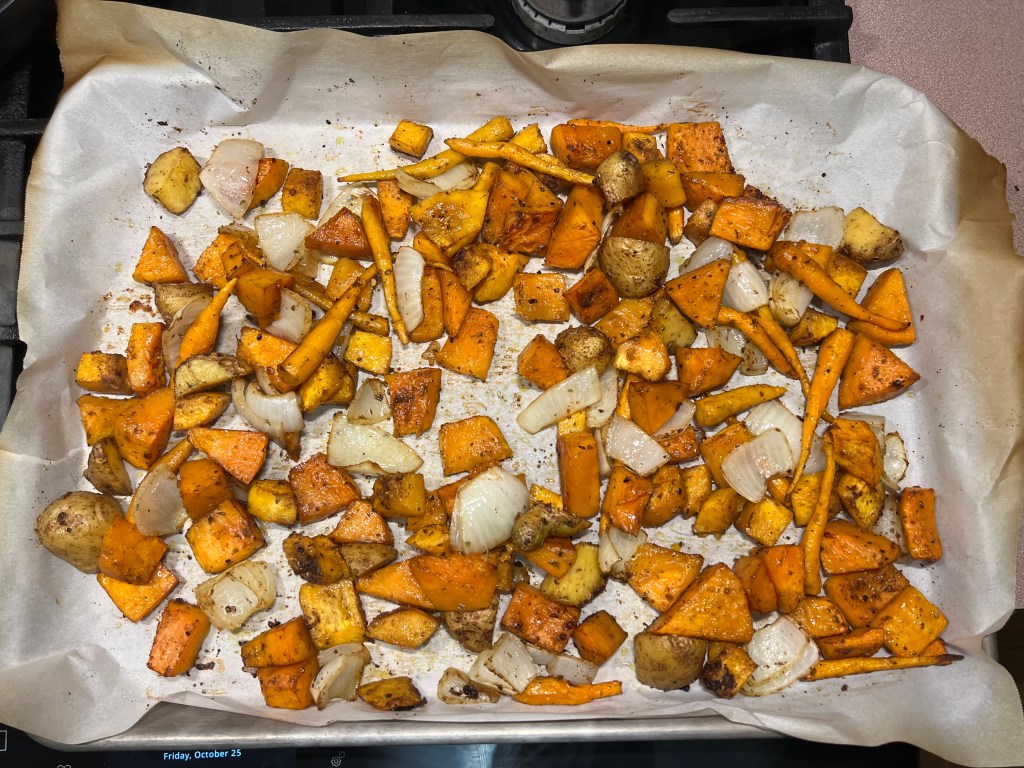
I make my squash soup differently than most recipes (surprising, right?). They suggest roasting squash and onion (Allium cepa) and adding it to a base of chicken broth and cream. Nutmeg (Myristica fragrans) and sage (Salvia officinalis) then give the soup a sweeter taste. I begin with roasting but add other vegetables and forego the spices. Yesterday I roasted a sheet of baby carrots (Daucus carota), green bell peppers (Capsicum annuum), cauliflower (Brassica oleracea), potatoes (Solanum tuberosum), and red onions at 425F (218C) for 20 minutes to let them caramelize. Next, I placed four small squashes, cut in half and seeded, on a sheet with salt, pepper (Piper nigrum), and olive (Olea europaea) oil. I added a half cup of water (steam) and roasted them for 45 minutes. During the last 20 minutes I added the same vegetables (minus the potatoes) to another sheet to roast. I added the vegetables to the cream and broth base and used a hand mixer to puree the vegetables. Melissa likes chunkier soup, so I did not make smooth puree. I tasted the soup, and it seemed bland. Melissa suggested more salt (tried to be low sodium) and black pepper (Piper nigrum) along with red pepper (Capsicum annuum) flakes. That made it.
THOUGHTS: Melissa and I enjoyed the squash soup yesterday. I kept some of the extra in a bowl for later this week and the rest went into a freezer bag, along with the two freezer bags of first batch roasted vegetables. These went into the freezer for later meals. Canning and freezing have become my go-to for excess produce and even leftovers. While I enjoy the dishes I make, they are often too much for the two of us. I also share as much as I am able with neighbors or the local food bank (produce). Residential and community gardens can make a difference for those who face food insecurity. Act for all. Change is coming and it starts with you.
 A travelers odyssey