Diet Coke

May 26, 2026

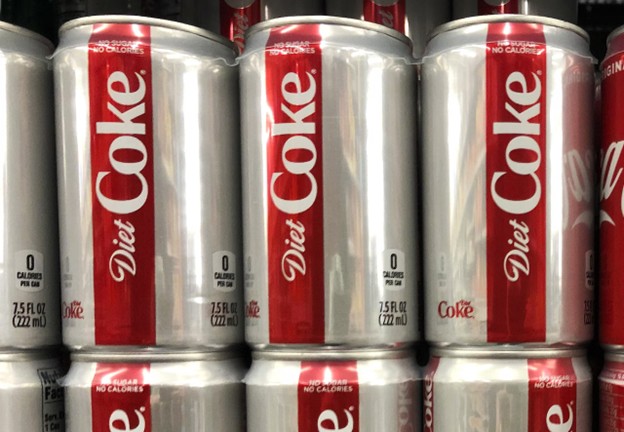
I came across a Reuters article on my local newspaper that addressed closing of the Strait of Hormuz effect on India.  While India sells most of its soda beverages in plastic, glass, and cans, one beverage is only sold in cans and has made the beverage vulnerable to supply chain disruptions caused by stoppage of shipments.  Limited quantities of cans can still be purchased online, and Indian pubs and social media influencers have spotted a chance to profit from the scarcity by organizing parties that come with a US$10 to US$16 entry fee, offering access to the cans along with music, alcohol, can decoration and themed T-shirt painting.  Partyers in New Delhi come dressed in themed attire and are experimented by mixing the drink with local spices, jalapenos and honey.  At a Mumbai event, entry tickets doubled as raffle entries, with two winners taking home 50 cans each.  “We had a cocktail menu which we call Coke-tails.  The idea was to bring fans together,” said 25-year-old marketing executive Ishika Gupta.  Gupta was the first to throw a Diet Coke party in India in early May, plans to organize more, and is holding discussions with Coca-Cola given the trend.

When I went online, I found Diet Coke, also branded as Coca-Cola Light or Diet Coca-Cola, is a sugar-free and low-calorie diet soda produced and distributed by the Coca-Cola Company.  The cola is based on a different recipe from the flagship Coca-Cola drink and has a distinct taste of its own.  Diet Coke was unveiled on July 8, 1982, and was the first new brand since the company’s creation in 1886 to use the Coca-Cola trademark.  The drink became wildly successful and a cultural status symbol, leading worldwide diet soda sales for most of its existence.  Diet Coke launched in 28 international markets successfully in 1983 and in many was branded Coca-Cola Light or Coke Light.  The soda launched in ten additional markets in 1984, including Japan.  In 2010, Diet Coke surpassed Pepsi in sales for the first time to become the second most popular soda in the US after Coca-Cola but dropped below Pepsi again in 2014.  Diet Coke has had a significant cultural impact, including links with healthiness and wellness but also negative connotations regarding body image.  The drink has achieved high popularity in certain circles with loyal fans, including in popular culture.

Coca-Cola and Pepsi both see India as a major growth market, and most of their drinks are sold in plastic and glass bottles, as well as cans.  A Ninecamp Ventures restaurant hosted a party near New Delhi where it offered “Diet Coke on the house” with ​snacks for $16.    Diet Coke is ​a preferred alcohol ⁠mixer in India, often paired with rum.  The soda is also popular among health-conscious consumers, and shortage has seen social media flooded with humorous memes showing people hoarding the cans in India.  Retail chain Broadway is using the shortage to promote its ⁠New Delhi ​event, saying “In light of the great Diet Coke shortage of 2026 … we’re ​turning our space into a full-blown Diet Coke experience.”  Tickets are 999 rupees (US$10) and have burgers, Diet Coke, vintage art, and custom T-shirt painting.  ​Broadway CEO Sankalp Kathuria.  “It’s a love letter to the cult of Diet Coke”.

THOUGHTS: Hoarding (and indulging in) Diet Coke during this shortage is not dissimilar to the US reaction to toilet paper in 2020.  A shortage creates a self-reinforcing cycle of hoarding due to fear, uncertainty, and rational self-interest.  Bare shelves cause consumers to panic that they will be unable to purchase essentials in the future, prompting them to buy more than they need.  Ninecamp CEO Chaitanya Mathur said, “For the young people it’s about scarcity being a premise of the entire event.  That’s where the fun is – the less there is of something is when they want more of it.”  Some are probably still using Toilet paper they bought six years ago.  Hoarding creates irrational fear and deprives access to others.  Act for all.  Change will come and it starts with you.
PFAS

December 09, 2025

While perusing the newspapers which had been held in my mail while I was gone (yes, I have gone paperless, but they send hardcopy), I came across a USA Today article on a new bill to allow fire departments across Wisconsin to have access to new technology to fight forest fires.  The bill would make firefighting foam derived from ground-up soybeans eligible for a Department of Natural Resources grant up to 50% of the cost of acquiring supplies, equipment, and training related to forest fires.  Dave Garlie, the chief technology officer for Cross Plains Solutions, has been working on creating foam using organic materials for years.  In a November 4th hearing of the Senate Committee on Agriculture and Revenue, Garlie said using soybeans is not a new idea as the substance was used before the 1960’s.  When PFAS was introduced, it took over the market as the foam was easier to handle because it did not go rancid and it was not as thick of a solution as the soybean paste.

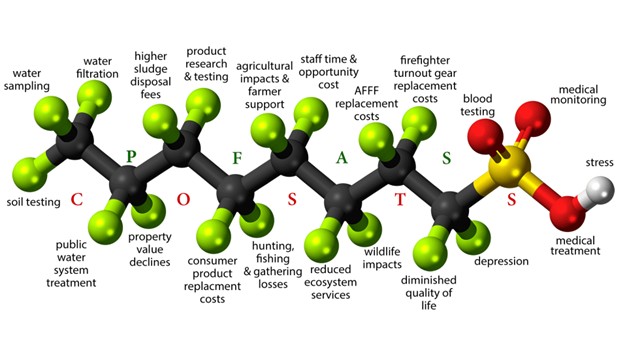
When I went online, I found PFAS, or per- and polyfluoroalkyl substances, are a family of man-made chemicals used for their water and stain resistant qualities in products like clothing, carpet, nonstick cookware, packaging, and firefighting foam.  PFAS are a group of synthetic organofluoride chemical compounds that have multiple fluorine atoms attached to an alkyl chain.  Different organizations use different definitions for PFAS, leading to estimates of between 8,000 and 7 million chemicals within the group.  The family includes 5,000 compounds which remain in both the environment and human body over time (persistent).  The chemicals have been linked to types of kidney and testicular cancers, lower birth weights, harm to immune and reproductive systems, altered hormone regulation, and altered thyroid hormones.  The US Environmental Protection Agency (EPA) toxicity database (DSSTox) lists 14,735 unique PFAS chemical compounds while 7 million are listed in PubChem.

Garlie started to hear from firefighters who were afraid of using PFAS, and he started looking into using soybeans again.  It is safer for firefighters to use, as well as community members nearby.  When soybean foam is deployed, it breaks down naturally, so there’s no need for a pricey cleanup, or for water filtration.  During the hearing, Garlie told lawmakers testing at Chippewa Valley Technical College has shown that the foam is just as successful at putting out fires as PFAS-containing foam.  The soybean product could also lessen firefighters’ exposure to toxic PFAS in an occupation that already exposes them to numerous toxins every fire.  According to the National Institute for Occupational Safety and Health, firefighters have a 9% higher risk of being diagnosed with cancer and a 14% higher risk of dying from cancer than the general population.  The use of soybean-based foam could also help drive up domestic sales of soybeans.  While it will not make up for the loss of trade with China, it will help in the long run.  Senator Howard Marklein, listed as a co-author on the bill, said, “This is good for farmers, good for our fire departments and good for the environment.”

THOUGHTS: Several companies have ended or plan to end the sale of PFAS or products that contain them as PFAS producers have paid billions to settle litigation claims.  Studies have shown that companies have known of health dangers from ingestion of PFAS since the 1970’s.  The PFAS market includes the chemical production side (US$28 billion in sales globally pre-2023) and rapidly growing related markets like treatment, testing, and waste management, (from regulations) with projections reaching tens of billions.  According to ChemSec, external costs for remediation of contamination, treatment of related diseases, and monitoring of pollution, may be as high as US$17.5 trillion annually.  While health concerns were not enough to end production and sales, it seems the cost of remediation may.  Act for all.  Change is coming and it starts with you.

Fall Alert

October 22, 2025

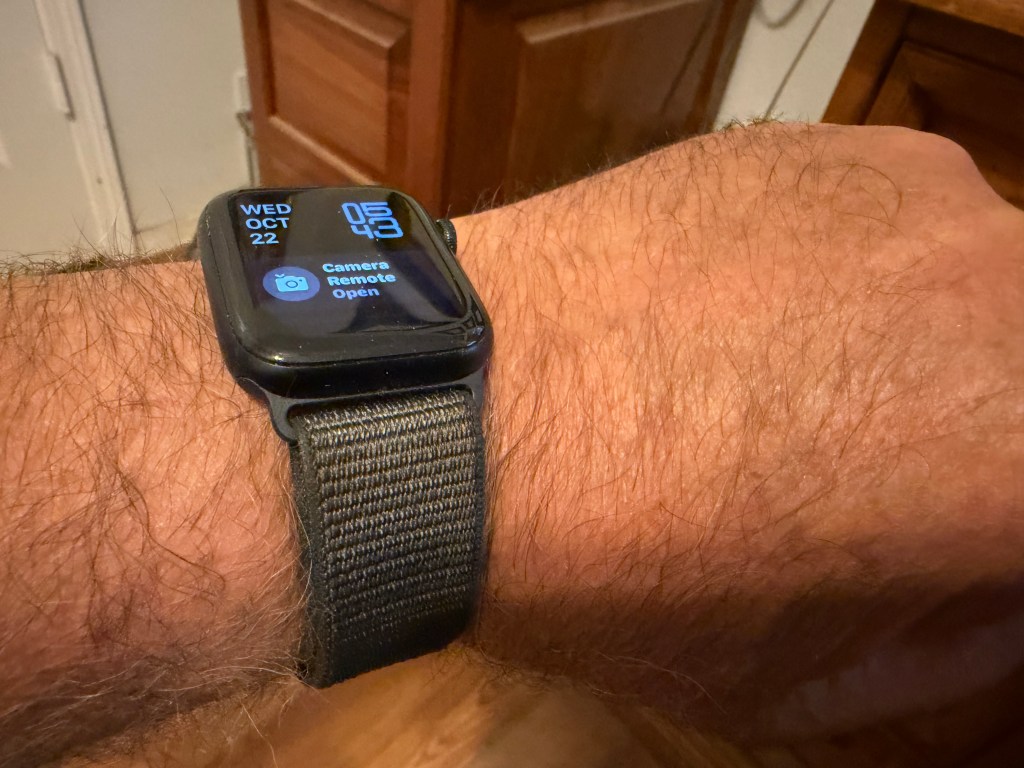
Earlier this week I saw the dogs both laying on their beds asleep and I decided it was time to create some mischief by getting down on their beds between them.  While I do rough house with them, it is generally while I am sitting on the edge of my chair.  Zena plays by turning back and forth while pressing her side against my legs.  She will also use the “power paw” (if you have a dog, you know what this whack is) to get my attention.  Loki’s go-to is to turn his back to me and slam his rear into my legs.  At times he does this so hard it can begin to hurt.  This time I got on the floor and started to roughly play with the two of them.  They got all worked up and began to bark and prance around, Zena pushing in with her side and Loki slamming me with his rear.  That is when I decided to use his tactics against him.  I lowered my head and started head butting him like he did me.  I had been doing this for less than a minute when the AI fall alert went off on my watch.

When I went online, I found AI fall alert systems use technologies like radar, cameras, and sensors to detect falls in real-time and can also predict a person’s fall risk.  Implementation in the US was envisioned in 1973 by Andrew Dibner, a psychologist on leave from Boston University studying personality in advanced age.  Also, in the early 1970’s in Germany, Wilhelm Hormann thought about developing a comprehensive structure for ambulatory and non-ambulatory care for the sick, the elderly, those who live alone, and people with disabilities.  These systems are designed to send immediate alerts to caregivers, family, or emergency services.  Some can even analyze movement patterns to help prevent future falls.  Privacy is often maintained using non-wearable sensors that convert human figures into abstract data.  Vision-based alert systems examine real-time video feeds to recognize fall events.  Radar and sensor-based systems (like my watch) track changes in height and sudden movement (like when a person falls out of bed or to the floor).  When a fall is detected a notice can be sent to the person to confirm or send alerts to pre-determined contacts.  The alerts can be sent via text, email, or to a dedicated app.  In high-risk environments, the system can immediately contact first responders. 

Medical fall alert devices can be a pendant around the neck, a wristband, or a smart watch.  Monitors, motion detectors, or radar-based detectors can also be placed in the home.  Active systems require the user to take some action to trigger an alarm condition, while passive systems monitor the user and raise an alarm based on an algorithm (a fall or lack of activity).  Alert systems can analyze patterns in movement, gait, and activity to identify individuals at higher risk of falling before an incident occurs, allowing for more proactive intervention and personalized prevention plans.  A weakness of active devices is that the user must be conscious to trigger the alarm.  Both passive and active devices require that the user wear the device.  Installed systems can be expensive and difficult to deploy.  My watch alert system detected that I had dropped to the floor (loss in height) and then forcibly hit another object (Loki). 

THOUGHTS: My watch fall alert was an alarm and (thankfully) asked if I had fallen and needed assistance.  This reminded me of the 1989 catchphrase of LifeCall Medical Alert System’s television commercial, “I’ve fallen and I can’t get up!”  The unintentional humor in the commercial made it a frequent punchline.  My watch had the option of having an SOS sent to EMT services or to decline assistance.  This was a timed alert and if I did not respond it would act automatically.  The alert surprised me but seemed like a good idea if it was required.  I never thought I would be the one who had fallen and could not get up.  Human and AI monitoring should be interchangeable to protect those with a possibility of a fall.  Act for all.  Change is coming and it starts with you.

Cramps

August 15, 2025

We decided it was time to visit my son and his wife (and especially the grandkids!) and arraigned for the flight to Seattle, Washington.  We previously took advantage of a direct flight when we lived in Wichita, Kansas.  The flight was set up to quickly fly air manufacturers and reps between their factories in both cities.  Even after moving to Arkansas, we took this flight since both mom and my brother lived in Wichita.  We would drive to see them and then fly direct to Seattle.  This time we decided to fly from the regional airport next to us rather than drive 5 hours prior to the 3-1/2 hour flight.  The difficulty with our local airport is they only fly to big hubs and then you still need the same amount of time to get to your location.  That meant we took a short flight to Dallas/Fortworth, had a quick layover, and still had the 3-1/2 hour flight to Seattle.  This was complicated further as our puddle jumper got in 20 minutes late and left us only 35 minutes to catch our next flight (no stress here).  Luckily, that flight had difficulty boarding passengers and we easily made the next leg.  We arrived just after my son flew into the same airport and had an exciting evening watching grandkid activities (football and cheer).  We went to bed early after the long day, but both Melissa and I both woke up in the middle of the night with leg cramps.

When I went online, I found that long flights can result in leg cramps.  Everyday leg cramps are often caused by muscle strain, exercise, or dehydration, but long flights can introduce extra complications that increase the risk of cramps.  The main cause is long periods of sitting still in cramped conditions. Even when sitting for long periods at work or at home, we have the freedom to move and stretch.  Sitting on a long flight has limited leg room that reduces the natural muscle contractions in your legs crucial for pumping blood back to your heart.  This causes sluggish circulation, allows blood to pool, and makes muscles far more vulnerable to cramping.  Long flights can also create dehydration from the dry cabin air (humidity is often 10 to 20% compared to 40 to 50% on land) and pressure changes during take-off and landing.  This makes your muscles more prone to painful cramps.  However, there are ways to help prevent painful cramps.

I found a site that listed five ways to prevent the painful cramps we both experienced.  The first is to start hydrating 1-2 days pre-flight, wear loose fitting clothing, and consider wearing compression socks to promote better blood flow.  Once on the flight, make it a priority to get up and move around the cabin at least once every hour and resist the urge to cross your legs (impedes blood flow).  There are simple exercises you can perform to maintain circulation.  These include ankle circles, foot pumps, knee lifts, calf raises, and leg extensions.  Next, find ways to stay hydrated while in the air by drinking at least 8.5 ounces (250 ml) of fluid every hour you are in the air.  Finally, avoid alcoholic beverages (a diuretic) as these encourage your body to lose more fluids and increase your risk of cramps.  Drinks with high sugar content (fruit juices and soda) can also pull water from your system as your body tries to process it.  While not glamorous, plain water is best for preventing leg cramps.

THOUGHTS: When Melissa and I woke up with cramps we both immediately thought of grabbing an electrolyte drink which provides minerals in your body fluids that carry an electric charge.  My son is a fitness aficionado, so I figured he would have something.  I looked through the drinks stored in the garage and checked the refrigerator, but to no avail.  Getting moving seemed to help.  When he got up, I asked, and he had several powdered remedies rather than a liquid version.  Between the electrolytes and moving the cramps went away.  Now that I know the secret to avoiding cramps, I am ready for our return flights.  Like most things, planning in advance and proper execution can make life easier.  Act for all.  Change is coming and it starts with you.