
Iguana

November 11, 2025

Credit…Daniel Mulcahy

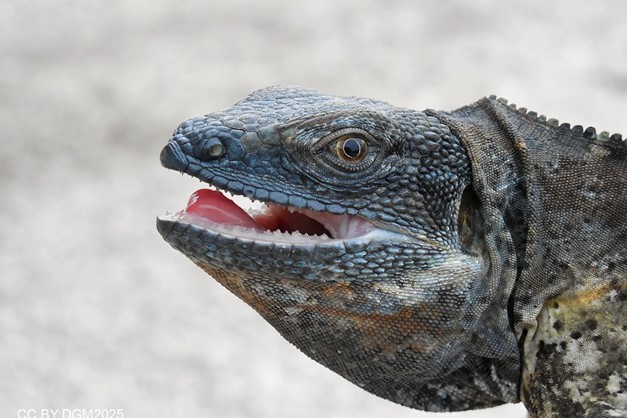
The Morning Read of the NY Times feed included an article on a possible reprieve for a previously invasive reptile species.  Biologists say DNA evidence proves the lizard landed on Clarion Island nearly half a million years ago, long before any humans might have transported them from the mainland.  Researchers reported the discovery last month in the journal Ecology and Evolution, and the finding means that the animals should be able to continue living on Clarion Island, a remote, mostly uninhabited Mexican archipelago in the Pacific Ocean.  There are around 100 iguanas there, and scientists and locals alike assumed that they had been introduced by humans in the late 20th century because they had gone unmentioned in prior accounts of the island’s fauna.  “It was all speculative that they were introduced — no one ever tested it,” said Daniel Mulcahy, an evolutionary biologist at the Museum of Natural History in Berlin who is an author of the new study.  The government was planning to exterminate the invaders to protect island’s delicate ecosystem.  Mulcahy and his colleagues compared mitochondrial DNA, passed down maternally, from the Clarion iguanas and the mainland spiny-tailed iguanas and found a 1.5 % difference in their DNA.  That meant these spiny-tailed iguana are genetically distinct and could not be recent invaders.

When I went online, I found the spiny-tailed iguana (Ctenosaura pectinata) is a species of is a species of iguanid lizard found in eastern Mexico and extreme western Guatemala.  This iguana has distinctive keeled scales on its long tail, to which its common name refers.  It is one of the larger members of the genus Ctenosaura, capable of growing to 4.3 feet (1.3 m) in total length (including tail), with females being slightly smaller than males at 3.3 feet (1.0 m).  It usually has a brown or grey-brown colored back (dorsally), with a yellowish underbelly (ventral surface).  It has a crest of long spines which extend down the center of its back.  Mating generally occurs in spring with the male showing dominance and interest by head bobbing before chasing the female until he can catch her and subdue her.  Within eight to ten weeks, the female will dig a nest and lay clutches of up to 24 eggs which hatch in 90 days with the babies digging their way out of the sand.  Hatchlings are often bright green with no body pattern and juveniles are typically green with brown markings, although all-brown hatchlings have been recorded.

Some wonder how a 4-foot (1.2 m) black-and-yellow lizard went unnoticed on Clarion Island for decades.  Clarion’s landscape has changed dramatically in recent years. The island was covered in prickly pear cactus (genus, Opuntiathat) that made exploration difficult, but was consumed by sheep (Ovis aries) and pigs (Sus domesticus) introduced by thew Mexican Navy in the 1970’s.  Those animals are gone and a shrubland community (chaparral) remains.  The iguanas are wary of humans and hide when approached.  The destruction by sheep and pigs underscores the damage invasive animals can cause.  Island ecosystems are particularly vulnerable.  Rayna Bell, an evolutionary biologist at the California Academy of Sciences said, “This type of work is fundamental to conserving some of the world’s most unique and imperiled diversity.”  Mulcahy’s colleagues are working to spread the news to government officials in Mexico to stop the eradication program.

THOUGHTS: The spiny-tail iguana is a traditional food in Mexico, listed as “Least Concern” by the IUCN Redlist, but the species is listed on the Mexican Red List as threatened and it is illegal to hunt them.  Their presence on Clarion suggests a 700-mile trip on a floating mat of vegetation.  It would be the second-longest known iguana aquatic journey, topped by another species of iguanas traveling 5,000 miles from North America to Fiji.  Humans thought the 1947 Kon-Tiki expedition was amazing.  We are always outdone by nature.  Act for all.  Change is coming and it starts with you.
Screwworm

November 10, 2025

The Sunday before Halloween, the Homes section of my local newspaper ran a Reutters article detailing a new sterile fly plant added in Mexico.  In Metapa, Mexico, engineers, veterinarians, and entomologists are racing to repurpose a plant that will play a pivotal role in trying to eradicate the flesh-eating fly threatening the country’s cattle industry and raising tensions with the US.  The facility used to help control Mediterranean fruit flies, but workers are dismantling old infrastructure and rebuilding specialized laboratories designed to mimic the conditions of an animal wound.  The plant aims to be ready by July 2026 and would double the number of sterile flies Mexico can release into the wild.  The US has kept its border mostly closed to Mexican cattle imports since May 2025 and has invested US$21 million towards the US$51 million facility in Chiapas state in an effort to keep the screwworm fly out of America.

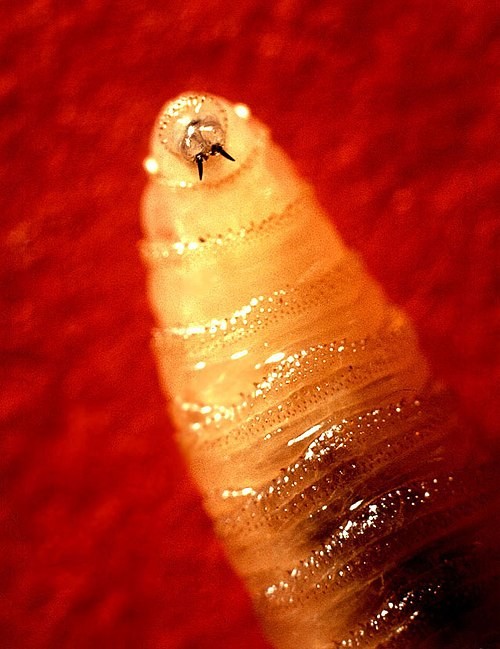
When I went online, I found the New World screwworm fly (Cochliomyia hominivorax), or simply screwworm, is a species of parasitic blowfly which is present in the New-World tropics.  The screwworm larvae (maggots) eat the living tissue of warm-blooded animals.  Of the four species of Cochliomyia, only the species hominivorax is parasitic, but a single parasitic species of Old-World screwworm fly is placed in a different genus (Chrysomya bezziana).  The maggots of many fly species eat dead flesh and may occasionally infest an old and putrid wound.  Infestation of a live vertebrate animal by the screwworm maggot (myiasis) is unusual because they attack healthy tissue, increasing the chances of infection, which then attracts more flies.  Screwworm females lay 250 to 500 eggs in the exposed flesh which hatch and burrow into the surrounding tissue as they feed.  If the wound is disturbed during this time, the larvae burrow or “screw” deeper into the flesh, giving the larva its common name.  The maggots can cause severe tissue damage or even death to the host.  About three to seven days after hatching, the larvae fall to the ground to pupate, reaching the adult stage about seven days later.  The female will mate four to five days after hatching and can lay up to 3,000 eggs and fly up to 120 miles (200 km) during her life.  Males mate up to ten times, but females mate only once and retain the male’s sperm for life, leading to the sterile eradication technique.

The screwworm was the first species to be tested with the sterile insect technique and resulted in control and systematic eradication of the species from the US, Central America, and parts of the Caribbean beginning in the 1950’s.  The US and Mexico bred and released more than 94 billion sterile flies from 1962 to 1975.  By the early 2000’s, it was considered eradicated from North America, but was detected in Mexico in 2024 and 2025, prompting renewed efforts to prevent its re-emergence.  The fly is still widespread in tropical and subtropical parts of the Caribbean and South America and animals imported from these areas must be inspected or treated to prevent the pest’s reintroduction.  Eradication efforts continued and in 1998 the first sterile flies were released in Panama with the goal of creating a barrier zone at the Darién Gap against a screwworm invasion.  This is achieved through weekly sterile screwworm releases of up to 50 million insects bred in factories and sterilized by ionizing radiation.  The bred insects must not suffer any impairment to compete with wild, fertile insects.  In September 2025, a case of New World screwworm was found in Sabinas Hidalgo, Mexico, less than 70 miles (110 km) from the US-Mexico border.

THOUGHTS: When sterile screwworm males’ mate with wild females no offspring are produced, and the population collapses over time.  Coordinator Jose Luis Quintero said, “The screwworm was eradicated once before in Mexico — it took 19 years.  We hope to do it in far less time.”  Let’s hope that is the case.  Act for all.  Change is coming and it starts with you.
Wavy-lined

October 14, 20254

Melissa tends to keep the back door to the porch open to help provide a breeze and keep down the humidity for the succulents.  If the air conditioner is not running, she will often keep the house door open as well.  This provides a breeze for us and allows the kids to roam freely in and out of the house without having to get up every time they hear a noise or want to go outside.  While this is convenient, it allows house flies (Musca domestica), moths (order, Lepidoptera), and other flying insects (and occasional birds) to fly enter both the porch and the main house.  I have tried to combat this by placing a bug-zapper next to the doorway.  The blue light is not visible during the day but does attract moths at night.  When it is time for a final constitutional, Loki will wait at the door for Melissa or I to go first to “protect” him from the sounds of the moths hitting the zapper.  When I got up yesterday, I noticed one of the moths had avoided the zapper and was attached to the wall above the kitchen sink.  When I looked closer the moth’s coloration was “wavy-lined”.

When I went online, I found the wavy-lined emerald moth (Synchlora aerate), or camouflaged looper, is a species of moth of the family Geometridae.  The species is found in the US and Canada and was described by Johan Christian Fabricius in 1798.  There are dozens of species in the subfamily of emeralds in North America.  Most look incredibly similar, being green (sometimes tan) and typically resting with their wide wings spread out to the sides.  The key identifying features for the species are the mildly wavy white lines that run across the wings, a pale green fringe on the wings, and a long, thin white stripe running the whole length of the abdomen.  The adult wingspan is about 0.67 inches (17 mm).  The caterpillar of this species is an inchworm (looper) that camouflages itself from predators with small clippings from flower petals they are feeding on.  The wavy-lined is a common moth that has two or three broods a year and overwinters as a partially grown larva. 

The wavy-lined emerald moth is an important food for birds and other predators.  While some insects use camouflage or mimicry to outwit predators, the wavy-lined caterpillar blends these two defenses.  Insect camouflage often refers to creatures like stick bugs (order, Phasmatodea) that have evolved to look like their surroundings.  Mimicry means looking like a completely different creature, like the less toxic Viceroy Butterfly (Limenitis archippus) which looks like the toxic Monarch (Danaus plexippus).  The wavy-lined larva will attach bits of the plant material on which it is feeding to its back with bits of silk to blend into its host plant and avoid detection.  When it feeds on a different plant it will “wear” the appropriate foliage.  These fragments start off colorful (to blend in with the flower) and then dry out to look like a chunk of debris.  It also seems to detach and replace the parts as they wilt, keeping the larvae covered in fresh adornments that match its meal.  While it is essentially using camouflage, the insect is an active participant in the process, mimicking whatever flower it feeds on. 

THOUGHTS: While I have no problem swatting the flies and mosquitoes (family, Culicidae) that invade my house, I did not feel threatened or bothered by the wavy-lined emerald moth.  It spent the entire day resting on the wall as Melissa and I came and went around the sink, allowing me to admire its delicate lines many times.  When I got up this morning the moth was gone.  Hopefully it made it past the bug zapper on its way outside.  Most insects tend to go about their business and do not seek out humans.  Flies and mosquitoes are an exception and use humans as a source of food (dead skin, blood), water (sweat), and salt.  The fact that the moths are aesthetically pleasing is another plus.  Sometimes I need to remind myself that every creature has a role to play in the larger biome.  Act for all.  Change is coming and it starts with you.
Digger

August 21, 2025

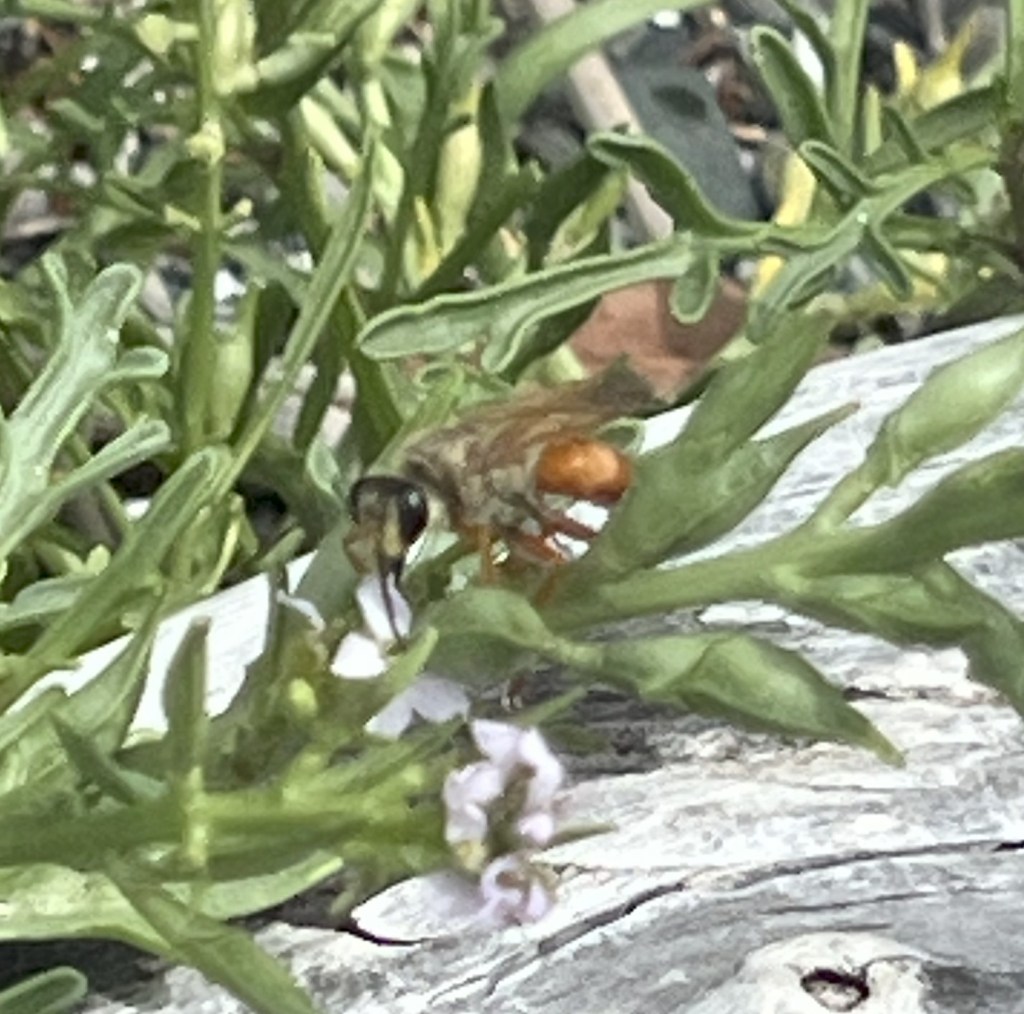
Following my disappointment fishing while at the coast last week I decided to walk through the beach community and see if I could spot some birds that were not yet on my list.  I took the road through the community first to try and spot land birds.  I was able to see two species I already recorded, an American Crow (Corvus brachyrhynchos) and a flock of house sparrows (Passer domesticus).  It was not until I returned along the beach that I picked out several forms of gulls (California gull, Larus californicus; western gull, Larus occidentalis; short-billed gull, Larus brachyrhynchus) and a flock of white-winged scoter (Melanitta deglandi) ducks.  The beaches along the Puget Sound tend to be small well-worn rock rather than the sand I associat with other coasts.  This is harder to walk on, and it took me a while to get back to the house.  When I arrived, my daughter-in-law showed me a picture of the unusual wasp they had encountered on their beach walk (other direction).  It was a large golden digger sand wasp.

When I went online, I found the golden digger sand wasp (Sphex ichneumoneus), or great golden digger wasp or great golden sand digger, is a wasp in the family Sphecidae.  The wasp’s name comes from the Greek word for “tracker,” and is most well-known for its parasitic nesting behavior.  It is identified by the golden pubescence on its head and thorax (chest), its reddish orange legs, and partly reddish orange body.  Golden hairs cover the head and thorax (hence “golden”).  The digger has a long, slender waist (petiole).  Their hind region (metasoma) is black with the first couple of segments a brilliant orange-red that matches their legs.  Size varies from 1/2 to over 1 inch (1-1/4 to 2.5+ cm) long.  This wasp is native to the Western Hemisphere, from Canada to South America, and provisions its young with various types of paralyzed Orthoptera (grasshoppers and crickets). 

From May through August, great golden digger wasp females build their nests in sandy soils.  These consist of a descending shaft and side chambers for the young at right angles.  This makes it difficult to pull prey into a brood chamber without getting stuck and is one possible reason why the wasp always checks to ensure the path is clear before pulling its prey down by its antennae.  Female wasps commonly build their burrows nearby those of other females of their species and may even share a nest.  However, they will fight other wasps if they encounter them inside their burrow during prey retrieval.  By inspecting the unattended nest, the wasp avoids risking an encounter with another wasp while carrying its prey.  The digger will track and hunt their prey (i.e., tracker) and sting it with a paralyzing venom that keeps it alive, then flies (or drags) the prey to the nest.  At the nest the digger wasp lays down their paralyzed prey and enters her tunnel and checks to ensure that all is well.  Then she brings the prey down into a side chamber, lays an egg on the prey, and seals the chamber.  When the egg hatches it feeds on the prey through the winter, and the new wasp emerges from its side chamber in the spring and begins the cycle again. 

THOUGHTS: The golden digger sand wasp is like the cicada killer (Sphecius speciosus) I saw last week in Arkansas.  Both are large, solitary, build nests in the ground, are harmless to humans, and do not defend their nest or behave aggressively.  While they have stingers, they rarely sting humans unless they are stepped on.  The digger is a pollinator that preys on insects that are harmful and are helpful to have around your garden (or beach house!).  These are possibly the only wasps known to be attacked by birds.  House sparrows and American robins (Turdus migratorius) will attack to force the digger to drop its prey for the bird to eat.  I guess both the young and the birds are looking for an easy meal.  Act for all.  Change is coming and it starts with you.
Sea Lion

August 17, 2025

One of the joys of visiting family is being able to spend time on the ocean coast.  My sister lives in Maine and we always take time to visit the ocean for at least one day during the trip.  My son’s family lives near Seattle and has a beach house near the Tulalip Tribe’s reservation.  This weekend we were able to go to Seattle and spend two days on the coast.  The first day my young grandson took me fishing on the rock beach behind their house.  He made two casts and immediately caught a 6-inch (15 cm) sculpin (Hemilepidotus spinosus).  After two more casts, he offered the pole to me.  I took several casts and did not get a bite.  My grandson seemed to get bored and went back to play at the house.  I kept casting for another 10 minutes and did not get a bite the entire time.  I gave up and went to sit on the deck and watch the beautiful sunset.  After several minutes my daughter-in-law noticed a sea lion had ventured into our part of the bay and was bobbing up and down in the channel.

When I went online, I found the California sea lion (Zalophus californianus) is a coastal eared seal native to western North America.  It is one of six species of sea lions.  It has a natural habitat range from southeast Alaska to central Mexico, including the Gulf of California.  California sea lions are sexually dimorphic with the males being larger than females. Males have a thicker neck and a protruding ridge of bone lengthwise along the top of the skull (sagittal crest).  The animals will mainly haul out on sandy or rocky beaches, but they also frequent manmade environments such as marinas and wharves.  Sea lions feed on several species of fish and squid and are preyed on by orcas and great white sharks.  The sea lions have a polygynous (multiple partners) breeding pattern.  Males establish territories from May to August and try to attract females to mate.  Females are free to move between territories and are not coerced by males.  Mothers nurse their pups in between foraging trips.  California sea lions use many vocalizations, but most notably barks and mother-pup contact calls.  Outside breeding season, California sea lions spend much of their time at sea but come to shore to molt.  The International Union for Conservation of Nature (IUCN) lists the species as Least Concern due to its abundance.  Oregon and Washington states engage in annual kill quota to protect the fish.

When I woke up the following morning, I decided I would try my luck with fishing again.  When I fished yesterday it had been high tide (the best time to catch fish on this beach).  Now it was low tide.  Undeterred, I took the poll and strode to the water’s edge and began to cast once more.  I found out why it is best to fish at high tide almost immediately.  On nearly every cast I fouled my hook in the lush beds of eel grass (Zostera marina) that covered the bottom of the channel.  Besides providing excellent forage for the California sea lions, the sea grass meadows provide food and shelter for juvenile fish, Dungeness crabs (Metacarcinus magister), the Pink (Chlamys rubida) and Spiny Scallops (Chlamys hastata). and other marine life.  They serve as a food source for herbivores during the growing season and for things that feed on the decomposing grass (detritivores).  The seagrasses absorb carbon dioxide, filter polluted runoff, absorb excess nutrients (nitrogen and phosphorus), stabilize sediments, and improve water flow. 

THOUGHTS: One of the questions I was frequently asked after moving from California’s Bay Area to southcentral Kansas was if it was any different where I used to live.  I rented a house at a marina on the bay with a boat slip out my back door.  My stock answer was, “well, I have not been greeted by the sound of a sea lion when I wake up in the morning.”  While not getting any bites the second day, I spotted a sea lion pup and mother foraging nearby.  It was good to know I was in a healthy ecosystem.  We need to do what we can to keep them that way.  Act for all.  Change is coming and it starts with you.

Cicada-killer

August 11, 2025

I have been seeing the scattered exoskeletons of the cicada (superfamily, Cicadoidea) brood hatch that is occurring in Arkansas this summer.  Brood XIX emerges every 13 years, and its last emergence was in 2011.  It is a large brood that encompasses 15 states.  Although they are not in Arkansas, Brood XIII is also emerging in other parts of the country.  Although the cicadas are large and a brood hatch can become messy when great numbers emerge at the same time, they are not agricultural pests or a threat to humans.  Trees may be overwhelmed by the sheer number of females laying their eggs in their shoots and small branches.  Yesterday while watering my garden, I noticed what looked like a large wasp trapped between the screen and window on the porch.  When I find wasps on our porch, I shoo them away or if they persist, I will spray them.  I have been stung too many times to allow these pests to establish close to our house.  The insect looked like a yellow jacket but was over twice the normal size.  What I found out was this was an eastern cicada-killer.

When I went online, I found the eastern cicada-killer wasp (Sphecius speciosus) is a large, solitary digger wasp species in the family Bembicidae.  They are also erroneously called sand hornets, although they are not true hornets, which belong to the family Vespidae.  Their name comes as they hunt cicadas and provision their nests with them.  The species is found in the Eastern and Midwest US and south into Mexico and Central America.  Adult eastern cicada wasps are 0.6 to 2.0 inches (1.5 to 5.0 cm) long.  They have hairy, reddish, and black areas on their middles (thoraces), and black to reddish brown rear (abdominal) segments that are marked with light yellow stripes.  The wings are brownish.  The females are slightly larger than the males, and both are among the largest wasps in the Eastern US.  European hornets (Vespa crabro) are often mistaken for eastern cicada killers, although they are smaller at 1.4 inches (3.5 cm) long.  The males are smaller than the females because they are not given as much larval food.  The females benefit from being larger as they must carry the cicadas they have killed to a burrow for nesting.  Cicada killers exert a measure of natural control on cicada populations which may directly benefit the deciduous trees the cicadas feed on.  

Despite their fearsome appearance, female cicada-killers are not aggressive and rarely sting unless they are mistreated.  Their sting is not much more than a “pinprick”.  Males aggressively defend their perching areas on nesting sites against rival males, but they have no stinger.  Although they appear to attack anything that moves near their territories, male cicada killers are just investigating anything that might be a female cicada killer ready to mate.  Their close inspection may appear to be an attack, but male and female cicada killers do not land on people with the intent to sting.  If handled roughly, females will sting, and males will jab with a sharp spine on the tip of their abdomen.  They are generally not aggressive towards humans and usually fly away rather than attacking.  I initially tried to swat the wasp but its size and being behind the screen protected it.  I finally gave up and decided if it could get out of the screen on its own it would go away.  Since it was not there this morning, I assume it had done so. 

THOUGHTS: The size of the cicada-killer and its resemblance to a yellow jacket made me fearful when I first encountered it.  It seemed docile rather than the aggression I have seen from other wasps.  Still, I wanted it to go.  After I found out what it was, I was glad I left it alone.  We do not have a cicadae problem, but this was nature’s way of providing control.  One benefit of my garden is taking time to observe the interaction between the flora and fauna (plants and animals) that thrive there.  Identifying the different species and their place in my sub-ecosystem has been enlightening.  We are all part of the same planet.  Act for all.  Change is coming and it starts with you.
Red-bellied

July 14, 2025

Last weekend Melissa called me into the kitchen to watch the large bird that had been battling two squirrels over “rights” to what was left in my soot feeder.  I grabbed my camera and by the time I arrived the squirrels had been driven off, but the bird was still there.  Melissa said she had watched the bird attack the two eastern gray squirrels (Sciurus carolinensis) for about 20 minutes.  The bird alternately flew at both squirrels keeping them at bay.  This was a new species identification for Melissa, and the bright red head led her to believe this was a red headed woodpecker (Melanerpes erythrocephalus).  I occasionally see one of these birds at my feeders and had even identified one early in January (although without a photo).  At first, I also thought it might be a red-headed woodpecker.  My apps instead identified this as a red-bellied woodpecker.

When I went online, I found the red-bellied woodpecker (Melanerpes carolinus) is a medium-sized woodpecker of the family Picidae.  While the species breeds mainly in the eastern US, it ranges as far south as Florida and as far north as Canada.  The most prominent feature is a vivid orange-red crown and nape, but this is not to be confused with a separate species in the same genus, the red-headed woodpecker.  The red-headed woodpecker has an entirely red head and neck, a solid black back, and white belly.  Red-bellied woodpeckers are 9 to 10.5 inches (22.85 to 26.7 cm) long, have a wingspan of 15 to 18 inches (38 to 46 cm), and weigh 2 to 3 ounces (57 to 91 g).  The red-bellied earns its name from the pale reddish tint on its lower underside.  Adults are mainly light gray on their face and underparts and have black and white barred patterns on their back, wings, and tail.  Adult males have a red cap going from the bill to the nape while females have a red patch on the nape and another above the bill.  White patches become visible on the wings in flight.  The reddish tinge on the belly is difficult to see in field identification.

I have never noticed the red spot on a red-bellied woodpecker and have instead identified them by the black and white barred pattern on their backs.  I always wondered why they were called red-bellied, and now I know.  Predators of adult, red-bellied woodpeckers include birds of prey such as sharp-shinned hawks (Accipiter striatus), Cooper’s hawks (Astur cooperii), black rat snake (Pantherophis alleghaniensis), and house cats (Felis catus).  Known predators of nestlings and eggs include red-headed woodpeckers, owls (Order, Strigiformes), pileated woodpeckers (Dryocopus pileatus), black rat snakes, and eastern gray squirrels.  When approached by a predator, the birds either hide from or harass the threat with alarm calls.  They will defend their nests and young aggressively and may directly attack predators that come near.  While this bird did not have a nest, it was aggressively defending its food supply.

THOUGHTS: By driving off the gray squirrels the red-bellied woodpecker was it was exerting its territorial rights.  A defended territory is typical of songbirds but is also found in many other orders of birds.  Territory may be held by one bird, a pair, or a flock and can be held for all or only part of a year.  It may be very large (eagles) and provide all the resources the bird needs or be very small such as nesting territories.  It may be vigorously defended or loosely guarded.  Typically, territories are defended against others of the same species but may also be defended against other species.  Humans also claim both small and large areas we define as ours and actively defend.  These are also shared, but generally only with those we define as “us”.  Globalization is forcing humans to make new choices on us and them.  Cooperation and sharing resources may provide for all.  Hoarding resources has and will always lead to conflict.  Act for all.  Change is coming and it starts with you.
Smallmouth

June 30, 2025

My MSN browser scroll included an article on the attempts to eradicate an invasive fish from a midsized lake in the Adirondacks.  While the fish are native to North America, they were introduced widely across the Adirondacks in the 1900’s, where they took over many lakes.  Their arrival led to declines of native fish species and stunting of growth rates in prized brook and lake trout, which compete for the same prey.  A study published in the journal Proceedings of the National Academy of Sciences revealed that in response to the annual removal of a quarter of the invasive fish from the lake, the numbers of fish 5 inches (12.7 cm) and under have increased while fish larger than 12 inches (30.5 cm) were mostly eliminated.  The findings have important implications for fish management.  It highlights the importance of preventing non-native species invasions before they happen and illustrates how efforts to suppress a species may backfire, leading to the opposite effect.  The smallmouth bass rapidly evolved to grow faster and invest more in early reproduction, leading to an even larger population of smaller fish.

When I went online, I found the smallmouth bass (Micropterus dolomieu), also known as brown bass, bronze bass, and bareback bass, is a freshwater fish in the sunfish family (Centrarchidae).  It is the type species of its genus Micropterus (black basses) and is a popular game fish throughout the temperate zones of North America.  Males are generally smaller than females. The males tend to range around two pounds, while females can range from three to six pounds.  The maximum recorded size is approximately 27 inches (69 cm) and 12 pounds (5.4 kg).  The color of the smallmouth ranges from golden olive to dark brown dorsally which fades to a yellowish white ventrally with dark brown vertical bars or blotches along the body and dark brown horizontal bars on the head.  The combination of muscular fusiform body shape and camouflage like coloring make these fish highly effective ambush predators.  The color varies greatly depending on age, habitat, water quality, diet, and the spawning cycle.  The fish has spread through stocking, along with illegal introductions, to many cool-water tributaries and lakes in Canada and especially the US.  

Peter McIntyre, professor in the departments of Natural Resources and Ecology and Evolutionary Biology and among the senior authors, said, “Twenty-five years ago, Cornell’s Adirondack Fishery Research Program set out to test whether we could functionally eradicate smallmouth bass from a lake.  It took us 25 years to prove why the answer is no: the fish evolved to outmaneuver us.”  Efforts began in 2000 to suppress bass in Little Moose Lake in the Adirondacks by using a generator to electrify the water to temporarily stun fish (electrofishing).  Scientists then scooped them up, released the native species back into the lake, and removed all captured bass.  The removal of 1000’s of fish worked for several years, then the smallmouth began to make a comeback, especially the smaller fish.  Genetic analysis revealed that selection pressures from removing fish resulted in dramatic genetic changes between 2000 and 2019 in the genomic regions associated with increased growth and early maturation.  

THOUGHTS: The introduction of smallmouth bass to the mountain lakes presented a new apex predator.  The brook (Salvelinus fontinalis) and lake (Salvelinus namaycush) trout are threatened by warming surface waters and depleted oxygen levels in cooler deeper water during the summer, and then competition with the smallmouth.  The genetic evolution resulted in a lose-lose for anglers.  The trout are disappearing, and the smallmouth are too small to keep.  Ecosystems are delicate balance and human intervention is rarely positive.  Act for all.  Change is coming and it starts with you.

Hammerhead

June 17

Inside the back section of my local newspaper was an article on an invasive species that has been reported in Texas.  The worms have been reported throughout Texas for decades but several weeks of excessive rainfall have literally flushed the creatures into the open.  Usually, during the day the worms can be found under leaves, rocks, or logs.  The rain has brought them out to driveways, patios, and sidewalks.  Ashley Morgan-Olvera, director of the Texas Invasive Species Institute, said while the worms are not a direct threat to humans or household pets, they do have a lasting effect on the ecosystem as they prey on the earthworms that are responsible for distributing oxygen, draining water, and creating space for plant roots.  This genus is collectively known as hammerhead worms.

When I went online, I found hammerhead worms (Bipalium) are a genus of large predatory land flatworms (planarians), also known as broadhead planarians.  The name Bipalium comes from Latin bi- (two) and pala (shovel or spade), because species in this genus resemble a pickaxe.  Hammerhead worms are unique in that they possess a highly ciliated (hair-like) region on the ventral epidermis (a creeping sole) that helps them to creep over the substrate.  The worm is typically light honey colored with a darker collar and one to five strips on its body.  The worm can grow up to 15 inches (38 cm) in length.  Bipalium species are predatory and some species prey on earthworms while others also feed on mollusks.  These flatworms can track their prey.  To feed on their prey, the hammerhead often turns the pharynges out of their mouths (evert), which are located on the midventral portion of their bodies and secrete enzymes that begin the digestion of the prey.  The liquefied tissues are sucked into the branching gut of the flatworms by ciliary action.  Hammerhead worms are native to Asia, but several species are invasive to the US, Canada, and Europe.

The hammerhead does not bite but they do secrete a poisonous chemical for protection from predators which can cause skin irritation.  If a cat or dog eats a hammerhead it will likely get nauseated and throw it up, but there is no long-term threat.  Morgan-Olvera said if you see a hammerhead do not try to kill it or cut it up.  The worm can reproduce asexually and if you cut it up and leave it in the yard a new head could form within about ten days.  To dispose of the worm, place the whole worm in a resealable bag with salt or vinegar and put it in the trash.  The worms can also be sprayed with a combination of citrus oil (orange essence) and vinegar.  You should always wear gloves when handling the worms to avoid irritation and wash your hands thoroughly with soap and water followed by hand sanitizer.  The Texas Invasive Species Institute is asking if you spot a hammerhead that you contact your local extension agent to let them know

THOUGHTS: Four invasive species of hammerhead worms have been found in the US which are thought to have come via infected plants and soil.  The worms are veracious predators and have been identified as a nuisance in the earthworm raising beds of the southern US.  In 2019, the worms were found as far north as Montreal, Canada.  The worms have few natural enemies due to their toxic surface secretions and control is difficult.  However, because of their cannibalistic tendencies they may be their own worst enemy.  While humans are rarely cannibalistic, we are also considered our own worst enemy.  Rather than following an innate need to survive, the danger comes from a conscious choice to harm each other.  The choice can also provide compassion and aid.  Act for all.  Change is coming and it starts with you.
Long-beaked

June 14

Charles Hamilton Smith circa 1837.

Biologists have confirmed the existence of a 200-million-year-old species of egg-laying mammal thought to be extinct.  Footage was captured in 2023 by Oxford University during an expedition to the Cyclops Mountains in Indonesia.  Researchers said the species had not been recorded in the region for more than 60 years (a dead specimen), but evidence of the animal’s existence was found in recent decades.  In 2007, researchers found “nose pokes” in the Cyclops, or the trace signs made when they forage underground for invertebrates.  Indigenous groups also reported sightings of the species in the past two decades.  In 2017 and 2018, researchers combined participatory mapping with indigenous and other knowledge to assess the probability the animals still existed.  Camera traps deployed in the Cyclops in 2022 and 2023 garnered 110 photos from 26 individual events.  In a paper published in the journal NPJ Biodiversity in May 2025, by combining modern technology with indigenous knowledge researchers confirmed the long-beaked echidna had been found,

When I went online, I found the Attenborough’s long-beaked echidna (Zaglossus attenboroughi), also known locally as Payangko, is one of three species from the genus Zaglossus that inhabits the island of New Guinea.  The species lives in the Cyclops Mountains near the cities of Sentani and Jayapura in the Indonesian province of Papua in Western New Guinea.  It is named in honor of naturalist Sir David Attenborough.  The long-beaked is the smallest member of the genus Zaglossus, being closer in size to the short-beaked echidna (Tachyglossus aculeatus).  The weight of the type specimen when it was alive was estimated to be 4.4 to 6.6 pounds (2 to 3 kg).  The male is larger than the female and is further differentiated by the spurs on its hind legs.  The species has five claws on each foot like the eastern long-beaked echidna, and has short, very fine and dense fur.  The diet of the long-beaked echidna consists primarily of earthworms, in contrast to the termites and ants preferred by the short-beaked echidna.  The long-beaked is listed as critically endangered by the IUCN, and there had been no confirmed sightings between its collection in 1961 and November 2023, when the first video footage of a living individual was recorded. 

The long-beaked echidna is not a social animal and only comes together once a year, in July, to mate.  The female then lays the eggs after about eight days, with the offspring staying in their mother’s pouch for around eight weeks.  The long-beaked is nocturnal and rolls up into a spiky ball like a hedgehog (family Erinaceidae) when it feels threatened.  According to the research paper, these are the “sole living representatives” of egg-laying (monotreme) lineage that diverged from marsupials and placental mammals (therians) more than 200 million years ago.  The long-beaked echidna also once lived in the Oenaka Range of Papua New Guinea, but the Cyclops Mountains are the only location where the long-beaked has been recorded in modern times.  The long-beaked echidna is one of just five egg-laying mammals in existence today, including the platypus and two modern echidnas.

THOUGHTS: The long beaked echidna were one of more than 2,000 “so-called lost species”, or species that have gone undocumented for sustained periods of time.  The research paper said, “Rediscoveries offer hope that others survive, especially in places where biological research has been limited.”  Only 3% of the earth’s land mass is unexplored, but over 80% of the ocean remains unexplored.  It is estimated that between 15,000 and 18,000 new species are discovered annually, in addition to lost species rediscovery.  While all types of species are discovered every year, insects are by far the most common.  There is still a lot that humans do not know about the earth and new discoveries are always possible.  Act for all.  Change is coming and it starts with you.