Partula

March 28, 2025

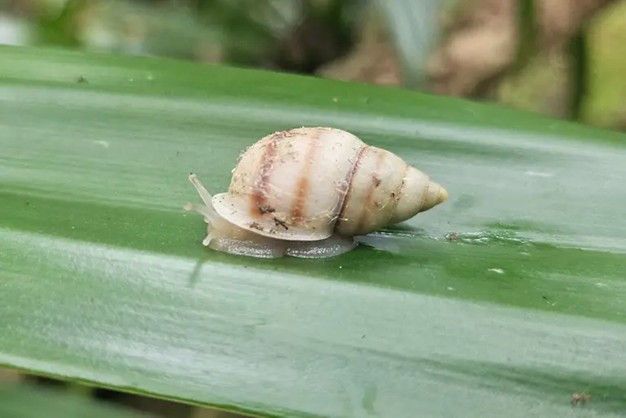
This morning’s MSN browser caught my eye with an article on a creature that has managed to return from extinction.  The International Union for Conservation of Nature (IUCN) Red List of Threatened Species has reclassified a peanut sized snail as critically endangered after being previously declared extinct in the wild, according to a release from the Zoological Society of London (ZSL).  The snail’s comeback is credited to a decades-long conservation program led by ZSL and its global partners.  Paul Pearce-Kelly, leader of the conservation program, said in a news release, “This is a landmark moment for Partula tohiveana and for decades of international conservation work.  Seeing a species return from the brink after years of collaborative effort is exactly why we do what we do.”  The press release states that the reclassification follows the discovery of adult Partula snails born in the wild.

When I looked online, I found Partula tohiveana is one of several species with the common name Moorean viviparous tree snail.  The species is an air-breathing tropical land snail in the family Partulidae endemic to highlands on Moorea, French Polynesia.  The species was reintroduced into the wild in 2024 and by September “born in the wild” snails were observed for the first time in 40 years, meaning the species is officially considered re-established.  While the snail is still critically endangered, it had been extinct in the wild since the 1980’s.  The snail is the first invertebrate species to be successfully re-established following an Extinct in the Wild IUCN status.  ZSL started breeding these snails in the 1980’s after the invasive carnivorous rosy wolf snail (Euglandina rosea) began to threaten the Partula tohiveana’s wild population.  The snails were bred and cared for under carefully controlled conditions and were then marked with UV reflective paint prior to their release back into their forest habitats.  The 2024 reintroduction saw the release of about 6,000 snails from 10 species and sub-species of Partula snails raised at zoos worldwide.

Ali Reynolds, Senior Keeper, Lower Vertebrates & Invertebrates at the Marwell Wildlife Zoo, said: “It was so heartening when I heard the news of tohiveana being downlisted, it makes all our efforts worthwhile, and shows what a difference zoos can make.”  Reynolds has a tattoo on her arm with a picture of a snail along with words, “never give up”.  She went on to say the more you learn about Partula, the more fascinating they become.  The snails show a high level of speciation, and a single species can evolve in very small specific areas, at times even living in only one valley.  They are unusual amongst snails, as they do not lay eggs, but give birth to a single live young.  Their name comes from Partula, the Roman goddess of birth.  “Given the cause of their decline is entirely manmade, we have a responsibly to try to make things right, and this shows that is possible!”

THOUGHTS: One of the global partners that aided the reintroduction of Partula was the Sedgwick County Zoo in Wichita, Kansas.  My parents lived there and always had a season pass to the zoo, so when we held reunions, we would all go.  This was usually in August and turned out to be the hottest day of the year (100+F/37.7+C).  Zoos have always been a subject of interest and debate.  Some say they play a crucial role in conserving endangered species and educating the public.  Others say they represent captivity for profit and do more harm than good.  Zoos do support conservation through breeding and donations that are critical for groups working in areas trying to preserve wildlife.  A critical argument for zoos is that people need to see animals to care about their protection and most urban populations will likely never get the opportunity to experience these animals in the wild.  Direct encounters with animals encourage people to adopt more eco-friendly behaviors and feel more invested in conservation efforts.  Longer life (with ethical treatment) is a tradeoff for freedom.  As with humans, not all feel the cost is worth it.  Act for all.  Change is coming and it starts with you.
Python

March 21, 2025

This morning’s local newspaper carried a USA Today article on the adaptability of the Burmese python in Florida.  The snakes have been established in the Everglades since the 1990’s but recent studies and sightings indicate the cold-blooded reptiles have adapted to cooler temperatures and different habitats.  One reason for the adaptation is crossbreeding with the Indian rock python (Python molurus) which has also been introduced into the habitat.  Genetic evidence by the USGS shows at least 13 out of 400 pythons studied were crossbred.  Climate change could expand their range by 2100 to include New York, New Jersey, Pennsylvania, West Virginia, Ohio, Indiana, Illinois, Colorado, and parts of Washington State.  Southern states with climates like the native range of the Burmese python include all of Florida, most of California, the Carolinas, Georgia, Alabama, Louisiana, Texas, and Oklahoma.          

When I looked online, I found the Burmese python (Python bivittatus) is one of the largest species of snakes in the world.  The species is a dark-colored non-venomous snake with many brown blotches bordered by black down the back.  Burmese pythons typically grow to 16 feet (5 m) but unconfirmed specimens of over 23 feet (7 m) have been reported.  The species is sexually dimorphic with females slightly longer but considerably heavier and bulkier than males.  Length-weight comparisons in captive Burmese pythons for females have shown at 11 feet 5 inches (3.47 m) length, a specimen weighed 64 pounds (29 kg) and a specimen of 16 feet (5 m) weighed 165 pounds (75 kg).  Length-weight comparisons for males found a specimen of 9 feet 2 inches (2.8 m) weighed 26 pounds (12 kg) and a specimen of 10 feet (3.05 m) weighed 41 pounds (18.5 kg).  Individuals over 16 feet (5 m) are rare for either sex.  The Burmese is native to a large area of Southeast Asia where it is listed as Vulnerable on the IUCN Red List.  It is an invasive species in Florida because of the pet trade.

Importing Burmese pythons was banned in the US in January 2012 by the US Department of the Interior.  A 2012 report stated, “in areas where the snakes are well established, foxes and rabbits have disappeared.  Sightings of raccoons are down by 99.3%, opossums by 98.9%, and white-tailed deer by 94.1%.”  Road surveys between 2003 and 2011 indicated an 87.3% decrease in bobcat (Lynx rufus) populations, and in some areas, rabbits (Sylvilagus palustris) have disappeared.  Bird and coyote (Canis latrans) populations may be threatened, as well as the rare Florida panther (Puma concolor couguar).  Burmese pythons compete with the native American alligator (Alligator mississippiensis), and numerous instances of alligators and pythons attacking, and even preying on, each other.  By 2011, researchers identified up to 25 species of birds from nine avian orders in the digestive tract remains of 85 Burmese pythons found in Everglades National Park.  Native bird populations are suffering a negative impact from the introduction of the Burmese python in Florida and the wood stork (Mycteria americana) is now listed as federally endangered.

THOUGHTS: A Burmese python named “Baby” was the heaviest snake recorded in the world in 1999 at 403 pounds (182.8 kg), much heavier than any wild snake ever measured.  Her length was measured at 18 feet (5.74 m).  Efforts in Florida have removed over 23,000 pythons since 2000, but trappers have caught less than 1% of the estimated population of tens of thousands.  Lisa Thompson of the Florida Wildlife Conservation Commission said, “Every python removed from the Florida landscape is one less invasive snake impacting our native wildlife and ecosystems.”  While importing exotic wildlife may be chic, bringing them (and allowing them to escape) into compatible ecosystems is never a good idea.  Act for all.  Change is coming and it starts with you.

Holla Bend

January 27, 2025

The intense cold (highs below freezing) that has stricken most of the south began to lessen over the weekend and Melissa thought it a good time to get out of the house with the kids for a drive.  While the motivation was to “just go”, we also wanted to see a birding site.  The Sequoya Wildlife Refuge is only about 90 minutes west, but we have not had much luck finding birds in the winter.  Lake Fort Smith is an hour north and has good fishing in the cove, but we have never caught much from the shore.  I put in a little work while Melissa searched for a new birding site.  What she found was about 2 hours away near where she spent her college years.  This sounded like a possibility (and promised a trip to her favorite burger joint).  We packed up the kids, got gas and aired up the tires that had been deflated by the cold, and took off for Holla Bend National Wildlife Refuge.

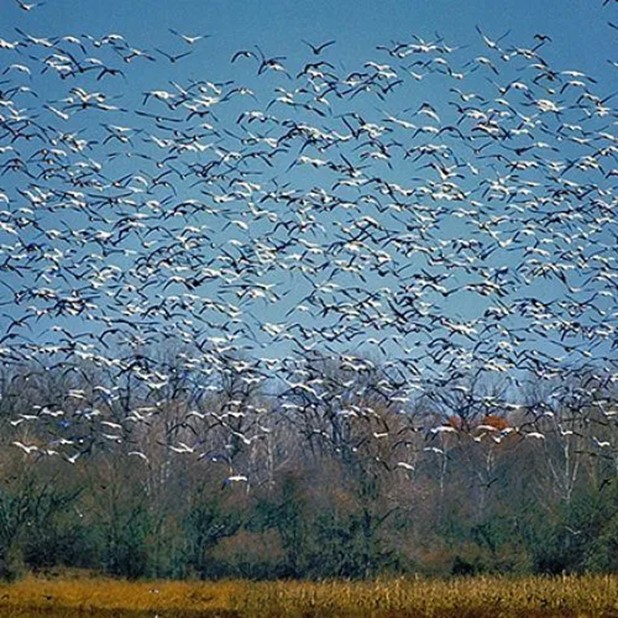
When I looked online, I found Holla Bend National Wildlife Refuge is a 7,055-acre (28.6 km2) site located 5 miles (8 km) south-east of Dardanelle, Arkansas.  The refuge is bounded on one side by the Arkansas River and on its others by an oxbow lake that was formed in 1954 by the Army Corps of Engineers during efforts to straighten the river navigation channel.  The resulting island was transferred to the US Department of the Interior in 1957 for a wildlife refuge.  The refuge provides habitat for migratory waterfowl, indigenous endangered species, other resident wildlife, and offers interpretation and recreation to the public.  The area is a year-round sanctuary for the 236 species of birds, tree frogs, and the American alligator.  Migratory fowl following the Central and Mississippi flyways stay in the refuge during the winter months, including 14 species of ducks and 4 kinds of geese, with as many as 100,000 there at once.  Winter migratory neotropical songbirds use the refuge as a rest stop during their long journey to and from Central and South America and during the spring and summer migratory birds use the refuge for breeding and nesting.  I anticipated birds.

Last year I purchased an Interagency Lifetime Pass from the US National Park Service so we cruised past the Holla Bend information center without stopping.  We turned around realizing we did not know where we were going without a flyer.  As we got into the refuge, we saw large flocks of American Robin (Turdus migratorius) on the road between the trees and European starling (Sturnus vulgaris) passing among the harvested grain fields.  Along the oxbow we found a flock of mallards (Anas platyrhynchos) and a flock of ring-billed gull (Larus delawarensis) along the river.  The best find however, was totally unexpected.  We stopped to admire a herd of 20 does and fawns racing across the far end of a harvested field.  Then I noticed what I thought was a group of black vultures (Coragyps atratus) about 300 yards (274 m) out.  When I focused my camera, I realized this was a flock of wild turkey (Meleagris gallopavo) feeding in the field.  It turned out to be a great day.  And we topped it with a great burger.

Thoughts: When we stopped at the Holla Bend information office a sign listed the daily hours along with the caveat of “Closed when we are not here”.  They were not there.  The Wildlife Refuge System is the US’s largest network of lands and waters dedicated to wildlife conservation, but it is facing a staffing crisis.  The Refuge System has lost over 800 permanent positions since fiscal year 2011, resulting in a 27% loss in capacity.  No national wildlife refuge is fully staffed, and more than half have zero staff on-site.  Much of the system is unprotected due to the lack of law enforcement officers.  This shortage impacts critical volunteers by a lack of staff supervision or infrastructure.  We need to invest in this system and prioritize staffing to ensure the future of this network and the wildlife it protects.  Act for all.  Change is coming and it starts with you.
Birds 2024

January 04, 2025

I am a little later than usual, but it is again time to recap my annual birder list. Once more I saw a number of red-tailed hawks (Buteo jamaicensis) on the power lines going to and from town but this year I was unable to actually get a picture, so they were not added to my count. I was unable to take my usual trip to the wildlife area this year and so missed out on any of the birds I might have seen there. The end of year presence on my feeders was good as the cold weather brought the small Passerines (sparrows and finches), although the larger birds (cardinals and jays) were mostly absent. I cleaned out the bluebird (Sialia sialis) house last week. One of the squirrels who frequent the feeders has taken to gnawing on the entrance, so I opened it to check if everything was ok. It was fine but I cleaned the nest and debris in preparation for the next nesting season. BTW: for those who read last week’s blog (Gaggle) a group of squirrels is called a “dray” or a “scurry”.

All that said leads up to the “great reveal” concerning my birder totals for 2024. You may recall I recorded 26 species in my first year (2020). I got off to a great start in 2021 with 29 species by the end of January and a total of 52 species for the year. During 2022 the sightings were slower, with 44 different species, not counting the six European sightings (50 total?). During 2023 I recorded my lowest number of sightings since my first year, with only 30 species. During 2024 the numbers rose slightly to 39 documented species. Building a fence in the side yard helped as the kids no longer play near the feeders and the birds feel free to come and go more frequently. Still, early morning and early evening are the best times to watch. We also added three new feeders that attach to the glass on the bay window next to where Melissa works. This allows her to watch as the American gold finch (Spinus tristis) and Dark-eyed junco (Junco hyemalis) as they battle for feeding rights.

As I pulled onto the entrance road to the lake to take the kids for a walk yesterday, I caught sight of a large bird perched in the trees. I drove by as the bird turned and flashed the unmistakable white head of a bald eagle (Haliaeetus leucocephalus). I slowed and then pulled over as soon as I (no shoulders). I walked back the 1/4 mile (400m) scanning the trees and hoping to be able to get a photo for my birding list. Unfortunately, the eagle had moved on and was now out of sight. When we began our walk out onto the first spit of land, I heard the call of a red-bellied woodpecker (Melanerpes carolinus). I scanned the trees along the road and caught sight of the bird high among the branches. I pulled out my phone to take a photo but again, by that time the bird was gone. That made two birds I usually only see a couple of times a year and I had missed documenting them both. These were part of the many birds I have seen but not photographed over my last five years of birding. The official Cornell Lab of Ornithology bird list guide does not require documentation with a photo to count as a sighting, although that has been my criteria. Perhaps I should rethink.

THOUGHTS: I acquired several new feeders (now 13, plus 9 hummingbird feeders) during 2024. Melissa asked about the cost as she watched me buying seeds and filling the feeders on a daily basis. I tend to buy seeds in bulk, and I only have to restock two or three times a year. Watching the birds (and squirrels) gives us both pleasure. Like my garden and Melissa’s succulents, the expense to feed the birds is well spent. Be sure to mark your calendars for the Great Backyard Bird Count 2025 (February 14 to February 17, 2025). As I mentioned last year, birds are the (literal) canary in the mine shaft (earth) when it comes to gauging the health of our ecosystems. Act for all. Change is coming and it starts with you.
Cute

December 26, 2024

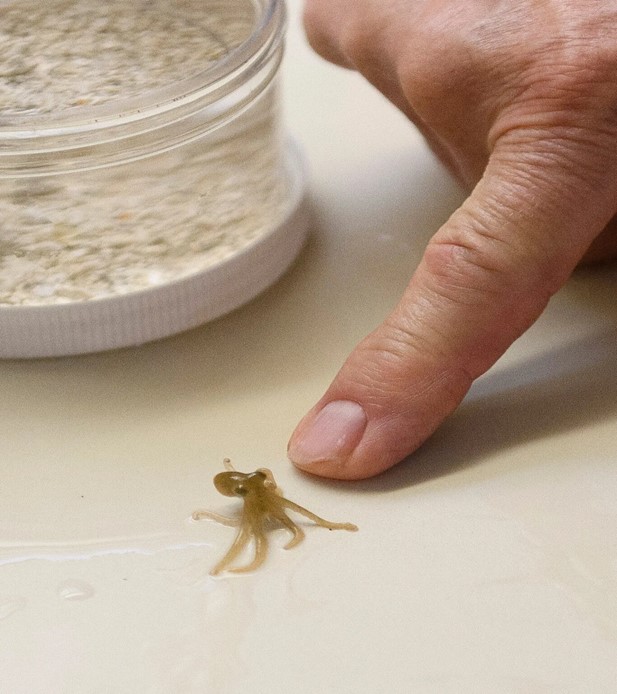
It is the end of the year and that means the internet is barraging us with stories of “The Best” and “The Worst” of everything from sports (Pommel Horse Guy) to music (Gabriela Ortiz, “Kauyumari”) to food (Sour Patch Oreos) . . . (ad nauseum). One story that caught my attention was about the animals that filled 2024 with sadness, intrigue, and delight. Sadness came with the tragic end of Flaco, the escaped Eurasian eagle owl who appeared to die in a building collision in February. Our intriguing was piqued by the Governor boasting of killing her misbehaving dog and a presidential nominee who deposited a dead bear cub in Central Park and cut the head off a dead whale found of the beach. The delight was the previously mentioned slippery potato named after a pork meatball (Moo Deng) who rocked the internet and drove cosmetic influencers for several months. Then there was Terrance the octopus who had been identified as male until “he” laid 50 fertilized eggs. The online audience watched the heroic efforts to keep the fragile hatchlings alive, even as there is only about 1% chance of survival for the hatchling to grow to .4 inches (10 mm) in the wild. It seemed what held media interest best was stories of cute baby animals learning to survive in the world.

When I looked online, I found there are two ways (of course) to answer why we find baby animals so cute. The proximate answer requires you to single out the features of animals that make them cute versus ugly, and often merge them into a general explanation. Why are baby ducks cute and baby parrots ugly? A proximate answer might involve fur, size of the head or the eyes, length of the limbs, all of which help us define cute. The ultimate answer is perhaps an evolutionary one. Is there an evolutionary reason why we find some features attractive and others repugnant? Answering these sorts of questions is the foundation of evolutionary psychology, and while the answers may be elusive (or even beyond our grasp), we still like to think about them. The reasons we find animals cute or ugly come from criteria that have evolved to help us evaluate members of our own species. Baby animals are cute because natural selection has given babies of some species traits that remind us of a human infant.

Some of these ideas could be tested to determine whether there is a commonality between features we see as ugly or cute in animals and compare them with similar features in humans. Regardless, it is important to remember things are not innately ugly or cute. Features humans find ugly may be exactly what attracts the female to the male of another species. As Darwin recognized, our tastes may be no less evolved than our brains or our bodies. For humans, there is no reason for why the signs of age make someone innately less attractive than the freshness of youth. It may be that our standards of beauty have evolved to reflect candidates for mates and older people are seen as less attractive because they are near or past the age of reproduction. This is a preference that could have been instilled in our ancestors by natural selection. Still, beauty in nature is not innate but evolved and our biology co-evolves with our tastes. Only in animal breeding is this reversed, where human desires allow us to sculpt the features and appearance regardless of the environment.

THOUGHTS: There are some babies (animals and humans) that are so ugly that they are cute. In Planet of the Apes, astronaut George Taylor is preparing to leave and thanks the chimpanzees who help him escape. He overcomes his repulsion and turns to Doctor Zira (female) saying, “Doctor, I’d like to kiss you goodbye.” Zira responds, “All right, but you’re so damned ugly.” Humans need to look beyond the traits that make one superficially cute and find the inner beauty that is only revealed when we get to know each other. Act for all. Change is coming and it starts with you.
Chipmunk

December 20, 2024

One of the casualties of building my raised beds was the wood pile located along the back fence. This wood had been stacked when Melissa and her parents used the raised fire pit that sits adjacent. We have not used the fire pit (or wood) in the six years we have been back, and it was beginning to deteriorate. This was the perfect wood for the bottom layer of the raised beds. As I transferred the wood to the beds I encountered a variety of critters. There was a small Texas Brown Snake (Storeria dekayi texana) hiding in the pile and toward the bottom I encountered several of the invasive earth worms (Lumbricus terrestris) that repopulated North America along with the European colonists. As I continued to work a small furry critter darted out of the wood pile and into the refuge in the next yard. had noticed the chipmunk on several previous occasions as it foraged beneath the bird feeders.

When I looked online, I found the eastern chipmunk (Tamias striatus) is a species endemic to eastern North America and the only living member of the genus Tamias. The name probably comes from the Ojibwe word “ajidamoo”, translating as “one who descends trees headlong.” The species was first described by Mark Catesby in 1743 and was eventually classified as Sciurus striatus by Linnaeus (Latin, “striped squirrel”). The scientific name was changed to Tamias striatus (“striped steward”) by Johann Illiger in 1811. The chipmunk reaches about 12 inches (30 cm) long including its tail and weighs 2.3 to 5.3 ounces (66 to 150g). It has reddish-brown fur on its upper body and five dark brown stripes contrasting with light brown stripes along its back. The fur of its lower body is lighter with a tawny stripe running from its whiskers to below its ears and light stripes over its eyes. The eastern chipmunk has two fewer teeth than other chipmunks, four toes on each front leg, and five toes on the hind legs. There is no external difference in appearance between the sexes except for genitalia. The eastern chipmunk lives in deciduous wooded areas and urban parks throughout the eastern US and southern Canada, preferring rocky areas, brush, log piles, and shrubs for cover.

I had not seen the chipmunk since removing the wood pile and forgot about it. Over the last month Loki has been going crazy every time we have let him out back. From the frantic way he was acting I figured there was some critter living under the ramp off our back door. When I mentioned this to Melissa, she said she thought she had seen a rat (Rattus norvegicus) scurry under the porch when she let the kids out in the morning. I poked around with a stick to see if I could scare the rat out, but it never budged. Last week the mystery was solved. I was up early and let the kids out and saw a flash as something tried to speed from beneath the feeder back under the ramp. I recognized the animal as a chipmunk and tried to keep Loke from grabbing it. It finally reached safety as Loki scratched, sniffed, and whined around the ramp. Melissa now makes a point of making noise before she lets the kids into the yard, giving the chipmunk time to scurry back to safety.

THOUGHTS: I was relieved when I found out we had a chipmunk rather than a rat. I have liked chipmunks since I encountered them as a boy around the picnic sites in the Rocky Mountains. Even though rats and chipmunks are both rodents, these smaller cousins seem cute and innocuous while rats seem menacing. Perhaps it is a throwback to the Black Plague that ravaged Europe and was blamed on the fleas carried by rats. I read an article last week suggesting it was more likely it was the human fleas that spread the disease rather than the rats (Europe was not very sanitary). Humans tend to have similar reactions when encountering other cultures. If they are welcoming or meek they are deemed ok, even if often taken advantage of. If they stand up or hold their ground, they are deemed a threat and often eliminated. Whether it is rats, chipmunks, or other humans, perspective changes how we treat them. Act for all. Change is coming and it starts with you.

Beards

November 27, 2024

As we approach Turkey Day, also known as Thanksgiving in the US, there have been a rash of stories on my browser about these interesting birds. These include the recent tradition of the Presidential Pardon. The first official presidential turkey pardon was given by George H.W. Bush in 1989, but reports credit many presidents with the tradition. Abraham Lincoln’s son took a liking to the turkey destined for Christmas dinner and the bird was spared. Harry Truman liked his bird so much he had the first presidential photo op, but that bird was not so lucky and was later served as a meal. Two days ago, President Biden pardoned Peach and Blossom. These domesticated turkeys weighed an impressive 40 and 41 pounds (18.1 and 18.6 kg) respectively. Another story was offered by the National Audubon Society and provided 10 Fun Facts About the Wild Turkey. The most interesting of these facts concerned the bundle of feathers sprouting from their chest is known as turkey beards, and it gets longer as the bird ages.

When I looked online, Audubon also offered an in-depth discussion on turkey beards. Turkey beards are plumes of dark brown or black feathers, more hair-like than a typical feather, that protrude from the bird’s chest. “If you had it in your hand, it has the consistency of a miniature horsetail,” says Gary Norman, a retired gamebird biologist at Virginia Department of Game and Inland Fisheries. While all adult male turkeys (toms) have beards, nearly 10% of hens also have one, although it is a smaller and wispier version. Male turkey beards are thought to be used as another tool for mate selection, but it is unknown why some female birds have them. Kelsey Sullivan, a gamebird specialist with the Maine Department of Inland Fisheries and Wildlife, says the beards can “indicate dominance and health”. Turkey beards start sprouting when youngsters are around five months old and continue to grow at a rate of nearly 5 inches (12.7 cm) a year throughout a bird’s life allowing the biologists a rough estimation of the bird’s age. While a one-year-old beards may measure only a few inches older males can have beards over 10 inches (25 cm). The longest beard length recorded on the National Turkey Wildlife Federation website is 11.75 inches (29.2 cm). Some toms even grow 2 or 3 (and even up to 13) separate beards. In the rare occasion where multiple beards are grown most are just short, wispy feathers with a single dominant cluster.

Turkeys can lose their beards several ways. Turkey beard rot is caused by vitamin deficiency and may result in the beards shearing off. Longer beards can snap from the heavy weight of snow and ice that collects on them during winter. Fraying from being dragged on the ground is also an issue. Terrain is another factor that influences beard length, and turkeys inhabiting rocky terrain may have shorter beards than those foraging across flat, sandy ground. The abundance of bearded hens varies by region and is perhaps affected by previous conservation efforts to recover Wild Turkeys. In the mid-1900’s, wildlife biologists trapped turkeys and moved them across state boundaries to restore severely depleted turkey populations due to hunting and habitat loss. Wild Turkeys have sharply rebounded and now inhabit every US state except Alaska. Wild turkey populations peaked at 7 million birds by the early 2000’s.

THOUGHTS: There are only two species of Wild Turkey; the North American (Meleagris gallopavo) and the Ocellated Turkey (Meleagris ocellata) in Central America. The domestic turkey (Meleagris gallopavo domesticus) shares their cousin’s trait by having beards, neither sex of the ocellated turkey have beards. As for the two pardoned turkeys, they will live out the remainder of their life at Farmamerica, a 360-acre agricultural interpretive center in Waseca, Minnesota. Act for all. Change is coming and it starts with you.
Mexican Wolf

November 20, 2024

Toward the back of the front section of my local newspaper was a USA Today article on a reward being offered for information on a dead wolf. The female is protected under the Endangered Species Act and was found northwest of Flagstaff, Arizona, on November 7th. The US Fish and Wildlife Service did not provide a cause of death, but the “mortality was not attributed to agency management actions”. Officials are offering a reward of US$103,500 for information that leads to “the successful prosecution” of the case. The wolf, known officially as F2979 and colloquially as “Hope”, was first GPS collared back in July. The Western Watersheds Project, a non-profit dedicated to protecting western watersheds and wildlife, shared a photo of the wolf in July during a wellness check clearly showing the collar. Cyndi Tuell, director of the project, said,” the shooter had to know she wasn’t a coyote.” The Mexican wolf is one of the most endangered mammals in North America, being driven almost to extinction in the mid-1980’s by hunting, trapping, and poisoning practices.

When I looked online, the Mexican wolf (Canis lupus baileyi), also known as the lobo mexicano or lobo, is a subspecies of gray wolf (Canis lupus) native to eastern and southeastern Arizona and western and southern New Mexico in the US and in fragmented areas of northern Mexico. The wolf originally ranged from eastern Southern California south into Baja California, east through the Sonora and Chihuahua Deserts, and into West Texas. The Mexican wolf is the smallest of North America’s gray wolf subspecies, weighing 50 to 80 pounds (23 to 36 kg) with an average height of 28 to 32 inches (71 to 81 cm) and an average length of 5.5 feet (1.7 m). It is similar to the Great Plains wolf (Canis lupus nubilus), but with a smaller, narrower skull and darker, more variable fur (pelage), which ranges from sandy to yellowish gray with black, brown, and some white highlights. The snout, inner legs, neck and undersides are white, while golden-yellow and beige hues dominate the top of the head and much of the rest of the body. The fur around the chest and neck forms a grayish black collar which flows onto the back where it is generally black all the way to the tail tip. As of 2024, there are at least 257 wild Mexican wolves in the US and 45 in Mexico. Another 380 wolves are in captive breeding programs.

There have been 92 Mexican wolf deaths recorded since 1998. Four occurred in 2012 as a result of illegal shootings. In 2015, a court ordered the US Fish and Wildlife revise the management rules after a survey done on the wolf population of the Mexican wolf in Alpine, Arizona, indicated the recovery of the species is being negatively impacted by poaching. Poaching accounted for 50% of all Mexican wolf mortalities from 2008 to 2019. In an effort to fight the slow recovery, GPS monitoring devices are being used to monitor the wolves. In 2016, 14 Mexican wolves were killed, making it the highest death count of any year since they were reintroduced into the wild in 1998. While two of the deaths were caused by officials trying to collar the animals the rest of the deaths remain under investigation.

THOUGHTS: The Mexican wolf was held in high regard in Pre-Columbian Mexico, considered a symbol of war and the Sun and referred to as Cuetzlachcojotl. The Apache call the Mexican wolf “ba’cho” or “ma’cho”, and there is a “wolf song” passed through oral tradition where the tribe used to summon the wolf’s power before battle. It is estimated up to 16% of the Mexican wolf diet may now include domestic cattle (Bos taurus), especially in locations where the cattle graze and calve year-round as opposed to seasonally. Studies suggest reports of wolf depredation on livestock are sometimes exaggerated or fabricated. That reflects the contrasting attitude as an invasive species (cattle) was introduced by Europeans. Act for all. Change is coming and it starts with you.

Yellow-legged

November 19, 2024

Inside the front section of my local newspaper was a USA Today article on the recovery efforts for a nearly extinct frog. The High Sierra lakes in Yosemite National Park have been biologically upset for over 100 years by the stocking of non-native fish. The rainbow, golden, brown, brook, and cutthroat trout, along with Atlantic salmon and grayling, were originally carried in buckets to these fishless lakes. After World War II, a generation of pilots who were adept in aerial bombing sped up the process in all but 20% of the smallest mountain lakes. While these lakes contained no fish, they were bursting with life. Within a few years of stocking the frog populations that had flourished were gone. The National Park Service ended fish stocking in the 1990’s out of concern for the native species. In 1992, Roland Knapp, a research biologist from the University of California, Santa Barbara, got permission to use gill nets to remove the fish from a small number of lakes. The frogs began to make a comeback, but in the early 2000’s research showed the arrival of amphibian chytrid fungus. The Sierra Nevada yellow-legged frog was added to the endangered species list in 2014.

When I looked online, the Sierra Nevada yellow-legged frog (Rana sierrae), also known as the Sierra Nevada Mountain yellow-legged frog, is a true frog endemic to the Sierra Nevada of California and Nevada in the US. The yellow-legged was formerly considered the southern mountain yellow-legged frog (Rana muscosa) until a 2007 study elevated the more central and northern populations to full species status and restricting the latter to the southern Sierra Nevada and southern California. Both mountain frogs are similar in appearance but are separated by differences in mitochondrial DNA. The yellow-legged grow up to 1.5 to 3.5 inches (3.8 to 8.9 cm) long and females tend to be larger than males. The frogs have brown backs, often with dark spots or bands, and yellow legs and underbellies. Considerable variance exists in species coloration and yellow-legged frogs can also be grey, red, or greenish brown with dark splotches. Tadpoles appear black or brown and require one to four years to fully develop. These frogs hibernate during the winter, staying submerged in the mud and may only be active around three months a year depending on the weather. Studies showed 92.5% of the yellow-legged populations have gone extinct and are estimated to have declined by over 90% over their range. They are considered an endangered and vulnerable species by the IUCN.

In 2006, Yosemite National Park and the Yosemite Conservancy began a project to introduce frogs into lakes without fish. In 2007, a project was started to restore frog habitat by removing non-native fish from remote sites. Once the site is fishless, lakes are inhabited by native species, including the yellow-legged frog. The ecological effects of their loss have been significant as the yellow-legged were a keystone species and important for nutrient and energy cycling in the aquatic and terrestrial ecosystems. A 2016 survey in Yosemite indicated a sevenfold increase in their numbers reported, but recent studies discovered amphibian chytrid fungus is contributing to the decline of the Sierra yellow-legged frog. Chytrid fungus leads to a usually fatal disease (Chytridiomycosis). Chytrid fungus lives on keratin which is found on the external mouthparts of tad poles and the outer skin layer of adults. Fungus growth on adults disrupts the ability to breathe through skin (osmoregulate). The species also suffers from habitat fragmentation as populations have become separated.

THOUGHTS: Stocking fish in the High Sierra’s began as early as the California Gold Rush in 1849. The fishless lakes seemed like a waste to the miners hiking into the backwoods. Stocking fish did provide food, but it nearly destroyed the delicate habitat of the high mountains. While introducing an invasive species may seem like a good idea, it is rarely the case. Life in fragile environments is especially vulnerable. Act for all. Change is coming and it starts with you.
Siamese

November 13, 2024

Today’s MSN browser featured a report on a crocodile thought to be extinct in the wild a generation ago that is making a comeback. The animals are being bred in captivity and reintroduced to their natural habitat. The conservation effort began in 2012 and last June the crocodiles laid 106 eggs and produced 60 hatchlings. There are about 1,000 of the crocodiles in the wild, including 400 in Cambodia. The species was nearly killed off by habitat destruction, poaching, and crossbreeding. Ironically, the hunters who captured, bred, and killed the crocodiles to sell their skins helped them bounce back. These captured crocs are the source of purebred, fertile crocodiles that were pulled from a population of 1.5 million (mostly hybrids) being bred for leather. After the females lay eggs, the eggs are incubated at the Phnom Tamao Wildlife Rescue Centre, allowing the crocodiles to develop before they are brought to a national park in the Cardamom Mountains. According to Pablo Sinovas of Fauna & Flora, only one in 20 crocodiles born in the wild survives, but if they are bred captively and not released until they reach 1 meter in length, “their chances of survival increase exponentially.”

When I looked online, I found the Siamese crocodile (Crocodylus siamensis), also known as the Singapore small-grain and soft-belly crocodile, is a medium-sized freshwater crocodile native to Indonesia (Borneo and possibly Java), Brunei, East Malaysia, Laos, Cambodia, Myanmar, Thailand, and Vietnam. The animal is medium-sized, with a relatively broad, smooth snout and an elevated, bony crest behind each eye. It is generally olive green but can range to a dark green. Immature crocodiles measure 4 to 5 feet (1.2 to 1.5 m) and weigh from 13 to 26 pounds (6 to 12 kg). Adults can grow to a length of 7 to 10 feet (2.1 to 3 m) and weigh from 88 to 265 pounds (40 to 120 kg). Adults have a bite force of 466 to 1,029 pounds per foot (2,073 to 4,577 N). Large males can reach over 13 feet (4 m) and weigh 770 pounds (350 kg). The species is critically endangered and already extinct in many regions.

The Siamese crocodile is critically endangered on the International Union for Conservation of Nature (IUCN) Red List and is listed on Appendix I of Convention on International Trade in Endangered Species of Wild Fauna and Flora (CITES). In Cambodia, Fauna and Flora International and the Government of Cambodia’s Forestry Administration have established the Cambodian Crocodile Conservation Programme for the protection and recovery of Siamese crocodiles. This program works with a network of indigenous villages who are helping to protect key sites such as Veal Veng Marsh (Veal Veng District), the Tatai River (Thmar Bang District), and the Araeng River. The Araeng is thought to have the second largest population of Siamese crocodiles in the world but is being threatened by proposed construction of a massive dam. The Siamese take advantage of the increase in water levels during the Monsoon season (June to November) to move out of the river and onto large lakes and other local bodies of water, returning to their original habitat once water levels receding back to their usual levels. Since 2012, approximately 50 purebred Siamese crocodiles have been released into community-protected areas to reinforce the depleted wild populations.

THOUGHTS: Conservationists are also trying to protect Siamese crocodile’s habitat as 32% of the Cambodia’s tree cover was lost from 2001 to 2023 due to climate change and deforestation. Sean Pang stated, “Policymakers must recognize that addressing both climate and land use change is crucial for protecting the fate of South-east Asia’s trees, and likely for much of the region’s biodiversity.” The world’s natural resources are at peril without a combined effort by government, conservationist, and the local population. Act for all. Change is coming and it starts with you.