
June 06, 2023
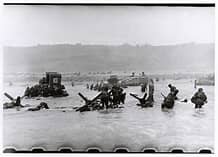
Last December my brother and his wife took a river cruise from Paris to northwestern France. He had gotten his degree in history and spent a semester in southern France but was unable to visit the towns and beaches he had read about as part of the Allied invasion of Normandy. The cruise was booked months in advance and described the places in Normandy which were included. As the cruise time approached, he learned the itinerary changed during the Christmas holiday. Rather than touring the history around Normandy, the Christmas festivals along the route were the featured attraction. They did extend their time in Paris, but rather than seeing the sights there they chose to visit Normandy. Today marks the 79th anniversary of what became known as D-Day.
When I checked History.com, it said today marks the invasion of the beaches at Normandy in northern France by the combined Allied forces during World War II. The German army occupied northern and western France in June of 1940 and the southern portion was occupied in November 1942. The D-Day assault (Operation Overlord) landed 156,000 Allied soldiers on five different beaches by the end of the day. The Allies encountered light opposition on four of the beaches, but the US forces met with heavy resistance on Omaha Beach. More than 4,000 Allied troops lost their lives in the D-Day invasion, and thousands more were wounded or missing. The D-Day invasion was the largest naval, air, and land operation in history to date. Within a few days 326,000 troops, 50,000 vehicles, and 100,000 tons of equipment had landed. Two months later northern France was liberated, and Berlin fell to the Soviet army on May 2. The Allies formally accepted Germany’s unconditional surrender on May 8, 1945. Historians often refer to D-Day as the beginning of the end of World War II.
While the historic facts around the D-Day invasion are well known, Sarah Rose in her book, D-Day Girls: The Spies who Armed the Resistance, Sabotaged the Nazis, and Helped Win World War II, focused on the stories of the female agents who contributed to the Allied victory in Normandy and the liberation of Western Europe. Andrée Borrel, Lise de Baissac, and Odette Sansom were among 39 female agents who served in the Special Operations Executive (SOE), a secret intelligence agency established by Prime Minister Winston Churchill in 1940. Borrel left France to train as a nurse with the Red Cross. She returned to help over 65 Allied troops escape France to Spain over the Pyrenees. She narrowly escaped herself, then parachuted back in September of 1942, becoming the first female combat agent to do so. She was captured and spent a year in a concentration camp before being executed a month after the D-Day invasion. Baissac left Paris on June 5, biking through the German lines for three days to bring news of the invasion to her brother in the French Resistance. She continued to gather intelligence which helped the US forces break through the German front seven days after D-Day. Sansom was born in Normandy but married a British soldier and lived in England. She answered the call to return to her homeland to become a courier for the Resistance in southeast France. She was arrested in 1943 and survived over a dozen torture sessions. After the war her testimony was used to convict the camp commander and other SS officers of war crimes.
Thoughts: While the historic facts are often known, the stories behind them are what spark our interest. My brother wanted to see the towns and sights he had read about. Rose told the stories of the women and added insight to the intelligence behind the D-Day invasion. History is more than names and dates. It is the story of people living the best they can in circumstances often beyond their control. When we hear the stories of others, we can learn how to live our own lives. That is why even boring history matters. Act for all. Change is coming and it starts with you.

