
April 10, 2024
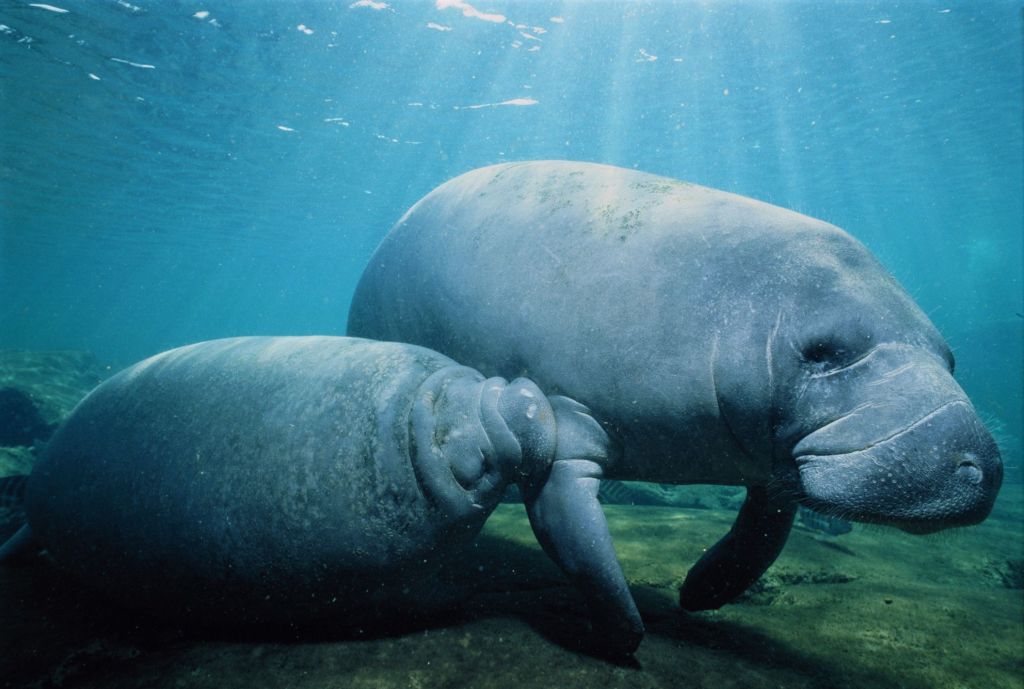
Several weeks ago, the inside of the front section of my local newspaper carried a USA Today article on the continued threat to Manatees in the wild. These gentle giants have no known natural predators but are still considered at risk. US Fish and Wildlife Service (FWS) estimates the global population of manatees is at least 13,000 and the Florida population is estimated at 8,350 to 11,730 based on an assessment from 2021 to 2022. The FWS no longer considers the West Indian manatee “endangered” and downgraded its status to “threatened” in March of 2017. The World Wildlife Fund says the manatee’s status is “under debate”. The reclassification was met with controversy, with Florida congressman Vern Buchanan and groups such as the Save the Manatee Club and the Center for Biological Diversity expressing concerns that the change would have a detrimental effect on conservation efforts. The International Union for Conservation of Nature and the WorldWide Fund for Nature both classify manatees as “vulnerable”.
When I looked online, I found Manatees (genus, Trichechus) are a large, fully aquatic, mostly herbivorous marine mammal also known as sea cows. There are three accepted living species, the Amazonian manatee (Trichechus inunguis), the West Indian manatee (Trichechus manatus), and the West African manatee (Trichechus senegalensis). Adults weigh from 880 to 1,210 pounds (400 to 550 kg) and average 9 feet 2 inches to 9 feet 10 inches (2.8 to 3.0 m) in length, but some may grow up to 15 feet (4.6 m) and weigh 3.913 pounds (1,775 kg). The females tend to be larger and heavier than males. At birth baby manatees weigh about 66 pounds (30 kg). Manatees eat over 60 different freshwater and saltwater plants. The species inhabit the shallow, marshy coastal areas and rivers of the Caribbean Sea, the Gulf of Mexico, the Amazon basin, and West Africa. The main cause of death for manatees are human-related, such as habitat destruction and human objects. Manatees are slow-moving, curious creatures which have led to violent collisions with propeller-driven boats and ships. Some manatees have been found with over 50 scars from propeller strikes. Others die of starvation as pollution-fueled algae blooms kill the sea grass they rely on for food. Natural deaths include adverse temperatures, predation by crocodiles on young, and disease.
Manatee deaths in the state of Florida nearly doubled from 637 (2020) to 1100 (2021). Although this number decreased in 2022 (800), it is likely the current rate of development in Florida, climate change, and decreasing water quality, habitat range, and genetic diversity among the population may lead to reconsideration of the West Indian Manatee as endangered. The Georgia coast is usually the northernmost range of the West Indian manatees as their low metabolic rate does not protect them in cold water. Prolonged exposure to water below 68F (20C) can cause “cold stress syndrome” and death. West Indian manatees can move freely between fresh water and salt water, but studies suggest that they are susceptible to dehydration if freshwater is not available for an extended period of time. Manatees are protected by the Marine Mammal Protection Act of 1972, the Endangered Species Act of 1973, and the Florida Manatee Sanctuary Act of 1978.
THOUGHTS: When I moved to Kansas I was asked if my home in California was any different. I responded, “Well, I have not been awoken by the seals in the cove next to my house since I moved back.” Last week I received a video from my brother showing a manatee swimming (floating?) in the canal behind his condo in Florida. This is something else that does not occur in Kansas. Each part of the world is unique to the ecosystem it supports. This diversity is what inspires the wonder of the world where we live. Act for all. Change is coming and it starts with you.
 A travelers odyssey
They should have never downgraded them to threatened! They are still endangered in my book.
LikeLiked by 1 person
They should ban all gasoline boats, in my opinion.
LikeLike
They seem very vulnerable.
LikeLike