
October 22, 2024
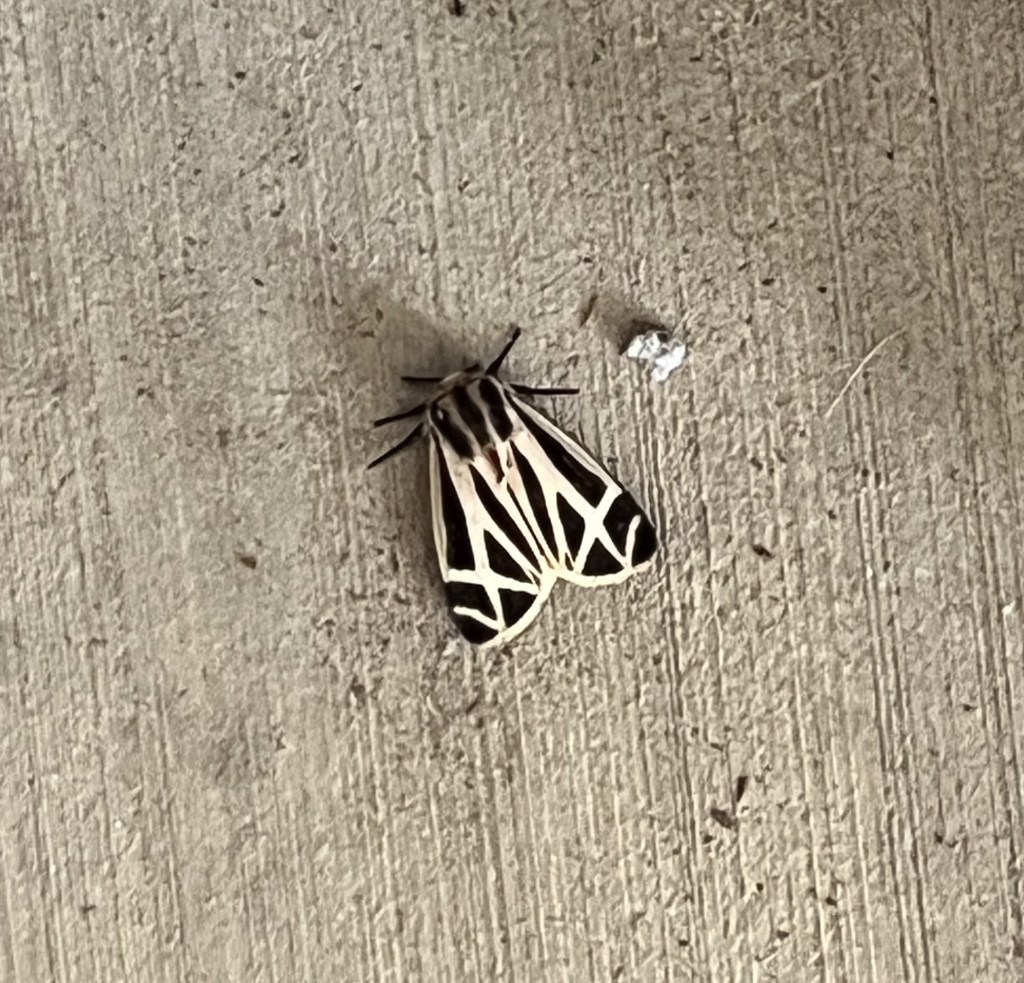
Our enclosed porch serves as a greenhouse for both Melissa’s succulents and a rack during late winter for my vegetable seedlings. The area is also used to store Melissa’s supplies and the seeds I use to feed the birds. When I started feeding birds several years ago, I set the bags on the floor. This worked for several months, but as the weather got colder the rodents that thrived in the tall grass of the lot behind our house were more intent on seeking food and shelter. While I never saw a house mouse (Mus musculus) or brown rat (Rattus norvegicus), I did have several instances of “something” chewing through the seed bags and spilling the contents onto the floor. I now have a large 20 gallon (76 l) tub for the larger bags and 3 smaller 5 gallon (15 l) buckets to hold the daily dispersal. The containers are large enough to contain the seed and have a lid which keeps out the (hopefully) mice. While cleaning behind the “supplies” behind the feed buckets I found more evidence of mice, but again no actual critters. What I did find beneath several of the buckets was a brightly colored moth. When I checked my phone identification it said this was a harnessed tiger moth.
When I looked online, I found the harnessed tiger moth (Apantesis phalerata) is a species of moth within the Erebidae family, first described by Thaddeus William Harris in 1841. The harnessed tiger moth’s subfamily (Arctiinae) has about 11,000 species of tiger moths divided globally across three tribes. The harnessed tiger moth is indigenous to North America, with a geographical distribution from Ontario, Quebec, and Maine in the north, to the west in South Dakota, and stretching south to Florida and Texas. The adult moth has a wingspan ranging from 1.2 to 1.7 inches (30 to 42 mm), and their distinctive black and orange wing patterns earned them the name “tiger” moth. The tiger moth has a grooved exoskeletal structure (tymbals) on the posterior three segments of the thorax (metathorax) which they use to produce high frequency cicada (superfamily, Cicadoidea) like clicks. The clicks are a defensive mechanism against predation and for communication during mating. The lifespan of a harnessed tiger moth ranges from 5 to 10 days after mating. The moth’s activity period varies regionally, being active from April to September in the southern parts of its range, and from May to August in the northern areas. My tiger moth was active (at least alive) in mid-October.
The harnessed tiger moth uses its vibrant colors to serve as a visual deterrent, signaling to potential predators that they are distasteful. Despite their warning colors, harnessed tiger moths are preyed upon by bats, which rely on echolocation (not sight) to hunt. This tiger moth is not poisonous, but adults do secrete a liquid to ward off predators that can cause allergic reactions in humans. The furry body of the caterpillar can also cause rashes and irritation if touched with bare hands. There are many spiritual meanings attached to the various species of tiger moth and different types of tiger moths hold different gravity in various cultures worldwide. White-colored tiger moths are seen as a sign of peace and innocence as white is often considered the color of peace.
THOUGHTS: Two common spiritual meanings are attached to all tiger moth species around their attraction to light. Some believe spotting a tiger moth is an indication that the person must leave the dark and start embracing the light in their soul. For other cultures this is a warning that means not to be easily lured by charming deals or things and think rationally before making decisions. Human decisions are fraught with a similar dichotomy of good and bad. Roman Emperor Marcus Aurelius, in his Meditations said, “You have power over your mind – not outside events.” Nietzsche takes the same perspective, affirming the agency of the individual goes beyond good and evil and declares what is “good” and “bad” by what is serving and hindering their own goals. There are not absolutes, only your reaction to events. Act for all. Change is coming and it starts with you.
 A travelers odyssey