
March 28, 2025
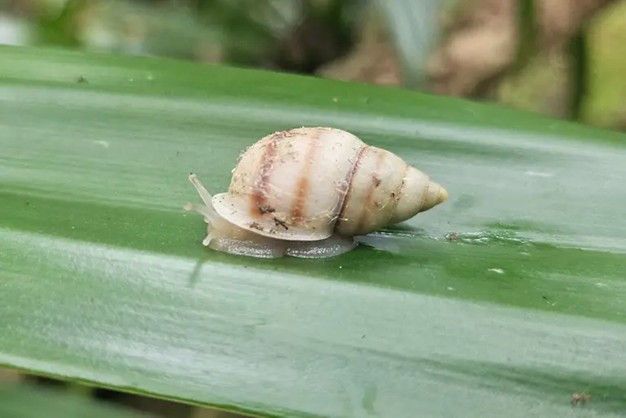
This morning’s MSN browser caught my eye with an article on a creature that has managed to return from extinction. The International Union for Conservation of Nature (IUCN) Red List of Threatened Species has reclassified a peanut sized snail as critically endangered after being previously declared extinct in the wild, according to a release from the Zoological Society of London (ZSL). The snail’s comeback is credited to a decades-long conservation program led by ZSL and its global partners. Paul Pearce-Kelly, leader of the conservation program, said in a news release, “This is a landmark moment for Partula tohiveana and for decades of international conservation work. Seeing a species return from the brink after years of collaborative effort is exactly why we do what we do.” The press release states that the reclassification follows the discovery of adult Partula snails born in the wild.
When I looked online, I found Partula tohiveana is one of several species with the common name Moorean viviparous tree snail. The species is an air-breathing tropical land snail in the family Partulidae endemic to highlands on Moorea, French Polynesia. The species was reintroduced into the wild in 2024 and by September “born in the wild” snails were observed for the first time in 40 years, meaning the species is officially considered re-established. While the snail is still critically endangered, it had been extinct in the wild since the 1980’s. The snail is the first invertebrate species to be successfully re-established following an Extinct in the Wild IUCN status. ZSL started breeding these snails in the 1980’s after the invasive carnivorous rosy wolf snail (Euglandina rosea) began to threaten the Partula tohiveana’s wild population. The snails were bred and cared for under carefully controlled conditions and were then marked with UV reflective paint prior to their release back into their forest habitats. The 2024 reintroduction saw the release of about 6,000 snails from 10 species and sub-species of Partula snails raised at zoos worldwide.
Ali Reynolds, Senior Keeper, Lower Vertebrates & Invertebrates at the Marwell Wildlife Zoo, said: “It was so heartening when I heard the news of tohiveana being downlisted, it makes all our efforts worthwhile, and shows what a difference zoos can make.” Reynolds has a tattoo on her arm with a picture of a snail along with words, “never give up”. She went on to say the more you learn about Partula, the more fascinating they become. The snails show a high level of speciation, and a single species can evolve in very small specific areas, at times even living in only one valley. They are unusual amongst snails, as they do not lay eggs, but give birth to a single live young. Their name comes from Partula, the Roman goddess of birth. “Given the cause of their decline is entirely manmade, we have a responsibly to try to make things right, and this shows that is possible!”
THOUGHTS: One of the global partners that aided the reintroduction of Partula was the Sedgwick County Zoo in Wichita, Kansas. My parents lived there and always had a season pass to the zoo, so when we held reunions, we would all go. This was usually in August and turned out to be the hottest day of the year (100+F/37.7+C). Zoos have always been a subject of interest and debate. Some say they play a crucial role in conserving endangered species and educating the public. Others say they represent captivity for profit and do more harm than good. Zoos do support conservation through breeding and donations that are critical for groups working in areas trying to preserve wildlife. A critical argument for zoos is that people need to see animals to care about their protection and most urban populations will likely never get the opportunity to experience these animals in the wild. Direct encounters with animals encourage people to adopt more eco-friendly behaviors and feel more invested in conservation efforts. Longer life (with ethical treatment) is a tradeoff for freedom. As with humans, not all feel the cost is worth it. Act for all. Change is coming and it starts with you.
 A travelers odyssey