
January 28, 2026
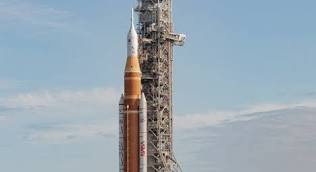
I have mentioned that I have an on-line subscription to our local paper that is sent instead as hard copy. They no longer have carriers and instead deliver via USPS. With the bad weather last Saturday, the Sunday paper did not arrive (I know, how do they get Sunday’s news by Friday night?) until the Post office restarted delivery yesterday. Inside the front section was a USA Today article on how to take a trip to the moon. The launch is scheduled to occur between February and April of this year at the Kennedy Space Center in Florida. The Orion capsule will carry four astronauts on the lunar journey. While there may not be enough seats for everyone to ride along, NASA has provided a way to punch your ticket virtually. When you sign up on the Artemis II site you will be included on an SD card that will fly inside Orion when the Artemis II mission launches.
When I went online, I found Artemis II will build on the success of the uncrewed Artemis I in 2022 and will demonstrate a broad range of capabilities needed on deep space missions. Artemis II will be NASA’s first mission with crew aboard the SLS (Space Launch System) rocket and Orion spacecraft. NASA is sending astronauts to explore the Moon for scientific discovery, economic benefits, and to build the foundation for the first crewed missions to Mars. The flight is designed as a test of NASA’s deep space capabilities, as humans fly on the SLS rocket and Orion spacecraft for the first time.
The crew will perform initial checkouts of Orion’s systems and manually test the spacecraft’s handling near Earth over the first two days of the mission, before heading toward the Moon. Orion’s service module will provide the push needed to break free from Earth orbit as a translunar injection burn will send the astronauts on a four-day outbound journey around the far side of the Moon. The approximately 10-day mission will launch from Launch Complex 39 at NASA’s Kennedy Space Center in Florida no later than April 2026.
The figure eight flight pattern for Artemis II will extend more than 230,000 miles (370149 km) from Earth and fly 4,600 miles (7403 km) beyond the Moon, making it the furthest humans have traveled from Earth. The flight will allow the astronauts to evaluate spacecraft systems along the way and test how they behave will direct human interaction. Several payloads will fly aboard the craft to expand our knowledge of space radiation, human health and behavior, and space communications. These tests are designed to help advance future exploration efforts. After completing its journey, Orion will undergo high-speed reentry through Earth’s atmosphere before safely splashing down in the Pacific Ocean off the coast of San Diego. NASA and a Department of Defense recovery team will retrieve the four-person international crew (three American, one Canadian) and spacecraft. Signing up for the virtual flight (https://www.nasa.gov/mission/artemis-ii/) will provide mission updates and information about the launch. You can also sign up for the NASA newsletter to receive updates in your inbox.
THOUGHTS: I was intrigued when I read about the Artemis II launch date as we are scheduled to be in a campground across from Kennedy Space Center during February. If conditions are right, we might be able to watch the launch and then accompany the astronauts on the virtual ride. I grew up in the Apollo era of moon trips that sparked my imagination (and desire) for space flight. While I may not be able to afford the 2026 Virgin Galactic commercial flights (priced around US$600,000) or enlist in NASA’s astronaut training program (age), I will be traveling to the moon virtually within the next few months. The Artemis ventures will take humanity to the moon and on to Mars. Lest we forget, this is another journey made possible through international cooperation. Act for all. Change is coming and it starts with you.
 A travelers odyssey